A timeline spanning key moments from 1994-2025 in David Boren's tenure as the University of Oklahoma's 13th president through his death.
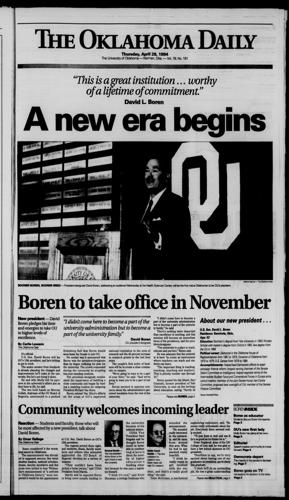
Boren named OU president
- Updated
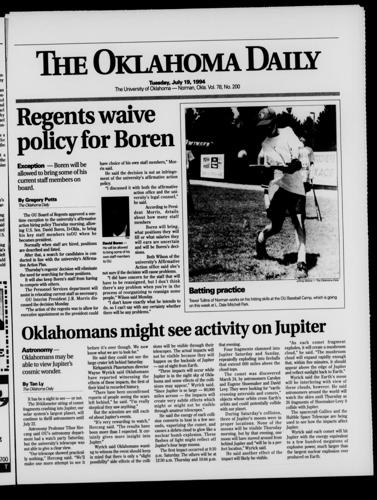
Regents waive policy for Boren
- Updated
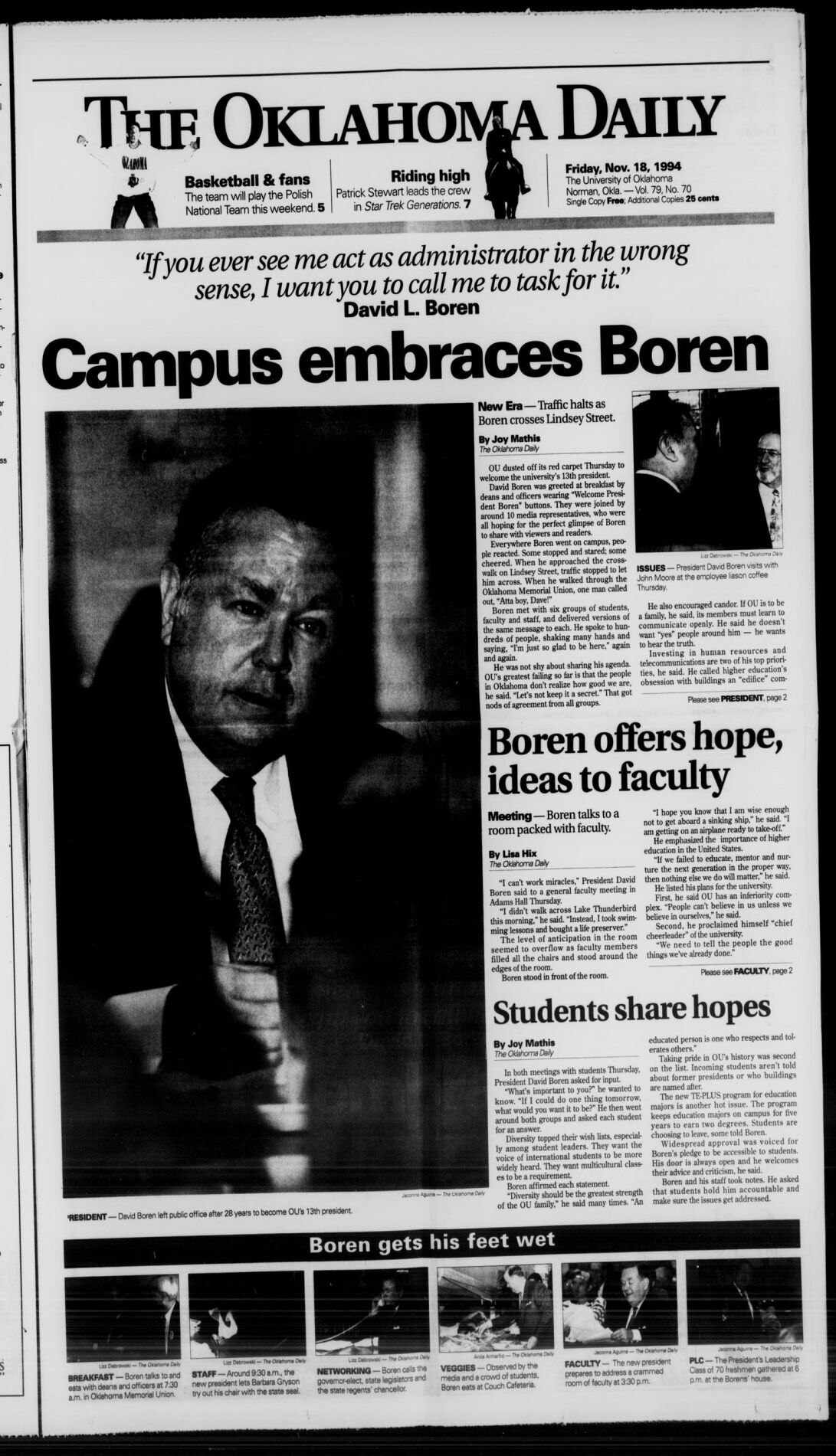
Campus embraces Boren
- Updated
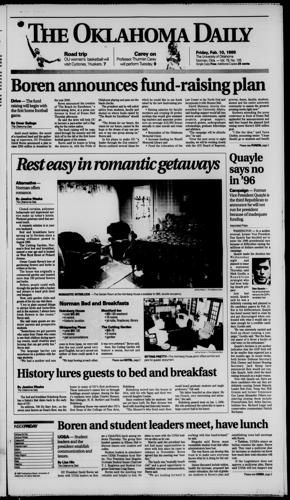
Boren announces $200 million fund-raising plan
- Updated
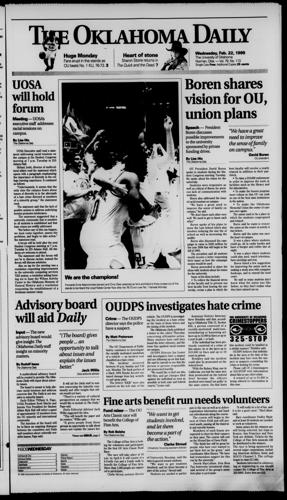
Boren shares vision for OU, union plans
- Updated

Bomb cripples OKC
- Updated
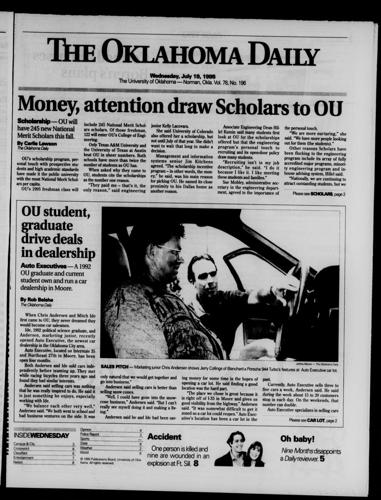
Money, attention draw scholars to OU
- Updated
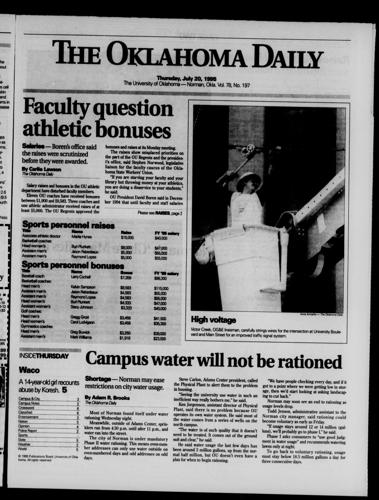
Faculty question athletic bonuses
- Updated
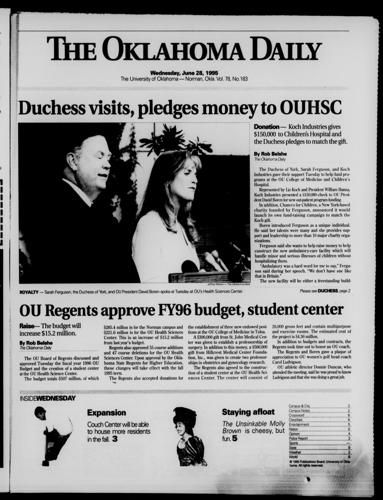
Duchess visits, pledges money to OUHSC
- Updated
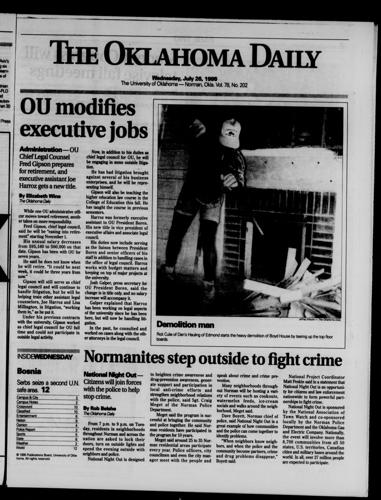
OU modifies executive jobs
- Updated
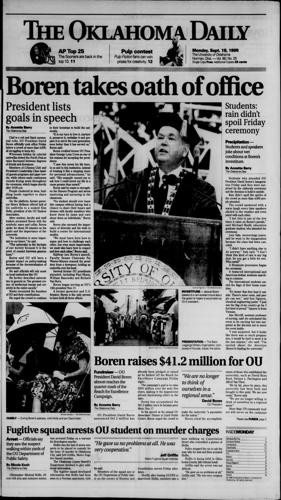
Boren takes oath of office
- Updated

Message from the president | OU People, Winter 1995
- Provided
- Updated
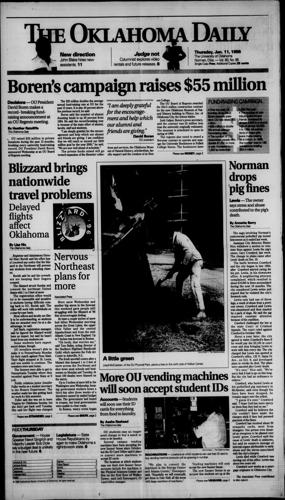
Boren's campaign raises $55 million
- Updated
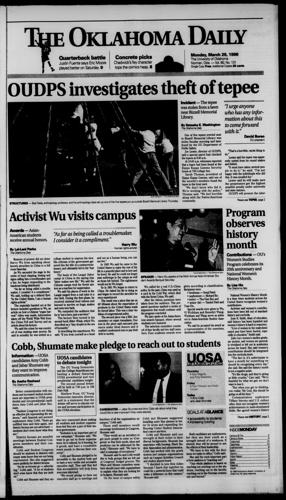
OUDPS investigates theft of tepee
- Updated
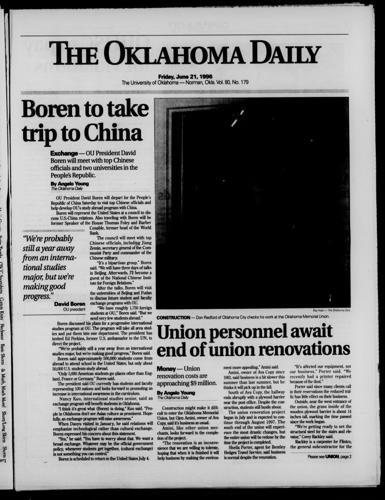
Boren to take trip to China
- Updated
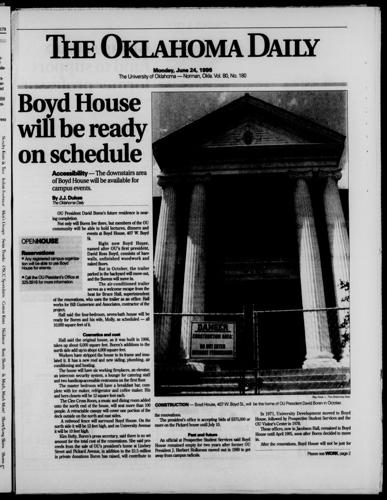
Boyd House will be ready on schedule
- Updated
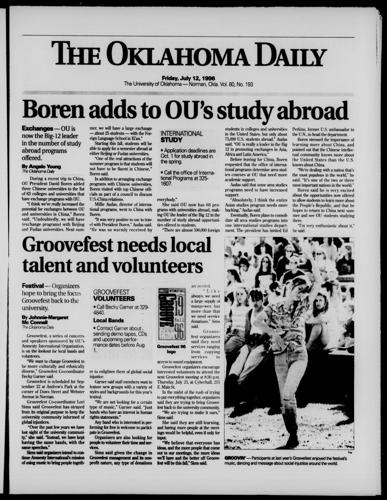
Boren adds to OU's study abroad
- Updated
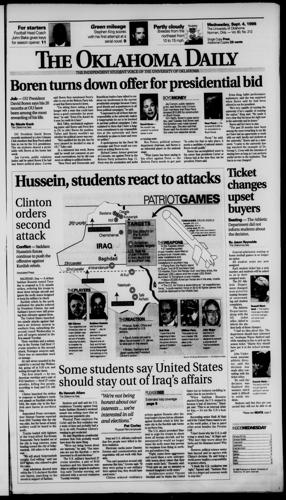
Boren turns down offer for presidential bid
- Updated
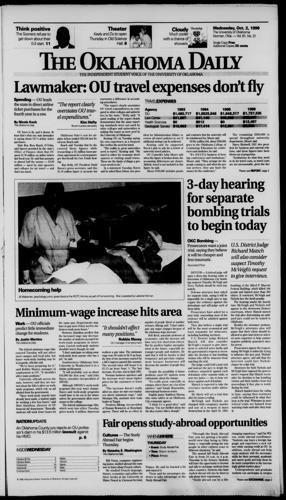
Lawmaker: OU travel expenses don't fly
- Updated
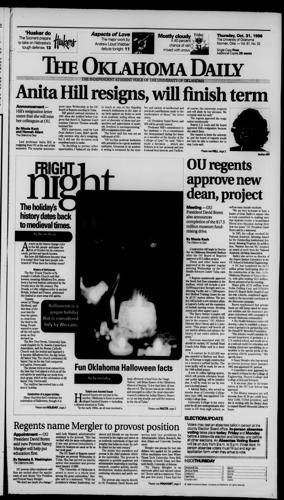
Anita Hill resigns, will finish term
- Updated
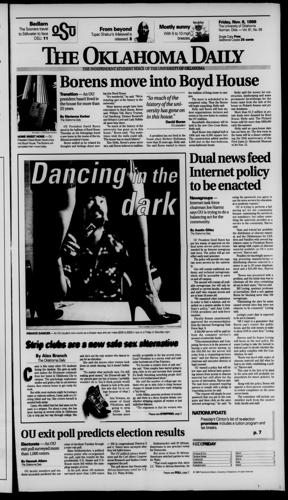
Borens move into Boyd House
- Updated
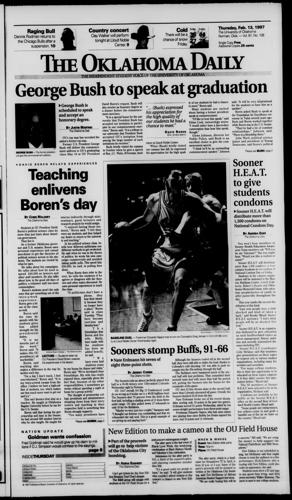
George Bush to speak at graduation
- Updated
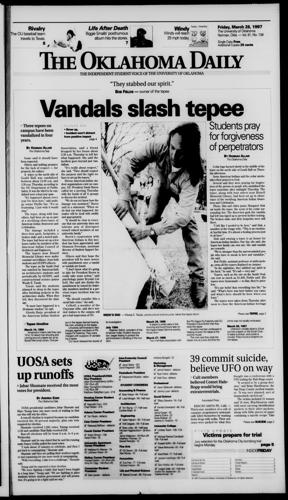
Vandals slash tepee
- Updated
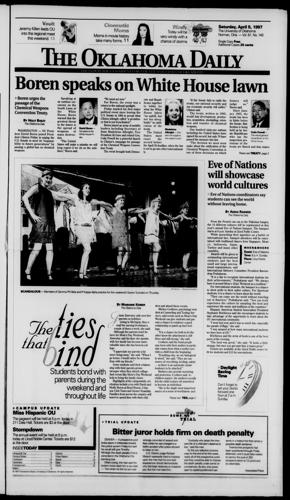
Boren speaks on White House lawn
- Updated
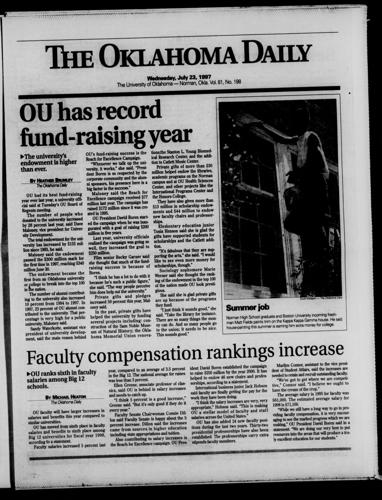
OU has record fundraising year
- Updated
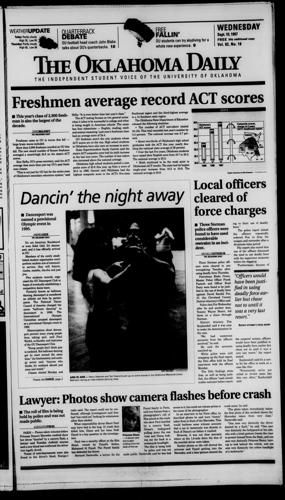
Freshmen average record ACT scores
- Updated
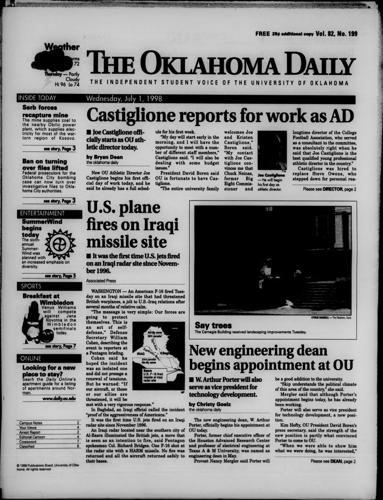
Castiglione starts job
- Updated
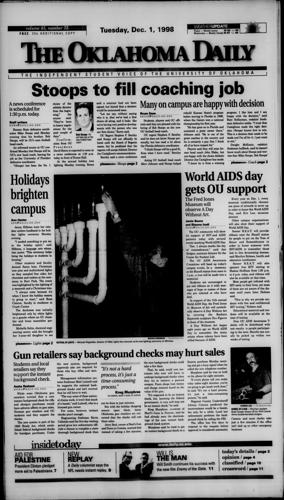
Stoops to fill coaching job
- Updated
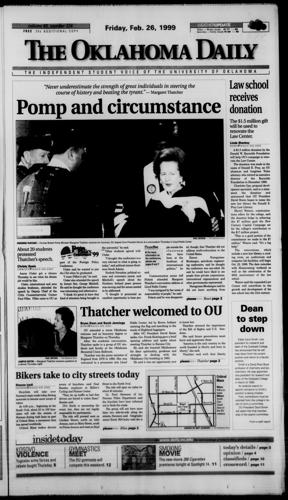
Margaret Thatcher visits
- Updated
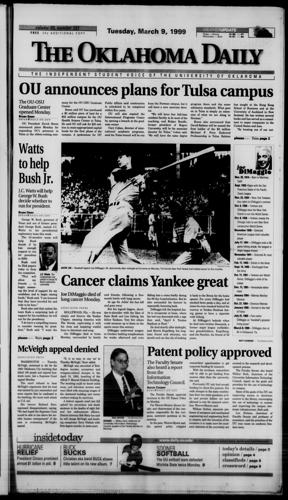
OU announces plans for Tulsa campus
- Updated
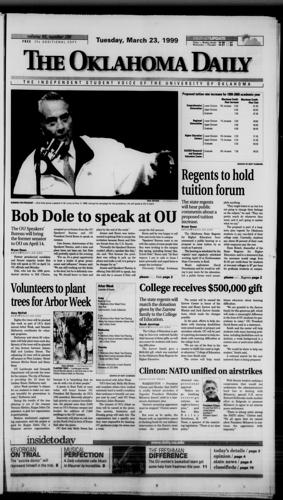
Bob Dole to speak at OU
- Updated
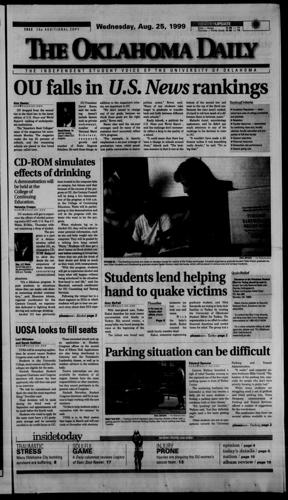
OU falls in U.S. News rankings
- Updated
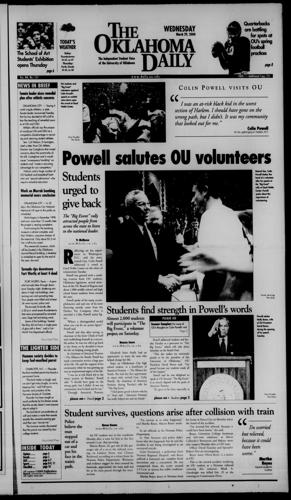
Colin Powell visit
- Updated
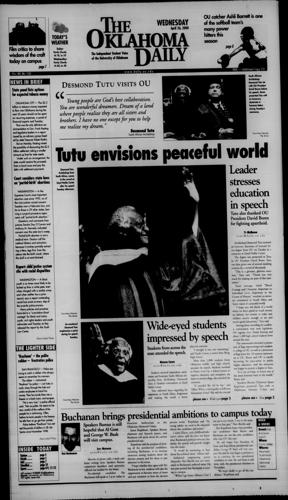
Desmond Tutu visit
- Updated
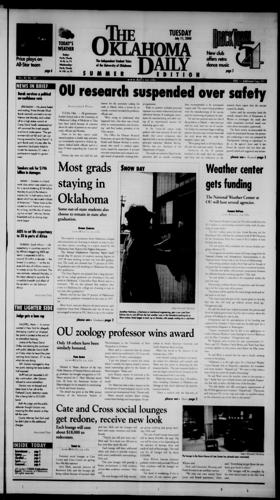
Weather center gets funding
- Updated
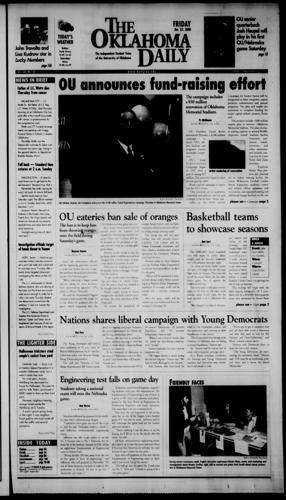
$100 million campaign
- Updated
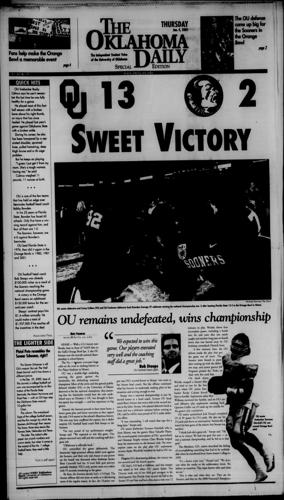
Football national championship
- Updated
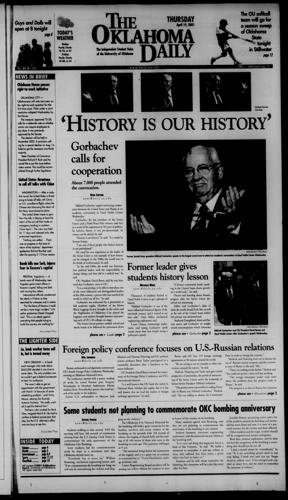
Gorbachev visit
- Updated
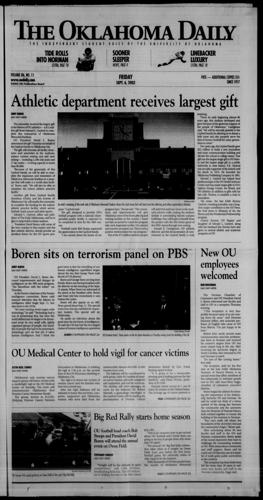
Athletic department receives largest gift
- Updated
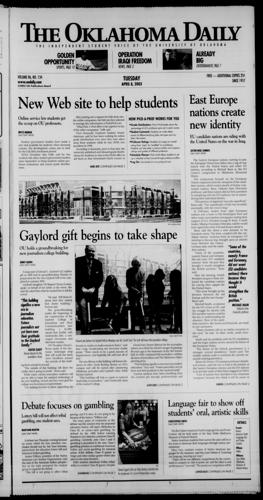
Gaylord gift begins to take shape
- Updated
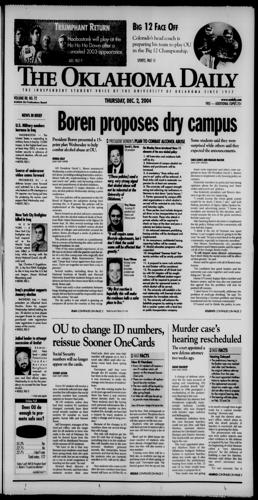
Boren proposes dry campus
- Updated
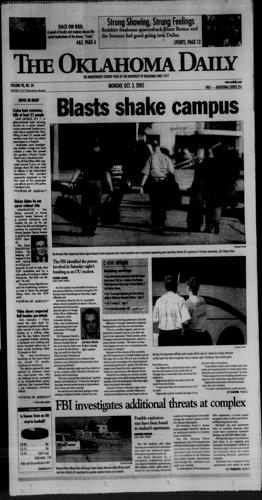
Blast shakes campus
- Updated
ExxonMobil donates for new building
- Updated
Endowments up to $428 million
- Updated
Obama appoints Boren to intelligence advisory board
- Updated
Boren marks milestone
- Updated
$14 million needed to fund new college
- Updated

$7.7M used at Boren's heed
- Updated
- Nicholas Harrison
- Updated
- 1 min to read
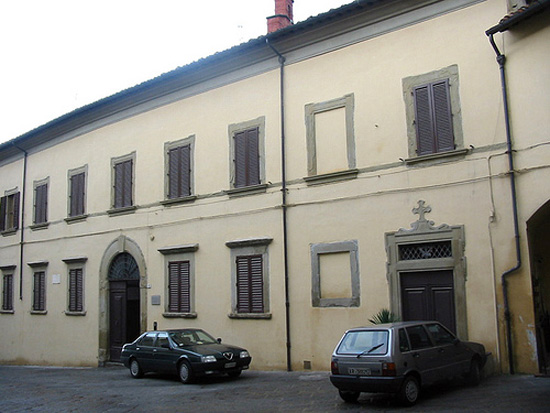
OU will spend about $14 million renovating a 500-year-old monastery in Arezzo, Italy for its study-abroad programs, according to university documents.
This means the university will have spent $16.5 million — including the $2.5 million spent to purchase the historic site, according to documents from the university’s architectural and engineering departments.
Uncommitted revenues from the university’s affinity-card agreement and Coca-Cola pouring-rights contract as well as private monies have been earmarked for the project, said Chris Kuwitzky, associate vice president and chief financial officer.
Almost $4 million in private funds has been raised thus far and no state-appropriated funds would be used for the project, OU President David Boren said.
Boren said he was confident sufficient private funds could be raised. However, revenues earned from monetizing the institution’s utilities systems also might be used, Boren said last week.
Boren said he didn’t support the purchase and renovation of the monastery when he was first approached with the idea.
“I literally threw them out the door,” Boren said. “It was one of those days when I was really, really upset about some more budget cuts from the state Capitol, and I said, ‘Get out. Don’t talk to me about that.’”
However, Boren said as he thought about the Arezzo project, he realized the purchase and renovation could provide an additional outlet for students hoping to study abroad.
The facility is expected to open in 2013 with accommodations for 45 to 50 students, three to four resident advisers and graduate assistants, and one faculty-in-residence.
It will include modern plumbing, wireless Internet, study areas and dining facilities, and a resident-life staff providing community programming.
College of International Studies Dean Zachariah Messitte said he felt the Arezzo program is an important part of the university’s educational experience.
“We hope the Arezzo program will help instill a lifelong curiosity and appreciation by OU students of other cultures, languages and the world,” Messitte said.
The precise cost of the project is still uncertain, Messitte said. However, he defended the value of the program.
“Thousands of OU students — including some of who would never have studied abroad because it would have been too expensive, too complicated or too hard to complete their major — will get their first taste of life outside of the U.S. in the years to come because of OU in Arezzo,” Messitte said.
As a former exchange student, Student Affairs Vice President Clarke Stroud said he is an avid advocate of education abroad.
“It fundamentally offers students a different view of the world not found studying on the Norman campus,” Stroud said.
- Ajinur Setiwaldi
- Updated
- 3 min to read
Fall 2010 Total Full-time Faculty
Total Full-time faculty: 1,460
White: 1,038 ( 71.09%)
American Indian/Alaskan Native: 42 (2.87%)
Asian: 157 (10.75%)
Black/African American: 35 (2.39%)
Hispanic: 47 (3.21%)
Hawaiian/Pacific Islander: 1 (.06%)
Two or more races: 7 (.47%)
Not reported: 24 (1.64%)
International: 109 (7.46%)
The representation of racial and ethnic minorities in the OU faculty is disproportionate compared with the demographics of the student population, despite affirmative action and equal opportunity plans.
Approximately 62 percent of students at OU were white in 2010, and more than 71 percent of full-time faculty members were white, according to the 2011 OU Factbook, which lists data for fall 2010.
Black full-time faculty members represented a little more than 2 percent of the faculty, and there were 35 black faculty members on campus, according to the OU Factbook. Black students represented more than 5 percent of the student population.
This falls below the average of 7 percent black college and university faculty in the U.S., according to the National Center for Educational Statistics. About 79 percent of all faculty were white.
Asian students made up more than 5 percent of the student population at OU and more than 10 percent of full-time faculty, according to the OU Factbook. The number of American Indians in the faculty, about 3 percent, was low compared to the student population, more than 5 percent.
Under-representation of minorities within faculties is a national problem as well, according to the American Federation of Teachers, which released a report to promote racial and ethnic diversity in faculty members.
Opposition to affirmative action efforts and the national trend away from creating and filling full-time tenure faculty positions are the two major national factors that contribute to the under-representation, according to the federation’s report.
DIVERSE FACULTY BENEFITS STUDENTS
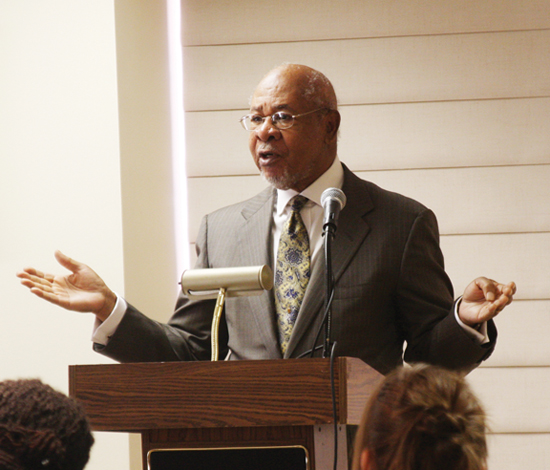
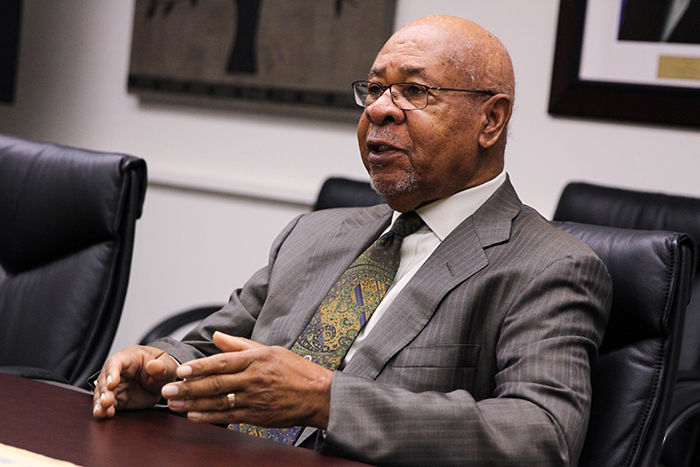
Well-educated minority faculty members, like minority staff members and students, offer the college community varying perspectives that prepare students to interact better in the community, said human relations professor George Henderson in an email.
Henderson became the third full-time black faculty member in 1967, according to his biography. He has written multiple books on race relations and diversity about OU, including “Race and the University: A Memoir” in 2010.
There is a problem with racial representation in the OU faculty, Henderson said. But the solution is more complex than simply recruiting more minorities, he said.
There are more black and Hispanic males in prison than in college, Henderson said.
“The black and Hispanic male pipeline has shrunk disproportionately,” he said.
Furthermore, there is a small pool of possible minority job applicants, and few of them are retained or promoted, Henderson said.
OU is constantly working to create and maintain a diverse culture among its students and employees, OU spokesman Michael Nash said. The applicant pool is constantly changing and only represents a snapshot in time.
FIVE YEARS WITH LITTLE CHANGE
The percentages of minorities have stayed consistent for the past five years, keeping within one percentage point, according to data from the Factbooks.
OU directors select faculty and staff based on the qualifications of the applicant and the value he or she brings to the campus, Nash said.
OU’s affirmative action plans are based on a formula, Provost Nancy Mergler said in an email. The formula attempts to determine the number of professors of a race or ethnicity or gender available in the workforce.
The formula looks at currently employed tenured or renewable professors at certain universities, Mergler said. It also considers how many people are graduating with degrees.
The percentage of minorities and women in each OU academic unit is compared with the percentage of minorities and women in the national availability pool for the discipline based on the formula, Mergler said.
Deans, chairs and directors are informed of the number needed to mirror national availability data. Meeting the national availability is only the initial goal of enriching the diversity of faculty across the campus, Mergler said.
“We are all obligated to continue to strive for greater diversity of faculty to better help our students prepare for the workforce of the 21st century,” Mergler said.
The national availability data predicts that 17 percent of the regular faculty, not including deans, should be minorities, according to Mergler’s data. About 20 percent of regular faculty at OU are minorities.
It’s dangerous to focus just on ratios and percentages of minority faculty, Henderson said.
Instead, the faculty should be viewed as a team that has a broad range of competence from acceptable to excellent, Henderson said.
Most institutions want the best available minorities for their faculty, and OU is one of them.
“It’s time for more departments to stop trying to only hire minority superstars,” Henderson said.
Diversity for minorities should look like diversity for whites: average, above average and excellent, Henderson said.
- Paighten Harkins
- Updated
- 2 min to read
Headington Hall
$75 million: estimated cost of the project
1,125,000: approximate square feet of steel in the building
230,000: total square footage
14,500: cubic yards of concrete poured
517: tons of rebar used in the building’s design
380: total student population
180: student athletes population
Source: Press release
The first batch of students to live in OU’s new residence hall moved their things into the almost $75 million building Sunday.
While the residents who moved in over the weekend were all athletes, Headington Hall is set to hold 380 students, and only 180, or 47 percent, of those will be student athletes.
The building was built with money from private donations from donors like former athletes Tim Headington, for whom the building is named, Adrian Peterson and Sam Bradford.
By intention, there will always be a majority of non-student athletes living in the new residence hall and there will be no efforts to segregate the two groups, said Kelly Damphousse, the hall’s Faculty-in-Residence.
“We’re trying to treat all of them as they are. They’re students at the University of Oklahoma living in Headington Hall,” he said.
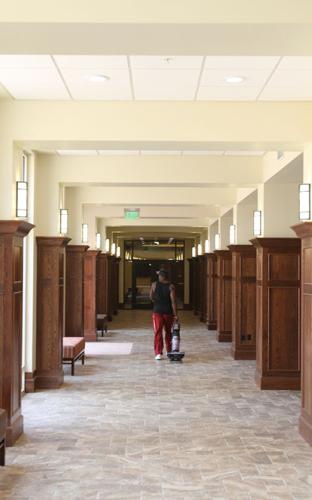
The five-story building includes an entertainment room with a 90-inch television and rows of leather lounge chairs, a game room to be filled with pool tables and ping-pong tables, as well as high-tech video gaming stations.
“[The entertainment room] is probably going to be the most popular room in the entire building,” said Bryan Hinnen, director of operations for Headington Hall.
The TV can be used to watch four different feeds at one time, Hinnen said.
“What that means is you can watch four games during March Madness, basically,” he said.
In addition to those amenities, the residence hall contains a 90-seat movie theatre, which officials for the Athletic Department hope can double as a classroom or meeting space, Hinnen said.
“This is fairly unique space for most residence halls. The majority that I’ve worked in…have [had] basements converted with old sofas that they found on Craigslist or something,” he said.
Headington Hall’s space doesn’t have old sofas, instead it’s equipped with stair-step seating and a screen that can receive a cable stream and also the stadium stream.
Hinnen hopes the space will be used to house watch parties during away games, or a place to hold team meetings. As well, the chairs have desks attached, meaning the room could be used to hold seminar classes, he said.
Students in the hall will be staying in apartment-style units with a living space and a small kitchen. They have the option of staying in two or four bedroom suites.
Coming from his old room in the Bud Wilkinson House, Oklahoma football sophomore wide receiver Sterling Shepard said he was happy with his new room and the prospect of having his own bathroom and bedroom.
“The bathroom is definitely the best thing. You get your own space. You don’t have to wait on one guy to take a shower,” he said.
The amenities in Headington Hall — including the apartment style units — are part of the reason Shepard thinks Headington Hall will be big determining factor for new recruits, he said.
“[Headington Hall is] a real big boost. That’s what student athletes look for. They look for a good facility,” Shepard said. “It doesn’t get much better than this.”
Per semester, the cost per room for a two bedroom, two bath unit housing four residents is $3,250. If you didn’t want to share a bedroom, but could share a bathroom, the cost of a four bedroom, two bath unit meant for four people is $3,500, according to the SoonerSports website.
The most expensive floor plan costs $5,000 a semester, and have two bedrooms and two bathrooms. They house two people, according to the website.
As well, students in the residence hall have to pay for a meal plan, which ranges from $1,880 for 12 meals a week in the Wagner Dining Hall, to $2,000 for 15 meals a week in the dining hall, according to the website.
Choosing the cheapest room and board options, a semester at Headington Hall will cost $5,130, 15 percent more than the cost of living in the suite-style units in Adams, Couch and Walker Centers.
Headington Hall — Housing
A Unit (two bedroom, two bath, two residents in single rooms): $5,000
B Unit (four bedroom, two bath, four residents): $3,500
C Unit (two bedroom, two bath, two residents per room): $3,250
Headington Hall — Board
12 meals per week: $1,880
15 meals per week: $2,000
Adams, Couch and Walker Center — Housing and Board
Double: $4,359
Single: $5,750
Cate Center and David L. Boren Hall — Housing and Board
Double: $3,961
Single: $4,949

- Matt Woods, Campus Reporter Ethan Koch, Campus Reporter
- Updated
- 1 min to read
OU President David Boren said the university would not return a French oil painting, stolen from its original owners by Nazis during World War II, until the matter has been decided in court.
Giving away the donated painting, called “Shepherdess Bringing In Sheep,” would set a bad precedent for the university and would not be fair to the painting’s donors, Aaron and Clara Weitzenhoffer, Boren said in a statement to the Daily.
The painting is currently on display at the Fred Jones Jr. Museum of Art.
Leone Meyer, the daughter of the painting’s former owner, filed a lawsuit in May claiming the museum is in wrongful possession of the 1886 painting “Shepherdess Bringing In Sheep,” according to court documents.
Aaron and Clara Weitzenhoffer, longtime university donors, donated the painting by French impressionist Camille Pissarro in 2000 to the Fred Jones Jr. Museum of Art.
Max Weitzenhoffer, Aaron and Clara Weitzenhoffer’s son, was 14 years old when his parents bought the painting, he said.
In the 1950s, Aaron and Clara Weitzenhoffer offered the painting back to its original who didn’t accept, OU regent Max Weitzenhoffer said.
“The owner had ample opportunity to get the painting back,” Max Weitzenhoffer said.
Max Weitzenhoffer said aside from his parents donating the painting to the museum, he has nothing to do with the case. However, Max Weitzenhoffer said Meyer’s suit doesn’t have merit.
In a similar 2007 lawsuit against actress Elizabeth Taylor, the U.S. Supreme Court allowed Taylor to keep a Vincent Van Gogh painting after an appeal from a Jewish woman who said she was coerced into selling it in Nazi Germany in 1939, according to a Reuters article.
Max Weitzenhoffer alluded to the case when he said Meyer’s suit didn’t have merit.
Rep. Paul Wesselhoft, R-Moore, protested and handed out fliers at the Warren Theater on Tuesday encouraging audiences of “The Monuments Men” — a film about saving Jewish art from Nazis in World War II — to petition Boren for the painting’s return from the Fred Jones Jr. Museum of Art to the family of its original owner.
“We know the exact date that it was stolen and we know that he owned it,” Wesselhoft said. “I think it’s the right and moral thing for OU to return this painting back to the Meyer family.”
Wesselhoft plans to boycott the museum until the painting is returned, he said, describing the painting’s presence as a “scar” on the museum.
“Even if OU wins this in the court, they will lose it in the court of public opinion because I believe most Oklahomans want the painting returned to its original owner,” Wesselhoft said.
Boren said university officials don’t want to keep any items that don’t belong to the university and will immediately comply with whatever the courts rule.
“The university and the donor are strongly opposed to the theft of art by the Nazis,” Boren said.
- Caitlin Schachter, Campus Reporter
- Updated
- 1 min to read
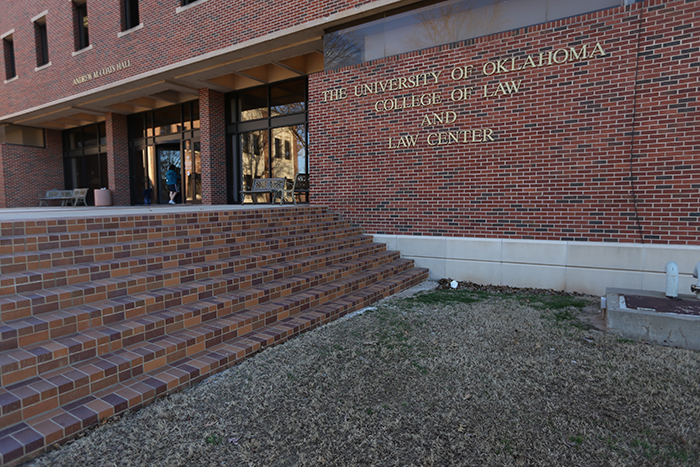
OU's College of Law jumped up 10 spots in US News & World Report 2015 to No. 58, the highest ranking any Oklahoma law school has earned in history, according to a press release.
National Jurist Magazine also named the law college a Top 20 “Best Value” Law School for the second year in a row, according to the press release.
“We have consistently kept tuition among the lowest in the country, so our students can pursue the career of their choice without being limited by excessive debt,” said Joe Harroz, the dean of the College of Law, in an email.
- Dillon Hollingsworth, Football Beat Reporter
- Updated
- 1 min to read
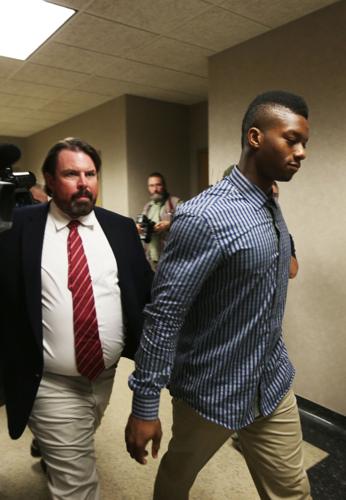
Oklahoma freshman running back Joe Mixon has been suspended from the team for the entire 2014 season, according to a statement from the university.
Mixon was charged on Friday with one misdemeanor count of acts resulting in gross injury stemming from an altercation between himself and a female student on campus corner in July.
He was arraigned Monday afternoon and released without bond, but ordered to be booked into the Cleveland County Detention Center.
President Boren accepted the recommendation of OU athletic director Joe Castiglione and coach Bob Stoops and issued the season-long suspension. Mixon will not be allowed to participate in any team activities and will be removed from the roster.
According to the statement, Mixon will be allowed to stay on as a student at the university, “with appropriate conditions,” and will be eligible for financial aid.
Castiglione and Stoops said, “As the university has demonstrated in the past, we are committed to winning the right way. As an example to others, OU sets the highest possible standards for its student athletes, coaches and staff.”
Mixon was expected to compete for playing time with returning backs Keith Ford, Alex Ross and Daniel Brooks, along with true freshman Samaje Perine, before he was suspended from team activities following the incident.
- Joe Mussatto, Sports Editor
- Updated
- 1 min to read
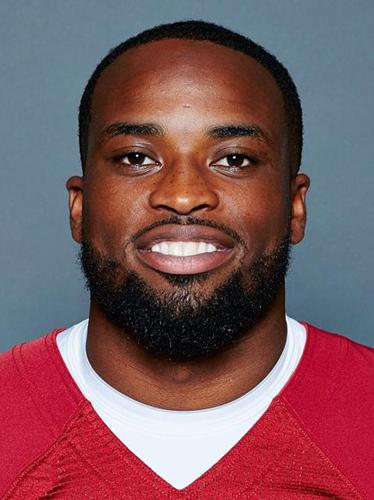
The Oklahoma Supreme Court ruled Monday to allow the university to enforce its one-year suspension of junior linebacker Frank Shannon, according to The Oklahoman.
Shannon was suspended after an alleged sexual assault in January when the school found him in violation of the Title IX sexual misconduct policy.
He had been granted a stay by District Court Judge Tracy Shumacher to remain enrolled in school and on the football team. The State Supreme Court ruled that the stay should never have been granted, according to The Oklahoman's report.
The linebacker led the team in tackles in 2013 and stood in silent protest on the sidelines during the team's opening game against Louisiana Tech.
He and his lawyer, Aletia Timmons, maintained that the university had no grounds to suspend Shannon when no criminal charges were filed against him.
The university released the following statement on Shannon on August 11 and Catherine Bishop, OU’s Vice President of Public Affairs, said nothing in it has changed following Monday’s court ruling.
“The final decision of the internal disciplinary process was suspension of the student for one year. Federal privacy law and other legal considerations prohibit the university from discussing the case further.”
Contrary to the statement, Shannon still appears on the Oklahoma football roster and at his Monday press conference coach Bob Stoops said the issue hadn’t been resolved.
The athletic department declined when asked to comment on the situation.
- Dana Branham, Campus News Reporter
- Updated
- 2 min to read
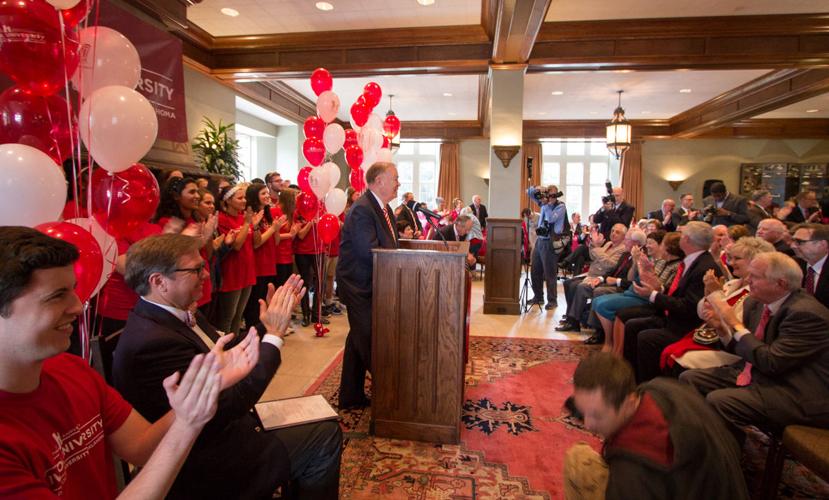
OU President David Boren took center stage Friday in Beaird Lounge, surrounded by members of the President’s Leadership Council, to announce a five-year, $500 million campaign to raise funds for scholarships, campus updates and faculty endowments.
The “Live On, University” campaign’s primary goal is raising funds for student scholarships. Over the past four years, the amount of private scholarships has doubled, but the “Live On, University” campaign intends to add another $100 million to that number, Boren said.
Boren announced the campaign at an event to mark OU's 125th anniversary.
Boren said he wants to ease the financial burden on students and families by giving more scholarships, especially because state allocations to higher education have decreased over the years.
The greatest portion of the campaign’s goal, $100 million, would go towards offering scholarships to both graduate and undergraduate students. While OU has more than doubled its private scholarships over the last five years, 57 percent of students still must take out loans, Boren said at the event.
In addition to providing scholarships to qualified students, the “Live On, University” campaign intends to raise funds for a number of other university resources, including:
- $25 million for updating classrooms and laboratories
- $20 million for creating a residential college system for sophomores, juniors and seniors to live on-campus
- Endowments for the Anne and Henry Zarrow School of Social Work, the Fred Jones Jr. Museum of Art, the Presidential Teaching Fellowship in the Joe C. and Carole Kerr McClendon Honors College, the Institute for Quality Communities, the Institute for the American Constitutional Heritage and for OU’s study abroad program and campus in Arezzo, Italy. Combined, these endowments total just over $34 million.
“We stand in danger of not developing some of the great potential of this state and this country by not allowing members of this generation to come to this university and to hone their talents as they should,” Boren said. “So, part of this campaign is a statement from all of us — we will join together and we will not let the doors of opportunity swing shut at the University of Oklahoma.”
Boren also announced a new parking garage, which was met from the audience with cheers and applause.
Throughout the speech, Boren introduced several donors who had already committed to various parts of the campaign’s plan during the “silent phase,” where community members were contacted privately and asked to donate to the campaign.
Before closing his speech with the singing of the OU chant, Boren explained the meaning of the phrase “Live on, university,” which appears at the end of the chant.
“These words at the end of the chant, ‘Live on, university,' they’re not words of assurance. They’re words of determination. They are words to which we are challenged. They challenge us that this university should live on, stronger, better and with more opportunities than ever before,” Boren said. “Today, we are sending out a message: We embrace that challenge. Our university will live on stronger and better than ever because of all of you."

- Paighten Harkins, Digital Managing Editor
- Updated
- 4 min to read
After OU was sued for housing a piece of art that was looted by Nazis during World War II, The Daily discovered that the university's museum currently has 40 pieces of art with Nazi connections.
The Fred Jones Jr. Museum of Art currently has 40 pieces of art with Nazi provenance, according to the Nazi-Era Provenance Internet Portal and confirmed in a statement from OU officials in an email from OU press secretary Corbin Wallace.
MORE: Find out which 40 pieces of Nazi-Era provenance art are housed in Fred Jones Jr. Museum of Art
The Nazi-Era Provenance Internet Portal is a searchable database of items in U.S. museums that could have ties to Nazi Germany during the times when Nazis were looting art from occupied countries. The Nazi era is typically considered between 1933 and 1945, when World War II ended.
To be added to the registry, a piece must have been created before 1946 and acquired by the museum after 1932, changed owners between 1932 and 1946 and it must have been in continental Europe during those years, according to the database’s website.
The database stores information from 175 self-reporting museums. The database is a registry of 29,031 individual items with Nazi provenance.
The piece involved in the lawsuit is a painting by French impressionist Camille Pissarro, “Shepherdess Bringing in Sheep (La bergère rentrant des moutons).” Leone Meyer filed suit against OU in May 2013 to reclaim the painting, which was stolen from her family by Nazis Occupation forces and the Vichy Regime in Nazi-occupied France sometime between 1940 and 1944.
“Shepherdess Bringing in Sheep” was donated to the Fred Jones museum by Aaron and Clara Weitzenhoffer in 2000. Aaron and Clara Weirzenhoffer are the parents of OU Regent Max Weitzenhoffer. The Weitzenhoffer College of Fine Arts is named after the family, and the family are longtime university donors.
Some of the items with Nazi provenance in the museum include “Portrait of Alexander Reid” by Vincent van Gogh, “Riverbank at Lavacourt (La Berge à Lavacourt)” by Claude Monet and three other pieces by Pissarro: “Nude with Swans,” a lithograph of “Nude with Swans” and “The Meadow at Eragny (Le Pré à Eragny),” according to the database. All of those pieces were donated by the Weitzenhoffers.
The statement said many pieces in the museum’s collections are gifts to the museum, and all pieces reported on the database were gifts.
Nazi-era provenance and museums
Because of the breadth of art looting during the Nazi era, it is fairly common for museums to have some pieces of art in their collections with some Nazi provenance, said Dewey Blanton, American Alliance of Museums strategic communications director.
The looting, which confused the provenance of many pieces of art by switching hands so many times, and the economic boom for the U.S. following World War II are two factors that contribute to the prevalence of art with Nazi-era provenance in American museums, Blanton said.
During the economic boom, many wealthy Americans began collecting art, which was now available in large quantities after the war.
OU’s statements echoed Blanton’s, but it added that before the mid-’70s record keeping was inconsistent for the pieces that flowed into the U.S. after World War II, meaning many of the wealthy Americans who bought these suspect artworks were unclear of the art’s origins.
In many cases, like in the case with “Shepherdess Bringing in Sheep,” the piece’s new owners died and the works were donated to museums like Fred Jones Jr., Blanton said.
The portal was created for just that reason, Blanton said.
The portal serves a two-fold purpose: to help museums that may have art with Nazi-era provenance and to help heirs find pieces looted from their families.
“It’s not easy work. As you can imagine, there’s a lot of investigative work that goes into this,” Blanton said.
When asked how OU specifically deals with art after finding it has Nazi-era provenance, the statement said the museum uses donor-completed and provided provenance research. If museum officials find it necessary, they will conduct additional provenance research.
The statement said that museum officials are unaware of any pieces of art “that have established ownership other than in the university or the OU Foundation.”
Meyer’s lawsuit
Meyer’s suit against the university prompted criticism from community members and lawmaker Mike Reynolds, who warned of future lawsuits regarding the different pieces of Nazi-era provenance art housed at Fred Jones Jr.
Since then, Emily Neff, former museum director, resigned on Oct. 6 after serving in the position since January 2014. OU President David Boren said her resignation is not linked to the lawsuit.
Following Neff’s resignation, Reynolds sent a letter to the American Alliance of Museums, formally known as the American Association of Museums, requesting an investigation into Fred Jones Jr. because of potential violations to the association’s ethics and standards code.
Reynolds also sent a letter to Boren asking him to clarify the circumstances surrounding Neff’s resignation, which came a day after Reynolds had asked the university to clarify its position involving the painting.
In May, the U.S. District Court for the Southern District of New York dismissed Meyer’s suit with the university for lack of personal jurisdiction, since the case involved people living in Oklahoma, not New York where the case was based, according to provided court documents.
- Kate Bergum, Assistant News Editor
- Updated
- 2 min to read
Students took the stage and unleashed their voices Thursday evening as they discussed their experiences as black members of the OU community.
The OU Unheard town hall meeting was held at 8 p.m. Thursday in George Lynn Cross Hall, Room 123. During the meeting, students who organized a unity march Wednesday afternoon went through their list of grievances with the university, which they will be discussing with OU President David Boren Jan. 21.
“We on this stage are unheard,” mechanical engineering junior Meagan Johnson said as the meeting began.
The students of Unheard told attendees that this was their chance to discuss the seven grievances that the group had outlined.
OU Unheard decided to hold the meeting because they wanted to strengthen their argument with the voices and opinions of other students before they went into Boren’s office next week, accounting junior Naome Kadira said.
“We wanted to know that when we go in, we go in strong, we go in united, and we go in as one,” Kadira said.
The first grievance that the students discussed was the lack of black faculty at OU.
There are few black professors at OU, especially in the STEM departments, mechanical engineering junior Alexis Hall said. Throughout her time at OU, she has never had a black professor within her major, she said.
The students then talked about low retention rates among black students at OU—often due to a lack of financial aid and support on campus, group members said.
Johnson has been at OU for six semesters, and she can name at least two black students who have left the university during each term, she said. They either couldn’t afford to keep attending or did not feel welcome on campus, Johnson said.
Directly related to low retention, the students of Unheard talked about a lack of financial aid for black students, many of whom need to work throughout their college careers to make it through.
“Our grievances, they’re a domino effect,” Kadira said. “One affects the other.”
Hall recounted times that she had been to the financial aid office and had been turned away. It was discouraging to meet with white financial advisers who she felt couldn’t fully understand her situation, Hall said.
In addition to funding, supportive programs for black students are also necessary to make all students on campus feel welcome, the students of Unheard said.
Health and exercise science junior Chelsea Davis talked about how many of her friends in engineering credit the Multicultural Engineering Program as the reason they are still in school. She wishes the College of Arts and Sciences had a similar program, she said.
The students then went on to talk about the Sooner experience as black students.
“OU prides itself as being a family,” Hall said “But are black students included in this family?”
As one of few black students, it easy to feel excluded from OU’s family, Johnson said.
Many students do not understand black history or culture and will act in insensitive or offensive ways, Kadira said.
Black representatives are also missing from OU’s executive hierarchy, and there is a lack of funding for multicultural organizations such as the Black Student Association, the students said.
Johnson wants OU to hire a vice president devoted to diversity so that minority students will have more of a voice within OU administration, she said.
After the discussion of the grievances, the leaders of Unheard collected notecards that had been distributed to the attendees at the beginning of the event for them to write down questions or discussion points.
The cards spurred further discussion of how to recruit a more diverse student body, cultural appropriation on campus and stereotypes.
Little things, such as when people assume that black students all like rap music or know all the lyrics to hip hop music, are painful and frustrating, said Erin Thornton, an environmental engineering graduate student who was in the audience.
“The black experience is different for every individual,” Thornton said.
After the meeting, Kadira felt pleased with the turnout and confident for the group’s meeting with Boren, she said.
“This is only the beginning,” Kadira said. “This is not the end of us. We are unheard, but we will be heard.”
- Andrew Clark, Staff Reporter
- Updated
- 1 min to read
OU President David Boren has broken his silence about a previous meeting with student minority group Unheard and other senior leadership yesterday in a statement:
“The meeting was extremely productive and I was very impressed by the thoughtfulness of the points raised by the students," Boren said in the statement. "I am now scheduled to meet with the Dean's Council at their next meeting to urge them to be proactive in working to diversify the faculty and staff of each college. I have also asked Lisa Morales and Dean Landers to come with me to the Dean's Council to make a presentation about the multicultural program at the College of Engineering, so we can begin the process of creating similar programs at other colleges.
"In addition, I am working with the Office of Student Affairs to increase diversity for Camp Crimson, and to improve minority representation on all Campus Activities Council committees and programs, including areas like homecoming and Camp Crimson.
"I have also already met with the leaders of Recruitment Services to intensify their efforts to recruit a diverse student body and to further engage our current students and alumni in the process. As reported in the OU Daily, other groups on campus including colleges are increasing their efforts on diversity as well as improving diversity training for their staffs.
"By working together and being sensitive to each other's needs, I am convinced we can make our university community even stronger and more inclusive."
- Andrew Clark, Staff Reporter
- Updated
- 1 min to read
Student advocacy group Unheard is giving all students a chance to have a voice and express themselves with its Letter Writing Campaign event.
It is welcoming students of all backgrounds and races to voice their thanks, concerns or any other thoughts to the University of Oklahoma senior administration.
“Any and all feelings [students] want to express to senior leadership, that’s what the campaign is for,” said Chelsea Davis, Unheard member.
Davis said the primary receivers of these letters will be the deans of each university college, but letters to any prominent leader on campus will be accepted. She is also confident that the receivers of these letters will take them with open arms.
“We’ve gotten a lot of outreach from different senior administrators at the university,” she said. “So I feel like they are listening and we do have their attention.” She said she is very proud of the way the university has handled Unheard.
Davis also said she hopes students take this opportunity to be heard and to show the addressees that there are more than just the members of Unheard who have things to say to them.
“We hope students come out and tell about their own personal experiences and speak on their own behalf,” she said. “We want to give that opportunity to as many students as possible.
Davis said the goal is still the same as all other Unheard events: to raise awareness and to be heard.
“We keep pushing for awareness so that nobody can say they didn’t know,” she said.
Unheard’s event will take place at 7 p.m. February 23 in the Wagner Hall Writing Center.
- Supriya Sridhar, News Reporter Andrew Clark, Staff Reporter
- Updated
- 2 min to read
NBC special correspondent and former anchor of NBC Nightly News Tom Brokaw accepted the Gaylord Prize for his distinguished career and display of ethics in the field of journalism Thursday.
The award ceremony was the largest luncheon in the history of OU, said OU President David Boren.
Boren recognized Brokaw as an American icon because “we trusted what [he] had to say.”
“[Brokaw] built American journalism, built its credibility and maintained its credibility in very difficult times,” Boren said. He cited Brokaw’s coverage of Ronald Reagan’s first run for presidential office and his trusted reporting during the Watergate scandal.
At the event, Brokaw spoke on the transformation of the media today, saying that he did not imagine a day where the newspaper would become less and less popular in providing daily news to audiences.
There are now countless sources for people to get their news and that people should make sure what they are reading is reliable, Brokaw said.
“There are a lot of guys sitting out there in their underwear in the basement who couldn’t get a date to the senior prom (just trying to get their voices heard),” Brokaw said. “And they could give a damn about the facts.”
Brokaw then talked about his award. A portion of his winnings from the Gaylord Prize will go toward the Committee to Protect Journalists, Brokaw said. Brokaw is on the advisory board for the committee.
It “sickens” him to hear what is happening to freelance journalists across the Middle East, referring to the multiple beheadings journalists have received by terrorist organizations such as ISIS, Brokaw said.
“I get very emotional when I think about the brave men and women … who are out there getting captured … and beheaded,” Brokaw said.
Brokaw also told the audience about his childhood in South Dakota.
“My father was a third-grade dropout,” Brokaw said. “[My parents] put together a working-class life.”
After giving his back story, Brokaw explained his fascination for Oklahoma. In his professional career, no city has responded greater to tragedy than Oklahoma City after the Alfred P. Murrah Federal Building was bombed in 1995, he said.
“Oklahoma understood that this was a time for it to come together and to be greater than the sum of its parts,” Brokaw said.
At the luncheon, Joe Foote, dean of Gaylord College of Journalism and Mass Communication, also recognized the various student media outlets of OU and their accomplishments.
“Our students are making waves throughout the country,” Foote said. “For our students, the classroom is a starting point.”
Boren also talked about Gaylord’s success.
“[Gaylord College] is firmly entrenched in the top 10 colleges of journalism in the country,” Boren said.
Boren gave thanks to the Gaylord family, members of which were present at the ceremony, for kick-starting Gaylord by transforming it from a school to a college.
“[The Gaylord family] and journalism in Oklahoma are synonymous,” Boren said.
He later asked the family members to rise and for the audience to recognize them for their role in the triumph of the college.
The ceremony ended when ABC foreign correspondent and OU professor Mike Boettcher came onstage and gave Brokaw the jacket Brokaw wore while covering the fall of the Berlin Wall as a gift. Brokaw borrowed the jacket from Boettcher because he did not have a jacket to wear before the broadcast of the Berlin Wall falling.
“I had no idea when I came to Oklahoma today that I was going to need this kind of a top,” Brokaw said.
After the ceremony, Brokaw left to go to a small question and answer session at Gaylord College which had to be shortened because he had to catch a flight soon afterwards.
This article was corrected on Feb. 27 at 1:15 p.m. to reflect that Brokaw is a member of the advisory board for the Committee to Protect Journalists, not a founder of the committee.

- Staff Reports
- Updated
- 1 min to read
Editor's Note: This story contains graphic and racially-charged language.
OU's Sigma Alpha Epsilon fraternity members have been allegedly implicated in a video showing members participating in a racist chant, and the fraternity is now under investigation.
The Daily received an anonymous tip about the video in an email Sunday evening. Shortly after, the video stirred up controversy online as OU students, including members of minority rights group Unheard, chastised the chant's racist language.
The video shows men on a charter bus singing a chant indicating that black students, which the men refer to with a racial slur in the chant, could not "sign" with the fraternity. The chant also alluded to lynchings.
Although Interfraternity Council President Payne Parker did not confirm whether OU's Sigma Alpha Epsilon fraternity members were the men depicted in the video, he did say IFC would conduct an investigation.
"The OU Interfraternity Council does not tolerate any of the behavior shown in the video," Parker said in an email.
Since the video was published, Sigma Alpha Epsilon's national fraternity Twitter account tweeted that they will also conduct an investigation.
We are investigating the details and will sanction those who are responsible.
— Sigma Alpha Epsilon (@sae1856) March 8, 2015OU President David Boren has also spoken out against the men in the video in a statement and on Twitter. He said OU is conducting an investigation.
"I have just been informed of the video, which purports to show students to show students engaging in a racist chant. We are investigating to determine if the video involved OU students. If OU students are involved, this behavior will not be tolerated and will be addressed very quickly. This behavior is contrary to all of our values," Boren said in the emailed statement.
If the video is indeed of OU students, this behavior will not be tolerated and is contrary to all of our values. We are investigating. - DBo
— David Boren (@President_Boren) March 9, 2015
This story will be updated as we get more information. For news tips email dailynews@ou.edu.
- Staff Reports
- Updated
- 1 min to read
OU President David Boren has updated his statement on the situation surrounding Sigma Alpha Epsilon from his Twitter account:
"To those who have misused their free speech in such a reprehensible way, I have a message for you. You are disgraceful. You have violated all that we sand for. You should not have the privilege of calling yourselves "Sooners". Real Sooners are not racist. Real Sooners are not bigots. Real Sooners believe in equal opportunity. Real Sooners treat all people with respect. Real Sooners love each other take care of each other like family members.
"Effective immediately, all ties and affiliations between this University and the local SAE chapter are hereby severed. I direct that the house be closed and that members will remove their personal belongings from the house by midnight tomorrow. Those needing to make special arrangements for positions shall contact the Dean of Students.
"All of us will redouble our efforts to create the strongest sense of family and community. We vow that we will be an example to the entire country of how to deal with this issue. There must be a zero tolerance for racism everywhere in our nation.
President Boren"
Boren has scheduled a press conference for 11a.m. in front of Evan's Hall.
Updated statement attached - DBo pic.twitter.com/xxfiJwCh0P
— David Boren (@President_Boren) March 9, 2015
- Staff Reports
- Updated
- 1 min to read
In a statement released through his Twitter account, OU President David Boren announced that two students "identified as playing a leadership role" in Sigma Alpha Epsilon's racist chant video have been expelled from the university.
The two students were not identified in the release.
Read his full statement:
I have acted today to expel two students who were leaders in the singing of a racist chant. See press release - DBo pic.twitter.com/VypOiVqXi7
— David Boren (@President_Boren) March 10, 2015
- Andrew Clark, Staff Reporter
- Updated
- 1 min to read
OKLAHOMA CITY — Kyle Harper has been named the Senior Vice President and Provost for OU's Norman campus.
OU President David Boren announced the selection at the OU Board of Regents meeting Tuesday.
“Dr. Kyle Harper is already recognized nationally as an outstanding scholar and will provide excellent leadership as a provost,” Boren said in a press release statement.
“It is an honor to accept my appointment to the position of Senior Vice President and Provost at the University of Oklahoma,” Harper said in a statement in the same release.
Harper will officially take over for former provost Nancy Mergler, who resigned last June to return to teaching. She served as provost for almost 20 years, according to the release. Harper has served as interim provost since her resignation.
- Paris Burris, Campus News Editor
- Updated
- 1 min to read
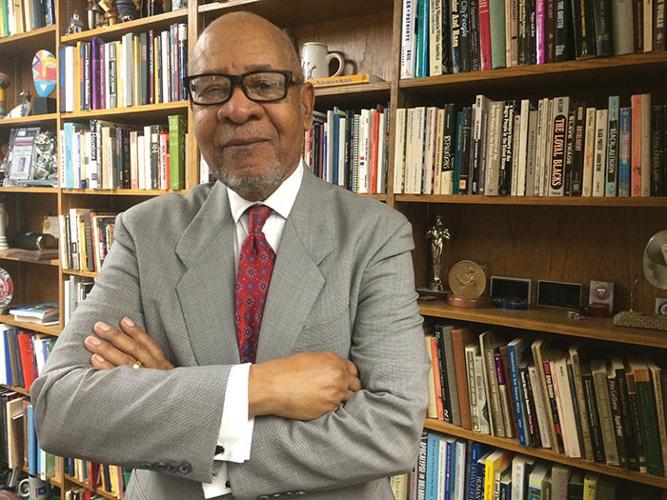
In the midst of racial tension, OU professor emeritus George Henderson sees a saving grace: change.
OU's Sigma Alpha Epsilon chapter was terminated in response to a leaked video that shows its members chanting racial slurs. The situation has made national headlines.
Reactions to the closure of SAE from students have been overwhelmingly positive, and student minority group Unheard was joined by a cluster of students at a peaceful protest the morning after the news broke.
"What I'm seeing now is what I hoped would happen," Henderson said.
Henderson joined OU in 1967 as the third full-time African American faculty member. He and his wife, Barbara, were the first African Americans to own a home in Norman, according to his OU biography.
He can relate to students.
"We had our time, we had our day, we had our targets," he said. "Today, the students are saying 'It's our time, it's our day, it's our place, it's our house, and we're going to help clean it up.'"
Society has changed since joining OU, Henderson said. But things still seem to come full circle.
"The Unheard individuals are doing some of the things that the Afro-American Student Union did back in the late '60s," Henderson said.
Despite the step back, Henderson said this is a pivotal point for fighting against racism.
"The arrogance of the individuals who were spewing that racist stuff was to think that everybody there agreed with them, or they didn't care whether they agreed with them — that's even worse," he said.
"But the unsung heroes are the individuals on that bus who videoed it and then leaked it," he said.
As far as where to go from here, Henderson said, the students are already there.
"This is our moment of truth," he said. "We're at a crossroads. We can move on from here and say, 'OK, it's all done.'"
But this isn't the case.
"It is almost as if, symbolically, the torch has been passed from my generation to this generation and they're holding it high," Henderson said. "They're shining the light on racism."
- Staff Reports
- Updated
- 1 min to read
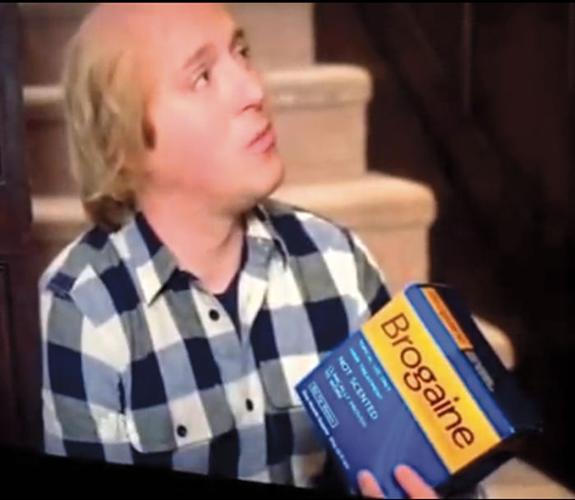
This weekend's episode of Saturday Night Live featured a brief sketch called "Brogaine," a product for hair loss among "college-age guys."
The skit listed causes of stress that might lead to hair loss, including midterms, nerds, the frat dog potentially being alcoholic, and last: "You chanted the N-word in a viral video."
The last on the list was clearly a jab at OU. The university was in the national spotlight when a video of Sigma Alpha Epsilon members singing a racist chant surfaced earlier this month.

- readfrontier.com
- Updated
- 1 min to read
Federal court records show the University of Oklahoma has reached a proposed settlement in a lawsuit filed by a French woman who alleged the school’s art museum housed a painting stolen from her father by Nazi allies during World War II, The Frontier reported Wednesday.
A lawsuit filed in Oklahoma’s Western District of federal court by Léone Meyer had sought the return of an 1886 Camille Pissarro oil painting titled “La bergère rentrant des moutons” (more commonly referred to as “La Bergère.”) Meyer initially filed the lawsuit in 2013 and amended it in July.
Court records indicate Meyer and university officials reached a proposed settlement after a Nov. 9 meeting in New York City to negotiate the painting’s return.
Read the full story on readfrontier.com
- Emma Keith, news reporter
- Updated
- 13 min to read
George Henderson has been a powerful figure for change at OU for almost half a century. When Henderson joined OU’s faculty in 1967, his family became the first African-American family to purchase a house in Norman.
Since then, Henderson has been a trailblazer for the advancement of diversity and racial relations at OU, establishing the university’s Department of Human Relations in 1970. In his 49 years at OU, Henderson has seen the university move through triumphs — like the civil rights movement and desegregation — and lows, such as the 2015 SAE scandal.
Here, Henderson reflects on the changes he’s seen at OU since 1983 — the last time Ohio State and OU met up.
Q: Can you tell me about what the environment at OU was in 1983 in regards to racial relations and diversity?
A: The '70s was the foundation — actually the '60s. I came in 1967, and somehow in 1967 the black students created the Afro-American student union. And that was the beginning of the so-called civil rights movement on this campus. They protested such things as a lack of minority faculty and staff and coaches and just an absence of people of color. They protested the fact that the dorms were racially segregated — people were segregated according to their race in rooms. They protested the fact that it was a hostile community on campus and off campus in the surrounding community.
That was the '70s. The '80s was a continuation. The university in the '80s — ’83 and the '80s — was really the best of times and the worst of times. It was the best of times in terms of students of color and other groups coalescing and really becoming allies. And when I say the students coalescing, I mean not just minorities, but also a substantial number of white students. We could not have had a successful movement without the white students who supported us and faculty. That was the best of times.
The worst of times was that the individuals as a whole that they were indeed protesting and challenging coalesced to try to maintain the status quo. So what was it like? Oh my goodness, take your pick: What side of this issue do you want to be on?
Obviously, I was on the side of change. And change in the '80s was very interesting for this reason: The people who were in the shadows academically — I’m talking about gays, lesbians, women, even Native Americans, Latinos and Hispanics — in the '80s, they said, ‘What about us?’ Finally we got it. It was a time in which the Human Relations department offered the first courses that focused specifically on women. I happened to be the chair of the department. We hired the first male full-time secretary at the University of Oklahoma. I chaired the gay alliance on campus so that they could have space, a meeting space. We were a hub of change, we were a hub of protest, we were a hub of coalitions and we were also a hub of separate, but unequal, relationships. The beauty of Oklahoma — people ask, ‘Well why do you stay so long?’ And I say, ‘Well, probably couldn’t get another job’ — that wasn’t it, really. ‘Why do you stay?’ To be very honest, I could not have found a better group of students and a more loyal group of colleagues and faculty committed to change in this place of all places — in Oklahoma. It was still a frontier, and in many ways we were the Sooners in terms of race relations: staked out our territory in places that others had claimed as their own, and we fought for it.
What was it like? With all of our differences, one of the few things that brought us together happened to be what happens on Saturdays when we have home games: the football team. We seemed to set aside whatever differences we had; we’d go in the stadium and cheer. We even sat next to individuals who indeed were not really friendly, and we cheered together. It was a promise of what could be. And some of us wanted more than just a Saturday football game, or a lecture/concert series to do this. We wanted it to be a way of life. So the '83s and '84s and '85s was a time in which all of the groups were pushing for more equality — exciting, challenging.
Q: What was the attitude of your opposition like?
Not very covert, very overt. It was not uncommon to see the Confederate flag flying out of some windows or just hanging in some windows. It was not unusual for students of color who were visibly students of color, in terms of their skin complexion, to be called — pick a word. What word do you find offensive? If you were a student of color, they heard it. It was not uncommon for the sidewalks to be chalked with all kinds of derogatory things. It was not uncommon for the walls in almost every toilet facility on this campus to have derogatory writings on them.
Q: When did you see that attitude start to fade into the background a little bit?
A: You know, I can’t pinpoint a specific time because we were gradually making changes. You win a battle, you lose a battle. You make a change, you keep a change. It’s such a gradual process. It’s kind of like someone asked, ‘When did you know you were an old man?’ I don’t know, it was a gradual process. I woke up, and I looked in the mirror, and I said, ‘Whoa, who is this guy?’
And I guess, when you ask the question, ‘When did it happen?’ — it’s still happening, so I can’t say that the change occurred because what we are about in Human Relations is a process of continually changing. What did I notice? I noticed more students, at least in the '70s and the '80s, were able to stand up and say, “Not only do I have a voice, but I will express my voice even if you disagree with me.” But most people don’t realize that in our classrooms, for the few individuals who were really, really committed to racial integration — not just desegregation, not just putting the bodies together, but having the bodies interact — it was an environment in which individuals on both sides of the racial divide felt free to express their opinions and did it in a way that was very civil most of the time. For someone like me who was involved in the civil rights movement in Detroit before I came here and committed to racial integration and committed to — when we sang ‘black and white together, we shall overcome,’ it had significance. When we started singing that on this campus, it also had significance. The change? Gradually. For people like me who wanted everything yesterday, it was never going to happen fast enough. But for individuals who really understood the culture — when it’s embedded in the culture, when it’s endemic, it takes an awful long time to see the change. But it was happening. It was happening in ways that — for example, our family was the first black family to own a home in Norman. I don’t know exactly when I started saying when I was out of town, ‘I can’t wait to get back home to Oklahoma.’ For a long time for me, home was still Detroit, because I felt like a stranger in a strange land. Somewhere in my interactions, mostly with students, I would say, I started saying, ‘I’ll be glad to go home to Oklahoma.’
And it was also a time that change occurred this way ... when we stop thinking about ourselves as unrelated, not interdependent individuals and started viewing ourselves as part of a community, that was the first step.
But the next step is we started thinking about one another as being brothers and sisters, and maybe fathers and grandfathers, and we start thinking about ourselves as being in a family called the University of Oklahoma. It’s interesting because, years later, we would get a president called David Boren who would start emphasizing the family concept. Well, in the '80s, with our allies, we referred to one another as brothers and sisters, and that prepared us for Boren — for David and Molly. It really prepared us for the family.
What was it like? I don’t know, maybe I and others like me were like the moth that flies around the flame, getting as close as you can, afraid that sometimes you’ll go too close, and you’ll burn, and you’ll fall. We did burn and fall many times as we flew around the flames of racism. But sometimes we extinguished that flame, and it felt good. I guess what I’m trying to say is that in the '80s on this campus, there was a growing feeling that the Pledge of Allegiance really meant something. “One nation, indivisible, with liberty and justice for" — it was that last word that we were struggling with and trying to find a way to make it operative. And the “all” became at first a small nucleus of individuals, and then it grew, and it grew, and suddenly it was a large minority here. It felt good.
Q: How have you seen resources, such as classes and student organizations, increase for students of color and minority groups?
A: If you look at the old OU Daily’s, if you look at the yearbooks and the others, you’ll see a not-too-subtle phasing in of people of color and different kinds of diverse organizations being represented. It was like a change that was just flowing. Not a tidal wave, nothing too drastic, but slowly there were ripples, and you could start seeing in school newspapers photos of people of color. And they were not all football or basketball players, and that felt good.
A few organizations, very few, started deciding that it was time to open up membership to people who were not just of one racial or ethnic group. That was slow, but it was happening.
Q: Other than the SAE incident last year, have you seen any other specific and major instances of racism in your time here?
A: No, I have not because most races are fairly sophisticated. It’s more civil now. People are more discreet and more careful, except, for example, SAE. In terms of singing those songs, those songs were not new. It wasn’t something that the young men woke up one morning and said, ‘Let’s create a song and sing it on the bus.’ Oh no, no, no. And it wasn’t just one house, it really wasn’t just one house. So if you ask if I’ve heard or seen: no, because individuals are careful now. And what’s been very helpful is that the organizations who indeed started integrating and bringing in more students of different racial and cultural groups, they then started changing somewhat.
That’s not what worries me now. What worries me today is that almost everyone coming to the University of Oklahoma can tell you what they should be doing. We talk a good diversity game; we talk a very good inclusion game. We bring in smart people. If you come to the university, you know how to give the answers to the question. But do you know how to behave in a way that will illuminate the question, and say that you live what you say you’ve committed to? That’s the next phase that we have to go through. More individuals talk about what we ought to and must do — it’s how we do it within the classrooms. The revolution that I see now — in all of my classes, every single one of the — the students may enter as strangers, but after the first night, they no longer are strangers, because they’ve had the opportunity to interact with one another. We don’t really get into the subjects until we’ve gotten into one another, and accept the relationship that, in this class, we are family. We can disagree, but let’s do it in terms of substance, not stereotypes and generalizations. Let’s talk about it.
But I still see individuals and clusters of individuals ... pick an eating place on campus. You still see clusters. But you know, you also see integrated clusters, some multiracial, multicultural clusters. Not wholesale, but enough to say, ‘Yay, OK, the family’s changing.’
Q: And that wasn’t something that you would have seen in 1983?
A: Oh heavens, oh no. No, you would not have. And in ‘83, it was a time in which in interracial activities, for example, to see an interracial couple walking down the streets or across campus, people would kind of look and some of them would stare and frown, and others would just say those obscene things. Not so much an event anymore. You pick a place, and you go and see interracial couples, especially if there are interracial babies — I mean, hey, you’re still looking. And if you’re going to comment, you comment, ‘That’s a cute baby.’ But the race is not a significant aspect of it now as it was before — that was, you didn’t see that.
Q: How have you seen the demographics of OU change since ’83?
A: Ah, the demographics is very interesting. I think that there is justice in demographics if you allow them to play out. The University of Oklahoma, which literally translated would be “the university of the red man,” we’re beginning to see more American Indians or Native Americans who are coming to the university. We’re also beginning to see more Latinos and Hispanics coming to the university. And so we’re beginning to see this shift, which means we’re beginning to recognize that race relations is not just black and white — it’s all of the different groups. And I see that shift. What I don’t see, however, is a shift in such a rapid way that we get past the point of thinking that the major players in race relations dramas are always black people and white people. I don’t see, on this campus or many other campuses, that all of the ethnic groups can be major players in the drama of change, and it doesn’t have to focus on just one group or two groups. There are issues within all groups; we’re gradually learning how to deal with those issues.
Q: How have you seen faculty attitudes toward diversity and inclusion change?
A: This might surprise you. When I came in ’67, through the '80s, we valued as a university teaching more than anything else — this was an excellent teaching place. So therefore, as teachers, we were not so much driven by our academic discipline in terms of research, we were driven by just the quest for knowledge. And so, we were not in silos — the physical, the social, the fine arts and so forth. People were not in silos, we were together.
I think as a whole, faculty members knew more individuals across campus than they do today, which meant also it was a time in which it was not uncommon to go to a student union and see faculty members, either from different departments together, or faculty members with students. There was an awful lot of that going on. I don’t see much of that anymore. Maybe that’s the price of progress — I hope not.
Q: What more would you want to see happen at OU in terms of progress?
A: I would want us to be as diverse as we possibly can with the resources that we have. I believe that we teach best what we live, and if we indeed have individuals who represent broad spectrums of race, gender, ethnicity, abilities and disabilities — if we have the broadest representation of our family, in all of the positions that are available, if indeed they want to be there, then we will have achieved that promised land that I’m not going to see. I’m not going there with you.
It’s up to the next generation to move us just a bit close to that. So, I would like to see us not just talk about diversity, but live it. And the best example that I can give you happens to be my family. We have a portrait in our home of four generations of us. The first two generations are African-Americans. The third and the fourth are multiracial, biracial. As our family has grown, that’s what I want to see happen more. I want us to be at a place where you really can’t worry what your race or ethnicity happens to be because you’re more concerned about moving together as a family and being better.
What would I like to see happen? I would like for us to reach a point where we no longer have a need for ethnic studies, women’s studies, special studies of any kind, because they will be an integral aspect of everything that we teach here when appropriate. That’s what I would like. Then we would be living what we say we’re committed to.
Q: Practically, how do you see some of these things playing out?
A: Time doesn’t heal anything; people make changes. But we tend to make changes slowly within institutions like universities. Maybe we’ll reach the point where we do it like we learn athletics; we learn our positions, and we play it well, and we’re not concerned about what the gender or the other kinds of identifiers are, as long as the person is playing their roles well.
How do you get there? You just do it. Almost every year in the '80s and '90s and '70s, I would have some of my white colleagues say, ‘How can I be effective teaching African-Americans or Latinos and students of color?’ And I have always answered, ‘The same way that I’m effective — you do it.’ This is not a head thing; you don’t have to think it. It’s a heart thing; you have to believe in it. Just do it.
Change occurs when us old folks step aside and let those of you who, indeed, have much more accepting ideas, let you live your lives and not fight our old battles.
The lines in South Pacific illustrated — ‘You’ve got to be taught to hate and fear. It’s got to be drummed in your dear little ear, to hate all the people your relatives hate before you’re six or seven or eight’ — we do it. I guess the change that you’ve asked me about ... the change will come when parents, your generation and generations after you, don’t teach their children to hate and fear people who are different. That’s our thing, and we pass it on to you, and I say maybe, just maybe, if we step aside and yield stage center to the next generation and let you have a shot at it without us being sideline coaches, you’ll get it done. Maybe if I do my job well in the classroom, then the students, thousands of students that I’ve taught now, their children will be more accepting, then I’ve done my job.
Q: Since the '80s, how have you seen diversity and demographics in faculty and administration change?
A: I say this not with pride: Students are still leading the civil rights movement. Students led us mostly in the '50s, '60s and '70s and the '80s, and you’re still leading us. Because there are too many of us who have not gotten into the game and who are not actively involved. And that’s my biggest disappointment: Too many of my colleagues would spend more time trying to write a book or do some research or do whatever they do than to take the time to interact with students across campus. Think about this: Let’s say that you want to meet and have a conversation with your professors. How many of them do you think you’ll find on campus Fridays? In the '60s and '70s and '80s, you would have found a lot of them. We managed to do our research and write our books and journal articles, but we also took time to be with students. So the change is not likely to come from us if you wait for a critical mass of us. You are our future. When people ask me where is my future, I don’t look a my colleagues, I look at you. It’s all about you. That’s what our civil rights movement was about. It was about the kids and the unborn, and now guess what? They were your parents, and now hopefully they pass it on to you, and it will be your children. Each of us, each generation, whether it’s in the classroom or outside the classroom, whether it’s in student organizations or it’s unofficial organizations, we do it generation by generation, one person at a time. It’s gonna happen. We’ll either work this out, or I don’t want to think about the alternative.
For OU vs. Ohio State weekend, we’re devoting our whole staff to coverage of the game and the events surrounding it. For all you need to know: oudaily.com/ohiostate.
- Dana Branham, editor-in-chief
- Updated
- 5 min to read
For months, OU’s highest administrative offices have not responded to new research on sexual misconduct on the Norman campus.
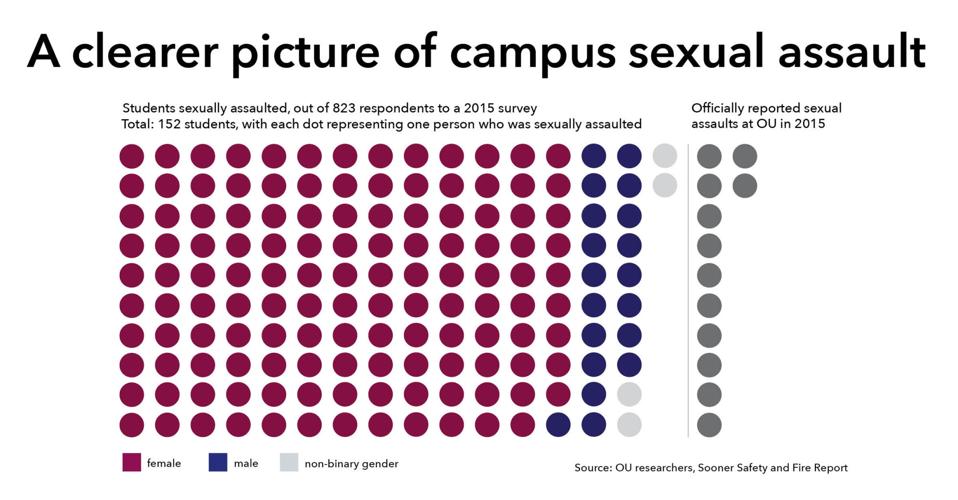
In April 2016, a report detailing the findings of the research — including that 19 percent of 823 OU students surveyed said they had been sexually assaulted — was delivered by researchers from the OU Psychology Clinic to the Office of the President, Title IX and other administrative offices, but the researchers said it had only been acknowledged by the Gender + Equality Center.
OU President David Boren said he never received the report, but that its findings on campus sexual assault were unsurprising.
“I've always felt that the problem is very significant,” Boren said. “That's one of the reasons why I wanted to make sure we had a very strong Title IX program and why I want a hotline — because I'm not surprised. I know we've got a problem and that colleges all across the country have a problem, but it's an understandable problem.”
The survey, conducted over the fall, spring and summer 2015 semesters and distributed via mass mail, found that of the 823 anonymous student respondents, 152 said they had been sexually assaulted.

Lisa Frey and Denise Beesley, both professors of counseling psychology at OU, organized a team of doctoral students to conduct the research after being approached by the Institutional Equity and Title IX Office in August 2014 to develop a sexual misconduct climate survey.
In January 2015, the Title IX office distanced itself from the survey — Frey said the office withdrew its support from the research, but Assistant Title IX Director Kathleen Smith said the office asked to delay the survey.
“We wanted to make sure that the official university campus climate survey would comply with any federal legislation or regulations,” Smith said in an email. “The researchers decided to move forward with the survey as a research project. We have received and reviewed their findings and recommendations.”
The researchers continued without administrative support — the only difference, Frey said, was that the survey was only distributed on the Norman campus and did not include the Health Science Center and Tulsa campuses in the research.
Still, the researchers are concerned that their report was met with relative silence.
“I don't know if that means they didn't see it. I don't know if that means they didn't read it. I don't know if that means they've read it and thought ‘Oh my gosh, we do have a problem,’” Beesley said. “Either way, it speaks to the idea that we want to maintain this public image, so we're going to keep a lid on things as much as we can. It's troubling.”
Scott Secor, a third year doctoral student in counseling psychology who was part of the research team that conducted the survey, said even the “Not on OUr Campus” slogan contributes to a culture of keeping campus sexual assault quiet.
“Not on OUr Campus — that has kind of a double meaning to it,” Secor said. “I know the intent behind it is to say, ‘We're not going to let this happen on our campus — this is not tolerated.’ But I think for a lot of people who have survived this, it actually constitutes a denial that (sexual assault) is happening on our campus.”
WHAT THE DATA SAYS

While the statistics show that sexual assault at OU is on par with national statistics — nationally, 1 in 5 women and 1 in 16 men are sexually assaulted in college — students’ narrative responses in the survey indicated that reporting sexual assault introduced additional levels of trauma.
One read: “I have zero trust in the system and zero belief I would be taken seriously.”
Another read: “Reporting was the best and worst decision. The process felt grueling and very isolating.”
And another: “My friend had to drop out of OU because she was so traumatized and afraid to see her rapist on campus.”
The numbers in the report told troubling stories — 43 percent of respondents who said they experienced sexual assault said it occurred during their first year on campus.
Of the 152 students who responded that they had been sexually assaulted as a student at OU’s Norman campus, 63 said they had been sexually assaulted at an on-campus location or at an OU-sponsored event.
Forty-seven of those 63 students said they had been sexually assaulted either in OU-affiliated housing or in fraternity or sorority housing.
For Gender + Equality Center Director Kathy Fahl, these statistics underscore the importance of educating first year students.
“We know that first year students are targeted, and so our residence life staff is really important to make sure they're educated,” Fahl said. “We know our students don't have good information when they land on campus on those issues. Most of them don't get anything in formal K-12 education.”
The phenomenon that first year students are more likely to be sexually assaulted during the first weeks of the fall semester of their freshman year is referred to as the “red zone,” according to the report.
“I can understand how first year students are at the highest risk. They know how to protect themselves less and to keep out of situations,” Boren said. “Every year you get older, you get a little wiser.”
Each year by Oct. 1, universities are required to disseminate data regarding campus security in order to comply with the Clery Act — OU does this through the annual Sooner Safety and Fire Report.
But the numbers in the Sooner Safety and Fire Report paint an incomplete picture of sexual assault on campus: the report shows 12 reported sexual assaults at OU in 2015, compared to 18 in 2014 and 22 in 2013. That’s vastly lower than the 152 who responded to the anonymous survey saying they had been sexually assaulted, but it doesn’t mean the numbers tell conflicting stories.
The Clery Act numbers show a small portion of campus sexual assault because they represent formal reports to entities like Student Affairs or OUPD. Because of the hesitance to formally report sexually assault, the anonymous survey found significantly higher numbers.

Some of that hesitance, Fahl said, can be attributed to a fear of being blamed for the assault.
“We live in a culture that blames victims — it's not just campus, it's Norman, it's Oklahoma, it's the United States, it's around the world,” Fahl said. “The fear of ‘Why would I put myself through this?’ is real.”
The OU Counseling Psychology researchers pointed to several reasons why their data is reliable — the survey was not incentivized (so, no chance at a free gift card for participation), it took about 30 minutes to complete, and respondents were a representative sample of OU’s population by race and gender. In addition to sending out the survey through mass mail, the researchers specifically reached out to marginalized groups on campus to complete the survey, Frey said.
Before students’ responses that they were sexually assaulted were counted, they had to answer a series of follow-up questions about the location and time of the assault, as well as their relationship to the perpetrator, Frey said.
WHERE WE GO FROM HERE
Frey, Beesley and Secor agreed on what they wanted to see from the university to combat campus sexual assault: honesty, education and a strong administrative response.
“I'd like for President Boren to get up and say, ‘We do take this seriously, we have a long way to go, but we're willing to fight the good fight and do things that will improve the experience on campus,’” Beesley said.
Students, faculty and staff are currently required to complete an online sexual misconduct training, Fahl said. Students in greek life and in athletics complete in-person sexual misconduct training.
Even if addressing sexual assault on campus can bring negative attention to a university, Beesley said the honesty would be welcomed.
“I think for most individuals, there's something refreshing about anyone just saying, ‘Hey, this is true, I acknowledge it, I have made mistakes or we haven't done enough’ — there's something about that that is hopeful,” she said.
Boren agreed that more education could be helpful in decreasing the prevalence of campus sexual assault, but budget cuts could be an obstacle to any new programs.
“All we're doing night and day is figuring out how to cut, cut, cut spending,” Boren said. “This is one of the things I noticed — people asked, can we hire another person for autism? Can we do this, can we do that? Where do they think the money's coming from?”
Fahl said the research was helpful in determining next steps for gender-based violence education.
“We have a lot of work to do, and it's all of our responsibilities,” Fahl said. “If we're going to change our cultural norms, we all have to do something."
Boren acknowledged the work the Gender + Equality Center does in decreasing gender-based violence, but the solution to eliminating campus sexual assault?
“We try to really train students about (sexual violence), and you try to also say, 'Don't get yourself in a situation where you're incapable of saying no,'” Boren said. “Can we eradicate the problem? Not any more than we can eradicate human nature.”
Read the report in its entirety here.

- Daisy Creager, assistant news managing editor
- Updated
- 2 min to read
Students will meet with OU President David Boren Oct. 12 to discuss rape culture following a protest in Evans Hall today.
The protest, which was held against rape culture at OU, was fueled by Boren's comments on sexual assault in an Oct. 3 Daily article. It began at 1:45 p.m. at the Unity Garden in the South Oval .
Kelsey Morris, a sociology sophomore and the protest's organizer, read a list of demands for Boren that the group had posted to Facebook. The demands included a public apology to sexual assault victims that contains the phrases "I believe you," "it’s not your fault" and "I'm sorry" and a written commitment to the issue, among others.
The protesters then walked to Evans Hall, with more joining along the way, including Student Government Association President Daniel Pae. Students held signs that read: "Rape is not human nature" and "apologize or resign."
OU tribal liaison Warren Queton and Kristen Partridge, associate vice president for student affairs, met the protesters at the Unity Garden and walked with them.
When the group arrived at Evans Hall, they were met by Jabar Shumate, the vice president for the university community, and Kathy Fahl, the director of the Gender + Equality Center, along with other administrators.
The administrators handed out a letter from Boren to protesters and asked if they would like to meet with him at 10 a.m., Oct. 12, to which they agreed. In the letter, Boren apologized for being out of the office, stating that he was visiting Clinton, Oklahoma, and Oklahoma City to campaign for his proposed penny sales tax.
In the letter, Boren recognized the seriousness of the situation surrounding campus sexual assault and highlighted his efforts to help. He also acknowledged that there is more to do to combat sexual assault.
"I believe you; the faculty and staff here at the university believe you are right about the seriousness of the problem, and we are committed to helping you," Boren said in the statement.
After meeting and speaking briefly with present administrators, the protesters walked from the Evans Hall offices into its hallway. Morris then announced that everyone was invited to attend the meeting with Boren the next day.
Morris said while the protest was anticlimactic, she is grateful Boren read the demands and is willing to meet with them. The protest and administrative response was a step in the right direction, she said.
"I’m not under any delusions that this is going to be an overnight change or that suddenly administration is going to become unproblematic, or that suddenly rapists are suddenly going to be expelled, because that’s not going to happen overnight," Morris said. "But I think we’ve made a small amount of measurable progress."
Shumate said he thought the meeting with the protesters went well and that he believes a meeting with Boren is important.
"I know the president is open-minded," he said. "I have really good feelings about the opportunity for them to dialogue with the president and us to make our university better."
Madison Lovell, an engineering, physics and environmental sustainability freshman, helped Morris organize the protest. She said it went well but feels there is still progress to be made.
Lovell said the short-term goal of an apology was accomplished, but the long-term goals of changing rape culture will need work. At tomorrow's meeting with Boren, the next step is him recognizing his role as a university leader, Lovell said.
"We need to make sure Boren realizes that because he is the president of the university, he is being held to an extremely high standard ... (And) he needs to recognize when he is at fault," Lovell said.
Lovell said she does not think the current sexual assault training for freshmen is enough, and hopes new programs can be put in place.
"(Boren) said that finances are going to be a problem in getting new programs, but if this problem is truly as important to him as he makes it out to be, he will make resources available," Lovell said.
Read Boren's full letter below.
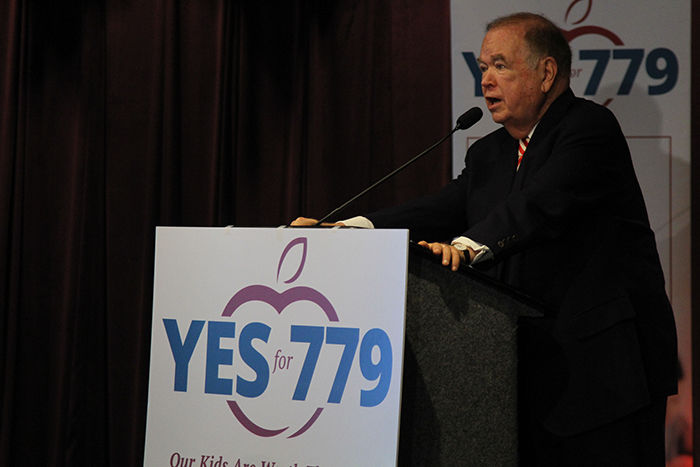
- Jesse Pound, assistant sports editor
- Updated
- 4 min to read
The campaign to add a one cent sales tax statewide, led by OU President David Boren, met a resounding defeat Nov. 8, leaving the future of education funding in Oklahoma uncertain and dealing one of the state’s most towering public servants a rare defeat.
State Question 779, which would have raised sales taxes to fund K-12 and higher education in the state, fell by a margin of 59-41. Boren, a former state governor and U.S. Senator, is in his 22nd year as OU’s president and has long been an advocate for increased education funding from the state government. Boren traveled to towns around the state urging people to vote for the measure.
The campaign was ignited amid declining education funding from the state, which reached a tipping point when Gov. Mary Fallin declared a revenue failure in December, leading to mid-year budget cuts across state agencies. Oklahoma, the state with the lowest annual mean secondary teacher salary, has seen some school districts cut back to four day school weeks in a desperate attempt to save money.
Boren, one of Oklahoma’s most decorated politicians, suffered a rare political defeat.
“It's been a lot of years since our president has been governor and senator, and so many of the legislators that we have now refer to him as President Boren and not Senator Boren and not Governor Boren,” said George Henderson, a professor emeritus who first taught at OU in 1967. “And that somewhat diminishes his clout. He certainly has the relationships and the contacts, but he has done well in terms of extracting value from those relationships, but sometimes you can go to the well once too often.”
Dan Snell, president of the Norman School Board, said the failure of the question at the ballot box may encourage more teachers to leave for larger paychecks across state lines.
“This is a good reason to get out of Oklahoma education in general,” Snell said.
Following the defeat, Boren promised to continue fighting for more education funding.
“While the results did not come back in our favor, we’ve succeeded in starting a conversation across Oklahoma about education and the need for adequate funding," Boren said in a statement Tuesday night. "We won’t stop fighting to keep great teachers in the classroom. We won’t stop fighting to improve funding for our schools. We won't stop fighting for our children.”
Snell said he thought the campaign, even in defeat, might have made enough noise that lawmakers would have to listen, and is thankful to Boren for leading the charge.
“He didn’t have to do this,” Snell said. “It would benefit the university a bit, but mostly it would benefit K-12 education, and he could’ve just kicked back and complained like the rest of us did, but he didn’t, so I think it’s a noble effort.”
The defeat was a first for Boren, who won the 1974 gubernatorial race at just 33 years old and has been a public servant ever since.
After one term in the Governor’s Mansion, Boren jumped to the Senate, where he served for 16 years. Boren may have left Washington, D.C., but he did not leave his connections, maintaining strong relationships with lawmakers and serving as chair of Barack Obama’s President’s Intelligence Advisory Board for more than three years.
“He’s well-liked by myself and by a lot of us that have been in and around the Hill for a long time … he’s well respected on both sides of the aisle, and I think President Obama had a good relationship with him,” said former Senator Don Nickles, who was the other half of Oklahoma’s Senate delegation with Boren from 1981-1994.
Taking over at OU in 1994, Boren set out to build a university his home state could be proud of, raising the school’s national reputation and exceeding internal expectations.
“What he has done has been absolutely miraculous, in my opinion,” Henderson said. “He came to a university where we aspired to be average. We did. And the very first thing he told us faculty when he became president is that we're going to strive for excellence. And many of the faculty members chuckle, 'You've got to be kidding. Excellence? We haven't even achieved the average yet.' President Boren was looking beyond that, and he's taken us there.”
Under Boren, OU has built a study abroad campus in Arezzo, Italy, added new colleges and increased the size of the student body while raising admissions standards.
“He took us to heights that very few faculty members ever believed that we could achieve,” Henderson said. “He let us ride in the plane when we were just walking, and now we take the plane away and blame him because we're no longer flying.”
But Boren said the state’s education funding is threatening the status of the university that he has worked so hard and so long to achieve, both by making it pinch pennies and by failing to properly educate the university’s main student base.
“I am very hopeful that we can avoid forced layoffs and excessive tuition increases. We will take our urgent need to the legislature when they go back into session,” Boren said in a statement Wednesday. “The university simply cannot absorb another cut or the magnitude which we received this year, 16 percent, without facing some painful decisions.”
In the event of cuts and layoffs, at least Boren can point to the state question and say he fought for the university.
“He didn't lose that ballot initiative,” Henderson said. “At least we had it. At least he can say he tried to do something. But the man does not like to lose. And that's why the university has won so much.”
Boren showed the legislature there is a desire in the state for more education funding, but he could not fix Oklahoma’s education problem alone.
“Do all of the hard work that needs to be done to try to change the status quo, and one man can't do it for us,” Henderson said.
Dana Branham contributed to this report.
This story was corrected at 10:45 p.m. Nov. 9 to show Oklahoma had the lowest annual mean salary for teachers, not starting salary.
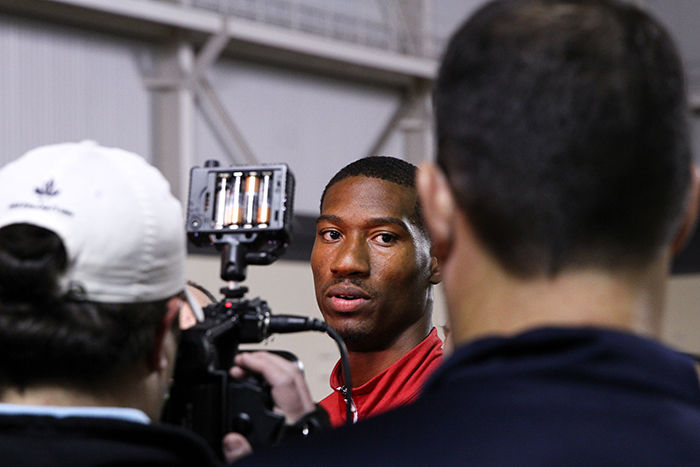
- Staff reports
- Updated
- 1 min to read
Oklahoma wide receiver Dede Westbrook was arrested twice on domestic violence complaints before coming to OU, according to a story published Sunday by the Tulsa World.
Before his improbable rise from nowhere — before he won the Biletnikoff Award, became a finalist for college football’s most coveted trophy and constructed one of the best seasons in OU football history — Westbrook was twice arrested on family violence complaints, according to police reports and court documents obtained by the Tulsa World.
In 2012, Westbrook was accused of throwing the mother of two of his children to the ground. In 2013, Westbrook was accused of biting the same woman’s arm and punching her in the face with a closed fist.
Westbrook was being recruited by Oklahoma in 2014, when the Sooners suspended running back Joe Mixon for a season for punching a woman in the face, had linebacker Frank Shannon miss the season after losing a Title IX case and brought in wide receiver Dorial Green-Beckham, who had been accused of violence against women while at the University of Missouri.
OU president David Boren, athletic director Joe Castiglione and coach Bob Stoops gave a joint statement to the Tulsa World.
“The university conducts independent background checks on every entering student-athlete,” the statement said. “While the university has declined to extend offers in other circumstances as a result of gathered information, nothing was reported in this case.”
After the story was published, Westbrook tweeted "Don't believe everything."
Don't believe everything!! Don't be so gullible
— Dede Westbrook (@DedeTHEGreat11) December 12, 2016
Westbrook had 1,465 receiving yards and caught 16 touchdowns this season for the Sooners, who won the Big 12 championship and finished the regular season ranked No. 7.
Read the rest of the story at the Tulsa World.
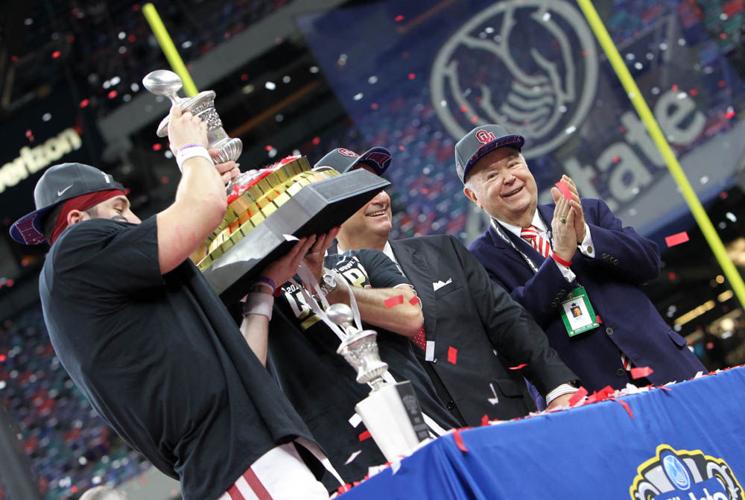
- Dana Branham, editor-in-chief
- Updated
- 10 min to read
OU President David Boren addressed media following Oklahoma's win over Auburn in the Sugar Bowl, defending the university's decision to keep Joe Mixon on the team after punching a female OU student in August 2014.
Boren discussed OU's background check system, which came into question after the Tulsa World reported Dede Westbrook had been arrested twice before coming to OU.
Read the transcript of Boren's comments in full below, and listen to the audio of the interview here. Boren's comments are in plain text and quotations, and our annotations and notes are in bold. Questions from media members are italicized.
BOREN: "There's also no reason to destroy the lives of young people when they make even a serious mistake at age 18. What you want to do is set those people in the right force and help them with productive lives in the future, and I think that's always the right thing to do. I don't think that should be decided by instant opinion. Opinion changes. At the time, we were far too rough. Now, there are people trying to second guess us. But I hope what won't be second-guessed is that educational institutions — they punish things that need to be punished, people need to learn from their serious mistakes, but we don't want to destroy the lives of young people that can be salvaged.
"I think it'd have been very hard, because I think what Bob (Stoops) is saying is that in 2 1/2 years, a lot of opinions have changed on that subject. My opinions haven't changed. I think it's wrong to hit a woman, no matter what the provocation, no matter what the circumstance. I think that person should always be punished, but on the other hand, I don't want to throw Father Flanagan into the dustbin of history. That wonderful character in the movie, the priest who gave people a chance and who gave young people a chance to learn from their mistakes and to make better lives for themselves. I just read the Pope's book, called "The Name of God Is Mercy," and I'd ask people to think a little bit before they want to reach out and let one single incident when someone has a clean record destroy an entire, productive life. Punish but yes, ruining lives permanently, no."
Boren’s reference to Father Flanagan refers to a Catholic priest who founded the famous Boys Town, an orphanage in Nebraska that is now a center for troubled youth. He’s known for giving second chances. The book Boren references is written by Pope Francis, and as the title suggest, it emphasizes themes of mercy and second chances.
Was public perception a factor in decision to punish Mixon?
"No, not at all. I think we did the right thing at the time, and I think we should've exacted a tough punishment, which we did. Some people talk as if we didn't have a punishment. Well, we did. But I think after that, the job of a university and the job of an educational institution is to put young people on the right path, to learn from their mistakes. I hope that's what we've done. I hope that's what we'll do 100 years from now.
"The moment we saw the video, it was immediate. We didn't even have any discussion about should there be punishment, should there be severe punishment, should he continue to play on the team. At that time, no. We dismissed him from the team, we didn't let him practice, we didn't let him travel. That was a very harsh penalty, but what we did say is, 'If you'll get your life straightened out, if you'll get on the right path and if you'll be constructive from now on out, you do your community service, you get anger management training, you do all the other things we're calling upon you to do, we'll release you to go to somewhere else if you don't want to measure up to these requirements that we're putting on you — that's what was done at the time.
"I'm not one of these people that wants to be involved — as a university president, I want to help young people learn from their mistakes and get on the right path. I'm not in the business, as a university president, of destroying entire lives and entire futures of young people. If they want to get someone else to be university president that's in the destruction business, get 'em. I'm in the education business."
Boren and others in the OU hierarchy have said they wanted to give Mixon a chance to grow from his mistakes by keeping him on the team. Other players, however, have been dismissed from the program since Mixon’s incident for less serious offenses.
Thoughts on strengthening OU's background check system?
"Well, we have one of the strongest in the country and will continue to do that. You know, most universities, many in the country, do not have background checks. We do. In the Mixon case, we did a background check. And you know what we found? His teachers, his classmates, people in his community said he had the cleanest record that they'd ever seen for a young person his age. None of these things are foolproof. You do the best you can. I think we're a national model. We have moved our enforcement section out from under the athletics department, it's separate. It's in the general counsel's office."
The background check system Boren references didn’t find that receiver Dede Westbrook had been arrested twice for domestic violence before coming to OU.
"We have one of the most active model Title IX programs in the nation. We don't tolerate violence against women. We're a model. But what I don't ever want to be a model of is the destruction of the lives of young people and never letting young people learn from their mistakes. I think that's wrong, and I think those people who have second-guessed it and rushed to mob mentality about this are wrong. I think when they sit back and reflect on it, I don't think they want to be in the business of destroying individuals any more than I do, as a university president."
Any regret about SAE reaction, then?
"No, no. You had to, because that was something that was an open shut case. You have to look at every case."
In March 2015, Boren said he expelled two students after video surfaced of members of Sigma Alpha Epsilon singing racist chants on a bus. It was later discovered that the students withdrew from the university.
"What does that have to do with this? The facts of the situation was totally different. So you have to really consider all the facts, and if we want to have a situation where every time something happens, we think there's some immediate answer to it without looking at the facts, without looking at the facts of the situation in every single case, without looking at the background, without looking at what's been happening, then no. You have to look at every case one by one. These are hard decisions.
"How many of you want to get in the business of deciding the future of everybody's life, based upon what they do? It's a hard decision to make. It's totally different. You can not, just like we had a recent situation where we took another action, where we had students who said, 'Let's bring back a weekly lynching on all the campuses,' and there were these emails to freshmen at the University of Pennsylvania — you cannot put up with that. We live in a country that you simply cannot put up with that kind of bias, that kind of racial division in our society."
In November, an OU student was suspended for his involvement in sending racist messages to University of Pennsylvania freshmen. Black students at UPenn were added to a group message rife with racial slurs and graphic images. The student is no longer enrolled at OU, though it is unclear whether the student withdrew or was expelled.
"The situation here had to do with one young person who had an absolutely clean record of every kind before this, and we did all the background checks, and what do they tell us? This tells you background checks are not foolproof either. You have to look at how the students have behaved once they come to the university, and whether or not they've met all the preconditions. And let me say, if he had not met all the preconditions, there would have been zero tolerance for him not doing so. It wouldn't have been a question at all."
Reaction to the parking ticket situation?
"Well, I was disappointed with that. I made my views known about that at the time and I insisted that he not play the next game at the time, so you learn from it. But he is still taking counseling, he is still trying to make himself in a better man. He's learned from it. You all heard yourself what he said the other day."
Mixon was suspended for OU’s Nov. 3 game against Iowa State University after he threw a torn-up parking ticket in an attendant’s face.
"How could the media at the time, who all had the opportunity to see that tape when I saw it, and many of them said we were too harsh. My phone rang off the wall that I was too harsh. I don't think we were too harsh. I think the conditions we put in place were the right conditions.
"On the other hand, I just go back to what I'm saying: How many people do you know, when they were 18 years old and they never had an episode whatsoever, unblemished record, have ever made a mistake? How many people have never made a mistake in their lives? I think it's a sort of rushed judgment, when you say, 'Oh, the answer is, let's destroy people's lives, let's not let them have any kind of future, let's not let them learn from their mistakes.' I don't believe in that. And if you want to say, I thought Father Flanagan, I watched the movies when I was growing up as a young person, I thought that person was very admirable."
Did the Mixon case go before Steve Ashmore in Student Conduct?
Ashmore is the director of Student Conduct at OU, the office that handles disciplinary measures for students.
"The Mixon case, we had several other cases, in fact, if you want to know about my own record, we had a Title IX case involving a player, Frank Shannon — the local judge wouldn't let us enforce our punishment and keep him off the team, so I took the case to the state supreme court. I think what a lot of people don't understand is, I may be the first person in the country to ever go to a state supreme court to enforce a Title IX ruling in our university. That's how firmly we believe in these things and how strongly we want to set a national example."
Former OU linebacker Frank Shannon was suspended for the entire 2014 season after he was accused of sexual assault in January 2014. District Judge Tracy Schumacher granted him a stay so he could remain on the team, a decision Boren took to the Oklahoma Supreme Court. The Supreme Court ruled OU could enforce the suspension and said Schumacher’s stay should have never been granted.
"I think you have to look at every case, case by case, look at the facts of the situation in the individual cases. As I said, background checks are not foolproof. You look at others who've been an important part of our team and again, there's a lot of discussion about that. They've been model citizens at the university since they've been there. Getting the people on the right track — I think one of the most, one of the greatest things, and I've seen this even more since I became president of the university, one of the greatest things about intercollegiate sports, is it is a place that provides equal opportunity for all sorts of people. Whether they grew up in single-parent families, whether they grew up in poverty, whether they grew up without role models, they have a chance by being good citizens at a university, by playing on a team, playing by the rules. It's one of the greatest places in America where people can start at the bottom, if we want to talk about their socioeconomic conditions, and still have the opportunity to make it at the top. We can second-guess all of these things. I think we should have tough rules and I think we should have punishments.
"And I don't know if you can find a case where we haven't made a punishment where we thought a punishment was right. I think we'll be doing something permanently — I appeal to you, as members of the press, you write about it all the time, you broadcast about it — let's not — intercollegiate press is a place of great opportunity for young people who grow up in poverty in the most difficult of circumstances, that none of us can imagine. Let's don't take away that opportunity to rise from humble beginnings and to have opportunities through intercollegiate sports. Let's not swing the pendulum so far in the other direction that we use it to destroy people and snuff out the possibilities from their lives, instead of giving them something to build on. I think we ought to think about that. When people want to play God and push people into the dustbin of future possibilities in their lives, I think that's wrong. I think what's right is set a punishment that is a serious punishment. Set conditions you have to live up to that are serious and demanding, and give people an opportunity for people to reclaim their lives and put it on the right path.
"I think if we stop that spirit in intercollegiate sports, if we become too judgmental in people who grew up in circumstances very unlike ourselves, I think we permanently damage intercollegiate sports, and I think we ought to think long and hard about that."
So the Mixon case did not go before Student Conduct?
"The Mixon case was first a criminal case, and then of course we immediately looked at it ourselves."
So it didn't go before Steve Ashmore's office?
"The person never filed a complaint with Title IX."
OU’s Institutional Equity and Title IX office handles issues related to sexual misconduct, discrimination, harassment, dating or domestic violence and gender equity issues related to athletics. Here, the "person" Boren refers to is Amelia Molitor, the woman Mixon punched in 2014.
Who conducts your background checks, third party?
"The third party is in compliance and it reports to the general counsel's office, not to the athletics department. The third party is the general counsel of the university. The general counsel of the university is where the Title IX office, or rather, where the compliance and athletics resides. You don't have the athletic department judging its own compliance. You have the general counsel's office judging it. There are people hired for the service — come visit our Title IX office. It's considered a model in the country, and there are schools all over the United States coming in to see how our Title IX office functions. It's very confidential in terms of complaints, certainly not like at some other universities where you have to go to the coach to make a complaint or somebody else to make a complaint. You come, you get an objective investigation into it, if you choose to make a complaint. Now, we can't compel people to, but that's where they come."
So, the third party is employees of the university?
"They're employees of the university. They're employees of the general counsel office."
By third party you mean it's just outside of athletics?
"Yes, you know, one of the reforms nationwide has been, the best practice, because for many years, you had compliance inside the athletics department reporting to the athletics director, et cetera. That was deemed to not be independent enough or objective enough, so schools across the country — not all of them — many of them now, who follow the best practices have that compliance function totally outside of the athletics department. We did that several years ago, and I think that's the right thing to do."
OU’s background check policy came into question after the Tulsa World first reported that receiver Dede Westbrook had been arrested twice on domestic violence complaints before coming to OU. In a joint statement to the Tulsa World from Boren, coach Bob Stoops and athletic director Joe Castiglione, they confirmed that OU did conduct a background check on Westbrook, as it does for all incoming student athletes, and nothing was reported.
Jesse Pound and Andrew Clark contributed to this report.
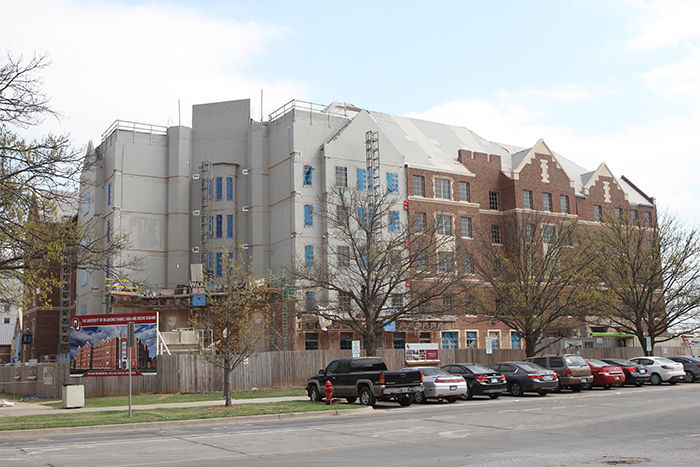
- Anna Bauman, news reporter
- Updated
- 3 min to read
While OU's Dunham and Headington Residential Colleges — scheduled to open fall 2017 — must abide by some rules required of all university-owned housing, students will use a system of self-governance to decide their own policies — including those surrounding alcohol.
The two colleges will serve as upperclassmen housing modeled after similar residences at Yale University. Its policies will allow students of legal drinking age to decide if they want to have alcohol in their rooms, said Keith Gaddie, Senior Fellow of Headington College.
“This is a space that’s made for people to be adults,” Gaddie said. “And that doesn’t mean stuffy or conservative, that means we are trusting in people to use judgment and govern themselves.”
The residential colleges will incorporate faculty mentorship, classes, social events and self-governance into the living experience, Gaddie said.
“Far from being just a place where you sleep and leave your stuff, it is a place where you dine together, where you learn together, you socialize together,” Gaddie said. “It has cultural, academic and social programming built-in.”
Each residential college has 12 faculty fellows who will teach one-hour seminars every semester for residents and act as mentors by engaging with students in the informal environment of the living spaces. Some faculty will have offices on the first floor of the colleges, Gaddie said.
“Their job is to create relationships and do the kind of soft teaching in the hallway that’s really at the heart of the good liberal arts education,” Gaddie said.
Gaddie said the colleges will each have four "resident mentors," or student leaders living in each hall whose role is similar to that of the resident advisers in the other on-campus residential halls. In addition, each college will have four graduate tutors living in the halls who will play a similar leadership role and offer tutoring services.
Holly Crawford, international business and entrepreneurship junior, will serve as a resident mentor in Dunham College and said she will help act as a support system for the residents by planning activities and promoting community building.
Crawford said she wanted to apply for the position because of her positive experience living on campus as a freshman.
“Living in the dorms was the best experience I could have asked for, where I met my closest friends, and something I know I’ll always look back on and just have really, really fond memories from,” Crawford said. “So the chance to get to move back to campus and having the chance to set up community, hopefully kind of like what I had freshman year but for upperclassmen, is just an incredible opportunity that I couldn’t pass up.”
Applications to live in the residential colleges are currently open. Gaddie said there are no special requirements, but he hopes the colleges will attract a diverse group of students who want to build a new culture.
“This is a place for the kind of student who wants to be engaged in campus life,” Gaddie said. “So if you’re the kind of person who engages with programming on campus, engages with life on campus, and you don’t want to have to drive all the time, this is exactly where you ought to be.”
Each college has the capacity to house 311 students, but Gaddie said he expects it will take several years for the space to be completely filled.
“It takes three to four years to fully stand something like this up and have demand to exceed capacity, because it takes that long to establish the culture,” Gaddie said. “If we’re at 65 percent, that’s a win, because we’ve hit a critical mass, we’ve got good numbers, and the revenue model looks good.”
Mark Morvant, Senior Fellow of Dunham College, said the concept of a residential college is difficult to explain and understand because it is rare and new to OU, so there is a general lack of prior experience.
“After we go through one year, everybody will go, ‘Oh, that’s what a residential college is,’” Morvant said.
The social programming will be largely left up to the student residents after they move in, which also makes it difficult to predict exactly what it will look like, Morvant said.
“We can’t show you what’s going to be there because we’re waiting for the students to develop it,” Morvant said. “What we’re trying to get is to get students who are kind of visionary and want to be part of building something to jump on board.”
Gaddie said the residential college model offers the basic framework for growth, but the residents will give it life.
“We’ve got a basic framework here ... and we have people,” Gaddie said. “And they’re going to make something — we don’t know what it’s going to be, but I tell you what, if this sticks, and I think it will, I think it’ll be special. I really do.”
Gaddie said the university is considering using the residential college model in future housing developments.
“Moving forward into the future, hopefully we can find additional donors, additional support, and construct additional residential colleges,” Gaddie said. “We can imagine a future where the freshman experience is based more upon a commons model, with a new freshman campus that looks more like this and feels more like this.”
For more information about the residential colleges, visit their website.
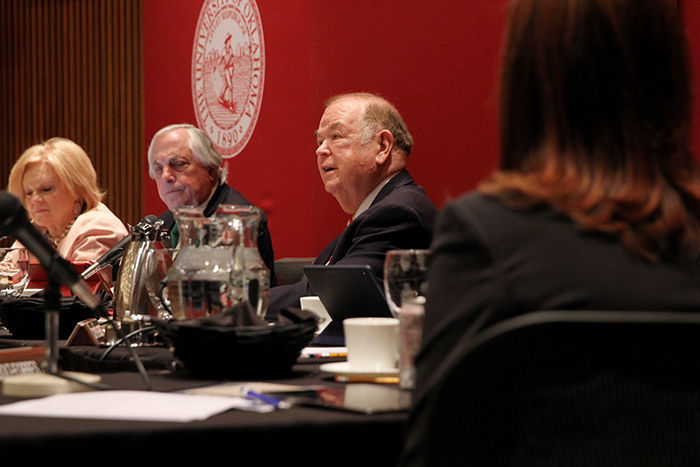
- Staff Reports
- Updated
- 1 min to read
OU President David Boren is home from the hospital and "has done remarkably well" following a heart bypass surgery March 20, OU press secretary Matt Epting said in an email.
Boren will be recuperating for a few weeks, Epting said in the email.
"He really misses the OU family and appreciates all the well-wishes he has received," Epting said.
Boren has continued to serve in his position during his recovery, but he missed the March 23 President's Associates Dinner, where J.D. Vance, author of "Hillbilly Elegy," spoke.

- Andrew Clark, news managing editor
- Updated
- 1 min to read
A painting that was stolen by Nazi forces and previously hung in the Fred Jones Jr. Museum of Art has been transferred to a museum in France and will be displayed there for the next five years.
The painting, "La Bergere rentrant des moutons," or "Shepherdess Bringing in Sheep," will return to the Fred Jones Jr. Museum of Art after its five-year stint at the Musee d'Orsay in Paris, and then it will rotate between the two locations every three years.
The painting was originally owned by a Jewish family before Nazi forces seized it from the family's bank safe in 1941.
The painting ended up at an art gallery in New York in 1956, where Clara and Aaron Weitzenhoffer, the parents of former OU Regent Max Weitzenhoffer, purchased the painting. Clara Weitzenhoffer's estate later bequeathed the painting to the Fred Jones Jr. Museum of Art, where it had been displayed since.
Leone Meyer, the adopted daughter of Raoul Meyer, who originally owned the painting, filed a complaint against OU in May 2013. The two parties eventually settled in November 2015 without exchanging any money, and OU fully transferred the rights of the painting to the Meyer family in February 2016.
OU president David Boren said in a statement that he believes the resolution was fair and just.
"We are particularly glad that both fine families involved in the case are being appropriately recognized, the Meyers who tragically lost the painting to Nazi theft and the Weitzenhoffer family who bought the painting in good faith and generously sought to share it with the people of Oklahoma. It is by mutual agreement that the artwork will remain on display in Paris for the next five years before returning to the Fred Jones Jr. Museum of Art to begin its ongoing three-year rotation between the University of Oklahoma and France. The history of the Pissarro painting and the families involved will continue to be honored, and the painting will remain accessible for the benefit of the public. This resolution of a difficult issue should be the cause of positive comment from all of those involved. The university has done its best to meet its obligations as a steward of the artwork and the gift,” Boren said.
Scroll through the timeline below to see the history of the painting from 1886 to 2015:
- Staff Reports
- Updated
- 1 min to read
OU President David Boren, who raised the university’s academic profile dramatically after leaving the U.S. Senate to take the position in 1994, has announced his retirement, effective at the end of the school year.
A mainstay of Oklahoma public life for five decades, Boren was the state’s governor for four years and a senator for 15, chairing the Senate Select Committee on Intelligence under presidents Ronald Reagan and George H.W. Bush. The son of Congressman Lyle Boren, he attended Yale University and Oxford University before receiving a law degree from OU. After several terms in the state House of Representatives, he became the youngest governor in the nation in 1974. Boren also served as chair of President Barack Obama's Intelligence Advisory Board from 2009 until 2013.
Boren founded the OU Honors College, which is housed in David L. Boren Hall, and the College of International Studies, which will soon bear his name when he is no longer president. Under Boren, OU ramped up its recruitment of National Merit Finalists, twice leading all universities in the country in number of those scholars enrolled.
He was a prodigious fundraiser at OU, expanding academic programs and upgrading facilities across campus. His tenure saw physical upgrades or construction of Holmberg Hall, the Michael F. Price College of Business, Gaylord Hall, the Stephenson Research and Technology Center and Gaylord Family Oklahoma Memorial Stadium, among others.
Boren, who has diabetes, has had medical issues in recent years. He had heart surgery in March 2017 and back surgery in 2005.
He helped bring many high profile speakers to campus, including politicians Mikhail Gorbachev and Margaret Thatcher, Pulitzer Prize-winning writers Bob Woodward and Doris Kearns Goodwin and musician Harry Belafonte.
OU’s athletic department also thrived under Boren, who hired Joe Castiglione as Director of Athletics in 1998. The Sooners have tallied Final Four appearances in men’s and women’s basketball, national titles in baseball, softball and men’s and women’s gymnastics and won the 2001 BCS national title in football.
In recent years, Boren, a lifelong Democrat, struggled to secure state funding for education at all levels. Higher education funding has been steadily dropping in Oklahoma for years, and a Boren-led initiative to fund education through a statewide sales tax increase was rejected by voters in November 2016.
Boren repeatedly expressed support for student causes and activism, recognizing OU’s first Indigenous People’s Day in 2015, taking swift action against OU’s Sigma Alpha Epsilon chapter performing a racist chant in 2015, creating the Office of University Community in response to the SAE incident and publicly denouncing racist demonstrators during a 2016 incident on the South Oval.
Boren’s family members include wife Molly Shi, daughter Carrie and son Dan, who served as a U.S. Congressman from 2005-2012.
Boren's replacement will be hired by the OU Board of Regents.
- David Boren, OU president
- Updated
- 2 min to read
OU President David Boren reached out the The Daily Feb. 12 to share his thoughts and personal experience regarding the university's ongoing presidential search:
I have been following the public discussion about the search process to find my successor and felt that it might be helpful for me to share some thoughts and personal experiences.
The first task of the Board of Regents was to appoint a search committee broadly representative of the university community. They have done exactly that by selecting members nominated to the regents from lists from the faculty and staff senates and the Student Government Association. In addition, the regents have selected alumni with records of commitment to the university.
Once chosen, the goal of this diverse search committee is to attract as many qualified persons as possible to agree to be considered for the presidency.
Confidentiality is needed to attract highly qualified prospects. Several may hold important posts which they don’t want to risk, and they will not agree to be considered unless the process assures that their names will not be revealed. In fact, most of our peer Big 12 institutions did not disclose the names of candidates in their most recent presidential searches.
I learned of the importance of confidentiality several years ago when I, as a trustee, also served on the search committee for the new president of Yale University. Several good candidates only allowed themselves to be considered when they were assured of confidentiality.
In addition, a distinguished scholar who was our tentative first choice decided to withdraw from consideration after he was informed that he was the frontrunner. If such information had been public, it would have seriously damaged the rest of the process because anyone selected would not want to feel that he or she was not the first choice.
In my own case at OU, confidentiality was also very important. As a U.S. Senator who planned to run for re-election, I could not afford the public perception that I wanted to leave my current post. Had I participated in a public contest and not have been selected, it would have done severe damage to my career. I would have missed out on what has been the most rewarding experience of my life.
My interest in the presidency of OU was kept completely confidential by the search committee, with whom I met, and by the regents. If it had not been kept confidential, I could never have applied.
At the conclusion of our current process, some very fine individuals will not be selected as president. They do not deserve to be embarrassed or undermined in their current positions. I understand the desire for broad participation. In many ways, the process used in appointing the search committee has already assured that all major groups in our community will have appropriate input.
We must not forget that if our goal is to find the best possible person to serve as the next president of the university, confidentiality in the process is required.
Editor's note: Boren's op-ed comes after members of OU's faculty, including College of International Studies dean Suzette Grillot, created a petition to the Board of Regents advocating for a more open search process and a chance for the OU community to meet and consider all presidential candidates. The petition, open to all members of the OU community, will be sent to the regents by Feb. 16. The search committee that will select OU's next president consists of seven at-large members with one vote each, five faculty members with one vote each, two staff members with half a vote each and three student members with one-third vote each.
The piece also comes days after OU Price College dean Daniel Pullin announced his candidacy for the presidential position. The executive assistant to Oklahoma City University President Robert Henry has said that though Henry was nominated for the position, he "declined to be considered."
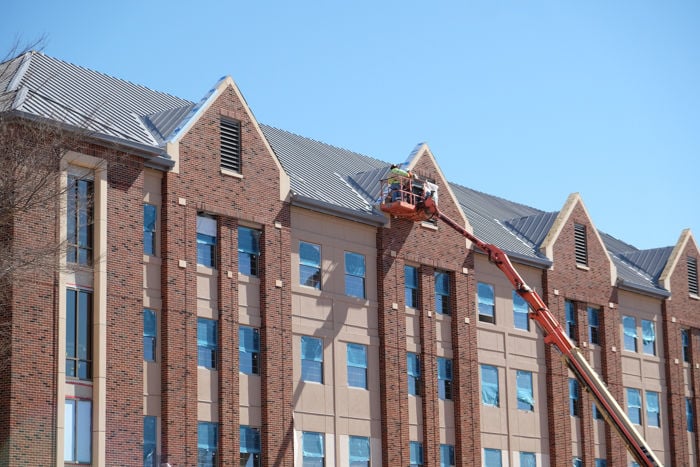
- Kate Perkins, news reporter
- Updated
- 2 min to read
An upcoming OU living option will include a gelato shop, a coffee shop, organic food choices and two workout facilities.
The Cross Neighborhood residence halls will consist of four buildings, each featuring four floors and amenities new to campus. It is scheduled to open in fall 2018, and it will be available for sophomores, juniors and seniors, said Dave Annis, associate vice president and director of OU Housing and Food.
“There will be quite a few amenities within the buildings themselves, and not just dining — a black box theater, workout rooms, a dance recital space, practice space,” Annis said. “It’s going to be really, really cool.”
A unique feature that Cross will include is Acre Market, a marketplace with several micro-restaurants and spaces where students can buy fresh fruit and produce. All the produce in Acre Market will be sourced from local producers within a 250-mile radius of OU, Annis said.
Students will be able to use the products they purchase in Acre Market to cook in kitchens located on every floor of all four of the Cross buildings.
The micro-restaurants will include a kebab station and a vegan and vegetarian station. It will be the first time on campus that allergen-free food, which accommodates the top eight allergies, will be prepared in an entirely different kitchen than the rest of the food, Annis said.
The other main feature of the new residence halls is the first “fast-casual” restaurant on campus, said Frank Henry, executive director of Food Services. "Fast-casual" is casual dining similar to restaurants like Panera, and it is a step up from Couch Restaurants or other dining on campus, Annis said.
While the restaurant will feature typical American food like burgers, salads and sandwiches, non-meat eaters will have access to an allergen-free section that features a juice bar, Henry said.
“We’re real excited about the restaurant concepts and what we’re going to be able to do with our first fast-casual (restaurant) on campus,” Annis said. “Having an allergen-free kitchen for students that is actually a separate kitchen from everything else we do, I think, is going to be very beneficial for students.”
Henry said Cross is also catering to “coffee snobs” through a partnership with Elemental Coffee, an Oklahoma City-based roaster. The coffee shop, which Annis described as “state-of-the-art,” will include new equipment located under the coffee bar instead of on top of the counter. This strategic placement was meant to create a simpler look and more of a connection with the barista.
Other than the food, Cross will also offer “club fitness” and a “sweat hut.” Club fitness will be a yoga and cycling fusion space that will offer class-based fitness opportunities, said OU press secretary Matt Epting.
The "sweat hut" will be more of a traditional gym area with various exercise equipment, Epting said. Although Epting said priority access to these gym spaces will be given to Cross residents, Housing and Food is working out details on its accessibility to other students as well.
Goddard Health Services will also run a clinic within the Cross village.
“Having a clinic right there that operates during the day ... What a great service for students instead of having to run to Goddard,” Annis said. “So having some of those things available is just cool.”
The first building should be ready in August, and the other three should come shortly after in time for the fall semester, Annis said.
“Having something fun like a gelato shop, I think, (is) really a world-class coffee experience ... and the Acre Marketplace is really going to be outstanding. We just have to get it all done in five months ... I think students will really warm up to it,” Annis said. “I think it’s great on-campus living.”
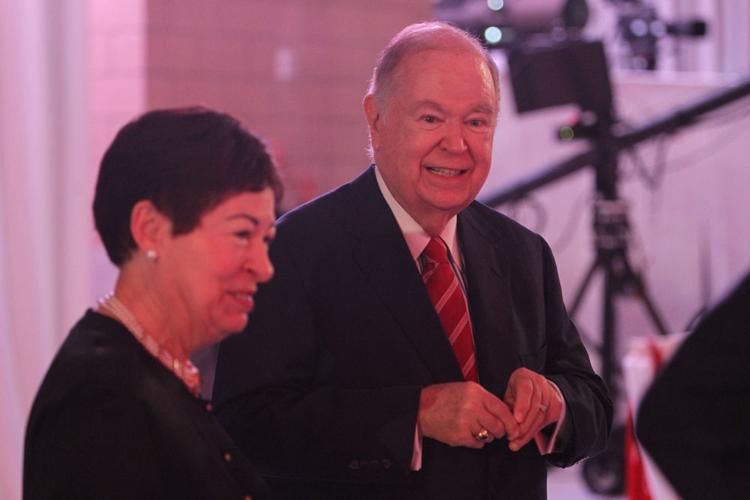
- Staff Reports
- Updated
- 1 min to read
OU President David Boren is in "good spirits" after suffering a minor stroke while giving a speech before the OU football spring game April 14.
OU press secretary Matt Epting said in a statement that Boren underwent several tests and is "alert and is communicating with family and his excellent team of medical professionals at OU Medical Center."
Boren and his wife, Molly Shi, "deeply appreciate the outpouring of love and support they have received" and no further updates are available at this time, Epting said in the statement.
Boren was taken away on a stretcher earlier in the day after giving a speech at the statue dedication ceremony for former OU football coach Bob Stoops.
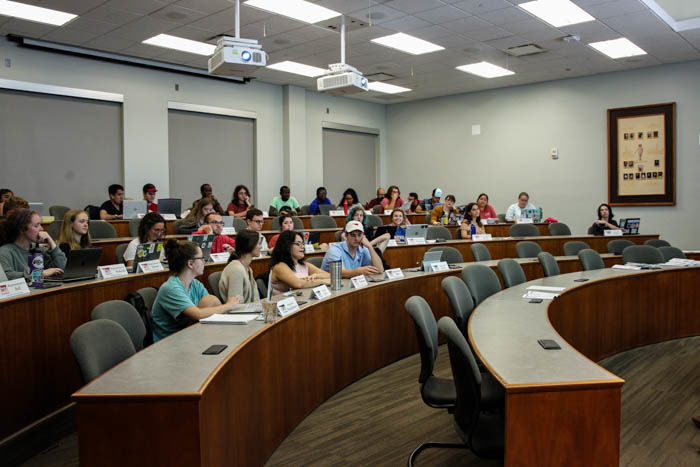
- Jordan Miller, news reporter
- Updated
- 1 min to read
The Undergraduate Student Congress passed a resolution addressing sexual harassment concerns at OU in its Oct. 16 meeting.
The resolution outlines the current process of handling sexual harassment at the university and urges OU to improve the process. Author of the bill, representative Elaina Fees, said she hoped those who received the resolution would “take it seriously.”
Fees said the main impetus for the resolution was sexual harassment allegations against arts donor John Scamehorn and drama professor Tom Orr.
“It’s a widespread enough problem that when I brought this to my committee, when I talk to my friends, when I talk to other people in congress about this, they were like, ‘Oh, I’ve experienced this,’ or ‘Oh, I know someone that did experience this,’” Fees said. “It was brought upon specifically by recent events, but ... sexual harassment, misconduct and discrimination have always been here, and they’re not going to go away unless we do something.”
The resolution suggests a specific protocol for “thoroughly investigating allegations of sexual misconduct, discrimination, or harassment by members of the university community with elevated or protected status,” which Fees said she believes does not exist in the Title IX or Institutional Equity offices.
The resolution also recommends that OU “more fully enforce its existing policy to investigate and respond to employees and university officials who suppress or dismiss reports of sexual misconduct, discrimination and harassment.”
For an example of administrators mishandling allegations, Fees pointed to Judith Pender, former interim director of the School of Drama, who sent an email that accused The Daily of running a smear campaign for reporting allegations of sexual harassment against Orr.
“Those actions contribute to a greater culture on campus that reinforces fear within survivors of these kind of situations to not come and speak up,” Fees said.
Although a resolution does not mandate any changes, it does state the opinion of the student congress since it passed unanimously with consent.
Copies of the resolution were sent to OU President James Gallogly and Title IX coordinator Bobby Mason, among others in the university administration. Every college dean was also sent a copy of the legislation, according to the bill.
“I hope (Gallogly) follows up on that promise to listen to us,” Fees said. “I hope that — just by sending it to all these people — that hopefully they’re not just going to put it in their recycle bin and move on. I hope this is taken seriously because it is a serious issue that is affecting so many students across campus.”
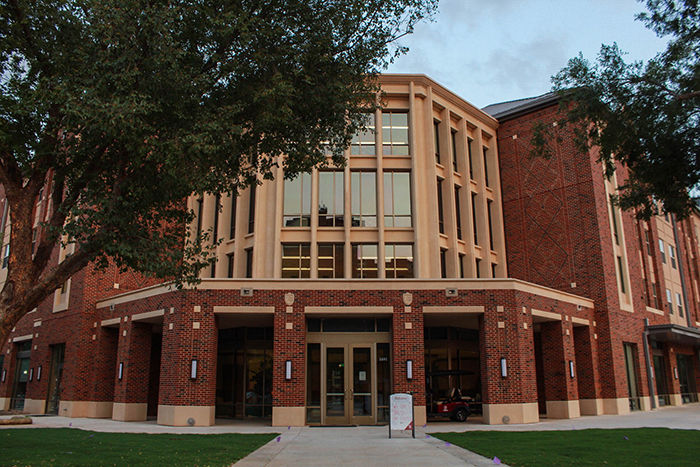
- Drew Hutchinson, news reporter
- Updated
- 1 min to read
On-campus living center Cross Village is under new management as of this week.
Balfour Beatty Campus Solutions used to manage Cross, but Capstone On-Campus Management took over the job on Oct. 15, according to a flyer posted in Cross. Personnel from Capstone will begin staffing the office this week, according to the flyer, which was signed by “The Team from COCM.”
“(Cross residents will) hear more about other changes as we get to know the community and residents better over the next few months,” the flyer stated.
Cross has had problems since its opening in August 2018, including low occupancy, prolonged construction and fire alarm malfunctions.
It is unclear why Balfour Beatty no longer manages Cross. The Daily has reached out to a representative from both management companies regarding the issue but has not yet received comment.
The flyer stated that Capstone’s affiliation with OU will be “effective for contracting for the Fall 2019 academic year” and that more information on next year’s housing situation will come soon.
Capstone is scheduling meet and greet opportunities for Cross residents to get to know the management, the first of which was yesterday at 7 p.m. in the Cross black box theater, according to the flyer.
Capstone On-Campus Management is a management company dedicated to on-campus student housing and has over 35,000 students living in its properties, according to the flyer. Capstone is based in Birmingham, Alabama, according to its website.

- Nick Hazelrigg, assistant news managing editor
- Updated
- 5 min to read
OU misreported alumni participation and donor data to U.S. News and World Report, prompting the university’s new administration to conduct an internal investigation with the help of a private law firm, according to multiple sources and data obtained by The Daily.
Multiple sources connected to OU’s development department in Whitehand Hall, which oversees the production of alumni participation statistics, have confirmed that the university inflated the percent of alumni donors it reported to U.S. News & World Report over multiple years during former OU President David Boren’s time in office.
The Daily is using information from anonymous sources because they feared retaliation. Their identities are known to The Daily.
The Daily reached out to Boren spokesperson and former presidential press secretary Matt Epting, but he pointed The Daily to Bob Burke, Boren’s official spokesperson on this matter. Burke, a lawyer who ran Boren’s first senate campaign in 1978, said Boren declined to comment on the story.
Sources also tell The Daily that outside law firm Jones Day, in conjunction with OU’s general counsel, interviewed former and potentially current OU employees on the subject of misreported data beginning as early as the summer of 2018.
U.S. News & World Report, a popular media outlet that produces an annual “Best Colleges” list by ranking universities on multiple criteria over the prior two years, uses a university’s alumni giving rate to determine overall alumni participation. This counts as 5 percent of a college’s overall ranking determination, according to the publication’s methodology.
In its most recent report, which reviewed giving for 2015-2016 and 2016-2017, U.S. News reported OU’s alumni giving rate as 13.8 percent.
However, university data obtained by The Daily shows OU’s internal numbers are different than those reported to U.S. News. According to the data, OU’s alumni giving rate per college for fiscal years 2015 and 2016 averaged at approximately 7 percent, roughly half of what was reported by U.S. News.
While it’s unclear whether this misreporting was intentional, The Daily’s sources say it’s been “an open secret” in the development department that numbers going back potentially as far as 10 years were inflated.
In an email to The Daily, university spokesperson Kathy Kesler sent a statement confirming that data had been incorrectly reported and that the university has completed an inquiry. Kesler did not confirm Jones Day played a role in the inquiry.
“The university found that incorrect data had been previously reported. We provided corrected information when we found that incorrect data had been provided previously. I cannot speculate on how this correction will change our rating by US News & World Report,” Kesler said in the statement. “Due to this, the university conducted an inquiry in to this matter. This review is now complete and issues have been corrected.”
Current OU President James Gallogly confirmed before the Dec. 11 Board of Regents meeting that Jones Day conducted a review and the university responded accordingly. There will be no legal action taken, he said.
"There’s no litigation," Gallogly said. "Instead of this being about somebody versus somebody else, when somebody comes in and says there’s misreporting we either give it to the auditors so it’s independent or we give it to a third party, and in this instance Jones Day conducted a third-party review and made recommendations, which we followed."
OU Board of Regents chairman Clay Bennett said on Dec. 11 that he does not believe the Jones Day report will be released to the public.
The university terminated Tripp Hall, former vice president for university development under Boren, and J.P. Audas, who served as director of the OU Alumni Association, on Nov. 1 during a round of staff layoffs. Hall and Audas had both served closely with Boren for more than 20 years. The December regents meeting agenda listed their departures as retirements, with Audas’ retirement effective Dec. 2 and Hall’s on Feb 1. 2019.
The Daily reached out to Hall and Audas three times over the phone Monday and left voice messages but neither responded by the time of publication.
Jones Day is the ninth largest worldwide law firm by revenue according to law.com. Its client list includes numerous Fortune 500 companies such as Goldman Sachs, and Jones Day has experience investigating misreporting in higher education.
When Emory University in Georgia misreported standardized test scores in 2012, the school said it conducted the internal investigation using Jones Day in the school’s public statement of apology. Another 2012 Jones Day investigation at Tulane University found business school administrators had falsely increased test scores.
At Tulane and Emory, the investigations found administrators had purposefully inflated reported numbers and it led to the termination of responsible administrators.
Though it’s unclear to what level Gallogly, Boren and OU’s Board of Regents are participating in the investigation, Gallogly and the regents held a private meeting the morning of the Oct. 24 regents meeting to discuss the “performance of institutional president(s)” and “pending investigations and potential litigation attendant to University administration transitions and reporting,” according to the regents’ agenda.
The Board of Regents recently announced another private meeting for the same purpose scheduled for its next regents meeting Dec. 11.
Judith Wilde, a researcher at George Mason University studying higher education, said the use of an outside law firm in an investigation of this type often indicates a desire for the university to be transparent.
“If nothing else, it means the university wants to at least appear — and they may really want to be — very transparent and say, ‘If we’ve done something wrong, we want to know about it,’” Wilde said. “I would imagine that with that law firm, it’s a fairly high price, so they probably are looking to be transparent and say, ‘We weren’t aware, we want to show you we weren’t aware, and there will be repercussions.’”
Wilde said that since this investigation is looking into activities taking place under a previous administration, communication between the Gallogly and Boren administrations would be key.
“It’s going to depend on to what extent the two administrations are friendly,” Wilde said. “If there was a lot of unfriendliness with the previous administration and the new one coming in, maybe there’s something more going on, but I don’t want to theorize that happens on a regular basis.”
Following the June 19 regents meeting where Gallogly announced OU was facing a financial crisis, Boren released an op-ed the next day saying the university’s finances were not that dire. Documents obtained by The Daily in November showed Gallogly told Public Affairs officers they could not share the op-ed without the permission of Gallogly or Board of Regents Chair Clay Bennett.
Don Heider, executive director of the Santa Clara University Markkula Center for Applied Ethics, said that though it is clearly unethical to misreport numbers, the idea that U.S. News’ “Best Colleges” list can be used as an accurate judge of university quality is questionable.
“A huge percentage of their rating is based on reputation, which is where (U.S. News) just asks other universities what they think of that university. What does that tell you? I don’t know what it tells you,” Heider said. “However, they’ve become important because so many consumers look at what U.S. News does. So then there’s a temptation for universities to either report your best numbers or make slight adjustments to make yourself look better.”
In fall 2017, OU and its administration celebrated the first time the university ranked in the top 100 universities, coming in at 97 overall on U.S. News’ list. In fall of 2018, OU had fallen back to 124th on that list. OU Vice President for Public Affairs Erin Yarbrough said in September that it was difficult to determine the cause of the decline, but that OU would “continue to review data that is submitted to ensure accuracy.”
U.S. News punishes misreporting by removing guilty schools for one cycle of the “Best Colleges” list, which Wilde said is not a very consequential punishment considering the frequency at which the list comes out.
“I think most universities want to consider that part of their training, part of the education they give students is an ethical training,” Wilde said. “So if the university is doing something unethical, how can they really be training ethical students?”
Editor’s note: For those who have information regarding OU misreporting data, The Daily can be reached by email at dailynews@ou.edu or reporter Nick Hazelrigg can be reached at hazelriggn@gmail.com.
Update: This story was updated at 6:30 p.m. Dec. 11 to include comments and information from OU President James Gallogly and Board of Regents Chairman Clay Bennett.

- Kayla Branch, editor-in-chief
- Updated
- 7 min to read
Current OU President James Gallogly has said OU is in financial crisis mode. Former OU President David Boren has said the finances aren’t the end of the world. They are both right and wrong.
When compared to other public Big 12 universities, OU does have some of the highest debt levels, as Gallogly has told the OU community since taking office July 1.
But, according to outside experts, debt isn’t always a red flag.
After reaching out to all public Big 12 schools, which OU benchmarks itself against financially, The Daily received financial information from every school except the University of Kansas. This information included total debt for each school and the percentage of each school’s overall budget spent on debt payments per year, among other things.
The review found that OU's debt levels are significantly higher than many other peer institutions' and the university does spend more than its counterparts of its overall budget on debt payments. But this might not be cause for immediate concern, said Susan Menditto, director of accounting policy at the National Association of College and University Business Officers, of which OU is a member.
"Without knowing all of the intricacies, I don't have a negative reaction... but (the debt) should be looked at against the viability of classic revenue streams like tuition and fees and compared against other institutions in the state," Menditto said.
Gallogly said he was displeased with OU’s financial situation, and during his first few weeks on the job, he cut multiple executive positions in early steps toward restructuring and savings. Since, there has been a round of layoffs with more to come, multiple offices have closed and staff members have begun to express serious concerns with the new administration.
David Boren, Gallogly’s predecessor who controlled the budget for the prior 24 years, released a statement in June following Gallogly’s initial comments on OU’s debt, saying the type and amount of debt is normal for a university of its size.
“OU’s required annual debt service payments represent only approximately 6 percent of its total operating revenue,” Boren wrote in the statement. “Neither its total debt outstanding nor its underlying funding sources are unusual.”
Menditto said every institution can handle differing amounts of debt depending on its overall financial health, so it can be difficult to pin down an exact number that universities should strive for.
“It’s hard to make a totally definitive statement, but when (debt) gets in the way of current operations, that may be problematic,” Menditto said.
Comparing OU’s debt
OU’s debt totals $908 million as of Nov. 30, according to Erin Yarbrough, interim vice president for public affairs. Yarbrough also said OU will spend roughly $66 million on debt payments this year.
Yarbrough previously told The Daily that a final university budget has not been completed for fiscal year 2019, which ends next June, so there is not an official percentage of the amount of the overall budget that will be spent on debt payments. But the Board of Regents approved a $1.02 billion preliminary budget for the Norman campus this fiscal year, leaving OU to spend roughly 6.5 percent of its total budget on debt payments until official budgets have been approved.
"I’ve seen healthy private institutions at that rate or higher," Menditto said, referring to OU’s 6.5 percent.
When looking at total debt, the percentage of overall budget spent on debt payments and debt per student, OU does spend more per year than most other Big 12 universities.
The University of Texas has $1.6 billion in debt, but it spends about 4 percent of its overall budget on debt payments. Oklahoma State University said it has roughly $863 million in total debt and spends 5 to 6 percent of its total budget on payments.
West Virginia University has $753 million in debt and spends approximately 5.5 percent on debt. Iowa State has about $503 million in debt, with 3 percent of its overall budget going to payments.
Kansas State University said it has $464 million in debt and spends 4.5 percent of its total budget on debt payments. Texas Tech has $445 million in debt, and most of its payments are covered through donations and gifts to the school.
The per student debt at OU's Norman campus is the second-highest in the Big 12 at $31,768, following Oklahoma State at $35,011, according to enrollment numbers from the schools' websites.
“We build a lot of buildings and have taken on a lot of debt. And that debt is, on a student basis, very high,” Gallogly said. “So we don't need to go build new buildings right now. I'm focusing on human capital.”
At OU, current debt was used for capital improvement projects, such as dorms, student recreational facilities and instructional buildings on campus.
Gallogly said at the June regents’ meeting that the university went on a “building campaign” in the past decade, and that projects like the new Cross Village and the Residential Colleges have proven to be poor investments due to their high start-up costs and low initial occupancy.
But these projects are similar to what other universities use debt for, according to information provided by other universities. Oklahoma State funded improvements to its student union and built new laboratory facilities and residence halls. Kansas State funded new athletic facilities, a recreation center and a research facility, among other things. Texas Tech spent funds on academic buildings and other facilities.
In recent years, news organizations like Time, The Atlantic and Forbes have examined the trend of universities using debt to finance campus improvements to increase out-of-state enrollment and tuition dollars, and studies have researched the same topic. According to a report published by the Roosevelt Institute, “public and private schools both are competing with each other for student dollars, increasingly courting wealthier students with fancy amenities built with borrowed money.”
Menditto said debt can be used as a long-term finance strategy, but for those who are more fiscally conservative, short-term strategies may be more appealing.
“In the recent past, the university has taken on more expenses and debt without having a significant enough decrease in expenses or increase in revenue to cover the cost of making payments on that debt,” Yarbrough told The Daily in an email. “The president is working with areas across the university to balance the budget via expense reductions first... Being better fiscal stewards allows us to hold the line on tuition and assure taxpayers and donors that their funds are well spent.”
Credit ratings
OU’s credit rating is A+, according to the rating firm Standard & Poor’s, which rates thousands of corporations, organizations and universities every year.
The range of credit scores goes up to AAA+, but an A+ score is the most common rating among universities, with roughly 25 percent of universities rated by S&P in 2017 having this score.
In S&P’s most recent report on OU in October 2017, it said the score was based on, “OU’s role as a co-flagship institution and its favorable enrollment trend.” The report also points to the belief that, “OU will continue to be well managed and governed and the enrollment trend will remain firm.”
The firm went through the entirety of OU’s financial portfolio, including enrollment data, financial management policies and total resources and debt, and then presented its findings to a committee that voted to give OU its score of A+, said Mary Ellen Wriedt, the lead analyst who authored S&P’s OU report.
The score indicates overall financial health, Wriedt said, and is used to determine how much interest an entity will pay on a loan.
Wriedt did not say whether OU’s score was good or bad for a university of its size, but said OU currently has an investment grade rating. OU is due for a review in the next few months.
“We don’t have qualifying adjectives of whether it’s good or not,” Wriedt said. “There are still many ratings below what OU has.”
But if the university sees continued state appropriation cuts, it’s likely the score could go down. It’s also possible for an administrative change to impact a credit score, Wriedt said.
Oklahoma State is rated one level higher than OU, with an AA- rating. Kansas State has the same A+ rating, and Texas Tech has one of the highest ratings available, at AA+.
Layers of bureaucracy
Debt cannot be approved at OU without university leaders navigating many layers of oversight.
OU’s president and the Board of Regents must be given a detailed financial plan from chief financial officers and vice presidents, including information on OU’s current debt, how new debt will be used and how it will be paid off, according to the regents' policy on debt.
His first day on the job, Gallogly ousted the longtime financial administrators who would have been in charge of these plans and recently filled those positions.
The policy’s goal is to make sure projects are affordable, the regents are informed of debt decisions and the highest achievable credit rating is maintained.
The policy also has language encouraging the use of debt to finance projects, saying, “Debt, especially tax-exempt debt, provides a low-cost source of capital for the University to help fund needs required to achieve its mission and strategic objectives.”
Once approved by the regents, proper documentation of OU’s financials are sent to the state treasurer’s office and the proposal is either approved or denied based on the purpose, structure and methods on which the debt is based, said Andrew Messer, a state bond adviser.
Even with these layers of oversight, Gallogly has said he does not believe the debt has been well-managed. He told The Daily in July that he thought the regents only passed recent debt proposals because they were given faulty information.
The Board of Regents includes some of the state’s leading business people, with chair Clay Bennett serving as the president of an investment firm and chairman of the OKC Thunder and regent Renzi Stone serving as the president of a large public relations firm.
“The financials that were presented indicated these were good deals... I have the benefit of seeing some of the numbers, but I think the premises were flawed,” Gallogly said. “For instance, the occupancy of the Residential Colleges. There are assumptions made — would they be full or not full? How much rent can be charged? Some of the assumptions turned out to be inaccurate.”
Menditto, the accounting policy director of the National Association of College and University Business Officers, said these assumptions can be vulnerable to change, but they are based on hard data.
"In general, I don't believe financial professionals put proposals together willy-nilly," Menditto said. "Analysts, bond buyers, bond issuers, they all carefully analyze proposals and ask questions and ask for more information if something looks askew... And if (OU has) an A+ rating in general, I'm not so sure there have been faulty assumptions in the past.
“The president has objectives and, to him, this is maybe a yellow light warning sign,” Menditto said. “Does it mean the sky is falling? Maybe not, but they are trying to deal with it.”
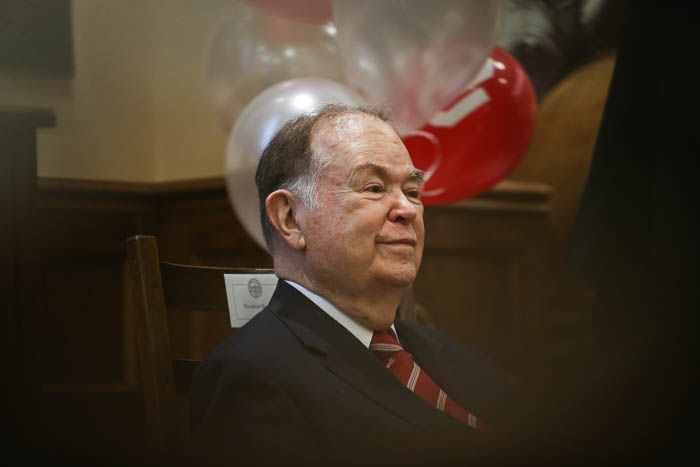
- Nick Hazelrigg, news managing editor
- Updated
- 2 min to read
A spokesperson for former OU President David Boren denied Boren acted inappropriately or unlawfully during his tenure at the university after The Oklahoman reported Boren was being investigated by the university for sexual harassment against male aides.
Bob Burke, an attorney and spokesperson for Boren, said in a statement he has not been made aware of the complaint against David Boren. Boren, 77, served as OU president from 1994 to 2018, and was previously a U.S. senator and governor of Oklahoma.
“I have been told that President James Gallogly has in the past few months commissioned the Jones-Day firm to investigate several people,” Burke said. “I have not been given a complaint or summary of any complaint against President Boren. To date, Jones-Day has not accepted our invitation to meet to talk about the matter. Jones-Day has been paid nearly $300,000 in taxpayer money and still won’t agree to even talk to President Boren’s counsel.”
Burke said Boren, who is on a sabbatical from teaching at OU this spring, denies any wrongdoing.
“Even though we have received no complaint, President Boren emphatically denies any inappropriate behavior or unlawful activity,” Burke said. “He has been a dedicated public servant for more than 50 years and his life is an open book in Oklahoma.”
University spokesperson Lauren Brookey emailed a statement saying the university had a legal obligation to investigate some allegations of misconduct. Brookey did not specifically tie the investigation to Boren or specify what type of misconduct was under investigation.
“The University of Oklahoma received allegations of serious misconduct that it was legally obligated to investigate,” Brookey said. “The University retained the Jones Day firm to conduct an independent investigation, which is ongoing at the current time. Appropriate individuals will have an opportunity to be interviewed during the investigation.”
Burke said the investigation is “not an objective search for truth,” mentioning previous reports of conflict between Boren and current OU President James Gallogly.
“It is a fishing expedition,” Burke said. “It has been widely reported that the current OU president threatened to destroy President Boren. I hope this leak of a possible inquiry is not part of any agenda to smear President Boren’s good name.”
The university contracted Jones Day previously to investigate misreporting of donation information. At the time, OU General Counsel Anil Gollahalli said the final report from that specific Jones Day investigation would not be made public.
During his 1978 campaign for U.S. senator, after public accusations from his opponent that he was gay, Boren swore on a bible that he was not bisexual or gay.
“The statement is utterly ridiculous and categorically untrue,” the Washington Post reported Boren saying at the time. “It is a shame that a person has to be subjected to this kind of personal attack in order to try to serve the public. I particularly resent the statement because it reflects upon the reputation of my wife, my children and my family as well as myself.”
- Nick Hazelrigg, news managing editor
- Updated
- 1 min to read
Chair of OU's Board of Regents Leslie Rainbolt-Forbes said the "truth will rise to the top" in regards to an OU sexual harassment investigation focused on David Boren and said she is not rushing to judgement.
In a statement emailed to The Daily from Rainbolt-Forbes through university spokesperson Lauren Brookey, Rainbolt-Forbes said the university would do the right thing when the time comes.
"This is a sensitive situation that we are still seeking to fully understand," Rainbolt-Forbes wrote. "We are not rushing to any judgments, and are certain the truth will rise to the top. At that time, we will absolutely and aggressively do the right thing.”
The statement comes after The Oklahoman originally reported the university is currently investigating whether Boren sexually harassed male aides. Boren has, through his lawyer Bob Burke, denied any wrongdoing.
- Jordan Miller, news editor
- Updated
- 1 min to read
The Oklahoma State Bureau of Investigation will serve as the lead agency in an investigation of criminal allegations against former OU President David Boren and former vice president for University Development Tripp Hall.
According to a statement from university spokesperson Lauren Brookey, the OU Police Department requested the involvement of the OSBI “in order to ensure an impartial and unbiased investigation on its campus.”
In a report by NonDoc, former OU graduates Jess Eddy and Levi Hilliard accused Boren and Hall, respectively, of unwanted sexual touching.
“The complaints originated with the Norman Police Department,” Brookey said. “The complainants recently described sexual misconduct in a public news account.”
- Emma Keith, editor-in-chief Jordan Miller, news editor
- Updated
- 6 min to read
Two OU graduates who say they described alleged sexual misconduct committed by administrators to mandatory reporters told The Daily they were never contacted by Title IX for an investigation prior to their story becoming public last week.
Jess Eddy, a former OU employee and teacher’s aide to former OU President David Boren, says Boren made unwanted sexual advances against him on multiple instances between 2010 and 2012. Eddy also alleges that Tripp Hall, former vice president of University Development, groped him in 2010.
Eddy’s allegations come in conjunction with allegations from Levi Hilliard, a 2017 OU graduate and current University Club employee, who says that Hall inappropriately and non-consensually touched and kissed him on multiple occasions through 2017 and 2018.
Eddy and Hilliard’s allegations were first reported March 26 by NonDoc, and Boren and Hall have both denied any wrongdoing. Boren and Hall also declined to comment on the situation when approached by The Daily on March 28, and the university has repeatedly declined to specifically comment on the issue because the investigation is ongoing.
Hall and Boren are currently the subject of a university investigation headed by law firm Jones Day, as well as an investigation by the Oklahoma State Bureau of Investigation. According to university spokesperson Lauren Brookey, the Jones Day investigation began in November 2018.
Eddy told The Daily in a March 31 interview that a Title IX report concerning his allegations was filed in November 2018, but that he has never reported his interactions with Boren directly to the Title IX office.
Eddy was questioned by Jones Day for the investigation in February 2019 based on the allegations in the 2018 Title IX report.
The investigation would unearth memories Eddy had tried to put behind him after almost 10 years of recovery from the alleged interactions with Boren and their aftermath. It would also place Eddy and Hilliard, two recent OU graduates and employees, at the center of allegations against one of the most powerful men in Oklahoma history — a former governor, senator and university president — and one of his closest political and personal allies.
‘I’m at the center of this. I didn’t even, I didn’t file a complaint.’
When Jones Day called Eddy in to speak about his allegations against Boren in February, Eddy said he had no concept of what Jones Day was investigating, and did not know he was about to relive events that he says happened almost 10 years ago.
After his first Jones Day interview, Eddy said he received a copy of a Title IX report detailing his alleged experiences with Boren from 2010 onward — his allegations of unwanted advances and touches from Boren — and was asked to confirm its validity. Eddy did not file the report and was unaware it existed until that point, and said he denied its contents to Jones Day investigators out of fear of retaliation by Boren or OU.
“You know, Boren’s going to be like, ‘God, he can’t keep his mouth closed,’” Eddy said. “‘He needs to shut his damn mouth,’ and … I’m afraid. I’m like, ‘Oh my God.’ You know what I mean? Like I’m at the center of this. I didn’t even, I didn’t file a complaint.”
Eddy said he believes the report was filed by Belinda Biscoe, senior associate vice president of university outreach, in November 2018. If Eddy’s allegation is true, the report came after months of personal and professional dispute between Biscoe and Eddy when they worked together from July 2017 to March 2018.
Eddy said he told Biscoe the details of Boren’s alleged misconduct in 2017 in a private conversation he never meant to be shared, and Biscoe was the only current university administrator who knew of Eddy’s story.
While Biscoe is a mandatory reporter under OU’s Title IX system, more than a year passed between the time Eddy said he told her about his alleged interactions with Boren, and the November 2018 Title IX report.
In that year, what Eddy said had once been a friendship between himself and Biscoe turned into disagreements about Eddy’s position within Biscoe’s department, ending with Eddy transfering to a different OU department.
The Daily has reached out to Biscoe once at her office number, twice at her landline and twice at her cell number, since March 28 to discuss Eddy’s allegations, but has not heard back.
After initially denying to Jones Day that Boren had ever acted inappropriately toward him, Eddy wrote a letter for Clark Brewster, one of Boren’s attorneys, March 14 stating that Boren never touched him inappropriately.
Eddy said leading up to the Jones Day investigation, he had compartmentalized most of what he says happened between him and Boren, but suddenly, the trauma of the situation was fresh in his life again. In the time after the alleged 2010 events, Eddy was arrested for disturbing the peace, DUI, vandalizing a police car and public intoxication during Norman Music Fest in 2011, NonDoc reported.
This time, he said his mental and physical health again began to decline, and three days after Eddy wrote the letter, he called Boren to confront him about the alleged sexual harassment.
Eddy said he asked Boren for compensation, as his mental and emotional state had made him unable to work and he did not have medical insurance for therapy. Boren denied the request, Eddy said, allegedly telling him that any payment would be an admission of guilt on Boren’s part, and denying that anything inappropriate had ever happened between himself and Eddy.
Since then, Eddy said he and his civil advocate and case manager, Sara Bana, went to the Norman Police Department March 25 and then to Jones Day to tell “the truth” about what happened to him and what he said he knows happened to others.
“He had been a victim of some serious patterns of unethical, illegal behavior,” Bana said. “I wasn’t comfortable with the way that Jones Day was doing this secret investigation. They don’t technically have a duty to report any crimes they come across; (Jones Day) would report that to the university and the university would choose whether the truth would come out or not.”
A NPD spokesperson has since said that the allegations Eddy brought to the NPD are outside of its jurisdiction, and referred them to the OU Police Department. OU announced March 28 that Eddy’s allegations against Boren and Hall would be investigated by the OSBI.
“The public oversight, the police — that puts pressure on Jones Day to do a proper investigation,” Eddy said. “I have no faith that they will.”
‘I was afraid every single day going into work.’
After Hilliard said he experienced inappropriate touching by Hall, he alerted his supervisor at the University Club, who told him that he would discuss the incident with Hilliard, but never followed up.
Hilliard said Hall first touched him on the buttocks a few times in February 2017. A year later, he said Hall forcibly kissed him on the neck during a 2018 event at the Sam Noble Museum.
Hilliard said he alerted his supervisors to what happened, but after telling him they would talk about the issue later at work, they never did, and never told Hilliard if they were reporting the incident. Hilliard said he was only contacted by Title IX after the NonDoc story came out detailing his allegations.
“I can’t comment on my supervisor’s state of mind at the time, or the underlying conditions that may have prevented him from resolving the ongoing issue,” Hilliard told The Daily in an email.
Bobby Mason, OU’s Title IX coordinator, told The Daily via email that if a mandatory report is made, the first step would be for the Sexual Misconduct Officer to review the report and reach out to the individual on the receiving end of the discrimination or harassment.
“It would be rare for a reach out to not be sent in response to a mandatory report,” Mason said of Title IX cases in general. “If a report was received that is not actionable under our (sexual misconduct, discrimination and harassment policy) but would be better addressed as an employment, conduct, or educational issue, we may refer the case to either HR, (Equal Opportunity), Academic Affairs, or Student Conduct.”
Hilliard’s current supervisors at the University Club declined to answer The Daily’s questions about whether they made a report to Title IX, saying they have been advised not to speak with reporters about the issue while the Jones Day investigation is ongoing. It is unclear if Hilliard’s supervisors pursued steps beyond Title IX.
In a third incident in 2018, Hilliard said Hall grabbed his buttocks and kissed his neck while he was working at an OU football game. At the time of these incidents, Hall served on the Board of Trustees for the University Club, according to NonDoc.
Hall was terminated Nov. 1 by OU President James Gallogly soon after an investigation by Jones Day found misreporting of numbers in the development department. Hall has declined to comment to The Daily, but told NonDoc there was no reason anyone would accuse him of inappropriate touching.
“Before (Hall’s) termination, I was afraid every single day going into work,” Hilliard told The Daily. “If I saw that he had a reservation on a certain day, my heart would sink into the pit of my stomach.”
Hilliard and Eddy have both said it has been a difficult time to relive their experiences publicly. Though it has required courage to come out with his story, Eddy said sharing his truth has been somewhat cathartic.
“(This past week) has just been, you know, at times nightmarish,” Eddy said. “Truthfully, though, I have my moments of great fear and distress, since everything’s gone public. I feel better that I’m telling the truth, you know, it’s just something about it that ... I’ve never experienced in my life, that it gives me the strength to kind of stand on.”
Jana Allen contributed to this report.
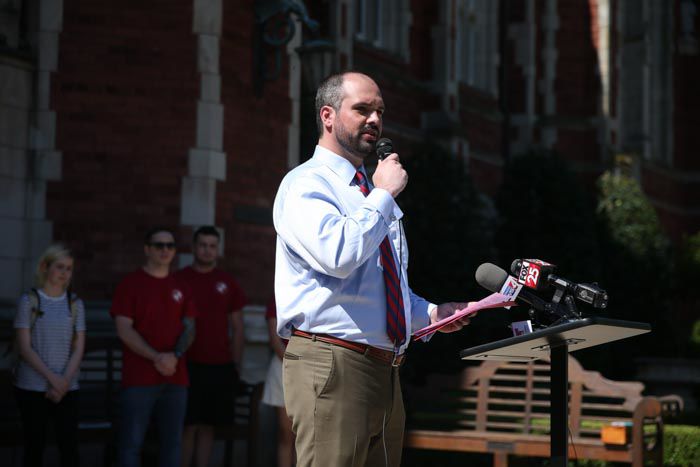
- Scott Kirker, editor-in-chief
- Updated
- 2 min to read
Four pages of the Jones Day report on its investigation into sexual misconduct allegations against former OU President David Boren describe Eddy’s accounts of Boren’s sexual conduct as “generally credible,” saying that his account matches with the stories of six witnesses to other incidents.
Jess Eddy, who has accused former OU President David Boren of sexual misconduct, received access Tuesday to four pages of the Jones Day law firm’s report on its investigation into allegations against Boren.
The description of Eddy’s testimony was included in the Jones Day report. Eddy was given access to the section of the report that focused on his testimony. An OU official provided Eddy with access to the pages of the report Tuesday. Eddy later provided screenshots of the pages to The Daily and other media outlets.
Only Eddy’s and Boren’s names are used in the four pages of the report. Other former senior administrators and witnesses are referred to, but not named.
The report says Eddy met with Jones Day on Feb. 13 and again on March 26.
The report describes Eddy’s March 26 account of his experience on a trip to Houston in which Boren asked Eddy to purchase alcohol and drank with him privately. Eddy’s account was first reported by NonDoc the same day.
The excerpt says that while Eddy's account matches with descriptions of Boren's sexual conduct from other "witnesses" and Jones Day could confirm his March 26 account as "generally credible," it also acknowledges possible credibility issues raised by Eddy's varying accounts.
"Jones Day determined that Mr. Eddy provided generally reliable information during his second interview with respect to President Boren’s sexual conduct," the report excerpt said. "That said, Jones Day acknowledges the credibility issues raised by Mr. Eddy’s varying accounts and his conduct related to the same. Thus, Jones Day notes that the core findings and conclusions in this Report do not rely heavily and certainly not exclusively on Mr. Eddy’s statements.”
In a statement that Eddy gave to The Daily along with screenshots of the report excerpt, he said that he decided to release the screenshots because the public "has the right to know." Eddy also said the handling of the matter by the university and the OU Board of Regents was "questionable, if not flat out unlawful."
"Now that I am in possession of (the report excerpt), I’m not going to do what OU has been doing and keep it secret," Eddy said in the statement. "The report cost OU students and taxpaying Oklahomans over half a million dollars. The public has the right to know. They paid for it."
Eddy's viewing of the report excerpt came three days after The Oklahoman reported that the Jones Day report had been given to the Oklahoma State Bureau of Investigation. OSBI began its own investigation in March into allegations against Boren and former OU administrator Tripp Hall.
Screenshots of the four pages provided to Eddy can be read below.
This story will be updated with more information.
This story was updated May 28 at 6:45 p.m. to include screenshots of the Jones Day report excerpt provided to Eddy.
This story was updated May 28 at 6:50 p.m. to include additional Jones Day analysis on Eddy's account from the report excerpt.
This story was updated at May 28 at 7:00 p.m. to include an excerpt of Eddy's statement and additional context on the Jones Day report and OSBI investigation.
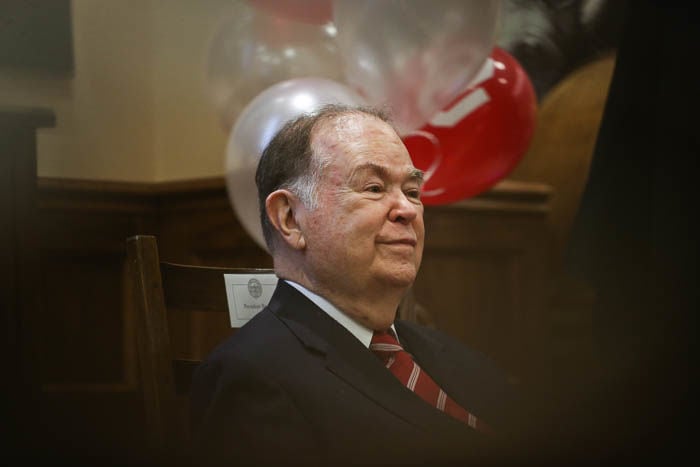
- Blake Douglas, news editor
- Updated
- 1 min to read
Former OU President David Boren has cut all remaining ties with the university, as first reported by The Oklahoman.
In a two-page resignation letter submitted to OU Wednesday, Boren agreed to surrender his president emeritus status. Boren will no longer teach political science at the university and will give up his free tickets to OU sporting events, according to the article.
Additionally, Boren will lose his rights to a teaching assistant, an administrative assistant, a campus office and a parking space, according to the article.
The university has no plans to remove the statue or any other likeness of Boren at this time, a university spokesperson told The Daily Wednesday. The university may reconsider the decision not to remove likenesses of Boren depending on the results of the OSBI investigation or potential grand jury proceedings.
The resignation comes as the investigation into sexual misconduct accusations against Boren is still ongoing, according to the article.
In the article, Boren's attorney, Clark Brewster, said Boren felt it was best for OU if he stepped away.
"David Boren no longer has any relationship going forward with the University as a result of his resignation," said Leslie Rainbolt-Forbes, chairman of the OU Board of Regents. "We have worked very hard to bring to a close the Title IX issue between David Boren and the University of Oklahoma while respecting those individuals involved who desire to maintain their privacy."
Jess Eddy, a former OU student and employee who accused Boren of sexual misconduct, said this is a big step in moving forward.
"This is an important step toward healing at the university," Eddy said, "and the next steps include learning how this abuse was able to happen and how to prevent it from happening again, and I look forward to an era of accountability at OU in the future."
The Oklahoman reported the grand jury is expected to meet next week regarding the Boren investigation.
This article has been updated to include more information than was available when originally published.
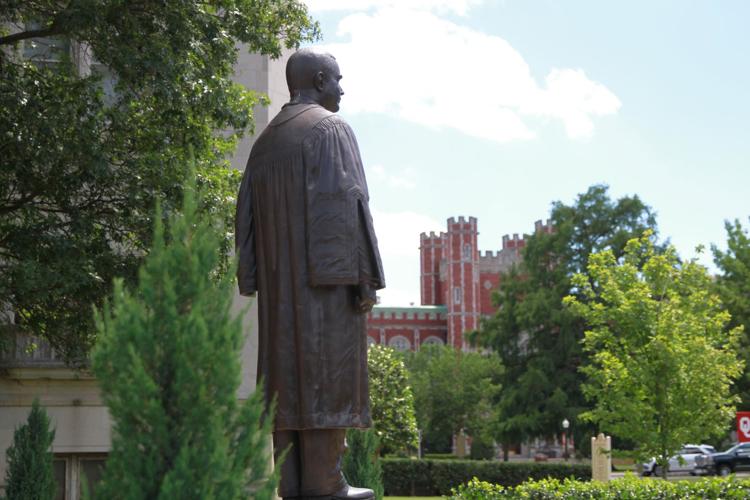
- Scott Kirker, editor-in-chief
- Updated
- 1 min to read
The university has no plans to remove the name or likeness of former OU President David Boren from campus at this time, a university spokesperson confirmed to The Daily Wednesday.
That decision may be subject to change pending the results of the Oklahoma State Bureau of Investigation's investigation into sexual harassment allegations against Boren, or potential grand jury proceedings, the spokesperson said. The Oklahoman reported grand jury proceedings related to Boren were expected to occur next week.
The spokesperson also said Boren's resignation letter would not be released. Leslie Rainbolt-Forbes, chair of the OU Board of Regents, said in a statement Wednesday that Boren's letter "terminates the Presidential Transition Agreement and relinquishes his affiliation with the University of Oklahoma."
While Rainbolt-Forbes said in the statement that Boren's resignation effectively brings to a close the "Title IX issue" between Boren and others, the university spokesperson said that any potential investigation into allegations against former OU administrator Tripp Hall would remain a Title IX investigation that cannot be commented on.
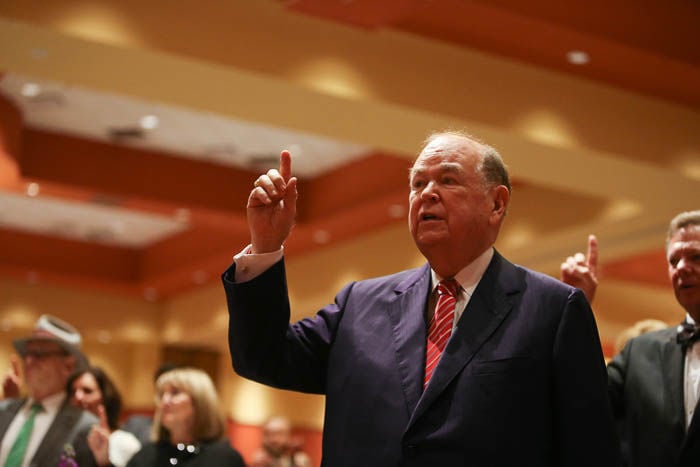
- Blake Douglas, news editor
- Updated
- 1 min to read
On Thursday former OU President David Boren released a statement through his attorney, Clark Brewster, addressing his decision to resign as president emeritus Wednesday.
Boren released the statement a day after he submitted a resignation letter to the OU Board of Regents, surrendering his president emeritus status and cutting remaining ties with the university.
“I deeply love the University of Oklahoma. The over 24 years I served at the University were the most rewarding years of my life. I will always be a supporter of the University and care about the university family,” Boren said in the statement.
Boren said he decided to resign to stop further damage to OU and the people involved.
“Last year, I came under a personal attack that was so vicious and relentless that it defied my comprehension,” Boren said in the statement. “As I wrote to the Regents, I felt that it was best to resolve this matter rather than continue a battle which was damaging lives and the University itself.”
In the statement, Boren said while he was “tempted” to continue the legal battle to protect his reputation and prove his innocence, he felt it was best to “suggest a resolution to end this divisive and unfair controversy.”
Boren said in the statement he has “only the best wishes” for OU moving forward.
- Scott Kirker, editor-in-chief
- Updated
- 1 min to read
Jess Eddy, who has accused former OU President David Boren and former administrator Tripp Hall of sexual harassment, was sent a letter from an OU official via email Thursday describing the results of the university's investigation against Boren.
According to the letter, after a thorough review of the evidence, and using a standard of preponderance of the evidence, "the evidence was found to be sufficient to substantiate that (Eddy) had been subjected to a hostile working environment."
According to the letter, the outcome of the university's investigation was sent to the OU Board of Regents for appropriate administrative action.
According to the letter, after an individual "voluntarily separates or resigns from OU, the University lacks jurisdiction over the individual, as the maximum sanction that the University can impose on anyone is disassociation with the University."
OU is continuing to look into allegations against Hall, the official said in the email the letter was attached to.
A university official told The Daily Friday that the investigation into Hall is continuing despite the fact that he is no longer associated with the university because OU has a responsibility to investigate the Title IX complaints made against individuals.
When Boren resigned, the official said, the OU Board of Regents decided that the investigation into complaints against him was complete. The university has yet to deem the Tripp Hall investigation has been completed, so the investigation continues.
- Bailey Lewis, news editor
- Updated
- 1 min to read
Sen. James Lankford and former Oklahoma Gov. and OU Board of Regents member Frank Keating both said the university needs to release more information about the sexual misconduct allegations against former OU President David Boren, NonDoc reported Tuesday.
Lankford referenced releasing something similar to the report about the Catholic Archdiocese of OKC, which alleges 11 clerics “inconsistently and inadequately investigated allegations of sexual abuse of minors in the past,” NonDoc, a journalism organization based in Oklahoma City, reported.
OU provided the Jones Day law firm’s report to the Oklahoma State Bureau of Investigation, the Oklahoman reported in May. Jess Eddy, a former OU employee and aide for Boren who has accused him of sexual misconduct, released four pages of the Jones Day report to media in May that called his account “generally credible.”
To read the full story from NonDoc, click here:
With the caveat that federal Title IX rules must be followed and a state criminal investigation is ongoing, U.S. Sen. James Lankford and former Gov. Frank Keating both believe the University of Oklahoma should ultimately release more information about allegations of sexual misconduct against former President David Boren.
Speaking Friday in separate conversations, Lankford and Keating each said the public deserves transparency from Oklahoma’s largest public university.
“They’ve got to get it behind them,” Lankford said. “If the facts never come out, if you never really get a dot at the end of that sentence, then it always hangs over the university in recruiting and everything else. And we can’t have that.”
- Scott Kirker, assistant news managing editor
- Updated
- 2 min to read
The nonprofit corporation that funded and constructed Cross Village filed a lawsuit Monday against the university seeking more than $750 million in damages.
The lawsuit, which was filed in Cleveland County by attorneys representing Provident Oklahoma Education Resources Group, Inc., alleges the university made “false promises and misrepresentations” to induce Provident Oklahoma to fund and construct the project on OU’s campus.
Cross Village is a luxury upperclassman housing facility that opened in 2018. The facility was created through a public-private partnership between the university, Provident Oklahoma and an on-site property manager. The project’s bondholder trustee and the university exchanged accusatory letters in September threatening legal action regarding Cross Village.
Two bond ratings experts told The Daily in October that the disagreement is unprecedented in the public-private student housing sector, and that they expected the dispute to reach legal proceedings.
The lawsuit alleges the university committed to “rent (the commercial and parking spaces) in their entirety every year during the life of the bonds” that financed the project and amounted to $250 million. The university announced in July that it would not renew the commercial and parking leases, effectively shutting down restaurants and commercial elements of the facility.
The lawsuit alleges these promises were made “repeatedly” by high-ranking university officials, and they were made in a bond investor presentation the university gave.
According to the lawsuit, the university said state law prohibited it from signing parking and commercial leases for more than one year, renewable annually, but the university “provided repeated assurances” that it would renew the leases.
In a statement Monday, a university spokesperson denied the allegations made in the lawsuit.
“In an apparent attempt to gain leverage in an ongoing dispute, Provident today filed a lawsuit against the university, which parrots the same baseless claims it has previously put forth,” the statement said. “The university will respond to the lawsuit as appropriate. OU’s obligation remains to its students and the taxpayers of Oklahoma, not to Provident or its debt.”
The lawsuit states that roughly one-third of project revenues should have come from the canceled parking and commercial leases and that the remaining two-thirds of project revenues should have come from rents paid by students living in Cross Village. But the lawsuit alleges the university misrepresented data related to student demand as well.
“The university had a flawed vision of the demand for on-campus upperclassman housing and the type of units upperclassmen would rent,” the petition states. “In order to induce the construction of student housing that fits that misguided view, the university misrepresented the core facts.”
The university provided misrepresentations indicating that more upperclassman demand would exist than actually did, the lawsuit alleges, and indicating that upperclassman student demand for Cross Village suites would desire units without kitchens, despite student surveys included in a university-solicited market study that indicated upperclassmen prioritize kitchens when selecting housing.
Cross Village has experienced low occupancy since opening in 2018. In August 2018, the housing complex had a 28 percent occupancy rate. As of Aug. 23, 2019, 34.7 percent of Cross’ roughly 1,200 beds were occupied.
The lawsuit also alleges that by refusing to house freshman students in Cross Village, the university violated provisions of the Cross Village ground lease requiring the university to place students in Cross Village on an equal basis with university-owned housing.
“(Cross Village) is a housing facility suited for freshman students; however, the university has refused to allow freshman students to live at (Cross) even as it amended its policies to place freshmen into university-owned housing,” the lawsuit states.
The lawsuit also alleges the university refused to allow freshmen to live in Cross “to the detriment of its own students.”
According to the lawsuit, Cross Village has been offered to the university as a solution to “the severe mold issues that plague the university’s Adams, Couch, and Walker freshman dorms,” but the university did not allow freshmen who wanted to escape the alleged mold to live in Cross.
According to the lawsuit, Provident Oklahoma is seeking damages in excess of $250 million for breach of the ground lease, in excess of $250 million for breach of contract, in excess of $250 million for promissory estoppel, $20 million for unjust enrichment from an upfront payment the university requested from Provident Oklahoma, a constructive trust over the $20 million of bond proceeds, and payment of legal fees.
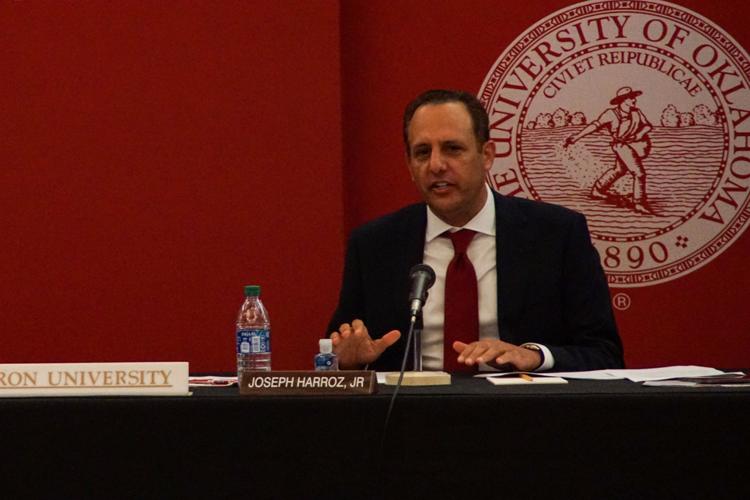
- Scott Kirker, assistant news managing editor
- Updated
- 4 min to read
The OU Board of Regents selected Joe Harroz as permanent president at its May 9 meeting after nearly six hours in executive session.
The board moved for Harroz to take on the title of permanent president effective immediately at his current rate of pay. The motion passed unanimously.
Before the board voted, board chair Gary Pierson summarized the presidential selection process that ended with Gallogly’s selection, and said Harroz was one of the final three in consideration.
Pierson said on the night Harroz was selected as interim, the board was willing to choose Harroz as permanent president but that Harroz asked the board to be named interim president rather than permanent president.
“(Harroz) knew he was up to the challenge, and he was unafraid to leave the sure thing that he had as dean of the law school to do right by the university,” Pierson said. “So today, when the regents met, we felt we were at the end of a very open, very transparent 12-month interview with interim President Harroz. Some people could argue that we were at the end of a 23-year interview, and they would be correct.”
Pierson said the board continued the need for stability at OU, Harroz’s in-depth knowledge of OU, his familiarity with the OU community worldwide, and many other qualifications and criteria.
“We also weighed the merits, and the need for a national search. And let’s just get it right on the table. We know there are going to be some people that say we didn’t do this right because we didn’t do a national search. Well, we considered that, and we considered it very carefully.”
Pierson said the regents looked at nationwide success of national searches and other factors related to national searches when deciding not to pursue such a search immediately prior to Harroz’s selection as permanent president.
“In so doing, we educated ourselves on the national success of national searches, especially in terms of, what’s the longevity of somebody coming from out-of-state to a new institution and their tenure before they leave for the next institution. We considered today the history of OU as it relates to national searches and how many presidents have come and gone in less than five years as a result of that.”
Pierson said candidates brought in by national searches can have a few hours or days with campus constituents. Pierson said the regents kept in mind that perhaps OU’s most storied president, George Lynn Cross, was appointed after 12 months as interim president.
“This is the most important decision we can make at OU,” Pierson said. “Any criticisms about that, the level of seriousness by which we take this, will be wrong. We could not have taken it more seriously.”
The regents’ May 8, 2020 meeting agenda included an item stating that potential action could be taken regarding the hiring and employment of a university president, as well as the evaluation of Harroz, who’d served as interim president for the past year. The item also stated that an executive session could be proposed regarding those topics.
During the meeting, though, the group moved to delay that item until the next day, and instead moved to enter executive session on another agenda item listing pending litigation against the university.
At around 8:45 a.m. on May 9, the regents reconvened from the previous day’s executive session. After hearing a few committee chair reports, the group moved to enter executive session again — this time, to discuss the potential selection of a permanent president, as well as pending litigation.
The regents’ decision to choose Harroz as a permanent president without the use of a search committee means the process was less open to the public than the secret search that ended in former OU President James Gallogly’s selection in 2018. Then, a search committee was formed that provided the regents with a list of finalists from which the regents selected Gallogly after a months-long selection process.
When Gallogly announced his sudden retirement in May 2019, the board chose Harroz as interim president in a nearly six-hour executive session meeting four days later.
When choosing a president, the Regents’ Policy Manual recommends the regents form a search committee of appointees from university groups including faculty, staff and students, but specifies that the regents are not bound to this process or to follow the committee’s recommendation(s) in their final selection.
Judith Wilde, chief operating officer and professor at the Schar School of Policy and Government at George Mason University in Virginia, has researched university presidential searches across the country. She said the regents do have the ultimate power to hire and fire a president, but doing so without much constituent input could be harmful to the relationship between university administrators and stakeholders.
“If (constituents) have a chance to provide input to the board, whether or not there’s a formal search … I would think that would give (the president) a better standing with the community — particularly, now, with a caveat — not only do they have a chance to provide some input, but that input is listened to,” Wilde said.
During his interim presidency, Harroz faced challenges including the outbreak of COVID-19 and related closures, as well as a three-day Evans Hall sit-in led by OU’s Black Emergency Response Team that came after two OU professors in two weeks said racial slurs in their classes.
Some of Harroz’s major actions while in office included a 69-person reduction in force in June 2019, a budget cut for fiscal year 2020, selecting a new chief diversity officer and creating a strategic plan for the university to use moving forward.
Harroz has long-standing ties to the university — he grew up in Oklahoma City, is an OU graduate and has served in numerous administrative roles at the university.
Harroz began serving as OU’s vice president for executive affairs in 1994 and was named OU’s general counsel in 1996, serving as the chief legal counsel to the university and the OU Board of Regents for 12 years — the longest tenure in the position in OU history. He then served as law dean from 2010 until his selection as interim president in 2019.
Harroz earned his juris doctorate from Georgetown University Law Center, and served as legislative director and legal counsel to former OU President David Boren during Boren’s time as a U.S. senator.
Additional experience includes Harroz’s time as president of a publicly traded health care company from 2008 to 2010. He also was a founding member of the Oklahoma Appleseed Center for Law and is a current board member of the Oklahoma Foundation for Excellence, according to its site.
Ari Fife contributed to this report.

- Blake Douglas, news managing editor
- Updated
- 2 min to read
Former OU President David Boren and former university Vice President Tripp Hall will not face indictments after a lengthy investigation into sexual misconduct allegations.
Special counsel Pat Ryan said in a Tuesday news release the Oklahoma State Bureau of Investigation had concluded its investigation of “alleged wrongful conduct while they were employed at the University of Oklahoma.” The news was first reported by The Oklahoman.
“I’m obviously not surprised, and I’m eased only to the extent that I know that this is … it’s over,” Clark Brewster, Boren’s attorney, told The Daily on Tuesday. “This was started maliciously two-and-a-half years ago by (former OU President James) Gallogly, this started off with just an outsized vengeance by Mr. Gallogly who actually was quoted as saying ‘He’s the meanest S-O-B that Mr. Boren ever encountered and he will destroy him.’”
The OSBI investigation began in the spring of 2019, shortly after NonDoc reported that OU graduate and former university employee Jess Eddy accused Boren and Hall of unwanted sexual touching. A report by the Jones Day law firm later found that Eddy’s account of the sexual misconduct to be “generally credible,” and OU later confirmed to Eddy he had been subjected to a “hostile” working environment while employed at OU during its own Title IX investigation.
An independent lawsuit was filed by Levi Hilliard, another former OU student and employee who accused Hall of “multiple instances” of sexual assault and battery, but the suit was later settled.
Boren, a former Oklahoma governor and U.S. senator who served as OU president from 1994 to 2018, denied wrongdoing throughout the process. However, he did cut remaining ties with the university — including his position as a political science instructor, free tickets to sporting events and a campus office and parking space — in June 2019.
Eddy said although an indictment will not be seen, he will be pleased if his story helps measures be taken at OU to keep students safe from sexual crime in the future.
"The fact is David Boren preyed on young men at OU for decades. Many experienced much greater trauma than me," Eddy said in a statement to media. "Justice for me was not an indictment, but rather that the truth prevail and measures be taken at OU to ensure this never happens again ... if that end was met, much of my objective has been accomplished."
Brewster said he expects Boren to publicly address the investigation’s findings at some point in the future.
“Well, I think he will (speak publicly at some point soon),” Brewster said. “It’s the dawn of a new day for (Boren and his wife, Molly), and hopefully his reputation will be what it was, and people will admire him as they should for all of the great things he’s done for the University of Oklahoma, as well as the state of Oklahoma and the United States as U.S. senator.”
Eddy said reform at OU to prevent sexual violence will not be possible as long as those he said helped facilitate Boren's "predation" remain in leadership positions at the university.
"Today, President Joseph Harroz, General Counsel Anil Gollahalli and Clarke Stroud maintain positions of power and influence at OU," Eddy said, "and no student or employee is safe under their administration."
Harroz has previously worked closely with Boren in several positions, including as Boren's legislative director while Boren was serving as a U.S. senator and as OU's vice president of executive affairs and legal counsel during much of Boren's presidency.
Eddy said he was grateful to the law enforcement officials and media members who provided "human treatment in the darkest period" of his life.
The university issued a brief statement to the media at 1 p.m. Tuesday.
"From the beginning, the university sought a thorough and objective investigation, cooperating extensively with the Oklahoma State Bureau of Investigation at every turn," the statement read. "The university appreciates the work of the OSBI and of the Grand Jury."
Editor's note: This story was updated at 12:50 p.m. to include a statement to media from Jess Eddy.
Editor's note: This story was updated at 1 p.m. to include a statement to media from the university.
- Ari Fife, assistant news managing editor
- Updated
- 1 min to read
Former OU President David Boren expressed appreciation for Oklahomans’ “kindness and confidence” in him after a special counsel announced he won’t be indicted on sexual assault allegations, The Oklahoman reported.
Special counsel Pat Ryan announced Tuesday neither Boren nor former university vice president Tripp Hall would be indicted after a lengthy investigation by the Oklahoma State Bureau of Investigation into allegations of misconduct while the two were employed by OU.
“I deeply appreciate the support and encouragement that Oklahomans have given me over many years and especially during the recent painful and difficult time,” Boren said, according to The Oklahoman. “The people of our state have a strong sense of fairness and justice. You have made me even more grateful to be an Oklahoman. Your prayers and support have sustained me throughout this ordeal.”
OU graduate and former university employee Jess Eddy, who accused Boren and Hall of sexual misconduct in March 2019, said to the media Tuesday he’ll be satisfied if his experiences will help create more measures to protect other students.
"The fact is David Boren preyed on young men at OU for decades. Many experienced much greater trauma than me," Eddy said in a statement. "Justice for me was not an indictment, but rather that the truth prevail and measures be taken at OU to ensure this never happens again ... if that end was met, much of my objective has been accomplished."
According to the Oklahoman, Boren has only spoken publicly one other time since the sexual misconduct investigation began almost two years ago. He denied wrongdoing from the outset.
“I deeply love the University of Oklahoma,” Boren said last year, according to The Oklahoman. “I will always be a supporter of the university and care about the university family.”
In June 2019, Boren formally cut ties with OU, surrendering his president emeritus status, position as a political science professor, and free tickets to university sporting events. He also lost rights to a teaching assistant, an administrative assistant, a parking space and a campus office.
- Macey Thaxton
- Updated
- 1 min to read
The OU Board of Regents filed a motion to close the courtroom for oral argument regarding a lawsuit pursuing the release of reports by the Jones Day law firm that include allegations about former OU President David Boren and Former Vice President of University Development Jim "Tripp" Hall.
On Aug. 28, Cleveland County Judge Michael Tupper decided to postpone judgment and schedule further hearings regarding news and media outlets’ access to the courtroom. According to university lawyers, the reports include details of interviews with 62 people that were made in confidence. The reports supposedly detail witnesses’ statements on the allegations of sexual misconduct against Boren and Hall.
The motion, filed on Sept. 13, argues that an open judgment hearing would harm the university and the public and calls for a closed summary judgment instead.
“The University could be subject to civil liability for retaliation under Title IX and the U.S. Constitution if it breaches its prior assurances of confidentiality,” the motion reads. “Holding the summary judgment hearing in open court is one such way in which that information could wrongfully become public.”
While the university acknowledged the curiosity of the general public about the reports, the motion argues the court is only reviewing evidence to determine if the case should be dismissed on summary judgment or proceed to trial, therefore there is no constitutional right to an open summary judgment hearing.
The motion additionally argues that the witnesses of the Jones Day reports rely on the university and the court to maintain their information as confidential.
“The purpose of summary judgment is to either dispose of a legal action before public trial or limit the factual matters tried,” the motion reads. “The use of information and evidence produced in discovery is meant to ‘facilitate orderly preparation for trial, not to educate or titillate the public.’”
The motion includes that the Plaintiffs can later motion to unseal the transcript for public consumption without risking the release of confidential information.
The reports were gathered in 2018 and 2019 by Jones Day law firm and sent to the Oklahoma State Bureau of Investigation in 2019. Charges were not filed against Boren, Hall or the university.
In June 2021, Tres Savage, editor-in-chief of NonDoc, filed a lawsuit against the OU Board of Regents, claiming the university had violated the Oklahoma Open Records Act by not releasing these reports. During the Aug. 28 hearing, Savage and his counsel argued the public has a constitutional right to access the details of the investigation and the documents in question are not confidential.
This story was edited by Ismael Lele and Ana Barboza. Gretchen Schultz and Avery Avery copy edited this story.
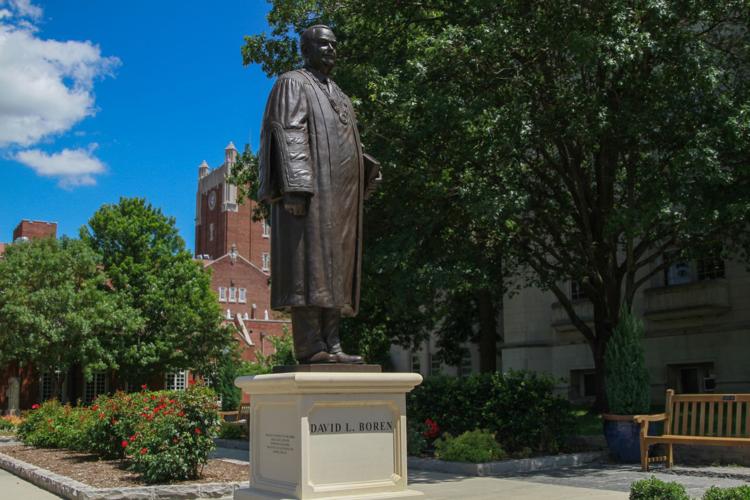
- Peggy Dodd
- Updated
- 3 min to read
Editors Note: This article was updated at 2:29 p.m. to clarify that NonDoc's argument for releasing the Jones Day reports was that the reports were not exempt from the Open Records Act.
A Cleveland County judge has ruled in favor of OU, declaring the reports from law firm Jones Day containing allegations against former OU President David Boren and former Vice President of University Development Jim “Tripp” Hall are privileged as a matter of law.
On Dec. 20, Cleveland County Judge Michael Tupper ruled OU had “properly exercised its statutory discretion” by denying a request for the documents under the Open Records Act from media outlet NonDoc.
In 2021, Tres Savage, editor-in-chief of NonDoc, filed a lawsuit against the OU Board of Regents claiming OU had violated the state’s Open Records Act after his request for a copy of the Jones Day report was denied.
Between 2018 and 2019, OU paid Jones Day $1.5 million to investigate alumni donorship data reported to U.S. News & World Report, after it was discovered OU had provided falsified data since 1999, and sexual misconduct allegations against Boren and Hall.
Over the course of the case, lawyers for OU argued publicizing the Jones Day report would release identifying information about victims. OU cited several exemptions under the Open Records Act, including attorney-client privilege, personnel records, along with the constitutional right to privacy as resources for not releasing the report.
NonDoc’s lawyers argued that the report should be made publicaly available because none of the exemptions under the Open Records Act were applicable in this case. NonDoc's lawyers also argued that the Jones Day investigation was about an abuse of power.
During the case, Tupper had the opportunity to read the Jones Day reports alone in his court chambers. Tupper ruled that the Jones Day reports are protected under the personnel records and investigative files exemption of the Open Records Act.
In an article posted to NonDoc, Savage wrote he plans to appeal the case to either the Oklahoma Court of Civil Appeals or the state Supreme Court.
“As I have maintained during the five years that have passed since Jones Day completed its investigations for OU, I look forward to helping the university turn the page beyond misconduct of the past,” Savage wrote in the article. “However, since those who do not learn from history are doomed to repeat it, the public has a right and a need to read the pages that brought us to this point.”
Jones Day reports background
Boren served as OU’s president for nearly 24 years, from 1994 to 2018. Boren played a large role in the physical transformation of OU, founding the Honors College and the College of International Studies. Boren also was involved in the success and improvements of OU’s athletic department, hiring Athletic Director Joe Castiglione in 1998 and former head coach Bob Stoops in 1999.
Prior to his time as OU president, Boren served as a U.S. senator for 15 years and Oklahoma’s governor for one four-year term.
Hall was a longtime confidant and employee of Boren, spearheading numerous fundraising efforts for Boren, greatly increasing private donations to support OU’s endeavors. At OU, Hall served as the vice president of university development. When Boren was senator in 1994, Hall served as his director of eastern Oklahoma operations.
In 2019, Jess Eddy, an OU graduate and former teaching assistant, alleged he received unwanted sexual touching from Boren and was groped by Hall. A second OU graduate and university employee, Levi Hilliard, alleged Hall touched him inappropriately multiple times in 2017 and 2018. Hilliard settled his case against Hall in court in 2020.
When allegations were first reported in 2019, Boren and Hall declined to answer questions or comment on the allegations. The Oklahoma State Bureau of Investigation looked into the claims. At the end of OSBI’s investigation, neither Boren nor Hall faced indictments.
Boren denied any wrongdoing throughout the Jones Day investigation. Boren did cut all remaining ties with OU in June 2019, including his position as a political science instructor, free tickets to sporting events, his campus office and an assigned parking space.
Hall was terminated by the university in 2018 as part of a series of staff layoffs.
Jones Day investigated two matters for OU: the Boren and Hall allegations and misreported alumni participation and donor data to the U.S. News & World Report. US News and World Report is a media outlet that produces an annual “Best Colleges” list, ranking universities based on multiple criteria including a school’s alumni giving rate.
OU admitted to reporting incorrect information since 1999, after discovering the misreporting in 2018 and provided updated information to U.S. News & World Report immediately.
As a result of the false data reporting, U.S. News and World Report stripped OU of its ranking on the “Best Colleges” list and would remain unranked for two years. OU reentered the U.S. News & World Report rankings in 2022 as the 127th best university nationally.
This article was edited by Ismael Lele.
More like this...
- Nicholas Harrison
- 1 min to read
OU will spend about $14 million renovating a 500-year-old monastery in Arezzo, Italy for its study-abroad programs, according to university documents.
This means the university will have spent $16.5 million — including the $2.5 million spent to purchase the historic site, according to documents from the university’s architectural and engineering departments.
Uncommitted revenues from the university’s affinity-card agreement and Coca-Cola pouring-rights contract as well as private monies have been earmarked for the project, said Chris Kuwitzky, associate vice president and chief financial officer.
Almost $4 million in private funds has been raised thus far and no state-appropriated funds would be used for the project, OU President David Boren said.
Boren said he was confident sufficient private funds could be raised. However, revenues earned from monetizing the institution’s utilities systems also might be used, Boren said last week.
Boren said he didn’t support the purchase and renovation of the monastery when he was first approached with the idea.
“I literally threw them out the door,” Boren said. “It was one of those days when I was really, really upset about some more budget cuts from the state Capitol, and I said, ‘Get out. Don’t talk to me about that.’”
However, Boren said as he thought about the Arezzo project, he realized the purchase and renovation could provide an additional outlet for students hoping to study abroad.
The facility is expected to open in 2013 with accommodations for 45 to 50 students, three to four resident advisers and graduate assistants, and one faculty-in-residence.
It will include modern plumbing, wireless Internet, study areas and dining facilities, and a resident-life staff providing community programming.
College of International Studies Dean Zachariah Messitte said he felt the Arezzo program is an important part of the university’s educational experience.
“We hope the Arezzo program will help instill a lifelong curiosity and appreciation by OU students of other cultures, languages and the world,” Messitte said.
The precise cost of the project is still uncertain, Messitte said. However, he defended the value of the program.
“Thousands of OU students — including some of who would never have studied abroad because it would have been too expensive, too complicated or too hard to complete their major — will get their first taste of life outside of the U.S. in the years to come because of OU in Arezzo,” Messitte said.
As a former exchange student, Student Affairs Vice President Clarke Stroud said he is an avid advocate of education abroad.
“It fundamentally offers students a different view of the world not found studying on the Norman campus,” Stroud said.
- Ajinur Setiwaldi
- 3 min to read
Fall 2010 Total Full-time Faculty
Total Full-time faculty: 1,460
White: 1,038 ( 71.09%)
American Indian/Alaskan Native: 42 (2.87%)
Asian: 157 (10.75%)
Black/African American: 35 (2.39%)
Hispanic: 47 (3.21%)
Hawaiian/Pacific Islander: 1 (.06%)
Two or more races: 7 (.47%)
Not reported: 24 (1.64%)
International: 109 (7.46%)
The representation of racial and ethnic minorities in the OU faculty is disproportionate compared with the demographics of the student population, despite affirmative action and equal opportunity plans.
Approximately 62 percent of students at OU were white in 2010, and more than 71 percent of full-time faculty members were white, according to the 2011 OU Factbook, which lists data for fall 2010.
Black full-time faculty members represented a little more than 2 percent of the faculty, and there were 35 black faculty members on campus, according to the OU Factbook. Black students represented more than 5 percent of the student population.
This falls below the average of 7 percent black college and university faculty in the U.S., according to the National Center for Educational Statistics. About 79 percent of all faculty were white.
Asian students made up more than 5 percent of the student population at OU and more than 10 percent of full-time faculty, according to the OU Factbook. The number of American Indians in the faculty, about 3 percent, was low compared to the student population, more than 5 percent.
Under-representation of minorities within faculties is a national problem as well, according to the American Federation of Teachers, which released a report to promote racial and ethnic diversity in faculty members.
Opposition to affirmative action efforts and the national trend away from creating and filling full-time tenure faculty positions are the two major national factors that contribute to the under-representation, according to the federation’s report.
DIVERSE FACULTY BENEFITS STUDENTS
Well-educated minority faculty members, like minority staff members and students, offer the college community varying perspectives that prepare students to interact better in the community, said human relations professor George Henderson in an email.
Henderson became the third full-time black faculty member in 1967, according to his biography. He has written multiple books on race relations and diversity about OU, including “Race and the University: A Memoir” in 2010.
There is a problem with racial representation in the OU faculty, Henderson said. But the solution is more complex than simply recruiting more minorities, he said.
There are more black and Hispanic males in prison than in college, Henderson said.
“The black and Hispanic male pipeline has shrunk disproportionately,” he said.
Furthermore, there is a small pool of possible minority job applicants, and few of them are retained or promoted, Henderson said.
OU is constantly working to create and maintain a diverse culture among its students and employees, OU spokesman Michael Nash said. The applicant pool is constantly changing and only represents a snapshot in time.
FIVE YEARS WITH LITTLE CHANGE
The percentages of minorities have stayed consistent for the past five years, keeping within one percentage point, according to data from the Factbooks.
OU directors select faculty and staff based on the qualifications of the applicant and the value he or she brings to the campus, Nash said.
OU’s affirmative action plans are based on a formula, Provost Nancy Mergler said in an email. The formula attempts to determine the number of professors of a race or ethnicity or gender available in the workforce.
The formula looks at currently employed tenured or renewable professors at certain universities, Mergler said. It also considers how many people are graduating with degrees.
The percentage of minorities and women in each OU academic unit is compared with the percentage of minorities and women in the national availability pool for the discipline based on the formula, Mergler said.
Deans, chairs and directors are informed of the number needed to mirror national availability data. Meeting the national availability is only the initial goal of enriching the diversity of faculty across the campus, Mergler said.
“We are all obligated to continue to strive for greater diversity of faculty to better help our students prepare for the workforce of the 21st century,” Mergler said.
The national availability data predicts that 17 percent of the regular faculty, not including deans, should be minorities, according to Mergler’s data. About 20 percent of regular faculty at OU are minorities.
It’s dangerous to focus just on ratios and percentages of minority faculty, Henderson said.
Instead, the faculty should be viewed as a team that has a broad range of competence from acceptable to excellent, Henderson said.
Most institutions want the best available minorities for their faculty, and OU is one of them.
“It’s time for more departments to stop trying to only hire minority superstars,” Henderson said.
Diversity for minorities should look like diversity for whites: average, above average and excellent, Henderson said.
- Paighten Harkins
- 2 min to read
Headington Hall
$75 million: estimated cost of the project
1,125,000: approximate square feet of steel in the building
230,000: total square footage
14,500: cubic yards of concrete poured
517: tons of rebar used in the building’s design
380: total student population
180: student athletes population
Source: Press release
The first batch of students to live in OU’s new residence hall moved their things into the almost $75 million building Sunday.
While the residents who moved in over the weekend were all athletes, Headington Hall is set to hold 380 students, and only 180, or 47 percent, of those will be student athletes.
The building was built with money from private donations from donors like former athletes Tim Headington, for whom the building is named, Adrian Peterson and Sam Bradford.
By intention, there will always be a majority of non-student athletes living in the new residence hall and there will be no efforts to segregate the two groups, said Kelly Damphousse, the hall’s Faculty-in-Residence.
“We’re trying to treat all of them as they are. They’re students at the University of Oklahoma living in Headington Hall,” he said.
The five-story building includes an entertainment room with a 90-inch television and rows of leather lounge chairs, a game room to be filled with pool tables and ping-pong tables, as well as high-tech video gaming stations.
“[The entertainment room] is probably going to be the most popular room in the entire building,” said Bryan Hinnen, director of operations for Headington Hall.
The TV can be used to watch four different feeds at one time, Hinnen said.
“What that means is you can watch four games during March Madness, basically,” he said.
In addition to those amenities, the residence hall contains a 90-seat movie theatre, which officials for the Athletic Department hope can double as a classroom or meeting space, Hinnen said.
“This is fairly unique space for most residence halls. The majority that I’ve worked in…have [had] basements converted with old sofas that they found on Craigslist or something,” he said.
Headington Hall’s space doesn’t have old sofas, instead it’s equipped with stair-step seating and a screen that can receive a cable stream and also the stadium stream.
Hinnen hopes the space will be used to house watch parties during away games, or a place to hold team meetings. As well, the chairs have desks attached, meaning the room could be used to hold seminar classes, he said.
Students in the hall will be staying in apartment-style units with a living space and a small kitchen. They have the option of staying in two or four bedroom suites.
Coming from his old room in the Bud Wilkinson House, Oklahoma football sophomore wide receiver Sterling Shepard said he was happy with his new room and the prospect of having his own bathroom and bedroom.
“The bathroom is definitely the best thing. You get your own space. You don’t have to wait on one guy to take a shower,” he said.
The amenities in Headington Hall — including the apartment style units — are part of the reason Shepard thinks Headington Hall will be big determining factor for new recruits, he said.
“[Headington Hall is] a real big boost. That’s what student athletes look for. They look for a good facility,” Shepard said. “It doesn’t get much better than this.”
Per semester, the cost per room for a two bedroom, two bath unit housing four residents is $3,250. If you didn’t want to share a bedroom, but could share a bathroom, the cost of a four bedroom, two bath unit meant for four people is $3,500, according to the SoonerSports website.
The most expensive floor plan costs $5,000 a semester, and have two bedrooms and two bathrooms. They house two people, according to the website.
As well, students in the residence hall have to pay for a meal plan, which ranges from $1,880 for 12 meals a week in the Wagner Dining Hall, to $2,000 for 15 meals a week in the dining hall, according to the website.
Choosing the cheapest room and board options, a semester at Headington Hall will cost $5,130, 15 percent more than the cost of living in the suite-style units in Adams, Couch and Walker Centers.
Headington Hall — Housing
A Unit (two bedroom, two bath, two residents in single rooms): $5,000
B Unit (four bedroom, two bath, four residents): $3,500
C Unit (two bedroom, two bath, two residents per room): $3,250
Headington Hall — Board
12 meals per week: $1,880
15 meals per week: $2,000
Adams, Couch and Walker Center — Housing and Board
Double: $4,359
Single: $5,750
Cate Center and David L. Boren Hall — Housing and Board
Double: $3,961
Single: $4,949
- Matt Woods, Campus Reporter Ethan Koch, Campus Reporter
- 1 min to read
OU President David Boren said the university would not return a French oil painting, stolen from its original owners by Nazis during World War II, until the matter has been decided in court.
Giving away the donated painting, called “Shepherdess Bringing In Sheep,” would set a bad precedent for the university and would not be fair to the painting’s donors, Aaron and Clara Weitzenhoffer, Boren said in a statement to the Daily.
The painting is currently on display at the Fred Jones Jr. Museum of Art.
Leone Meyer, the daughter of the painting’s former owner, filed a lawsuit in May claiming the museum is in wrongful possession of the 1886 painting “Shepherdess Bringing In Sheep,” according to court documents.
Aaron and Clara Weitzenhoffer, longtime university donors, donated the painting by French impressionist Camille Pissarro in 2000 to the Fred Jones Jr. Museum of Art.
Max Weitzenhoffer, Aaron and Clara Weitzenhoffer’s son, was 14 years old when his parents bought the painting, he said.
In the 1950s, Aaron and Clara Weitzenhoffer offered the painting back to its original who didn’t accept, OU regent Max Weitzenhoffer said.
“The owner had ample opportunity to get the painting back,” Max Weitzenhoffer said.
Max Weitzenhoffer said aside from his parents donating the painting to the museum, he has nothing to do with the case. However, Max Weitzenhoffer said Meyer’s suit doesn’t have merit.
In a similar 2007 lawsuit against actress Elizabeth Taylor, the U.S. Supreme Court allowed Taylor to keep a Vincent Van Gogh painting after an appeal from a Jewish woman who said she was coerced into selling it in Nazi Germany in 1939, according to a Reuters article.
Max Weitzenhoffer alluded to the case when he said Meyer’s suit didn’t have merit.
Rep. Paul Wesselhoft, R-Moore, protested and handed out fliers at the Warren Theater on Tuesday encouraging audiences of “The Monuments Men” — a film about saving Jewish art from Nazis in World War II — to petition Boren for the painting’s return from the Fred Jones Jr. Museum of Art to the family of its original owner.
“We know the exact date that it was stolen and we know that he owned it,” Wesselhoft said. “I think it’s the right and moral thing for OU to return this painting back to the Meyer family.”
Wesselhoft plans to boycott the museum until the painting is returned, he said, describing the painting’s presence as a “scar” on the museum.
“Even if OU wins this in the court, they will lose it in the court of public opinion because I believe most Oklahomans want the painting returned to its original owner,” Wesselhoft said.
Boren said university officials don’t want to keep any items that don’t belong to the university and will immediately comply with whatever the courts rule.
“The university and the donor are strongly opposed to the theft of art by the Nazis,” Boren said.
- Caitlin Schachter, Campus Reporter
- 1 min to read
OU's College of Law jumped up 10 spots in US News & World Report 2015 to No. 58, the highest ranking any Oklahoma law school has earned in history, according to a press release.
National Jurist Magazine also named the law college a Top 20 “Best Value” Law School for the second year in a row, according to the press release.
“We have consistently kept tuition among the lowest in the country, so our students can pursue the career of their choice without being limited by excessive debt,” said Joe Harroz, the dean of the College of Law, in an email.
- Dillon Hollingsworth, Football Beat Reporter
- 1 min to read
Oklahoma freshman running back Joe Mixon has been suspended from the team for the entire 2014 season, according to a statement from the university.
Mixon was charged on Friday with one misdemeanor count of acts resulting in gross injury stemming from an altercation between himself and a female student on campus corner in July.
He was arraigned Monday afternoon and released without bond, but ordered to be booked into the Cleveland County Detention Center.
President Boren accepted the recommendation of OU athletic director Joe Castiglione and coach Bob Stoops and issued the season-long suspension. Mixon will not be allowed to participate in any team activities and will be removed from the roster.
According to the statement, Mixon will be allowed to stay on as a student at the university, “with appropriate conditions,” and will be eligible for financial aid.
Castiglione and Stoops said, “As the university has demonstrated in the past, we are committed to winning the right way. As an example to others, OU sets the highest possible standards for its student athletes, coaches and staff.”
Mixon was expected to compete for playing time with returning backs Keith Ford, Alex Ross and Daniel Brooks, along with true freshman Samaje Perine, before he was suspended from team activities following the incident.
- Joe Mussatto, Sports Editor
- 1 min to read
The Oklahoma Supreme Court ruled Monday to allow the university to enforce its one-year suspension of junior linebacker Frank Shannon, according to The Oklahoman.
Shannon was suspended after an alleged sexual assault in January when the school found him in violation of the Title IX sexual misconduct policy.
He had been granted a stay by District Court Judge Tracy Shumacher to remain enrolled in school and on the football team. The State Supreme Court ruled that the stay should never have been granted, according to The Oklahoman's report.
The linebacker led the team in tackles in 2013 and stood in silent protest on the sidelines during the team's opening game against Louisiana Tech.
He and his lawyer, Aletia Timmons, maintained that the university had no grounds to suspend Shannon when no criminal charges were filed against him.
The university released the following statement on Shannon on August 11 and Catherine Bishop, OU’s Vice President of Public Affairs, said nothing in it has changed following Monday’s court ruling.
“The final decision of the internal disciplinary process was suspension of the student for one year. Federal privacy law and other legal considerations prohibit the university from discussing the case further.”
Contrary to the statement, Shannon still appears on the Oklahoma football roster and at his Monday press conference coach Bob Stoops said the issue hadn’t been resolved.
The athletic department declined when asked to comment on the situation.
- Dana Branham, Campus News Reporter
- 2 min to read
OU President David Boren took center stage Friday in Beaird Lounge, surrounded by members of the President’s Leadership Council, to announce a five-year, $500 million campaign to raise funds for scholarships, campus updates and faculty endowments.
The “Live On, University” campaign’s primary goal is raising funds for student scholarships. Over the past four years, the amount of private scholarships has doubled, but the “Live On, University” campaign intends to add another $100 million to that number, Boren said.
Boren announced the campaign at an event to mark OU's 125th anniversary.
Boren said he wants to ease the financial burden on students and families by giving more scholarships, especially because state allocations to higher education have decreased over the years.
The greatest portion of the campaign’s goal, $100 million, would go towards offering scholarships to both graduate and undergraduate students. While OU has more than doubled its private scholarships over the last five years, 57 percent of students still must take out loans, Boren said at the event.
In addition to providing scholarships to qualified students, the “Live On, University” campaign intends to raise funds for a number of other university resources, including:
- $25 million for updating classrooms and laboratories
- $20 million for creating a residential college system for sophomores, juniors and seniors to live on-campus
- Endowments for the Anne and Henry Zarrow School of Social Work, the Fred Jones Jr. Museum of Art, the Presidential Teaching Fellowship in the Joe C. and Carole Kerr McClendon Honors College, the Institute for Quality Communities, the Institute for the American Constitutional Heritage and for OU’s study abroad program and campus in Arezzo, Italy. Combined, these endowments total just over $34 million.
“We stand in danger of not developing some of the great potential of this state and this country by not allowing members of this generation to come to this university and to hone their talents as they should,” Boren said. “So, part of this campaign is a statement from all of us — we will join together and we will not let the doors of opportunity swing shut at the University of Oklahoma.”
Boren also announced a new parking garage, which was met from the audience with cheers and applause.
Throughout the speech, Boren introduced several donors who had already committed to various parts of the campaign’s plan during the “silent phase,” where community members were contacted privately and asked to donate to the campaign.
Before closing his speech with the singing of the OU chant, Boren explained the meaning of the phrase “Live on, university,” which appears at the end of the chant.
“These words at the end of the chant, ‘Live on, university,' they’re not words of assurance. They’re words of determination. They are words to which we are challenged. They challenge us that this university should live on, stronger, better and with more opportunities than ever before,” Boren said. “Today, we are sending out a message: We embrace that challenge. Our university will live on stronger and better than ever because of all of you."
- Paighten Harkins, Digital Managing Editor
- 4 min to read
After OU was sued for housing a piece of art that was looted by Nazis during World War II, The Daily discovered that the university's museum currently has 40 pieces of art with Nazi connections.
The Fred Jones Jr. Museum of Art currently has 40 pieces of art with Nazi provenance, according to the Nazi-Era Provenance Internet Portal and confirmed in a statement from OU officials in an email from OU press secretary Corbin Wallace.
MORE: Find out which 40 pieces of Nazi-Era provenance art are housed in Fred Jones Jr. Museum of Art
The Nazi-Era Provenance Internet Portal is a searchable database of items in U.S. museums that could have ties to Nazi Germany during the times when Nazis were looting art from occupied countries. The Nazi era is typically considered between 1933 and 1945, when World War II ended.
To be added to the registry, a piece must have been created before 1946 and acquired by the museum after 1932, changed owners between 1932 and 1946 and it must have been in continental Europe during those years, according to the database’s website.
The database stores information from 175 self-reporting museums. The database is a registry of 29,031 individual items with Nazi provenance.
The piece involved in the lawsuit is a painting by French impressionist Camille Pissarro, “Shepherdess Bringing in Sheep (La bergère rentrant des moutons).” Leone Meyer filed suit against OU in May 2013 to reclaim the painting, which was stolen from her family by Nazis Occupation forces and the Vichy Regime in Nazi-occupied France sometime between 1940 and 1944.
“Shepherdess Bringing in Sheep” was donated to the Fred Jones museum by Aaron and Clara Weitzenhoffer in 2000. Aaron and Clara Weirzenhoffer are the parents of OU Regent Max Weitzenhoffer. The Weitzenhoffer College of Fine Arts is named after the family, and the family are longtime university donors.
Some of the items with Nazi provenance in the museum include “Portrait of Alexander Reid” by Vincent van Gogh, “Riverbank at Lavacourt (La Berge à Lavacourt)” by Claude Monet and three other pieces by Pissarro: “Nude with Swans,” a lithograph of “Nude with Swans” and “The Meadow at Eragny (Le Pré à Eragny),” according to the database. All of those pieces were donated by the Weitzenhoffers.
The statement said many pieces in the museum’s collections are gifts to the museum, and all pieces reported on the database were gifts.
Nazi-era provenance and museums
Because of the breadth of art looting during the Nazi era, it is fairly common for museums to have some pieces of art in their collections with some Nazi provenance, said Dewey Blanton, American Alliance of Museums strategic communications director.
The looting, which confused the provenance of many pieces of art by switching hands so many times, and the economic boom for the U.S. following World War II are two factors that contribute to the prevalence of art with Nazi-era provenance in American museums, Blanton said.
During the economic boom, many wealthy Americans began collecting art, which was now available in large quantities after the war.
OU’s statements echoed Blanton’s, but it added that before the mid-’70s record keeping was inconsistent for the pieces that flowed into the U.S. after World War II, meaning many of the wealthy Americans who bought these suspect artworks were unclear of the art’s origins.
In many cases, like in the case with “Shepherdess Bringing in Sheep,” the piece’s new owners died and the works were donated to museums like Fred Jones Jr., Blanton said.
The portal was created for just that reason, Blanton said.
The portal serves a two-fold purpose: to help museums that may have art with Nazi-era provenance and to help heirs find pieces looted from their families.
“It’s not easy work. As you can imagine, there’s a lot of investigative work that goes into this,” Blanton said.
When asked how OU specifically deals with art after finding it has Nazi-era provenance, the statement said the museum uses donor-completed and provided provenance research. If museum officials find it necessary, they will conduct additional provenance research.
The statement said that museum officials are unaware of any pieces of art “that have established ownership other than in the university or the OU Foundation.”
Meyer’s lawsuit
Meyer’s suit against the university prompted criticism from community members and lawmaker Mike Reynolds, who warned of future lawsuits regarding the different pieces of Nazi-era provenance art housed at Fred Jones Jr.
Since then, Emily Neff, former museum director, resigned on Oct. 6 after serving in the position since January 2014. OU President David Boren said her resignation is not linked to the lawsuit.
Following Neff’s resignation, Reynolds sent a letter to the American Alliance of Museums, formally known as the American Association of Museums, requesting an investigation into Fred Jones Jr. because of potential violations to the association’s ethics and standards code.
Reynolds also sent a letter to Boren asking him to clarify the circumstances surrounding Neff’s resignation, which came a day after Reynolds had asked the university to clarify its position involving the painting.
In May, the U.S. District Court for the Southern District of New York dismissed Meyer’s suit with the university for lack of personal jurisdiction, since the case involved people living in Oklahoma, not New York where the case was based, according to provided court documents.
- Kate Bergum, Assistant News Editor
- 2 min to read
Students took the stage and unleashed their voices Thursday evening as they discussed their experiences as black members of the OU community.
The OU Unheard town hall meeting was held at 8 p.m. Thursday in George Lynn Cross Hall, Room 123. During the meeting, students who organized a unity march Wednesday afternoon went through their list of grievances with the university, which they will be discussing with OU President David Boren Jan. 21.
“We on this stage are unheard,” mechanical engineering junior Meagan Johnson said as the meeting began.
The students of Unheard told attendees that this was their chance to discuss the seven grievances that the group had outlined.
OU Unheard decided to hold the meeting because they wanted to strengthen their argument with the voices and opinions of other students before they went into Boren’s office next week, accounting junior Naome Kadira said.
“We wanted to know that when we go in, we go in strong, we go in united, and we go in as one,” Kadira said.
The first grievance that the students discussed was the lack of black faculty at OU.
There are few black professors at OU, especially in the STEM departments, mechanical engineering junior Alexis Hall said. Throughout her time at OU, she has never had a black professor within her major, she said.
The students then talked about low retention rates among black students at OU—often due to a lack of financial aid and support on campus, group members said.
Johnson has been at OU for six semesters, and she can name at least two black students who have left the university during each term, she said. They either couldn’t afford to keep attending or did not feel welcome on campus, Johnson said.
Directly related to low retention, the students of Unheard talked about a lack of financial aid for black students, many of whom need to work throughout their college careers to make it through.
“Our grievances, they’re a domino effect,” Kadira said. “One affects the other.”
Hall recounted times that she had been to the financial aid office and had been turned away. It was discouraging to meet with white financial advisers who she felt couldn’t fully understand her situation, Hall said.
In addition to funding, supportive programs for black students are also necessary to make all students on campus feel welcome, the students of Unheard said.
Health and exercise science junior Chelsea Davis talked about how many of her friends in engineering credit the Multicultural Engineering Program as the reason they are still in school. She wishes the College of Arts and Sciences had a similar program, she said.
The students then went on to talk about the Sooner experience as black students.
“OU prides itself as being a family,” Hall said “But are black students included in this family?”
As one of few black students, it easy to feel excluded from OU’s family, Johnson said.
Many students do not understand black history or culture and will act in insensitive or offensive ways, Kadira said.
Black representatives are also missing from OU’s executive hierarchy, and there is a lack of funding for multicultural organizations such as the Black Student Association, the students said.
Johnson wants OU to hire a vice president devoted to diversity so that minority students will have more of a voice within OU administration, she said.
After the discussion of the grievances, the leaders of Unheard collected notecards that had been distributed to the attendees at the beginning of the event for them to write down questions or discussion points.
The cards spurred further discussion of how to recruit a more diverse student body, cultural appropriation on campus and stereotypes.
Little things, such as when people assume that black students all like rap music or know all the lyrics to hip hop music, are painful and frustrating, said Erin Thornton, an environmental engineering graduate student who was in the audience.
“The black experience is different for every individual,” Thornton said.
After the meeting, Kadira felt pleased with the turnout and confident for the group’s meeting with Boren, she said.
“This is only the beginning,” Kadira said. “This is not the end of us. We are unheard, but we will be heard.”
- Andrew Clark, Staff Reporter
- 1 min to read
OU President David Boren has broken his silence about a previous meeting with student minority group Unheard and other senior leadership yesterday in a statement:
“The meeting was extremely productive and I was very impressed by the thoughtfulness of the points raised by the students," Boren said in the statement. "I am now scheduled to meet with the Dean's Council at their next meeting to urge them to be proactive in working to diversify the faculty and staff of each college. I have also asked Lisa Morales and Dean Landers to come with me to the Dean's Council to make a presentation about the multicultural program at the College of Engineering, so we can begin the process of creating similar programs at other colleges.
"In addition, I am working with the Office of Student Affairs to increase diversity for Camp Crimson, and to improve minority representation on all Campus Activities Council committees and programs, including areas like homecoming and Camp Crimson.
"I have also already met with the leaders of Recruitment Services to intensify their efforts to recruit a diverse student body and to further engage our current students and alumni in the process. As reported in the OU Daily, other groups on campus including colleges are increasing their efforts on diversity as well as improving diversity training for their staffs.
"By working together and being sensitive to each other's needs, I am convinced we can make our university community even stronger and more inclusive."
- Andrew Clark, Staff Reporter
- 1 min to read
Student advocacy group Unheard is giving all students a chance to have a voice and express themselves with its Letter Writing Campaign event.
It is welcoming students of all backgrounds and races to voice their thanks, concerns or any other thoughts to the University of Oklahoma senior administration.
“Any and all feelings [students] want to express to senior leadership, that’s what the campaign is for,” said Chelsea Davis, Unheard member.
Davis said the primary receivers of these letters will be the deans of each university college, but letters to any prominent leader on campus will be accepted. She is also confident that the receivers of these letters will take them with open arms.
“We’ve gotten a lot of outreach from different senior administrators at the university,” she said. “So I feel like they are listening and we do have their attention.” She said she is very proud of the way the university has handled Unheard.
Davis also said she hopes students take this opportunity to be heard and to show the addressees that there are more than just the members of Unheard who have things to say to them.
“We hope students come out and tell about their own personal experiences and speak on their own behalf,” she said. “We want to give that opportunity to as many students as possible.
Davis said the goal is still the same as all other Unheard events: to raise awareness and to be heard.
“We keep pushing for awareness so that nobody can say they didn’t know,” she said.
Unheard’s event will take place at 7 p.m. February 23 in the Wagner Hall Writing Center.
NBC special correspondent and former anchor of NBC Nightly News Tom Brokaw accepted the Gaylord Prize for his distinguished career and display of ethics in the field of journalism Thursday.
The award ceremony was the largest luncheon in the history of OU, said OU President David Boren.
Boren recognized Brokaw as an American icon because “we trusted what [he] had to say.”
“[Brokaw] built American journalism, built its credibility and maintained its credibility in very difficult times,” Boren said. He cited Brokaw’s coverage of Ronald Reagan’s first run for presidential office and his trusted reporting during the Watergate scandal.
At the event, Brokaw spoke on the transformation of the media today, saying that he did not imagine a day where the newspaper would become less and less popular in providing daily news to audiences.
There are now countless sources for people to get their news and that people should make sure what they are reading is reliable, Brokaw said.
“There are a lot of guys sitting out there in their underwear in the basement who couldn’t get a date to the senior prom (just trying to get their voices heard),” Brokaw said. “And they could give a damn about the facts.”
Brokaw then talked about his award. A portion of his winnings from the Gaylord Prize will go toward the Committee to Protect Journalists, Brokaw said. Brokaw is on the advisory board for the committee.
It “sickens” him to hear what is happening to freelance journalists across the Middle East, referring to the multiple beheadings journalists have received by terrorist organizations such as ISIS, Brokaw said.
“I get very emotional when I think about the brave men and women … who are out there getting captured … and beheaded,” Brokaw said.
Brokaw also told the audience about his childhood in South Dakota.
“My father was a third-grade dropout,” Brokaw said. “[My parents] put together a working-class life.”
After giving his back story, Brokaw explained his fascination for Oklahoma. In his professional career, no city has responded greater to tragedy than Oklahoma City after the Alfred P. Murrah Federal Building was bombed in 1995, he said.
“Oklahoma understood that this was a time for it to come together and to be greater than the sum of its parts,” Brokaw said.
At the luncheon, Joe Foote, dean of Gaylord College of Journalism and Mass Communication, also recognized the various student media outlets of OU and their accomplishments.
“Our students are making waves throughout the country,” Foote said. “For our students, the classroom is a starting point.”
Boren also talked about Gaylord’s success.
“[Gaylord College] is firmly entrenched in the top 10 colleges of journalism in the country,” Boren said.
Boren gave thanks to the Gaylord family, members of which were present at the ceremony, for kick-starting Gaylord by transforming it from a school to a college.
“[The Gaylord family] and journalism in Oklahoma are synonymous,” Boren said.
He later asked the family members to rise and for the audience to recognize them for their role in the triumph of the college.
The ceremony ended when ABC foreign correspondent and OU professor Mike Boettcher came onstage and gave Brokaw the jacket Brokaw wore while covering the fall of the Berlin Wall as a gift. Brokaw borrowed the jacket from Boettcher because he did not have a jacket to wear before the broadcast of the Berlin Wall falling.
“I had no idea when I came to Oklahoma today that I was going to need this kind of a top,” Brokaw said.
After the ceremony, Brokaw left to go to a small question and answer session at Gaylord College which had to be shortened because he had to catch a flight soon afterwards.
This article was corrected on Feb. 27 at 1:15 p.m. to reflect that Brokaw is a member of the advisory board for the Committee to Protect Journalists, not a founder of the committee.
- Staff Reports
- 1 min to read
Editor's Note: This story contains graphic and racially-charged language.
OU's Sigma Alpha Epsilon fraternity members have been allegedly implicated in a video showing members participating in a racist chant, and the fraternity is now under investigation.
The Daily received an anonymous tip about the video in an email Sunday evening. Shortly after, the video stirred up controversy online as OU students, including members of minority rights group Unheard, chastised the chant's racist language.
The video shows men on a charter bus singing a chant indicating that black students, which the men refer to with a racial slur in the chant, could not "sign" with the fraternity. The chant also alluded to lynchings.
Although Interfraternity Council President Payne Parker did not confirm whether OU's Sigma Alpha Epsilon fraternity members were the men depicted in the video, he did say IFC would conduct an investigation.
"The OU Interfraternity Council does not tolerate any of the behavior shown in the video," Parker said in an email.
Since the video was published, Sigma Alpha Epsilon's national fraternity Twitter account tweeted that they will also conduct an investigation.
We are investigating the details and will sanction those who are responsible.
— Sigma Alpha Epsilon (@sae1856) March 8, 2015OU President David Boren has also spoken out against the men in the video in a statement and on Twitter. He said OU is conducting an investigation.
"I have just been informed of the video, which purports to show students to show students engaging in a racist chant. We are investigating to determine if the video involved OU students. If OU students are involved, this behavior will not be tolerated and will be addressed very quickly. This behavior is contrary to all of our values," Boren said in the emailed statement.
If the video is indeed of OU students, this behavior will not be tolerated and is contrary to all of our values. We are investigating. - DBo
— David Boren (@President_Boren) March 9, 2015
This story will be updated as we get more information. For news tips email dailynews@ou.edu.
- Staff Reports
- 1 min to read
OU President David Boren has updated his statement on the situation surrounding Sigma Alpha Epsilon from his Twitter account:
"To those who have misused their free speech in such a reprehensible way, I have a message for you. You are disgraceful. You have violated all that we sand for. You should not have the privilege of calling yourselves "Sooners". Real Sooners are not racist. Real Sooners are not bigots. Real Sooners believe in equal opportunity. Real Sooners treat all people with respect. Real Sooners love each other take care of each other like family members.
"Effective immediately, all ties and affiliations between this University and the local SAE chapter are hereby severed. I direct that the house be closed and that members will remove their personal belongings from the house by midnight tomorrow. Those needing to make special arrangements for positions shall contact the Dean of Students.
"All of us will redouble our efforts to create the strongest sense of family and community. We vow that we will be an example to the entire country of how to deal with this issue. There must be a zero tolerance for racism everywhere in our nation.
President Boren"
Boren has scheduled a press conference for 11a.m. in front of Evan's Hall.
Updated statement attached - DBo pic.twitter.com/xxfiJwCh0P
— David Boren (@President_Boren) March 9, 2015
- Staff Reports
- 1 min to read
In a statement released through his Twitter account, OU President David Boren announced that two students "identified as playing a leadership role" in Sigma Alpha Epsilon's racist chant video have been expelled from the university.
The two students were not identified in the release.
Read his full statement:
I have acted today to expel two students who were leaders in the singing of a racist chant. See press release - DBo pic.twitter.com/VypOiVqXi7
— David Boren (@President_Boren) March 10, 2015
- Andrew Clark, Staff Reporter
- 1 min to read
OKLAHOMA CITY — Kyle Harper has been named the Senior Vice President and Provost for OU's Norman campus.
OU President David Boren announced the selection at the OU Board of Regents meeting Tuesday.
“Dr. Kyle Harper is already recognized nationally as an outstanding scholar and will provide excellent leadership as a provost,” Boren said in a press release statement.
“It is an honor to accept my appointment to the position of Senior Vice President and Provost at the University of Oklahoma,” Harper said in a statement in the same release.
Harper will officially take over for former provost Nancy Mergler, who resigned last June to return to teaching. She served as provost for almost 20 years, according to the release. Harper has served as interim provost since her resignation.
- Paris Burris, Campus News Editor
- 1 min to read
In the midst of racial tension, OU professor emeritus George Henderson sees a saving grace: change.
OU's Sigma Alpha Epsilon chapter was terminated in response to a leaked video that shows its members chanting racial slurs. The situation has made national headlines.
Reactions to the closure of SAE from students have been overwhelmingly positive, and student minority group Unheard was joined by a cluster of students at a peaceful protest the morning after the news broke.
"What I'm seeing now is what I hoped would happen," Henderson said.
Henderson joined OU in 1967 as the third full-time African American faculty member. He and his wife, Barbara, were the first African Americans to own a home in Norman, according to his OU biography.
He can relate to students.
"We had our time, we had our day, we had our targets," he said. "Today, the students are saying 'It's our time, it's our day, it's our place, it's our house, and we're going to help clean it up.'"
Society has changed since joining OU, Henderson said. But things still seem to come full circle.
"The Unheard individuals are doing some of the things that the Afro-American Student Union did back in the late '60s," Henderson said.
Despite the step back, Henderson said this is a pivotal point for fighting against racism.
"The arrogance of the individuals who were spewing that racist stuff was to think that everybody there agreed with them, or they didn't care whether they agreed with them — that's even worse," he said.
"But the unsung heroes are the individuals on that bus who videoed it and then leaked it," he said.
As far as where to go from here, Henderson said, the students are already there.
"This is our moment of truth," he said. "We're at a crossroads. We can move on from here and say, 'OK, it's all done.'"
But this isn't the case.
"It is almost as if, symbolically, the torch has been passed from my generation to this generation and they're holding it high," Henderson said. "They're shining the light on racism."
- Staff Reports
- 1 min to read
This weekend's episode of Saturday Night Live featured a brief sketch called "Brogaine," a product for hair loss among "college-age guys."
The skit listed causes of stress that might lead to hair loss, including midterms, nerds, the frat dog potentially being alcoholic, and last: "You chanted the N-word in a viral video."
The last on the list was clearly a jab at OU. The university was in the national spotlight when a video of Sigma Alpha Epsilon members singing a racist chant surfaced earlier this month.
- readfrontier.com
- 1 min to read
Federal court records show the University of Oklahoma has reached a proposed settlement in a lawsuit filed by a French woman who alleged the school’s art museum housed a painting stolen from her father by Nazi allies during World War II, The Frontier reported Wednesday.
A lawsuit filed in Oklahoma’s Western District of federal court by Léone Meyer had sought the return of an 1886 Camille Pissarro oil painting titled “La bergère rentrant des moutons” (more commonly referred to as “La Bergère.”) Meyer initially filed the lawsuit in 2013 and amended it in July.
Court records indicate Meyer and university officials reached a proposed settlement after a Nov. 9 meeting in New York City to negotiate the painting’s return.
Read the full story on readfrontier.com
- Emma Keith, news reporter
- 13 min to read
George Henderson has been a powerful figure for change at OU for almost half a century. When Henderson joined OU’s faculty in 1967, his family became the first African-American family to purchase a house in Norman.
Since then, Henderson has been a trailblazer for the advancement of diversity and racial relations at OU, establishing the university’s Department of Human Relations in 1970. In his 49 years at OU, Henderson has seen the university move through triumphs — like the civil rights movement and desegregation — and lows, such as the 2015 SAE scandal.
Here, Henderson reflects on the changes he’s seen at OU since 1983 — the last time Ohio State and OU met up.
Q: Can you tell me about what the environment at OU was in 1983 in regards to racial relations and diversity?
A: The '70s was the foundation — actually the '60s. I came in 1967, and somehow in 1967 the black students created the Afro-American student union. And that was the beginning of the so-called civil rights movement on this campus. They protested such things as a lack of minority faculty and staff and coaches and just an absence of people of color. They protested the fact that the dorms were racially segregated — people were segregated according to their race in rooms. They protested the fact that it was a hostile community on campus and off campus in the surrounding community.
That was the '70s. The '80s was a continuation. The university in the '80s — ’83 and the '80s — was really the best of times and the worst of times. It was the best of times in terms of students of color and other groups coalescing and really becoming allies. And when I say the students coalescing, I mean not just minorities, but also a substantial number of white students. We could not have had a successful movement without the white students who supported us and faculty. That was the best of times.
The worst of times was that the individuals as a whole that they were indeed protesting and challenging coalesced to try to maintain the status quo. So what was it like? Oh my goodness, take your pick: What side of this issue do you want to be on?
Obviously, I was on the side of change. And change in the '80s was very interesting for this reason: The people who were in the shadows academically — I’m talking about gays, lesbians, women, even Native Americans, Latinos and Hispanics — in the '80s, they said, ‘What about us?’ Finally we got it. It was a time in which the Human Relations department offered the first courses that focused specifically on women. I happened to be the chair of the department. We hired the first male full-time secretary at the University of Oklahoma. I chaired the gay alliance on campus so that they could have space, a meeting space. We were a hub of change, we were a hub of protest, we were a hub of coalitions and we were also a hub of separate, but unequal, relationships. The beauty of Oklahoma — people ask, ‘Well why do you stay so long?’ And I say, ‘Well, probably couldn’t get another job’ — that wasn’t it, really. ‘Why do you stay?’ To be very honest, I could not have found a better group of students and a more loyal group of colleagues and faculty committed to change in this place of all places — in Oklahoma. It was still a frontier, and in many ways we were the Sooners in terms of race relations: staked out our territory in places that others had claimed as their own, and we fought for it.
What was it like? With all of our differences, one of the few things that brought us together happened to be what happens on Saturdays when we have home games: the football team. We seemed to set aside whatever differences we had; we’d go in the stadium and cheer. We even sat next to individuals who indeed were not really friendly, and we cheered together. It was a promise of what could be. And some of us wanted more than just a Saturday football game, or a lecture/concert series to do this. We wanted it to be a way of life. So the '83s and '84s and '85s was a time in which all of the groups were pushing for more equality — exciting, challenging.
Q: What was the attitude of your opposition like?
Not very covert, very overt. It was not uncommon to see the Confederate flag flying out of some windows or just hanging in some windows. It was not unusual for students of color who were visibly students of color, in terms of their skin complexion, to be called — pick a word. What word do you find offensive? If you were a student of color, they heard it. It was not uncommon for the sidewalks to be chalked with all kinds of derogatory things. It was not uncommon for the walls in almost every toilet facility on this campus to have derogatory writings on them.
Q: When did you see that attitude start to fade into the background a little bit?
A: You know, I can’t pinpoint a specific time because we were gradually making changes. You win a battle, you lose a battle. You make a change, you keep a change. It’s such a gradual process. It’s kind of like someone asked, ‘When did you know you were an old man?’ I don’t know, it was a gradual process. I woke up, and I looked in the mirror, and I said, ‘Whoa, who is this guy?’
And I guess, when you ask the question, ‘When did it happen?’ — it’s still happening, so I can’t say that the change occurred because what we are about in Human Relations is a process of continually changing. What did I notice? I noticed more students, at least in the '70s and the '80s, were able to stand up and say, “Not only do I have a voice, but I will express my voice even if you disagree with me.” But most people don’t realize that in our classrooms, for the few individuals who were really, really committed to racial integration — not just desegregation, not just putting the bodies together, but having the bodies interact — it was an environment in which individuals on both sides of the racial divide felt free to express their opinions and did it in a way that was very civil most of the time. For someone like me who was involved in the civil rights movement in Detroit before I came here and committed to racial integration and committed to — when we sang ‘black and white together, we shall overcome,’ it had significance. When we started singing that on this campus, it also had significance. The change? Gradually. For people like me who wanted everything yesterday, it was never going to happen fast enough. But for individuals who really understood the culture — when it’s embedded in the culture, when it’s endemic, it takes an awful long time to see the change. But it was happening. It was happening in ways that — for example, our family was the first black family to own a home in Norman. I don’t know exactly when I started saying when I was out of town, ‘I can’t wait to get back home to Oklahoma.’ For a long time for me, home was still Detroit, because I felt like a stranger in a strange land. Somewhere in my interactions, mostly with students, I would say, I started saying, ‘I’ll be glad to go home to Oklahoma.’
And it was also a time that change occurred this way ... when we stop thinking about ourselves as unrelated, not interdependent individuals and started viewing ourselves as part of a community, that was the first step.
But the next step is we started thinking about one another as being brothers and sisters, and maybe fathers and grandfathers, and we start thinking about ourselves as being in a family called the University of Oklahoma. It’s interesting because, years later, we would get a president called David Boren who would start emphasizing the family concept. Well, in the '80s, with our allies, we referred to one another as brothers and sisters, and that prepared us for Boren — for David and Molly. It really prepared us for the family.
What was it like? I don’t know, maybe I and others like me were like the moth that flies around the flame, getting as close as you can, afraid that sometimes you’ll go too close, and you’ll burn, and you’ll fall. We did burn and fall many times as we flew around the flames of racism. But sometimes we extinguished that flame, and it felt good. I guess what I’m trying to say is that in the '80s on this campus, there was a growing feeling that the Pledge of Allegiance really meant something. “One nation, indivisible, with liberty and justice for" — it was that last word that we were struggling with and trying to find a way to make it operative. And the “all” became at first a small nucleus of individuals, and then it grew, and it grew, and suddenly it was a large minority here. It felt good.
Q: How have you seen resources, such as classes and student organizations, increase for students of color and minority groups?
A: If you look at the old OU Daily’s, if you look at the yearbooks and the others, you’ll see a not-too-subtle phasing in of people of color and different kinds of diverse organizations being represented. It was like a change that was just flowing. Not a tidal wave, nothing too drastic, but slowly there were ripples, and you could start seeing in school newspapers photos of people of color. And they were not all football or basketball players, and that felt good.
A few organizations, very few, started deciding that it was time to open up membership to people who were not just of one racial or ethnic group. That was slow, but it was happening.
Q: Other than the SAE incident last year, have you seen any other specific and major instances of racism in your time here?
A: No, I have not because most races are fairly sophisticated. It’s more civil now. People are more discreet and more careful, except, for example, SAE. In terms of singing those songs, those songs were not new. It wasn’t something that the young men woke up one morning and said, ‘Let’s create a song and sing it on the bus.’ Oh no, no, no. And it wasn’t just one house, it really wasn’t just one house. So if you ask if I’ve heard or seen: no, because individuals are careful now. And what’s been very helpful is that the organizations who indeed started integrating and bringing in more students of different racial and cultural groups, they then started changing somewhat.
That’s not what worries me now. What worries me today is that almost everyone coming to the University of Oklahoma can tell you what they should be doing. We talk a good diversity game; we talk a very good inclusion game. We bring in smart people. If you come to the university, you know how to give the answers to the question. But do you know how to behave in a way that will illuminate the question, and say that you live what you say you’ve committed to? That’s the next phase that we have to go through. More individuals talk about what we ought to and must do — it’s how we do it within the classrooms. The revolution that I see now — in all of my classes, every single one of the — the students may enter as strangers, but after the first night, they no longer are strangers, because they’ve had the opportunity to interact with one another. We don’t really get into the subjects until we’ve gotten into one another, and accept the relationship that, in this class, we are family. We can disagree, but let’s do it in terms of substance, not stereotypes and generalizations. Let’s talk about it.
But I still see individuals and clusters of individuals ... pick an eating place on campus. You still see clusters. But you know, you also see integrated clusters, some multiracial, multicultural clusters. Not wholesale, but enough to say, ‘Yay, OK, the family’s changing.’
Q: And that wasn’t something that you would have seen in 1983?
A: Oh heavens, oh no. No, you would not have. And in ‘83, it was a time in which in interracial activities, for example, to see an interracial couple walking down the streets or across campus, people would kind of look and some of them would stare and frown, and others would just say those obscene things. Not so much an event anymore. You pick a place, and you go and see interracial couples, especially if there are interracial babies — I mean, hey, you’re still looking. And if you’re going to comment, you comment, ‘That’s a cute baby.’ But the race is not a significant aspect of it now as it was before — that was, you didn’t see that.
Q: How have you seen the demographics of OU change since ’83?
A: Ah, the demographics is very interesting. I think that there is justice in demographics if you allow them to play out. The University of Oklahoma, which literally translated would be “the university of the red man,” we’re beginning to see more American Indians or Native Americans who are coming to the university. We’re also beginning to see more Latinos and Hispanics coming to the university. And so we’re beginning to see this shift, which means we’re beginning to recognize that race relations is not just black and white — it’s all of the different groups. And I see that shift. What I don’t see, however, is a shift in such a rapid way that we get past the point of thinking that the major players in race relations dramas are always black people and white people. I don’t see, on this campus or many other campuses, that all of the ethnic groups can be major players in the drama of change, and it doesn’t have to focus on just one group or two groups. There are issues within all groups; we’re gradually learning how to deal with those issues.
Q: How have you seen faculty attitudes toward diversity and inclusion change?
A: This might surprise you. When I came in ’67, through the '80s, we valued as a university teaching more than anything else — this was an excellent teaching place. So therefore, as teachers, we were not so much driven by our academic discipline in terms of research, we were driven by just the quest for knowledge. And so, we were not in silos — the physical, the social, the fine arts and so forth. People were not in silos, we were together.
I think as a whole, faculty members knew more individuals across campus than they do today, which meant also it was a time in which it was not uncommon to go to a student union and see faculty members, either from different departments together, or faculty members with students. There was an awful lot of that going on. I don’t see much of that anymore. Maybe that’s the price of progress — I hope not.
Q: What more would you want to see happen at OU in terms of progress?
A: I would want us to be as diverse as we possibly can with the resources that we have. I believe that we teach best what we live, and if we indeed have individuals who represent broad spectrums of race, gender, ethnicity, abilities and disabilities — if we have the broadest representation of our family, in all of the positions that are available, if indeed they want to be there, then we will have achieved that promised land that I’m not going to see. I’m not going there with you.
It’s up to the next generation to move us just a bit close to that. So, I would like to see us not just talk about diversity, but live it. And the best example that I can give you happens to be my family. We have a portrait in our home of four generations of us. The first two generations are African-Americans. The third and the fourth are multiracial, biracial. As our family has grown, that’s what I want to see happen more. I want us to be at a place where you really can’t worry what your race or ethnicity happens to be because you’re more concerned about moving together as a family and being better.
What would I like to see happen? I would like for us to reach a point where we no longer have a need for ethnic studies, women’s studies, special studies of any kind, because they will be an integral aspect of everything that we teach here when appropriate. That’s what I would like. Then we would be living what we say we’re committed to.
Q: Practically, how do you see some of these things playing out?
A: Time doesn’t heal anything; people make changes. But we tend to make changes slowly within institutions like universities. Maybe we’ll reach the point where we do it like we learn athletics; we learn our positions, and we play it well, and we’re not concerned about what the gender or the other kinds of identifiers are, as long as the person is playing their roles well.
How do you get there? You just do it. Almost every year in the '80s and '90s and '70s, I would have some of my white colleagues say, ‘How can I be effective teaching African-Americans or Latinos and students of color?’ And I have always answered, ‘The same way that I’m effective — you do it.’ This is not a head thing; you don’t have to think it. It’s a heart thing; you have to believe in it. Just do it.
Change occurs when us old folks step aside and let those of you who, indeed, have much more accepting ideas, let you live your lives and not fight our old battles.
The lines in South Pacific illustrated — ‘You’ve got to be taught to hate and fear. It’s got to be drummed in your dear little ear, to hate all the people your relatives hate before you’re six or seven or eight’ — we do it. I guess the change that you’ve asked me about ... the change will come when parents, your generation and generations after you, don’t teach their children to hate and fear people who are different. That’s our thing, and we pass it on to you, and I say maybe, just maybe, if we step aside and yield stage center to the next generation and let you have a shot at it without us being sideline coaches, you’ll get it done. Maybe if I do my job well in the classroom, then the students, thousands of students that I’ve taught now, their children will be more accepting, then I’ve done my job.
Q: Since the '80s, how have you seen diversity and demographics in faculty and administration change?
A: I say this not with pride: Students are still leading the civil rights movement. Students led us mostly in the '50s, '60s and '70s and the '80s, and you’re still leading us. Because there are too many of us who have not gotten into the game and who are not actively involved. And that’s my biggest disappointment: Too many of my colleagues would spend more time trying to write a book or do some research or do whatever they do than to take the time to interact with students across campus. Think about this: Let’s say that you want to meet and have a conversation with your professors. How many of them do you think you’ll find on campus Fridays? In the '60s and '70s and '80s, you would have found a lot of them. We managed to do our research and write our books and journal articles, but we also took time to be with students. So the change is not likely to come from us if you wait for a critical mass of us. You are our future. When people ask me where is my future, I don’t look a my colleagues, I look at you. It’s all about you. That’s what our civil rights movement was about. It was about the kids and the unborn, and now guess what? They were your parents, and now hopefully they pass it on to you, and it will be your children. Each of us, each generation, whether it’s in the classroom or outside the classroom, whether it’s in student organizations or it’s unofficial organizations, we do it generation by generation, one person at a time. It’s gonna happen. We’ll either work this out, or I don’t want to think about the alternative.
For OU vs. Ohio State weekend, we’re devoting our whole staff to coverage of the game and the events surrounding it. For all you need to know: oudaily.com/ohiostate.
- Dana Branham, editor-in-chief
- 5 min to read
For months, OU’s highest administrative offices have not responded to new research on sexual misconduct on the Norman campus.
In April 2016, a report detailing the findings of the research — including that 19 percent of 823 OU students surveyed said they had been sexually assaulted — was delivered by researchers from the OU Psychology Clinic to the Office of the President, Title IX and other administrative offices, but the researchers said it had only been acknowledged by the Gender + Equality Center.
OU President David Boren said he never received the report, but that its findings on campus sexual assault were unsurprising.
“I've always felt that the problem is very significant,” Boren said. “That's one of the reasons why I wanted to make sure we had a very strong Title IX program and why I want a hotline — because I'm not surprised. I know we've got a problem and that colleges all across the country have a problem, but it's an understandable problem.”
The survey, conducted over the fall, spring and summer 2015 semesters and distributed via mass mail, found that of the 823 anonymous student respondents, 152 said they had been sexually assaulted.
Lisa Frey and Denise Beesley, both professors of counseling psychology at OU, organized a team of doctoral students to conduct the research after being approached by the Institutional Equity and Title IX Office in August 2014 to develop a sexual misconduct climate survey.
In January 2015, the Title IX office distanced itself from the survey — Frey said the office withdrew its support from the research, but Assistant Title IX Director Kathleen Smith said the office asked to delay the survey.
“We wanted to make sure that the official university campus climate survey would comply with any federal legislation or regulations,” Smith said in an email. “The researchers decided to move forward with the survey as a research project. We have received and reviewed their findings and recommendations.”
The researchers continued without administrative support — the only difference, Frey said, was that the survey was only distributed on the Norman campus and did not include the Health Science Center and Tulsa campuses in the research.
Still, the researchers are concerned that their report was met with relative silence.
“I don't know if that means they didn't see it. I don't know if that means they didn't read it. I don't know if that means they've read it and thought ‘Oh my gosh, we do have a problem,’” Beesley said. “Either way, it speaks to the idea that we want to maintain this public image, so we're going to keep a lid on things as much as we can. It's troubling.”
Scott Secor, a third year doctoral student in counseling psychology who was part of the research team that conducted the survey, said even the “Not on OUr Campus” slogan contributes to a culture of keeping campus sexual assault quiet.
“Not on OUr Campus — that has kind of a double meaning to it,” Secor said. “I know the intent behind it is to say, ‘We're not going to let this happen on our campus — this is not tolerated.’ But I think for a lot of people who have survived this, it actually constitutes a denial that (sexual assault) is happening on our campus.”
WHAT THE DATA SAYS
While the statistics show that sexual assault at OU is on par with national statistics — nationally, 1 in 5 women and 1 in 16 men are sexually assaulted in college — students’ narrative responses in the survey indicated that reporting sexual assault introduced additional levels of trauma.
One read: “I have zero trust in the system and zero belief I would be taken seriously.”
Another read: “Reporting was the best and worst decision. The process felt grueling and very isolating.”
And another: “My friend had to drop out of OU because she was so traumatized and afraid to see her rapist on campus.”
The numbers in the report told troubling stories — 43 percent of respondents who said they experienced sexual assault said it occurred during their first year on campus.
Of the 152 students who responded that they had been sexually assaulted as a student at OU’s Norman campus, 63 said they had been sexually assaulted at an on-campus location or at an OU-sponsored event.
Forty-seven of those 63 students said they had been sexually assaulted either in OU-affiliated housing or in fraternity or sorority housing.
For Gender + Equality Center Director Kathy Fahl, these statistics underscore the importance of educating first year students.
“We know that first year students are targeted, and so our residence life staff is really important to make sure they're educated,” Fahl said. “We know our students don't have good information when they land on campus on those issues. Most of them don't get anything in formal K-12 education.”
The phenomenon that first year students are more likely to be sexually assaulted during the first weeks of the fall semester of their freshman year is referred to as the “red zone,” according to the report.
“I can understand how first year students are at the highest risk. They know how to protect themselves less and to keep out of situations,” Boren said. “Every year you get older, you get a little wiser.”
Each year by Oct. 1, universities are required to disseminate data regarding campus security in order to comply with the Clery Act — OU does this through the annual Sooner Safety and Fire Report.
But the numbers in the Sooner Safety and Fire Report paint an incomplete picture of sexual assault on campus: the report shows 12 reported sexual assaults at OU in 2015, compared to 18 in 2014 and 22 in 2013. That’s vastly lower than the 152 who responded to the anonymous survey saying they had been sexually assaulted, but it doesn’t mean the numbers tell conflicting stories.
The Clery Act numbers show a small portion of campus sexual assault because they represent formal reports to entities like Student Affairs or OUPD. Because of the hesitance to formally report sexually assault, the anonymous survey found significantly higher numbers.
Some of that hesitance, Fahl said, can be attributed to a fear of being blamed for the assault.
“We live in a culture that blames victims — it's not just campus, it's Norman, it's Oklahoma, it's the United States, it's around the world,” Fahl said. “The fear of ‘Why would I put myself through this?’ is real.”
The OU Counseling Psychology researchers pointed to several reasons why their data is reliable — the survey was not incentivized (so, no chance at a free gift card for participation), it took about 30 minutes to complete, and respondents were a representative sample of OU’s population by race and gender. In addition to sending out the survey through mass mail, the researchers specifically reached out to marginalized groups on campus to complete the survey, Frey said.
Before students’ responses that they were sexually assaulted were counted, they had to answer a series of follow-up questions about the location and time of the assault, as well as their relationship to the perpetrator, Frey said.
WHERE WE GO FROM HERE
Frey, Beesley and Secor agreed on what they wanted to see from the university to combat campus sexual assault: honesty, education and a strong administrative response.
“I'd like for President Boren to get up and say, ‘We do take this seriously, we have a long way to go, but we're willing to fight the good fight and do things that will improve the experience on campus,’” Beesley said.
Students, faculty and staff are currently required to complete an online sexual misconduct training, Fahl said. Students in greek life and in athletics complete in-person sexual misconduct training.
Even if addressing sexual assault on campus can bring negative attention to a university, Beesley said the honesty would be welcomed.
“I think for most individuals, there's something refreshing about anyone just saying, ‘Hey, this is true, I acknowledge it, I have made mistakes or we haven't done enough’ — there's something about that that is hopeful,” she said.
Boren agreed that more education could be helpful in decreasing the prevalence of campus sexual assault, but budget cuts could be an obstacle to any new programs.
“All we're doing night and day is figuring out how to cut, cut, cut spending,” Boren said. “This is one of the things I noticed — people asked, can we hire another person for autism? Can we do this, can we do that? Where do they think the money's coming from?”
Fahl said the research was helpful in determining next steps for gender-based violence education.
“We have a lot of work to do, and it's all of our responsibilities,” Fahl said. “If we're going to change our cultural norms, we all have to do something."
Boren acknowledged the work the Gender + Equality Center does in decreasing gender-based violence, but the solution to eliminating campus sexual assault?
“We try to really train students about (sexual violence), and you try to also say, 'Don't get yourself in a situation where you're incapable of saying no,'” Boren said. “Can we eradicate the problem? Not any more than we can eradicate human nature.”
Read the report in its entirety here.
- Daisy Creager, assistant news managing editor
- 2 min to read
Students will meet with OU President David Boren Oct. 12 to discuss rape culture following a protest in Evans Hall today.
The protest, which was held against rape culture at OU, was fueled by Boren's comments on sexual assault in an Oct. 3 Daily article. It began at 1:45 p.m. at the Unity Garden in the South Oval .
Kelsey Morris, a sociology sophomore and the protest's organizer, read a list of demands for Boren that the group had posted to Facebook. The demands included a public apology to sexual assault victims that contains the phrases "I believe you," "it’s not your fault" and "I'm sorry" and a written commitment to the issue, among others.
The protesters then walked to Evans Hall, with more joining along the way, including Student Government Association President Daniel Pae. Students held signs that read: "Rape is not human nature" and "apologize or resign."
OU tribal liaison Warren Queton and Kristen Partridge, associate vice president for student affairs, met the protesters at the Unity Garden and walked with them.
When the group arrived at Evans Hall, they were met by Jabar Shumate, the vice president for the university community, and Kathy Fahl, the director of the Gender + Equality Center, along with other administrators.
The administrators handed out a letter from Boren to protesters and asked if they would like to meet with him at 10 a.m., Oct. 12, to which they agreed. In the letter, Boren apologized for being out of the office, stating that he was visiting Clinton, Oklahoma, and Oklahoma City to campaign for his proposed penny sales tax.
In the letter, Boren recognized the seriousness of the situation surrounding campus sexual assault and highlighted his efforts to help. He also acknowledged that there is more to do to combat sexual assault.
"I believe you; the faculty and staff here at the university believe you are right about the seriousness of the problem, and we are committed to helping you," Boren said in the statement.
After meeting and speaking briefly with present administrators, the protesters walked from the Evans Hall offices into its hallway. Morris then announced that everyone was invited to attend the meeting with Boren the next day.
Morris said while the protest was anticlimactic, she is grateful Boren read the demands and is willing to meet with them. The protest and administrative response was a step in the right direction, she said.
"I’m not under any delusions that this is going to be an overnight change or that suddenly administration is going to become unproblematic, or that suddenly rapists are suddenly going to be expelled, because that’s not going to happen overnight," Morris said. "But I think we’ve made a small amount of measurable progress."
Shumate said he thought the meeting with the protesters went well and that he believes a meeting with Boren is important.
"I know the president is open-minded," he said. "I have really good feelings about the opportunity for them to dialogue with the president and us to make our university better."
Madison Lovell, an engineering, physics and environmental sustainability freshman, helped Morris organize the protest. She said it went well but feels there is still progress to be made.
Lovell said the short-term goal of an apology was accomplished, but the long-term goals of changing rape culture will need work. At tomorrow's meeting with Boren, the next step is him recognizing his role as a university leader, Lovell said.
"We need to make sure Boren realizes that because he is the president of the university, he is being held to an extremely high standard ... (And) he needs to recognize when he is at fault," Lovell said.
Lovell said she does not think the current sexual assault training for freshmen is enough, and hopes new programs can be put in place.
"(Boren) said that finances are going to be a problem in getting new programs, but if this problem is truly as important to him as he makes it out to be, he will make resources available," Lovell said.
Read Boren's full letter below.
- Jesse Pound, assistant sports editor
- 4 min to read
The campaign to add a one cent sales tax statewide, led by OU President David Boren, met a resounding defeat Nov. 8, leaving the future of education funding in Oklahoma uncertain and dealing one of the state’s most towering public servants a rare defeat.
State Question 779, which would have raised sales taxes to fund K-12 and higher education in the state, fell by a margin of 59-41. Boren, a former state governor and U.S. Senator, is in his 22nd year as OU’s president and has long been an advocate for increased education funding from the state government. Boren traveled to towns around the state urging people to vote for the measure.
The campaign was ignited amid declining education funding from the state, which reached a tipping point when Gov. Mary Fallin declared a revenue failure in December, leading to mid-year budget cuts across state agencies. Oklahoma, the state with the lowest annual mean secondary teacher salary, has seen some school districts cut back to four day school weeks in a desperate attempt to save money.
Boren, one of Oklahoma’s most decorated politicians, suffered a rare political defeat.
“It's been a lot of years since our president has been governor and senator, and so many of the legislators that we have now refer to him as President Boren and not Senator Boren and not Governor Boren,” said George Henderson, a professor emeritus who first taught at OU in 1967. “And that somewhat diminishes his clout. He certainly has the relationships and the contacts, but he has done well in terms of extracting value from those relationships, but sometimes you can go to the well once too often.”
Dan Snell, president of the Norman School Board, said the failure of the question at the ballot box may encourage more teachers to leave for larger paychecks across state lines.
“This is a good reason to get out of Oklahoma education in general,” Snell said.
Following the defeat, Boren promised to continue fighting for more education funding.
“While the results did not come back in our favor, we’ve succeeded in starting a conversation across Oklahoma about education and the need for adequate funding," Boren said in a statement Tuesday night. "We won’t stop fighting to keep great teachers in the classroom. We won’t stop fighting to improve funding for our schools. We won't stop fighting for our children.”
Snell said he thought the campaign, even in defeat, might have made enough noise that lawmakers would have to listen, and is thankful to Boren for leading the charge.
“He didn’t have to do this,” Snell said. “It would benefit the university a bit, but mostly it would benefit K-12 education, and he could’ve just kicked back and complained like the rest of us did, but he didn’t, so I think it’s a noble effort.”
The defeat was a first for Boren, who won the 1974 gubernatorial race at just 33 years old and has been a public servant ever since.
After one term in the Governor’s Mansion, Boren jumped to the Senate, where he served for 16 years. Boren may have left Washington, D.C., but he did not leave his connections, maintaining strong relationships with lawmakers and serving as chair of Barack Obama’s President’s Intelligence Advisory Board for more than three years.
“He’s well-liked by myself and by a lot of us that have been in and around the Hill for a long time … he’s well respected on both sides of the aisle, and I think President Obama had a good relationship with him,” said former Senator Don Nickles, who was the other half of Oklahoma’s Senate delegation with Boren from 1981-1994.
Taking over at OU in 1994, Boren set out to build a university his home state could be proud of, raising the school’s national reputation and exceeding internal expectations.
“What he has done has been absolutely miraculous, in my opinion,” Henderson said. “He came to a university where we aspired to be average. We did. And the very first thing he told us faculty when he became president is that we're going to strive for excellence. And many of the faculty members chuckle, 'You've got to be kidding. Excellence? We haven't even achieved the average yet.' President Boren was looking beyond that, and he's taken us there.”
Under Boren, OU has built a study abroad campus in Arezzo, Italy, added new colleges and increased the size of the student body while raising admissions standards.
“He took us to heights that very few faculty members ever believed that we could achieve,” Henderson said. “He let us ride in the plane when we were just walking, and now we take the plane away and blame him because we're no longer flying.”
But Boren said the state’s education funding is threatening the status of the university that he has worked so hard and so long to achieve, both by making it pinch pennies and by failing to properly educate the university’s main student base.
“I am very hopeful that we can avoid forced layoffs and excessive tuition increases. We will take our urgent need to the legislature when they go back into session,” Boren said in a statement Wednesday. “The university simply cannot absorb another cut or the magnitude which we received this year, 16 percent, without facing some painful decisions.”
In the event of cuts and layoffs, at least Boren can point to the state question and say he fought for the university.
“He didn't lose that ballot initiative,” Henderson said. “At least we had it. At least he can say he tried to do something. But the man does not like to lose. And that's why the university has won so much.”
Boren showed the legislature there is a desire in the state for more education funding, but he could not fix Oklahoma’s education problem alone.
“Do all of the hard work that needs to be done to try to change the status quo, and one man can't do it for us,” Henderson said.
Dana Branham contributed to this report.
This story was corrected at 10:45 p.m. Nov. 9 to show Oklahoma had the lowest annual mean salary for teachers, not starting salary.
- Staff reports
- 1 min to read
Oklahoma wide receiver Dede Westbrook was arrested twice on domestic violence complaints before coming to OU, according to a story published Sunday by the Tulsa World.
Before his improbable rise from nowhere — before he won the Biletnikoff Award, became a finalist for college football’s most coveted trophy and constructed one of the best seasons in OU football history — Westbrook was twice arrested on family violence complaints, according to police reports and court documents obtained by the Tulsa World.
In 2012, Westbrook was accused of throwing the mother of two of his children to the ground. In 2013, Westbrook was accused of biting the same woman’s arm and punching her in the face with a closed fist.
Westbrook was being recruited by Oklahoma in 2014, when the Sooners suspended running back Joe Mixon for a season for punching a woman in the face, had linebacker Frank Shannon miss the season after losing a Title IX case and brought in wide receiver Dorial Green-Beckham, who had been accused of violence against women while at the University of Missouri.
OU president David Boren, athletic director Joe Castiglione and coach Bob Stoops gave a joint statement to the Tulsa World.
“The university conducts independent background checks on every entering student-athlete,” the statement said. “While the university has declined to extend offers in other circumstances as a result of gathered information, nothing was reported in this case.”
After the story was published, Westbrook tweeted "Don't believe everything."
Don't believe everything!! Don't be so gullible
— Dede Westbrook (@DedeTHEGreat11) December 12, 2016
Westbrook had 1,465 receiving yards and caught 16 touchdowns this season for the Sooners, who won the Big 12 championship and finished the regular season ranked No. 7.
Read the rest of the story at the Tulsa World.
- Dana Branham, editor-in-chief
- 10 min to read
OU President David Boren addressed media following Oklahoma's win over Auburn in the Sugar Bowl, defending the university's decision to keep Joe Mixon on the team after punching a female OU student in August 2014.
Boren discussed OU's background check system, which came into question after the Tulsa World reported Dede Westbrook had been arrested twice before coming to OU.
Read the transcript of Boren's comments in full below, and listen to the audio of the interview here. Boren's comments are in plain text and quotations, and our annotations and notes are in bold. Questions from media members are italicized.
BOREN: "There's also no reason to destroy the lives of young people when they make even a serious mistake at age 18. What you want to do is set those people in the right force and help them with productive lives in the future, and I think that's always the right thing to do. I don't think that should be decided by instant opinion. Opinion changes. At the time, we were far too rough. Now, there are people trying to second guess us. But I hope what won't be second-guessed is that educational institutions — they punish things that need to be punished, people need to learn from their serious mistakes, but we don't want to destroy the lives of young people that can be salvaged.
"I think it'd have been very hard, because I think what Bob (Stoops) is saying is that in 2 1/2 years, a lot of opinions have changed on that subject. My opinions haven't changed. I think it's wrong to hit a woman, no matter what the provocation, no matter what the circumstance. I think that person should always be punished, but on the other hand, I don't want to throw Father Flanagan into the dustbin of history. That wonderful character in the movie, the priest who gave people a chance and who gave young people a chance to learn from their mistakes and to make better lives for themselves. I just read the Pope's book, called "The Name of God Is Mercy," and I'd ask people to think a little bit before they want to reach out and let one single incident when someone has a clean record destroy an entire, productive life. Punish but yes, ruining lives permanently, no."
Boren’s reference to Father Flanagan refers to a Catholic priest who founded the famous Boys Town, an orphanage in Nebraska that is now a center for troubled youth. He’s known for giving second chances. The book Boren references is written by Pope Francis, and as the title suggest, it emphasizes themes of mercy and second chances.
Was public perception a factor in decision to punish Mixon?
"No, not at all. I think we did the right thing at the time, and I think we should've exacted a tough punishment, which we did. Some people talk as if we didn't have a punishment. Well, we did. But I think after that, the job of a university and the job of an educational institution is to put young people on the right path, to learn from their mistakes. I hope that's what we've done. I hope that's what we'll do 100 years from now.
"The moment we saw the video, it was immediate. We didn't even have any discussion about should there be punishment, should there be severe punishment, should he continue to play on the team. At that time, no. We dismissed him from the team, we didn't let him practice, we didn't let him travel. That was a very harsh penalty, but what we did say is, 'If you'll get your life straightened out, if you'll get on the right path and if you'll be constructive from now on out, you do your community service, you get anger management training, you do all the other things we're calling upon you to do, we'll release you to go to somewhere else if you don't want to measure up to these requirements that we're putting on you — that's what was done at the time.
"I'm not one of these people that wants to be involved — as a university president, I want to help young people learn from their mistakes and get on the right path. I'm not in the business, as a university president, of destroying entire lives and entire futures of young people. If they want to get someone else to be university president that's in the destruction business, get 'em. I'm in the education business."
Boren and others in the OU hierarchy have said they wanted to give Mixon a chance to grow from his mistakes by keeping him on the team. Other players, however, have been dismissed from the program since Mixon’s incident for less serious offenses.
Thoughts on strengthening OU's background check system?
"Well, we have one of the strongest in the country and will continue to do that. You know, most universities, many in the country, do not have background checks. We do. In the Mixon case, we did a background check. And you know what we found? His teachers, his classmates, people in his community said he had the cleanest record that they'd ever seen for a young person his age. None of these things are foolproof. You do the best you can. I think we're a national model. We have moved our enforcement section out from under the athletics department, it's separate. It's in the general counsel's office."
The background check system Boren references didn’t find that receiver Dede Westbrook had been arrested twice for domestic violence before coming to OU.
"We have one of the most active model Title IX programs in the nation. We don't tolerate violence against women. We're a model. But what I don't ever want to be a model of is the destruction of the lives of young people and never letting young people learn from their mistakes. I think that's wrong, and I think those people who have second-guessed it and rushed to mob mentality about this are wrong. I think when they sit back and reflect on it, I don't think they want to be in the business of destroying individuals any more than I do, as a university president."
Any regret about SAE reaction, then?
"No, no. You had to, because that was something that was an open shut case. You have to look at every case."
In March 2015, Boren said he expelled two students after video surfaced of members of Sigma Alpha Epsilon singing racist chants on a bus. It was later discovered that the students withdrew from the university.
"What does that have to do with this? The facts of the situation was totally different. So you have to really consider all the facts, and if we want to have a situation where every time something happens, we think there's some immediate answer to it without looking at the facts, without looking at the facts of the situation in every single case, without looking at the background, without looking at what's been happening, then no. You have to look at every case one by one. These are hard decisions.
"How many of you want to get in the business of deciding the future of everybody's life, based upon what they do? It's a hard decision to make. It's totally different. You can not, just like we had a recent situation where we took another action, where we had students who said, 'Let's bring back a weekly lynching on all the campuses,' and there were these emails to freshmen at the University of Pennsylvania — you cannot put up with that. We live in a country that you simply cannot put up with that kind of bias, that kind of racial division in our society."
In November, an OU student was suspended for his involvement in sending racist messages to University of Pennsylvania freshmen. Black students at UPenn were added to a group message rife with racial slurs and graphic images. The student is no longer enrolled at OU, though it is unclear whether the student withdrew or was expelled.
"The situation here had to do with one young person who had an absolutely clean record of every kind before this, and we did all the background checks, and what do they tell us? This tells you background checks are not foolproof either. You have to look at how the students have behaved once they come to the university, and whether or not they've met all the preconditions. And let me say, if he had not met all the preconditions, there would have been zero tolerance for him not doing so. It wouldn't have been a question at all."
Reaction to the parking ticket situation?
"Well, I was disappointed with that. I made my views known about that at the time and I insisted that he not play the next game at the time, so you learn from it. But he is still taking counseling, he is still trying to make himself in a better man. He's learned from it. You all heard yourself what he said the other day."
Mixon was suspended for OU’s Nov. 3 game against Iowa State University after he threw a torn-up parking ticket in an attendant’s face.
"How could the media at the time, who all had the opportunity to see that tape when I saw it, and many of them said we were too harsh. My phone rang off the wall that I was too harsh. I don't think we were too harsh. I think the conditions we put in place were the right conditions.
"On the other hand, I just go back to what I'm saying: How many people do you know, when they were 18 years old and they never had an episode whatsoever, unblemished record, have ever made a mistake? How many people have never made a mistake in their lives? I think it's a sort of rushed judgment, when you say, 'Oh, the answer is, let's destroy people's lives, let's not let them have any kind of future, let's not let them learn from their mistakes.' I don't believe in that. And if you want to say, I thought Father Flanagan, I watched the movies when I was growing up as a young person, I thought that person was very admirable."
Did the Mixon case go before Steve Ashmore in Student Conduct?
Ashmore is the director of Student Conduct at OU, the office that handles disciplinary measures for students.
"The Mixon case, we had several other cases, in fact, if you want to know about my own record, we had a Title IX case involving a player, Frank Shannon — the local judge wouldn't let us enforce our punishment and keep him off the team, so I took the case to the state supreme court. I think what a lot of people don't understand is, I may be the first person in the country to ever go to a state supreme court to enforce a Title IX ruling in our university. That's how firmly we believe in these things and how strongly we want to set a national example."
Former OU linebacker Frank Shannon was suspended for the entire 2014 season after he was accused of sexual assault in January 2014. District Judge Tracy Schumacher granted him a stay so he could remain on the team, a decision Boren took to the Oklahoma Supreme Court. The Supreme Court ruled OU could enforce the suspension and said Schumacher’s stay should have never been granted.
"I think you have to look at every case, case by case, look at the facts of the situation in the individual cases. As I said, background checks are not foolproof. You look at others who've been an important part of our team and again, there's a lot of discussion about that. They've been model citizens at the university since they've been there. Getting the people on the right track — I think one of the most, one of the greatest things, and I've seen this even more since I became president of the university, one of the greatest things about intercollegiate sports, is it is a place that provides equal opportunity for all sorts of people. Whether they grew up in single-parent families, whether they grew up in poverty, whether they grew up without role models, they have a chance by being good citizens at a university, by playing on a team, playing by the rules. It's one of the greatest places in America where people can start at the bottom, if we want to talk about their socioeconomic conditions, and still have the opportunity to make it at the top. We can second-guess all of these things. I think we should have tough rules and I think we should have punishments.
"And I don't know if you can find a case where we haven't made a punishment where we thought a punishment was right. I think we'll be doing something permanently — I appeal to you, as members of the press, you write about it all the time, you broadcast about it — let's not — intercollegiate press is a place of great opportunity for young people who grow up in poverty in the most difficult of circumstances, that none of us can imagine. Let's don't take away that opportunity to rise from humble beginnings and to have opportunities through intercollegiate sports. Let's not swing the pendulum so far in the other direction that we use it to destroy people and snuff out the possibilities from their lives, instead of giving them something to build on. I think we ought to think about that. When people want to play God and push people into the dustbin of future possibilities in their lives, I think that's wrong. I think what's right is set a punishment that is a serious punishment. Set conditions you have to live up to that are serious and demanding, and give people an opportunity for people to reclaim their lives and put it on the right path.
"I think if we stop that spirit in intercollegiate sports, if we become too judgmental in people who grew up in circumstances very unlike ourselves, I think we permanently damage intercollegiate sports, and I think we ought to think long and hard about that."
So the Mixon case did not go before Student Conduct?
"The Mixon case was first a criminal case, and then of course we immediately looked at it ourselves."
So it didn't go before Steve Ashmore's office?
"The person never filed a complaint with Title IX."
OU’s Institutional Equity and Title IX office handles issues related to sexual misconduct, discrimination, harassment, dating or domestic violence and gender equity issues related to athletics. Here, the "person" Boren refers to is Amelia Molitor, the woman Mixon punched in 2014.
Who conducts your background checks, third party?
"The third party is in compliance and it reports to the general counsel's office, not to the athletics department. The third party is the general counsel of the university. The general counsel of the university is where the Title IX office, or rather, where the compliance and athletics resides. You don't have the athletic department judging its own compliance. You have the general counsel's office judging it. There are people hired for the service — come visit our Title IX office. It's considered a model in the country, and there are schools all over the United States coming in to see how our Title IX office functions. It's very confidential in terms of complaints, certainly not like at some other universities where you have to go to the coach to make a complaint or somebody else to make a complaint. You come, you get an objective investigation into it, if you choose to make a complaint. Now, we can't compel people to, but that's where they come."
So, the third party is employees of the university?
"They're employees of the university. They're employees of the general counsel office."
By third party you mean it's just outside of athletics?
"Yes, you know, one of the reforms nationwide has been, the best practice, because for many years, you had compliance inside the athletics department reporting to the athletics director, et cetera. That was deemed to not be independent enough or objective enough, so schools across the country — not all of them — many of them now, who follow the best practices have that compliance function totally outside of the athletics department. We did that several years ago, and I think that's the right thing to do."
OU’s background check policy came into question after the Tulsa World first reported that receiver Dede Westbrook had been arrested twice on domestic violence complaints before coming to OU. In a joint statement to the Tulsa World from Boren, coach Bob Stoops and athletic director Joe Castiglione, they confirmed that OU did conduct a background check on Westbrook, as it does for all incoming student athletes, and nothing was reported.
Jesse Pound and Andrew Clark contributed to this report.
- Anna Bauman, news reporter
- 3 min to read
While OU's Dunham and Headington Residential Colleges — scheduled to open fall 2017 — must abide by some rules required of all university-owned housing, students will use a system of self-governance to decide their own policies — including those surrounding alcohol.
The two colleges will serve as upperclassmen housing modeled after similar residences at Yale University. Its policies will allow students of legal drinking age to decide if they want to have alcohol in their rooms, said Keith Gaddie, Senior Fellow of Headington College.
“This is a space that’s made for people to be adults,” Gaddie said. “And that doesn’t mean stuffy or conservative, that means we are trusting in people to use judgment and govern themselves.”
The residential colleges will incorporate faculty mentorship, classes, social events and self-governance into the living experience, Gaddie said.
“Far from being just a place where you sleep and leave your stuff, it is a place where you dine together, where you learn together, you socialize together,” Gaddie said. “It has cultural, academic and social programming built-in.”
Each residential college has 12 faculty fellows who will teach one-hour seminars every semester for residents and act as mentors by engaging with students in the informal environment of the living spaces. Some faculty will have offices on the first floor of the colleges, Gaddie said.
“Their job is to create relationships and do the kind of soft teaching in the hallway that’s really at the heart of the good liberal arts education,” Gaddie said.
Gaddie said the colleges will each have four "resident mentors," or student leaders living in each hall whose role is similar to that of the resident advisers in the other on-campus residential halls. In addition, each college will have four graduate tutors living in the halls who will play a similar leadership role and offer tutoring services.
Holly Crawford, international business and entrepreneurship junior, will serve as a resident mentor in Dunham College and said she will help act as a support system for the residents by planning activities and promoting community building.
Crawford said she wanted to apply for the position because of her positive experience living on campus as a freshman.
“Living in the dorms was the best experience I could have asked for, where I met my closest friends, and something I know I’ll always look back on and just have really, really fond memories from,” Crawford said. “So the chance to get to move back to campus and having the chance to set up community, hopefully kind of like what I had freshman year but for upperclassmen, is just an incredible opportunity that I couldn’t pass up.”
Applications to live in the residential colleges are currently open. Gaddie said there are no special requirements, but he hopes the colleges will attract a diverse group of students who want to build a new culture.
“This is a place for the kind of student who wants to be engaged in campus life,” Gaddie said. “So if you’re the kind of person who engages with programming on campus, engages with life on campus, and you don’t want to have to drive all the time, this is exactly where you ought to be.”
Each college has the capacity to house 311 students, but Gaddie said he expects it will take several years for the space to be completely filled.
“It takes three to four years to fully stand something like this up and have demand to exceed capacity, because it takes that long to establish the culture,” Gaddie said. “If we’re at 65 percent, that’s a win, because we’ve hit a critical mass, we’ve got good numbers, and the revenue model looks good.”
Mark Morvant, Senior Fellow of Dunham College, said the concept of a residential college is difficult to explain and understand because it is rare and new to OU, so there is a general lack of prior experience.
“After we go through one year, everybody will go, ‘Oh, that’s what a residential college is,’” Morvant said.
The social programming will be largely left up to the student residents after they move in, which also makes it difficult to predict exactly what it will look like, Morvant said.
“We can’t show you what’s going to be there because we’re waiting for the students to develop it,” Morvant said. “What we’re trying to get is to get students who are kind of visionary and want to be part of building something to jump on board.”
Gaddie said the residential college model offers the basic framework for growth, but the residents will give it life.
“We’ve got a basic framework here ... and we have people,” Gaddie said. “And they’re going to make something — we don’t know what it’s going to be, but I tell you what, if this sticks, and I think it will, I think it’ll be special. I really do.”
Gaddie said the university is considering using the residential college model in future housing developments.
“Moving forward into the future, hopefully we can find additional donors, additional support, and construct additional residential colleges,” Gaddie said. “We can imagine a future where the freshman experience is based more upon a commons model, with a new freshman campus that looks more like this and feels more like this.”
For more information about the residential colleges, visit their website.
- Staff Reports
- 1 min to read
OU President David Boren is home from the hospital and "has done remarkably well" following a heart bypass surgery March 20, OU press secretary Matt Epting said in an email.
Boren will be recuperating for a few weeks, Epting said in the email.
"He really misses the OU family and appreciates all the well-wishes he has received," Epting said.
Boren has continued to serve in his position during his recovery, but he missed the March 23 President's Associates Dinner, where J.D. Vance, author of "Hillbilly Elegy," spoke.
- Andrew Clark, news managing editor
- 1 min to read
A painting that was stolen by Nazi forces and previously hung in the Fred Jones Jr. Museum of Art has been transferred to a museum in France and will be displayed there for the next five years.
The painting, "La Bergere rentrant des moutons," or "Shepherdess Bringing in Sheep," will return to the Fred Jones Jr. Museum of Art after its five-year stint at the Musee d'Orsay in Paris, and then it will rotate between the two locations every three years.
The painting was originally owned by a Jewish family before Nazi forces seized it from the family's bank safe in 1941.
The painting ended up at an art gallery in New York in 1956, where Clara and Aaron Weitzenhoffer, the parents of former OU Regent Max Weitzenhoffer, purchased the painting. Clara Weitzenhoffer's estate later bequeathed the painting to the Fred Jones Jr. Museum of Art, where it had been displayed since.
Leone Meyer, the adopted daughter of Raoul Meyer, who originally owned the painting, filed a complaint against OU in May 2013. The two parties eventually settled in November 2015 without exchanging any money, and OU fully transferred the rights of the painting to the Meyer family in February 2016.
OU president David Boren said in a statement that he believes the resolution was fair and just.
"We are particularly glad that both fine families involved in the case are being appropriately recognized, the Meyers who tragically lost the painting to Nazi theft and the Weitzenhoffer family who bought the painting in good faith and generously sought to share it with the people of Oklahoma. It is by mutual agreement that the artwork will remain on display in Paris for the next five years before returning to the Fred Jones Jr. Museum of Art to begin its ongoing three-year rotation between the University of Oklahoma and France. The history of the Pissarro painting and the families involved will continue to be honored, and the painting will remain accessible for the benefit of the public. This resolution of a difficult issue should be the cause of positive comment from all of those involved. The university has done its best to meet its obligations as a steward of the artwork and the gift,” Boren said.
Scroll through the timeline below to see the history of the painting from 1886 to 2015:
- Staff Reports
- 1 min to read
OU President David Boren, who raised the university’s academic profile dramatically after leaving the U.S. Senate to take the position in 1994, has announced his retirement, effective at the end of the school year.
A mainstay of Oklahoma public life for five decades, Boren was the state’s governor for four years and a senator for 15, chairing the Senate Select Committee on Intelligence under presidents Ronald Reagan and George H.W. Bush. The son of Congressman Lyle Boren, he attended Yale University and Oxford University before receiving a law degree from OU. After several terms in the state House of Representatives, he became the youngest governor in the nation in 1974. Boren also served as chair of President Barack Obama's Intelligence Advisory Board from 2009 until 2013.
Boren founded the OU Honors College, which is housed in David L. Boren Hall, and the College of International Studies, which will soon bear his name when he is no longer president. Under Boren, OU ramped up its recruitment of National Merit Finalists, twice leading all universities in the country in number of those scholars enrolled.
He was a prodigious fundraiser at OU, expanding academic programs and upgrading facilities across campus. His tenure saw physical upgrades or construction of Holmberg Hall, the Michael F. Price College of Business, Gaylord Hall, the Stephenson Research and Technology Center and Gaylord Family Oklahoma Memorial Stadium, among others.
Boren, who has diabetes, has had medical issues in recent years. He had heart surgery in March 2017 and back surgery in 2005.
He helped bring many high profile speakers to campus, including politicians Mikhail Gorbachev and Margaret Thatcher, Pulitzer Prize-winning writers Bob Woodward and Doris Kearns Goodwin and musician Harry Belafonte.
OU’s athletic department also thrived under Boren, who hired Joe Castiglione as Director of Athletics in 1998. The Sooners have tallied Final Four appearances in men’s and women’s basketball, national titles in baseball, softball and men’s and women’s gymnastics and won the 2001 BCS national title in football.
In recent years, Boren, a lifelong Democrat, struggled to secure state funding for education at all levels. Higher education funding has been steadily dropping in Oklahoma for years, and a Boren-led initiative to fund education through a statewide sales tax increase was rejected by voters in November 2016.
Boren repeatedly expressed support for student causes and activism, recognizing OU’s first Indigenous People’s Day in 2015, taking swift action against OU’s Sigma Alpha Epsilon chapter performing a racist chant in 2015, creating the Office of University Community in response to the SAE incident and publicly denouncing racist demonstrators during a 2016 incident on the South Oval.
Boren’s family members include wife Molly Shi, daughter Carrie and son Dan, who served as a U.S. Congressman from 2005-2012.
Boren's replacement will be hired by the OU Board of Regents.
- David Boren, OU president
- 2 min to read
OU President David Boren reached out the The Daily Feb. 12 to share his thoughts and personal experience regarding the university's ongoing presidential search:
I have been following the public discussion about the search process to find my successor and felt that it might be helpful for me to share some thoughts and personal experiences.
The first task of the Board of Regents was to appoint a search committee broadly representative of the university community. They have done exactly that by selecting members nominated to the regents from lists from the faculty and staff senates and the Student Government Association. In addition, the regents have selected alumni with records of commitment to the university.
Once chosen, the goal of this diverse search committee is to attract as many qualified persons as possible to agree to be considered for the presidency.
Confidentiality is needed to attract highly qualified prospects. Several may hold important posts which they don’t want to risk, and they will not agree to be considered unless the process assures that their names will not be revealed. In fact, most of our peer Big 12 institutions did not disclose the names of candidates in their most recent presidential searches.
I learned of the importance of confidentiality several years ago when I, as a trustee, also served on the search committee for the new president of Yale University. Several good candidates only allowed themselves to be considered when they were assured of confidentiality.
In addition, a distinguished scholar who was our tentative first choice decided to withdraw from consideration after he was informed that he was the frontrunner. If such information had been public, it would have seriously damaged the rest of the process because anyone selected would not want to feel that he or she was not the first choice.
In my own case at OU, confidentiality was also very important. As a U.S. Senator who planned to run for re-election, I could not afford the public perception that I wanted to leave my current post. Had I participated in a public contest and not have been selected, it would have done severe damage to my career. I would have missed out on what has been the most rewarding experience of my life.
My interest in the presidency of OU was kept completely confidential by the search committee, with whom I met, and by the regents. If it had not been kept confidential, I could never have applied.
At the conclusion of our current process, some very fine individuals will not be selected as president. They do not deserve to be embarrassed or undermined in their current positions. I understand the desire for broad participation. In many ways, the process used in appointing the search committee has already assured that all major groups in our community will have appropriate input.
We must not forget that if our goal is to find the best possible person to serve as the next president of the university, confidentiality in the process is required.
Editor's note: Boren's op-ed comes after members of OU's faculty, including College of International Studies dean Suzette Grillot, created a petition to the Board of Regents advocating for a more open search process and a chance for the OU community to meet and consider all presidential candidates. The petition, open to all members of the OU community, will be sent to the regents by Feb. 16. The search committee that will select OU's next president consists of seven at-large members with one vote each, five faculty members with one vote each, two staff members with half a vote each and three student members with one-third vote each.
The piece also comes days after OU Price College dean Daniel Pullin announced his candidacy for the presidential position. The executive assistant to Oklahoma City University President Robert Henry has said that though Henry was nominated for the position, he "declined to be considered."
- Kate Perkins, news reporter
- 2 min to read
An upcoming OU living option will include a gelato shop, a coffee shop, organic food choices and two workout facilities.
The Cross Neighborhood residence halls will consist of four buildings, each featuring four floors and amenities new to campus. It is scheduled to open in fall 2018, and it will be available for sophomores, juniors and seniors, said Dave Annis, associate vice president and director of OU Housing and Food.
“There will be quite a few amenities within the buildings themselves, and not just dining — a black box theater, workout rooms, a dance recital space, practice space,” Annis said. “It’s going to be really, really cool.”
A unique feature that Cross will include is Acre Market, a marketplace with several micro-restaurants and spaces where students can buy fresh fruit and produce. All the produce in Acre Market will be sourced from local producers within a 250-mile radius of OU, Annis said.
Students will be able to use the products they purchase in Acre Market to cook in kitchens located on every floor of all four of the Cross buildings.
The micro-restaurants will include a kebab station and a vegan and vegetarian station. It will be the first time on campus that allergen-free food, which accommodates the top eight allergies, will be prepared in an entirely different kitchen than the rest of the food, Annis said.
The other main feature of the new residence halls is the first “fast-casual” restaurant on campus, said Frank Henry, executive director of Food Services. "Fast-casual" is casual dining similar to restaurants like Panera, and it is a step up from Couch Restaurants or other dining on campus, Annis said.
While the restaurant will feature typical American food like burgers, salads and sandwiches, non-meat eaters will have access to an allergen-free section that features a juice bar, Henry said.
“We’re real excited about the restaurant concepts and what we’re going to be able to do with our first fast-casual (restaurant) on campus,” Annis said. “Having an allergen-free kitchen for students that is actually a separate kitchen from everything else we do, I think, is going to be very beneficial for students.”
Henry said Cross is also catering to “coffee snobs” through a partnership with Elemental Coffee, an Oklahoma City-based roaster. The coffee shop, which Annis described as “state-of-the-art,” will include new equipment located under the coffee bar instead of on top of the counter. This strategic placement was meant to create a simpler look and more of a connection with the barista.
Other than the food, Cross will also offer “club fitness” and a “sweat hut.” Club fitness will be a yoga and cycling fusion space that will offer class-based fitness opportunities, said OU press secretary Matt Epting.
The "sweat hut" will be more of a traditional gym area with various exercise equipment, Epting said. Although Epting said priority access to these gym spaces will be given to Cross residents, Housing and Food is working out details on its accessibility to other students as well.
Goddard Health Services will also run a clinic within the Cross village.
“Having a clinic right there that operates during the day ... What a great service for students instead of having to run to Goddard,” Annis said. “So having some of those things available is just cool.”
The first building should be ready in August, and the other three should come shortly after in time for the fall semester, Annis said.
“Having something fun like a gelato shop, I think, (is) really a world-class coffee experience ... and the Acre Marketplace is really going to be outstanding. We just have to get it all done in five months ... I think students will really warm up to it,” Annis said. “I think it’s great on-campus living.”
- Staff Reports
- 1 min to read
OU President David Boren is in "good spirits" after suffering a minor stroke while giving a speech before the OU football spring game April 14.
OU press secretary Matt Epting said in a statement that Boren underwent several tests and is "alert and is communicating with family and his excellent team of medical professionals at OU Medical Center."
Boren and his wife, Molly Shi, "deeply appreciate the outpouring of love and support they have received" and no further updates are available at this time, Epting said in the statement.
Boren was taken away on a stretcher earlier in the day after giving a speech at the statue dedication ceremony for former OU football coach Bob Stoops.
- Jordan Miller, news reporter
- 1 min to read
The Undergraduate Student Congress passed a resolution addressing sexual harassment concerns at OU in its Oct. 16 meeting.
The resolution outlines the current process of handling sexual harassment at the university and urges OU to improve the process. Author of the bill, representative Elaina Fees, said she hoped those who received the resolution would “take it seriously.”
Fees said the main impetus for the resolution was sexual harassment allegations against arts donor John Scamehorn and drama professor Tom Orr.
“It’s a widespread enough problem that when I brought this to my committee, when I talk to my friends, when I talk to other people in congress about this, they were like, ‘Oh, I’ve experienced this,’ or ‘Oh, I know someone that did experience this,’” Fees said. “It was brought upon specifically by recent events, but ... sexual harassment, misconduct and discrimination have always been here, and they’re not going to go away unless we do something.”
The resolution suggests a specific protocol for “thoroughly investigating allegations of sexual misconduct, discrimination, or harassment by members of the university community with elevated or protected status,” which Fees said she believes does not exist in the Title IX or Institutional Equity offices.
The resolution also recommends that OU “more fully enforce its existing policy to investigate and respond to employees and university officials who suppress or dismiss reports of sexual misconduct, discrimination and harassment.”
For an example of administrators mishandling allegations, Fees pointed to Judith Pender, former interim director of the School of Drama, who sent an email that accused The Daily of running a smear campaign for reporting allegations of sexual harassment against Orr.
“Those actions contribute to a greater culture on campus that reinforces fear within survivors of these kind of situations to not come and speak up,” Fees said.
Although a resolution does not mandate any changes, it does state the opinion of the student congress since it passed unanimously with consent.
Copies of the resolution were sent to OU President James Gallogly and Title IX coordinator Bobby Mason, among others in the university administration. Every college dean was also sent a copy of the legislation, according to the bill.
“I hope (Gallogly) follows up on that promise to listen to us,” Fees said. “I hope that — just by sending it to all these people — that hopefully they’re not just going to put it in their recycle bin and move on. I hope this is taken seriously because it is a serious issue that is affecting so many students across campus.”
- Drew Hutchinson, news reporter
- 1 min to read
On-campus living center Cross Village is under new management as of this week.
Balfour Beatty Campus Solutions used to manage Cross, but Capstone On-Campus Management took over the job on Oct. 15, according to a flyer posted in Cross. Personnel from Capstone will begin staffing the office this week, according to the flyer, which was signed by “The Team from COCM.”
“(Cross residents will) hear more about other changes as we get to know the community and residents better over the next few months,” the flyer stated.
Cross has had problems since its opening in August 2018, including low occupancy, prolonged construction and fire alarm malfunctions.
It is unclear why Balfour Beatty no longer manages Cross. The Daily has reached out to a representative from both management companies regarding the issue but has not yet received comment.
The flyer stated that Capstone’s affiliation with OU will be “effective for contracting for the Fall 2019 academic year” and that more information on next year’s housing situation will come soon.
Capstone is scheduling meet and greet opportunities for Cross residents to get to know the management, the first of which was yesterday at 7 p.m. in the Cross black box theater, according to the flyer.
Capstone On-Campus Management is a management company dedicated to on-campus student housing and has over 35,000 students living in its properties, according to the flyer. Capstone is based in Birmingham, Alabama, according to its website.
- Nick Hazelrigg, assistant news managing editor
- 5 min to read
OU misreported alumni participation and donor data to U.S. News and World Report, prompting the university’s new administration to conduct an internal investigation with the help of a private law firm, according to multiple sources and data obtained by The Daily.
Multiple sources connected to OU’s development department in Whitehand Hall, which oversees the production of alumni participation statistics, have confirmed that the university inflated the percent of alumni donors it reported to U.S. News & World Report over multiple years during former OU President David Boren’s time in office.
The Daily is using information from anonymous sources because they feared retaliation. Their identities are known to The Daily.
The Daily reached out to Boren spokesperson and former presidential press secretary Matt Epting, but he pointed The Daily to Bob Burke, Boren’s official spokesperson on this matter. Burke, a lawyer who ran Boren’s first senate campaign in 1978, said Boren declined to comment on the story.
Sources also tell The Daily that outside law firm Jones Day, in conjunction with OU’s general counsel, interviewed former and potentially current OU employees on the subject of misreported data beginning as early as the summer of 2018.
U.S. News & World Report, a popular media outlet that produces an annual “Best Colleges” list by ranking universities on multiple criteria over the prior two years, uses a university’s alumni giving rate to determine overall alumni participation. This counts as 5 percent of a college’s overall ranking determination, according to the publication’s methodology.
In its most recent report, which reviewed giving for 2015-2016 and 2016-2017, U.S. News reported OU’s alumni giving rate as 13.8 percent.
However, university data obtained by The Daily shows OU’s internal numbers are different than those reported to U.S. News. According to the data, OU’s alumni giving rate per college for fiscal years 2015 and 2016 averaged at approximately 7 percent, roughly half of what was reported by U.S. News.
While it’s unclear whether this misreporting was intentional, The Daily’s sources say it’s been “an open secret” in the development department that numbers going back potentially as far as 10 years were inflated.
In an email to The Daily, university spokesperson Kathy Kesler sent a statement confirming that data had been incorrectly reported and that the university has completed an inquiry. Kesler did not confirm Jones Day played a role in the inquiry.
“The university found that incorrect data had been previously reported. We provided corrected information when we found that incorrect data had been provided previously. I cannot speculate on how this correction will change our rating by US News & World Report,” Kesler said in the statement. “Due to this, the university conducted an inquiry in to this matter. This review is now complete and issues have been corrected.”
Current OU President James Gallogly confirmed before the Dec. 11 Board of Regents meeting that Jones Day conducted a review and the university responded accordingly. There will be no legal action taken, he said.
"There’s no litigation," Gallogly said. "Instead of this being about somebody versus somebody else, when somebody comes in and says there’s misreporting we either give it to the auditors so it’s independent or we give it to a third party, and in this instance Jones Day conducted a third-party review and made recommendations, which we followed."
OU Board of Regents chairman Clay Bennett said on Dec. 11 that he does not believe the Jones Day report will be released to the public.
The university terminated Tripp Hall, former vice president for university development under Boren, and J.P. Audas, who served as director of the OU Alumni Association, on Nov. 1 during a round of staff layoffs. Hall and Audas had both served closely with Boren for more than 20 years. The December regents meeting agenda listed their departures as retirements, with Audas’ retirement effective Dec. 2 and Hall’s on Feb 1. 2019.
The Daily reached out to Hall and Audas three times over the phone Monday and left voice messages but neither responded by the time of publication.
Jones Day is the ninth largest worldwide law firm by revenue according to law.com. Its client list includes numerous Fortune 500 companies such as Goldman Sachs, and Jones Day has experience investigating misreporting in higher education.
When Emory University in Georgia misreported standardized test scores in 2012, the school said it conducted the internal investigation using Jones Day in the school’s public statement of apology. Another 2012 Jones Day investigation at Tulane University found business school administrators had falsely increased test scores.
At Tulane and Emory, the investigations found administrators had purposefully inflated reported numbers and it led to the termination of responsible administrators.
Though it’s unclear to what level Gallogly, Boren and OU’s Board of Regents are participating in the investigation, Gallogly and the regents held a private meeting the morning of the Oct. 24 regents meeting to discuss the “performance of institutional president(s)” and “pending investigations and potential litigation attendant to University administration transitions and reporting,” according to the regents’ agenda.
The Board of Regents recently announced another private meeting for the same purpose scheduled for its next regents meeting Dec. 11.
Judith Wilde, a researcher at George Mason University studying higher education, said the use of an outside law firm in an investigation of this type often indicates a desire for the university to be transparent.
“If nothing else, it means the university wants to at least appear — and they may really want to be — very transparent and say, ‘If we’ve done something wrong, we want to know about it,’” Wilde said. “I would imagine that with that law firm, it’s a fairly high price, so they probably are looking to be transparent and say, ‘We weren’t aware, we want to show you we weren’t aware, and there will be repercussions.’”
Wilde said that since this investigation is looking into activities taking place under a previous administration, communication between the Gallogly and Boren administrations would be key.
“It’s going to depend on to what extent the two administrations are friendly,” Wilde said. “If there was a lot of unfriendliness with the previous administration and the new one coming in, maybe there’s something more going on, but I don’t want to theorize that happens on a regular basis.”
Following the June 19 regents meeting where Gallogly announced OU was facing a financial crisis, Boren released an op-ed the next day saying the university’s finances were not that dire. Documents obtained by The Daily in November showed Gallogly told Public Affairs officers they could not share the op-ed without the permission of Gallogly or Board of Regents Chair Clay Bennett.
Don Heider, executive director of the Santa Clara University Markkula Center for Applied Ethics, said that though it is clearly unethical to misreport numbers, the idea that U.S. News’ “Best Colleges” list can be used as an accurate judge of university quality is questionable.
“A huge percentage of their rating is based on reputation, which is where (U.S. News) just asks other universities what they think of that university. What does that tell you? I don’t know what it tells you,” Heider said. “However, they’ve become important because so many consumers look at what U.S. News does. So then there’s a temptation for universities to either report your best numbers or make slight adjustments to make yourself look better.”
In fall 2017, OU and its administration celebrated the first time the university ranked in the top 100 universities, coming in at 97 overall on U.S. News’ list. In fall of 2018, OU had fallen back to 124th on that list. OU Vice President for Public Affairs Erin Yarbrough said in September that it was difficult to determine the cause of the decline, but that OU would “continue to review data that is submitted to ensure accuracy.”
U.S. News punishes misreporting by removing guilty schools for one cycle of the “Best Colleges” list, which Wilde said is not a very consequential punishment considering the frequency at which the list comes out.
“I think most universities want to consider that part of their training, part of the education they give students is an ethical training,” Wilde said. “So if the university is doing something unethical, how can they really be training ethical students?”
Editor’s note: For those who have information regarding OU misreporting data, The Daily can be reached by email at dailynews@ou.edu or reporter Nick Hazelrigg can be reached at hazelriggn@gmail.com.
Update: This story was updated at 6:30 p.m. Dec. 11 to include comments and information from OU President James Gallogly and Board of Regents Chairman Clay Bennett.
- Kayla Branch, editor-in-chief
- 7 min to read
Current OU President James Gallogly has said OU is in financial crisis mode. Former OU President David Boren has said the finances aren’t the end of the world. They are both right and wrong.
When compared to other public Big 12 universities, OU does have some of the highest debt levels, as Gallogly has told the OU community since taking office July 1.
But, according to outside experts, debt isn’t always a red flag.
After reaching out to all public Big 12 schools, which OU benchmarks itself against financially, The Daily received financial information from every school except the University of Kansas. This information included total debt for each school and the percentage of each school’s overall budget spent on debt payments per year, among other things.
The review found that OU's debt levels are significantly higher than many other peer institutions' and the university does spend more than its counterparts of its overall budget on debt payments. But this might not be cause for immediate concern, said Susan Menditto, director of accounting policy at the National Association of College and University Business Officers, of which OU is a member.
"Without knowing all of the intricacies, I don't have a negative reaction... but (the debt) should be looked at against the viability of classic revenue streams like tuition and fees and compared against other institutions in the state," Menditto said.
Gallogly said he was displeased with OU’s financial situation, and during his first few weeks on the job, he cut multiple executive positions in early steps toward restructuring and savings. Since, there has been a round of layoffs with more to come, multiple offices have closed and staff members have begun to express serious concerns with the new administration.
David Boren, Gallogly’s predecessor who controlled the budget for the prior 24 years, released a statement in June following Gallogly’s initial comments on OU’s debt, saying the type and amount of debt is normal for a university of its size.
“OU’s required annual debt service payments represent only approximately 6 percent of its total operating revenue,” Boren wrote in the statement. “Neither its total debt outstanding nor its underlying funding sources are unusual.”
Menditto said every institution can handle differing amounts of debt depending on its overall financial health, so it can be difficult to pin down an exact number that universities should strive for.
“It’s hard to make a totally definitive statement, but when (debt) gets in the way of current operations, that may be problematic,” Menditto said.
Comparing OU’s debt
OU’s debt totals $908 million as of Nov. 30, according to Erin Yarbrough, interim vice president for public affairs. Yarbrough also said OU will spend roughly $66 million on debt payments this year.
Yarbrough previously told The Daily that a final university budget has not been completed for fiscal year 2019, which ends next June, so there is not an official percentage of the amount of the overall budget that will be spent on debt payments. But the Board of Regents approved a $1.02 billion preliminary budget for the Norman campus this fiscal year, leaving OU to spend roughly 6.5 percent of its total budget on debt payments until official budgets have been approved.
"I’ve seen healthy private institutions at that rate or higher," Menditto said, referring to OU’s 6.5 percent.
When looking at total debt, the percentage of overall budget spent on debt payments and debt per student, OU does spend more per year than most other Big 12 universities.
The University of Texas has $1.6 billion in debt, but it spends about 4 percent of its overall budget on debt payments. Oklahoma State University said it has roughly $863 million in total debt and spends 5 to 6 percent of its total budget on payments.
West Virginia University has $753 million in debt and spends approximately 5.5 percent on debt. Iowa State has about $503 million in debt, with 3 percent of its overall budget going to payments.
Kansas State University said it has $464 million in debt and spends 4.5 percent of its total budget on debt payments. Texas Tech has $445 million in debt, and most of its payments are covered through donations and gifts to the school.
The per student debt at OU's Norman campus is the second-highest in the Big 12 at $31,768, following Oklahoma State at $35,011, according to enrollment numbers from the schools' websites.
“We build a lot of buildings and have taken on a lot of debt. And that debt is, on a student basis, very high,” Gallogly said. “So we don't need to go build new buildings right now. I'm focusing on human capital.”
At OU, current debt was used for capital improvement projects, such as dorms, student recreational facilities and instructional buildings on campus.
Gallogly said at the June regents’ meeting that the university went on a “building campaign” in the past decade, and that projects like the new Cross Village and the Residential Colleges have proven to be poor investments due to their high start-up costs and low initial occupancy.
But these projects are similar to what other universities use debt for, according to information provided by other universities. Oklahoma State funded improvements to its student union and built new laboratory facilities and residence halls. Kansas State funded new athletic facilities, a recreation center and a research facility, among other things. Texas Tech spent funds on academic buildings and other facilities.
In recent years, news organizations like Time, The Atlantic and Forbes have examined the trend of universities using debt to finance campus improvements to increase out-of-state enrollment and tuition dollars, and studies have researched the same topic. According to a report published by the Roosevelt Institute, “public and private schools both are competing with each other for student dollars, increasingly courting wealthier students with fancy amenities built with borrowed money.”
Menditto said debt can be used as a long-term finance strategy, but for those who are more fiscally conservative, short-term strategies may be more appealing.
“In the recent past, the university has taken on more expenses and debt without having a significant enough decrease in expenses or increase in revenue to cover the cost of making payments on that debt,” Yarbrough told The Daily in an email. “The president is working with areas across the university to balance the budget via expense reductions first... Being better fiscal stewards allows us to hold the line on tuition and assure taxpayers and donors that their funds are well spent.”
Credit ratings
OU’s credit rating is A+, according to the rating firm Standard & Poor’s, which rates thousands of corporations, organizations and universities every year.
The range of credit scores goes up to AAA+, but an A+ score is the most common rating among universities, with roughly 25 percent of universities rated by S&P in 2017 having this score.
In S&P’s most recent report on OU in October 2017, it said the score was based on, “OU’s role as a co-flagship institution and its favorable enrollment trend.” The report also points to the belief that, “OU will continue to be well managed and governed and the enrollment trend will remain firm.”
The firm went through the entirety of OU’s financial portfolio, including enrollment data, financial management policies and total resources and debt, and then presented its findings to a committee that voted to give OU its score of A+, said Mary Ellen Wriedt, the lead analyst who authored S&P’s OU report.
The score indicates overall financial health, Wriedt said, and is used to determine how much interest an entity will pay on a loan.
Wriedt did not say whether OU’s score was good or bad for a university of its size, but said OU currently has an investment grade rating. OU is due for a review in the next few months.
“We don’t have qualifying adjectives of whether it’s good or not,” Wriedt said. “There are still many ratings below what OU has.”
But if the university sees continued state appropriation cuts, it’s likely the score could go down. It’s also possible for an administrative change to impact a credit score, Wriedt said.
Oklahoma State is rated one level higher than OU, with an AA- rating. Kansas State has the same A+ rating, and Texas Tech has one of the highest ratings available, at AA+.
Layers of bureaucracy
Debt cannot be approved at OU without university leaders navigating many layers of oversight.
OU’s president and the Board of Regents must be given a detailed financial plan from chief financial officers and vice presidents, including information on OU’s current debt, how new debt will be used and how it will be paid off, according to the regents' policy on debt.
His first day on the job, Gallogly ousted the longtime financial administrators who would have been in charge of these plans and recently filled those positions.
The policy’s goal is to make sure projects are affordable, the regents are informed of debt decisions and the highest achievable credit rating is maintained.
The policy also has language encouraging the use of debt to finance projects, saying, “Debt, especially tax-exempt debt, provides a low-cost source of capital for the University to help fund needs required to achieve its mission and strategic objectives.”
Once approved by the regents, proper documentation of OU’s financials are sent to the state treasurer’s office and the proposal is either approved or denied based on the purpose, structure and methods on which the debt is based, said Andrew Messer, a state bond adviser.
Even with these layers of oversight, Gallogly has said he does not believe the debt has been well-managed. He told The Daily in July that he thought the regents only passed recent debt proposals because they were given faulty information.
The Board of Regents includes some of the state’s leading business people, with chair Clay Bennett serving as the president of an investment firm and chairman of the OKC Thunder and regent Renzi Stone serving as the president of a large public relations firm.
“The financials that were presented indicated these were good deals... I have the benefit of seeing some of the numbers, but I think the premises were flawed,” Gallogly said. “For instance, the occupancy of the Residential Colleges. There are assumptions made — would they be full or not full? How much rent can be charged? Some of the assumptions turned out to be inaccurate.”
Menditto, the accounting policy director of the National Association of College and University Business Officers, said these assumptions can be vulnerable to change, but they are based on hard data.
"In general, I don't believe financial professionals put proposals together willy-nilly," Menditto said. "Analysts, bond buyers, bond issuers, they all carefully analyze proposals and ask questions and ask for more information if something looks askew... And if (OU has) an A+ rating in general, I'm not so sure there have been faulty assumptions in the past.
“The president has objectives and, to him, this is maybe a yellow light warning sign,” Menditto said. “Does it mean the sky is falling? Maybe not, but they are trying to deal with it.”
- Nick Hazelrigg, news managing editor
- 2 min to read
A spokesperson for former OU President David Boren denied Boren acted inappropriately or unlawfully during his tenure at the university after The Oklahoman reported Boren was being investigated by the university for sexual harassment against male aides.
Bob Burke, an attorney and spokesperson for Boren, said in a statement he has not been made aware of the complaint against David Boren. Boren, 77, served as OU president from 1994 to 2018, and was previously a U.S. senator and governor of Oklahoma.
“I have been told that President James Gallogly has in the past few months commissioned the Jones-Day firm to investigate several people,” Burke said. “I have not been given a complaint or summary of any complaint against President Boren. To date, Jones-Day has not accepted our invitation to meet to talk about the matter. Jones-Day has been paid nearly $300,000 in taxpayer money and still won’t agree to even talk to President Boren’s counsel.”
Burke said Boren, who is on a sabbatical from teaching at OU this spring, denies any wrongdoing.
“Even though we have received no complaint, President Boren emphatically denies any inappropriate behavior or unlawful activity,” Burke said. “He has been a dedicated public servant for more than 50 years and his life is an open book in Oklahoma.”
University spokesperson Lauren Brookey emailed a statement saying the university had a legal obligation to investigate some allegations of misconduct. Brookey did not specifically tie the investigation to Boren or specify what type of misconduct was under investigation.
“The University of Oklahoma received allegations of serious misconduct that it was legally obligated to investigate,” Brookey said. “The University retained the Jones Day firm to conduct an independent investigation, which is ongoing at the current time. Appropriate individuals will have an opportunity to be interviewed during the investigation.”
Burke said the investigation is “not an objective search for truth,” mentioning previous reports of conflict between Boren and current OU President James Gallogly.
“It is a fishing expedition,” Burke said. “It has been widely reported that the current OU president threatened to destroy President Boren. I hope this leak of a possible inquiry is not part of any agenda to smear President Boren’s good name.”
The university contracted Jones Day previously to investigate misreporting of donation information. At the time, OU General Counsel Anil Gollahalli said the final report from that specific Jones Day investigation would not be made public.
During his 1978 campaign for U.S. senator, after public accusations from his opponent that he was gay, Boren swore on a bible that he was not bisexual or gay.
“The statement is utterly ridiculous and categorically untrue,” the Washington Post reported Boren saying at the time. “It is a shame that a person has to be subjected to this kind of personal attack in order to try to serve the public. I particularly resent the statement because it reflects upon the reputation of my wife, my children and my family as well as myself.”
- Nick Hazelrigg, news managing editor
- 1 min to read
Chair of OU's Board of Regents Leslie Rainbolt-Forbes said the "truth will rise to the top" in regards to an OU sexual harassment investigation focused on David Boren and said she is not rushing to judgement.
In a statement emailed to The Daily from Rainbolt-Forbes through university spokesperson Lauren Brookey, Rainbolt-Forbes said the university would do the right thing when the time comes.
"This is a sensitive situation that we are still seeking to fully understand," Rainbolt-Forbes wrote. "We are not rushing to any judgments, and are certain the truth will rise to the top. At that time, we will absolutely and aggressively do the right thing.”
The statement comes after The Oklahoman originally reported the university is currently investigating whether Boren sexually harassed male aides. Boren has, through his lawyer Bob Burke, denied any wrongdoing.
- Jordan Miller, news editor
- 1 min to read
The Oklahoma State Bureau of Investigation will serve as the lead agency in an investigation of criminal allegations against former OU President David Boren and former vice president for University Development Tripp Hall.
According to a statement from university spokesperson Lauren Brookey, the OU Police Department requested the involvement of the OSBI “in order to ensure an impartial and unbiased investigation on its campus.”
In a report by NonDoc, former OU graduates Jess Eddy and Levi Hilliard accused Boren and Hall, respectively, of unwanted sexual touching.
“The complaints originated with the Norman Police Department,” Brookey said. “The complainants recently described sexual misconduct in a public news account.”
- Emma Keith, editor-in-chief Jordan Miller, news editor
- 6 min to read
Two OU graduates who say they described alleged sexual misconduct committed by administrators to mandatory reporters told The Daily they were never contacted by Title IX for an investigation prior to their story becoming public last week.
Jess Eddy, a former OU employee and teacher’s aide to former OU President David Boren, says Boren made unwanted sexual advances against him on multiple instances between 2010 and 2012. Eddy also alleges that Tripp Hall, former vice president of University Development, groped him in 2010.
Eddy’s allegations come in conjunction with allegations from Levi Hilliard, a 2017 OU graduate and current University Club employee, who says that Hall inappropriately and non-consensually touched and kissed him on multiple occasions through 2017 and 2018.
Eddy and Hilliard’s allegations were first reported March 26 by NonDoc, and Boren and Hall have both denied any wrongdoing. Boren and Hall also declined to comment on the situation when approached by The Daily on March 28, and the university has repeatedly declined to specifically comment on the issue because the investigation is ongoing.
Hall and Boren are currently the subject of a university investigation headed by law firm Jones Day, as well as an investigation by the Oklahoma State Bureau of Investigation. According to university spokesperson Lauren Brookey, the Jones Day investigation began in November 2018.
Eddy told The Daily in a March 31 interview that a Title IX report concerning his allegations was filed in November 2018, but that he has never reported his interactions with Boren directly to the Title IX office.
Eddy was questioned by Jones Day for the investigation in February 2019 based on the allegations in the 2018 Title IX report.
The investigation would unearth memories Eddy had tried to put behind him after almost 10 years of recovery from the alleged interactions with Boren and their aftermath. It would also place Eddy and Hilliard, two recent OU graduates and employees, at the center of allegations against one of the most powerful men in Oklahoma history — a former governor, senator and university president — and one of his closest political and personal allies.
‘I’m at the center of this. I didn’t even, I didn’t file a complaint.’
When Jones Day called Eddy in to speak about his allegations against Boren in February, Eddy said he had no concept of what Jones Day was investigating, and did not know he was about to relive events that he says happened almost 10 years ago.
After his first Jones Day interview, Eddy said he received a copy of a Title IX report detailing his alleged experiences with Boren from 2010 onward — his allegations of unwanted advances and touches from Boren — and was asked to confirm its validity. Eddy did not file the report and was unaware it existed until that point, and said he denied its contents to Jones Day investigators out of fear of retaliation by Boren or OU.
“You know, Boren’s going to be like, ‘God, he can’t keep his mouth closed,’” Eddy said. “‘He needs to shut his damn mouth,’ and … I’m afraid. I’m like, ‘Oh my God.’ You know what I mean? Like I’m at the center of this. I didn’t even, I didn’t file a complaint.”
Eddy said he believes the report was filed by Belinda Biscoe, senior associate vice president of university outreach, in November 2018. If Eddy’s allegation is true, the report came after months of personal and professional dispute between Biscoe and Eddy when they worked together from July 2017 to March 2018.
Eddy said he told Biscoe the details of Boren’s alleged misconduct in 2017 in a private conversation he never meant to be shared, and Biscoe was the only current university administrator who knew of Eddy’s story.
While Biscoe is a mandatory reporter under OU’s Title IX system, more than a year passed between the time Eddy said he told her about his alleged interactions with Boren, and the November 2018 Title IX report.
In that year, what Eddy said had once been a friendship between himself and Biscoe turned into disagreements about Eddy’s position within Biscoe’s department, ending with Eddy transfering to a different OU department.
The Daily has reached out to Biscoe once at her office number, twice at her landline and twice at her cell number, since March 28 to discuss Eddy’s allegations, but has not heard back.
After initially denying to Jones Day that Boren had ever acted inappropriately toward him, Eddy wrote a letter for Clark Brewster, one of Boren’s attorneys, March 14 stating that Boren never touched him inappropriately.
Eddy said leading up to the Jones Day investigation, he had compartmentalized most of what he says happened between him and Boren, but suddenly, the trauma of the situation was fresh in his life again. In the time after the alleged 2010 events, Eddy was arrested for disturbing the peace, DUI, vandalizing a police car and public intoxication during Norman Music Fest in 2011, NonDoc reported.
This time, he said his mental and physical health again began to decline, and three days after Eddy wrote the letter, he called Boren to confront him about the alleged sexual harassment.
Eddy said he asked Boren for compensation, as his mental and emotional state had made him unable to work and he did not have medical insurance for therapy. Boren denied the request, Eddy said, allegedly telling him that any payment would be an admission of guilt on Boren’s part, and denying that anything inappropriate had ever happened between himself and Eddy.
Since then, Eddy said he and his civil advocate and case manager, Sara Bana, went to the Norman Police Department March 25 and then to Jones Day to tell “the truth” about what happened to him and what he said he knows happened to others.
“He had been a victim of some serious patterns of unethical, illegal behavior,” Bana said. “I wasn’t comfortable with the way that Jones Day was doing this secret investigation. They don’t technically have a duty to report any crimes they come across; (Jones Day) would report that to the university and the university would choose whether the truth would come out or not.”
A NPD spokesperson has since said that the allegations Eddy brought to the NPD are outside of its jurisdiction, and referred them to the OU Police Department. OU announced March 28 that Eddy’s allegations against Boren and Hall would be investigated by the OSBI.
“The public oversight, the police — that puts pressure on Jones Day to do a proper investigation,” Eddy said. “I have no faith that they will.”
‘I was afraid every single day going into work.’
After Hilliard said he experienced inappropriate touching by Hall, he alerted his supervisor at the University Club, who told him that he would discuss the incident with Hilliard, but never followed up.
Hilliard said Hall first touched him on the buttocks a few times in February 2017. A year later, he said Hall forcibly kissed him on the neck during a 2018 event at the Sam Noble Museum.
Hilliard said he alerted his supervisors to what happened, but after telling him they would talk about the issue later at work, they never did, and never told Hilliard if they were reporting the incident. Hilliard said he was only contacted by Title IX after the NonDoc story came out detailing his allegations.
“I can’t comment on my supervisor’s state of mind at the time, or the underlying conditions that may have prevented him from resolving the ongoing issue,” Hilliard told The Daily in an email.
Bobby Mason, OU’s Title IX coordinator, told The Daily via email that if a mandatory report is made, the first step would be for the Sexual Misconduct Officer to review the report and reach out to the individual on the receiving end of the discrimination or harassment.
“It would be rare for a reach out to not be sent in response to a mandatory report,” Mason said of Title IX cases in general. “If a report was received that is not actionable under our (sexual misconduct, discrimination and harassment policy) but would be better addressed as an employment, conduct, or educational issue, we may refer the case to either HR, (Equal Opportunity), Academic Affairs, or Student Conduct.”
Hilliard’s current supervisors at the University Club declined to answer The Daily’s questions about whether they made a report to Title IX, saying they have been advised not to speak with reporters about the issue while the Jones Day investigation is ongoing. It is unclear if Hilliard’s supervisors pursued steps beyond Title IX.
In a third incident in 2018, Hilliard said Hall grabbed his buttocks and kissed his neck while he was working at an OU football game. At the time of these incidents, Hall served on the Board of Trustees for the University Club, according to NonDoc.
Hall was terminated Nov. 1 by OU President James Gallogly soon after an investigation by Jones Day found misreporting of numbers in the development department. Hall has declined to comment to The Daily, but told NonDoc there was no reason anyone would accuse him of inappropriate touching.
“Before (Hall’s) termination, I was afraid every single day going into work,” Hilliard told The Daily. “If I saw that he had a reservation on a certain day, my heart would sink into the pit of my stomach.”
Hilliard and Eddy have both said it has been a difficult time to relive their experiences publicly. Though it has required courage to come out with his story, Eddy said sharing his truth has been somewhat cathartic.
“(This past week) has just been, you know, at times nightmarish,” Eddy said. “Truthfully, though, I have my moments of great fear and distress, since everything’s gone public. I feel better that I’m telling the truth, you know, it’s just something about it that ... I’ve never experienced in my life, that it gives me the strength to kind of stand on.”
Jana Allen contributed to this report.
- Scott Kirker, editor-in-chief
- 2 min to read
Four pages of the Jones Day report on its investigation into sexual misconduct allegations against former OU President David Boren describe Eddy’s accounts of Boren’s sexual conduct as “generally credible,” saying that his account matches with the stories of six witnesses to other incidents.
Jess Eddy, who has accused former OU President David Boren of sexual misconduct, received access Tuesday to four pages of the Jones Day law firm’s report on its investigation into allegations against Boren.
The description of Eddy’s testimony was included in the Jones Day report. Eddy was given access to the section of the report that focused on his testimony. An OU official provided Eddy with access to the pages of the report Tuesday. Eddy later provided screenshots of the pages to The Daily and other media outlets.
Only Eddy’s and Boren’s names are used in the four pages of the report. Other former senior administrators and witnesses are referred to, but not named.
The report says Eddy met with Jones Day on Feb. 13 and again on March 26.
The report describes Eddy’s March 26 account of his experience on a trip to Houston in which Boren asked Eddy to purchase alcohol and drank with him privately. Eddy’s account was first reported by NonDoc the same day.
The excerpt says that while Eddy's account matches with descriptions of Boren's sexual conduct from other "witnesses" and Jones Day could confirm his March 26 account as "generally credible," it also acknowledges possible credibility issues raised by Eddy's varying accounts.
"Jones Day determined that Mr. Eddy provided generally reliable information during his second interview with respect to President Boren’s sexual conduct," the report excerpt said. "That said, Jones Day acknowledges the credibility issues raised by Mr. Eddy’s varying accounts and his conduct related to the same. Thus, Jones Day notes that the core findings and conclusions in this Report do not rely heavily and certainly not exclusively on Mr. Eddy’s statements.”
In a statement that Eddy gave to The Daily along with screenshots of the report excerpt, he said that he decided to release the screenshots because the public "has the right to know." Eddy also said the handling of the matter by the university and the OU Board of Regents was "questionable, if not flat out unlawful."
"Now that I am in possession of (the report excerpt), I’m not going to do what OU has been doing and keep it secret," Eddy said in the statement. "The report cost OU students and taxpaying Oklahomans over half a million dollars. The public has the right to know. They paid for it."
Eddy's viewing of the report excerpt came three days after The Oklahoman reported that the Jones Day report had been given to the Oklahoma State Bureau of Investigation. OSBI began its own investigation in March into allegations against Boren and former OU administrator Tripp Hall.
Screenshots of the four pages provided to Eddy can be read below.
This story will be updated with more information.
This story was updated May 28 at 6:45 p.m. to include screenshots of the Jones Day report excerpt provided to Eddy.
This story was updated May 28 at 6:50 p.m. to include additional Jones Day analysis on Eddy's account from the report excerpt.
This story was updated at May 28 at 7:00 p.m. to include an excerpt of Eddy's statement and additional context on the Jones Day report and OSBI investigation.
- Blake Douglas, news editor
- 1 min to read
Former OU President David Boren has cut all remaining ties with the university, as first reported by The Oklahoman.
In a two-page resignation letter submitted to OU Wednesday, Boren agreed to surrender his president emeritus status. Boren will no longer teach political science at the university and will give up his free tickets to OU sporting events, according to the article.
Additionally, Boren will lose his rights to a teaching assistant, an administrative assistant, a campus office and a parking space, according to the article.
The university has no plans to remove the statue or any other likeness of Boren at this time, a university spokesperson told The Daily Wednesday. The university may reconsider the decision not to remove likenesses of Boren depending on the results of the OSBI investigation or potential grand jury proceedings.
The resignation comes as the investigation into sexual misconduct accusations against Boren is still ongoing, according to the article.
In the article, Boren's attorney, Clark Brewster, said Boren felt it was best for OU if he stepped away.
"David Boren no longer has any relationship going forward with the University as a result of his resignation," said Leslie Rainbolt-Forbes, chairman of the OU Board of Regents. "We have worked very hard to bring to a close the Title IX issue between David Boren and the University of Oklahoma while respecting those individuals involved who desire to maintain their privacy."
Jess Eddy, a former OU student and employee who accused Boren of sexual misconduct, said this is a big step in moving forward.
"This is an important step toward healing at the university," Eddy said, "and the next steps include learning how this abuse was able to happen and how to prevent it from happening again, and I look forward to an era of accountability at OU in the future."
The Oklahoman reported the grand jury is expected to meet next week regarding the Boren investigation.
This article has been updated to include more information than was available when originally published.
- Scott Kirker, editor-in-chief
- 1 min to read
The university has no plans to remove the name or likeness of former OU President David Boren from campus at this time, a university spokesperson confirmed to The Daily Wednesday.
That decision may be subject to change pending the results of the Oklahoma State Bureau of Investigation's investigation into sexual harassment allegations against Boren, or potential grand jury proceedings, the spokesperson said. The Oklahoman reported grand jury proceedings related to Boren were expected to occur next week.
The spokesperson also said Boren's resignation letter would not be released. Leslie Rainbolt-Forbes, chair of the OU Board of Regents, said in a statement Wednesday that Boren's letter "terminates the Presidential Transition Agreement and relinquishes his affiliation with the University of Oklahoma."
While Rainbolt-Forbes said in the statement that Boren's resignation effectively brings to a close the "Title IX issue" between Boren and others, the university spokesperson said that any potential investigation into allegations against former OU administrator Tripp Hall would remain a Title IX investigation that cannot be commented on.
- Blake Douglas, news editor
- 1 min to read
On Thursday former OU President David Boren released a statement through his attorney, Clark Brewster, addressing his decision to resign as president emeritus Wednesday.
Boren released the statement a day after he submitted a resignation letter to the OU Board of Regents, surrendering his president emeritus status and cutting remaining ties with the university.
“I deeply love the University of Oklahoma. The over 24 years I served at the University were the most rewarding years of my life. I will always be a supporter of the University and care about the university family,” Boren said in the statement.
Boren said he decided to resign to stop further damage to OU and the people involved.
“Last year, I came under a personal attack that was so vicious and relentless that it defied my comprehension,” Boren said in the statement. “As I wrote to the Regents, I felt that it was best to resolve this matter rather than continue a battle which was damaging lives and the University itself.”
In the statement, Boren said while he was “tempted” to continue the legal battle to protect his reputation and prove his innocence, he felt it was best to “suggest a resolution to end this divisive and unfair controversy.”
Boren said in the statement he has “only the best wishes” for OU moving forward.
- Scott Kirker, editor-in-chief
- 1 min to read
Jess Eddy, who has accused former OU President David Boren and former administrator Tripp Hall of sexual harassment, was sent a letter from an OU official via email Thursday describing the results of the university's investigation against Boren.
According to the letter, after a thorough review of the evidence, and using a standard of preponderance of the evidence, "the evidence was found to be sufficient to substantiate that (Eddy) had been subjected to a hostile working environment."
According to the letter, the outcome of the university's investigation was sent to the OU Board of Regents for appropriate administrative action.
According to the letter, after an individual "voluntarily separates or resigns from OU, the University lacks jurisdiction over the individual, as the maximum sanction that the University can impose on anyone is disassociation with the University."
OU is continuing to look into allegations against Hall, the official said in the email the letter was attached to.
A university official told The Daily Friday that the investigation into Hall is continuing despite the fact that he is no longer associated with the university because OU has a responsibility to investigate the Title IX complaints made against individuals.
When Boren resigned, the official said, the OU Board of Regents decided that the investigation into complaints against him was complete. The university has yet to deem the Tripp Hall investigation has been completed, so the investigation continues.
- Bailey Lewis, news editor
- 1 min to read
Sen. James Lankford and former Oklahoma Gov. and OU Board of Regents member Frank Keating both said the university needs to release more information about the sexual misconduct allegations against former OU President David Boren, NonDoc reported Tuesday.
Lankford referenced releasing something similar to the report about the Catholic Archdiocese of OKC, which alleges 11 clerics “inconsistently and inadequately investigated allegations of sexual abuse of minors in the past,” NonDoc, a journalism organization based in Oklahoma City, reported.
OU provided the Jones Day law firm’s report to the Oklahoma State Bureau of Investigation, the Oklahoman reported in May. Jess Eddy, a former OU employee and aide for Boren who has accused him of sexual misconduct, released four pages of the Jones Day report to media in May that called his account “generally credible.”
To read the full story from NonDoc, click here:
With the caveat that federal Title IX rules must be followed and a state criminal investigation is ongoing, U.S. Sen. James Lankford and former Gov. Frank Keating both believe the University of Oklahoma should ultimately release more information about allegations of sexual misconduct against former President David Boren.
Speaking Friday in separate conversations, Lankford and Keating each said the public deserves transparency from Oklahoma’s largest public university.
“They’ve got to get it behind them,” Lankford said. “If the facts never come out, if you never really get a dot at the end of that sentence, then it always hangs over the university in recruiting and everything else. And we can’t have that.”
- Scott Kirker, assistant news managing editor
- 2 min to read
The nonprofit corporation that funded and constructed Cross Village filed a lawsuit Monday against the university seeking more than $750 million in damages.
The lawsuit, which was filed in Cleveland County by attorneys representing Provident Oklahoma Education Resources Group, Inc., alleges the university made “false promises and misrepresentations” to induce Provident Oklahoma to fund and construct the project on OU’s campus.
Cross Village is a luxury upperclassman housing facility that opened in 2018. The facility was created through a public-private partnership between the university, Provident Oklahoma and an on-site property manager. The project’s bondholder trustee and the university exchanged accusatory letters in September threatening legal action regarding Cross Village.
Two bond ratings experts told The Daily in October that the disagreement is unprecedented in the public-private student housing sector, and that they expected the dispute to reach legal proceedings.
The lawsuit alleges the university committed to “rent (the commercial and parking spaces) in their entirety every year during the life of the bonds” that financed the project and amounted to $250 million. The university announced in July that it would not renew the commercial and parking leases, effectively shutting down restaurants and commercial elements of the facility.
The lawsuit alleges these promises were made “repeatedly” by high-ranking university officials, and they were made in a bond investor presentation the university gave.
According to the lawsuit, the university said state law prohibited it from signing parking and commercial leases for more than one year, renewable annually, but the university “provided repeated assurances” that it would renew the leases.
In a statement Monday, a university spokesperson denied the allegations made in the lawsuit.
“In an apparent attempt to gain leverage in an ongoing dispute, Provident today filed a lawsuit against the university, which parrots the same baseless claims it has previously put forth,” the statement said. “The university will respond to the lawsuit as appropriate. OU’s obligation remains to its students and the taxpayers of Oklahoma, not to Provident or its debt.”
The lawsuit states that roughly one-third of project revenues should have come from the canceled parking and commercial leases and that the remaining two-thirds of project revenues should have come from rents paid by students living in Cross Village. But the lawsuit alleges the university misrepresented data related to student demand as well.
“The university had a flawed vision of the demand for on-campus upperclassman housing and the type of units upperclassmen would rent,” the petition states. “In order to induce the construction of student housing that fits that misguided view, the university misrepresented the core facts.”
The university provided misrepresentations indicating that more upperclassman demand would exist than actually did, the lawsuit alleges, and indicating that upperclassman student demand for Cross Village suites would desire units without kitchens, despite student surveys included in a university-solicited market study that indicated upperclassmen prioritize kitchens when selecting housing.
Cross Village has experienced low occupancy since opening in 2018. In August 2018, the housing complex had a 28 percent occupancy rate. As of Aug. 23, 2019, 34.7 percent of Cross’ roughly 1,200 beds were occupied.
The lawsuit also alleges that by refusing to house freshman students in Cross Village, the university violated provisions of the Cross Village ground lease requiring the university to place students in Cross Village on an equal basis with university-owned housing.
“(Cross Village) is a housing facility suited for freshman students; however, the university has refused to allow freshman students to live at (Cross) even as it amended its policies to place freshmen into university-owned housing,” the lawsuit states.
The lawsuit also alleges the university refused to allow freshmen to live in Cross “to the detriment of its own students.”
According to the lawsuit, Cross Village has been offered to the university as a solution to “the severe mold issues that plague the university’s Adams, Couch, and Walker freshman dorms,” but the university did not allow freshmen who wanted to escape the alleged mold to live in Cross.
According to the lawsuit, Provident Oklahoma is seeking damages in excess of $250 million for breach of the ground lease, in excess of $250 million for breach of contract, in excess of $250 million for promissory estoppel, $20 million for unjust enrichment from an upfront payment the university requested from Provident Oklahoma, a constructive trust over the $20 million of bond proceeds, and payment of legal fees.
- Scott Kirker, assistant news managing editor
- 4 min to read
The OU Board of Regents selected Joe Harroz as permanent president at its May 9 meeting after nearly six hours in executive session.
The board moved for Harroz to take on the title of permanent president effective immediately at his current rate of pay. The motion passed unanimously.
Before the board voted, board chair Gary Pierson summarized the presidential selection process that ended with Gallogly’s selection, and said Harroz was one of the final three in consideration.
Pierson said on the night Harroz was selected as interim, the board was willing to choose Harroz as permanent president but that Harroz asked the board to be named interim president rather than permanent president.
“(Harroz) knew he was up to the challenge, and he was unafraid to leave the sure thing that he had as dean of the law school to do right by the university,” Pierson said. “So today, when the regents met, we felt we were at the end of a very open, very transparent 12-month interview with interim President Harroz. Some people could argue that we were at the end of a 23-year interview, and they would be correct.”
Pierson said the board continued the need for stability at OU, Harroz’s in-depth knowledge of OU, his familiarity with the OU community worldwide, and many other qualifications and criteria.
“We also weighed the merits, and the need for a national search. And let’s just get it right on the table. We know there are going to be some people that say we didn’t do this right because we didn’t do a national search. Well, we considered that, and we considered it very carefully.”
Pierson said the regents looked at nationwide success of national searches and other factors related to national searches when deciding not to pursue such a search immediately prior to Harroz’s selection as permanent president.
“In so doing, we educated ourselves on the national success of national searches, especially in terms of, what’s the longevity of somebody coming from out-of-state to a new institution and their tenure before they leave for the next institution. We considered today the history of OU as it relates to national searches and how many presidents have come and gone in less than five years as a result of that.”
Pierson said candidates brought in by national searches can have a few hours or days with campus constituents. Pierson said the regents kept in mind that perhaps OU’s most storied president, George Lynn Cross, was appointed after 12 months as interim president.
“This is the most important decision we can make at OU,” Pierson said. “Any criticisms about that, the level of seriousness by which we take this, will be wrong. We could not have taken it more seriously.”
The regents’ May 8, 2020 meeting agenda included an item stating that potential action could be taken regarding the hiring and employment of a university president, as well as the evaluation of Harroz, who’d served as interim president for the past year. The item also stated that an executive session could be proposed regarding those topics.
During the meeting, though, the group moved to delay that item until the next day, and instead moved to enter executive session on another agenda item listing pending litigation against the university.
At around 8:45 a.m. on May 9, the regents reconvened from the previous day’s executive session. After hearing a few committee chair reports, the group moved to enter executive session again — this time, to discuss the potential selection of a permanent president, as well as pending litigation.
The regents’ decision to choose Harroz as a permanent president without the use of a search committee means the process was less open to the public than the secret search that ended in former OU President James Gallogly’s selection in 2018. Then, a search committee was formed that provided the regents with a list of finalists from which the regents selected Gallogly after a months-long selection process.
When Gallogly announced his sudden retirement in May 2019, the board chose Harroz as interim president in a nearly six-hour executive session meeting four days later.
When choosing a president, the Regents’ Policy Manual recommends the regents form a search committee of appointees from university groups including faculty, staff and students, but specifies that the regents are not bound to this process or to follow the committee’s recommendation(s) in their final selection.
Judith Wilde, chief operating officer and professor at the Schar School of Policy and Government at George Mason University in Virginia, has researched university presidential searches across the country. She said the regents do have the ultimate power to hire and fire a president, but doing so without much constituent input could be harmful to the relationship between university administrators and stakeholders.
“If (constituents) have a chance to provide input to the board, whether or not there’s a formal search … I would think that would give (the president) a better standing with the community — particularly, now, with a caveat — not only do they have a chance to provide some input, but that input is listened to,” Wilde said.
During his interim presidency, Harroz faced challenges including the outbreak of COVID-19 and related closures, as well as a three-day Evans Hall sit-in led by OU’s Black Emergency Response Team that came after two OU professors in two weeks said racial slurs in their classes.
Some of Harroz’s major actions while in office included a 69-person reduction in force in June 2019, a budget cut for fiscal year 2020, selecting a new chief diversity officer and creating a strategic plan for the university to use moving forward.
Harroz has long-standing ties to the university — he grew up in Oklahoma City, is an OU graduate and has served in numerous administrative roles at the university.
Harroz began serving as OU’s vice president for executive affairs in 1994 and was named OU’s general counsel in 1996, serving as the chief legal counsel to the university and the OU Board of Regents for 12 years — the longest tenure in the position in OU history. He then served as law dean from 2010 until his selection as interim president in 2019.
Harroz earned his juris doctorate from Georgetown University Law Center, and served as legislative director and legal counsel to former OU President David Boren during Boren’s time as a U.S. senator.
Additional experience includes Harroz’s time as president of a publicly traded health care company from 2008 to 2010. He also was a founding member of the Oklahoma Appleseed Center for Law and is a current board member of the Oklahoma Foundation for Excellence, according to its site.
Ari Fife contributed to this report.
- Blake Douglas, news managing editor
- 2 min to read
Former OU President David Boren and former university Vice President Tripp Hall will not face indictments after a lengthy investigation into sexual misconduct allegations.
Special counsel Pat Ryan said in a Tuesday news release the Oklahoma State Bureau of Investigation had concluded its investigation of “alleged wrongful conduct while they were employed at the University of Oklahoma.” The news was first reported by The Oklahoman.
“I’m obviously not surprised, and I’m eased only to the extent that I know that this is … it’s over,” Clark Brewster, Boren’s attorney, told The Daily on Tuesday. “This was started maliciously two-and-a-half years ago by (former OU President James) Gallogly, this started off with just an outsized vengeance by Mr. Gallogly who actually was quoted as saying ‘He’s the meanest S-O-B that Mr. Boren ever encountered and he will destroy him.’”
The OSBI investigation began in the spring of 2019, shortly after NonDoc reported that OU graduate and former university employee Jess Eddy accused Boren and Hall of unwanted sexual touching. A report by the Jones Day law firm later found that Eddy’s account of the sexual misconduct to be “generally credible,” and OU later confirmed to Eddy he had been subjected to a “hostile” working environment while employed at OU during its own Title IX investigation.
An independent lawsuit was filed by Levi Hilliard, another former OU student and employee who accused Hall of “multiple instances” of sexual assault and battery, but the suit was later settled.
Boren, a former Oklahoma governor and U.S. senator who served as OU president from 1994 to 2018, denied wrongdoing throughout the process. However, he did cut remaining ties with the university — including his position as a political science instructor, free tickets to sporting events and a campus office and parking space — in June 2019.
Eddy said although an indictment will not be seen, he will be pleased if his story helps measures be taken at OU to keep students safe from sexual crime in the future.
"The fact is David Boren preyed on young men at OU for decades. Many experienced much greater trauma than me," Eddy said in a statement to media. "Justice for me was not an indictment, but rather that the truth prevail and measures be taken at OU to ensure this never happens again ... if that end was met, much of my objective has been accomplished."
Brewster said he expects Boren to publicly address the investigation’s findings at some point in the future.
“Well, I think he will (speak publicly at some point soon),” Brewster said. “It’s the dawn of a new day for (Boren and his wife, Molly), and hopefully his reputation will be what it was, and people will admire him as they should for all of the great things he’s done for the University of Oklahoma, as well as the state of Oklahoma and the United States as U.S. senator.”
Eddy said reform at OU to prevent sexual violence will not be possible as long as those he said helped facilitate Boren's "predation" remain in leadership positions at the university.
"Today, President Joseph Harroz, General Counsel Anil Gollahalli and Clarke Stroud maintain positions of power and influence at OU," Eddy said, "and no student or employee is safe under their administration."
Harroz has previously worked closely with Boren in several positions, including as Boren's legislative director while Boren was serving as a U.S. senator and as OU's vice president of executive affairs and legal counsel during much of Boren's presidency.
Eddy said he was grateful to the law enforcement officials and media members who provided "human treatment in the darkest period" of his life.
The university issued a brief statement to the media at 1 p.m. Tuesday.
"From the beginning, the university sought a thorough and objective investigation, cooperating extensively with the Oklahoma State Bureau of Investigation at every turn," the statement read. "The university appreciates the work of the OSBI and of the Grand Jury."
Editor's note: This story was updated at 12:50 p.m. to include a statement to media from Jess Eddy.
Editor's note: This story was updated at 1 p.m. to include a statement to media from the university.
- Ari Fife, assistant news managing editor
- 1 min to read
Former OU President David Boren expressed appreciation for Oklahomans’ “kindness and confidence” in him after a special counsel announced he won’t be indicted on sexual assault allegations, The Oklahoman reported.
Special counsel Pat Ryan announced Tuesday neither Boren nor former university vice president Tripp Hall would be indicted after a lengthy investigation by the Oklahoma State Bureau of Investigation into allegations of misconduct while the two were employed by OU.
“I deeply appreciate the support and encouragement that Oklahomans have given me over many years and especially during the recent painful and difficult time,” Boren said, according to The Oklahoman. “The people of our state have a strong sense of fairness and justice. You have made me even more grateful to be an Oklahoman. Your prayers and support have sustained me throughout this ordeal.”
OU graduate and former university employee Jess Eddy, who accused Boren and Hall of sexual misconduct in March 2019, said to the media Tuesday he’ll be satisfied if his experiences will help create more measures to protect other students.
"The fact is David Boren preyed on young men at OU for decades. Many experienced much greater trauma than me," Eddy said in a statement. "Justice for me was not an indictment, but rather that the truth prevail and measures be taken at OU to ensure this never happens again ... if that end was met, much of my objective has been accomplished."
According to the Oklahoman, Boren has only spoken publicly one other time since the sexual misconduct investigation began almost two years ago. He denied wrongdoing from the outset.
“I deeply love the University of Oklahoma,” Boren said last year, according to The Oklahoman. “I will always be a supporter of the university and care about the university family.”
In June 2019, Boren formally cut ties with OU, surrendering his president emeritus status, position as a political science professor, and free tickets to university sporting events. He also lost rights to a teaching assistant, an administrative assistant, a parking space and a campus office.
- Macey Thaxton
- 1 min to read
The OU Board of Regents filed a motion to close the courtroom for oral argument regarding a lawsuit pursuing the release of reports by the Jones Day law firm that include allegations about former OU President David Boren and Former Vice President of University Development Jim "Tripp" Hall.
On Aug. 28, Cleveland County Judge Michael Tupper decided to postpone judgment and schedule further hearings regarding news and media outlets’ access to the courtroom. According to university lawyers, the reports include details of interviews with 62 people that were made in confidence. The reports supposedly detail witnesses’ statements on the allegations of sexual misconduct against Boren and Hall.
The motion, filed on Sept. 13, argues that an open judgment hearing would harm the university and the public and calls for a closed summary judgment instead.
“The University could be subject to civil liability for retaliation under Title IX and the U.S. Constitution if it breaches its prior assurances of confidentiality,” the motion reads. “Holding the summary judgment hearing in open court is one such way in which that information could wrongfully become public.”
While the university acknowledged the curiosity of the general public about the reports, the motion argues the court is only reviewing evidence to determine if the case should be dismissed on summary judgment or proceed to trial, therefore there is no constitutional right to an open summary judgment hearing.
The motion additionally argues that the witnesses of the Jones Day reports rely on the university and the court to maintain their information as confidential.
“The purpose of summary judgment is to either dispose of a legal action before public trial or limit the factual matters tried,” the motion reads. “The use of information and evidence produced in discovery is meant to ‘facilitate orderly preparation for trial, not to educate or titillate the public.’”
The motion includes that the Plaintiffs can later motion to unseal the transcript for public consumption without risking the release of confidential information.
The reports were gathered in 2018 and 2019 by Jones Day law firm and sent to the Oklahoma State Bureau of Investigation in 2019. Charges were not filed against Boren, Hall or the university.
In June 2021, Tres Savage, editor-in-chief of NonDoc, filed a lawsuit against the OU Board of Regents, claiming the university had violated the Oklahoma Open Records Act by not releasing these reports. During the Aug. 28 hearing, Savage and his counsel argued the public has a constitutional right to access the details of the investigation and the documents in question are not confidential.
This story was edited by Ismael Lele and Ana Barboza. Gretchen Schultz and Avery Avery copy edited this story.
- Peggy Dodd
- 3 min to read
Editors Note: This article was updated at 2:29 p.m. to clarify that NonDoc's argument for releasing the Jones Day reports was that the reports were not exempt from the Open Records Act.
A Cleveland County judge has ruled in favor of OU, declaring the reports from law firm Jones Day containing allegations against former OU President David Boren and former Vice President of University Development Jim “Tripp” Hall are privileged as a matter of law.
On Dec. 20, Cleveland County Judge Michael Tupper ruled OU had “properly exercised its statutory discretion” by denying a request for the documents under the Open Records Act from media outlet NonDoc.
In 2021, Tres Savage, editor-in-chief of NonDoc, filed a lawsuit against the OU Board of Regents claiming OU had violated the state’s Open Records Act after his request for a copy of the Jones Day report was denied.
Between 2018 and 2019, OU paid Jones Day $1.5 million to investigate alumni donorship data reported to U.S. News & World Report, after it was discovered OU had provided falsified data since 1999, and sexual misconduct allegations against Boren and Hall.
Over the course of the case, lawyers for OU argued publicizing the Jones Day report would release identifying information about victims. OU cited several exemptions under the Open Records Act, including attorney-client privilege, personnel records, along with the constitutional right to privacy as resources for not releasing the report.
NonDoc’s lawyers argued that the report should be made publicaly available because none of the exemptions under the Open Records Act were applicable in this case. NonDoc's lawyers also argued that the Jones Day investigation was about an abuse of power.
During the case, Tupper had the opportunity to read the Jones Day reports alone in his court chambers. Tupper ruled that the Jones Day reports are protected under the personnel records and investigative files exemption of the Open Records Act.
In an article posted to NonDoc, Savage wrote he plans to appeal the case to either the Oklahoma Court of Civil Appeals or the state Supreme Court.
“As I have maintained during the five years that have passed since Jones Day completed its investigations for OU, I look forward to helping the university turn the page beyond misconduct of the past,” Savage wrote in the article. “However, since those who do not learn from history are doomed to repeat it, the public has a right and a need to read the pages that brought us to this point.”
Jones Day reports background
Boren served as OU’s president for nearly 24 years, from 1994 to 2018. Boren played a large role in the physical transformation of OU, founding the Honors College and the College of International Studies. Boren also was involved in the success and improvements of OU’s athletic department, hiring Athletic Director Joe Castiglione in 1998 and former head coach Bob Stoops in 1999.
Prior to his time as OU president, Boren served as a U.S. senator for 15 years and Oklahoma’s governor for one four-year term.
Hall was a longtime confidant and employee of Boren, spearheading numerous fundraising efforts for Boren, greatly increasing private donations to support OU’s endeavors. At OU, Hall served as the vice president of university development. When Boren was senator in 1994, Hall served as his director of eastern Oklahoma operations.
In 2019, Jess Eddy, an OU graduate and former teaching assistant, alleged he received unwanted sexual touching from Boren and was groped by Hall. A second OU graduate and university employee, Levi Hilliard, alleged Hall touched him inappropriately multiple times in 2017 and 2018. Hilliard settled his case against Hall in court in 2020.
When allegations were first reported in 2019, Boren and Hall declined to answer questions or comment on the allegations. The Oklahoma State Bureau of Investigation looked into the claims. At the end of OSBI’s investigation, neither Boren nor Hall faced indictments.
Boren denied any wrongdoing throughout the Jones Day investigation. Boren did cut all remaining ties with OU in June 2019, including his position as a political science instructor, free tickets to sporting events, his campus office and an assigned parking space.
Hall was terminated by the university in 2018 as part of a series of staff layoffs.
Jones Day investigated two matters for OU: the Boren and Hall allegations and misreported alumni participation and donor data to the U.S. News & World Report. US News and World Report is a media outlet that produces an annual “Best Colleges” list, ranking universities based on multiple criteria including a school’s alumni giving rate.
OU admitted to reporting incorrect information since 1999, after discovering the misreporting in 2018 and provided updated information to U.S. News & World Report immediately.
As a result of the false data reporting, U.S. News and World Report stripped OU of its ranking on the “Best Colleges” list and would remain unranked for two years. OU reentered the U.S. News & World Report rankings in 2022 as the 127th best university nationally.
This article was edited by Ismael Lele.
More like this...
As featured on

Comprehensive coverage on the life and complex legacy surrounding one of the most consequent…