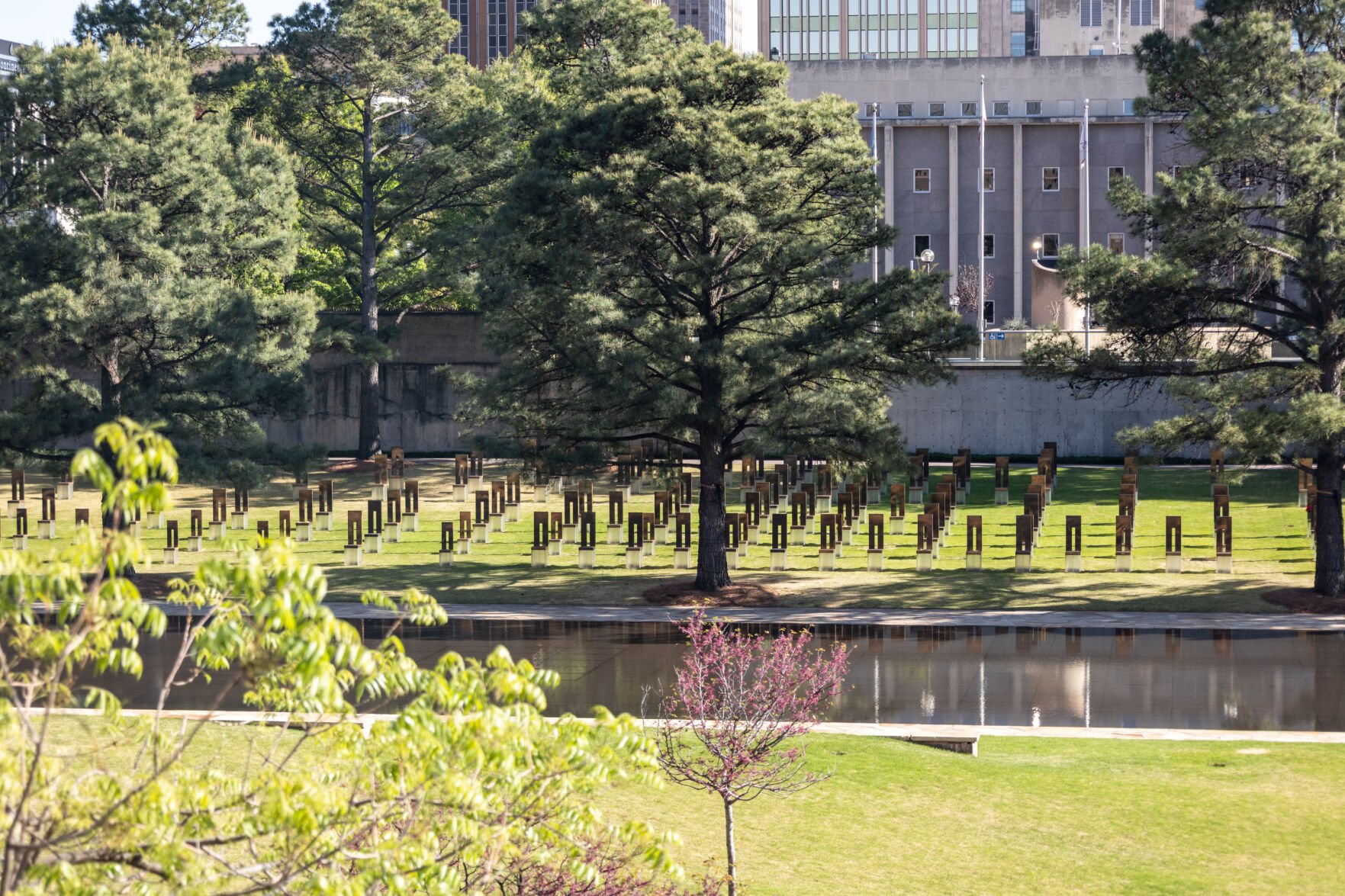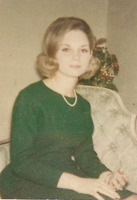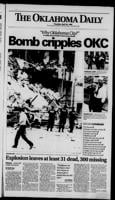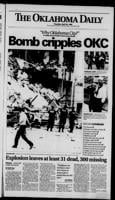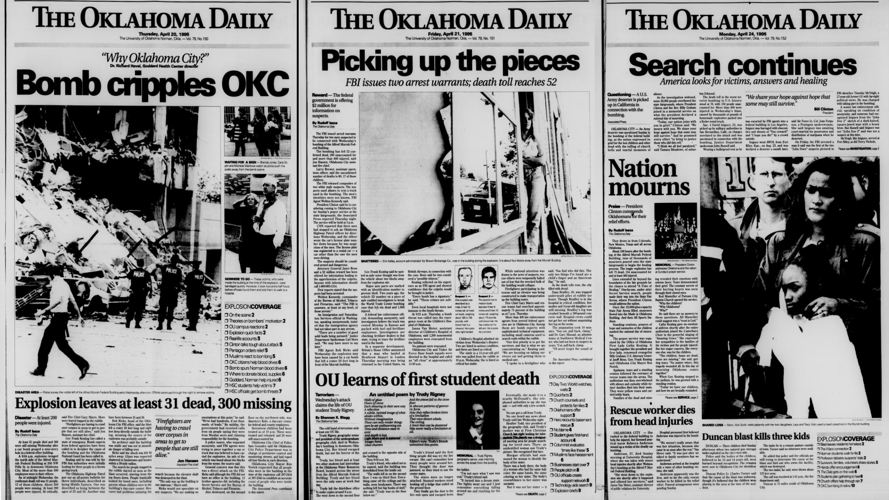


The first three days of coverage of the Oklahoma City bombing from Oklahoma Daily staffers in April 1995.
Editor’s note: This story is a part of a commemorative series marking 30 years since the Oklahoma City bombing, a domestic terrorist attack in which 168 people died. Several stories and multimedia projects commemorating this milestone will be published in the week leading up to April 19, the day the bomb detonated outside the Alfred P. Murrah Federal Building in 1995.
On Wednesday, April 16, Gaylord College of Journalism and Mass Communications will host a panel discussing the impact of The Oklahoma Daily's reporting and the creation of the Daily's website. The panel titled Breaking News 1995, Breaking News 2025: Journalism Technology at the Forefront, is opened to the public and will feature Michelle Strain and Mas'ood Cajee. To RSVP to this event, use this link.
On April 19, 1995, a bombing at the federal building in Oklahoma City killed 168 people. A team of student journalists at The Oklahoma Daily covered the bombing from that day onward, most barely in their 20s.
This story is part of a commemorative series marking 30 years since the Oklahoma City bombing, a domestic terrorist attack in which 168 people died. Several stories and multimedia projects commemorating this milestone will be published in the week leading up to April 19, the day the bomb detonated outside the Alfred P. Murrah Federal Building in 1995.
The morning of April 19, 1995, OU Daily managing editor Joy Mayer walked into the Copeland Hall newsroom ready to map out another Wednesday of coverage. It was less than three weeks before finals began, and students on campus were preparing to finish their semesters. Summer was in sight.
Editorial adviser Jack Willis was already at work, marking up that morning’s 14-page paper. A front page story noted another sizable gift raised by the new president, David Boren. An inside story summarized Gov. Frank Keating’s first 100 days in office. A back page story highlighted winners of the most prestigious honor in journalism: The Pulitzer Prizes.
Around 9:02 a.m., Mayer and Willis had heard about a developing situation. Mayer turned the television to a local channel. At a home elsewhere in Norman, reporter Michelle Strain did the same and called for her dad to come downstairs. Another reporter, Omar Gallaga, watched as people in the OU Board of Regents meeting in Norman, including Boren, the former chair of the Senate intelligence committee, began whispering.
Something had happened in downtown Oklahoma City.
Mayer soon spoke with Strain, photo editor Annette Price and a few other reporters, mobilizing Strain and Price to head downtown. She stepped back, feeling like she had done her job and thinking little more would be required at that point.
Moment by moment, the circumstances changed as what was airing on TV showed the growing scale of the event.
Mayer had never covered something like this before and certainly had never led newsroom staff in navigating it. She relied on Willis, whose coaching and guidance evolved into a crash course in crisis reporting as he encouraged her to think deeper about what Strain and Price were racing toward.
This is a story of how the staff of The Oklahoma Daily — a place where students since 1916 have crafted the day’s headlines and lasting memories — covered one of the worst stories in Oklahoma history before they were, in some cases, even legally allowed to drink.
How their work got the story right — as trustworthy journalism always must.
How their work outpaced industry norms — as innovative college media always can.
How their work that day and in those that followed forever imprinted itself on their lives, and what it means to them 30 years later.

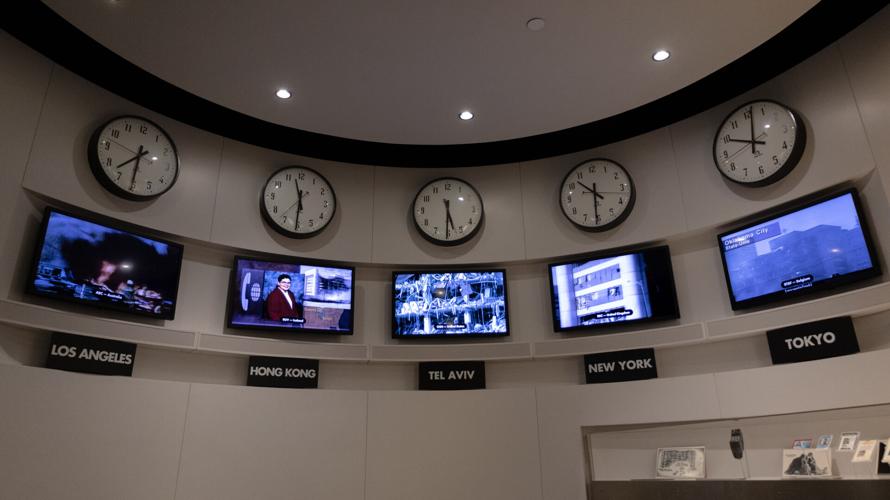
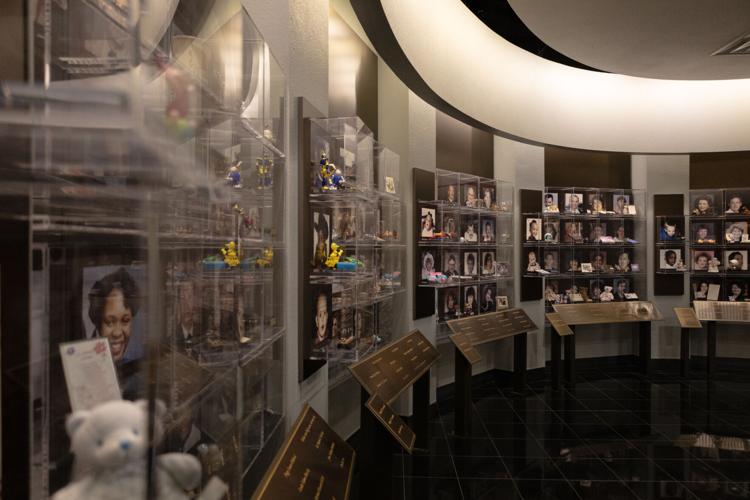
World clocks and newscasts in the Oklahoma City National Memorial & Museum on April 11.
‘It's hard to imagine that even a bomb could do that kind of devastation’
It took about 10 minutes for Strain, still living at home with her parents, to shift from dazed 20-year-old to student journalist. As she watched helicopter footage from downtown Oklahoma City on her TV, she spoke to Mayer on the phone. While the two — who later became roommates — talked, Strain’s father urged her not to go, stressing that the scene was too dangerous.
Strain told her father she’d park her car far away and walk to the site they were now watching billow with black smoke: the Alfred P. Murrah Federal Building.
Price, then a sophomore, was told to meet Strain at her home so the pair could drive to Oklahoma City together.
Strain remembers it took them 12 minutes to drive to Bricktown and another 25 to walk to the site of the Murrah building. In those approximately 37 minutes, they left a world of relative college innocence and stepped into a scene so unfathomable that it was hard to process.
Two blocks from the Murrah building, they began seeing structures with windows blown out, including a place called Betty K’s Subs & More where they conducted a quick interview with the owner, Betty Kennedy.
“As we were walking, I was stepping on broken glass and it was crunching under my feet,” Strain recalled. “I have a vivid memory of that.
“I asked Betty if she called 911, and she said yes — but 911 was busy.”
In Norman, Gallaga recalled the regents adjourning their meeting at the OU Foundation early.
Gallaga returned to the newsroom, which was mostly empty other than Mayer, who was watching the TV and calling her staff at home, waking up at least one of them.
As she marshaled coverage plans, the newsroom began to fill. Soon, reporters were making calls and fanning out in the community. Editors were making and remaking plans, and Willis was doing what he always did: Observing from the perimeter and offering counsel when sought, always there to listen and help staffers unpack the deeper learnings in their work.
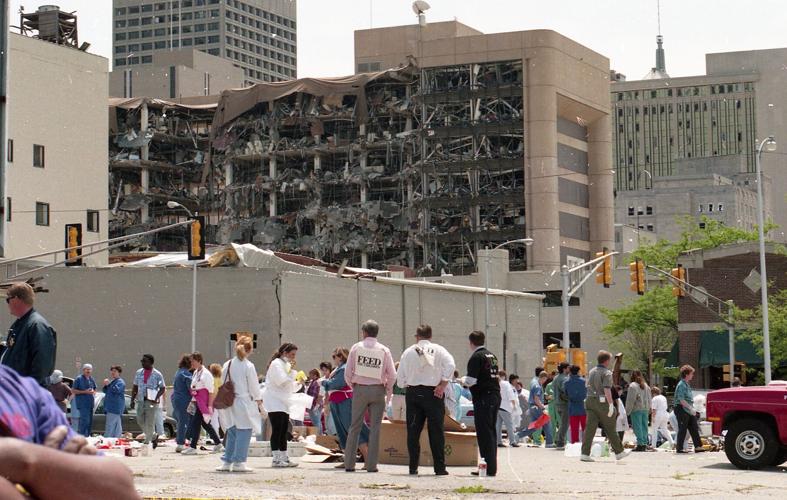
Downtown, Strain and Price arrived at the media staging area just northwest of the Murrah building. Strain stared at the blown-out shell, all nine of its floors torn through, processing how much worse the scene was than she had gathered from TV.
“This is totally different than anything I could possibly imagine at any time, at any place, …” said Strain. “It's hard to imagine that even a bomb could do that kind of devastation, but it had.”
Soon, a second bomb scare briefly halted rescue efforts and sent Strain, Price and others running. Strain remembers not knowing where they were heading, just running.
After collecting herself, regrouping and reporting more, Strain called the newsroom on the cellphone she had only because her mother worked for Southwestern Bell Telephone Company. Mayer, already staggering her team’s shifts to sustain coverage, had organized another group to go downtown. She told Strain and Price to return to the newsroom.
After hitching a ride back to Bricktown and Strain’s car, the two listened to the radio in silence during their drive back to campus.
“It was the first time Annette and I had heard that there was a daycare in the building, and that was really hard to know that children had been hurt or killed. It was really, really hard,” Strain said. “We didn't talk. I remember just driving back, and I think we were both just in shock about what we just experienced.”

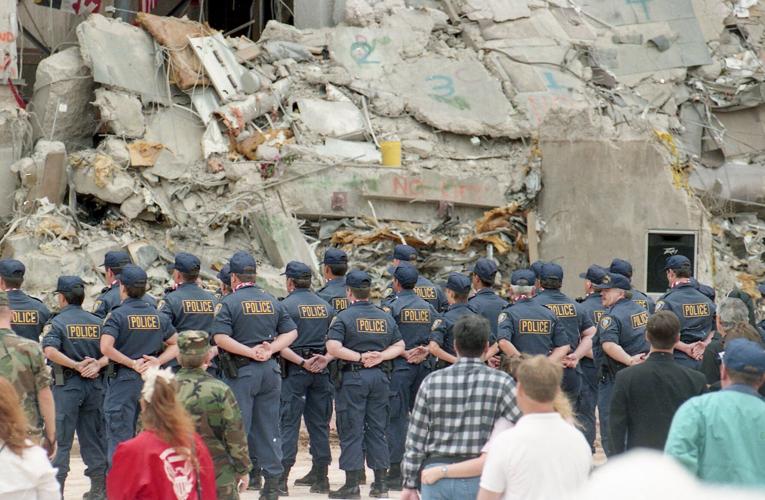
Murrah Federal Building on April 19, 1995.
Nicole Hughes, then a first-year from Bartlesville, was supposed to be in the group that relieved Strain and Price. Mayer had called, ordering her to the newsroom as soon as possible. Hughes, still in bed in Walker Center, answered the phone — then fell back asleep.
“It was absolutely supposed to happen that way because I didn't get up in time to make it to the newsroom to get in the car with all the other reporters that were heading to downtown Oklahoma City,” Hughes said. “Joy gave me a different story, and my assignment was going out on campus and interviewing, just getting campus reaction.”
Hughes walked to Ellison Hall, where students often gathered at what was then the location of the campus Chick-fil-A. Some students had gathered around a TV hanging on the wall, watching news coverage in shock. Hughes recalled some were sobbing, learning afterward that a few of those students’ parents worked downtown.
In the group, Hughes recognized a member of the President’s Leadership Class, another organization she was a part of. Hughes asked what he thought about the explosion downtown.
“He said, ‘Well, I am shocked like everyone else. I just wonder if it has anything to do with what happened on this day in history, especially a couple years ago,’” recalled Hughes, 49 and now in a financial services career. “It was actually the second anniversary of the raid on the Branch Davidians in Waco, Texas.
“I just made a note of it in my notepad.”
The Waco siege was a 51-day standoff between a religious group, the Branch Davidians, and federal agents that occurred between Feb. 28 and April 19, 1993. On the final day of the siege, the Branch Davidians’ compound was destroyed in a fire, and 75 people were killed.
According to the Southern Poverty Law Center, antigovernment movement leaders criticized the conduct of federal agencies and considered the siege to be proof that the U.S. government was corrupt, sparking the militia movement.

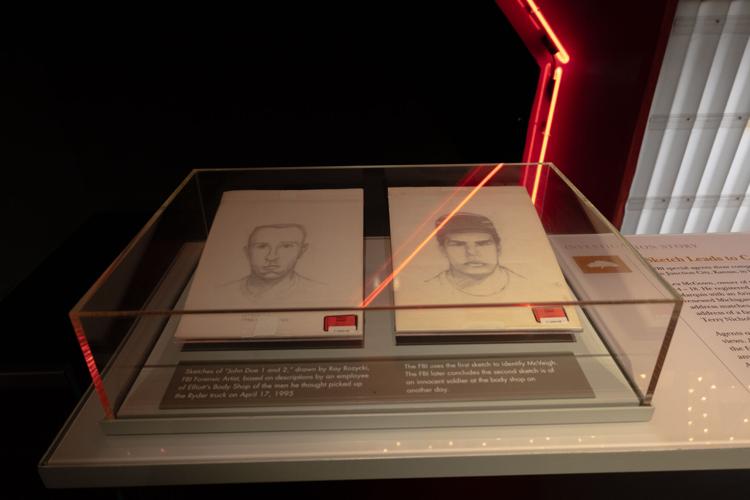
Federal Bureau of Investigation sketches in the Oklahoma City National Memorial & Museum on April 11.
Hughes continued gathering reactions from students in Ellison Hall before returning to the newsroom.
There, she told Mayer about the students she had spoken with, telling Mayer about her fellow President’s Leadership Class member and his mention of Waco.
“Do you think I should make any calls on this Branch Davidian thing?” Hughes recalled asking Mayer.
Mayer told her to follow up on that.
Mayer recalled that pivotal moment in a day full of big decisions.
“Up until that point, it was faces of brown, foreign-looking men who were on the TV. It was a completely different understanding and set of assumptions that were being plastered all over TVs around the world based on not that much,” she said. “And the idea that somebody with a different set of motivations could be behind it was a brand new idea. …
“I'm so glad we decided to write about it.”
‘A grizzled journalist all in one morning and afternoon’
When Strain and Price returned to the newsroom everyone, including the journalism professors who had come in to help the Daily staff, stopped.
Someone asked Strain what she had seen.
She opened her mouth, but no words came out. All she could do was sob, and she ran to the restroom.
When she returned, she remembers working at “breakneck speed” to write about the scene of devastation and vignettes about the people she encountered in the immediate aftermath.
“I knew that my life had totally changed that day,” Strain said. “I was very sheltered and naive — this 20-year-old kid living at home — and (I) became what I felt like was a grizzled journalist all in one morning and afternoon.”
Hughes, meanwhile, looked up James Breckenridge, a professor at Baylor University who taught a course on cults.
“It’s still too early to tell, but it’s very probable that the Branch Davidians may be connected, …” Breckenridge told Hughes for a story she wrote that day. “It could have been someone who is not directly related to the Branch Davidians but felt a calling to perform for them. Many people were troubled that weren’t part (of) the group. An individual or maybe a few people could be the masterminds behind this act of terrorism.”

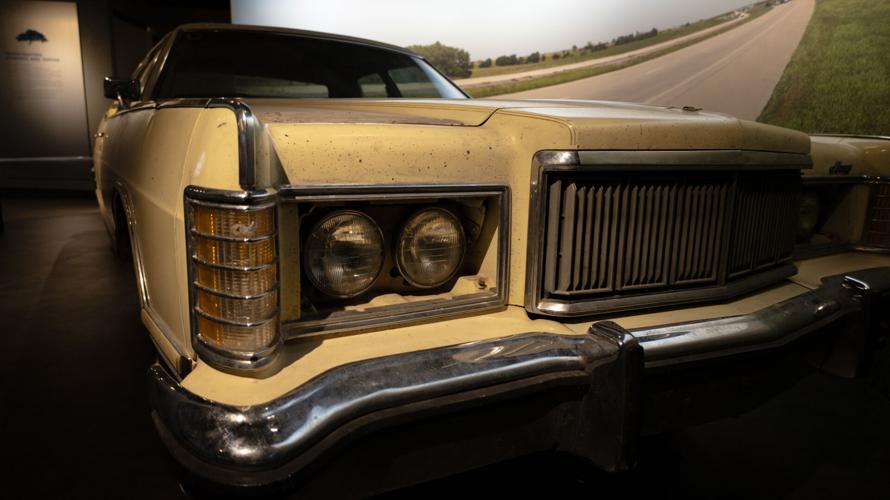
Timothy Mcveigh's car in the Oklahoma City National Memorial & Museum on April 11.
By the time Hughes was running to ground the possibility of a Waco connection, Timothy McVeigh — the man who would later be executed for planning and carrying out the bombing — was stopped by a state patrol officer in Perry for driving without a license plate about 80 miles north of Oklahoma City just 75 minutes after the bomb detonated.
During the investigation, it was later revealed that McVeigh had visited Waco during the siege, selling bumper stickers with pro-gun and antigovernment slogans. He was immersed in extremist militia literature like “The Turner Diaries,” a novel written by a white nationalist about a government overthrow that detailed a bombing similar to the one in Oklahoma City.
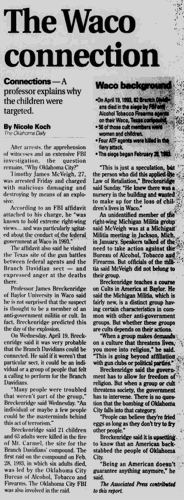
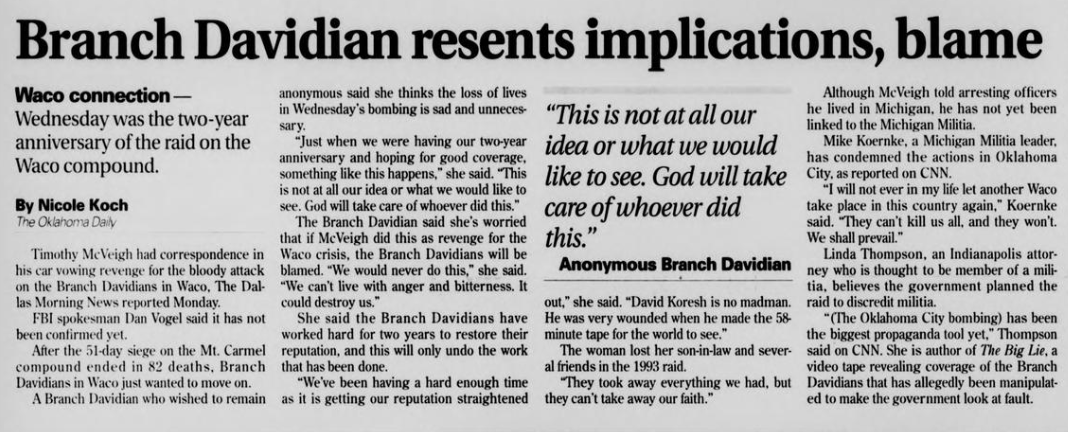
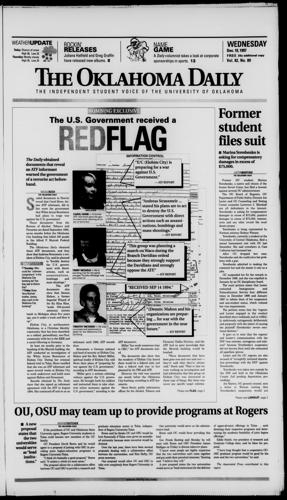
Nicole Hughes' coverage of Waco and the Oklahoma City bombing
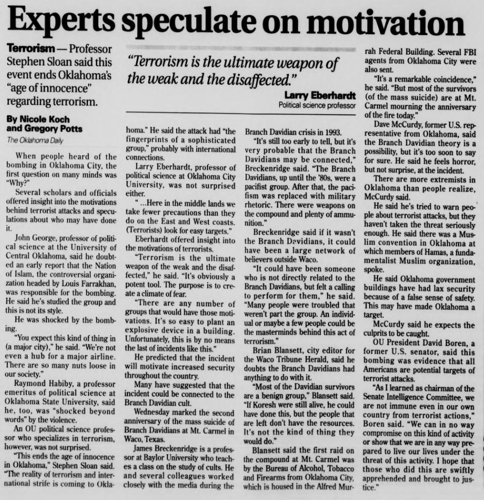
The first Waco story
Published in the April 20, 1995 edition of The Oklahoma Daily, this is the first story Hughes wrote about the Waco connection along with Gregory Potts.
Rudolf Isaza, then 20, was in Willis’ class where journalism students’ work could be offered for editors to independently consider publishing in the Daily. Isaza was called into the newsroom and assigned with another student to go to a medical center in downtown Oklahoma City.
Ultimately the last Daily staffers downtown as the day wore on, they were subsequently redirected to a press conference held a couple of blocks from the Murrah building.
Late in the evening, the pair returned to the newsroom and immediately started writing. On a day in which 20 names of students contributing to the coverage appeared throughout the paper, Isaza’s byline was the only one that ended up on the front page of the April 20 edition.
His lead quote, from an assistant fire chief, described first responders having to crawl over bodies to get to survivors.
While McVeigh sat in a Noble County jail, national media outlets began reporting the bombing was likely connected to Middle Eastern or Islamic terrorism. In the days that followed, such speculative reports led to the harassment of Muslim families across Oklahoma.
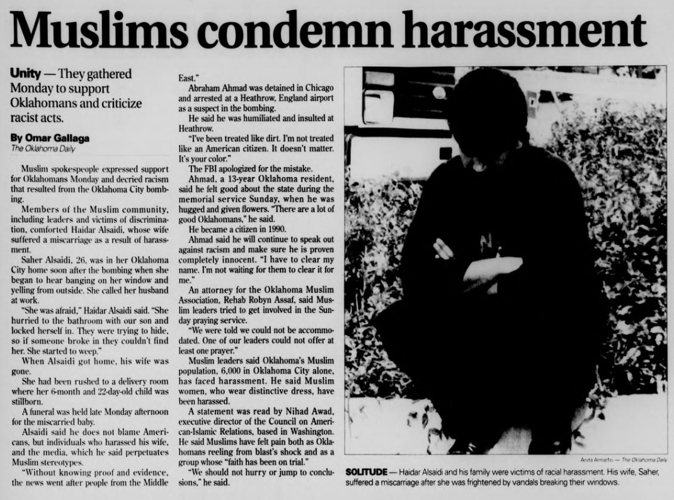
In the April 25 edition of the Daily — days after McVeigh was officially named as a suspect in the Oklahoma City bombing — Gallaga wrote about one such Oklahoma City couple. Saher Alsaidi was home when she began to hear banging and yelling outside, locking herself in the bathroom to call her husband, Haidar. The stress caused Saher to go into early labor, and she gave birth to a stillborn child.
“I felt very protective of them,” Gallaga said about the Alsaidis 30 years later. “They clearly had not dealt with media or press before. … That story really resonated with me because it was sort of a, not a byproduct, but like collateral damage.
“It was not from the blast that their family was hurt, but from the hatred that came out of that.”

Originally published in the April 25, 1995 edition of The Oklahoma Daily.
‘What if we could get the stories and the photos on the internet?’
Mas’ood Cajee was commonly in one of three places on campus: the Daily newsroom, Bizzell Memorial Library or the physics computer lab.
Cajee, then 20, remembers being drawn to the lab filled with the most advanced Mac computers on the market — machines he couldn’t afford but dreamed of having and loved to work on.
He was in the computer lab at 9:02 a.m. with three friends: Mark Anquoe, Mueed Ahmad and Angela Goodman. Not long afterward, Cajee walked into the Daily newsroom, hoping his role there as a weekly columnist would help him get the latest news on what was happening downtown.
“There’s nothing on the internet,” Cajee said, thinking back on that period, “because there’s no breaking news websites, there’s no Drudge Report, there’s no New York Times, CNN — nobody has websites.”
When he walked in, more reporters were heading downtown. Cajee ran into Gallaga, and the pair began discussing Hughes’ Waco angle.
Cajee recalled early televised reports that the bombing could be a product of foreign terrorism. Hearing about Hughes’ reporting, an idea Cajee had considered in the computer lab clicked.
“All of these amazing young student journalists are writing. They actually have the front row seat, and they’re writing the news as it happens,” Cajee said. “But their audience is only going to be the campus tomorrow morning if it’s just the print edition. … What if we could get the stories and the photos on the internet, and then we could have this global audience?”
There were two problems with Cajee’s idea: The Daily didn’t have a website and Cajee had no newsroom authority.
Cajee knew the solutions to both problems. First, he had to persuade his physics computer lab friends to help him with their coding and graphics skills. That turned out to be quite simple — they were all on board. Second, he had to persuade Mayer and editor-in-chief Tiffany Pape to give him the Daily’s content, which proved to be much harder.
“I was getting skepticism, rightfully so, and I was getting a little bit of pushback,” Cajee said. “I was also getting, ‘Hey, could you leave us alone? We’re trying to cover the biggest story of our lives.’”
Cajee was persistent, bouncing between the newsroom and the computer lab — still without any content. In the lab, however, his friends had already started building what would become the Daily’s first website, incorporating information about relief efforts and other resources, the Daily’s tip line and whatever else they could find. Intermittently, he’d run back to the newsroom to bug Mayer and Pape again.
“I remember him coming up to me at my desk in the middle of the newsroom and saying that the Daily needs a website,” Mayer recalled. “It was real early for that. This was not a common thing. I don’t remember that it was something (newsroom leaders) had discussed before; I don’t think this was something that was on our agenda for later.”
Nonetheless, by the afternoon, Cajee and newsroom leadership reached a deal: After their evening print deadline, when the paper was sent to printer around 10:30 to 11 p.m., they’d give Cajee the content.
“It’s hard to appreciate this now because in 1995 even the web was just so relatively new and fresh and young, it was only like a year or two old,” Cajee said. “Most universities didn’t have websites, let alone news organizations. But somehow, they relented, and I think it was just because they wanted me to get out of their hair, really.”

Originally published in April 24, 1995 in The Oklahoma Daily.
The Daily’s content from April 19 was turned over to Cajee on a floppy disk. He ran down the South Oval to the physics computer lab and the group raced to post the content online.
That night, the Daily was published both in print and online. The web address was uoknor.edu/okdaily/bombing.
CNN went online four months later. Nine months after the bombing, The New York Times publicly launched its website. Nearly one year later, The Oklahoman’s first website went live. The Washington Post followed in June 1996.
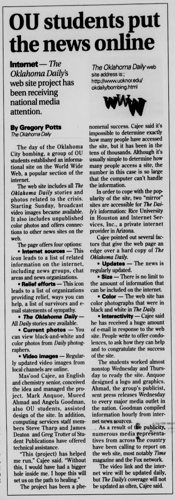
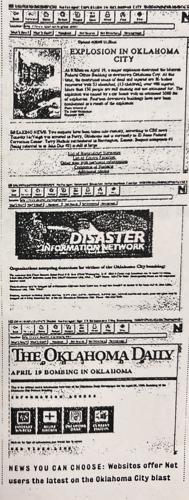
An article published in Entertainment Weekly in May 1995 headlined “Net-Cast News” explored how the internet was poised to change both how breaking news was reported and how the public engaged with it. The article cited the Daily’s digital launch, describing how the student news organization became a must-read for news outlets worldwide.

Screenshots of the first Oklahoma Daily website, published in the May 12, 1995 edition of Entertainment Weekly.
Cajee, quoted in the story and credited as editor of the Daily’s website, reflected on how media had covered the Gulf War years before, with CNN rising to prominence through its live televised coverage.
“In a small sense, we supplanted them in this incident,” he said of media at large, “going to the new medium of the internet and doing a better job.”
Gian Trotta, an editor of Time magazine’s fledgling website was quoted in the story, too, and went further:
“They deserve an electronic Pulitzer for how quickly they got stuff up,” Trotta said.
‘We all took our job seriously’
Tan Ly, the Daily’s opinion editor, had been driving to campus at 9:02 a.m. when a radio station broke in with a news report. Soon he was rerouted downtown, driving there alone, unsure what he would see or write.
Ly, then 21,ended up writing about health sciences students volunteering to help after the blast. He remembered the scene downtown as chaotic — his story mentions children and blood and ends with the quote: “You just don’t think about it as you help patients.”
After his story was sent to editors, Ly began helping design the paper.
“The biggest discussion we had was the photo, the lead photo of what was going on, …” Ly said. “I just remember going on autopilot and just doing whatever, trying to assess the news while designing the news and getting something out for people to understand.”
Across the 16 pages, 11 photos appeared from the bombing site and the response on campus. Eight pages included stories about the bombing and its response with all but one, which was produced by The Associated Press, written by Daily staffers.
Once the lead photo for the front page was chosen — taken by staff photographer Tom Nuspi, featuring three police officers surveying a pile of rubble that was once part of the Murrah building — the headline came next.
Ly said the staff emotionally debated what words would be proper and appropriately sensitive, balancing an overriding concern of being accurate in full but not ghoulishly describing the scenes in downtown Oklahoma City.
By evening, the idea of the bombing being linked to homegrown terrorism had sunk in with Daily staffers. Ly said the newsroom viewed their role as a public service, aiming to be a source that the community trusted and learned from.
“We all took our job seriously and getting the details right and everything accurately and with a lot of sensitivity,” Ly said.
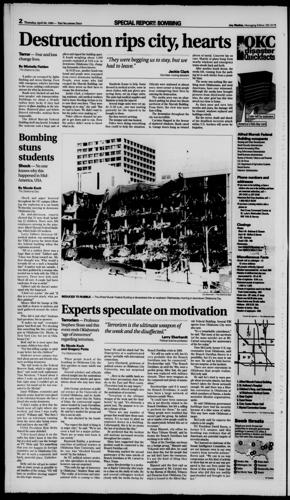
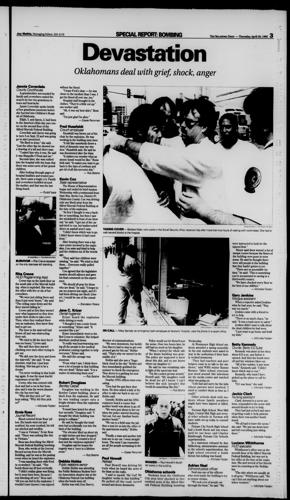
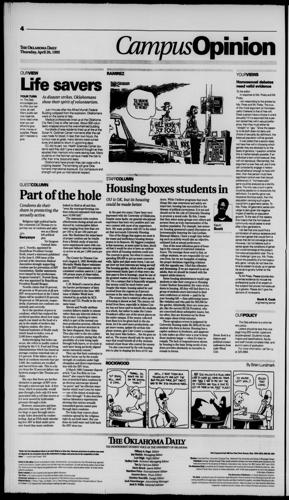
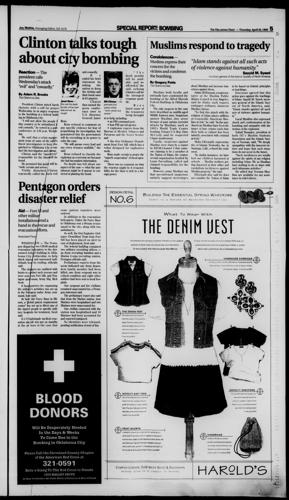
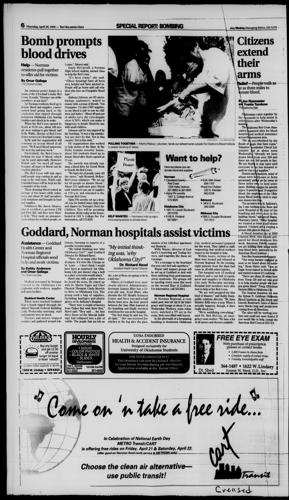
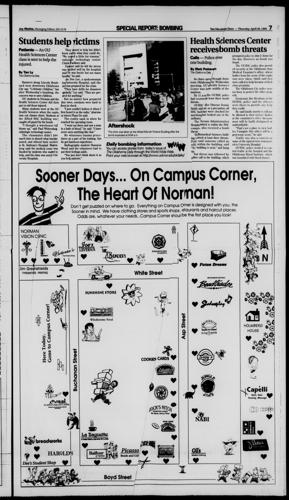
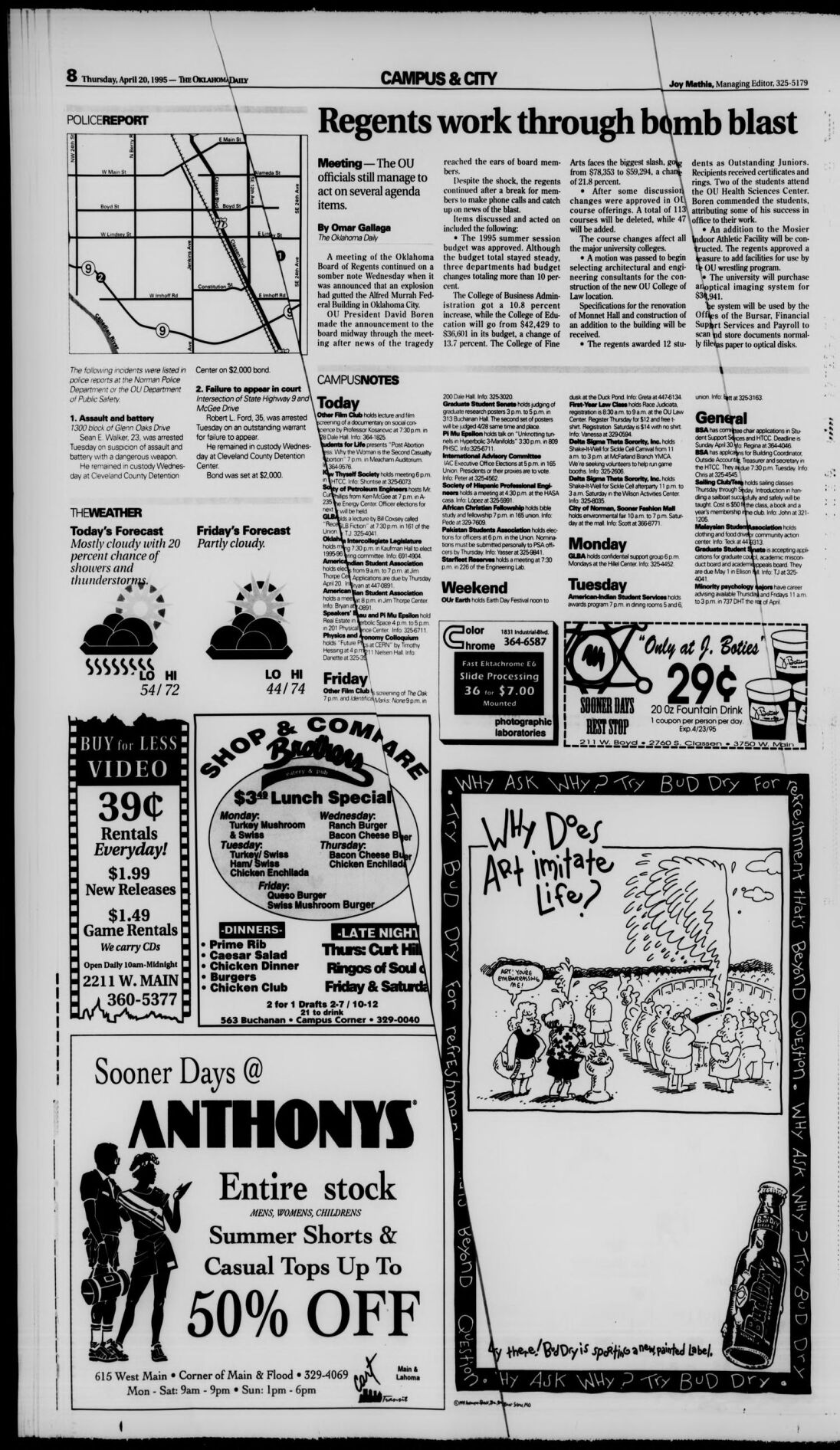
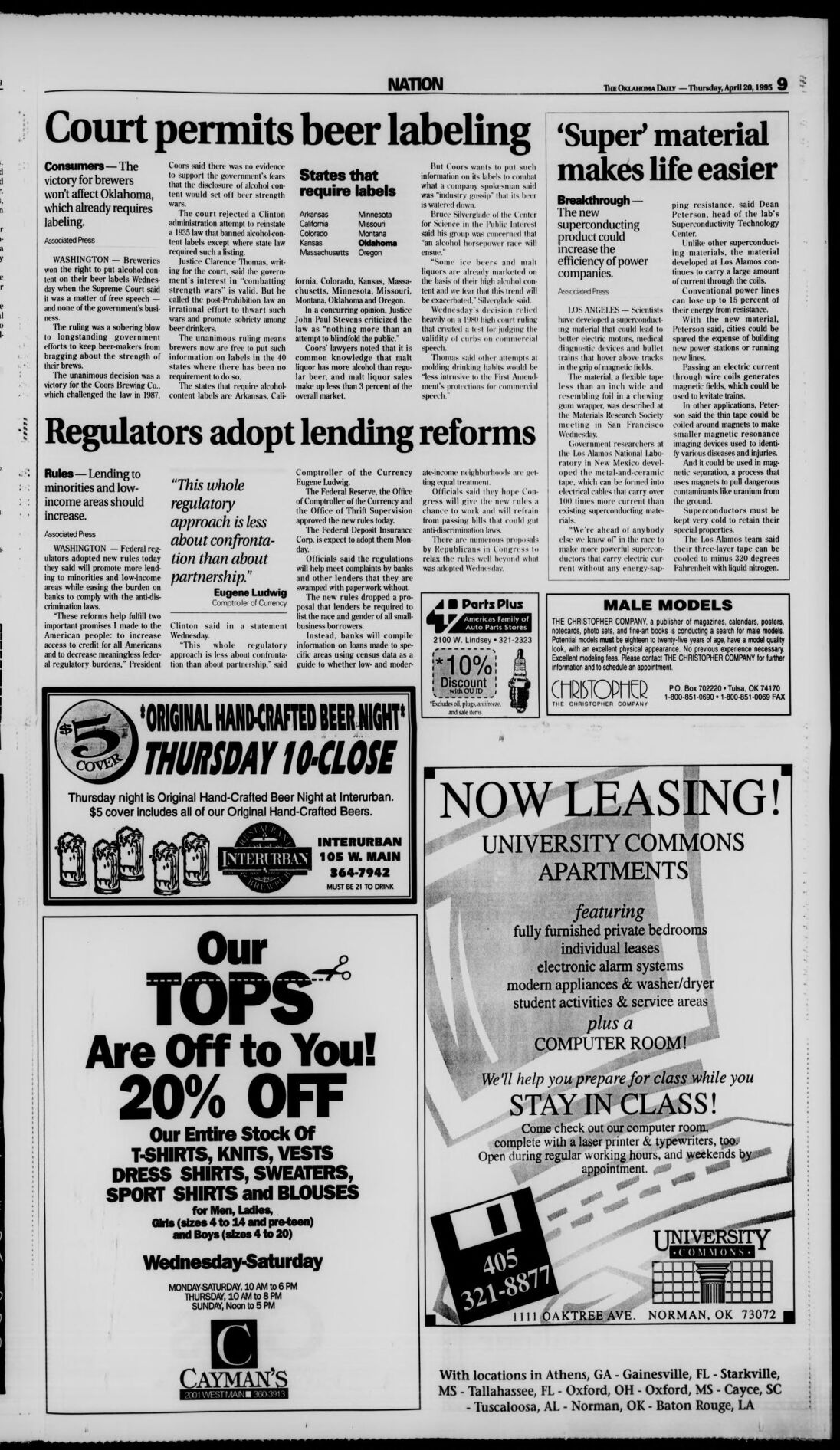
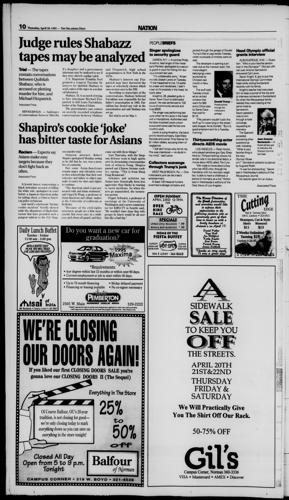
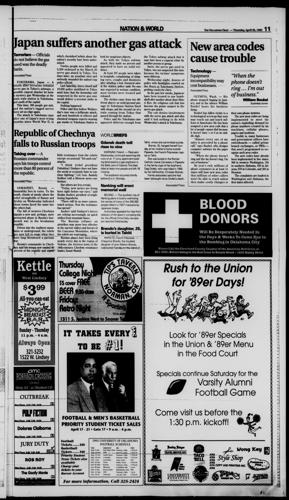
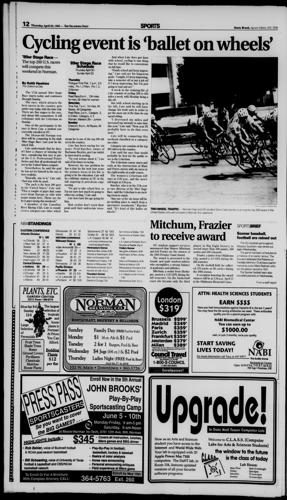
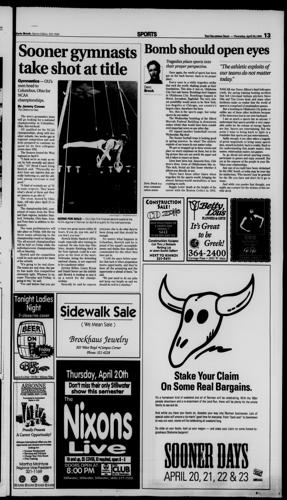
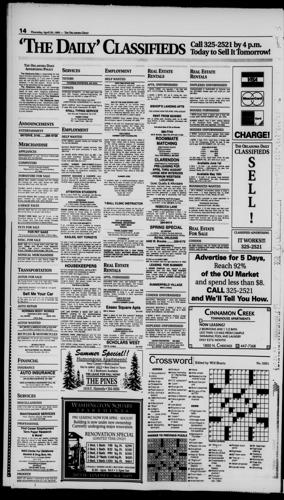
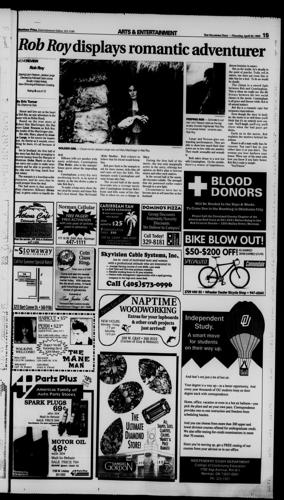
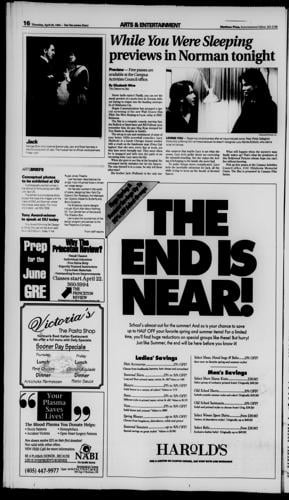
April 20, 1995, edition of the Oklahoma Daily
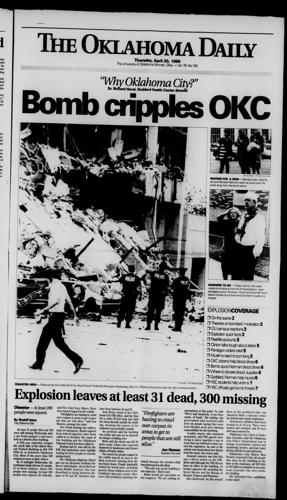
Page one
Page one of the April 20, 1995, edition of the Oklahoma Daily.
Still running on adrenaline after clocking all 16 pages of the paper, the staff was too wired to go directly home. They needed to decompress.
Willis has often told the story of one student in that newsroom asking if it was OK to cheer. Willis, a veteran journalist finishing his second year as the newsroom’s adviser who had a daughter around the age of his students, said yes.
While their historic day of work was plated up and 14,550 copies were printed in the old pressroom where today’s newsroom stands, a number of the staffers retreated to The Mont.
Gathering in the velvet conversation booth known as the Blue Room, the Daily staffers reflected on what they had been through — and accomplished — together.
Meanwhile, Willis waited for the first papers to come off the press and then drove a bundle over to the restaurant, where he handed them out.
Exhausted yet exhilarated, the staff cheered in the middle of the restaurant, looking down at the fresh newsprint.
“I was so conflicted about it,” Mayer said. “It was my first experience with the tension that happens where journalists are so proud of themselves and also covering something that is just an unimaginable tragedy.
“We looked around and were like, ‘God, that is not the reaction regular people have today.’ I understand it because we had done the best work of our young lives. We had put everything we had into informing the people in our community that day. We had taken care with their stories, we were taking care with each other. It was a team effort, we were so proud of ourselves. And yet, isn’t it just tricky and complicated that journalists often do their best work when the people they aim to serve are having the worst time?”
Strain and Gallaga also remember feeling that conflict as they sat in the wraparound booth — all facing one another after facing something they’d carry in various ways for the rest of their lives.
“I don’t think any of us wanted to go home by ourselves after the day we had just had,” Gallaga said. “I think we all wanted to stay together a little while longer and kind of be in that moment.”
When staffers did eventually go home, they were left to reflect.
Gallaga began journaling, which he continued doing for the next nine days, eventually emailing his entries to people he knew — akin to today’s Substack-style first-person newsletters — and later publishing them online as a collection.
Strain returned home to find that her dad had been waiting up for her, watching footage from Oklahoma City. She sat next to her father, placed her head on his chest and began to cry.

Murrah Federal Building on April 19, 1995.
‘The humanity that was on full display was so beautiful’
The next day, calls from around the world flooded the newsroom.
Several outlets wanted Daily students to write for their publications with the latest news from Oklahoma.
Others wanted to interview Hughes and sought permission to run her story, as it was one of the first pieces to draw a connection between Waco and Oklahoma City.
Many also wanted to know how a student newsroom managed to launch a website amid such a news event.
“I’m not even sure really that I probably processed it at that time and just kind of how huge that was because it was a lot of days of being downtown or being in the newsroom and just a blur really, covering all of that,” Hughes said. “I’m incredibly proud of what our newsroom did and how we reacted and reported and especially considering I was 19.”
Cajee remembered watching Pape handle calls from NPR, the BBC and The Washington Post. That “15 minutes of fame,” Cajee said, was focused on the efforts of the Daily and the reality that student journalists were doing some of the best work on an international story.
Staffers, including Hughes and Cajee, who didn’t travel to downtown Oklahoma City on April 19 did so in the following days while others returned to report multiple times.
Mayer would go downtown herself a few days later.
“I remember what it was like to see the rubble in person and realize how different it felt from seeing it on TV and in pictures because I was really struck by the fact that among all the rocks were pieces of bodies,” Mayer said. “Trying to wrap my head around how many bodies had disappeared along with the side of the building is something I hadn’t before or have since experienced again.”
She remembered feeling proud of the community response — what would come to be called the “Oklahoma Standard” — recalling a church across the street from the bombing site serving as a spot for rescue workers.
“The humanity that was on full display was so beautiful,” Mayer said.
Gallaga spent his days working and his evenings journaling. The full scope of the tragedy didn’t sink in until he went home to his parents after the 10th day.
“(The bombing) was sort of us putting into practice everything we’ve been taught up to that point,” Gallaga said. “We were so focused on that and fixated on that and felt very duty bound to do that that I don’t think we were really letting the emotion of it wash over us yet until much later.”
That night, at his parents’ home attempting to fall asleep, he wrote the following:
“Officially, I was off duty. No more death. No more story. It was going to (be) my time off and my discharge from this tour of duty. But I couldn’t forget. I couldn’t shut it off. The memories and the trauma stuck out in me like that hideous building sticks out in the middle of downtown Oklahoma City.”

Murrah Federal Building on April 19, 1995.
‘I would hope that this next generation just never forgets’
The Daily’s accolades for its coverage of the bombing included a national college media award that several staffers, including Cajee, flew to Washington, D.C., to accept.
Mayer and Cajee also traveled to a conference in Texas to speak about the Daily’s website.
Cajee devoted the rest of the semester to developing the website. Among his efforts, helping pioneer what resembles live blogging today with real-time updates posted as he watched former President Bill Clinton’s memorial address on TV.
That summer, Cajee worked with the Council on American-Islamic Relations to study the rise of Islamophobia in 1995 and became active in interfaith work nationally.
Cajee took an incomplete in most of his courses that semester, forcing him into a fifth year at OU. When he graduated, Cajee held two acceptance letters: OU’s dental school and Columbia’s journalism school.
Cajee, now a dentist in California, said he wishes he could have done both. He also completed a master’s in public health at Harvard.
“April 19 was a very spiritual event for people,” Cajee said, reflecting on the impact the bombing had on his life. “It moved us.”
Today, Gallaga said the bombing changed the way he approached reporting and events, realizing the value in seeking the bigger picture.
“We really are kind of bonded for life over this,” Gallaga, now an Austin-based writer, said of his peers at the Daily. “Just that experience of having covered it and kind of growing up together through this experience.
“I really miss the people of Oklahoma because I was so impressed with the people that I met and the people that were there and helping,” Gallaga said. “I think that’s something that kind of gets lost in this story, is just how people came together.”
Isaza now works at a civil rights organization in the South. He has not returned to Oklahoma City since the bombing or visited the memorial. He hopes the bombing is remembered as something that could happen again.
For Ly, the bombing confirmed that he wanted to go into journalism. He went on to work for The Washington Post as a designer and is now a lead product designer in Washington, D.C.
Today, Strain is the director of counseling at Mid-America Christian University. She said she’s a counselor because of April 19, shaped by the desire to help others and from the kindness she saw in Oklahoma City that day.
Every day for the past 20 years, Strain said she’s worn a necklace with a charm in the shape of Oklahoma with a heart in the middle. It reminds her of the Oklahoma Standard that emerged following the bombing.
“It’s the definition of it, the way community wrapped around each other, the way we made the best of the worst possible situation, the way people rallied around the families of those that were lost and injured,” Strain said.
“It just changed Oklahoma forever.”
That Oklahoma Standard is what Strain hopes lives on with future generations of Oklahomans and Americans.
Hughes remained at the Daily for the rest of her time in college, becoming managing editor her senior year. She covered not only the bombing but its aftermath and related legal cases until she graduated in spring 1998. She went on to work for The Dallas Morning News before leaving journalism to run a financial company with her husband in Oklahoma City.
Today, Hughes has a daughter preparing to enter college who is one year younger than she was at the time of the bombing. Her family, longtime residents of Oklahoma City, once lived just blocks from the memorial. Her husband will participate in the memorial marathon on April 27, which starts at the memorial and has the slogan “Run to Remember.”
“I would hope that this next generation just never forgets, and not just the people who lost their lives, who were in the Murrah building — the children, the people working in the Murrah building — but the first responders, just anybody impacted,” Hughes said.
“I would hope that we will always remember them and what they endured and the lives that were lost because of that.”

Oklahoma City National Memorial & Museum on April 11.
After working in newsrooms around the country, Mayer founded Trusting News, an organization that seeks to guide journalists in evolving their practices to earn trust with their communities.
Mayer remembers the lessons she learned as a young manager and journalist, especially when she was covering the 9/11 attacks six years later in Sarasota, Florida.
“(The bombing) happened before the era where we were used to turning on the TV and seeing mass destruction caused by an individual,” Mayer said. “I think I was less surprised because I had seen that that could happen. In a way, until 9/11, I was probably less surprised than other people by what could happen when an angry person wanted to send a message and decided to just cause as much damage as he could.”
Today, Mayer hopes that people remember their shared experiences and try to understand, if not trust, one another.
“I just hope that we continue to value the people and institutions in our lives that help us feel connected to each other,” Mayer said.
“I think I learned a lot that day in covering the bombing in general about what communities need and what it looks like to meet communities' needs for both information and connection.”
On April 19, 1995, a bombing at the federal building in Oklahoma City killed 168 people. The work of Daily staffers forever changed their lives and the newsroom. Read more at oudaily.com.
Editor’s note: This story is a part of a commemorative series marking 30 years since the Oklahoma City bombing, a domestic terrorist attack in which 168 people died. Several stories and multimedia projects commemorating this milestone will be published in the week leading up to April 19, the day the bomb detonated outside the Alfred P. Murrah Federal Building in 1995.
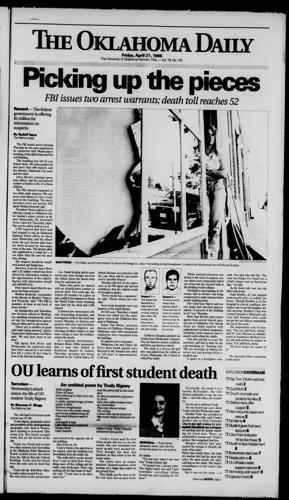
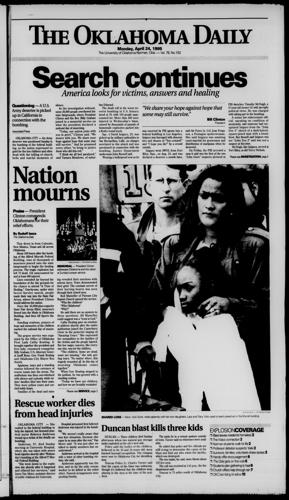
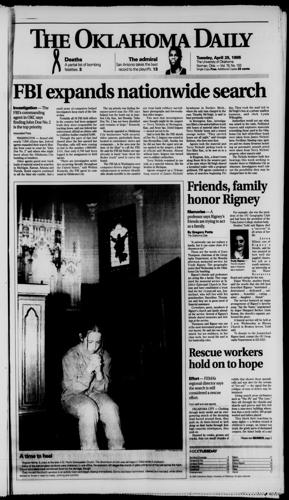
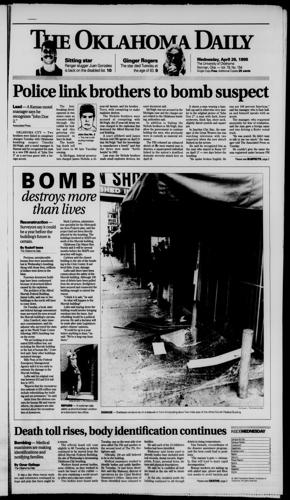
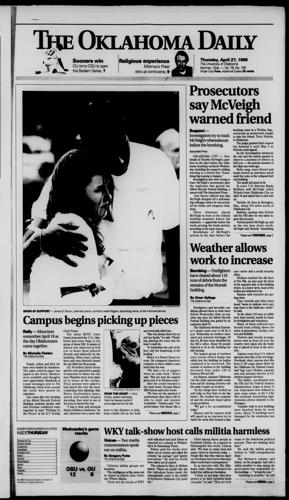
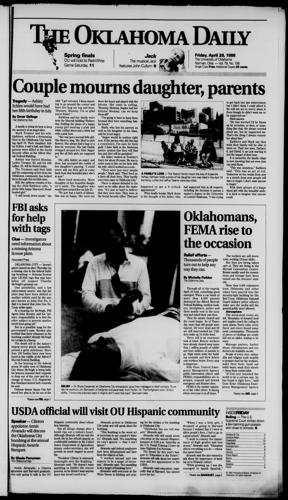
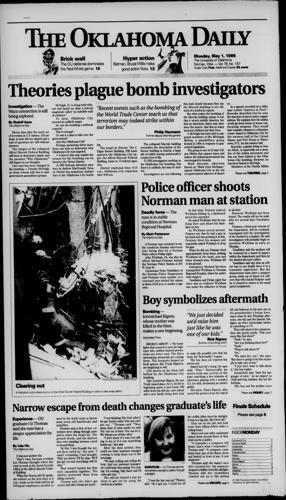
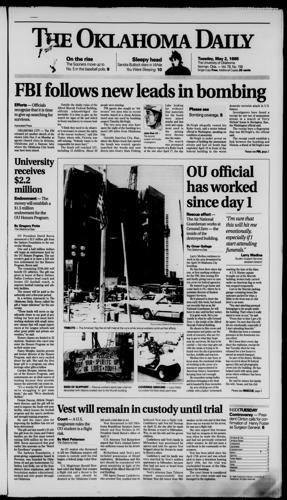
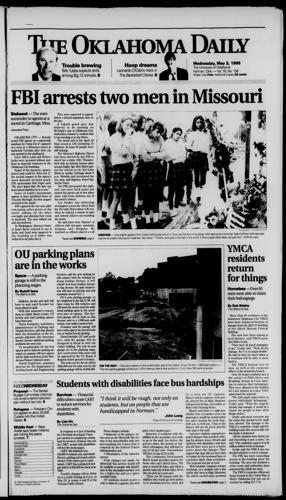
First 10 days of Oklahoma City bombing coverage
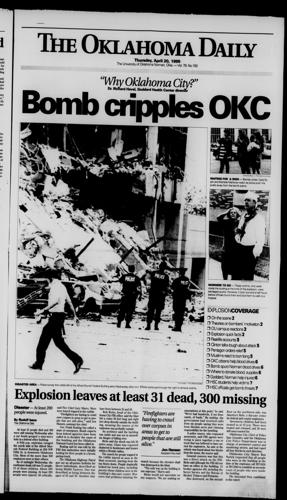
April 20, 1995, edition of the Oklahoma Daily
Front page of the April 20, 1995, edition of the Oklahoma Daily.
In addition to Mayer, Strain, Hughes, Gallaga, Price, Cajee, Ly and Isaza, over 20 students worked on the Daily’s bombing coverage from April 19 through the week following the blast. Their names, as they appear in The Oklahoma Daily editions are: Gregory Potts, Lizz Dabrowski, Gisele Perryman, Rob Belshe, Anita Armarfio, Brandelyn Peters, Jeffrey Moore, Jeff Sexton, Lori High, Adam Brooks, Bobby Anderson, Jon Nyemaster, Yvette Turnbow, Shannan K. Blagg, Elizabeth Wine, Chris Newsom, Heather Ratcliffe, Lisa Hix, Tom Nuspi, Matt Patterson, Matthew Price and Brad Baranet.
There were also students behind the scenes, serving as copy editors and designers, who contributed to the success of the Daily.
While an independent student publication, Daily staffers in 1995 and today are advised in their work by a team of professionals. In 1995, the Daily’s professional staff were: Susan Sasso as Student Publications director, Willis as newsroom advisor and Twila Smith as advertising adviser.
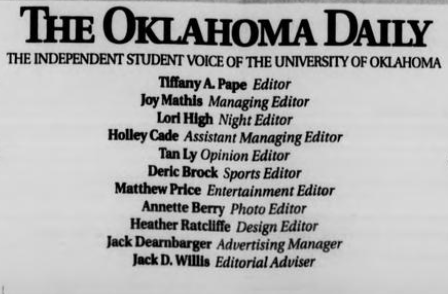
The masthead from the April 20, 1995 edition of The Oklahoma Daily.
Keaton Shaffer and Audrey McClour contributed to this reporting.
Natalie Armour, Avery Avery, Sophie Hemker, Grace Rhodes and Mary Ann Livingood copy edited this story.
30 years later: OU, Norman communities reflect on Oklahoma City bombing
Comprehensive coverage on the legacy of the Oklahoma City bombing 30 years ago.