
This article is a continuation of the Daily’s coverage of the 30th anniversary of the Oklahoma City bombing earlier this year. Read about how other Norman families were impacted here.
Bill McGonnell and his mother, Betsy, didn’t call often, but they did on April 18, 1995.
They caught up about McGonnell’s promotion and Betsy’s new boyfriend. Before they hung up, McGonnell told her that he loved her and was excited to see her the next time he visited Norman.
“Thank God I had that conversation,” McGonnell said.

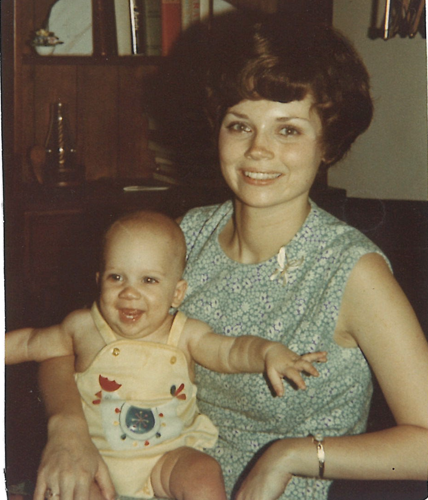
Betsy McGonnell and her son, Bill McGonnell, in August 1968. Bill was six months old.
The next morning, McGonnell, then a 27-year-old TV company director and editor, saw footage of the Alfred P. Murrah Federal Building exploding on a monitor on the studio wall in Dallas. It took him 20 minutes to realize it was the building his mom worked in.
Being hours away and supposing Betsy was fine, McGonnell figured there was nothing he could do. He decided he’d drive up to Norman after finishing the morning show.McGonnell said his coworkers at Westcott Communications, later acquired by Primedia, urged him to go and practically pushed him out the door.
“Mom could have gotten taken out,” McGonnell’s mind raced on the drive. “Mom might be okay.”
Jamie Sly, McGonnell’s younger sister, heard the explosion from her home in Norman. She was in the shower and said it sounded like someone was banging on her door.
Sly and Betsy spoke the night before the bombing, too. Sly was working on homework in her room, and Betsy came in to check on her, sitting on the floor to keep Sly company. The two had a good relationship, but this kind of conversation was unusual for them, Sly said.
“That was not something she would normally do,” Sly said. “It was just kind of strange, her coming in and just sitting in my room.”
Sly can’t remember what they talked about, but Betsy sat on the floor with her for a while. She said she mostly brushed her mom off, wanting to keep working, but she wishes that conversation went differently.
Sly, then a 22-year-old majoring in secondary education at OU, and her husband, Dave Sly, lived with Betsy. Dave was in Kansas City doing job interviews that day.
McGonnell and Sly, along with Betsy’s mom, Mary, waited at the house all day, watching the news and hoping for the best, but heard nothing. McGonnell said there was a stream of people from Betsy’s church, St. Michael’s Episcopal Church, at the house bringing casseroles — the family was in a state of disbelief.
Three days after the bombing, McGonnell let himself cry for the first time. Sitting on a railing around a tree in his front yard, he said he realized what happened to Betsy and it hit him emotionally. Sly said reality set in for her after a few days too.
“She’s not coming home,” Sly realized.
Two weeks after the bombing, the McGonnells were notified there were enough unidentifiable remains of people to assume Betsy was among them, though they couldn’t recover her body. The authorities had an eyewitness report that Betsy was at her desk about 15 minutes before the bomb went off.
“We never got so much as an urn with her ashes, because it was basically at the point where the building had fallen in,” McGonnell said.
Remembering his last conversation with his mother kept McGonnell going through his grief. McGonnell said his mom always knew he loved her, and he’s never doubted that she loved him too.
‘I would love to see her again’

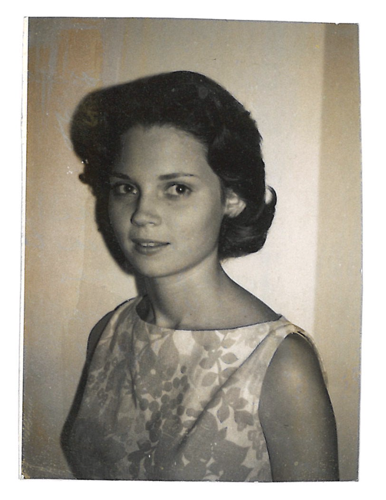
Betsy McGonnell in summer 1962.
Betsy, who was 47, worked as an assistant loan manager for the department of Housing and Urban Development in the Murrah Building. An only child, Betsy grew up in Tulsa and Oklahoma City, and graduated with degrees in history and English from OU. She met her ex-husband, Owen McGonnell, at OU. The couple had McGonnell and Sly before they divorced.
When Betsy worked as a library assistant at an elementary school, Sly remembers shelving library books with her mom. Betsy loved reading, Sly said, and she loved to sing. Betsy sang alto in the church choir at St. Michael’s, and McGonnell said she found a definite community there.
McGonnell remembers she was always supportive of him and Sly and, though reserved, she had a sense of humor. Betsy was always loving and kind, McGonnell said.
Betsy sewed her children’s Halloween costumes every year growing up and taught Sly how to sew. She also remembers watching soap operas with her mom during the summer growing up.
Betsy was a stay-at-home mom while her kids grew up but began to work once McGonnell and Sly got older. Aside from being a library assistant, Betsy took business classes at Moore Norman Technology Center and worked at a car dealership before working for various divisions in the Murrah building, Sly said.
Betsy’s memorial service was held at St. Michael’s. Sly remembers the room was full of family, Sly’s high school friends and church members.
“You realize, OK, this is life now,” Sly said.
Both McGonnell and Sly wrestle with not knowing how Betsy died. McGonnell said not having her remains makes him wonder if she really died — he sometimes hopes she lost all her memories and started a new life somewhere — but he knows that’s not reality.
“I'm not holding out hope that someday she's gonna walk through the door and go, ‘Hey, I got my memory back,’ but it's nice to daydream about every now and again,” McGonnell said. “I would love to see her again.”
Seeing the Oklahoma City National Memorial & Museum was a peaceful experience, Sly said. She said it was tasteful and liked how they had something for every victim.
McGonnell appreciates how the memorial recognizes all 168 people killed in the bombing, though he avoids the exhibit that simulates what it was like to be in the Murrah building when the bomb went off. He said his imagination is vivid enough without it.
McGonnell said the calm he experienced at the memorial was the closest to having closure he’s been. But he said he doesn’t need to go to the memorial to be reminded of his mom.
“I carry my mom in my heart all the time,” McGonnell said.
‘I wish you could see this’
Later in 1995, Sly moved to Wichita, Kansas, with her husband, where she completed a graduate program at Wichita State University for school psychology. Leaving Oklahoma so soon after the bombing helped Sly feel removed from the event and move on with her life, and she said she figured out a “new normal.”
Each year, April 19 was a “non-day” for Sly — a day to get through, thinking about the bombing as little as possible.
“Because it was part of this big event, it kind of makes it feel like it should be this bigger moment, …” Sly said. “I just try to, … it's just another day. It's not anything I can change.”
In 2008, Sly and her husband moved to Edmond. Sly went to the museum and said it helped her feel more connected to what happened.
Sly has two sons, Christian and Cameron. She feels sad that her mother didn’t get to see her boys grow up, but she knows Betsy would be impressed by them.
When Timothy McVeigh, the man convicted of carrying out the Oklahoma City bombing, was sentenced in 1997, McGonnell said he was glad he was caught but didn’t care what punishment McVeigh and his accomplice, Terry Nichols received. McGonnell said no matter what their punishment was, it wouldn’t bring his mom back.
“None of it would change the fact that I can't call my mom and tell her how my day went,” McGonnell said.
Betsy and McGonnell didn’t get the chance to have many “real” conversations as adults, and McGonnell regrets not asking her enough questions about her life.
McGonnell now works as a multimedia developer for RealPage, a software company in Dallas, and has two kids, Zoë and Sage.
McGonnell said he and Sly grew up around lots of extended family, and were particularly close with Betsy’s parents, affectionately called Mimi and Dada. McGonnell said they were like second parents and would spend weekends together. But, with Betsy gone, McGonnell said his kids don’t get that experience.
McGonnell said he wishes his kids weren’t missing a grandma. Aside from the bombing itself, Betsy not getting to meet her grandkids is the biggest thing McGonnell wishes he could change.
“I will never stop missing her,” McGonnell said. “I will never stop wishing that I could show off my kids to her. I will never stop hoping that you look up in the sky and go, ‘Man, I wish you could see this.’ … So I will, I’ll hold on to all of the hopes like that.”

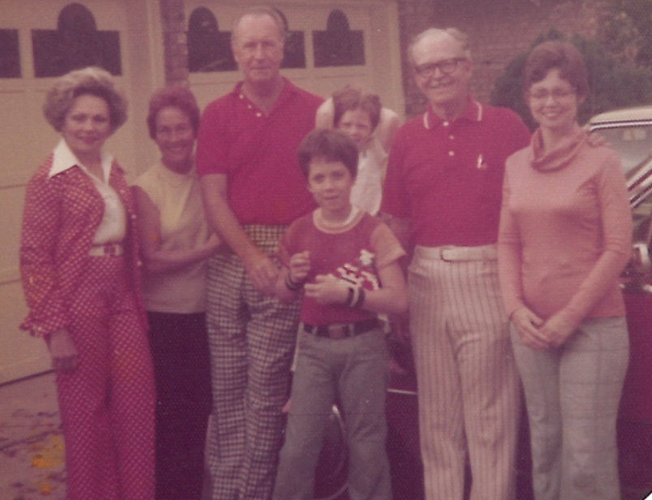
Betsy McGonnell, right, and her family before an OU game day in 1977.
‘Her death captured a nation’
Now, Sly and her husband live in San Antonio, and she works as a school psychologist.
Sly said her experience enduring a traumatic event helps her better understand and counsel students who deal with trauma. She’s always been an empathetic person, she said, but her experience likely grew her empathy and informed how she handles trauma in patients.
Sly planted a “Survivor Tree” sapling in her backyard in 2022. Her husband’s parents and sister have “Survivor Trees” too. She said it’s like having a piece of the memorial in her yard. McGonnell planted his “Survivor Tree” sapling in the front yard of his Dallas home, and said it calms him.
McGonnell said people will always remember the bombing, so Betsy’s death isn’t faceless or nameless. That isn’t necessarily comforting for McGonnell, but he said it perhaps makes it more meaningful to him.
“If she had to go, (at least) her death captured a nation, ” McGonnell said.
Though McGonnell’s memories of that day don’t fade, he said it wouldn’t do him any good to succumb to them. It’s impossible to change what happened, so he said he’s worked to cultivate a good life for the people he loves.
“I'm going to move forward, and I'm going to spend more time worrying about tomorrow than yesterday,” McGonnell said. “Yesterday is where your fondest memories come from.
“Yesterday is now where I find my mother, but I know that she won’t be there tomorrow.”
This story was edited by Ana Barboza and Natalie Armour. Sophie Hemker and Gretchen Schultz copy edited this story.

Comprehensive coverage on the legacy of the Oklahoma City bombing 30 years ago.


