


Editor’s note: This story is featured in OU Daily’s voter guide, which is available in print on racks across campus and Norman in mid-October. Check out the other featured stories at the bottom of this article.
Pulling national headlines and earning loud condemnations from high-ranking Democratic officials, Project 2025 offers a vision for the future of the United States under the next Republican administration.
The project pitches a government and society infused with conservative Christian values, should former President Donald Trump be reelected in November. Trump has repeatedly claimed he is not involved with and has not read Project 2025.
The over 900-page roadmap was published in April 2023 by conservative think tank The Heritage Foundation, with 34 authors and over 200 contributors. Reporting by CNN found six former Trump Cabinet secretaries helped write or collaborated on Project 2025, and at least 140 people who worked in Trump’s administration had a hand in the project.
The Heritage Foundation lists 100 Project 2025 coalition partners on its website, including the Oklahoma Council of Public Affairs, a conservative think tank founded in 1993. OU Daily reached out to the OCPA for comment, but it declined to speak.
Other coalition partners include Turning Point USA, Young America’s Foundation and Moms for Liberty.
Project 2025 looks to shift partisan control of sections of the federal government including the Department of Justice, the Environmental Protection Agency and the Department of Homeland Security.
Project 2025’s lengthy list of goals includes abolishing the federal Department of Education; rejecting abortion as health care; removing legal protections against discrimination based on sexual orientation and gender identity; detaining and deporting “immigration violators;” and terminating diversity, equity and inclusion offices.
“The next conservative President must make the institutions of American civil society hard targets for woke culture warriors,” Project 2025 states.
While sending ripples through the national political scene, some of Project 2025’s goals have already been achieved in Oklahoma at the state level. In state Superintendent Ryan Walters’ Department of Education and the halls of Oklahoma’s Capitol under Gov. Kevin Stitt, policies and bills fall in line with the mission of Project 2025.
Rachel Blum, an OU political science professor, told OU Daily that Project 2025 is a historical anomaly. While previous presidential candidates have advertised their policy positions, Blum noted Project 2025 is publicly available in a comprehensive format.
“Project 2025 is just remarkable because we have so much detail on what some of the biggest movers and shapers in conservative political thought and politics since the 1970s want to do if they're able to get a president who will do what they want,” Blum said.
Project 2025 is divided into five sections. The first, “Taking the Reins of Government,” presents recommendations for actions that should come directly from the next Republican president. Section two lays out the plan for national defense and foreign affairs.
The third section covers departments in the federal government that aim to ensure the welfare of Americans and their education, health and housing. Section four lays out the economic agenda for the next Republican administration. The final section covers independent regulatory agencies and how they would function under this project.
“Conservatives should be confident that we can rescue our kids, reclaim our culture, revive our economy, and defeat the anti-American Left—at home and abroad,” Project 2025 reads. “We did it before and will do it again.”
According to Blum, states like Oklahoma and Texas have become models for Project 2025. Regarding school vouchers, public education, abortion and DEI, Blum said Oklahoma could be viewed as a success case for the architects of Project 2025.
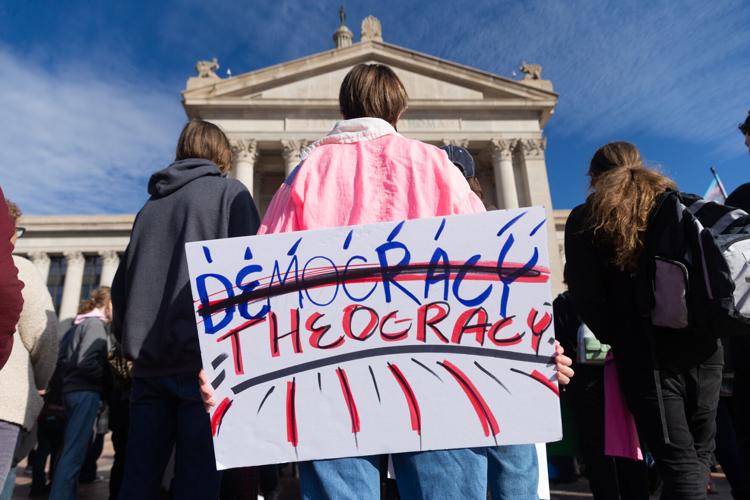
Blum said Project 2025 has the power to override the democratic will of the people.
“Some of the domestic portions of (Project 2025) have already been realized by many states, and that's because nothing in this project is a surprise to people who've been following the intellectual patterns on the right,” Blum said. “The people behind it believe so deeply that those policies are right that they're willing to override the democratic will.”
‘Woke education cartel’
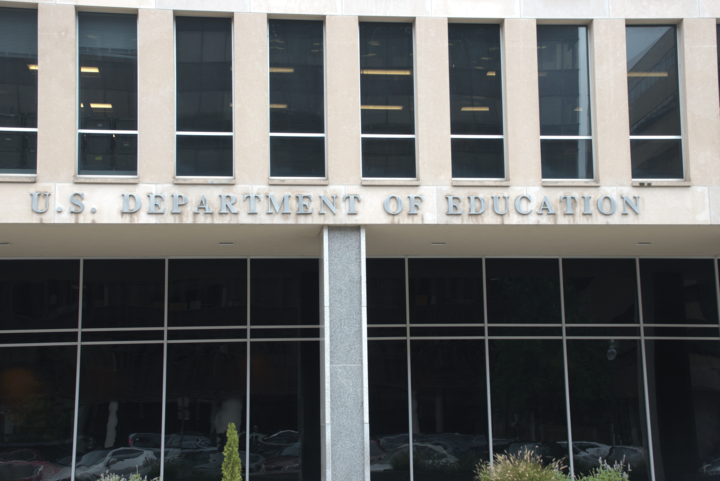
One of the largest changes listed in Project 2025 is the elimination of the federal Department of Education. The writers of Project 2025 believe this will lead to more parental rights in public schools.
“The department is a convenient one-stop shop for the woke education cartel, which—as the COVID era showed—is not particularly concerned with children’s education,” Project 2025 reads. “Schools should be responsive to parents, rather than to leftist advocates intent on indoctrination—and the more the federal government is involved in education, the less responsive to parents the public schools will be."
In March 2023, the Oklahoma State Department of Education unanimously approved a Parents’ Bill of Rights proposed by Walters.
The bill establishes the right of parents to “direct the education” of their children and to “object to public schools imposing unwanted instruction on questions of sex, morality, or religion.” This includes notifying parents of names and pronouns used by students while at school and any developments in students’ physical and mental health.
Project 2025 states the federal secretary of education should “insist” the Department of Education serve parents and “American ideals,” rather than political ideas. These include the ideas that children can “choose their own sex” and that “America is ‘systemically racist.’”
Critical race theory, an academic framework centered on the idea that racism is systemic in American institutions, is discussed throughout Project 2025. The theory has been banned by the state Legislature through House Bill 1775, which Stitt signed into law in 2021.
HB 1775 banned eight concepts, including teaching that one race or sex is inherently superior to another and an individual’s moral character is determined by their race or sex.
OU’s Black Emergency Response Team, OU’s chapter of the American Association of University Professors and other plaintiffs sued the state over HB 1775 soon after its signing. The case is currently in the 10th U.S. Circuit Court of Appeals.
“The noxious tenets of ‘critical race theory’ and ‘gender ideology’ should be excised from curricula in every public school in the country,” Project 2025 reads. “These theories poison our children, who are being taught on the one hand to affirm that the color of their skin fundamentally determines their identity and even their moral status while on the other they are taught to deny the very creatureliness that inheres in being human and consists in accepting the givenness of our nature as men or women.”
After Stitt signed an executive order in December 2023, Oklahoma universities were ordered to complete reviews of their DEI programs. OU decided to change its DEI programs and curricula, including renaming its DEI office to the Division of Access and Opportunity.
Aniketh Koneru, OU Undergraduate Student Congress human diversity committee chair and external vice president for the India Student Association, said he was disappointed by Stitt’s executive order and the removal of university programs such as the DEI office.
Koneru said many politicians have never actually engaged with DEI programs and services, so they don’t fully understand the impact the programs have on students.
“I feel like they're just vaguely attacking things that they don't understand. What people don't understand, they fear, and they try to instill that sense of fear in other people,” Koneru said. “They’re trying to make it a problem when in reality it's not actually a problem.”
Koneru said he would be scared to see DEI eliminated on a national scale.
“We would just be taking a step back in time to the 1950s, you know, where people's problems were not even acknowledged,” Koneru said. “If we keep taking steps back, we're going to crumble as a country. In my opinion, I feel like it will just lead to a downfall of the U.S. because the U.S. is a place of so many cultures and people of different backgrounds.”
Project 2025 also proposes ending “abuses” in student loan forgiveness, which includes eliminating student loan forgiveness plans put into place by President Joe Biden; privatizing subsidized, unsubsidized and PLUS loans; and terminating the Public Service Loan Forgiveness program. It adds that “borrowers should be expected to repay their loans.”
Madeline Canning, vice president of OU’s chapter of Turning Point USA, said she originally wanted to be a teacher. After realizing she could not repay her student loans on a teacher’s salary, Canning said she changed her major to criminology.
“I would never pay back my debt by being a teacher,” Canning said. “That's terrible, because we need teachers.”
To combat Oklahoma’s teaching shortage, OU has several programs and partnerships aimed at helping lessen student loan debt for future educators. The Inspired to Teach program offers teachers who stay in Oklahoma up to $25,500. The TEACH Grant program provides up to $4,000 a year in grants to students who intend to teach at schools that serve low-income families. The federal government also offers four loan forgiveness plans aimed at educators.
Canning said while college tuition is high, debtors and their families should be responsible for repaying student debt. She added receiving loan cancellation would be unfair to her predecessors.
“I know how hard it is to be a college student and know that you have to pay back for your education because most people don't go into college having enough money,” Canning said. “That being said, it doesn't change my view on the fact that I still don't think it's someone else's responsibility. I wouldn't want to place that burden on someone else to repay my loans.”
‘Abortion and euthanasia are not health care’
Project 2025, which defines life as beginning “from the moment of conception,” states that the Department of Health and Human Services should become known as the Department of Life. According to the mandate, all programs and activities within this department should promote anti-abortion ideology.
“The Secretary must ensure that all HHS programs and activities are rooted in a deep respect for innocent human life from day one until natural death: Abortion and euthanasia are not health care,” Project 2025 reads.
Following the U.S. Supreme Court decision overturning Roe v. Wade in 2022, Oklahoma was one of 13 states that had a “trigger” law in place designed to immediately scale back abortion rights once the decision was passed down.
A month before the landmark decision, Stitt signed one of the nation's strictest abortion bans into law, making Oklahoma one of the first states to effectively end access to the procedure.
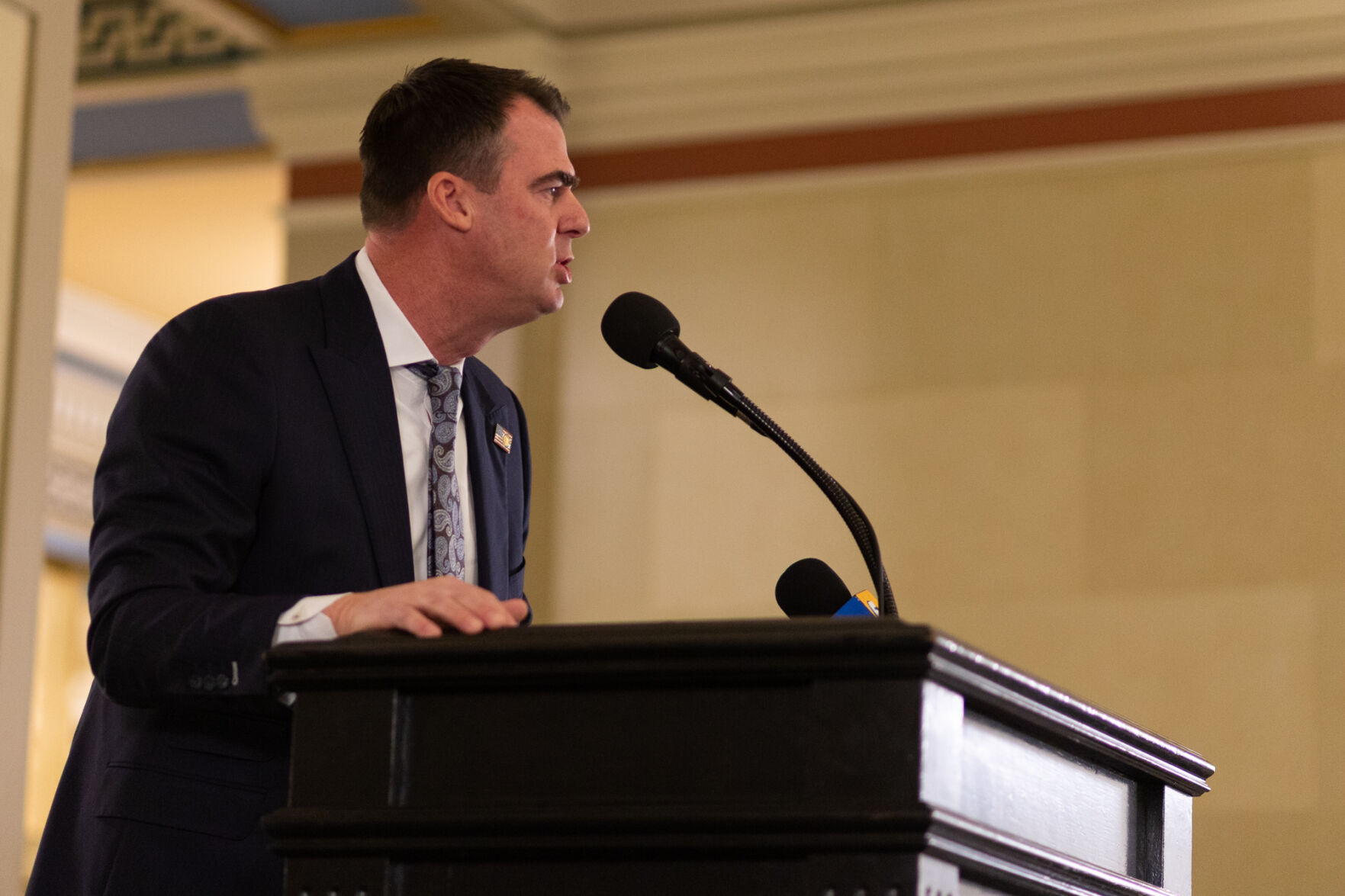
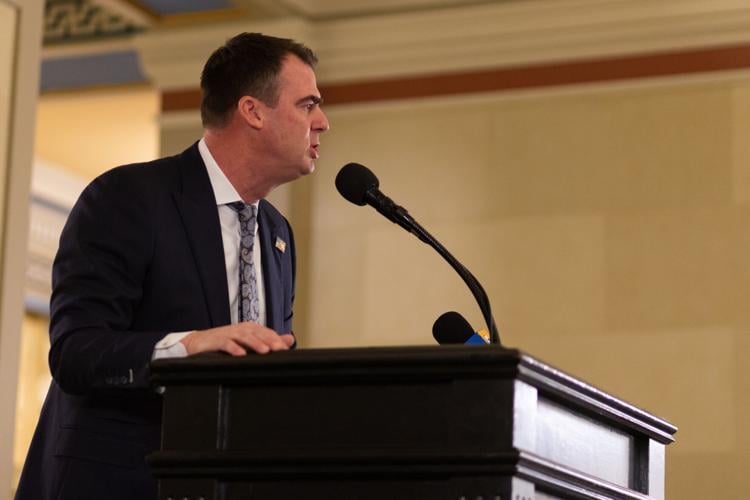
Gov. Kevin Stitt speaks during the first annual Black History Day at the capitol on Feb. 13.
In March 2023, the Oklahoma Supreme Court ruled that the state constitution protects a pregnant person’s right to an abortion only if the health of the individual is at stake, overturning a portion of the extensive ban.
Kathryn Brooks, social media chair of Students for Reproductive Justice — an action fund council of Planned Parenthood — said Oklahoma’s current abortion policies follow the same ideology present in Project 2025.
“The vision that Project 2025 has for America is also the vision that politicians have for the future of this state,” Brooks said. “I do believe that (Stitt’s) vision for reproductive health care aligns very much with what is proposed in Project 2025.”
Brooks said, similar to those writing Project 2025, Oklahoma politicians who write abortion legislation are not familiar with the medical needs of women.
Of the 34 authors of Project 2025, only one person has a background in health care. Dr. Ben Carson is a retired pediatric neurosurgeon and politician who ran for the 2016 Republican presidential nomination. Carson retired from medicine in 2013.
Project 2025 advocates to outlaw pornography, described within the mandate as being manifested in “the omnipresent propagation of transgender ideology and sexualization of children.”
The project calls for the Centers for Medicare and Medicaid Services to re-publicize the 2016 decision against providing a national coverage determination on gender reassignment surgery for Medicare beneficiaries. The mandate asks the centers to recognize “the growing body of evidence that such interventions are dangerous.”
In May 2023, Oklahoma's Senate Bill 613 banned gender-affirming care for transgender and gender-nonconforming people under the age of 18. This law makes it illegal for medical providers to provide puberty blockers, hormones and surgery to minors.
“On the list of important priorities for (Students for Reproductive Justice) is gender-affirming care,” Brooks said. “In states like Oklahoma, I don't think that people always have access to the kinds of healthcare that they absolutely should.”
‘Victimization should not be a basis for an immigration benefit’
Blum said whether Trump is involved with or has read Project 2025, the stances on immigration within the mandate are reflective of his own.
“There are many places where (Project 2025) is super Trump, right?” Blum said. “With immigration, it’s exactly what he wants to do.”
Project 2025 notes Immigration and Customs Enforcement would be responsible for arresting, detaining and removing “immigration violators” anywhere in the U.S. without warrants “where appropriate.”
In April, Stitt signed House Bill 4156, creating the crime of “impermissible occupation.” The bill notes upon first offense, immigrants lacking permanent legal status would be punished with one year in county jail, fined up to $500 or both. A second offense would be labeled a felony, and violators would be sentenced to two years in prison, fined up to $1,000 or both.
Canning said she agrees with Project 2025’s stance on immigration.
“Those resources are being taken up by people who are here illegally, which isn't fair,” Canning said. “We aren't founded on people being here illegally.”
Canning said immigrants lacking permanent legal status use social services that could benefit U.S. citizens.
“I don't think they should have access to the stuff that the people who pay taxes and who are citizens of the United States need because there are people here now that aren't getting what they need because it's being taken up by people here illegally,” Canning said.
Koneru said Project 2025 pushes a dangerous narrative that all immigrants without permanent legal status are criminals, which isn’t true.
Koneru said, rather than demonize immigrants lacking permanent legal status, it’s important to have accessible education about what the proper procedure is to become a legal citizen because the American naturalization process is extremely difficult.
“The story of the U.S. is a story of immigrants. Our ancestors, no matter who you are, at one point in time, immigrated to the U.S. Technically, the first colonists were illegal immigrants because this was Native territory,” Koneru said. “The U.S. can become a place where we respect each other's backgrounds and histories.”
‘We’re in territory we haven’t been in before’
According to Blum, Trump’s “Make America Great Again” philosophy originated from Barry Goldwater, the 1964 Republican presidential nominee, which reflected a desire to return to a pre-Civil Rights Movement era. Blum said Project 2025 hopes to make this prospect a reality, creating a more “restrictive” American society.
Blum said while the majority of Americans don’t agree with many of Project 2025’s policies, Trump could override majority rule, citing the Supreme Court’s ruling in Trump v. United States, which granted the executive branch presumptive immunity for “official acts.”
“We have this three-part tug-of-war, and because there are three equal and independent branches, no tyranny can happen,” Blum said. “But if two of those branches collude by creating a pathway to get around the third branch, … then the entire premise of what keeps us from King George is kind of undermined. We’re in territory we haven’t been in before.”
According to Canning, a Trump victory in November does not guarantee the enactment of Project 2025. She said Trump is pro-democracy, and Project 2025’s enactment could diminish the authoritative power of both conservative and liberal officials.
“For anyone who's connecting the two, I would say not to worry, … he wouldn’t implement it,” Canning said. “There's corruption on both sides. I think the aim (of Project 2025) is to diminish that corruption but equally.”
Blum said Project 2025 envisions an America not unlike versions depicted in dystopian novels. While citizens read about these possible futures, Blum believes Project 2025 is closer to reality than fiction.
“There are some really powerful people in our country who don't really care what the majority of people want and who don't think that everybody is equal or should be equal. They think some people should be more equal than others,” Blum said. “It seems like a distant thing, but countries can change very, very quickly, especially democracies, when the people stop mattering as much.”
This story was edited by Ismael Lele and Ana Barboza. Avery Avery, Natalie Armour, Kylie Caldwell, Grace Rhodes and Mary Ann Livingood copy edited this story.