
Content warning: This article mentions suicide. A list of resources is included at the bottom of the story.
The Oklahoma state Senate passed a bill Wednesday that could ban gender-confirming health care for people under the age of 18.
Senate Bill 613, authored by Sen. Julie Daniels, aims to ban health care providers from performing certain gender-confirming care for minors in Oklahoma, and could be punishable by up to a $100,000 fine and/or 10 years in jail. Health care providers could also face license penalties.
The measure passed with eight dissenting votes.
Freedom Oklahoma, American Civil Liberties Union of Oklahoma and Planned Parenthood Great Plains released a joint statement condemning the passage of the bill, calling it a “direct attack” on transgender youth in Oklahoma.
“Transgender youth – like all Oklahomans – deserve access to best practice healthcare,” Nicole McAfee, executive director of Freedom OK, said in the statement. “Ensuring trans Oklahoma youth can access the care they need is a critical part of helping them succeed in school, creating positive relationships in their communities, and developing into healthy adults.”
The Trevor Project and the Human Rights Campaign also released statements that condemned the passage, saying the bill goes against the guidance of major medical and health associations and research.
“SB 613 is among the most egregious efforts by extremist lawmakers in the country, which continues to demonstrate Oklahoma’s crusade against transgender youth and the people who support them,” Human Rights Campaign State Legislative Director and Senior Counsel Cathryn Oakley wrote in the statement. “ … This is one more such unconscionable attack by powerful adults on kids just trying to grow up healthy and well.”
The Trevor Project’s 2022 U.S. National Survey on LGBTQ Youth Mental Health found that 55 percent of transgender and nonbinary youth in Oklahoma seriously considered attempting suicide in the past year, with 20 percent attempting suicide.
The Trevor Project also cited research that showed access to gender-confirming care improved the mental health of trans youth and reduced suicide risk. The organization also said new polling found that 86 percent of transgender and nonbinary youth say debates surrounding laws that restrict the rights of transgender people have negatively impacted their mental health.
“Going against the guidance of every major medical and mental health association, this bill brings the state one step closer toward stripping transgender and nonbinary young people of their right to receive best-practice medical care,” Troy Stevenson, director of state advocacy campaigns at The Trevor Project, wrote.“ ... We urge lawmakers to work toward expanding access to this potentially life-saving care – not restrict it further.”
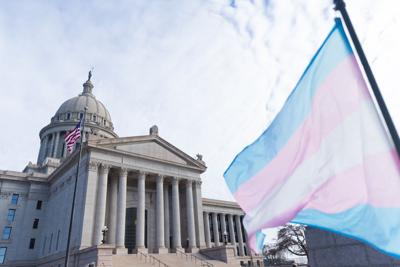
On the first day of the 59th legislative session, 2SLGBTQ+ advocates rallied outside of the Oklahoma state Capitol before and after Gov. Kevin Stitt’s State of the State address. In his address, Stitt urged lawmakers to ban gender-confirming care, saying it’s for the “protection” of youth in Oklahoma.
The bill will now advance to a committee in the Oklahoma House of Representatives before it will be heard on the House floor. The Oklahoma House Public Health Committee is currently scheduled to hear another ban, House Bill 2177, on gender-confirming healthcare at 3 p.m. Wednesday.
This article was edited by Alexia Aston.


