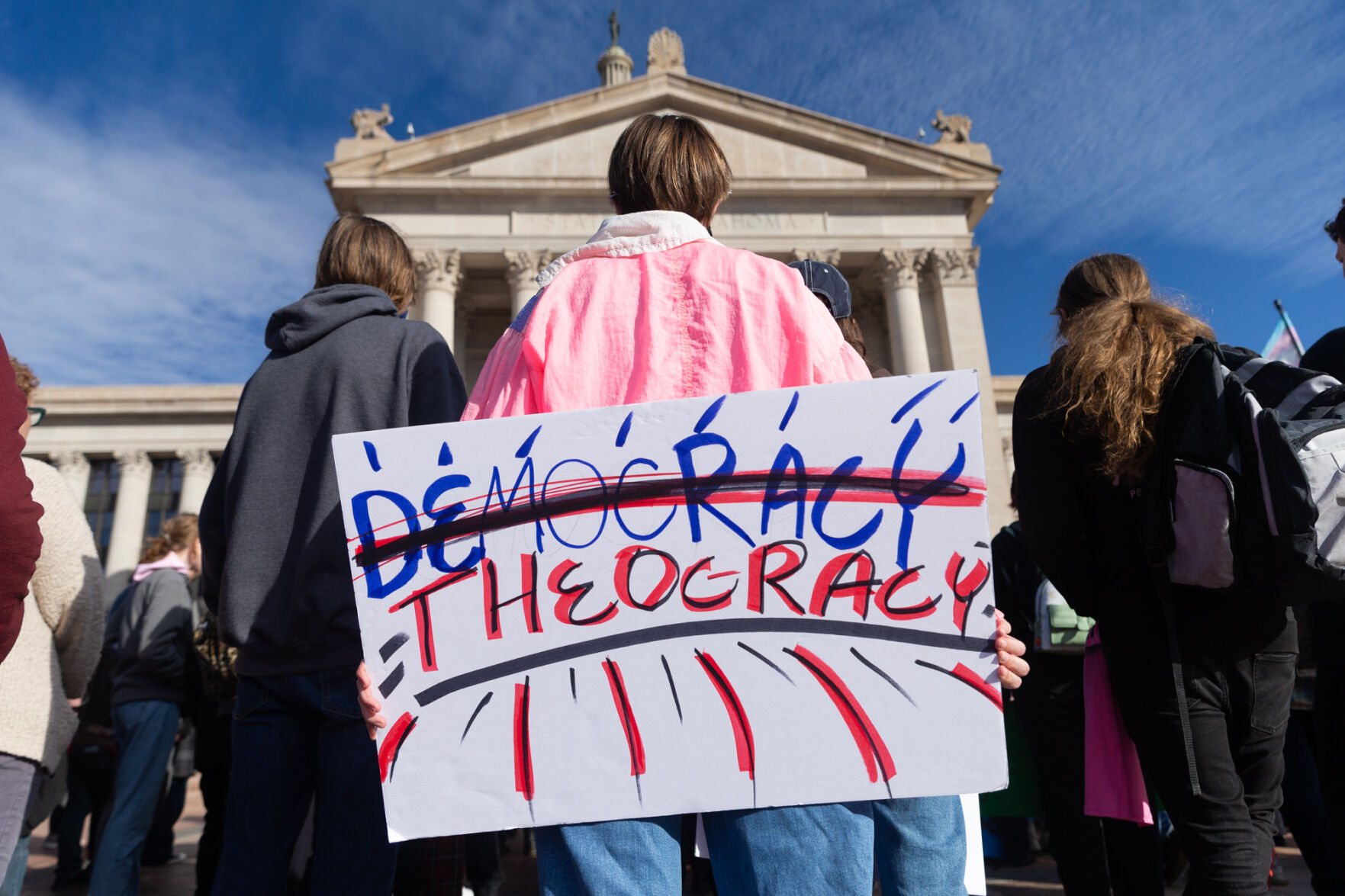


Editor’s note: This story is featured in OU Daily’s voter guide, which is available in print on racks across campus and Norman in mid-October. Check out the other featured stories at the bottom of this article.
WASHINGTON — While Vice President Kamala Harris and former President Donald Trump have yet to release comprehensive higher education policies in 2024, both the Democratic and Republican parties have released platforms that include higher education stances and goals.
In 2004, Trump founded Trump University, a for-profit company. The program was not accredited and did not confer college credit. In the face of legal issues and complaints, the company ceased operations in 2010. In 2016, a National Review article called the operation a scam.
During her six-year stint as California attorney general, Harris took on for-profit colleges and universities. In 2016, Harris won a $1.1 billion judgment in federal court for a lawsuit she led against Corinthian Colleges.
In a 2020 Inside Higher Ed article, Clare McCann, a former senior policy adviser for the U.S. Department of Education, said she expects Harris to help find relief for students who fell victim to for-profit colleges.
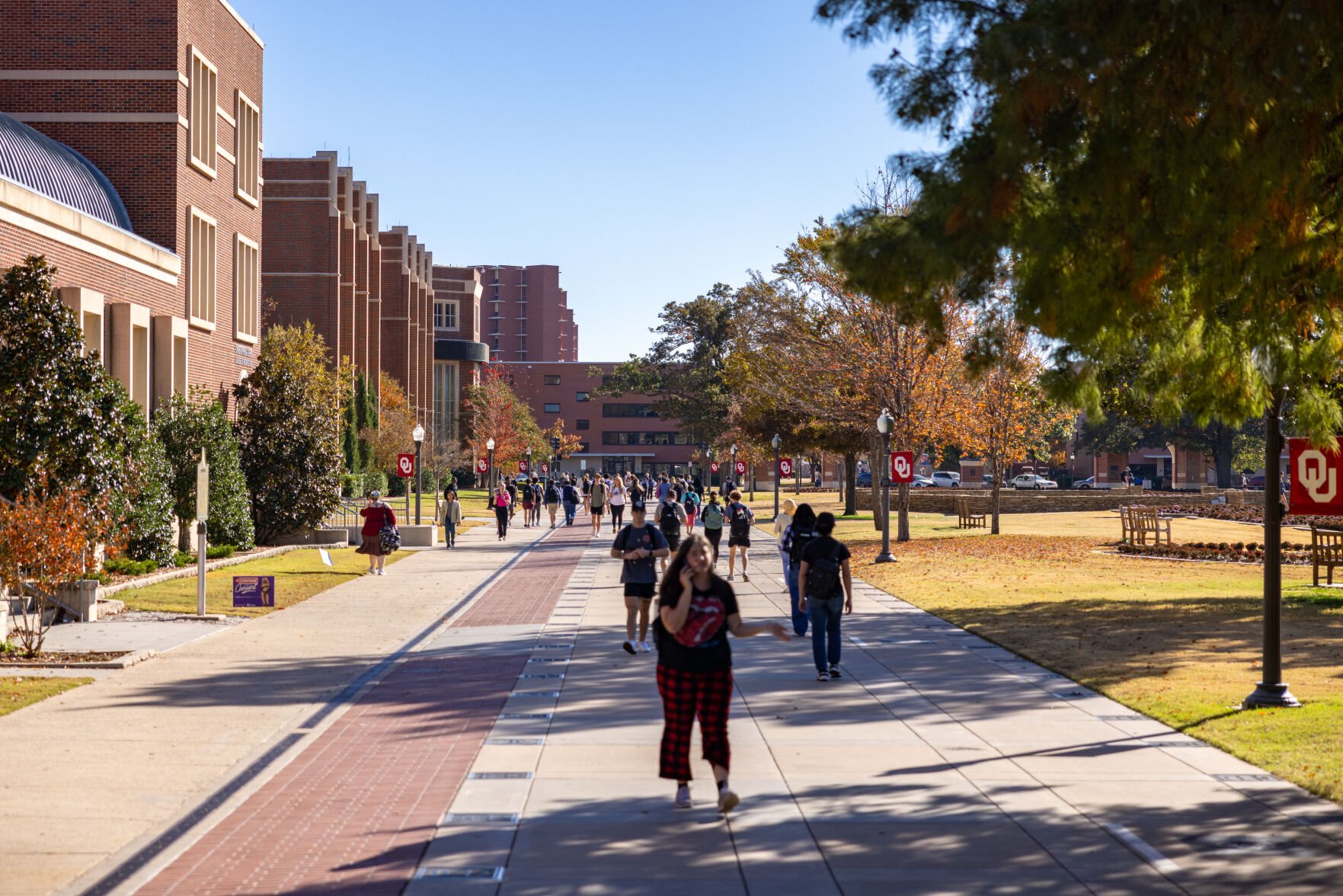
OU students walk to class on the South Oval.
Affordability, loan forgiveness and funding
Harris is expected to continue President Joe Biden’s efforts to implement programs that lower the cost of college tuition and forgive student loans.
“One of the major things that I think is expected from Harris is to continue to fight for debt forgiveness in the vein of Joe Biden,” said Alisa Fryar, OU political science professor and department chair. “That was something she worked on as a senator.”
In 2017, Harris was one of the original co-sponsors of the College for All Act. The bill was authored by Sen. Bernie Sanders (I-Vt.) and called for an amendment to the Higher Education Act of 1965. The amendment, which was last referred to the Committee on Health, Education, Labor and Pensions, would have established a grant program to eliminate tuition and fees for all students at community colleges and two-year tribal colleges and universities. It would have also eliminated tuition and fees for working- and middle-class students at four-year public universities.
In 2019, Harris was one of nine co-sponsors of the Debt-Free College Act, authored by Sen. Brian Schatz (D-Hawaii). The bill would have required the Department of Education to award grants for federal-state partnerships aiming to provide debt-free college to students at in-state public institutions of higher education, historically Black colleges and universities and minority-serving institutions. It would have also allowed grants for financial aid to be given to immigrant students who entered the United States before the age of 16 and met certain education requirements.
Harris graduated from Howard University, a historically Black college, in 1986, where she studied political science and economics. Following her time at Howard, she studied law at the University of California in San Francisco and graduated with a law degree in 1989.
Trump began his collegiate studies at Fordham University and transferred to the University of Pennsylvania two years later. He graduated from the Wharton School of Business with a bachelor’s in economics in 1968.
According to the 2024 Democratic Party platform, the cost of higher education is a barrier to opportunity that is hurting families, futures and the economy.
In addition to supporting accessible higher education and loan forgiveness efforts, the Democratic Party platform calls for free community college and trade school.
“Four year college is not the only pathway to a good career, so Democrats are investing in other forms of education as well, including career and technical education,” the Democratic Party platform read.
While the Republican Party platform does not mention a vision for career trade schools, Trump showed support for them when he was in office.
In 2018, Trump signed legislation updating the Department of Education’s $1.2 billion Career and Technical Education program. The legislation increases the program's authorized funding from $1.2 billion in 2019 to $1.3 billion in 2024. It also supports state and local grant recipients with STEM-focused programs featuring activities meant to encourage participation by underrepresented groups.
The Democratic Party is also pushing for subsidized tuition at all minority-serving institutions for students with families earning less than $125,000 annually.
Harris has worked to solidify her support of HBCUs. From fiscal year 2021 to fiscal year 2024, the Biden-Harris administration has worked to allocate over $17 billion in funding for HBCUs.
Despite federal investment, 16 states have continually underfunded HBCUs by over $12 billion, according to a 2023 report by the Department of Education. In Oklahoma, Langston University has been underfunded by $400 million over the past 30 years. As a response to the underfunding of Langston University, Oklahoma House Democrats have called for an audit.
In 2019, Trump signed a bill reauthorizing $225 million in mandatory funding for minority-serving institutions including $85 million in recurring funds for HBCUs.
While Harris is expected to continue Biden’s push for loan forgiveness, Trump has spoken against the idea.
In 2023, the Supreme Court voted 6-3 to block Biden’s plan to cancel up to $400 billion in student loans. The Supreme Court said the administration had overstepped its authority. In August, the Supreme Court temporarily barred the Biden administration and the Department of Education from implementing what is known as the SAVE Plan.
The SAVE Plan is a new income-driven repayment plan that would have lowered undergraduate borrowers’ monthly payments to 5% of their discretionary income.
“He did that with the tuition and that didn’t work out too well, he got rebuked,” Trump said at a campaign rally in Wisconsin. “Then he did it again, it’s going to get rebuked again, even more so, it’s an even more vile attack.”
Project 2025, a policy document from the Heritage Foundation, calls for the dismantling of a variety of loan forgiveness programs and the Department of Education. Trump has repeatedly denied involvement with the project, but a CNN review found at least 140 people who worked in the Trump administration have been involved in Project 2025.
The policy document calls for an end to the Public Service Loan Forgiveness program and loan forgiveness like Income-Driven Repayment plans.
“I think those folks who are professionals, who are working, who are getting their loans forgiven through this program, that money that they would be paying in student loans, they’re paying back into the economy in different ways. They’re consuming more, they’re purchasing better cars or whatever, and that money is matriculating into the economy in a different fashion,” said Emily Stacey, political science professor at Rose State College. “I think that’s a consideration that needs to be had because, again, these are not folks that are just trying to squelch on their loans.”
Fate of the Department of Education
Trump and the Republican Party platform both support dismantling or restructuring the federal Department of Education. The decision relies on the department’s adherence to Trump’s goals. For Stacey and Fryar, the idea is concerning and half-baked.
“The danger with this is, whenever you’re talking about eliminating the Department of Education, are you talking about completely eliminating the department and all of its services, or are you talking about moving those services to an existing entity?” Stacey said. “It’s a real dangerous topic.”
The fate of the Free Application for Federal Student Aid poses one of the biggest questions regarding the restructuring or dismantling of the Department of Education.
Beginning in 2023, students faced issues with the revamped FAFSA process. These issues led to trickle-down effects, such as universities not being able to make financial aid decisions within a normal timeframe, Fryar said. FAFSA issues also forced students to make tough decisions about when and where to enroll.
“Eliminating the Department of Education raises so many questions about how federal financial aid especially, also a lot of other kinds of core functions in higher ed, would be managed,” Fryar said. “Those questions are going to be largely around federal financial aid, accreditation, also a lot of other legal frameworks the federal Department of Education is quite involved in. It’s hard to imagine what that could look like structurally if someone were to implement that change.”
The Republican Party’s platform indicates that Republicans will fire “Radical Left accreditors,” suggesting a shift from the current accreditation system.
Trump has repeatedly said higher education institutions across the country are “too woke” and indoctrinate students with “radical left” ideologies. He has implied he wants to overhaul the current higher education system.
“The time has come to reclaim our once great educational institutions from the radical left, and we will do that,” Trump said in a campaign video published in May 2023.
In the same video, Trump said he would fire accreditors he perceives as “radical leftists” and replace them with accreditors who would impose new standards. Trump said the new standards would include a new focus on American tradition and Western civilization; protecting free speech; eliminating administrative positions; removing diversity, equity and inclusion programs; new options for accelerated and low-cost degrees; job placement and career services; and entrance and exit exams.
In addition to accreditation changes, Trump has floated the idea of a new institution he calls the American Academy. Trump hopes to fund the institution by taxing the endowments of private universities. He said the institution would be free of charge and provide a world-class education.
Diversity, equity and inclusion
In 2023, Gov. Kevin Stitt signed an executive order defunding diversity, equity and inclusion initiatives in Oklahoma higher education. The executive order led to the review and dismantling of DEI programs at universities and colleges across the state, including OU.
In 2020, Trump issued an executive order banning federal agencies and departments from engaging in DEI training.

Oklahoma Gov. Kevin Stitt speaks during the inauguration ceremony of OU's 15th President Joseph Harroz on Sept. 17, 2021.
In the video released in May 2023, Trump promised to remove all “Marxist” DEI bureaucrats.
Since Harris became the Democratic nominee, she has been referred to as a “DEI hire” by some Republicans. In this context, some claim Harris is in her position due to her race and gender rather than by merit.
Harris herself has been a proponent of DEI throughout her career and will likely work to protect DEI initiatives if elected president.
“We understand that you can’t truly invest in the strength of our nation if you don’t pay attention to diversity, equity, and inclusion,” Harris said during a vice presidential event in Atlanta.
Trump has called for the deportation of students he calls “pro-Hamas radicals.” He first shared this sentiment in the wake of the pro-Palestinian protests that swept university campuses, including OU, toward the end of the spring 2024 semester.
“It’s hard to know what that could mean. Deporting American citizens for political activism is hard to square with our current legal system and expectations,” Fryar said. “Deporting noncitizens for similar activities would also be a departure from norms, especially when we don’t have any meaningful physical violence, and even with some physical violence, deportation is rarely part of that conversation.”
The Republican Party platform also states rolling back Biden’s Title IX changes as a goal of a Trump presidency. During his first term, Trump rolled back Title IX changes instituted by former President Barack Obama.
Biden’s new regulations took effect on Aug. 1 and introduced shifts in how institutions handle sexual assault and harassment as well as an expansion for 2SLGBTQ+ and pregnant students.
The changes made by Biden eliminated mandatory live cross-examination hearings for sexual assault disciplinary proceedings. The change also implemented a new definition of sexual harassment, extended universities’ jurisdiction to off-campus and international incidents; and clarified protections against discrimination based on sexual orientation, gender identity, pregnancy and parenting status.
On a conservative podcast, Kayal and Company, in May, Trump said he would terminate Biden’s changes and roll them back on day one.
This story was edited by Peggy Dodd, Anusha Fathepure, Ismael Lele and Ana Barboza. Natalie Armour, Grace Rhodes and Mary Ann Livingood copy edited this story.