

Editor's note: This story is featured in OU Daily's Best of Norman Guide, which is available online and in print. Racks can be found around Norman and campus. Check out the other featured stories at the bottom of this article.
Nobody knows what Norman will look like 20 years from now. As the city grows, local business owners, community organizations and city leaders are discussing how the city should adapt to protect the community.
For some, that future starts downtown.
The Walker Arts District thrives partly because of the arts and community, but Sereta Wilson, owner of Yellow Dog Coffee Co., thinks the area could become more accessible.
Wilson envisions a downtown with more residences, car-free mobility and a more robust bus system.
This year, Gray Street became a two-way road, something Wilson said could happen to Main Street. Multiple cities have restored two-way street designs. Advocates cite reduced pedestrian accidents, speeding and motor vehicle crashes, as well as increased pedestrian traffic and a decrease in business vacancies.
Theron Jessop, co-owner of Juliette Oyster Bar and Steakhouse, describes the need to protect Norman’s unique downtown business ecosystem.

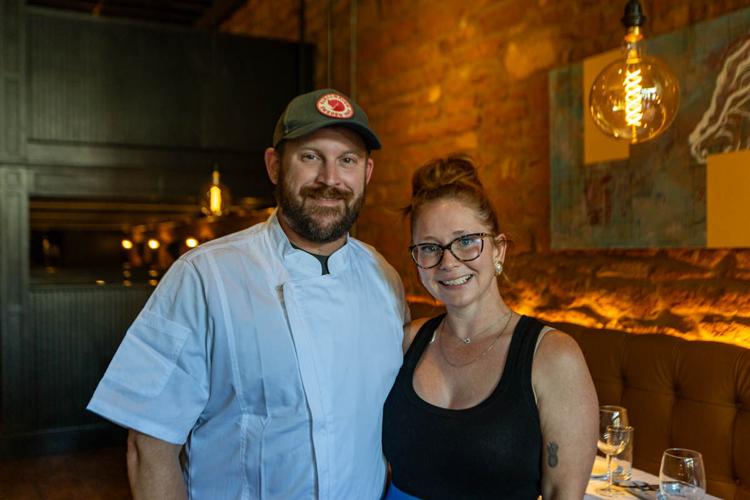
Theron Jessop and LeRhonda Jessop, owners at Juliette Oyster Bar, Norman on Sept. 24, 2026.
“Main streets and downtowns are a dying dream. Nobody wants to be down there and none of the buildings can stay open. So I think that it’s rare that we have so many businesses in this area,” Jessop said. “Hopefully it’ll just keep expanding.”
Jordan Cramer has watched local restaurants come and go as the city expands. As a Chamber of Commerce member, he likes to see small businesses succeed.
“It breaks my heart when I see a small business come in and have a great neighborhood around them, and then they pop up and then go out of business,” Cramer said.
He believes those closures are driven by a lack of information. Cramer is developing “Norman Connect” to connect residents and local businesses with their council members and help nonprofits work together to better serve the community.
Scott Martin, Norman Chamber of Commerce president and CEO, said that as utilities, insurance and property taxes rise, businesses on thin margins can struggle to balance those costs while paying employees a fair wage.
Martin said the city can control permitting and inspection costs and believes it is trying to reduce them, but difficulties remain. Martin said the chamber regularly talks to Norman City Council, advocating for policies that keep prices lower for small businesses.
“In today’s world, businesses have choices just like people do. You can kind of go wherever you want to, so you want to create a climate that is very welcoming and attractive for businesses and families to be at,” Martin said.
Cramer said he hopes a data center is built in Norman, as it could make the city more affordable through deals that help pay residents’ property taxes, fund schools and bring jobs.
But Norman’s future is not just about its growth. For some, it’s about where that growth stops.
While much of the city expands, Ward 5 Councilmember Trey Kirby advocates for the protection of Norman’s watershed, fighting development of East Norman.
He said he believes watershed preservation will come from banning data centers in Norman, opposing Cramer’s stance that a data center would make the city more affordable.
The South Extension Turnpike is expected to be complete by 2034, and Kirby fears it will invite development to East Norman.
“Every big city at some point in time stopped and left a pretty good-sized green space for people to be able to go and enjoy nature, …” Kirby said. “At the end of the day, we’re going to have development all the way around us. We need to start looking at that Lake Thunderbird area as our green space. That’s always going to be a green space for all the future generations.”
Wilson believes developing Downtown Norman will protect rural areas and the water supply — a stance she held as a former city council member.
The debate over growth comes as residents and organizations face another challenge: affordability.
Mike Butler, executive director of Mission Norman, said hunger crises are getting worse. Currently, the organization serves 600 to 800 Norman families monthly, but he said cuts to families eligible for Supplemental Nutrition Assistance Program, or SNAP, benefits have made it harder to keep its shelves stocked.
“The inflation, the cost of groceries is so high. That’s why (there’s a) growing number of families that are coming here, …” Butler said. “That’s one of the challenges that we have, and we’re not government based. We’re totally (based on) donations from the community, and so sometimes it’s hard. The food comes in … and it goes out as fast as we get it.”
For Butler, food insecurity is only part of the problem, as he said the organization will need to continue supporting Norman residents facing housing challenges. Martin agreed housing affordability is an issue, but it isn’t unique to Norman.
“Housing issues are nationwide. The cost of housing, these are not unique to us,” Martin said. “I would just offer that some of these things where we have control over, we should take a little bit more ownership over and chart our own path and try to set a different course.”
For Wilson, building Norman’s future depends on creating a community for people to connect. She said she aspires for her coffee shop to be the heart of downtown, where activist groups, book clubs, bible studies, artists and musicians meet, along with its food pantry.
“We have become kind of the living room of downtown. I think we have everybody in here all the time,” Wilson said. “Our goal is to provide great coffee, and be sustainable and a fair trade coffee provider, but also be a community. … I think we achieve that on the regular with just the different walks of life.”
Loveworks Leadership, located on Gray Street, aims to support kids and create community in Norman.
Kennedy Corbin, Loveworks community relations manager, said the organization supports middle school children who face challenges regarding image, especially in the age of social media. She said the goal is to build up kids for the community.
“I think everybody’s kind of seen that there’s been a real big shift of younger generations going through and building community,” Corbin said. “Loveworks is a really cool place for them to be able to form a community built on principles that help them not only get to find people who are learning and developing as well, but also learning useful skills that they can apply beyond just their day-to-day in school, or they can take on with them at any point in their life.”
She also said that in Norman, protecting the community is a priority.
“We’re a pretty small community, but it is cool getting to see how big and homey we can feel at the same time,” Corbin said. “That’s something I think really needs to be protected.”
This story was edited by Madisson Cameron. Izzy Fletcher, Tori Pham and Larkin Bock copy edited this story.