
Editor's note: This story is featured in OU Daily's Best of Norman Guide, which is available online and in print. Racks can be found around Norman and campus. Check out the other featured stories at the bottom of this article.
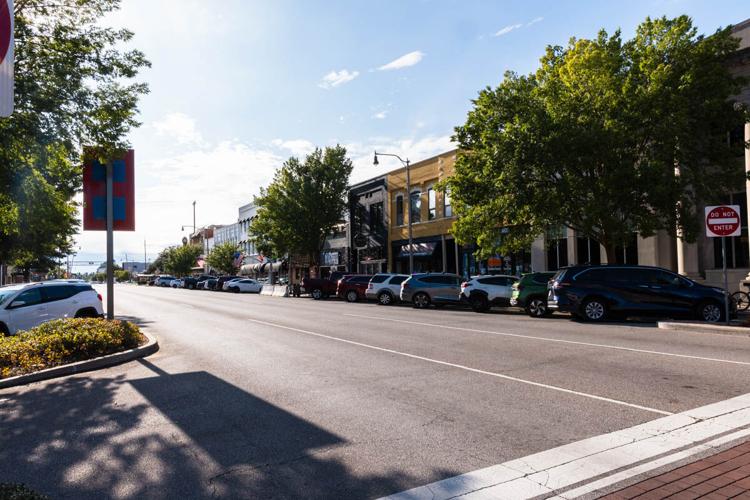
New development may change Norman’s landscape, but the city’s character is shaped by something harder to measure: local businesses, traditions and gathering places that bring people together.
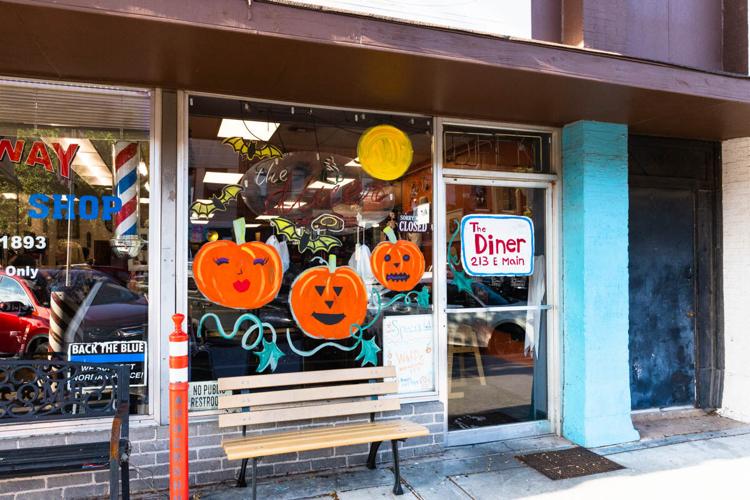
For Bonnie Amspacher, owner of The Diner, Norman’s identity comes down to its small-town feel, local business scene and sense of community.
Many people who visit The Diner, a chili parlor and brunch stop on Main Street, bring old memories of Norman with them, sharing stories about what life used to look like.
The sense of community stretches beyond these shared stories, according to Amspacher.
“I think the best way to describe that is when people come in to eat, and they see other people they know, and they’re like, ‘Oh, hey, it’s you. How are you?’” Amspacher said. “Or when you’ll be talking to a customer from a table, and someone at another table chimes in, and then it’s sort of like a conversation in the whole restaurant.”
With OU now in the Southeastern Conference, more out-of- town fans have been eating at The Diner, bringing new faces into a restaurant where longtime residents continue to gather. This closeness is what Amspacher hopes Norman never loses as it continues to grow.
“I hope that it holds on to its … funky, local flavor,” Amspacher said. “I hope that (Norman) doesn’t expand and get so big that it can’t support local, interesting places, because it’s when places get so big, a lot of times it’s just chains.”
Amspacher emphasizes the unique experiences that local businesses offer. She hopes that as Norman grows, it doesn’t lose the identity and community these businesses have fostered.

The Diner on Oct. 14, 2026.
“I would like to encourage the people of Norman to come out and support independently owned local businesses,” Amspacher said. “I feel like they do a lot to make a place have a form of identity and build a sense of community that I think people need to be happy and thrive. It’s a lot of hard work, and we need their support.”
Norman’s identity is also shaped by the people who study and work here.
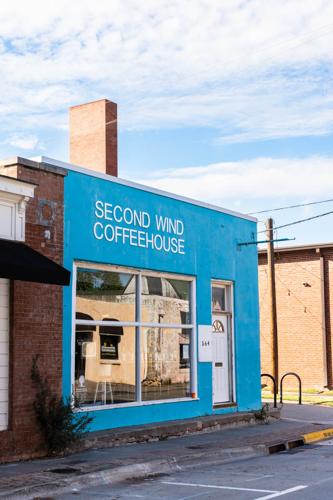
Dawn Solis, coffeehouse director of Second Wind Coffeehouse and OU literary and social studies junior, said that the variety of backgrounds and beliefs in Norman differ from what she experienced in her hometown.
“It’s very radical to be able to see the way that people talk to each other and the amount of political activism that is in the space, even just at OU, but overall in the metro city area,” Solis said. “It’s very interesting to see the different ideologies that I come across. Even just having multiple religions in one space is very interesting to me.”
Solis described Second Wind as a “melting pot,” something that echoes the diversity seen throughout Norman.
“We have different people … and that is what makes Second Wind such a safe space and such a great space,” Solis said.

Second Wind Coffeehouse on Oct. 14, 2026.
Solis sees the university as the central part of Norman, the thing that distinguishes it from other cities. Its influence can be seen even in the way traffic and business hours revolve around students’ schedules.
“This very much is a college town,” Solis said. “I feel like there’s no way to get away from that.”
Solis’ favorite Norman tradition stems from university culture: “Boomer Sooner.” When fans walk around on game day, Solis enjoys watching them yell “Boomer” and “Sooner” to each other.
“That just brings up such catharsis in me because I grew up watching the game on TV, and now I get to be a part of the action now that I live on campus,” Solis said. “It’s a lot of fun.”
The university may anchor Norman as a college town, but its influence reaches beyond campus and the football stadium.
Wess McMichael, owner of McMichael Music and co-founder of Norman Porch Fest, said the university helps make Norman a cultural center by attracting artists and intellectuals. The city’s music scene also influenced his decision to move to Norman.
When he was younger, McMichael said he would travel to Norman to play chess with OU’s chess club. Afterward, he would walk around Campus Corner and listen to the different musicians.
“I was like, ‘Wow, this is really cool!’” McMichael said. “I hadn’t seen anything like that since I was in Austin, so I got my ducks in a row and I moved down here.”
The combination of artistic opportunities and small-town setting continues to be a big part of Norman’s appeal. McMichael said Norman offers opportunities to experience “big city sorts of art” while maintaining a friendly, smaller community feel.
That balance is reflected in Norman’s music scene, which includes longstanding venues such as The Deli and Bluebonnet Bar, as well as newer additions like Opolis.
Like Amspacher, McMichael hopes Norman continues to support local art and businesses.
“I would like to see it keep the small-town friendly attitude, not become corporate,” McMichael said. “Fight that urge. Keep it small and local.”
Norman will continue to grow and change, but it is not necessarily defined by its size or the number of students who live here.
It lives in conversations between customers in a restaurant, the diversity of backgrounds and beliefs in a coffee shop, the traditions that unite the city and the artists that bring everyone together.
This story was edited by Madisson Cameron. Avery Shaw, Kylie Caldwell and Kennedy Johnson copy edited this story.


