
Editor's note: This story was updated at 2:59 p.m. May 19 to reflect the reschedule of the meeting in Norman due to severe weather.
The Oklahoma Turnpike Authority will host two public meetings for residents to share input on its ACCESS Oklahoma long-range plan in Cleveland and McClain counties.
The first meeting will be held from 5 to 7 p.m. Wednesday at the Purcell Multi-Purpose center. The second meeting will be held from 5 to 7 p.m. May 27 at Countdown Event Center in Norman.
The Norman meeting was originally scheduled for Monday but was postponed due to severe weather.
What is ACCESS Oklahoma?
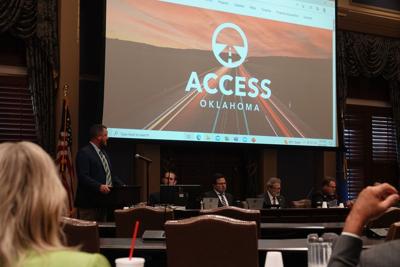
ACCESS Oklahoma is a 15-year, $8 billion plan to develop new turnpikes, and renovate and expand existing highways statewide. It was originally approved by the Oklahoma State Supreme Court in August 2023.
Two turnpikes are planned for the Norman area: the South Extension Turnpike and the East-West Connector.
The South Extension would run approximately 19 miles through Cleveland County from the East-Connector on Franklin Road and south I-35 in Slaughterville. The project is expected to cost $1 billion and would be completed by 2036, according to the ACCESS Oklahoma website. In March, the South Extension was rerouted to avoid federal property at Lake Thunderbird.
Meanwhile, the East-West Connector would cost an estimated $3 billion and run 28 miles, connecting Interstate 44 near Newcastle to Interstate 40 at the Kickapoo Turnpike across north Norman.
OTA, city of Norman
On Aug. 27, Norman City Council unanimously rejected a resolution that would have allowed the OTA to build turnpike facilities through “critical areas” of Norman, including the Lake Thunderbird watershed, the Canadian River Corridor and the city’s flood hazard areas.
At the meeting, dozens of members of Pike Off OTA, a grassroots movement by Norman residents against the proposed turnpikes, filled the council chambers and wore red in protest.
On Oct. 15, council discussed a new resolution with the OTA at a special meeting. During the meeting, city attorney Rick Knighton said the OTA did not require a resolution to build the East-West Connector through Norman, adding council’s rejection of ACCESS Oklahoma facilities in August did not prevent construction.
“The OTA has eminent domain powers granted to them by the state …” Knighton said. “There isn’t anything we can do to stop that.”
On Oct. 22, council voted to postpone a resolution requesting the OTA build facilities in Norman along ACCESS Oklahoma’s East-West Connector. Council also approved to schedule a public hearing involving representatives of the OTA answering questions from Norman residents.
Over 100 residents filled the Norman City Council chamber in protest of the resolution.
On Oct. 24, the OTA announced it would move forward with its plans for the East-West Connector without the city’s input, declining the city’s request for a public hearing.
Lisa Shearer-Salim, OTA public information manager, told OU Daily in October the resolutions rejected and postponed by council did not prevent the OTA from building the East-West Connector, citing the Oklahoma Supreme Court’s authorization of ACCESS Oklahoma in August 2023.
“The OTA has legal authority to build the turnpike,” Shearer-Salim said. “We don't need permission from the city of Norman.”
OTA, Oklahoma Legislature
In January, Sen. Lisa Standridge (R-Norman), among other state lawmakers, proposed a series of bills aimed at the OTA.
Senate Bill 80 would require the OTA provide notice to all affected property owners before the proposal of a new turnpike or modification to an existing turnpike, including a brief summary of the turnpike and its map in “simple language,” the proposed action, the circumstances that created the need for a turnpike, legal authority, the intended effect of a turnpike and information for individuals to gather copies of the turnpike and voice their opinions.
House Bill 1939, which was authored by Rep. Danny Sterling (R-Tecumseh), would mandate comprehensive studies that consider surrounding residents and businesses when planning turnpike routes. It would also require the OTA to partner with municipal governments and hold public meetings. Additionally, the bill would require property owners within a mile of proposed developments to be notified and given the opportunity to voice their concerns.
In February, the Senate Aeronautics and Transportation Committee unanimously passed SB 80 and the House of Representatives Transportation Committee passed HB 1939.
On March 17, the Cleveland County Commissioners approved a resolution requesting the OTA to resume its original plan to design and build frontage and access roads in Cleveland County. Around 60 Norman residents organized by Pike Off OTA protested the approval during the meeting.
This story was edited by Natalie Armour. Sophie Hemker copy edited this story.


