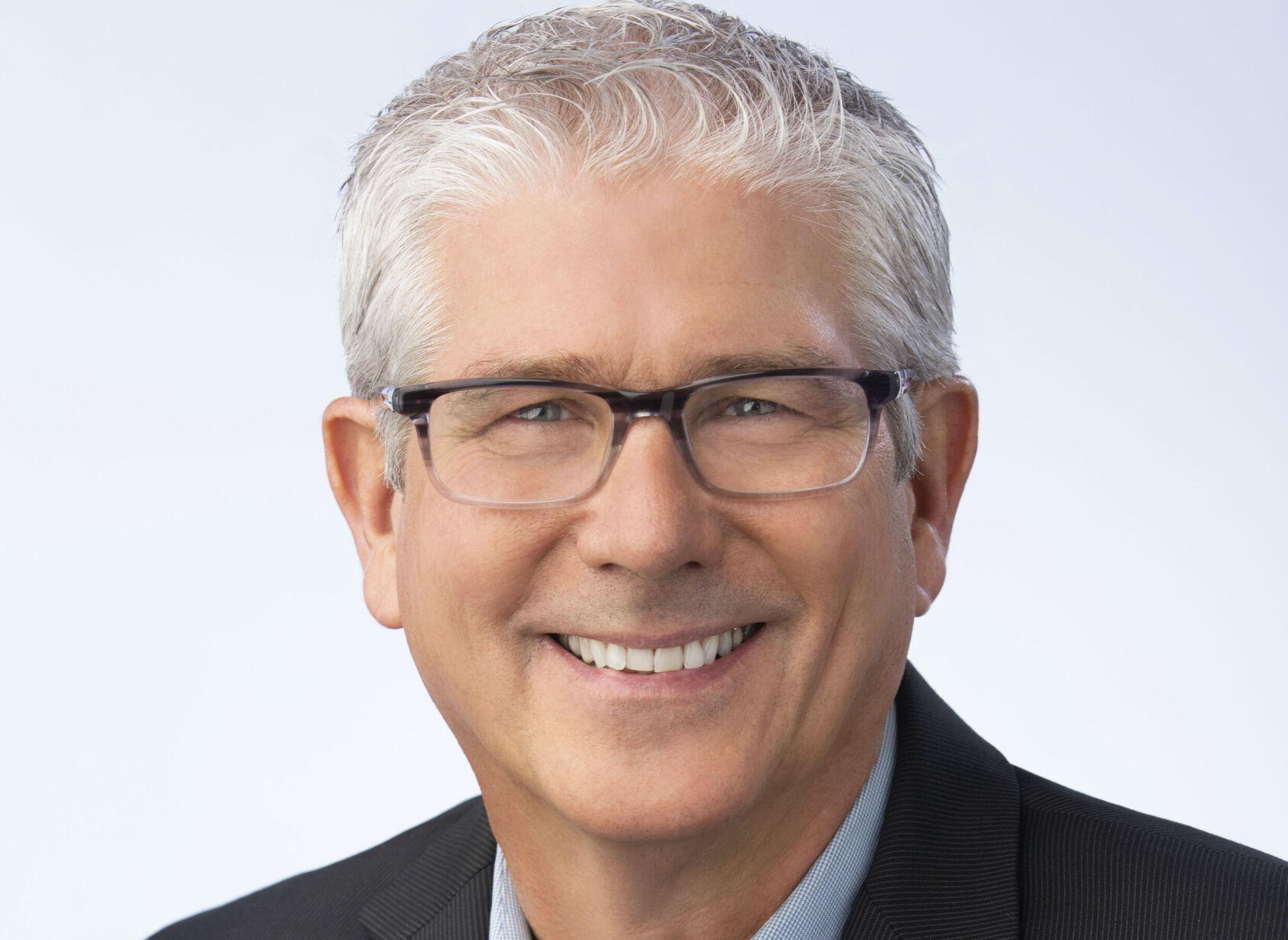

“Midway” Bob Thompson is stepping out from behind his deli counter to place his bid for Norman mayor with a “nonpartisan" and “local focus” on economic development, homelessness, public safety, stormwater and making city government accessible.
In 1981, Thompson was in his twenties when he decided to move to Norman. There, he bought Midway Deli, where, after 36 years, he continues to balance family life and sandwich making.
It was behind the counter of his deli that Thompson said he recognized local issues that affected him and his neighbors. He ran for and secured Norman’s Ward 1 city council seat in 2005 after three-term incumbent Kevin Hopkins decided not to run again.
While on council, Thompson supported the first voter-approved Public Safety Sale Tax, which provided a temporary sales tax increase of one-half to 1 percent to fund an addition of 41 police officers and revive the city’s community-oriented policing program. The tax transitioned into a permanent one-fourth cent sales tax in 2014, requiring the city to add 41 police officers and 30 firefighters.
By 2009, Thompson had two terms under his belt. When his daughter turned six, he felt he had used up enough evenings, or “dad time,” behind the dais and decided he wouldn’t run for reelection. Now, Thompson said the timing is right for him to return, with his daughters in college or starting families.
Although Midway Deli is a sandwich shop first, Thompson said he is proud of how the space serves as a community and local political hub, where people from different backgrounds can feel welcome. Thompson said his understanding of his community, paired with experience in hearing contentious issues on Norman’s Charter Review Commission, made him feel like he could be helpful in Norman.
“I have a good understanding of the process and issues, and I have a good track record of having done what I'm saying I will do — which is to be accessible … to be available and to push for the interests of our community,” Thompson said. “That's one of the reasons I'm not the darling in the Chamber of Commerce. I try to consider the entire community in my system of values.”
In approaching city issues, Thompson said he will abide by a four-step decision-making process in asking “who will this benefit, who will it hurt, what alternatives have been considered and how does that recommendation help our entire community.”
Citizens in Norman’s rural areas, for example, are concerned about the preservation of their way of life, which Thompson said contributes heavily to the city. He said the rural area acts as an aquifer for runoff near Lake Thunderbird and keeps the water usable.
When Thompson spoke with residents of the rural community, he said they requested a discount on stormwater payments. Thompson said they are “enormous contributors” to the city’s stormwater solution through utility fees. This was an issue he felt would benefit from being approached by his four-step process.
“Who are we going to help? Obviously, we're trying to help the entire city. And who might we hurt or leave out? … It’s pretty unusual for this city of this size to have a rural area, but it's part of our character, and it's also part of our function,” Thompson said. “So when we look at solutions, we want to make sure that we include those unique things about us that really help us to continue to see ourselves the way that we'd like to see ourselves.”
Thompson said Norman needs a “systemic approach” to stormwater issues and suggested mirroring the city’s transportation bonds to accomplish a series of stormwater projects. The bond would be revolving, allowing citizens to continue voting on the issue.
During his time on city council, Thompson also opposed the University North Park Tax Increment Finance District, which he said encouraged development by relying on sales tax revenue to cover partial infrastructure costs. He said using sales tax revenue over property taxes puts the city’s treasury at risk because revenue gained from sales taxes depends on a building's commercial success.
Although several projects were completed under the University North Park TIF, the city council voted to end the “contentious issue” in 2019 following the completion of the remaining projects. If sales tax TIF projects are considered in the future, Thompson said he would want to allow citizens the right to vote on them, considering the risk involved.
Thompson’s campaign also considers the issue of homelessness in Norman, which he said possesses “complex causes and consequences.” He said the first step in addressing the issue comes from understanding how it has changed.
According to a gap analysis of Cleveland County’s homeless services system, 266 people were identified as experiencing homelessness during 2020, which is a 100 percent increase from 133 homeless individuals in 2015. Norman has previously been comfortable with the idea that Food and Shelter, the Salvation Army, churches and nonprofits provided adequate care to the population, Thompson said.
The issue’s dynamics have changed, Thompson said, as businesses and neighborhoods experience its effects. He said the city must understand its role in addressing homelessness, as it seeks to protect the interests of individuals, businesses, neighbors and public safety officials.
“Our understanding or our sense of the ‘problem’ now includes us, as well as people who are without homes,” Thompson said. “Some of that's unfortunate, and some of it's probably good for us. … Sometimes life puts you in a position where you have to come to terms with how you are connected to everybody in your community, regardless of their circumstances. So, I think we're in a position where we're starting to see, as a community, that we all have an interest in addressing the problem of homelessness.”
In the short term, Thompson said Norman should address the “needs that humanity requires of us.” He said he sees immediate needs in the Norman Warming Shelter — which has a 35-guest capacity limit — and transportation. In the “longer short-term,” Thompson hopes to increase access to affordable housing.
One thing Thompson said sets him apart from his opponents is his non-partisan campaign, as he believes each mayoral candidate has “tacit affiliations with the major political parties.” He said he took “great care” in his messaging — down to his teal and purple campaign signs — to increase voter awareness of his values.
Thompson said in a campaign video that a local approach to city government is necessary, as everything that allows a city to function has “no place in the partisan divide.” He said having a partisan focus inhibits the city’s ability to work together to face challenges, solve problems and determine its future.
The issue of masking and vaccinations came to mind, as Thompson said a local approach would allow the city to focus on the capability of Norman’s health system to manage sick people instead of focusing on terms like mandates. He said he’s watched national politicians claim they were trying to save lives when, instead, they should be focusing on keeping hospitals functioning.
“The national political tug and pull over mandates doesn't really help us. (We should) focus on what we need to do,” Thompson said. “People should be wearing masks out of courtesy for everybody else to try and keep Norman Regional functioning. That's a local thing. If you don't care to wear a mask, then don't wear a mask. Be a jerk. Now we can hide behind some sort of principle when we're just being a jerk. This is my freedom. No, you're being a jerk.”
Thompson also criticized the city council’s decision to cut $865,000 from the Norman Police Department’s proposed budget increase in a campaign video as “shooting from the hip.” In the video, he said the vote felt like a “nod to one of the national political party’s agendas,” to some, causing individuals who are aligned with the other national party to “take offense and take up arms.”
His criticism, he said, wasn’t particularly about the decision the council made, but that it was done “without careful process.”
The Norman City Council was investigated by the Oklahoma State Bureau of Investigation in January 2021 after Judge Thomas K. Baldwin ruled that the council’s meeting agenda was “deceptively worded or materially obscured.” The decision was deemed to be a violation of the Open Meetings Act in April 2021, and the council revoted on and ratified the 2021 budget.
Thompson said he felt if his four-step method had been applied, community members would have had a better understanding of the council's decision.
Adding a “plain talk” policy to the city’s agenda is another solution to lowering barriers between city officials and residents, Thompson said. He hopes to increase access to city issues by releasing city council agenda summaries with common language and improving the city’s website to be more “interactive, intuitive and informational.”
He said he also saw a missed opportunity in Ward 6 Councilmember Elizabeth Foreman’s proposal on participatory budgeting during the 2022 budget meeting, which failed by a vote of 7-2. Participatory budgeting, a policy that originated in Brazil, allows community members to engage in dialogue with elected officials on “what services the municipal budget should prioritize.”
The reaction to the proposal was “terrible,” Thompson said, but he sees participatory budgeting as an opportunity to involve people in a way that will “actually make some changes.”
“We should never forget that our best ideas typically come from somebody else. Most of us don't think of all of our own best ideas,” Thompson said. “The reason that we have people like us that live together, solve problems together is that lots of inputs typically mean good outcomes.”
In 2008, when Thompson decided not to run for city council, he reflected on his time on council by saying he learned to multi-task, as residents would come to Midway Deli to talk about city issues. He said, if elected, he will maintain that kind of accessibility to the people he represents.
“I think I've established that expectation for my community. I don't think I could get away from it if I wanted to,” Thompson said. “People know they can come in and say what's on their mind.”
Thompson said he refers to himself as the “Mayor for Everyone” because it reflects his sense of commitment to being open. To him, becoming mayor means knowing that he will still owe something to the people that didn’t vote for him, as his place as a representative includes everyone.
“It's a really simple idea. It's just not more complex than understanding that, when I'm elected mayor, I'm elected even by the people that didn't vote for me, (and) that everybody that participates in the election process did the election,” Thompson said. “I have a sense of duty to have an ear for people (and) to have an ear for people that disagree with me. I might be wrong, and I need to have people disagree with me.”
Mayoral and city council elections will take place Tuesday, Feb. 8, and in-person absentee voting will occur Thursday and Friday, Feb. 3-4. If no candidate receives 50 percent of the vote, the runoff election will be held Tuesday, April 5. For more information on where, when and how to vote, visit the Cleveland County Election Board website.


