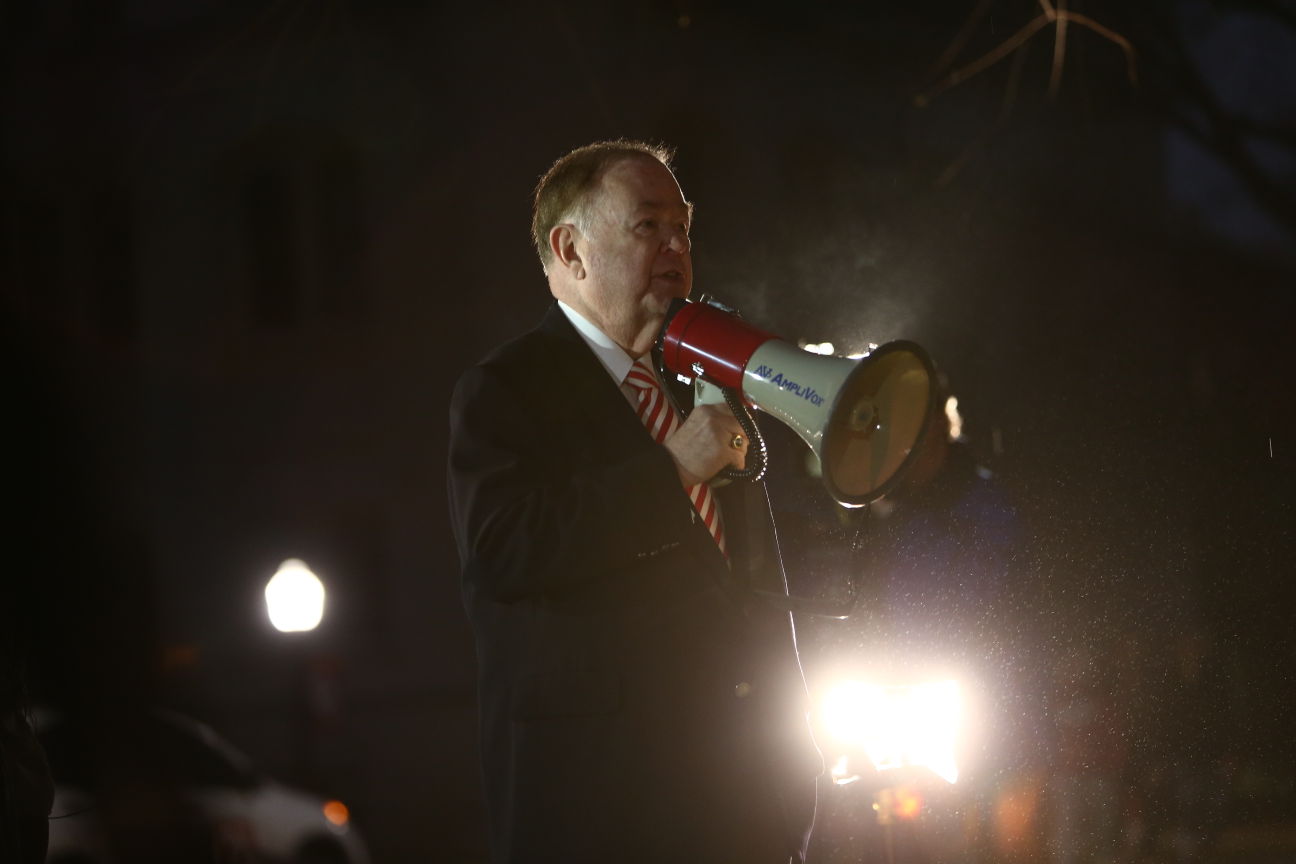



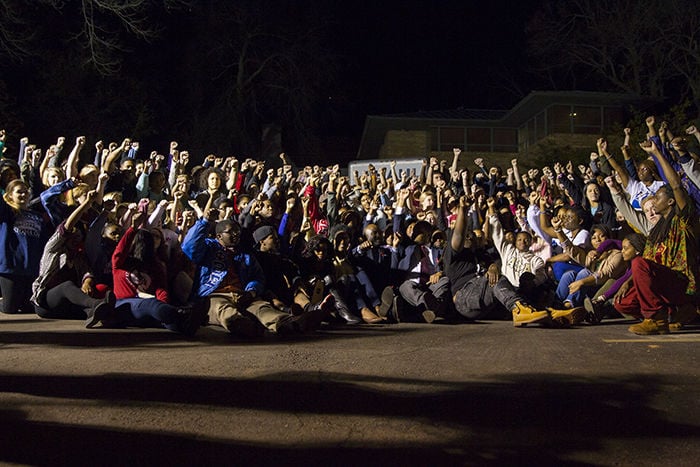
Hundreds of students celebrate the closing of Sigma Alpha Epsilon at the University of Oklahoma Tuesday, March 10, 2015. The National Pan-Hellinic Council led the demonstration.
Editor’s note: This story is a part of a commemorative series marking 10 years since a video showing members of the Sigma Alpha Epsilon chapter at OU singing a chant with a racial slur went viral. The video sparked protests across campus and placed OU and race relations on college campuses under a national spotlight. Several stories commemorating this milestone will be published the week of March 10, the day protests took place in front of the SAE house while members of the newly banned fraternity moved out.
Correction: This story was updated at 11:07 a.m. March 11 to reflect that the North Oval protest organized by OU Unheard took place on March 9, 2015, not March 10.
On the evening of March 8, 2015, a video began circulating across campus. A shaky vertical video shot on an iPhone depicted members of OU’s Sigma Alpha Epsilon chapter singing a racist chant, which included racial slurs and references to lynching.
The video went viral.
There was an outpour of reactions: shock, anger, fear. This language, this attitude — it seemed from another time.
The next morning, students, faculty and staff members across the university gathered on the North Oval in a protest led by OU Unheard, an alliance of Black students who advocated for minority rights on campus.
What followed was a spring of marches on campus, calls for expulsion and requests to implement measures to promote diversity, equity and inclusion.
Unheard and the SAE video were catalysts, generating greater discussions of diversity and representation on OU’s campus in the years that followed. These events also sparked the creation of another student activist group: the Black Emergency Response Team.
Ten years after SAE was removed from OU’s campus following the posting of the racist video, people impacted by the events reminisce on what was a time of solidarity among OU’s student population.
Chelsea Davis, co-founder of OU Unheard
When Chelsea Davis heard about SAE’s video, the first thing she felt was shock.
“It’s just not anything you’d expect to see in person,” Davis said. “Things like that you see on movies and television but don’t necessarily expect to be amongst people who might have viewpoints as was going on in the video.”
Davis said the SAE incident made students from different cultures closer because they felt affected by the video.
“(In) a small town like Norman, where you already have a very small Black and Brown student body, all of our different communities are very close knit, …” Davis said. “It was just something that you wouldn’t expect to see, but when it happens, it kind of just brings you closer to people that understand that kind of maybe displaced feeling.”
Davis, who served as co-founder of OU Unheard, said many people involved with Unheard had ties to other campus organizations and felt there were areas in which they didn’t feel represented.
Davis said she hoped to empower younger generations and to keep in mind that, regardless of their background or experience, they still need equal support.
“It was a movement that was started to get Black students more support on campus and better visibility, and it just led into a movement where we were also speaking up against things that we were seeing that were also injustices to our student body,” Davis said. “It just became an evolving journey.”
When the SAE video was released, OU Unheard organized a series of events protesting the video and what it depicted. On the morning of March 9, 2015, about 100 people gathered on the North Oval.
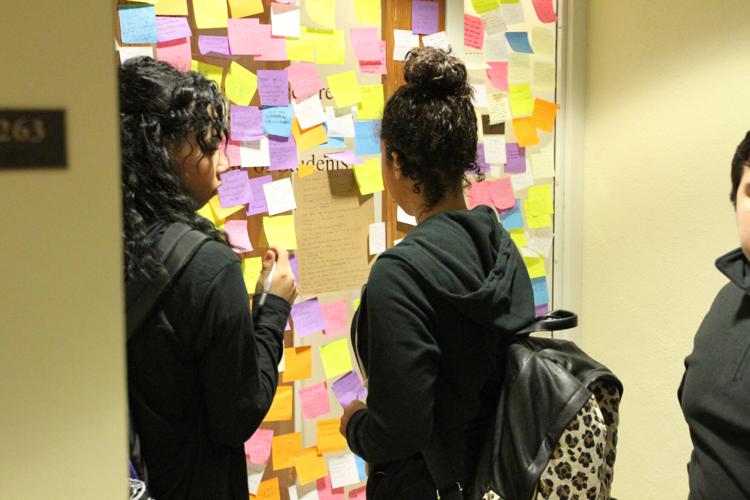
OU Unheard led students with tape over their mouths and Post-it notes in hand from Evans Hall to the Oklahoma Memorial Union, where they wrote their concerns and thoughts and stuck the notes on the door of the Student Affairs office.

Students write their concerns, grievances and hopes on sticky notes to put on the Department of Student Affairs door on Monday in the departments office in The Student Union. Students wrote on these sticky notes in response to a racially charge video of members of Sigma Alpha Epsilon.
“It was definitely good to see that it was inexcusable and not tolerated from the top down,” Davis said. “It was good for the community to be together and to be standing as one in those initial days and weeks after because campus was buzzing for a while. So I think the community response was good and supportive.”
Davis felt OU administration responded to the incident within their boundaries.
“Their response was very intentional in hiring the position of the vice president of student community, but I think that was their effort to address our demands and to address the areas that we thought the students needed it most,” Davis said. “With that spawned support pathways and just different things going on through Student Affairs that ultimately helped kind of push the community forward from what happened.”
In December 2023, Gov. Kevin Stitt signed an executive order to review diversity, equity and inclusion efforts in Oklahoma higher education. Following the executive order, OU’s Division of Diversity, Equity and Inclusion changed its name to the Division of Access and Opportunity and the Gender + Equality Center Center closed.
Davis said DEI is necessary for people who are looking for a sense of community in a university like OU and it’s important to have the resources and funding to support and make people feel included. While it’s good to have multicultural student organizations, she believes it’s good for a community to come together as one.
“Being alumni of OU, you know what it’s like firsthand to want to have and need to have community in a space where you’re trying to elevate your education and your career and your life. You need to have the support mechanism in order for you to do that,” Davis said. “It takes a lot to be able to get to OU and to stay at OU, and I think anybody who graduates from OU can attest to that.”
As she reflects on her role 10 years after the SAE incident, Davis said she feels very proud of the young people they were and the growth they’ve had.
“It definitely was a challenging time,” Davis said. “For a lot of us, it was a very crucial time and pivotal time of our college career, so I’m very proud of the things that we were able to accomplish. ... We really went into it with the mindset of wanting to improve things and elevate things and leave it better than it was, and I felt like we did that.
“It’s definitely something that is special and meaningful to all of us, especially me.”
Spencer Davis, former OU Unheard member
During the spring of 2015, Spencer Davis was a junior majoring in chemical engineering.
Davis remembers receiving a GroupMe message that notified him of the video while he was studying.
“I just remember my heart kind of dropping a little bit,” Davis said.
After seeing the video, Davis said he wasn’t surprised but disappointed, and the atmosphere around campus became awkward rather than tense.
“It became almost as if you were a Black student, and you had people that were quiet or people that were apologetic, …” Davis said. “They look at you as if they were sorry, and it's like, I don't need pity or anything like that. That's not what I need.”
According to Davis, there were various responses from the Black community following the SAE video. Some people were “pissed,” some were “unnerved” and others found it necessary to “come together and unite.”
Davis was among those who wanted to unite.
Two months before the events of SAE, Unheard led a march down the South Oval into Evans Hall to capture the attention of then-OU President David Boren. Shortly after, Unheard organized a town hall to voice its grievances.
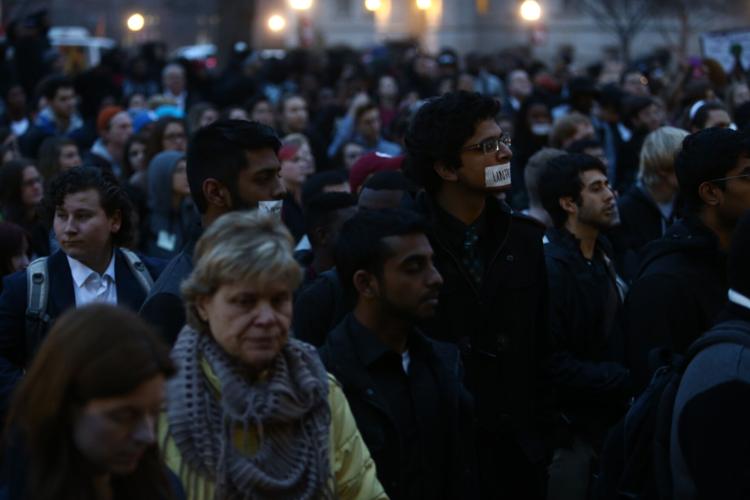
They led the march with tape over their mouths signifying that their voices were “unheard.”
“With the formation of Unheard, it was really a group of friends that had grievances, and this was like a sparking point, seeing the video and frustrations with whether it was faculty, whether it was representation (or) not really feeling like we were heard on campus,” Davis said.
As an official member of Unheard, Davis was part of the organization’s events and town halls to help publicize the grievances of Black students at OU.
Davis credited the efficiency of Unheard and how it operated to the fact that so many of its members were already a part of different groups on OU’s campus.
He said members of Unheard would gather in the residence halls or Traditions Square and brainstorm their next course of action. For hours, they would discuss their grievances.
“We took a lot of frameworks from organizational documents that were already from meeting minutes and took that structure,” Davis said.
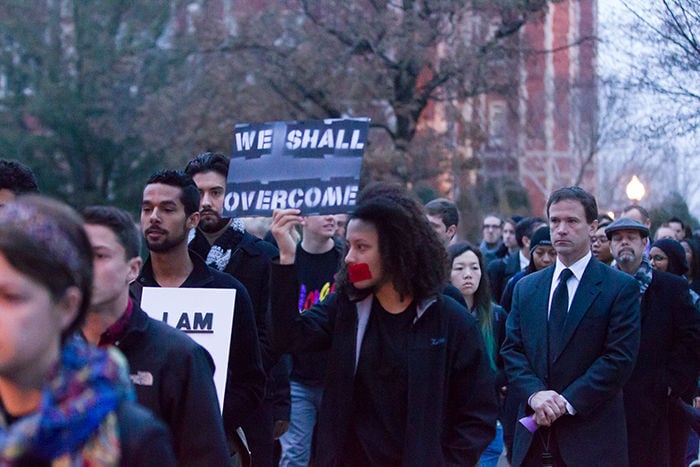
Students, faculty and staff walk to the North Oval as part of a demonstration March 2015 following the Sigma Alpha Epsilon incident, in which a video of a racist fraternity chant surfaced online. OU recently received the Jefferson Muzzle award for allegedly prohibiting free speech on campus.
Based on their experience in other organizations, they would map out their call to action, type it in a Google Doc, review it and, with the help of student advisers like Rodney Bates, they’d distribute it to the necessary parties.
“It wasn't super complicated, but it was definitely organized,” Davis said.
As for its protest, Davis said Unheard wanted to maintain a level of seriousness to communicate its message effectively. Everyone kept one another accountable, Davis said, encouraging one another to dress nice, be organized and prepare as they readied themselves to protest in front of Boren.
“We wanted to be more solemn, not an event,” Davis said. “This isn't a joke. This isn't time for people to be laughing. This isn't time for people to be screaming or angry. We're supposed to be walking together, hand in hand.”
Davis highlighted how he was a member of the national pan-hellenic council of Phi Beta Sigma, a historically Black greek life organization, and believed fraternities were about brotherhood and community. He said one thing that puzzled him about SAE was where they learned the song and where it originated.
“The wording of the song — this isn't something that they just made up. This is something that they were taught,” Davis said. “This is something that they got from regionals, and this is something that other chapters and other universities know.”
According to Davis, the racism displayed by members of SAE was passed down, and it was something they allowed to exist in SAE’s culture.
“(The national chapter) were like, ‘Oh no, this is just an isolated incident. This is just at OU.’ And I was like, ‘No, this isn't. No, this is not. They just got caught, and it happened to be at OU,’” Davis said.
As he reflected on his time protesting, Davis emphasized the importance of student activism and how crucial it is for students to use their advantages to highlight systemic injustices.
“I think about how in corporate America and working and everything, you have that fear, because you have bills. You have your rent or mortgage, so you don't speak up. So I think using your voice and being able to stand on that and advocate for yourself is really important,” Davis said. “It's important that students do it. It's important that we keep doing it, as Black people, because if we don't stand up and stand united, laws can’t be changed.”
Rodney Bates, former OU Unheard adviser
Rodney Bates, a professor in women and gender studies and director of the Center for Social Justice, remembers the exact day he saw the SAE video.
Bates, who served as a center coordinator for Walker Center at the time, said his phone blew up with messages from students.
“All the members of OU Unheard were like, ‘There's this video. Have y'all seen this video?’” Bates said. “They were naturally irate.”
Bates, who also taught an intro to African American studies class, formed a connection with many students of color.
“I would periodically have conversations with them, nothing formal, they just had questions about things, and I would answer them, and then they kind of just evolved into a student group,” Bates said.
The student group, which would go on to become OU Unheard, asked Bates to serve as their adviser.
“They would come to Walker in my office, sit in my office, and we would just kind of talk about, ‘What does it mean for your voice to be heard? What does it mean for equity?’ And that's where the relationship started. It was a natural thing, …” Bates said. “It was an organic conversation of, ‘Hey, you all are here, what are you all doing to make sure that you're getting the experiences that you want to get? Are you being heard?’”
Bates said in the aftermath of the video going viral, students were angry.
“They were upset, and they were ready to storm, as they said, storm the university,” Bates said.
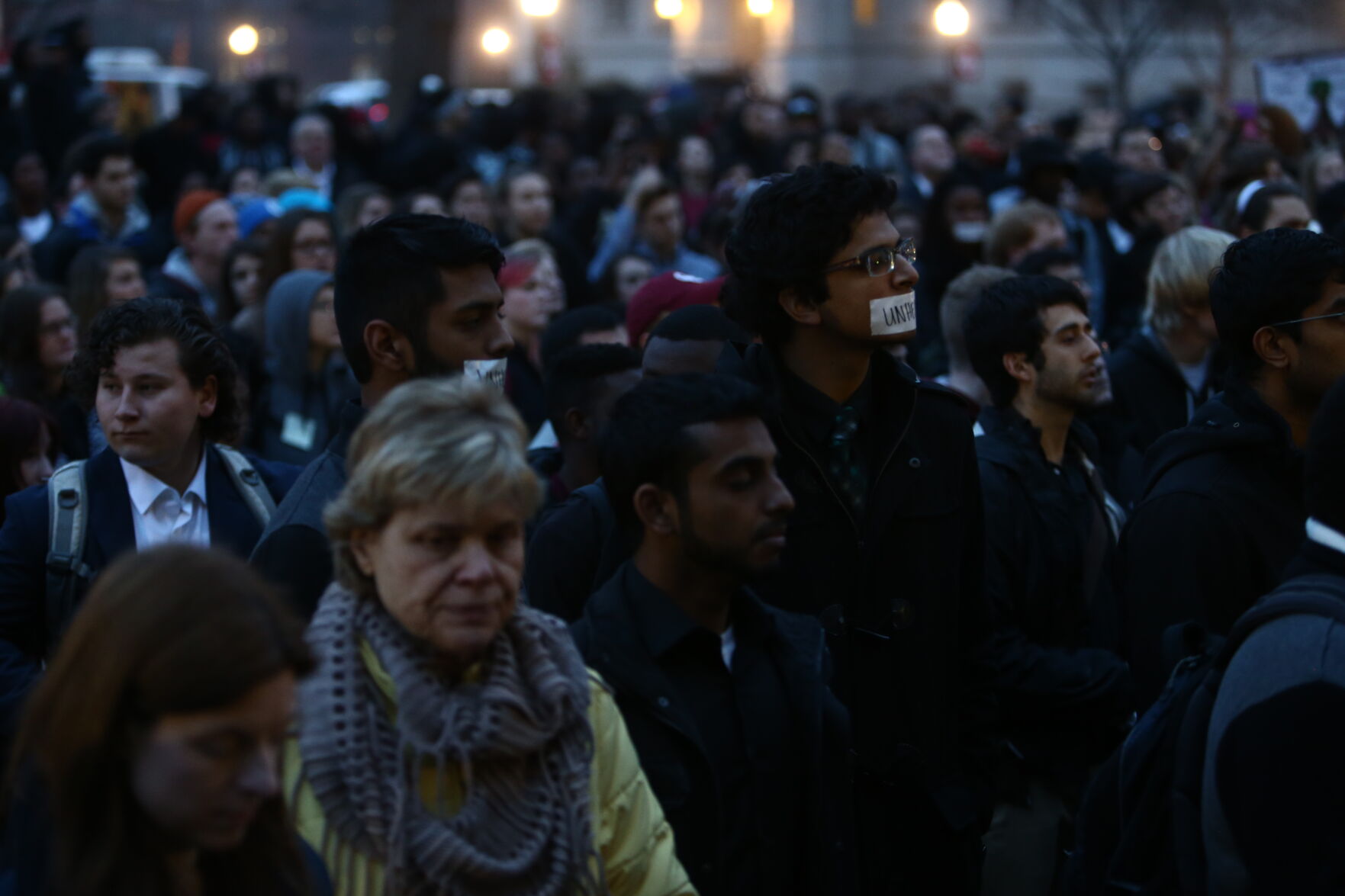
Students, faculty, news organizations and Norman community members gather outside of Evans Hall Monday morning for OU Unheard's demonstration in response to SAE's racist chant. A video of the chant was leaked online Sunday afternoon.
Bates said he told students they could react impulsively but helped them question what they would do if another incident happened just a year later. He said this advice helped students realize they wanted to start a movement that would incite a long-lasting change.
Bates said students looked to OU professor and civil rights activist George Henderson’s 2010 book “Race and the University” as a guide.
“They created their list of demands, and from there, they launched a campaign that said we're not going to just stop at this video,” Bates said. “We're going to try to ensure more longevity practices.”
As adviser, Bates said he tried to support students in their concerns and engage them in practical dialogue about how they could advocate.
“I wanted to kind of give them a perspective that … there's probably a lot of things at play that you all need to be aware of and that you need to be able to strategize, understanding that there's a bigger strategy,” Bates said.
Bates said he looks at student activism on campus today, such as OU Students for Justice in Palestine’s recent protests, and sees the legacy OU Unheard championed.
“There's a number of activists, student organizations that are on campus, and some of them have gotten or torn a page from other student activist groups, and that was connected to OU Unheard,” Bates said. “OU Unheard really provided a really good way for student activist groups to be heard on campus.”
Bates said he was proud of OU Unheard’s work and that the group was a catalyst for students to be heard on campus.
“I hope that they continue to get flowers for the work that they did, and I hope that other people know that it wasn't just OU Unheard; there were so many other members, students that did a lot of work during that time,” Bates said. “It led into the Black Emergency Response Team. It led to these other student organizations that do a lot of great work.”
Karlos Hill, African American studies professor
As the SAE incident unfolded, Karlos Hill, an African American studies professor, watched from out of state. At the time, Hill was a professor at Texas Tech University.
He described the SAE video as a group of white fraternity members celebrating racial violence without seeing any kind of moral or ethical issue.
“I was someone who was horrified by it and was really relieved to see that a university president and a university would take it so seriously as to take action against the students (and) take action against the fraternity,” Hill said.
When he was in talks to become a professor in OU’s African American studies department the following year, Hill said part of the reason he strongly considered joining OU was how the university handled the SAE situation. From both its public statements and the punishments it handed out.
“It was great to see leadership saying, ‘In no way, shape (or) form, we're not going to wait for this to be litigated. We're going to actually take a stand on it.’ And that caught my attention,” Hill said.
After the video gained national attention, Boren informed the OU community that the behavior displayed in the SAE video was reprehensible and contrary to OU’s values.
Boren announced the intent to expel the two students identified as the “leaders” of the chant, Parker Rice and Levi Pettit. Both students withdrew from OU before their expulsion went into effect. Rice apologized for his actions in a written statement that same evening. Two weeks later, Pettit apologized at an Oklahoma City church in front of Black community leaders.
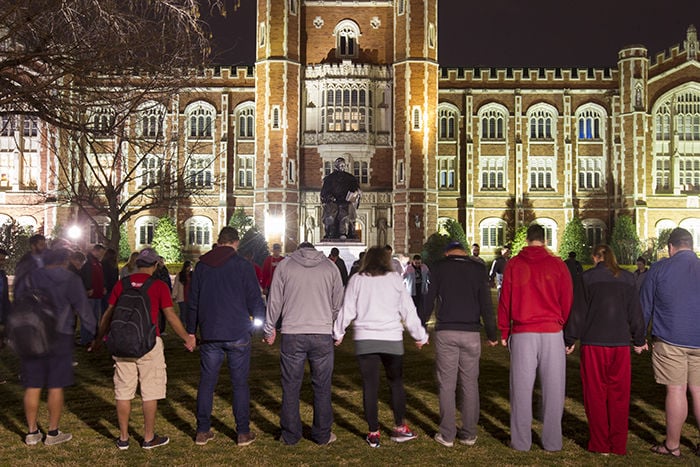
Students gather for a prayer vigil in response to the video of a racist chant on the North Oval March 9, 2015. Students and professors in the Gaylord College of Journalism and Mass Communication will make up a panel to discuss the events after the Sigma Alpha Epsilon video.
Despite how the SAE incident was handled, it wasn’t long before more racist incidents occurred on campus, though this time Hill was present to witness them first hand.
“I came into a really heightened atmosphere where these issues — because of SAE, because of the media attention and because of the way in which students mobilized following 2015 spring — by the time I arrived in fall of 2016, there was a whole lot of organization that had happened, a whole lot of sort of community building to figure out, ‘What can we do, what should we do?’ And I only saw that grow between 2016 and 2020,” Hill said.
In 2019, a video posted on Snapchat showed a member of the OU Delta Delta Delta sorority wearing blackface and saying a racial slur. That same week, an unknown individual was photographed walking around campus in blackface, as well.
In February 2020, two OU professors used racial slurs in their classes.
Later that month, the Black Emergency Response Team initiated a three-day sit-in and hunger strike in Evans Hall, calling for the creation of a multicultural center on campus, a semester-long class to replace OU's diversity training and mandatory diversity and equity training for faculty members.
“(BERT) really did an amazing job of keeping the issues at the forefront of the campus when something racist happened,” Hill said. “They had become a really important part of the ecosystem several years after because it had become kind of like a watchdog for issues of race and racism.”
According to Hill, the way OU student organizations like BERT mobilized to protest and called attention to racist incidents happening on campus began with Unheard and how it operated in 2015.
When he arrived at OU, Hill said he forged relationships with former members of Unheard. He, alongside other faculty members, mentored Black students who were in need of guidance whenever necessary.
Hill said he was so inspired by the students who protested when he first started at OU that he decided to speak up for them, something he said he wouldn’t normally do.
“Their passion was contagious and forced people like me to say, ‘You know what, I'm gonna get my behind up and speak out with you because you're right, these are issues we should care about. I should speak out against them,’” Hill said. “So even the people who knew, like me, who weren't as activated, that movement of students made us pay attention and wake up and get woke and support.”
Hill said education was the key to ensure the racist incidents don’t happen again. According to Hill, without educating students about the history of racism, the cycle of protest, emergency responses and town halls would continue.
“The true response is to take it seriously every day and to learn about it every day, to treat it seriously every day, and you only do that by including a curriculum, making it a part of our curriculum,” Hill said. “That hasn't happened, that was a vision and an aim.”
This story was edited by Peggy Dodd. Mary Ann Livingood and Grace Rhodes copy edited this story.
A decade later: OU alums, leaders, greek life members reflect on Sigma Alpha Epsilon incident, protests
Comprehensive coverage on the legacy of the Sigma Alpha Epsilon racist video and following protests on OU's campus 10 years ago.