
A consistent argument surrounding homelessness in Norman posits people experiencing homelessness as factors for crime, positioning those experiencing homelessness as capable of choosing their circumstances, though experts disagree.
On Nov. 26, Norman City Council narrowly approved the continued funding of A Friend’s House, Norman’s emergency shelter, by a 5-4 vote. During the meeting, multiple residents advocated for and against its continuation, while making claims toward unhoused people.
“I see a community of people that are addicted to drugs and alcohol and addicted to a lifestyle of freedom,” one Ward 4 resident said during the meeting. “A lifestyle where they don’t have to choose what they’re doing.”
Similar sentiments have been echoed by Ward 1 Councilmember Austin Ball, who has advocated against the idea of a homeless shelter in favor of privatized alternatives.
“For those who chose this lifestyle because of the freedom and independence it bestows, congratulations, you got it. Don’t break our laws and enjoy your freedom and lifestyle and we will do the same,” Ball wrote on Facebook in September.
The data
At a Norman City Council special meeting in February, Richard Brady, president of Matrix Consulting Group, presented a public safety report that included analyses of Norman’s fire and police departments.
According to Brady’s data, NPD’s top 10 calls for service include domestic disturbances, welfare checks, alarms, larcenies, suspicions, trespassings, non-injury motor vehicle accidents, subject contacts, harassment and threats and area checks. Brady said these calls for service peak in early mornings. Brady said this was unusual data for Matrix Consulting Group, which has conducted over 400 policing studies across the country.
“Most of the workload happens in these top 10 categories between 12 and 3 o'clock in the mornings and late in the afternoon into the early evening. That is unusual for us, usually it's the reverse,” Brady said. “(NPD is) very busy in the early morning hours, in part because (of) the university activities, bars and casinos, and things like that.”
The police report notes that on average in 2023, NPD’s calls for services peaked at 10 p.m. and were lowest at 10 a.m., adding this is potentially due to OU’s location.
“While the pattern is consistent with what is to be expected, these trough and peak times are extraordinary,” the report reads. “This is likely a result of the presence of a large university within the city.”
According to case record data collected by NPD, there have been 56 reported cases in the 100 block of West Gray Street — the location of A Friend’s House — from October 2023 to October 2024.
The data includes 13 reported trespassings, seven larcenies, six protective orders, four domestic disturbances, four assaults, three public intoxications, two vandalisms and two drug violations.
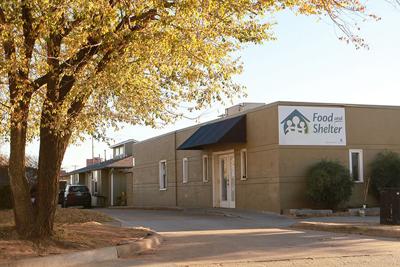
Meanwhile, NPD lists 121 reported cases at 201 Reed Ave., the location of Food and Shelter. During the same time period, 32 trespassings, 17 assaults, two sexual assaults, six public intoxications, 13 larcenies, 21 warrant services, one drug violation and eight domestic disturbances were reported.
NPD’s open data presents similar results in the overall Campus Corner area during this period.
NPD lists 77 reported cases at the 700 block of Asp Avenue; 15 cases in the 300 block of White Street and its intersections at South University Boulevard, Asp Avenue and Buchanan Avenue; 35 cases in the 500 block of Buchanan Avenue and its intersection with West Boyd Street; and 24 cases in the 300 and 200 blocks of West Boyd Street.
Overall, NPD listed 151 cases within these vicinities of Campus Corner.
In these areas, NPD listed reports of 23 assaults, 21 public intoxications and four intoxicated persons, 21 larcenies, five vandalisms, six harassments or threats, six trespassings, two robberies, a stabbing and a shooting.
‘Much more likely to be the victims of crime than the perpetrators’
Rachel Freeman, CEO of City Care, a nonprofit designed to provide services for homelessness and the current operator of A Friend’s House, wrote in an email to OU Daily that the majority of individuals the organization works with are not dangerous. She wrote that people experiencing homelessness include parents, veterans and individuals with health crises that have often lost jobs or fled domestic violence.
“Unhoused people are much more likely to be the victims of crime than the perpetrators. I think that’s something people don’t realize — being on the street can be dangerous,” Freeman wrote. “They’re not trying to hurt anyone — they’re just trying to survive.”
According to Freeman, the perception of people experiencing homelessness as having substance use disorders is not entirely accurate, adding substance abuse can be fueled by trauma.
David McLeod, interim director of the Anne and Henry Zarrow School of Social Work and former police detective in Sherwood, Arkansas, said the biggest misconception regarding people experiencing homelessness is that they choose to be unhoused. McLeod said people experiencing homelessness will often self-medicate due to trauma.
“None of us want, in a healthy space, to be homeless and doing drugs. That's just not how brains work,” McLeod said. “Is it true that they could be drinking (or) could be doing drugs? Sure, those things are true, but those are true of people who've experienced great deals of trauma, and being homeless is a trauma.”
‘When you squeeze a working class, there's less philanthropy’
Freeman wrote she also considers a lack of affordable housing to be the ultimate root cause of homelessness, adding City Care has worked with multiple individuals whose housing situations deteriorated due to a single unexpected bill, such as a medical emergency or vehicle troubles.
According to a 2020 study from the U.S. Government Accountability Office, median rent increases of $100 contribute to 9% increases in homelessness.
“There’s mental health and substance use disorder, but those are more like complicating factors, not the root cause,” Freeman wrote. “The real issue is that when people hit a crisis, there’s often nowhere to catch them.”
Affordable housing is a consistent issue discussed by Norman City Council, as is the subject of the emergency shelter’s operations.
The city of Norman first entered into a contract with Food and Shelter to operate A Friend’s House in October 2022 by an 8-1 vote.
In March 2023, the city extended the initial contract 8-1. Ball voted to approve the extension despite saying the U.S. Constitution did not guarantee Americans a bed or meal every night.
The council continued to extend the contract on a monthly basis after July 2023.
In September 2024, Food and Shelter announced it would discontinue operating the shelter after a report issued by the city accused the organization of mismanaging funds. Food and Shelter continued operating the shelter until City Care took over operations in January.
In late 2024, the council held a series of special meetings discussing finding a potential new operator, along with the overall continuation of the shelter.
At an Oct. 1 special meeting, Ball, along with Mayor Larry Heikkila, said the shelter should close. Ball said the city should instead find “real solutions.”
“We have private organizations here ready to go. I'm sure we could find hotel vouchers,” Ball said during the meeting. “We should ignore this contract, get rid of this contract, and do what's best for our citizens and our taxpayers, and clean up our downtown.”
On Nov. 26, the council approved a new contract with City Care 5-4 — a smaller margin compared to the original October 2022 vote. Ball, Heikkila, Ward 5 Councilmember Michael Nash and Ward 8 Councilmember Scott Dixon voted against the contract.
Heikkila said he still wants to remove the city of Norman from paying for operations at A Friend’s House and instead let philanthropic organizations like Bridges of Norman and the Salvation Army provide homelessness services. He added he wants to help people experiencing homelessness who attempt to be housed and does not believe the subject of affordable housing is tangible.
Bridges of Norman is a nonprofit designed to provide housing and services to high school students in Norman.
“People want to tell me that it's biblical, that we have to do that. I challenge them to show me the verse. Show me a set of verses that are in there,” Heikkila said. “There's nothing that says that we take care of those who are lazy or those who are addicted. When it comes to widows, orphans, a guy down on his luck, we’ve got a job to do.”
McLeod said philanthropy from the working class in Norman has become more sparse due to an increase in personal expenditures and rising inflation amid stagnant wages. As the working class becomes more preoccupied, pays more bills and devotes mental energy toward its own needs, it has less to provide for philanthropic causes, he said.
The minimum wage in Oklahoma is $7.25 per hour, which has not increased since 2009. Due to inflation, $7.25 in July 2009 would be worth $10.69 in January 2025, according to the Bureau of Labor Statistics Consumer Price Index calculator.
“When you squeeze a working class, there's less philanthropy. Their ability to be altruistic and thoughtful and helpful for others is minimized because they're too worried about caring for themselves,” McLeod said. “When you take away a person's ability to help others, then you force that kind of human animal to come out. And when we are forced to care for either ourselves in our immediate family or somebody we don't know, we will care for ourselves and our immediate family first.
“We've, in a lot of ways, taken away opportunities for people in the working class to be able to support programs that would help people with chronic mental health or substance abuse issues.”
‘When you don’t have a home, everything you do is visible’
People who experience homelessness have become the subject of discourse due to the literal visibility of the issue, Freeman wrote.
“When you don’t have a home, everything you do is visible. If you’re brushing your teeth or sleeping in a park, people see you, and they can feel uncomfortable,” Freeman wrote. “That visibility can make it seem like there’s a bigger problem than there is.”
McLeod said individuals experiencing homelessness have also become scapegoats for broader economic issues. Society likes to “other” individuals, he said, treating them as root causation for societal problems.
He said social and historic media propagates such “othering,” which requires people to vet their sources regarding similar topics.
“As a community, we like having a bad guy. We like to have somebody we can point at and say, ‘It's their fault,’” McLeod said. “The conversation around homeless people is probably connected to all of our collective fear of wanting, of being scared about our economic outcomes and economic resources. We're worried about the economy. We're worried about paying our bills. We know we haven't got a raise in forever, and we know that the cost of a car or a house or a meal continues to go up. And so if we're worried about that, then we can project onto someone that we don't want to be.”
McLeod added the city cannot ignore the subject of homelessness, comparing it to ignoring a leaking rooftop.
Freeman wrote broad misconceptions about people experiencing homelessness have become prevalent due in part to fear, though they are still inaccurate.
“I get why those stereotypes exist — people often fear what they don’t understand. But the reality is, they’re just not true,” Freeman wrote. “In order to address community issues as complex as homelessness, it is imperative we check those biases in ourselves and each other, and deal only in the facts.”
This story was edited by Anusha Fathepure, Ana Barboza and Ismael Lele. Tori Pham and Avery Avery copy edited this story.


