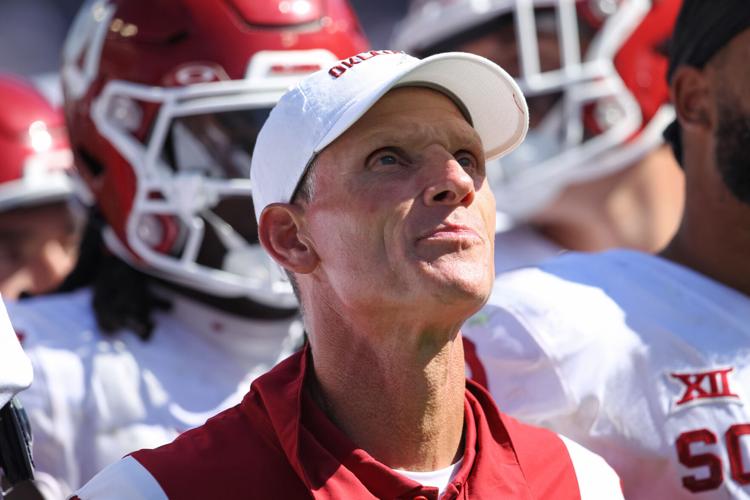


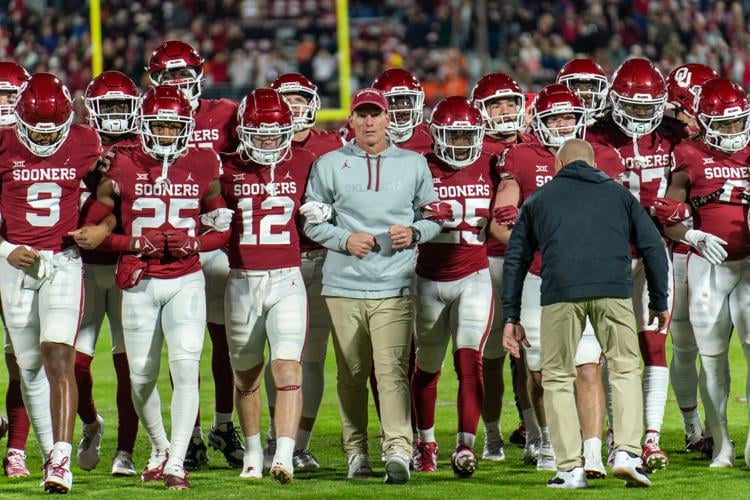


OU football head coach Brent Venables during the game against TCU in Fort Worth, Texas on Oct. 1, 2022.
While en route from Norman to South Carolina on a private jet to interview Brent Venables, Oklahoma Athletic Director Joe Castiglione told the traveling party his plan.
OU President Joseph Harroz Jr., Tim Headington — the Sooners’ wealthiest donor — and Zac Selmon, then-deputy athletic director, all understood their orders when they arrived at Venables’ home on Lake Keowee on Dec. 5, 2021. They were to hear about Venables' philosophy for their football program then huddle in a separate room to discuss where to go from there.
About 10 minutes into the former Clemson and OU defensive coordinator’s emotional spiel about what is now OU’s S.O.U.L. Mission program for student-athlete development, OU’s president couldn’t help himself.
He shot up from the couch and blurted out: “Hey, will you be our head coach?”
Castiglione glared at Harroz, who had ruined his plan, but ultimately gave him the go-ahead as Venables, one of a few coaches on their shortlist, replied, “Are you offering?”
“It was just a hilarious moment,” Harroz told the OU Daily. “Because I totally did not handle the moment well. I got caught up in it and wasn't about to wait.”
The energy the group felt in the room after signing their new head man to a fully guaranteed 6-year, $43.5 million contract hasn’t wavered an inch over a year and a half later even as the first-time head coach has overhauled a bludgeoned roster, lost his executive director of football administration and is racing to prepare his team to enter the SEC a year earlier than expected.
Although Venables led the Sooners to a 6-7 record in his first season — the program’s worst since 1998 — Castiglione believes OU is on schedule for Venables’ plan ahead of moving to the SEC in 2024.
“We can’t anticipate all of the world we are facing, all of the disruption that happens and evolves in ways that few can predict,” Castiglione told the OU Daily in July, before the Big 12 and the Big Ten pillaged the Pac-12’s members on Aug. 4. “But that's just the point of how a leader needs to be positioned to be able to adapt, pivot and evolve without compromising a vision or the values.
“It doesn't mean your tactics may not change or alter a little bit based on how you're navigating something, but you don't get your eyes off of focusing on the things that matter most and the way you go about it, and what we're trying to do to build a program of success long term. (Venables has) been exceptionally disciplined and I think in the long run you’re going to see how the dividends result from that.”
Just like Castiglione entered Venables’ interview with patience, the Sooners’ second-year head coach is doing the same with the program he leads. While he wants to win now, Venables is realistic about how long it might take, especially given that first and second year players make up 76% of OU’s roster.
While such inexperience would seem daunting for many coaches, it excites Venables. After a disappointing first season, he signed the highest-rated recruiting class in program history, ranked No. 4 ahead of Ohio State and comprised of players Venables handpicked to position OU to compete in the SEC.
“Building something and the improvement process takes time, but I'm not trying to wait to be great,” Venables told the OU Daily during a one-on-one 15-minute interview in his office. “That's my mindset. So, do I know that in five years we'll be in a much different place, much more stable several years into our new league and things of that nature?
“Yeah. But my mindset is to improve every day and all the improvement can’t happen fast enough.”
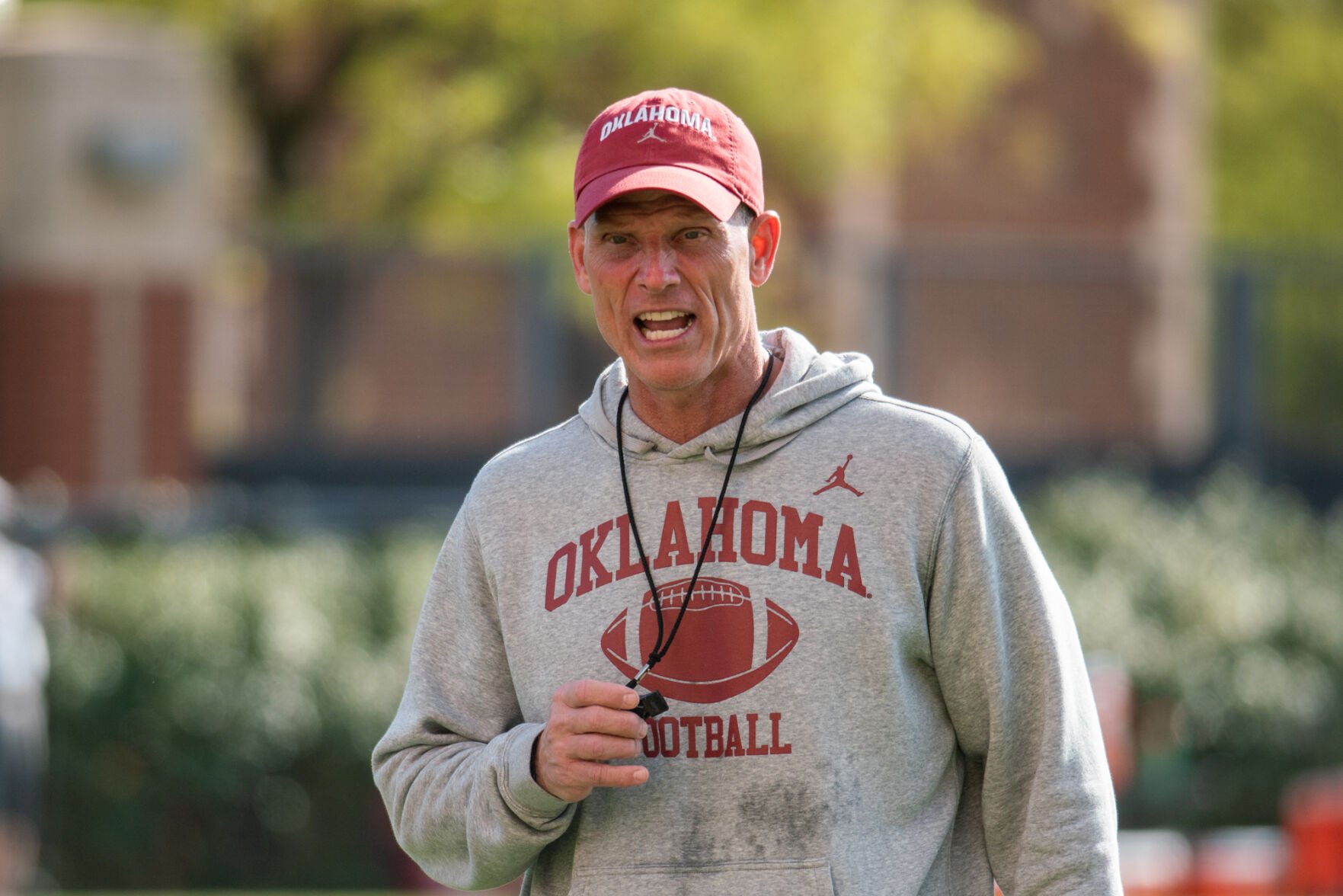
OU football head coach Brent Venables during the Sooners' open practice on April 10.
‘DNA has been proven’
Venables thought he might be dying while he laid on the floor of the then-Reliant Stadium coaches’ locker room pregame on Dec. 7, 2002. It wasn’t the first time life, and the way Venables meets it head on, left him staggered.
While Venables remembers receiving four IV bags, a shot of Phenergan and a suppository, then-co-defensive coordinator Mike Stoops and his staff panicked. Stoops was in charge of calling the defensive plays and it was Venables’ job to signal them to the players from the sideline.
And only Venables knew the signals.
“Who the hell’s going to signal?” Venables remembers Mike Stoops yelling.
Notoriously energetic, Venables felt ill on the bus ride to the venue but toughed it out during warmups, hyping up his players before the game. The Sooners were minutes from facing Colorado in the Big 12 Championship Game when Venables passed out.
“That’s the only time I've ever seen a coach that had to go in pregame and get put on an IV,” Bobby Jack Wright, then-Oklahoma’s defensive ends coach, told the OU Daily.
The treatment worked, though Venables had a team manager stand behind him throughout the game in case he passed out again. He didn’t and the Sooners defeated the Buffaloes 29-7.
It wouldn’t be the last time he required help on the sideline, however. During his time at Clemson, Venables became nationally known for having a “get-back” coach, the Tigers’ strength and conditioning coach Adam Smotherman, whose game-day job was to pull Venables off the playing field in the most frenzied moments during Tigers’ games.
Harroz has grown accustomed to, and even had fun with, Venables’ intensity. The president shared that he’s invited the coach to play golf — a sport that requires a quiet, controlled composure — and took advantage of his boundless energy, defeating him handily.
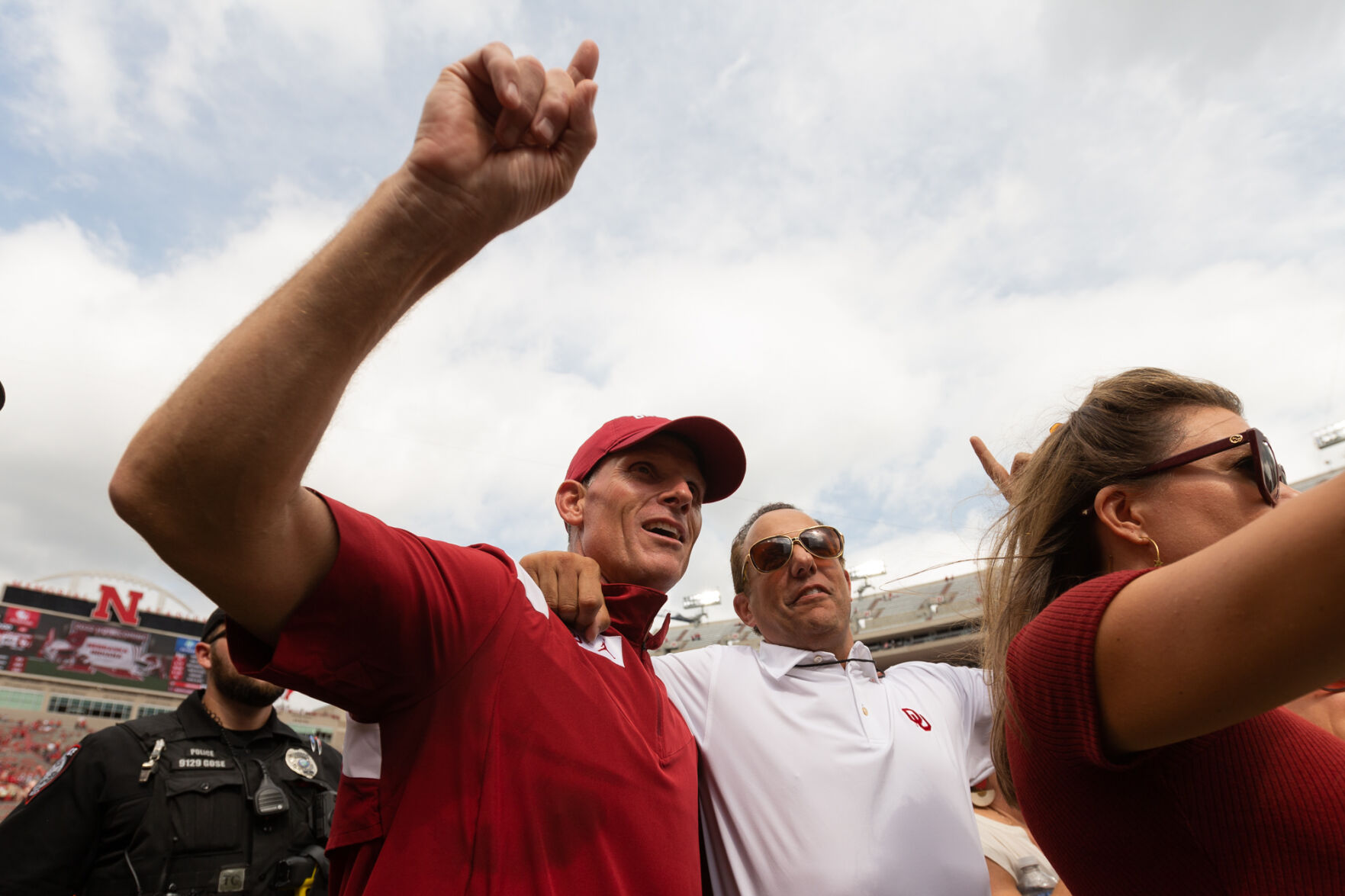
OU football head coach Brent Venables and OU President Joseph Harroz Jr. during the game against Nebraska in Lincoln, Nebraska on Sept. 17, 2022.
Harroz, of course, just needs Venables to shine on the football field. And Bill Snyder and Mark Mangino remember Venables’ unparalleled passion there from the first day he strapped on pads after transferring to Kansas State from Garden City Community College in 1991 at 20.
“He was probably as into it as any player we’ve ever had,” Snyder, a Hall of Famer who coached at Kansas State from 1989-2005 and 2009-18 told the OU Daily. “He was an extremely hard worker, he caught your attention through how well he dedicated his attention to what he was doing.
“Probably as focused of an individual on the football field as you can imagine. A toughness that went right along with all the other characteristics he had and still a good guy off the field. … He knew how to make that transition on the football field.”
Snyder has known not only Venables, but his wife, Julie, since their earliest days together as Kansas State students, to their 1997 marriage and beyond.
Snyder’s appreciation for Venables’ all-in approach to everything he does led him to make Venables a graduate assistant once he ran out of eligibility. Mangino, then the Wildcats’ run game coordinator, remembers looking out onto the practice field and thinking Venables was a player going through drills.
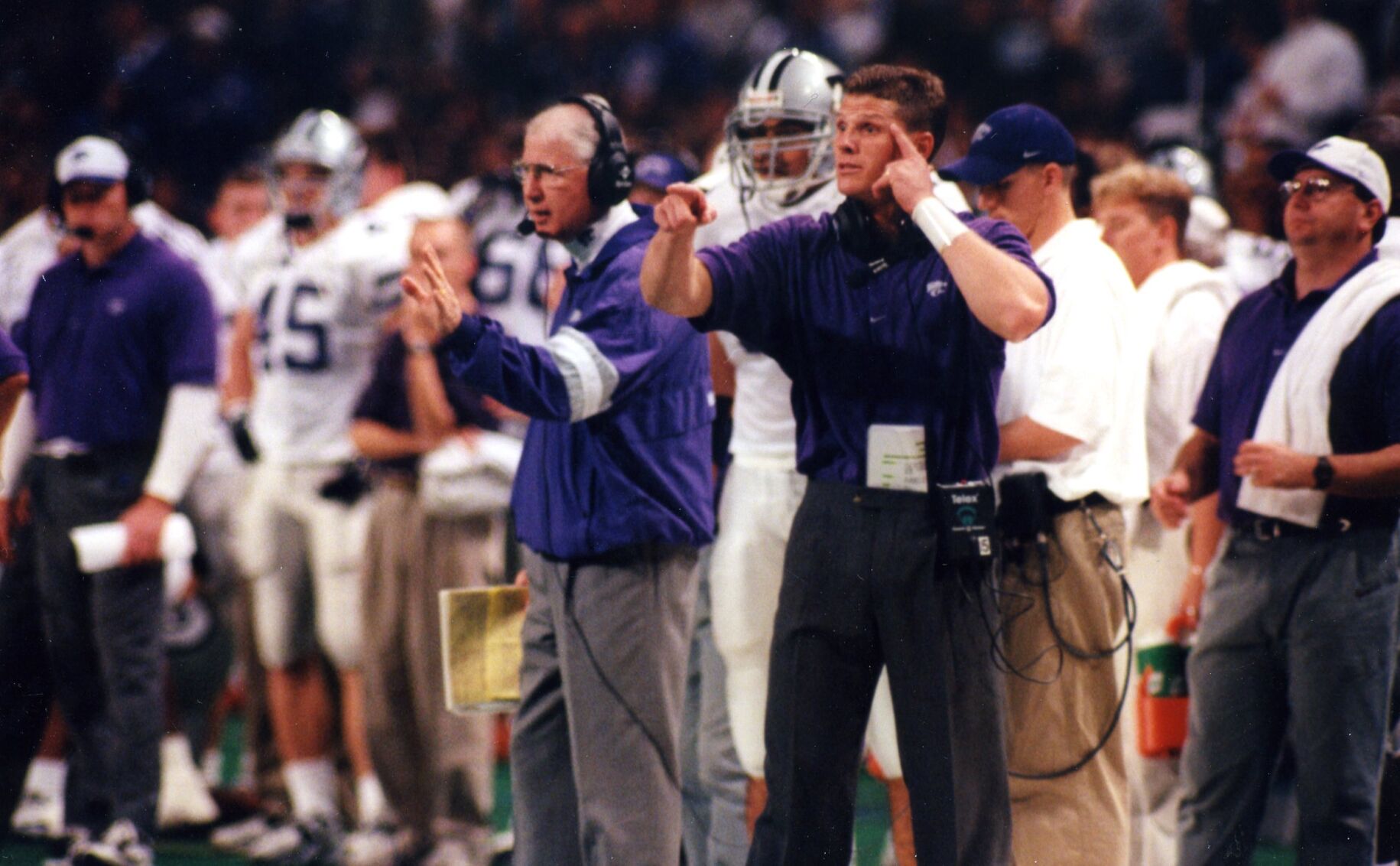
OU head coach Brent Venables (right) coaches next to his mentor Bill Snyder during his time at Kansas State.
One day during an intense drill with running backs and linebackers, Venables said something to one of Mangino’s players. “Brent,” Mangino remembers sternly telling him afterward, “coach your own guys!”
“Boy was he a worker as a GA, he flew around that office. If somebody said, ‘Hey Brent, we need this done by 2 o'clock,’ it was done at 1 o'clock,” Mangino told the OU Daily of Venables, who is up against a new clock in preparation for the SEC. “When we left the practice field, he was just as full of sweat as the players were.
“I remember that you had to hold him back sometimes, he started flying around. … How could you not love this guy? He's got the energy and the enthusiasm of a 10-year-old kid, I'm telling you, he's got energy going out the windows.”
Fast forward to 2023 and Venables, who made $7 million last season, still gives position groups individual attention and still hops in drills with players. If players aren’t doing something correctly, Venables will show — and tell — them how it’s done, jackknifing his arms and pumping his feet and bellowing instructions for all to hear.
An animated Brent Venables coaching during #Sooners practice: pic.twitter.com/kvLmhFWE3N
— Colton Sulley (@colton_sulley) April 3, 2023
When Venables and Mangino joined Bob Stoops at Oklahoma in 1999, the program was in shambles. OU was fresh off five consecutive seasons at or below .500, the facilities were in awful shape and Stoops’ staff worked in portable buildings the first month on the job.
Their arrival came during the program’s lowest point before last season’s disappointment. Venables brought the same intensity from K-State to Norman as co-defensive coordinator with Mike Stoops and helped lead OU’s dramatic turnaround to 7-5 in ’99 and then a national title in 2000. Wright said while that first-year team didn’t always win with Venables helping run the defense, he never felt like the Sooners entered a contest unprepared.
“The great thing was just his preparedness going into every ball game,” Wright said. “He was always super prepared. The guy was always one that would always go the extra mile to look at one more clip of video even though you might have watched that game three or four times already.”
After learning from Snyder as a player and a young coach, learning from a national championship coach in Stoops who built sustained success, and winning two more national championships at Clemson, Venables called on all those experiences when stepping onto the sideline as a head coach for the first time last fall.
He keeps in touch with all three coaches he’s worked under. Snyder even phoned him before he accepted the OU job, not to tell him whether to take it, but to make sure it was actually something he desired and that OU fit with his feelings.
What has Venables taken with him from those three legends?
“Don't get distracted on what it takes and what you're looking for,” Venables said. “The DNA has been proven at three great programs in Kansas State and what Coach Snyder was able to do there, and then the renaissance of Oklahoma football and Bob Stoops and then being a small part of what Dabo Swinney has done at Clemson.
“It's the same DNA at all three places and as people, you’ve got to be good enough. You have to be talented enough, but you’ve got to find the right people to get all that stuff, even if it's a little shorter and maybe a step slower. It’s about finding the right people, and people always make the place.”
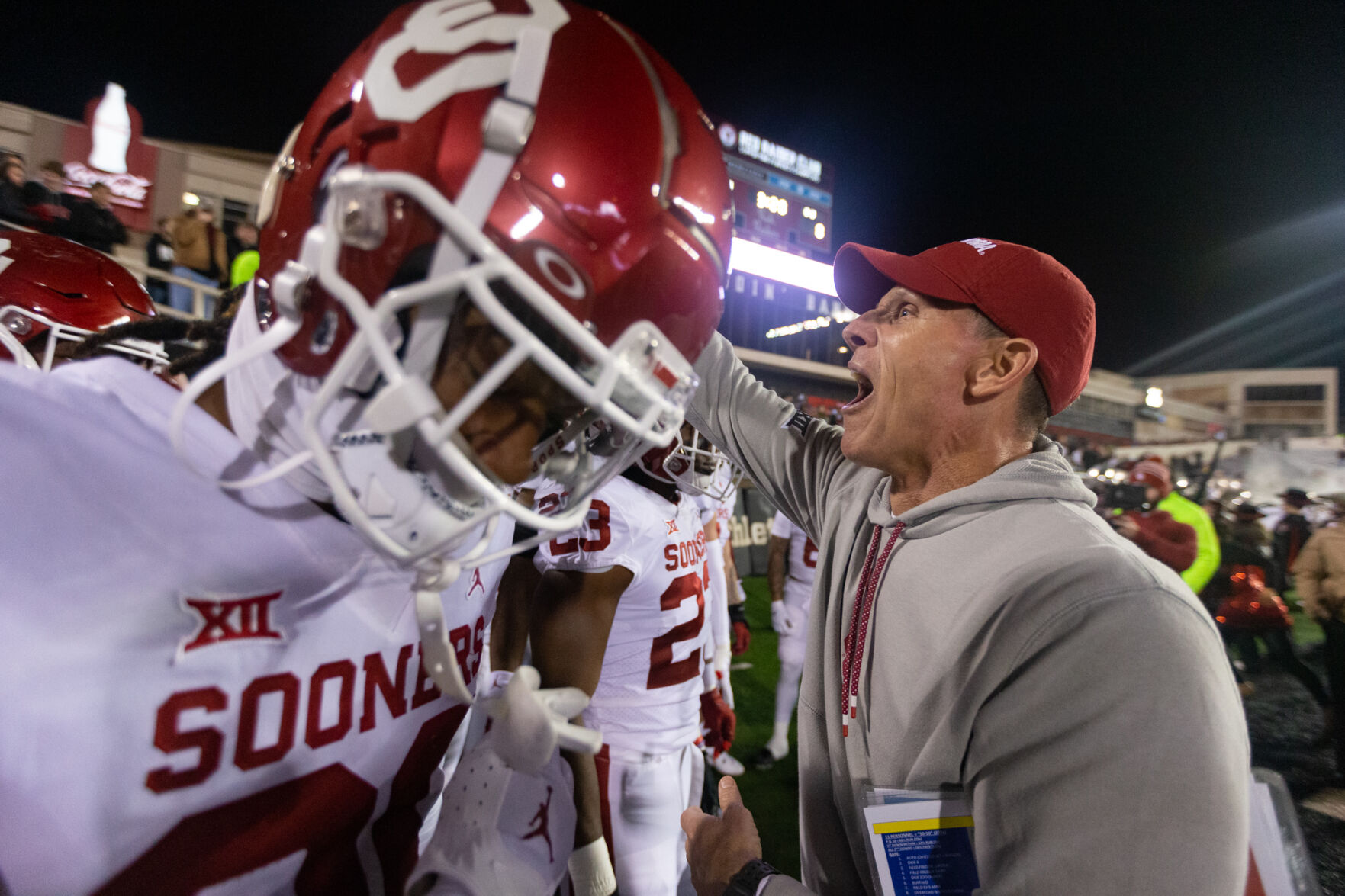
OU football head coach Brent Venables before the game against Texas Tech in Lubbock on Nov. 26, 2022.
‘We do care about family’
Hearing Venables’ passion for family, trust and the goal with S.O.U.L. mission was exactly what Harroz needed to hear.
Seven days before meeting with Venables, Castiglione, Harroz and Stoops, the Sooners’ head coach from 1999-2016, witnessed then-OU coach Lincoln Riley tell his team on the morning of Nov. 28, 2021, that he was leaving the program he led for five seasons.
Riley had agreed to become USC’s head coach and subsequently took four on-field coaches and three players with him, including starting quarterback Caleb Williams, who won the Heisman Trophy with the Trojans in 2022.
“That's hard to watch,” Harroz said of Riley’s exit. “Because we talk about character and about family and about doing the right thing, about putting team above self. And all of a sudden, an entire team finds out that the coach is leaving. And that can feel hollow, when it's that unceremonious, and you find out in that way, and then the coach is gone.”
The trio acted swiftly, banding together to not only try to retain players while preparing for a bowl game, but also to console the leaders in the locker room. Harroz met with captains Pat Fields, Jeremiah Hall, Caleb Kelly and Spencer Rattler.
“We do care about family,” Harroz told them. “And we care about you.”
Harroz said it was basically a complete 180, going from watching the players learn Riley was leaving to interviewing Venables and hearing his passionate vision for players — on and off the field. It all left him so ready to run through a wall he instead interjected with the job offer.
And while Castiglione might have wanted a more tempered approach, he told OU Daily that Venables was the first person he thought of to fill the Sooners’ vacancy when he learned of Riley’s decision. The two had stayed in touch after Venables left OU in 2012 after 13 years to lead Clemson’s defense and Venables said familiarity played an important part in his return to Norman.
“Trying to take a program that's been really good for a long time to great (was attractive to me),” Venables said. “And that's in every part. So culturally, systematically in some ways, and then in many ways too, carry on the rich history and tradition in the most tumultuous time in college football history with the portal and NIL.”
It’s only going to get tougher for Venables and the Sooners. Joining the conference where everything “just means more,” has its challenges as big-time schools are on the docket seemingly every weekend. Next season, for example, OU will host Alabama, Tennessee and South Carolina, while playing at, among others, Auburn, LSU and Mississippi.
Venables is crystal clear on where he wants OU to be. He understands the expectations he inherited and isn’t shying away from them.
“Nobody's ever just walked away from Oklahoma,” said Venables, zooming right past Riley’s exit that facilitated this opportunity. “I had several amazing conversations about the vision of our program, and how we do what we do, I think, was attractive to them. Football's incredibly important, this is a performance-based profession, I’m in charge of winning games, but how we do it matters to the leadership of this university, and that is aligned with my values as well.”
One of the most important agendas in Venables’ blueprint was finding someone to lead S.O.U.L. mission, the player developmental program that stands for “Serving Our Uncommon Legacy.” Venables thought of one of the best linebackers he’s ever coached and a eight-year NFL veteran: Curtis Lofton.
After an hour-long phone conversation with Lofton’s wife, Venables hired him as director of S.O.U.L. Mission, specializing in life skills and as NFL liaison. Lofton, who played under him at OU from 2005-07, grew up without his father and credits Venables for building him into the man he is today.
“He not only made me a great football player, he was a teacher of the game,” Lofton told the OU Daily. “(He) made me a great football player, but more importantly, the way he led his family and the way he was a father were some of the things that I implemented and are some of the reasons why I'm back doing what I'm doing.
“Because I don't have to. I've been really successful in my life and I don't really need a job, but to whom much is given, much is required. Part of the reason why I was successful was because of Brent Venables. … Without him, I wouldn't be Curtis Lofton.”
Doing the same for others is the job Venables is in Norman to pay forward, just as others did for him coming out of the challenging circumstances he faced growing up.
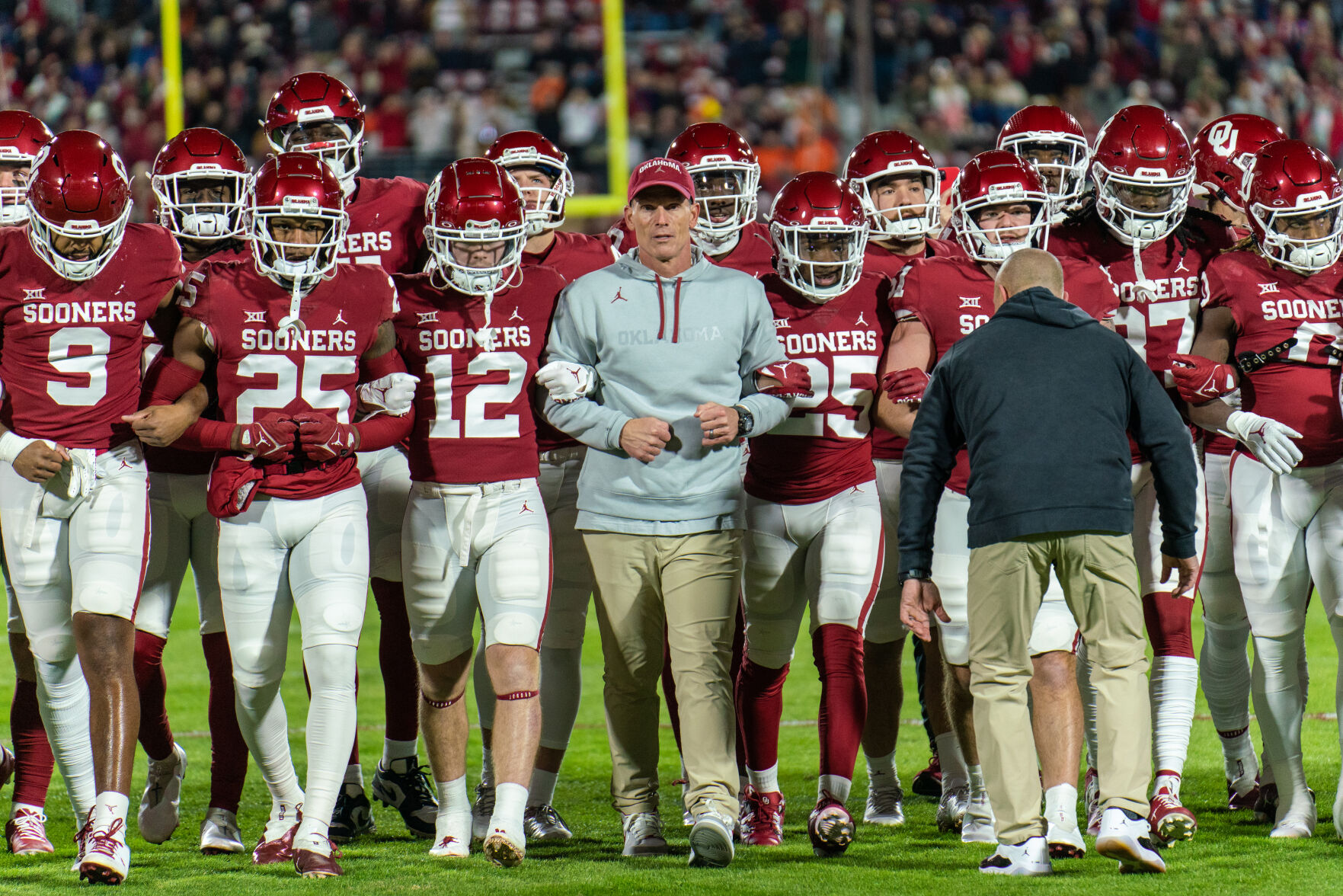
Head coach Brent Venables before the game against OSU on Nov. 19, 2022.
‘Keep the main thing the main thing’
The closeness of exactly those old bonds led Mangino to pick up the phone in February and dial an old friend.
In Oklahoma City to visit his daughter, Mangino asked Venables if he could spend a day at the Sooners’ facilities and chat with the coaching staff. Upon arrival, the atmosphere was better than he could’ve imagined and he left feeling better than he already did about Castiglione’s hire of Venables.
“Nothing's changed. Brent is super positive,” Mangino said. “They have done a tremendous job recruiting. When I went into the weight room and I saw the portal transfers and early signees and stuff, I was impressed. They've got some good looking cats now, I mean, they look like Oklahoma kids normally look.”
One of the most encouraging signs to Mangino, other than the return of his buddy, strength and conditioning coach Jerry Schmidt, was the family atmosphere in the room. Mangino hasn’t coached at OU since 2001 and he had players coming up to him, shaking his hand and welcoming him back to Norman.
Ask anyone on his staff, from his past or in his inner circle: Venables is going to succeed at OU. It’s a matter of when, not if. All the way to Harroz, that view is resolute.
“With all the changes that are taking place in college football right now and in athletics as a whole, it is so easy to be discouraged,” Harroz said amid another wave of conference realignment chaos. “It is so easy to get overwhelmed.”
But reflecting on who leads the football team — a program whose “There’s only one Oklahoma” slogan has become the catchphrase of the entire university’s recent rebrand — gives him comfort.
“The guy's focused, he's intense,” Harroz continued. “You see what he's doing with recruiting classes, he knows who he is. And I’d say his energy is even greater than it was, which gets a little scary. The guy's intense. But I'm a hundred percent in.”
Being around him as a coach, a friend and a player for decades, Snyder, Mangino and Lofton also believe the fires Venables has been through will help him succeed this season and have the Sooners SEC ready.
But this offseason didn’t start as planned.
Julie Venables was diagnosed with breast cancer on June 16 and underwent surgery on July 28 in New Orleans. The pair have four kids.
It’s the very dynamic of the game developing not just the player, but the man that has helped Venables persevere in battles like these before. He grew up in a household that experienced domestic violence. His mother died during the Sooners’ 2005 season after spending her final days living with Brent and Julie in Norman. In the span of two days in 2011, he lost a linebacker he coached, Austin Box, to an overdose, and his brother, Kirk, who was 43.
Mangino said he’d known Venables for 20-plus years before learning some deeper details of Venables’ upbringing. Venables mostly kept things inside but would occasionally open up to him.
Years later, in a season that will demand both in new ways, Venables is closer to mastering the balance of football and family life.
“It’s all about family,” Venables said. “So in every way, your football life is your family. Not the game, but the football family, and so you're on this journey together as a family. It reflects your faith and you prioritize. I say, ‘Keep the main thing the main thing,’ and be faithful to things that you believe in, and that helps. That’s your compass, for you to prioritize and not lose your way.”
As a stack of papers canvas his desk like his hallmark defenses and countless meetings jam his schedule like pass rushers swarming an opposing quarterback, Venables is figuring out how to lead a program and the people in it to success on and off the field, in football and in life.
To Venables, success isn’t measured by the number of trophies lining the Switzer Center, or whether he someday earns a statue on campus like four of his predecessors.
“(Success) is our love for one another, how competitive we are, and our ability to overcome,” he says, sharing one last piece of his overall vision as he rushes out of his office to make it to a meeting he’s late for, 32 days before the season opener and 11 months before his team transitions to the SEC.
“How we measure our success is the type of men that we develop to the game. It's improving, it's getting better. It's getting the most out of what we got, and it's maximizing a small window and all those areas that I’ve said. Nothing takes a backseat to anything.
“It's graduation. It's boyhood to manhood. It's our guys having an amazing college experience. I have failed them if they're miserable and winning games. … The fun’s in the winning no matter how you win.
“I don't want to ever lose perspective. If we lose perspective, then you're going to be miserable on your journey. … We've got a small window on this earth and I want us to have love and appreciation and joy in the doing.”
This story was edited by Karoline Leonard, Louis Raser and Jason Batacao. Mary Ann Livingood and Nikkie Aisha copy edited this story.


