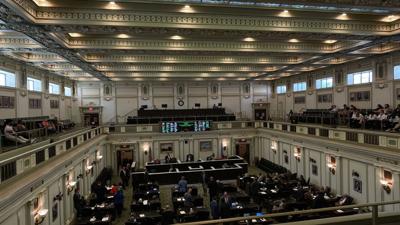
Protesters gathered inside the Oklahoma state Capitol Thursday afternoon as the two chambers of the Oklahoma House of Representatives passed a bill that ended certain OU Health’s gender-confirming programs.
Sarah, who is transgender and a parent of a nonbinary child, protested outside the Oklahoma House of Representatives floor while the bill, which was aimed at halting gender-confirmation care for children in the OU Health system, was being debated. Sarah chose not to provide a last name out of privacy and safety concerns.
Sarah arrived at the state Capitol at 8:30 a.m. Thursday, equipped with signs opposing Senate Bill 3. An Oklahoma resident for less than a year, Sarah moved from Texas expecting more freedoms and access to gender-confirmation health care.
SB 3, similar to House Bill 1007, would give over $108 million to OU Health for a pediatric mental health facility, the utilization of electronic records and the creation of a Stephenson Cancer Center in Tulsa. These bills, however, included a provision to end some gender-confirmation treatment for minors. OU Health later announced plans were underway to cease aspects of this care.
“They are voting currently to take away the largest source of medical care in Oklahoma from trans children because they’re trans,” Sarah said. “When session resumes in January, they’re going to go after all trans people’s medical care.”
Nicole McAfee, another protester of HB 1007 and SB 3, interacted with fellow advocates in the rotunda. Arriving early in the morning like many other protesters, McAfee spoke with members of Congress during recesses throughout the day to express their grievances with the bill.
An Oklahoma resident for seven years, McAfee, executive director of Freedom Oklahoma, has already made headway in 2SLGBTQ+ advocacy in the state. They organize policy work to secure equality for historically marginalized communities in their job at Freedom Oklahoma, with a special focus on 2SLGBTQ+ rights.
“I think that it’s really important for everyone to be aware that there are trans folks in every community across Oklahoma. There always have been,” McAfee said. “That, in this moment especially, the Legislature is essentially enacting policy that is trans genocide.”
While the House floor debated the bill, attendee Kris Williams interjected at the suggestion of gender-confirmation processes being mutilation. Williams referred to the necessity of experts creating 2SLGBTQ+ inpatient programs in assisting 2SLGBTQ+ youth before being removed.
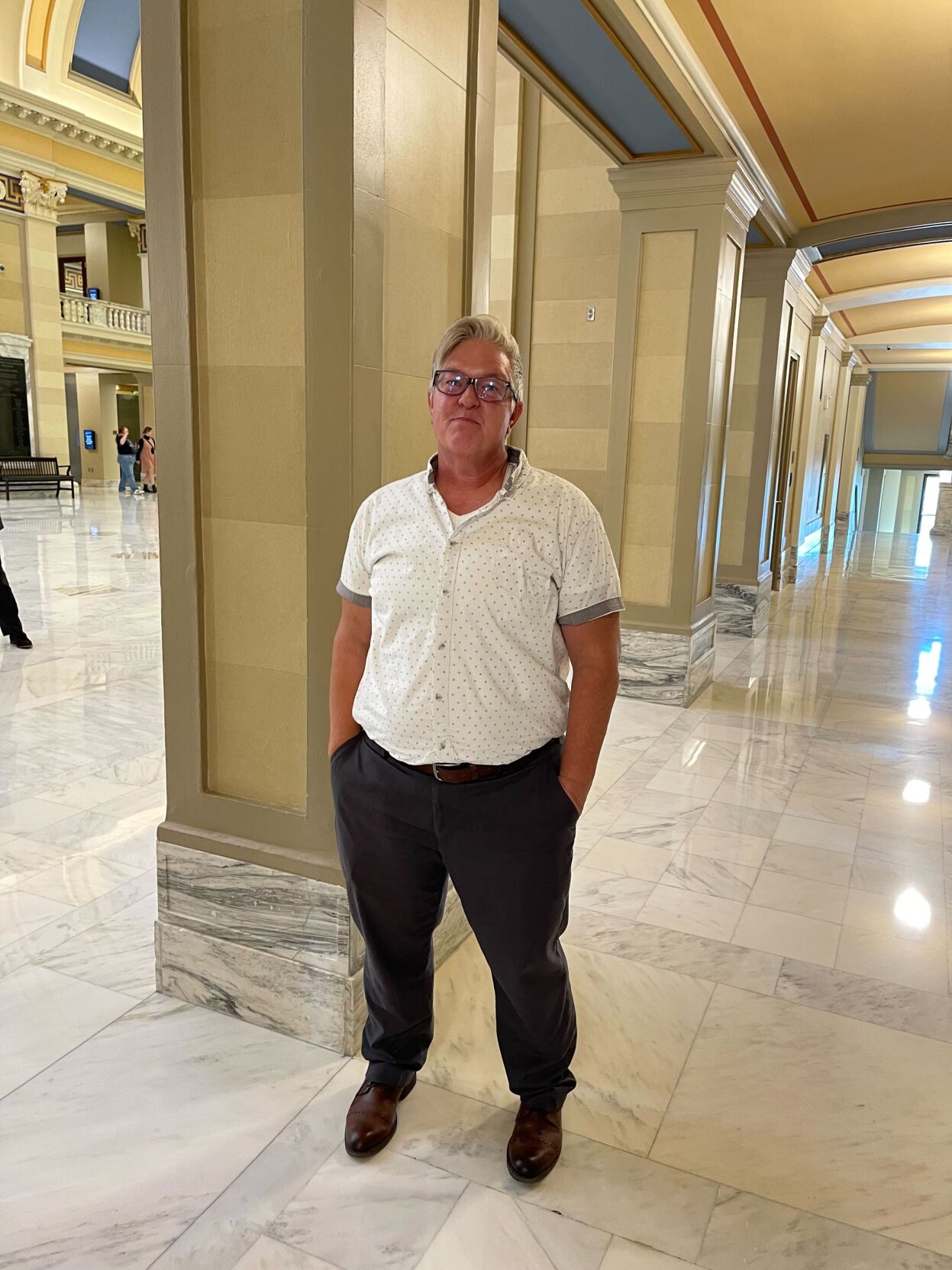
Kris Williams stands in the Capitol after she was removed from the House floor's gallery for verbally protesting claims that gender-confirmation surgery was mutilation during the debate.
After her removal, Williams explained her history to the Daily in developing the inpatient NEST Program at the Cedar Ridge Behavioral Hospital in 2017. Williams also stated that she has assisted multiple other programs in Oklahoma for the past 20 years, ranging from children’s health and people experiencing homelessness.
Williams referenced her fears of the bill’s passage by saying this bill will result in increased suicide rates and less safe hormone sources.
“They didn’t take the time out to look at any statistics,” Williams said. “This is not body mutilation. What they’re doing is absolutely dangerous, and it is a political ploy.”
Despite protesters' hopes, SB 3 passed with 68 votes for and 23 votes against. Several protesters and representatives expressed their disappointment with the passage of the bill, saying transgender and nonbinary children are being further targeted by the Oklahoma Legislature. The bill will now head to Gov. Kevin Stitt’s desk for approval. If signed, the bill will be enacted immediately.
Rep. Mauree Turner, Democrat of Oklahoma City, was also among the disappointed crowd gathered outside the floor.
Turner said the bill shows the Oklahoma Legislature does not believe there is space for transgender people in Oklahoma.
“I hope that students on (OU’s) campus, whether or not they are registered to vote here, are truly engaging,” Turner said. “Oklahoma government, OU, any institution that you’re receiving higher education from, they are dictating your everyday life. How you hear things, how you think things. We have to be actively engaged and be active participants and not passive recipients of the things that they are saying about (the 2SLGBTQ+ community).”
Turner was among the main debaters in the session and is a member of the 2SLGBTQ+ community. Upon their election in 2020, Turner became the first and only nonbinary representative in the Oklahoma Legislature, and the first nonbinary legislator in the U.S.
Turner said while they are disheartened about the bill's passage, they see rallying support for the 2SLGBTQ+ community.
“Oklahomans understand fundamentally how to care, but the Legislature doesn’t,” Turner said. “(I’m) distraught about the outcome of the legislation today, (but) very, very hopeful for the future of Oklahoma. And hopefully, this really lights a fire under folks when it’s time for them to do whatever they’re ready to.”