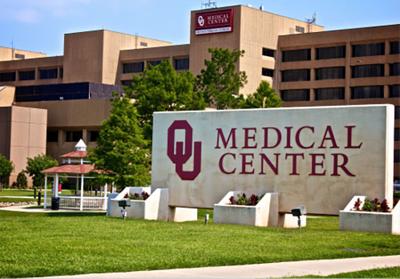

OU Health plans to cease certain gender medicine services across its facilities, according to a statement Tuesday.
The statement comes after Oklahoma Republican lawmakers announced they hope to use $39.4 million in American Rescue Plan funds for the OU health system to create a pediatric mental health hospital with the stipulation that the money cannot go toward “gender reassignment medical treatment” on minors.
House Bill 1007 will be heard during a special legislative session this week. The bill outlines over $108 million to be given to the University Authority and Trust to establish better mental health treatment for minors, the utilization of an electronic records system and the creation of a Stephenson Cancer Center in Tulsa.
The bill, however, defines that in the creation of the pediatric mental health hospital, money may not be allotted toward any treatment for gender reassignment, which is described in the bill as “any health care to facilitate the transitioning of a patient’s assigned gender identity on the patient’s birth certificate, to the gender identity experienced and defined by the patient.”
The treatment, as the bill explains, can include medical therapies or intervention to treat gender dysphoria, suppress the development of secondary sex characteristics or “align the patient’s appearance with the patient’s gender identity.”
OU Health said that its senior leadership team is “proactively planning the ceasing of certain gender medicine services.” They also said the plan’s development is already underway.
OU Children’s Hospital currently offers gender-affirming treatment and care, including hormone therapy, assisting with legal name changes, offering puberty blockers and collaborating with schools and families.
Cindy Nguyen, policy director for the American Civil Liberties Union of Oklahoma, said this bill will be detrimental to transgender and nonbinary youth in Oklahoma.
“We know that when we deny best practice medical care for trans youth, it is nothing short of life threatening,” Nguyen said.
Gender-affirming care for youth has been shown to reduce suicidal ideations and behavior, symptoms of depression and decreased emotional problems, according to The Trevor Project. In an article published in the American Journal of Psychiatry, gender-affirming surgery was found to lead to long-term mental health benefits for transgender individuals.
Nicole McAfee, executive director of Freedom Oklahoma, said this law will cost transgender and nonbinary youth their lives, agreeing with Nguyen that gender-affirming care is essential healthcare.
McAfee said the Oklahoma legislature is once again “piling on” transgender and nonbinary youth. Last legislative session, Oklahoma passed several anti-2SLGBTQ+ bills, including the “Save Women in Sports Act” and Senate Bill 615. McAfee said this is just another example of the Oklahoma legislature’s motives against the 2SLGBTQ+ community.
“It's just sort of a worst case example of what we see too regularly from the politicians in the Oklahoma legislature — that their priority isn't caring for Oklahomans. It's advancing in their personal political agendas,” McAfee said.
Nguyen said gender-affirming healthcare is essential healthcare, and this bill is going to be devastating for the 2SLGBTQ+ community in Oklahoma. Nguyen explained the bill is holding ARPA funding “hostage,” saying that once again, the Oklahoma legislature is using transgender youth as a “bargaining chip.”
OU Health said the funding provides a major opportunity for the advancement of medicine and the health of Oklahomans. They also said they are thankful for the “long-standing, collaborative relationship” with the Oklahoma legislature.
The bill does not apply to care for individuals with ambiguous genitalia or a verifiable disorder of sex development. The university previously requested ARPA funding for the new pediatric mental health hospital, saying the university hoped to improve behavioral health, both in-patient and outpatient, for Oklahoma’s children.


