
NBA Draft 2018: The best of Trae Young at Oklahoma (photos)

Freshman guard Trae Young jumps to shoot the ball Feb. 19.
- Paxson Haws/The Daily
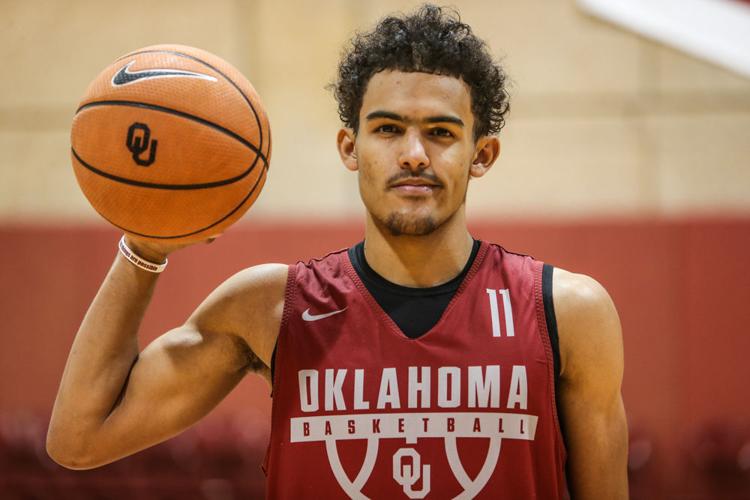
Freshman guard Trae Young poses for a photo in the basketball practice gym Nov. 20. Young wears a bracelet that says "All things are possible if you believe. Mark 9:23."
- Caitlyn Epes/The Daily
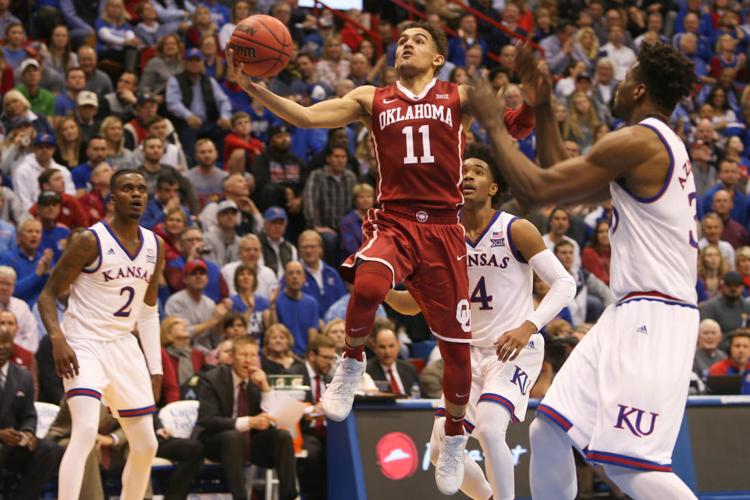
Freshman guard Trae Young goes up to shoot the ball Feb. 19.
- Paxson Haws/The Daily
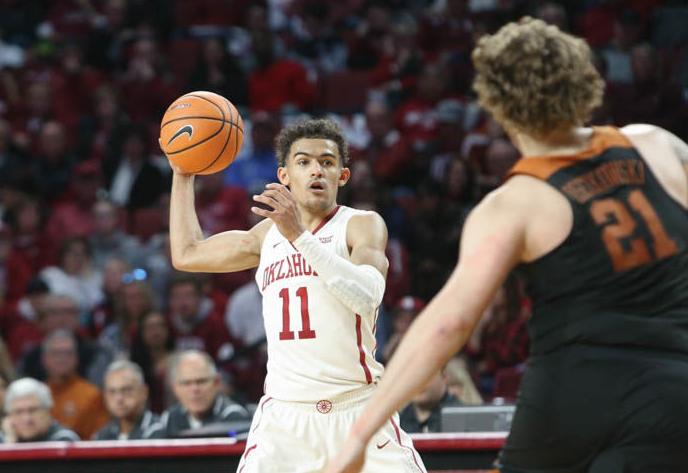
Freshman guard Trae Young catches the ball Feb. 17.
- Paxson Haws/The Daily
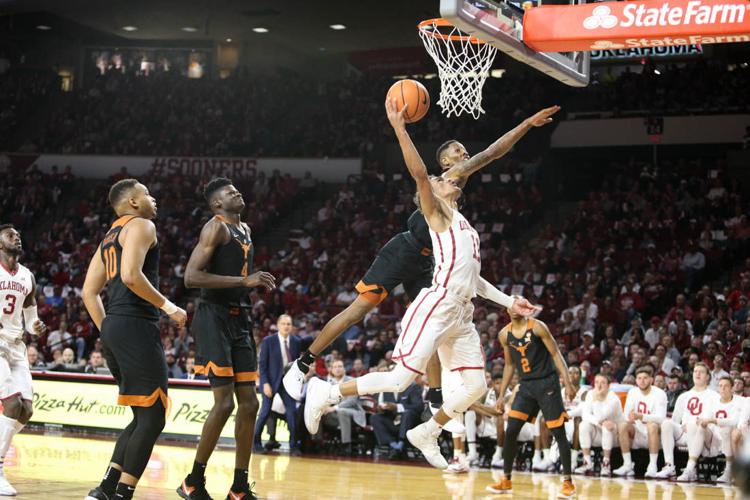
Freshman guard Trae Young jumps towards the basket Feb. 17.
- Paxson Haws/The Daily
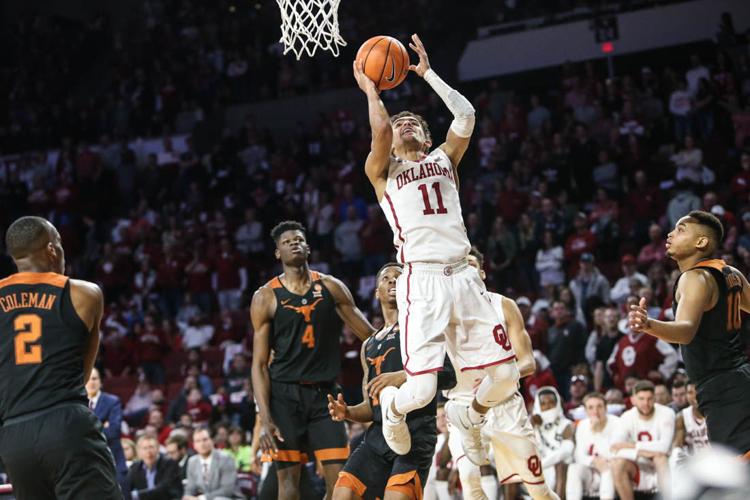
Freshman guard Trae Young jumps to make a shot Feb. 17.
- Paxson Haws/The Daily
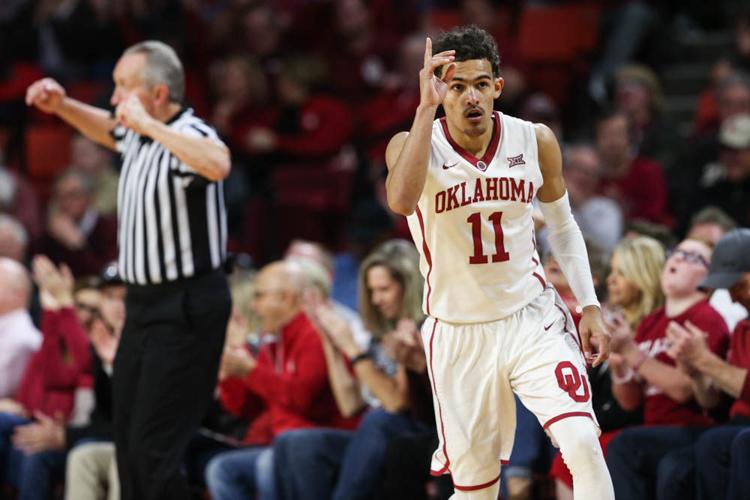
Freshman guard Trae Young points after making a 3-pointer Jan. 30.
- Paxson Haws/The Daily
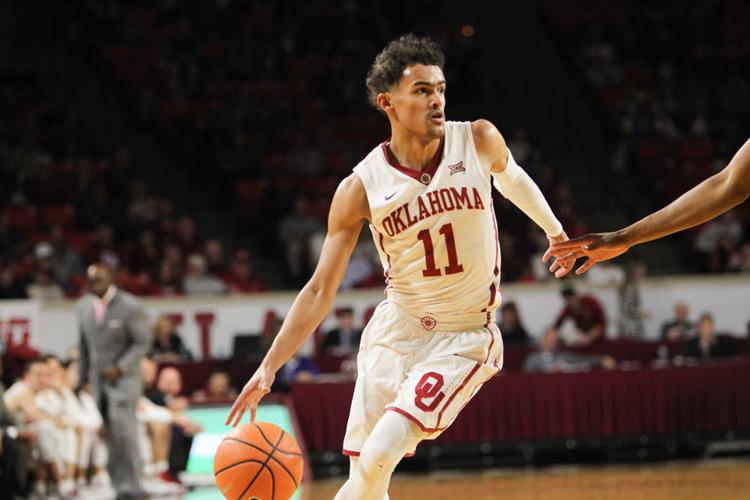
Freshman Trae Young dribbles down the court Jan. 30.
- Paxson Haws/The Daily
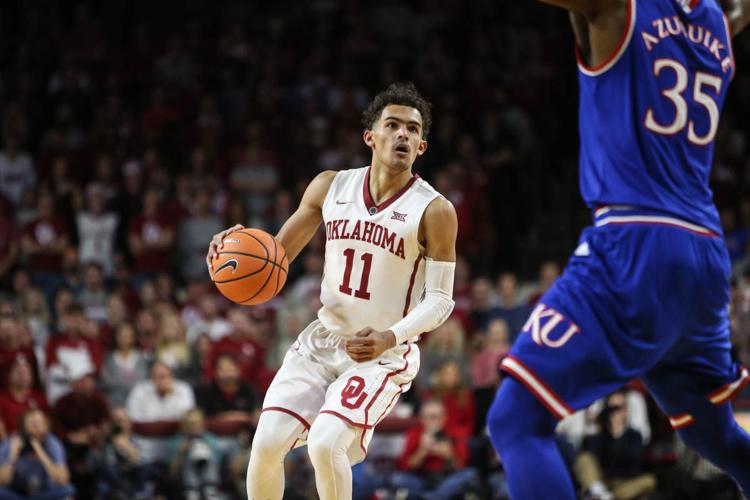
Freshman guard Trae Young looks at the basket Jan. 23.
- Paxson Haws/The Daily
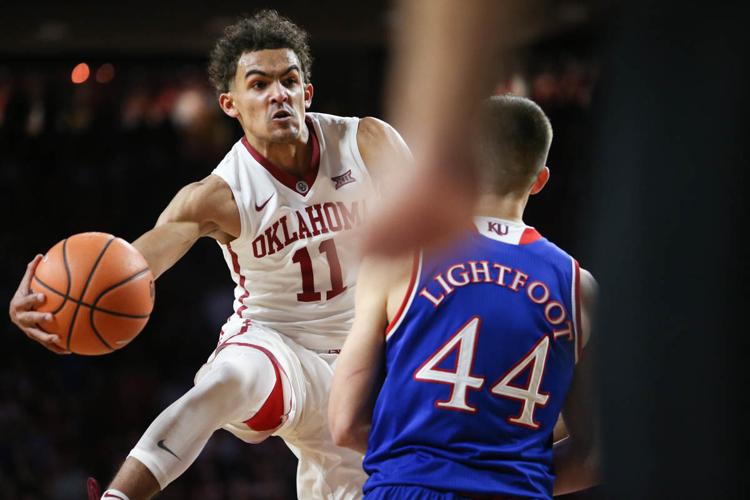
Freshman guard Trae Young attempts to pass the ball around his opponent Jan. 23.
- Paxson Haws/The Daily

Freshman guard Trae Young does a shimmy after making a three point shot against Oklahoma State Jan. 20.
- Paxson Haws/The Daily
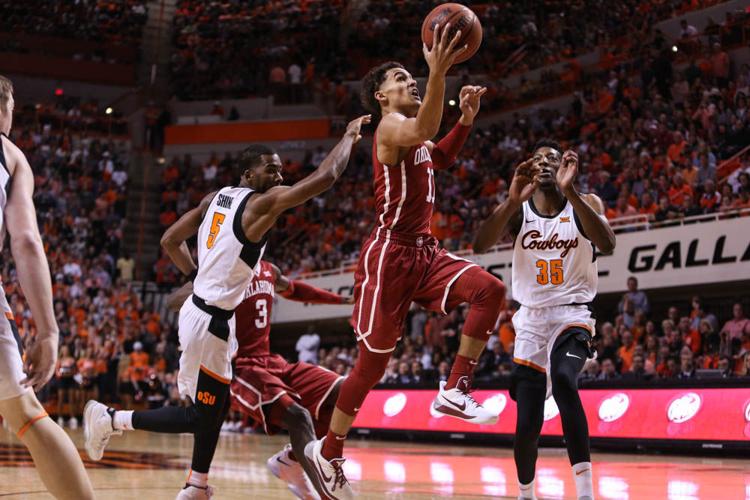
Freshman guard Trae Young goes for a layup Jan. 20.
- Paxson Haws/The Daily
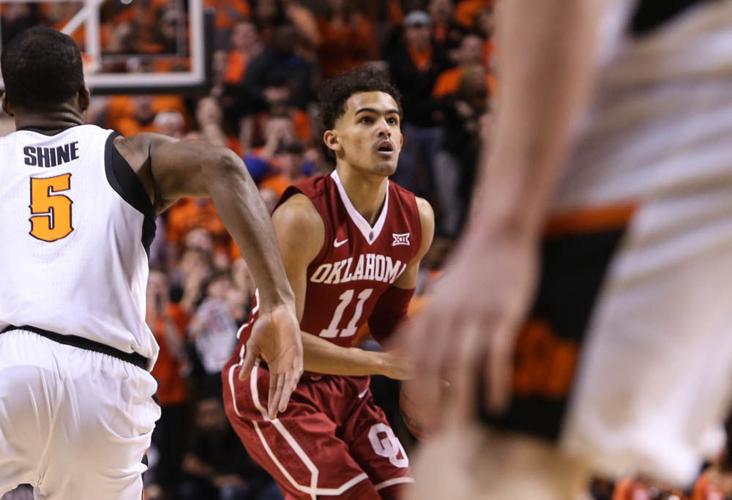
Freshman guard Trae Young looks for an opportunity to make a shot Jan. 20.
- Paxson Haws/The Daily
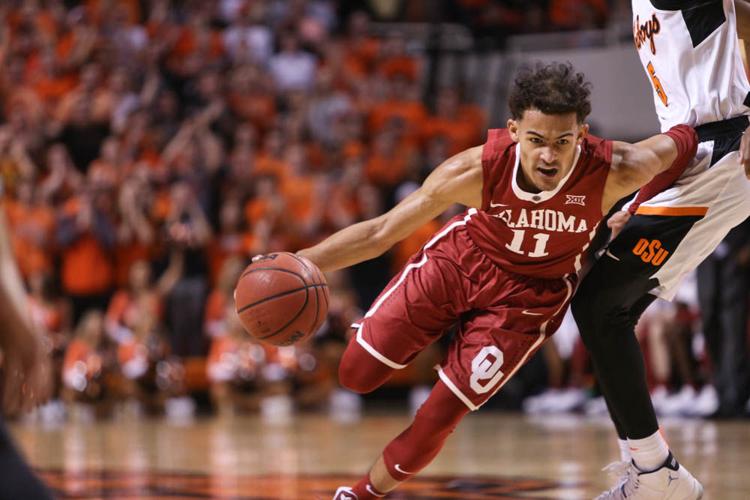
Freshman guard Trae Young dribbles down the court against Oklahoma State Jan. 20.
- Paxson Haws/The Daily
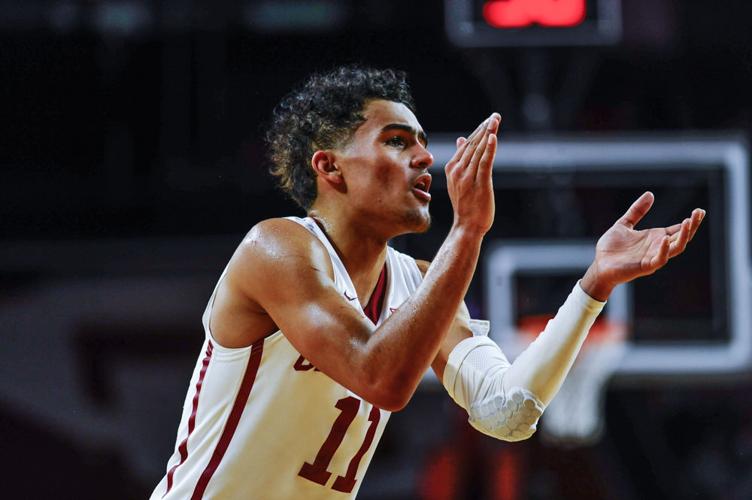
Freshman guard Trae Young claps his hands after a successful play during the game against Texas Tech on Jan. 9.
- Paxson Haws/The Daily
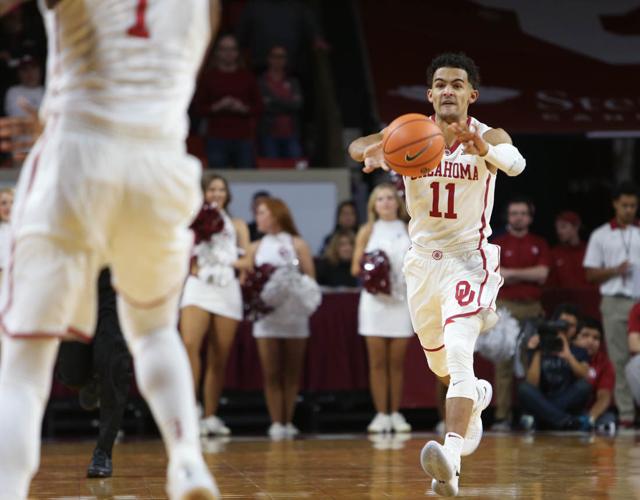
Freshman guard Trae Young passes the ball to a teammate Dec. 4.
- Paxson Haws/The Daily
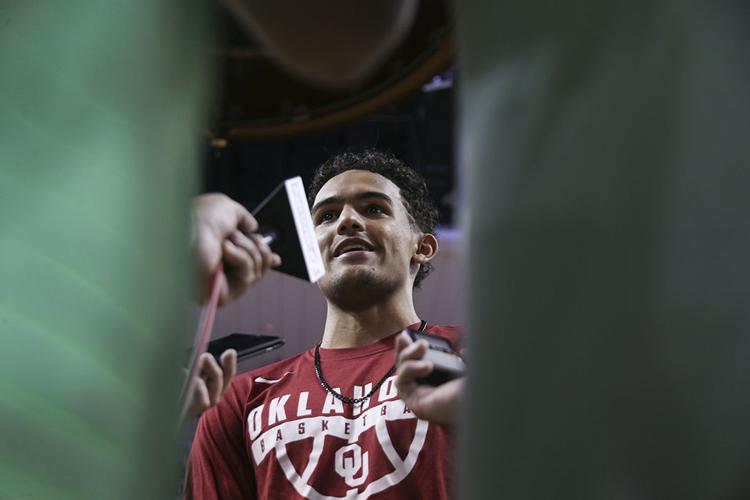
Freshman point guard Trae Young talks to reporters after the alumni game Aug. 25.
- Paxson Haws/The Daily
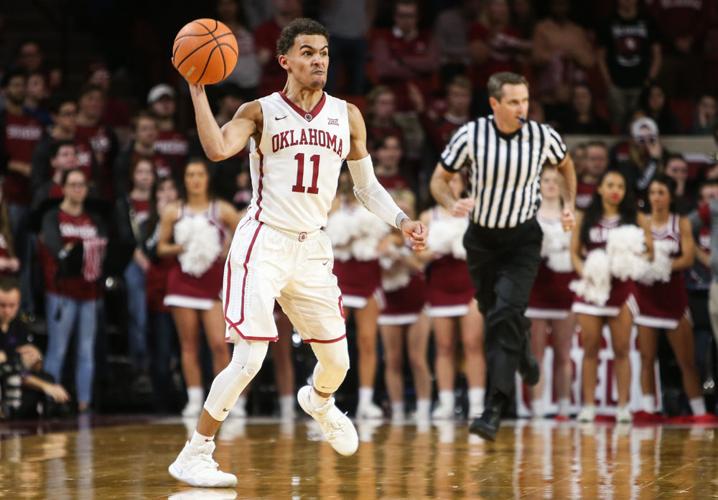
Freshman guard Trae Young passes the ball down the court Feb. 24.
- Caitlyn Epes/The Daily
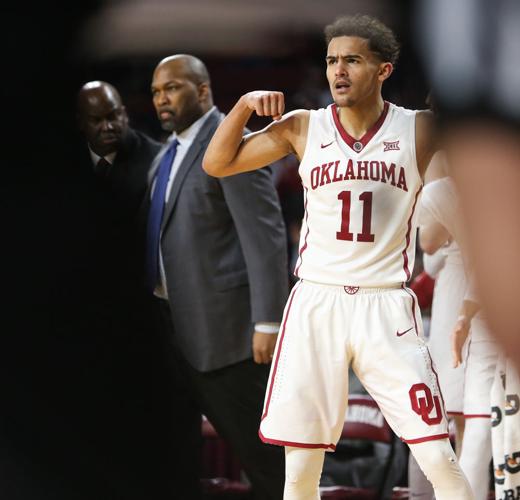
Freshman guard Trae Young celebrates during the game Feb. 24.
- Caitlyn Epes/The Daily

Freshman guard Trae Young smiles after making a basket Feb. 24, 2018.
- Caitlyn Epes/The Daily
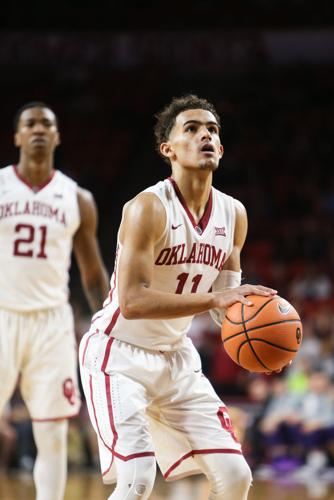
Freshman guard Trae Young shoots a free throw Feb. 24.
- Caitlyn Epes/The Daily
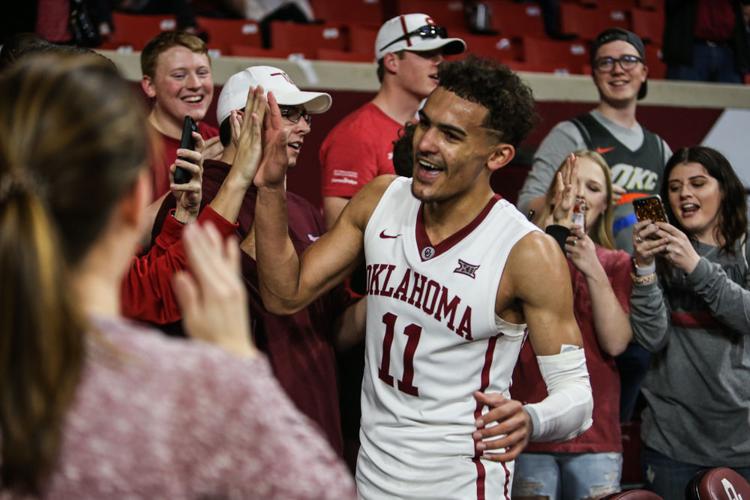
Freshman guard Trae Young smiles as he gives high-fives to fans Feb. 24.
- Caitlyn Epes/The Daily
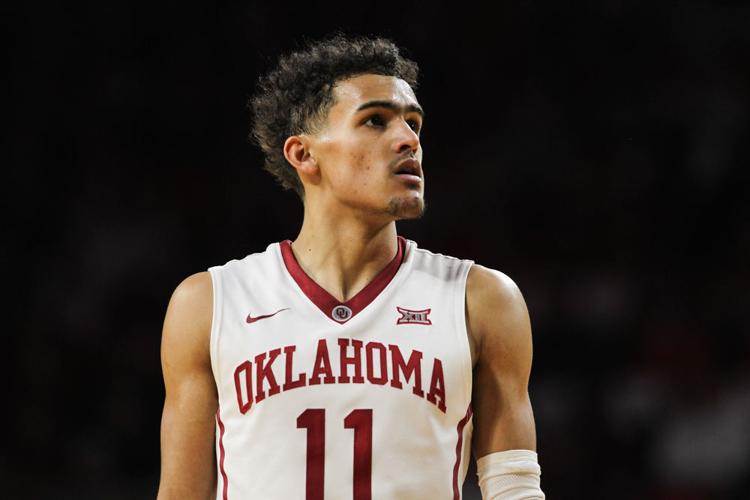
Freshman guard Trae Young looks to the basket in the game against Texas Feb. 17.
- Caitlyn Epes/The Daily
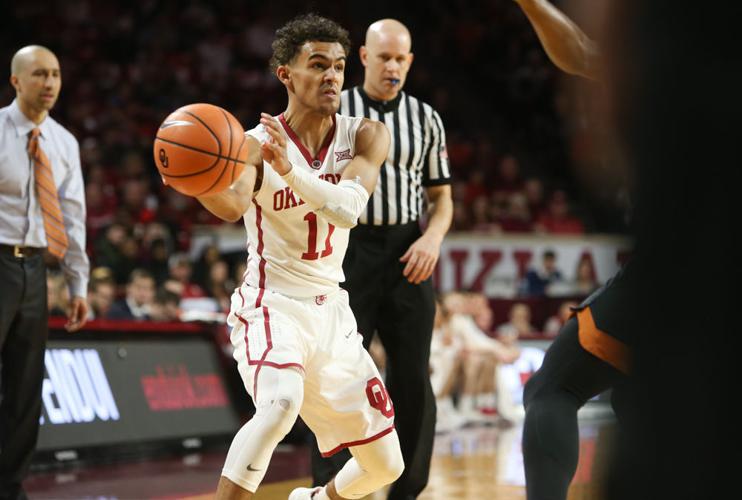
Freshman guard Trae Young passes the ball in the game against Texas Feb. 17.
- Caitlyn Epes/The Daily
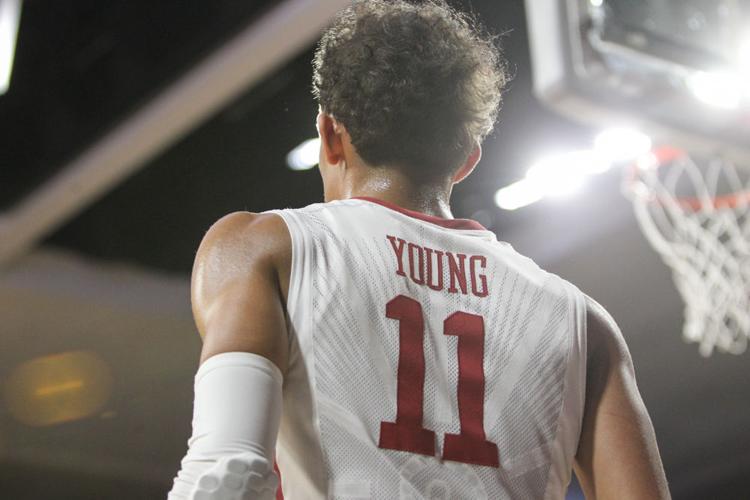
Freshman guard Trae Young prepares to throw in the ball in the game against Baylor Jan. 30.
- Caitlyn Epes/The Daily
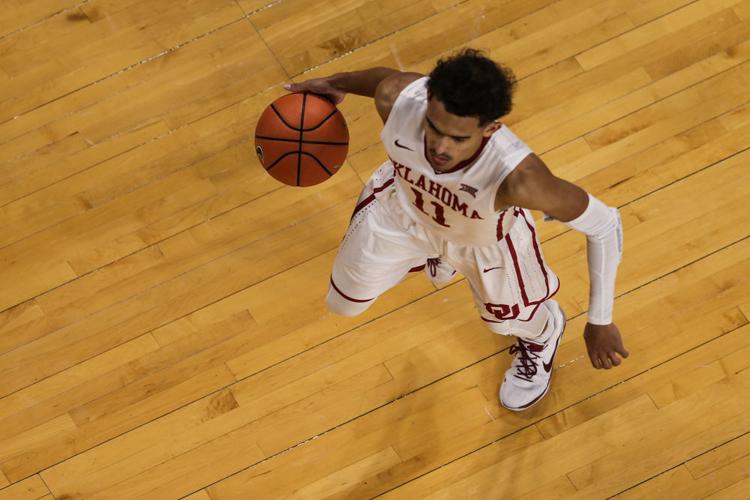
Freshman guard Trae Young dribbles the ball in the game against Baylor Jan. 30.
- Caitlyn Epes/The Daily
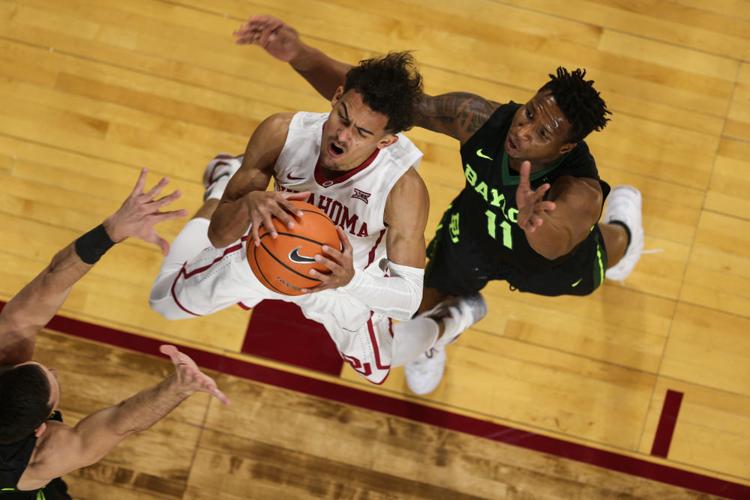
Freshman guard Trae Young fights through the defense in the game against Baylor Jan. 30.
- Caitlyn Epes/The Daily
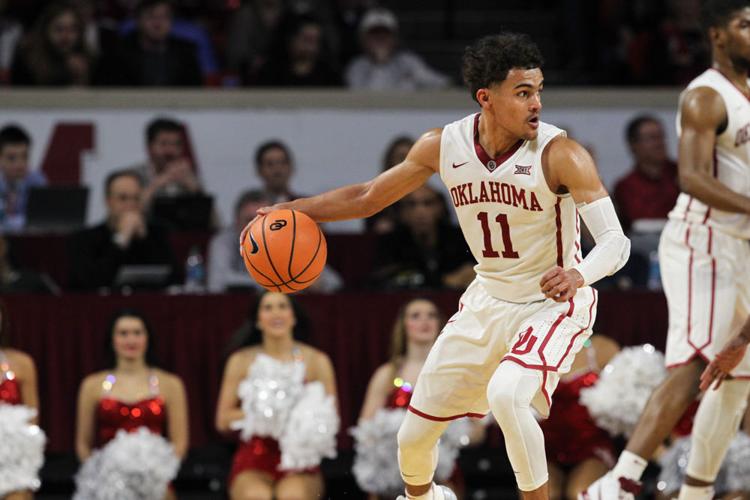
Freshman guard Trae Young handles the ball in the game against Kansas Jan. 23.
- Caitlyn Epes/The Daily
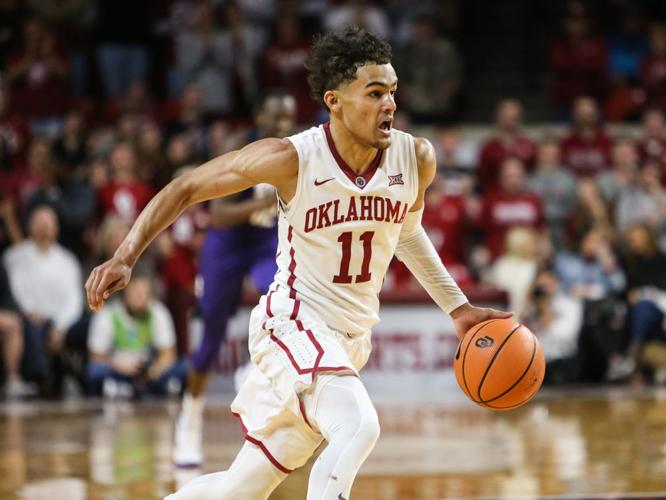
Then-freshman guard Trae Young dribbles down the court during the game against TCU Jan. 13, 2018.
- Caitlyn Epes/The Daily
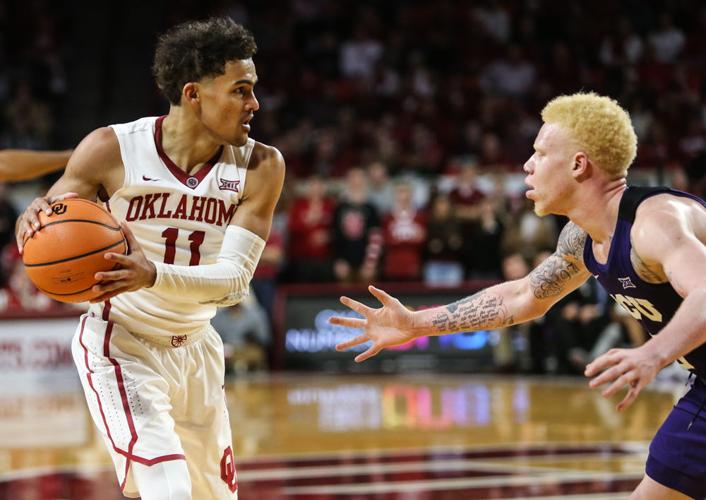
Freshman guard Trae Young looks at the defense during the game against TCU Jan. 13.
- Caitlyn Epes/The Daily
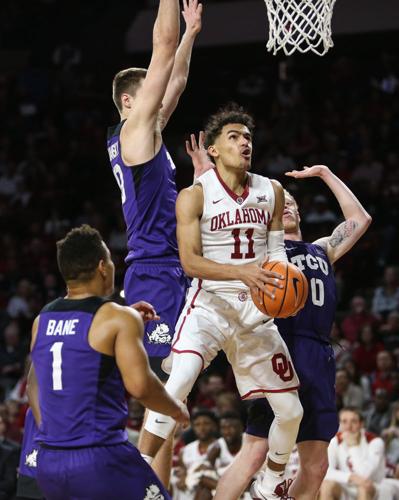
Freshman guard Trae Young goes up for a shot during the game against TCU Jan. 13.
- Caitlyn Epes/The Daily
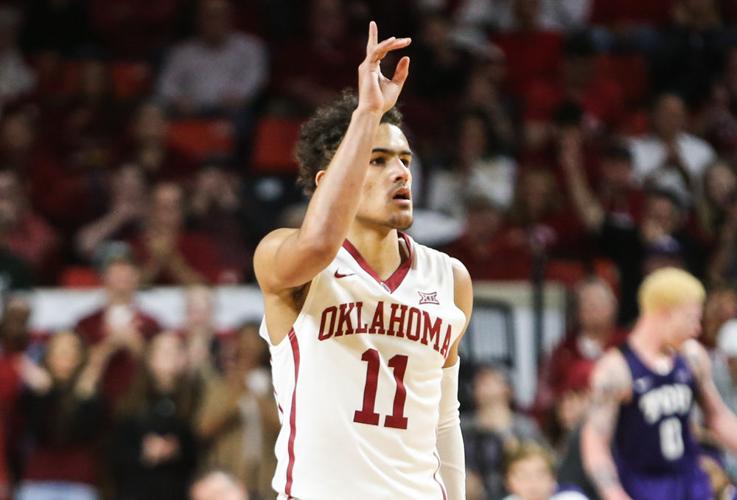
Freshman guard Trae Young celebrates after shooting a three point shot during the game against TCU Jan. 13.
- Caitlyn Epes/The Daily
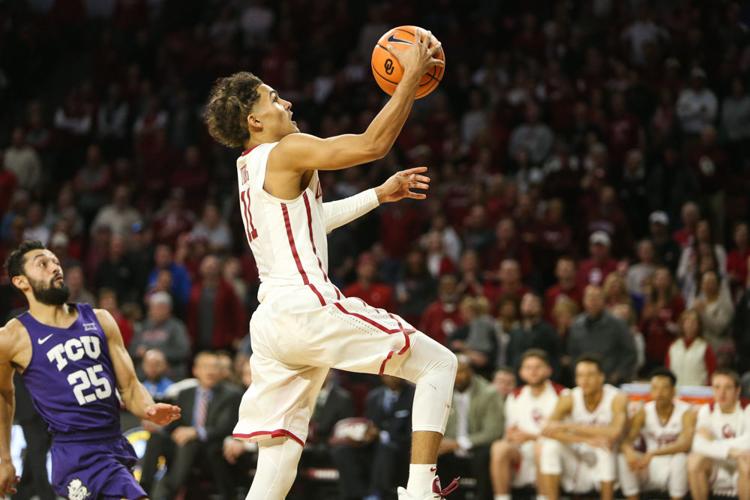
Freshman guard Trae Young goes up to the basket during the game against TCU Jan. 13.
- Caitlyn Epes/The Daily
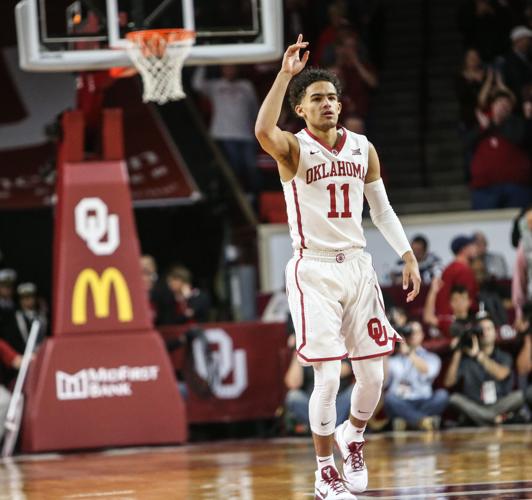
Freshman guard Trae Young celebrates after shooting a three point shot during the game against TCU Jan. 13.
- Caitlyn Epes/The Daily
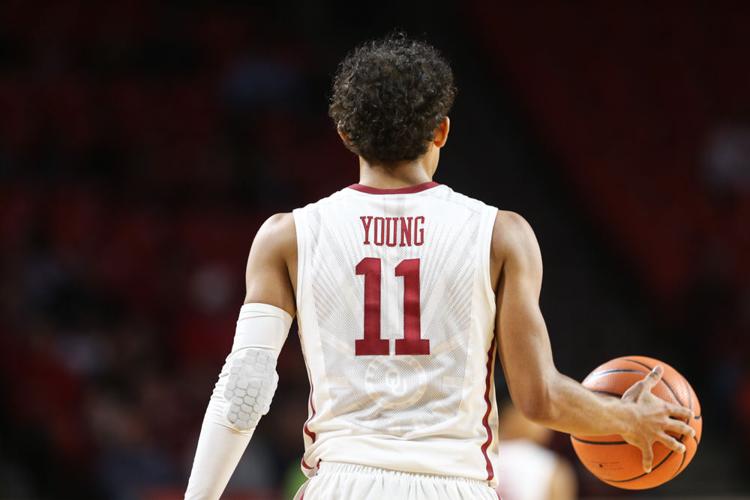
Freshman guard Trae Young dribbles down the court in the game against North Texas Nov. 30.
- Caitlyn Epes/The Daily
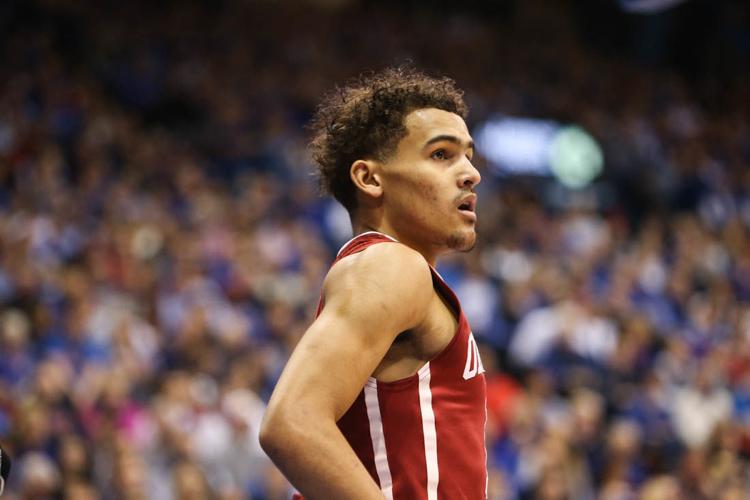
Freshman guard Trae Young looks across the court Feb. 19, 2018.
- Paxson Haws/The Daily
Freshman guard Trae Young steps up to the 3-point line, poised to take the first shot of his college career. The jerseys of Alvan Adams, Wayman Tisdale, Mookie Blaylock, Stacey King and Blake Griffin hang in the rafters above. Instead of hearing the net swish as the ball falls through the cylinder, Young is completely off target — air ball. He shakes it off and records 15 points and 10 assists against Omaha, the first points-assist double-double for any player in more than two years. His start is promising.
Four months later, Young walks off the floor at the PPG Paints Arena in Pittsburgh, finishing his historic season with 28 points, seven assists and five rebounds in a heartbreaking overtime loss in the first round of the NCAA Tournament. Four days later, Young announced his decision to leave for the NBA.
Now, the same Sooner greats whose numbers were suspended above him this season say Young is in a position to join them. His deep 3s, long passes and ability to make his teammates better are more than just an eye-popping spectacle or slick basketball. Young recorded numbers that hadn’t been seen before and shattered records that stood for decades, rewriting the history books. His success brought lofty comparisons from fans and analysts — they said he had a dazzling quick release similar to the Warriors’ Stephen Curry and his passing looked like former NBA star Steve Nash’s.
Either way, Young took the basketball world by storm in just 124 days, impressing some of Oklahoma’s most celebrated.
“I would love to play with Trae — not that I play anymore — just as I wish I could’ve played with Steve Nash, because those guys make everybody else better,” Adams said. “They get you the ball in a position to succeed.”
Young longs to see his name hanging in the Lloyd Noble Center's rafters, too.
“That's an amazing compliment. I grew up a big fan of them,” Young said. “Hopefully, one day, I can have my jersey (retired) with them.”
“Off-the-charts great”
Nearly 45 years ago, Adams stepped onto the court in McCasland Field House for the first time. In a somewhat similar fashion to Young’s air ball, Adams lost the opening tip, giving Indiana State first possession. He thought about it for at least a full minute, longer than he should have, but it didn’t determine the rest of his debut or the trajectory of his career. Adams pulled down 28 rebounds that day — an unmatched program record — and started himself on a historic path, culminating in his jersey hanging over players like Young.
From the first time Young stepped on the court sporting crimson and cream, like Adams, everyone knew he was going to be special. That first double-double came on day one, and he just kept going.
Tisdale dropped 51 points versus Abilene Christian four games into his career. Young had 43 in his fifth against Oregon. The center leads the program with five games, three in his rookie season, of 40-plus points. The new kid didn’t catch up to Tisdale’s career five, but Young did have four — more than Adams, King, Griffin and Buddy Hield.
By the 30-day mark of Young’s career, he’d logged a double-double two additional times and was one week away from tying the NCAA single-game assist record.
“No one could’ve projected him doing what he did in the first 10 to 12 games, because that was off-the-charts great,” coach Lon Kruger said.
Young broke record after record, including the number of consecutive 20-point games, surpassing names such as King and Tisdale. He euro-stepped his way to being the fastest freshman in program history to reach 500 points and the third to hit 600. One month later, he became the first Big 12 player in history to score 800 points before the postseason. He ended his season leading Division I in scoring and assists, a feat that has never been done since assists were introduced as an official statistic in 1983.
It’s easy to see how he captured the nation's attention.
“I was able to do it 20 years ago, and it hadn’t happened since,” said Jeff Webster, an Oklahoma forward from 1989 to 1994, who also scored 600 points his rookie season and is third in the program for career points. “That kind of tells you how hard it is.”
“It was magical”
Young, the No. 4 point guard in the 2017 class, had the opportunity to attend the blue bloods of college basketball — Duke, Kentucky, Kansas and UCLA — but, like his predecessors, chose to stay in Norman. He picked the school, for which he’d once been a ball boy, to follow in the footsteps of players he revered, to work under the coach that developed Hield into a first-round NBA Draft pick and to play in the arena he called home — the Lloyd Noble Center.
The Lloyd Noble Center is known as the house Alvan Adams built and Wayman Tisdale filled. The duo, both Oklahoma natives, played 10 years apart but were two of the program’s formative players. Between the two, there were five All-America selections, four Big Eight Player of the Year awards, 4,368 points and 1,986 rebounds. They did it in three seasons apiece — without the 3-point line — but Young chased the greats quickly.
Adams, now vice president of facilities management for the Phoenix Suns, averaged 23.4 points and 12.8 rebounds per game in his three years at Oklahoma. While his team never made the NCAA Tournament, Adams had personal success as a two-time All-American and Big Eight Player of the Year in 1975.
On the other hand, Tisdale was everything Young has tried to be. He held the school record for points scored by a freshman, 810, for 35 years before Young broke it at Baylor. Like Tisdale, Young has already been named an All-American after one year. With a career average of 25.6 points per game, Tisdale was a guiding force in the Sooners’ three conference titles and a 1985 trip to the Elite Eight. When people say the name Wayman Tisdale, it’s usually associated with Oklahoma’s success. That’s what Young wants, too.
A year after Tisdale’s departure, King, now a broadcaster for the Chicago Bulls, joined the program. The center started as a key bench player before exploding in his junior and senior seasons. Out of his 2,008 total points, King scored 1,728 — 26 points per game his final year — during his time as a starter and helped the team to a national runner-up finish in 1988.
“It was magical,” King said. “My team was the pro team before Oklahoma had (one). It was just fun. We were brash, everybody had nicknames. We were on TV all the time. People wanted to see us.”
Similar to what Young did this season, Griffin also captured the hearts of Oklahoma fans far and wide. His strength at the rim, whether scoring or rebounding, was mesmerizing. Oklahoma went 30-6 Griffin’s sophomore year, making it back to the Elite Eight in 2009. It was possibly one of the best seasons in the Sooner annals. Griffin’s 22.7 points and 14.4 boards per game brought him Big 12 and National Player of the Year recognition before being taken as the No. 1 pick in the NBA Draft months later.
Finally, along came Hield. He would become the sharp-shooting Bahamian whose game would be lovingly referred to as Buddy Ball. He led the Sooners to a Final Four behind 25 points and 5.7 rebounds per game his senior year, and he tallied 376 career 3-pointers. Hield won the Wooden Award, the Naismith Trophy and the Oscar Robertson Trophy as the National Player of the Year, etching his legacy into college basketball by the time he was drafted in 2016.
Young knew who he was following and the program he was inheriting when he signed with Oklahoma in February 2017. He’s made waves as a young star like Griffin, hit some 3s in ways Hield never did and paved the way for future Sooners just like Adams, Tisdale and King did before him. With a 27.4-point and 8.8-assist average, Young reflects the game of those who came before while also blowing past them on the way to his own place in the Oklahoma archives.
“We talk on Twitter, and he always calls me legend,” King said with a laugh. “He knows his history. He knows the history of the program.”
“One of the best”
It’s generally accepted that Young’s season is worth commemorating, although sometimes it feels like there aren’t enough adjectives to describe what the 19-year-old has achieved. Clever social media managers have suggested words such as dominant, fierce, genius, thrilling and vexing. Webster calls it phenomenal. King argues that he’s currently the best college basketball player, and Adams thinks Young may be the best guard to come out of the program.
Only five players in program history, with Hield likely to be next, have seen their jersey numbers honored. Those men were All-Americans, NBA Draft picks and some of the best scorers and rebounders in college basketball history, while others were National Player of the Year and led their teams on deep NCAA Tournament runs. Young — a contender for prestigious national awards, arguably the season’s best offensive player in America and a possible lock in the draft lottery — mesmerized fans and opponents alike, and he’s left a legacy that will remain for decades to come.
While Adams built the Lloyd Noble Center and Tisdale filled it, Trae Young has captivated it.
“He will be one of the best in Oklahoma history. To get your number up in those rafters, you have to be special,” King said. “There have been hundreds of players to go through Oklahoma that were good players, that did good things there, but not everybody can have your number retired. I think Trae Young will deserve to be there at the end of his career.”
OU Daily standards
See an error? Earning trust is our duty. We correct errors atop stories. Identify an error, request a takedown or get in touch.
Independent and free since 1916: OU is committed to our editorial independence. You can help ensure our reporting remains strong and accessible to all invested in OU and Norman.
Artificial intelligence: The Daily in its news coverage does not publish reporting, writing, graphics or designs generated by AI. Read our policy.
Want to comment? We value dialogue on issues we cover. On our social media accounts, we moderate attacks, slurs, dehumanizing language, threats or the disclosure of private info. The editor considers guest column submissions.


