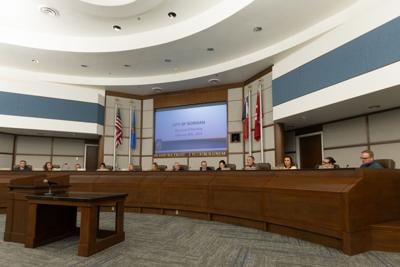

Norman City Council discussed uses for Home-American Rescue Plan Act funds, swore in Ward 1 Councilmember Austin Ball, appointed a resident ad hoc committee for its partnership with Strong Towns and scheduled a special election to increase the city’s room tax Tuesday night.
During a special meeting prior to the regular session, Lisa Krieg, community development block grants director, presented the city’s plan to allocate Home-ARP funds. Norman was awarded over $1.5 million in these funds, according to Krieg.
The planning for these funds span several years due to the United States Department of Housing and Urban Development requirements for the project.
HUD requires the city to consult several different groups, according to Krieg. These groups include homelessness and domestic violence service providers, veterans' groups and public or private organizations that address fair housing, civil rights and the needs of people with disabilities.
The basis for the programming of funds was the city’s gaps analysis survey, then determining the priorities of projects. Qualifying populations for the projects included people experiencing homelessness, domestic violence victims, people at risk of becoming homeless and other people that may need housing support.
The five eligible activities for these funds include affordable housing, tenant-based rental assistance, support services, the purchase and development of a non-congregate shelter and a non-profit operating and capacity building.
A non-congregate shelter features a separate living space for each individual or household that offers privacy similar to a hotel or motel. According to Krieg, there is not enough funding to develop a similar shelter in Norman.
Krieg said when choosing projects, it was important to consider if the city could maintain the project in the future, as Home-ARP funds are one-time only.
$234,000 of Norman’s Home-ARP allocation will go to program administration, $100,000 to support services and the remaining $1.2 million will be reserved for affordable housing production.
Public comment on the plan will continue until March 20. On March 14, the council will vote on the allocation. The proposal will reach HUD by March 31. Krieg estimated that all projects will be completed by 2030.
During the regular meeting, Ward 1 Councilmember Austin Ball was sworn in. Ball won the Feb. 14 Norman City Council election and was appointed to fill former Ward 1 Councilmember Brandi Studley’s seat after she vacated the position in January. Ball will serve until 2025.
“I was not expecting to be up here this soon,” Ball said. “There was a void to fill, and it’s an honor to be able to do it.
Several council members thanked first responders and city staff for their service in responding to Sunday’s EF2 tornado in East Norman. Ward 5 Councilmember Rarchar Tortorello thanked his ward’s residents for coming together to help each other after the storm.
“They checked on each other, went door to door, looked out for each other to make sure we’re all OK. That epitomizes what it means to be a Normanite,” Tortorello said.
Tortorello asked for residents not to drive in Ward 5 unless they live there due to construction traffic and the risk to response times traffic brings.
Two items were pulled from the consent docket: a contract with Neighborhood Alliance of Central Oklahoma and the appointment of a resident ad hoc committee to serve as part of the Strong Towns leadership team.
The Neighborhood Alliance, a group that works to make ensure safety and organize neighborhoods, requested $100,000 from the city to continue work in Norman. The city first allocated funding to the Neighborhood Alliance in June 2021.
The partnership will include several educational workshops aimed at organizing neighborhoods, including teaching code enforcement, maintenance of private roads and waterways and developing homeowners associations.
Tortorello said he originally approved the contract with the Neighborhood Alliance because they agreed to facilitate a conversation with Norman Police Department Chief Kevin Foster. Part of the Neighborhood Alliance’s plan is to organize community watches.
Georgia Rasco, director of the Neighborhood Alliance, said the organization hasn’t had those conversations yet.
Ward 2 Councilmember Lauren Schueler said the Neighborhood Alliance could be “powerful” in creating strong neighborhoods and praised the work the alliance has done in Oklahoma City. Schueler said she looks forward to empowering residents through the contract.
The contract passed in a vote of 8-1, with Ward 3 Councilmember Kelly Lynn voting against.
The Strong Towns committee was approved unanimously. Strong Towns focuses on creating development by coordinating with local governments and community members.
Strong Towns’ priority campaigns include ending highway expansion, supporting incremental housing, ending parking mandates, enforcing transparent local accounting and creating safe streets, according to a staff report by Mayor Larry Heikkila.
Notable appointees included Cameron Brewer, vice president of commercial capital for BancFirst, OU student Jayke Flaggert and Pike Off OTA President Amy Cerato.
Tortorello requested the item to be pulled off the consent docket after receiving an email from a concerned resident about a committee attendance policy. The committee members cannot miss three meetings in a row, but could theoretically miss every other meeting, which worried the resident, he said.
City Manager Darrell Pyle said the language in this committee appointment is similar to other committees.
Norman resident Dave Moore asked for the appointments to be postponed, expressing concerns regarding the presentation of the committees. Moore claimed that two other committees involving Strong Towns would be presented that residents did not know about.
Moore also took issue with Heikkila solely appointing the committee members, along with Garver LLC’s involvement with the future Norman 2045 Comprehensive Land Use Plan. Garver also works with the Oklahoma Turnpike Authority’s ACCESS Oklahoma Plan.
Schueler spoke about the confusion between Norman 2045 and Strong Towns, as they are two separate entities. Schueler further clarified that while the mayor does make the appointments, council members are involved in the process.
The agenda items involving the rezoning of 1300 Lindsey Street have been postponed until March 14 at the request of attorney Sean Reiger. The item did not include a needed Land Use 2025 Plan amendment, a mistake that Norman City Clerk Brenda Hall apologized for.
Sooner Traditions Realty previously presented this property to council, first as a strip mall development. However, this project faced backlash from surrounding residents and was shot down by council.
Council approved the re-codification of Norman’s city code by Municode unanimously. The re-codification process must happen every 10 years, according to assistant city attorney Jeanne Snider, and includes a comprehensive review of the code’s materials.
The code provisions are still in effect and will not change, however, zoning numbers have been changed. Some sections have been repealed, including former commissions no longer in operation, along with cable television and COVID-19 provisions.
Other updates included more user-friendly features, self-publishing abilities and easier researching for the public. The new website will go live in 30 days.
Council unanimously approved a May 9 special election to change the city’s room tax from 5 percent to 8 percent. Room tax comes from the rental of hotel rooms in the city.
Three percent of money gained from the tax will go toward the Norman Sports Commission, while the remaining five percent will go to the Norman Arts Council.
According to Dan Schemm, Visit Norman executive director, Norman residents will not have to pay room tax should they stay at the hotel and the tax only applies to outside visitors. In 30 years, the hotel tax has only been increased once, from 4 percent to 5 percent in 2013.
Pyle noted OU’s early move to the Southeastern Conference, possibly bringing in more money as the city estimates increased tourism following the university’s switch.
The meeting concluded with public comment when OU professor Cynthia Rogers discussed the three recent deaths at the Cleveland County Detention Center and asked for the council to think about ensuring people in crisis will be treated properly.
One of those deaths, OU alumna and Cookie Cottage owner Shannon Hanchett, was found dead at the detention center two weeks after her arrest.
“I worry there will be other cookie queens and other friends, neighbors, family members that need help that we’re going to end up sending to jail given what our current policing policies are,” Rogers said. “I know we’re talking about exciting SEC and sports and things, but I want us to be thinking about the things that save people’s lives.”
Resident Paul Wilson expressed concern about the possibility that Food and Shelter’s contract to operate the city warming shelter might not be renewed. The contract is set to end in March, and Wilson is concerned that this will place people without homes in danger.
“As we saw on Sunday, tornados happen day and night. If these 40 people are out on the streets at night, that’s 40 people with no shelter,” Wilson said. “We got lucky this time, we may not be lucky the next time.”
This story was edited by Alexia Aston, Karoline Leonard and Jazz Wolfe. Alexandra Powell-Lorentzatos and Nikkie Aisha copy edited this story.


