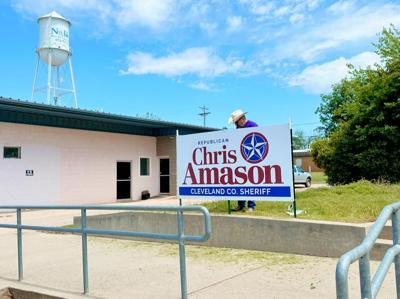


State Auditor Cindy Byrd conducted a special audit into the budgeting practices of Cleveland County Sheriff Chris Amason.
A Thursday press release states that the Cleveland County Sheriff’s Office collected about $18.36 million approved for the annual budget on Sept. 26, 2023, but still overspent the allowed amount and did not take steps to stay within the limits of the approved budget.
Despite a 40% increase in total expenditures over the last four years — the highest funding levels in county history — the sheriff exceeded his budget by approximately $4 million, according to the release.
Auditors identified over 300 instances where the sheriff’s office may have violated purchasing laws over the course of a year, noting sheriff’s office leadership attended 24 out-of-state conferences, used taxpayer funds on “high-end meals, games, and DoorDash,” purchased or leased 40 new vehicles and gave retroactive raises to 28 employees, all while facing payroll challenges and cutting detention staff by 45%.
The audit was requested by the Cleveland County Board of County Commissioners, which will review the audit and determine appropriate next steps in the coming days, according to the release.
According to a press release sent to the Daily by Assistant District Attorney Merydith Harmon, the Cleveland County District Attorney’s Office will review the audit before proceeding with next steps.
According to the audit report, the sheriff’s office experienced a budget shortfall during the fiscal year ending June 30, 2024, and needed additional funding from the Cleveland County Budget Board to avoid a deficit.
The report pointed to several factors that contributed to the shortfall, including failing to encumber before making a purchase and insufficient control over budget process and travel expenses.
The report also noted the sheriff’s office does not prepare an annual schedule of incarceration costs to determine the actual cost of incarcerating an inmate and has experienced a turnover in administrative staff responsible for financial matters.
PCard Transactions
On Feb. 27, 2017, Cleveland County implemented the PCard program, a form of credit card issued to designated state employees. Individuals from each office are issued PCards and attend regular training to maintain their cards.
Auditors tested all of the sheriff’s office PCard disbursement. Of the 82 transactions made during the audit period, 37 were not timely encumbered totaling $18,904.85, two were not supported by adequate documentation totaling $499.60, seven included sales tax and processing fees totaling $475.71 and one that was not for the appropriate amount of $62.27.
The 82 PCard transactions made by the sheriff’s office totaled $47,764.57 and ranged from travel in and out of state, office supplies, training and prisoner transports, according to the audit report.
The audit report states the sheriff’s office attended 24 training conferences in the fiscal year 2024 and used PCards, travel cards and regular purchase orders to pay for them. Lodging and meals for individuals attending the training conferences were also paid.
Byrd also reviewed PCard transactions made for the fiscal year 2023 and found the following items:
• A $244 registration for a spouse or significant other to attend a national Sheriff’s Association conference on March 18, 2022. During the same conference, the sheriff’s office paid for five hotel rooms when documentation showed only four employees attended.
• A $35 registration for a spouse to attend a conference in Las Vegas on Nov. 29, 2022.
• Three instances where the sheriff’s office paid for meals. The total overage was $219.25.
• Multiple instances of paying state taxes and excessive tips.
Transportation deputies’ credit card transactions
According to the audit report, any county sheriff or deputy county sheriff may purchase materials, supplies or services necessary for travel out of the county using one or more credit cards issued for the department.
After testing the 303 transport credit card transactions in fiscal year 2024, Byrd found 128 transactions were not encumbered timely, 63 included in-state taxes, 20 did not include itemized receipts, 18 had excessive tips for more than 20%, nine did not have supporting receipts, eight included late fee payments, five had invoices that did not match the amount paid and four appeared to include excessive purchases.
The audit report also noted:
• A meal receipt from Mike’s Clam Shack totaling $141.84 for two deputies.
• A $924.04 hotel charge for a conference in Florida that no employees attended. According to the report, the sheriff’s office canceled the trip but not the hotel booking.
• A receipt for Ziosk Premium Content — Gaming service while waiting for food.
• A receipt for DoorDash service included delivery fees and tip in excess of 27%.
The auditor also reviewed if the transactions were in line with the General Services Administration per diem rates. During the review, it was noted there were 13 trips with meal expenses exceeding the allowable rate with total overages of $206.53.
Byrd recommended the county consult the District Attorney’s Office to determine if payments over General Services Administration rates are a taxable fringe benefit to the employee and that it should update their travel policy to ensure there are no “frivolous charges” at the taxpayers’ expense.
Encumbrances for purchases
Byrd reviewed 120 expenditures to determine if they were being appropriately encumbered before the purchase. The expenditures were from the County General Fund, Sheriff Service Fee, Sheriff Justice Assistance Grant Fund, Sheriff Commissary and Public Safety Sales Tax.
Of the expenditures reviewed, 41 were not properly encumbered totaling $129,932 and three included late fee payments totaling $29.
On March 11, 2024, the Budget Board had an agenda item to accept a list of items from the sheriff’s office to determine if they had sufficient balances to finish the fiscal year. The items included:
• Current balance of available funds in the County General fund account and revolving cash accounts.
• Expended payroll through Feb. 29.
• Expected payroll through June 30.
• Expenses of the Cleveland County Detention Center through Feb. 29.
• Expected expenses for the detention center through June 30.
• Expenses of all other operations of the sheriff's office through Feb. 29.
• Expected expenses for the sheriff’s office through June 30.
• A list of all encumbrances.
On April 29, 2024, the sheriff’s office sent four spreadsheets to further support the information requested. Byrd reviewed the 402 listed expenditures to determine if proper purchasing procedures were followed and properly encumbered before receiving the invoice for the outstanding and canceled invoices.
Of the 68 outstanding invoices for the detention center, it was noted items were purchased without following required budgeting procedures to ensure the funds were available, purchase orders were canceled and poor bookkeeping practices resulted in the county incurring excessive late fees.
Byrd found 18 purchase orders were paid two months after the invoice due date totaling $82,931, two purchase orders were canceled totaling $29,838 and five late fee payments were paid totaling $797.
Of the 108 outstanding invoices reviewed, it was noted items were purchased without following required budgeting procedures to ensure the funds were available, purchase orders were canceled and proper procedures were not followed resulting in an unallowable purchase being made for legal fees outside the scope of the sheriff’s office.
Byrd found 86 purchase orders were paid more than two months after the invoice due date totaling $192,636, one was canceled in the amount of $10, two had funds that were encumbered in fiscal year 2025 totaling $18,333 and a purchase order for legal expenses that does not pertain to the business of the sheriff’s office in the amount of $550.
Of the 50 purchase orders that were said to be canceled for the detention center, 20 orders were canceled totaling $39,200, 19 were not canceled and fully paid to the vendor totaling $24,612 and 11 were not canceled and partially paid totaling $8,685, which resulted in a misleading report being submitted to the Budget Board, and decisions were made based on inaccurate or incomplete information.
Of the 176 purchase orders that were said to be canceled for operations by the sheriff’s office, 119 were canceled totaling $571,068, 10 were not canceled and fully paid totaling $5,972 and 47 were not canceled and partially paid totaling $64,317.
Payroll expenditures
According to the audit report, the sheriff’s office used six different funds for payroll expenses in fiscal year 2024, however, three of the funds make up 99% of the payroll expenses.
The three main funds used were the County General Fund, Sheriff Service Fee and Public Safety Sales Tax. The other three, which make up less than 1%, were Sheriff Justice Assistance Grant Fund, Sheriff Commissary Fund and Sheriff Special Revenue.
Cleveland County processes payroll bi-monthly. According to a graph shown on the audit report, more than 200 employees were paid from the general fund on the July 14, 2023, pay period. The Public Safety Sales Tax and the Cash Funds were not used for that pay period.
On the Dec. 29, 2023, pay period, roughly 100 employees were paid from the Public Safety Sales Tax, 78 were paid from the general fund and 34 were paid from cash funds.
During the audit period, there was an issue within the sheriff’s office providing the finance department with payroll change forms when employees were promoted or given pay raises, resulting in retroactive pay raises to employees during fiscal year 2024.
According to the report, 28 employees received retroactive pay raises totaling $37,208. Of the employees, 15 worked for the detention center and received raises totaling $18,724, and 13 worked for other areas of the sheriff’s office totaling $18,483.
Many of these retroactive raises were given to individuals in upper management and administrative positions, according to the audit.
It was also noted the sheriff’s office created four new positions in fiscal year 2024.
• Network support technician, created in November 2023, was paid a total of $40,118.14.
• Professional standards director, created in November 2023, was paid a total of $56,477.14.
• Public information specialist, created in November 2023, was paid a total of $66,431.62.
• Fleet technician, created in July 2023, was paid a total of $70,578.80.
Byrd noted a 30% turnover rate at the sheriff’s office. Of the 291 employees that worked at some point in fiscal year 2024, 88 of them no longer worked for the office by the end of the fiscal year. For the detention center, out of the 149 employees who worked at some point in fiscal year 2024, 56 were no longer employed by the end of fiscal year, making a 38% turnover rate for the detention center.
The turnover amounts listed resulted in compensatory time payouts of $3,623 and vacation payouts of $201,400.
While reviewing leave balances, it was noted that due to turnover in financial positions, leave balances for May and June 2024 were not completed timely and signed off until Oct. 22, 2024.
Contracts and expenses
Byrd reviewed 51 professional service and lease-purchase contracts:
• Six contracts that did not have payments made in the fiscal year of 2024 totaling $394,207.
• 23 contracts that the Board of County Commissioners did not approve until after the contract start date.
• 21 contracts that were not encumbered until after the contract start date.
• Five contracts that were not presented to the Board of County Commissioners for approval.
According to the audit, the sheriff's office entered into a contract with political subdivisions to provide services for payment. The two main contracts that the sheriff's office used in 2024 were school resource officer contracts and housing of prisoner contacts. SROs are stationed at schools to provide safety and protection. Housing and Prisoner contracts allow other political subdivisions to house its prisoners in the detention center for a daily charge.
After reviewing six SRO contracts, four Housing of Prisoner contracts and seven Memorandum of Understanding contracts, Byrd found:
• An SRO contract that was not approved by the Board of County Commissioners before the contract start date.
• An invoice was sent to Norman Public Schools in the amount of $700,000 and later the Board of County Commissioners entered into a $200,000 settlement agreement.
• The sheriff's office invoiced NPS on April 10, 2024, for SRO salary reimbursement. There was no written contract between the two parties, though Byrd was informed that there was a verbal contract between the sheriff’s office and NPS.
• On June 24, county commissioners entered into a $200,000 settlement agreement with NPS as payment in full for any and all SRO services provided by the sheriff's office during the fiscal year 2024.
• Two Housing of Prisoner contracts originated in the fiscal year 2023 and were automatically renewed without approval from the county commissioners.
• Three Memorandum of Understanding contracts that were not approved by the Board of County Commissioners.
According to the audit, the sheriff's office purchased 17 vehicles totaling $511,436. The office also leased purchase agreements in place for 23 vehicles, 13 of which began in the fiscal year 2023 that had required payments.
In the fiscal year 2024, $271,452 worth of lease purchases were paid with “Sheriff Bailout Funds;” 10 of these lease purchases were obligated in the 2024 fiscal year but were not paid until the fiscal year 2025, which totaled $279,773.
During the the period when the sheriff's office had a budget shortfall, 40 vehicles were purchased, and lease purchase agreements totaled $1,062,661.
These lease purchase agreements were approved by the Board of County Commissioners but included a clause that would have allowed the county to cancel the agreements if funds were unavailable.
“In the event that the Lessee determines that sufficient funds have not been appropriated to make the payments required under the terms of this agreement, the obligations of the Lessee under this agreement shall terminate,” the clause reads.
Jail financial operations
Byrd compared fiscal year 2024 expenditure reports and staffing levels of the fiscal year 2020, which was the last year before Amason took up his position as sheriff.
According to the audit, Amason’s payroll expenses increased by 57% from 2020 to 2024, or $10.3 million to $16.2 million, or 57%. The detention center payroll made up 50% of the total payroll expenses in fiscal year 2020, in fiscal year 2024 they made up 44%.
Byrd reviewed 50 expenditures for the Cleveland County Detention Center during 2024. Among the 50, Byrd found two expenditures that totaled $38,463, which were meant specifically for jail operations. According to the audit, part of the expenses were used to pay for a Verizon Wireless phone bill, and one was for the purchase of ballistic vests.
According to the audit, due to an increase in administration and detention deputies, staffing levels at the detention center increased from 103 employees in 2020 to 107 in the fiscal year 2024. The sheriff's office informed the state auditor that there were employees who could work in several areas at the sheriff's office, though they did not change the job titles of the employees every time they moved positions.
According to the audit, in the fiscal year 2020, there were an average of 71 detention officers at the detention center; that number decreased to 39 in the fiscal year 2024. The audit attributed this decrease to the sheriff's office using deputies in the fiscal year 2024 to perform detention officer duties.
When reviewing fiscal year 2024 staffing levels, Byrd found there were 12 employees who began the year working for other areas of the sheriff’s office and were moved to the detention center. There were also four employees who worked for the detention center who were moved to other areas of the sheriff's office.
“Based on employee turnover and job descriptions, (the Oklahoma State Auditor Inspector) was unable to determine if the effort made was able to meet jail staffing levels,” the audit reads.
This story was edited by Anusha Fathepure.


