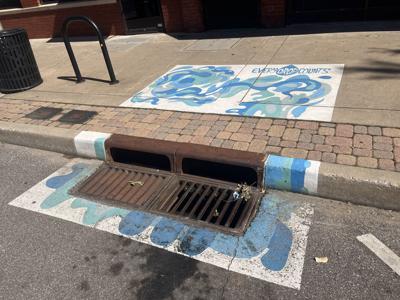

Flooding and runoff caused by stormwater in Norman continue to pose challenges for residents, from issues commuting to impaired drinking water sources.
When severe weather hits Norman and the surrounding areas, stormwater floods the roads and picks up debris as it flows through town. While the Stormwater Division of the Norman Public Works Department manages some stormwater-related issues, a lack of sufficient funding has made it difficult to keep up with the city’s needs, Jason Murphy, the Stormwater program manager, said.
Stormwater is not an issue unique to Norman. The United States Environmental Protection Agency has multiple rules and regulations in place requiring cities to manage stormwater issues, Murphy said.
Jason Vogel, the director of the Oklahoma Water Survey, said as communities shift from natural landscaping to less-permeable materials like concrete, the problem of stormwater runoff grows.
“Stormwater is an issue in every urban area,” Vogel said.
Lake Thunderbird, Norman’s main source of water, is significantly impaired by sediment and pollutants delivered to the lake by stormwater runoff, Michele Loudenback, Norman environmental and sustainability manager, said.
Efforts to provide more funding to address stormwater have been made in the past. Norman voters turned down the addition of a stormwater utility tax twice shortly before the pandemic, but the topic has not been brought before voters since. Ward 7 Councilmember Stephen Tyler Holman said most cities have a dedicated fund for stormwater. Norman currently relies on the general fund, and it is not enough.
Loudenback said the lack of funding for stormwater management means there is a lack of staff to address problems when they arise, making it difficult for the city to respond to everything or grow stormwater programs. Murphy said the staffing challenges also prevent the stormwater management team from getting ahead of future problems.
“It’s like playing whack-a-mole,” Murphy said.
He said they have to focus on the most critical or pressing issues, such as keeping up with general maintenance as well as cleaning up after storms or major city events. They also have to focus on overseeing the many construction sites around the city.
Vogel said the sediment and pollutants produced by construction sites are often picked up by stormwater runoff in large quantities when the sites are not managed correctly, making the stormwater even more dangerous to the environment as well as the people who encounter it.
“Construction sites are open wounds on the landscape,” Vogel said.
Loudenback said there are solutions to stormwater issues that the average resident can take part in, but it is hard to expect residents to utilize stormwater management techniques without providing them the resources they require.
The Blue Neighborhood Pilot Project is an attempt at providing that example. The project helps residents obtain the tools they need to create green infrastructure at their homes that is designed to both mitigate stormwater problems and improve the environment in other ways, such as creating pollinator pockets. The project is only available for a portion of Norman at the moment, but Loudenback said the goal is to open it up to more residents in the future.
Green infrastructure like that of the Blue Neighborhood Pilot Project, also called low-impact infrastructure, provides ways to both reduce and improve stormwater, Vogel said. Collecting rainwater or constructing rain gardens are useful ways to contribute to stormwater management, he said.
However, Loudenback said it is important that residents see the city participating in stormwater projects.
“We need to lead by example,” Loudenback said. “To show people what to do, we need funding.”
Murphy said the city receives some stormwater funding through grants from organizations like the Federal Emergency Management Agency, but getting them is a competitive process. Still, getting Norman residents to approve a new tax is not an easy task, either.
The rising cost of living makes it difficult to ask people for more money, Holman said. Additionally, Murphy said a big reason the tax was turned down by residents before was because of a lack of understanding about what the funding would provide. He said it is important that Norman residents are consistently shown how stormwater management benefits them.
Holman said there are no current plans within the city to bring the stormwater utility tax back up for a vote, but there are ongoing conversations about the need to improve stormwater management in Norman.
“The issue is definitely not going away,” Holman said. “It’s only going to become more costly the longer it goes unaddressed.”
This story was edited by Peggy Dodd, Anusha Fathepure and Ismael Lele. Avery Avery copy edited this story.


