

The Undergraduate Student Congress submitted Election Day and the Friday before OU-Texas as student holidays in the fall and elected congressional leadership at its Tuesday evening meeting.
Submitted student holidays
The news: Congress approved a bill requesting the university allow two student holidays in the fall semester: Nov. 3, Election Day and Oct. 9, the Friday before the OU-Texas football game.
Last Tuesday, congress failed to pass the Red River Holiday Act, which would have submitted the Friday before OU-Texas as the single fall student holiday, in a 12-20-0 vote. At a Graduate Student Senate meeting the following Thursday, a new bill was proposed, requesting two holidays.
“Given the importance of both the Red River Rivalry Holiday and Election Day, SGA respectfully requests that the Administration of the University of Oklahoma grant a holiday on both of these days,” the bill reads. “SGA feels strongly that by providing a holiday on both days, the University can demonstrate its dedication to civil engagement, democratic processes, cultural heritage, and community.”
In a Friday interview with OU Daily, GSS Ways and Means Committee Chair Sam Jensen, said last week’s Red River Rivalry Holiday Act failed for two key reasons.
“They had some procedural issues with the bill. Specifically, certain people had been listed on the bill as co-authors, even though they hadn’t been consulted and hadn’t had any hand in writing up the legislation,” Jensen said. “...The secondary reason they failed it is they wanted to ask for November 3 Election Day as a day off.”


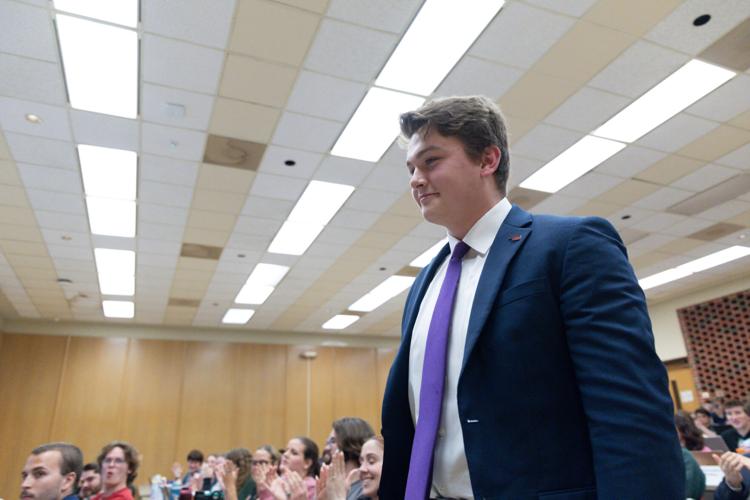
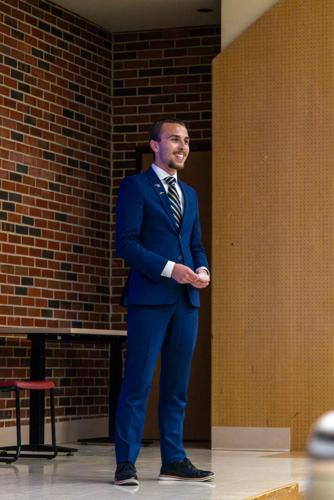
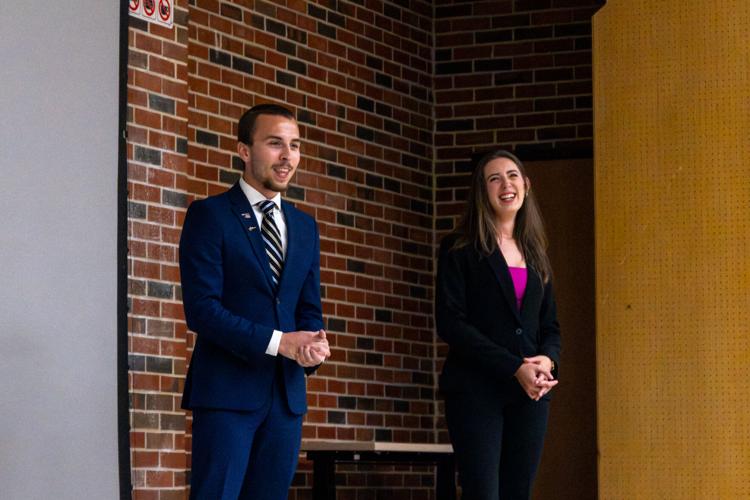
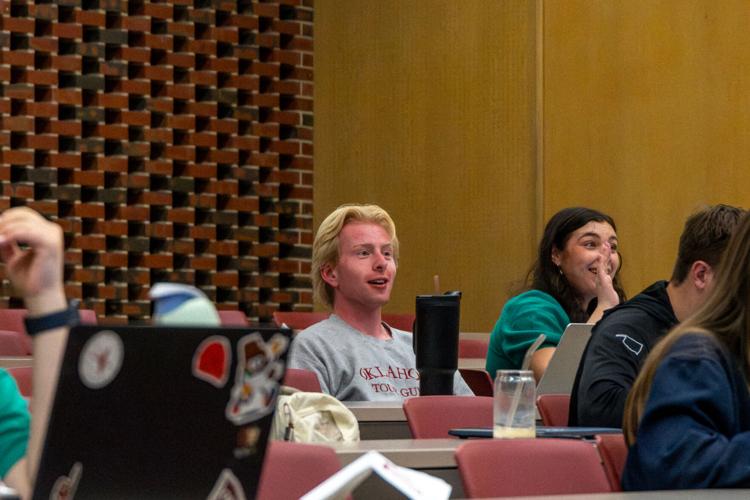
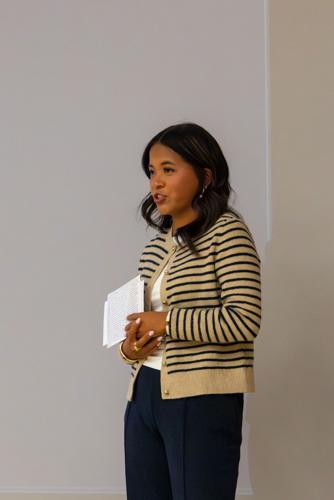
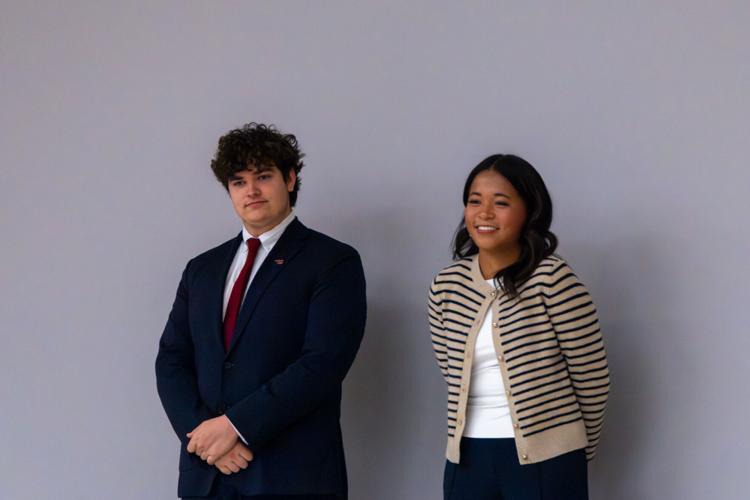
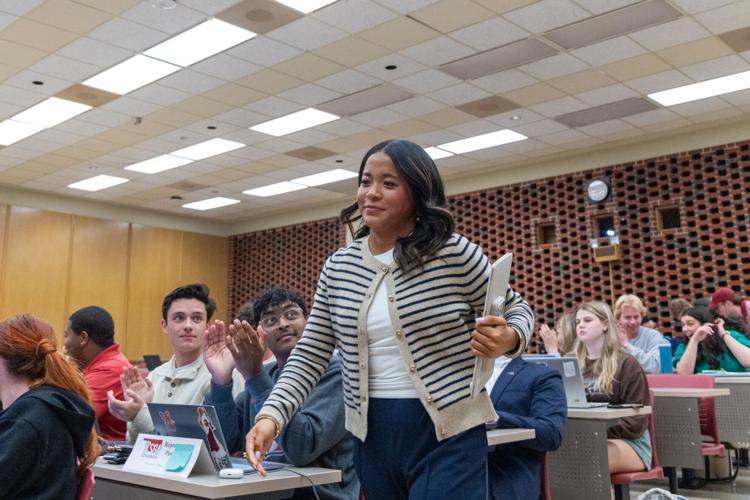
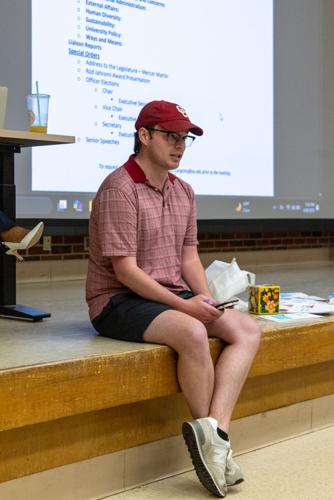
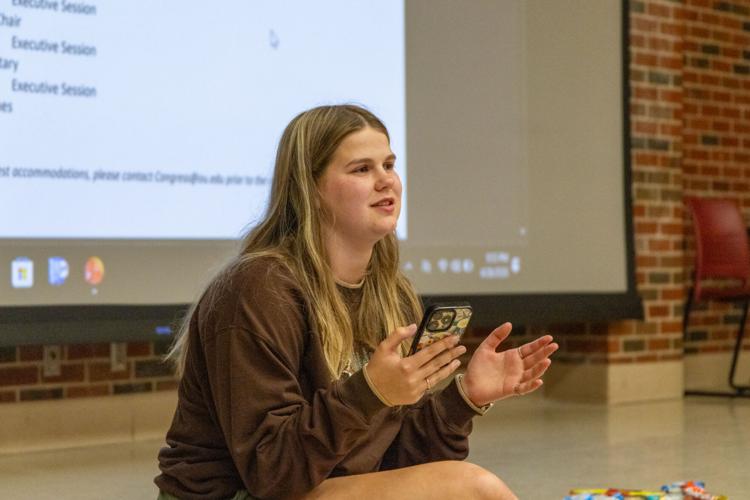
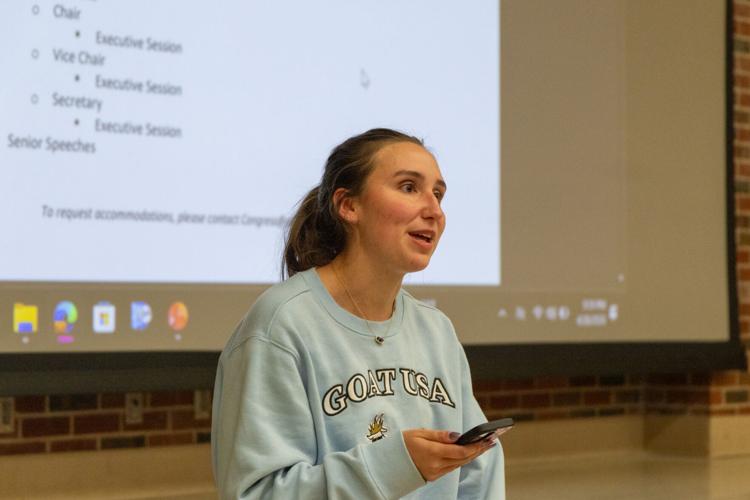
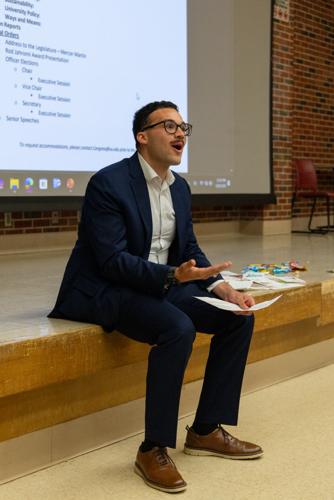
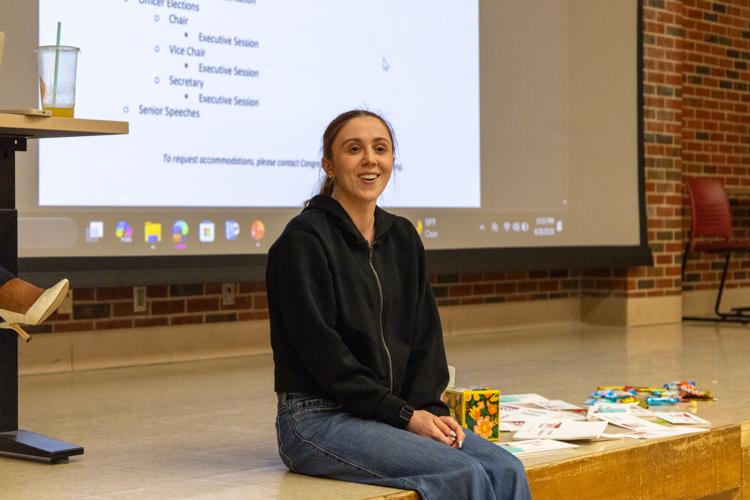
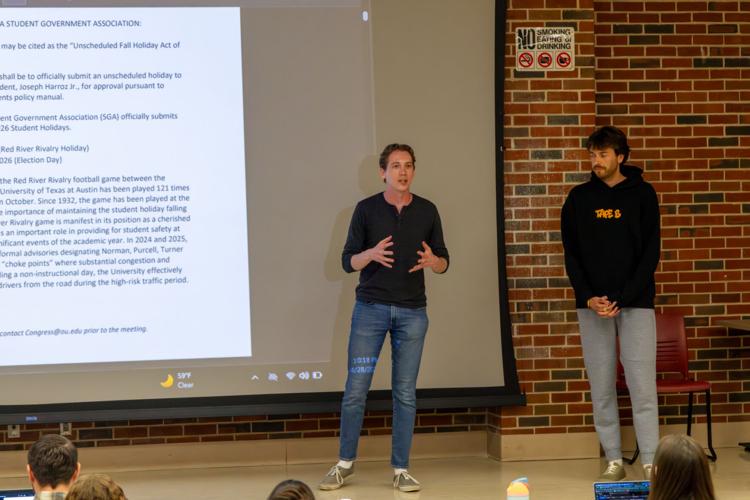
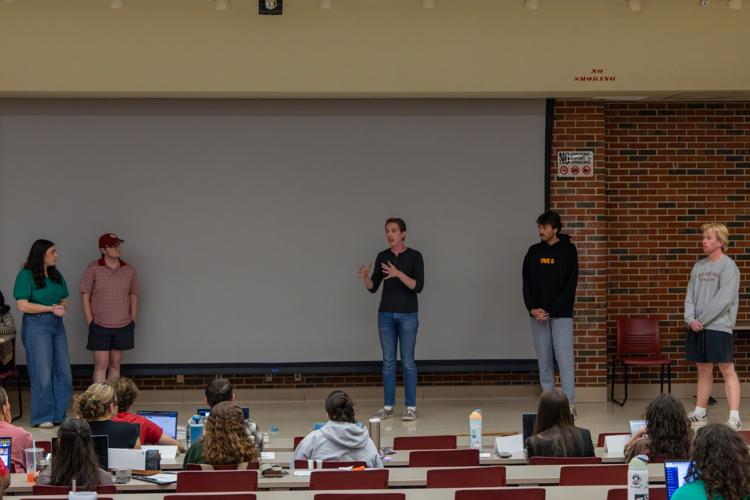

Photos: OU SGA Meeting
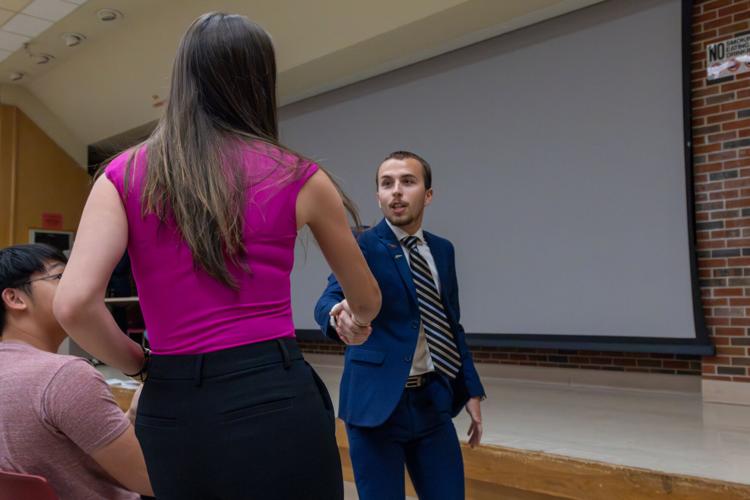
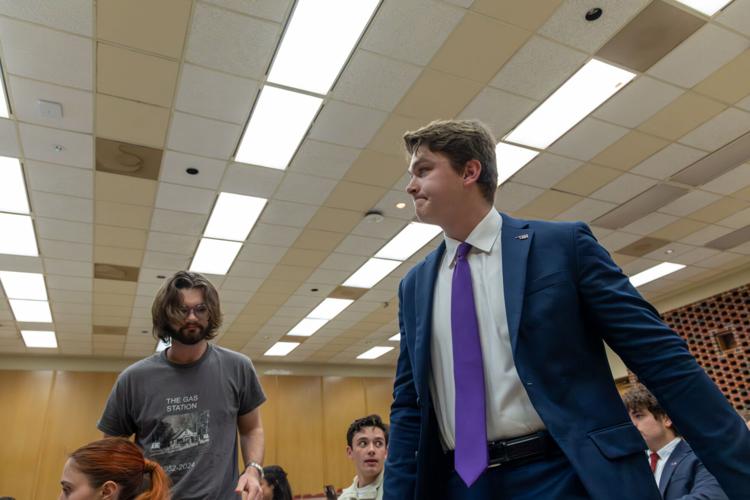
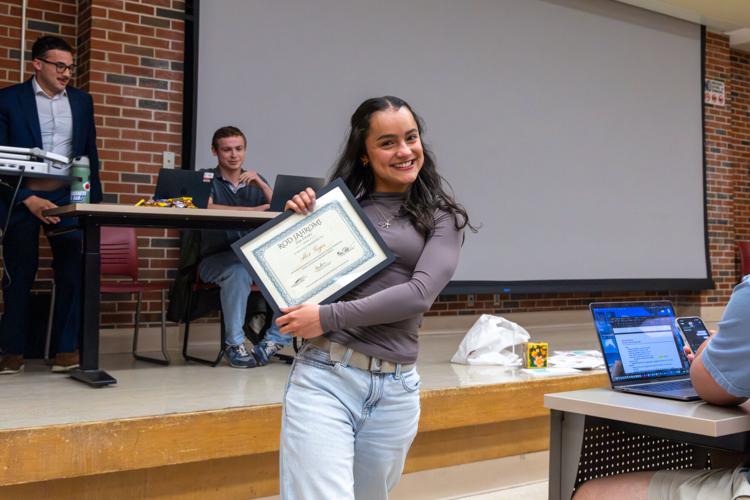
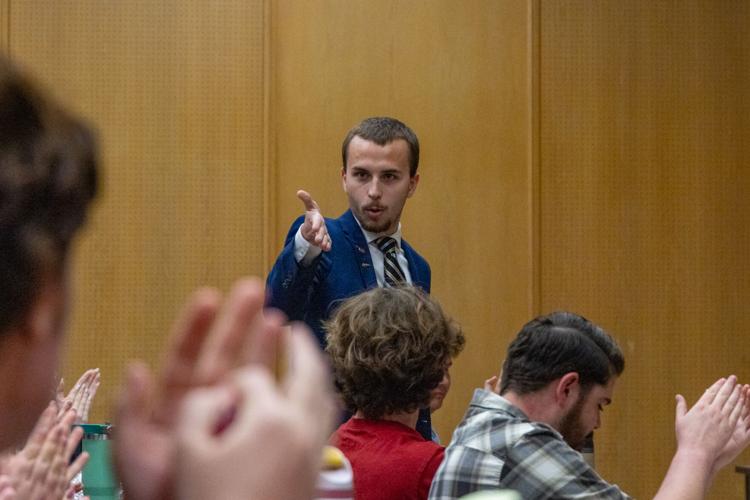
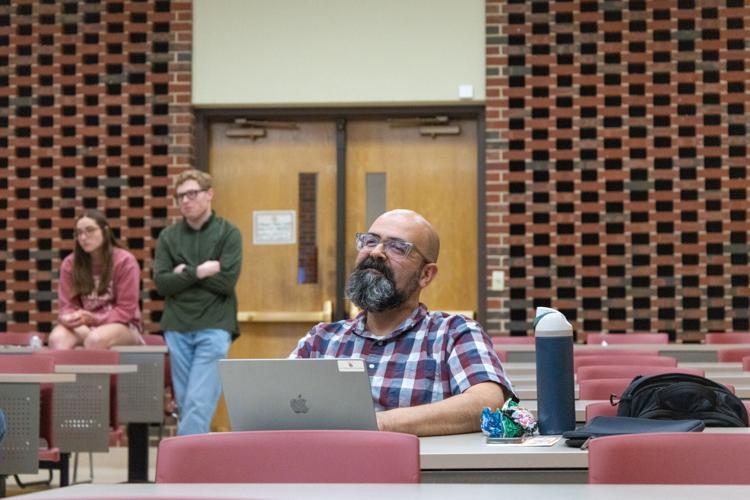
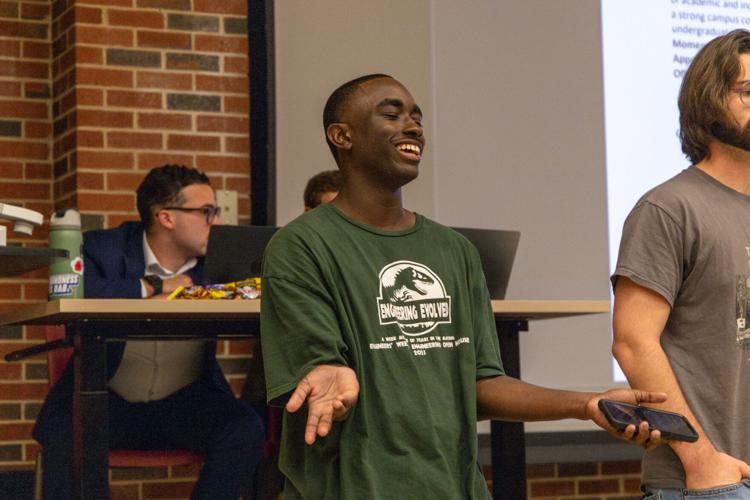
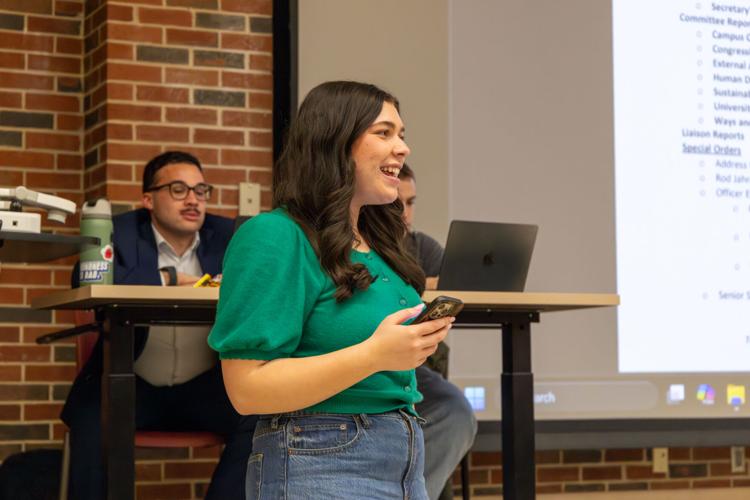
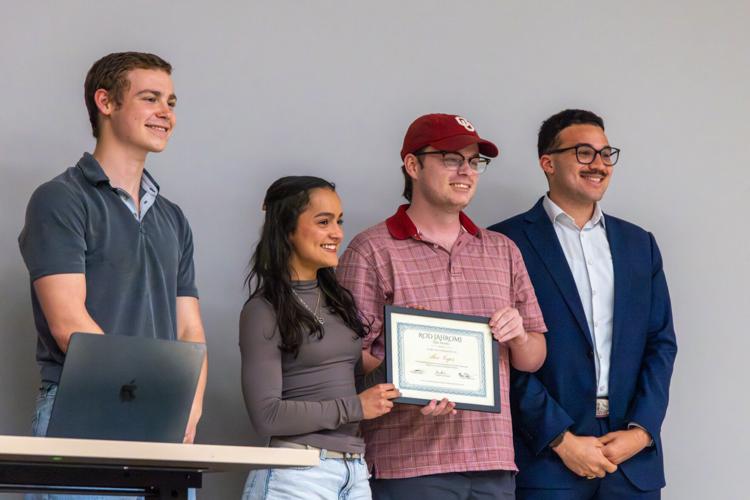
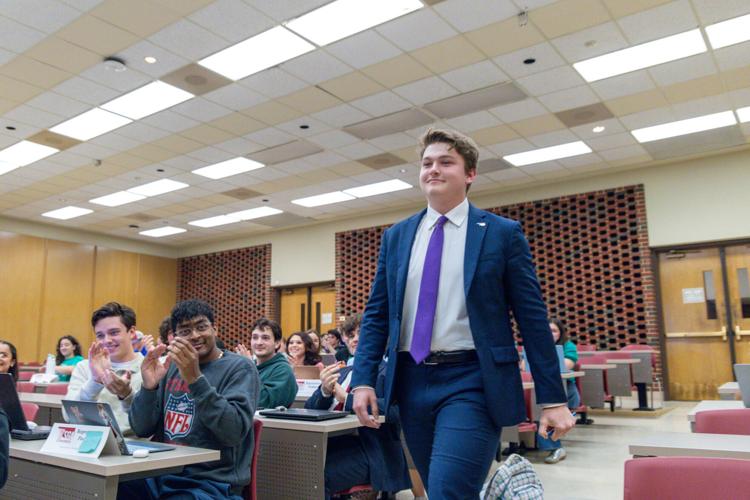
Owen Cunningham and Lorelai Radzanowski during the OU Student Government Association meeting on April 28, 2026.
Jensen said students have a desire to exercise their right to vote but can face barriers due to classes.
Henry Christiansen, chief of staff and author of the previous and new holiday bill, wrote in an April 24 email to congress members apologizing and explaining his thought process behind the writing of the bill.
“I should have gone ahead and discussed it with you all first. I will ensure we avoid this communication breakdown in the future for bills of this nature,” Christiansen wrote. “It was my understanding that using the Red River Holiday bill from a previous year would suffice, and that it was standard procedure for this to occur. I believed that using the bill and swapping names and dates for the current year would suffice.”
According to the OU Board of Regents policy manual, the Undergraduate Student Congress and Graduate Student Senate have authority to recommend to the university president one unscheduled student holiday in the fall semester of each academic year, giving two weeks before the recommended date.
If congress’s request to allocate two holidays is denied, the Board of Regents and President Joseph Harroz Jr. will choose the student holiday for the 2026-2027 year, according to the manual.
Congress Chair Caleb Robinson told OU Daily Monday the new bill is a result of congress being out of time as the end of the semester grows nearer. Tuesday’s meeting was the final meeting of the semester.
“There wasn't really enough time to have at least substantive enough discussions and there had been talks in the past about officially recommending two holidays,” Robinson said. “...We decided that putting them both on the same bill is probably the best path. At the very worst, the president picks one of them, and at the very best, we brought attention to the fact that students want both Red River and Election Day.”
What they’re saying: OU SGA President Mercer Martin thanked GSS for its quick turnaround on the bill’s creation during the presentation of the bill.
“Sam has worked very tirelessly, and all the branches have really done a great job about working together to create this bill and be able to move forward and recommend a holiday to the administration,” Martin said.
Associate Samuel Bregnard asked if the authors knew the timeline for when regents would make their decision on the submitted holidays.
Jensen said he doesn’t have a specific timeline but predicts it will occur sometime in the summer.
“Normally, how this works is we pass the bill in the spring, and then over the summer, the president or the provost will send out an email to faculty and instructors letting them know which day is off so they can plan their course syllabi,” Jensen said.
The vote: Congress passed the bill in a 22-0-1 vote. Rep. Owen Cunningham abstained from the vote.
Electing congress chair
The news: Congress unanimously elected Congressional Administration Committee Chair Coleman Morgan as congress chair. Morgan ran unopposed.
Morgan was nominated by Rep. Alexandra Toyos.
What they’re saying: In his candidate presentation, Morgan discussed his platform LEAAD: learning, expansion, action, ability and direct impact.
Morgan said he strongly believes all members of congress are important campus leaders.
“It is not just about one person, it is about a collective movement, a want to be better, a need for improvement,” Morgan said. “Leading looks like giving 100% effort every single day and being committed to being 1% better each and every day.”
Morgan said he wishes to create a congress that represents every OU student and proposed outreach through registered student organizations as a solution to encourage more student participation in SGA.
“We owe it to those we represent to go to their clubs and their organizations and the things they care about and make changes that they can see,” Morgan said.
The vote: Congress elected Morgan as chair with a vote of 30-0-0.
Electing congress vice chair
The news: Owen Cunningham, Sustainability Committee chair, beat Lorelai Radzanowski, Human Diversity Committee chair for the vice chair position.
Cunningham was nominated by Secretary Aaron Gilson-Bond. Radzanowski was nominated by Rep. Estrella Quinones.
What they’re saying: In his presentation to congress, Cunningham discussed his platform HELP: holistic, encouraging, lively and persistent.
Cunningham emphasized the importance of developing all congress members into leaders, including the body’s newest members.
“Most peoples’ introduction to congress is orientation, whether an associate or representative. Encouraging current representatives to attend orientation … would be a great way to promote engagement, not just for them, but also of the new members,” Cunningham said.
Cunningham also addressed the need for transferable documents and expectations in an ever-changing government. Cunningham said the university provides Outlook accounts for all congress committees.
“We can use (the Outlook account) to create persistent, transferable transition documents that cover the responsibilities, the roles and the expectations of every committee chair, helping them get engaged quicker and start producing results faster,” Cunningham said.
The vote: Congress elected Cunningham as vice chair with a vote of 18-11-0.
Electing congress secretary
The news: Associate Cai Le, University Policy Committee secretary, beat Associate Samuel Bregnard, for congress secretary.
Congress Secretary Michael Wintory nominated Le. Bregnard was nominated by Rep. Hope Rhodes, former congress chair.
What they’re saying: In his presentation to congress, Bregnard discussed his platform HELP: headfirst, enthusiasm, leadership and punctual.
“The HELP platform truly exhibits what I want to put into congress,” Bregnard said. “I want to be somebody who is headfirst into all the positions, and then I want to be somebody who is firm but also very enthusiastic about the job.”
Bregnard said as secretary he wants to emphasize the importance of communication with congress members. Bregnard said it was also a priority for him to make council agendas and minutes easy to read and accessible.
Le introduced her platform RECORD: reliability, efficiency, clarity, organization, responsibility and documentation.
Le said she is a detail-oriented person with strong organization and precision skills that are essential for the congress secretary to possess. Le previously served as University Policy secretary and in high school, served as student government secretary and National Honor Society secretary.
“In these roles, I managed meeting minutes, tracked attendance, organized documents and helped maintain clear communication between members,” Le said. “I've worked in fast paced meetings where it's easy to miss details, but I've also learned how important it is to stay focused, organized and be reliable so that everything is recorded correctly.”
Le said the most important thing about serving as secretary isn't just about writing things down. The role is also about ensuring “information is accurate, accessible and useful.”
Encourage eco-friendly confetti options
The news: Congress passed a resolution urging more eco-friendly options and detailing the negative effects of using confetti.
According to the resolution, confetti is an environmental concern because it is typically composed of microplastics, which are not biodegradable. The resolution states that, due to confetti's small nature, it makes clean-up difficult for university staff.
According to the resolution, the GSS Sustainability Committee has received complaints from both students and faculty regarding the use and lack of confetti cleanup.
What they’re saying: GSS Ways and Means Committee Chair Benjamin Fellman said this bill discouraged the use of confetti and encouraged more environmentally friendly options such as flower petals, seeds or biodegradable confetti.
“What we wanted to do with this resolution is just basically address the negative impacts that really do come from confetti usage, specifically ones that are not biodegradable, water soluble, ones that can be really environmentally impactful,” Fellman said.
Fellman said there are numerous environmentally-safe confetti alternatives, such as leaves, petals and biodegradable confetti.
The vote: Congress passed the bill with a 21-0-1 vote. Cunningham abstained from the vote.
Conoco Student Leadership access
The news: Congress amended the Code Annotated to update its policy regarding space and access to the Conoco Student Leadership Center following its new remodel.
Card access to the center will now be provided each semester to SGA leadership and other members as needed. This will be up to the discretion of the SGA adviser and administrative support specialist.
Office spaces on the first floor are reserved for the top leadership offices and other SGA staff. The rooms on the second and third floors are reserved for use by registered student organizations and students according to booking time, booking window and event length.
What they’re saying: In 2024, SGA approved a new pilot program for Conoco for the 2024-2025 academic year ahead of the remodel of the second and third floors of the leadership center in the Oklahoma Memorial Union.
Originally, RSOs could apply for exclusive office spaces for the length of the academic year in the leadership center and would be selected based on the size and reach of their organization. Through the pilot program, all RSOs could reserve space in the leadership center. Through this program, no RSO will be allocated an exclusive, individual space.
Martin said with the implementation of the pilot program, usage rate of the leadership center has significantly increased. Martin specifically cited leadership center room 293, which previously had a 1% usage rate but has now increased to 90%.
“It's just been a really good program, good steward of the space,” Martin said.
The vote: Congress passed the bill with a vote of 21-0-1. Cunningham abstained from the vote.
Recognizing Pride Month
The news: Congress recognized June as Pride Month.
“OU SGA encourages the student to take advantage of the month of June to celebrate pride and learn about the representative communities here on campus,” the bill reads.
The bill states 2SLGBTQ+ students make up a significant portion of college campuses and contribute to the diversity and academic vitality of higher education institutions.
What they’re saying: Radzanowski, who co-authored the bill, said this is the first instance of this legislation being introduced to congress as the body does not meet in June. She said this bill highlights the history of the queer rights movement.
“Everything from Stonewall to the passing of gay marriage in 2015, and it also highlights a lot of resources and organizations on our campus that celebrates your pride,” Radzanowski said. “… I feel very proud to be an author on this piece of legislation.”
Associate Madilynn Sneller, who co-authored the bill with Radzanowski, said this legislation makes her feel accepted as someone part of the 2SLGBTQ+ community.
“But with this piece of legislation, I felt that I don't need to hide myself just because I love someone that wasn't the stereotypical norm that we see here in Oklahoma, and no one else should have to as well,” Sneller said.
The vote: Congress passed the resolution with a vote of 20-0-1. Cunningham abstained from the vote.
Expulsion bylaw update
The news: Congress amended its bylaws to clarify the expulsion process to members attending the meeting on their last unexcused absence.
The update states if a congress member up for expulsion due to excessive unexcused absences attends the meeting at which the expulsion bill is being seen, the member will also have allotted time to speak. In the past, that time would only be used by the secretary to list absences.
What they’re saying: Associate and former Secretary Michael Wintory clarified that the bill's amended expulsion process was initially quickly created because of a large expulsion bill seen at last week’s meeting, and it is now written in the bylaws officially.
“Last session, we saw a pretty big expulsion bill, and people did not want to be expelled, so we had to kind of come up with on the fly what we do when that happens. We figured it out and this is really exactly what we did, just written in the code.” Wintory said.
Wintory highlighted how representation was important within congress and accepted a friendly amendment to where members with several unexcused absences have limitations for them to rerun in a representative seat.
“I hate having so few people voting when there are so many associates here who would love to be (representatives),” Wintory said “It's not hard to stay in the body. Frankly, it's really just about wanting to be here.”
The vote: Congress passed the resolution with a vote of 21-0-1. Cunningham abstained from the vote.
This story was edited by Macey Thaxton and Anusha Fathepure.


