


Since as early as 2023, university leaders and city developers have attempted to address an issue known as “brain drain,” where students enter college towns and promptly leave after graduating. This is a problem that, according to statistics, is common in Norman.
OU is the most attended public university in Oklahoma. According to data from spring 2023, OU students make up 20.5% of Norman’s 130,000 population, making them a crucial part of Norman’s identity and financial growth.
“We know that not everybody's going to stay here,” said Scott Martin, president and CEO of the Norman Chamber of Commerce. “A lot of people are going to go back home, wherever that may be, but a lot of people could be like me. I came here from Tulsa and have never left once I graduated from OU because of job (opportunities).”

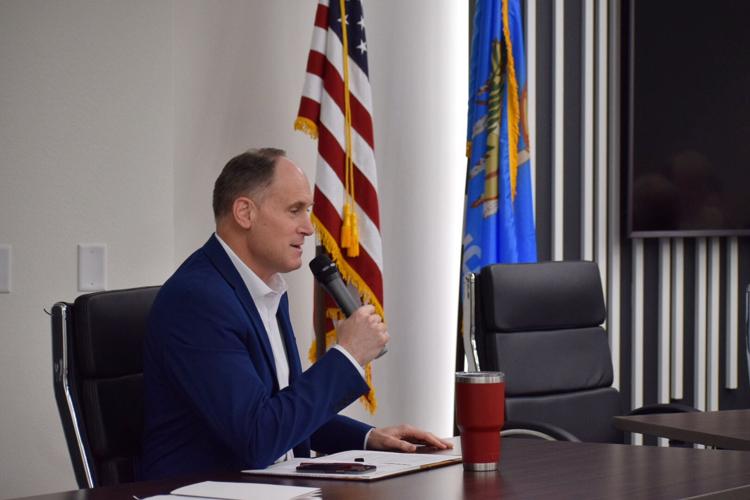
Scott Martin speaks at the Norman City Council Candidate Forums on Feb. 5.
Alongside Martin, OU President Joseph Harroz Jr. expressed his optimism for retaining graduates in Norman in the future. Following a January Board of Regents meeting, Harroz told OU Daily he was excited to share data collected by the Career Center on where OU students go after graduating.
“When you look at the career services, we've spent a lot of time working on how do we retain students through the career,” Harroz said.
According to Harroz, the career survey tracks students five to 10 years out of graduation and compares their performance to national standards.
Graduate retention for Oklahoma residents statewide is strong, according to a 2023 report from the Oklahoma State Regents for Higher Education. The report states that over 85% of Oklahomans who graduate from a state system college or university remain and work in the state five years after graduating.
The same cannot be said when looking at retention rates at the city level, specifically in Norman.
According to data given to OU Daily by the OU Career Center, over a five year period from 2019-23, an average of 90.8% of OU students who enter the workforce after graduating leave Norman for opportunities elsewhere. Of students continuing their education, an average of 46.3% remain in Norman.
When asked why OU students may leave after graduation, OU economics professor Greg Burge said many students come from out of state and after graduation they either return home or seek jobs across the nation.
“It is really common for universities to graduate lots of students who then go all over the place, all over the state, and all over the region, and sometimes all over the country, and sometimes even all over the world,” Burge said.
Norman also faces competition from the Oklahoma City metropolitan area.
According to data available on the OU Career Center website, Paycom, Boeing and Tinker Air Force Base have employed over 150 OU graduates since fall 2022.
The Oklahoma City Chamber of Commerce wrote in an email to the OU Daily that the chamber has been addressing brain drain for over 15 years and that talent is Oklahoma’s greatest asset.
According to Lee Copeland, director of talent for the Oklahoma City Chamber of Commerce, “abundant, quality jobs” and “vibrant quality of life” are the two ingredients for addressing brain drain.
“The Chamber’s core mission has been to support both these endeavors, through its work to recruit new business investment to the region, assisting existing employers to thrive and helping the City continue to build a vibrant quality of life,” Copeland wrote.
Copeland highlighted InternOKC, a program that connects students interning in Oklahoma City with local employers who help develop their future careers.
“The continued population growth of the Oklahoma City Metro is evidence that these efforts have created an environment in which people want to live and work,” Copeland wrote.

Several community leaders formed Team Norman in 2023 as part of OU’s preparation to join the Southeastern Conference, anticipating a population growth and tourism uptick in Norman.
What followed was the proposal for the University North Park entertainment district, an estimated $1.1 billion development that would be funded through a tax increment financing district. The entertainment district would contain housing and office spaces, restaurants and an arena to replace Lloyd Noble Center.
During the entertainment district’s announcement in 2023, Martin said the top two issues affecting profitability and growth of businesses were employee recruitment and retention.
According to Martin, Oklahoma has only 53 available workers for every 100 jobs.
“The proposed mixed-use development will continue this amazing success story, thus providing more opportunities and resources to better serve our local citizenry, …” Martin said. “We must do everything in (our) power to attract and retain skilled and talented entrepreneurs and workers to fill these jobs.”
During two public hearings at city hall, dozens of residents flooded the council chambers to protest the TIF district. The proposed entertainment district was narrowly approved 5-4. Shortly after its approval, three Norman residents filed a petition to bring the decision to a public vote.
The city clerk certified over 10,000 signatures for the petition, nearly double the required amount. Shortly after, four local businessmen filed a protest against the petition.
Currently, the fate of the entertainment district awaits a court hearing regarding the legality of the petition and whether its language was legitimate.
Ryan Barnett, an economics and international studies senior, said the disconnect between OU and the Norman community has contributed to the fleeting talent.

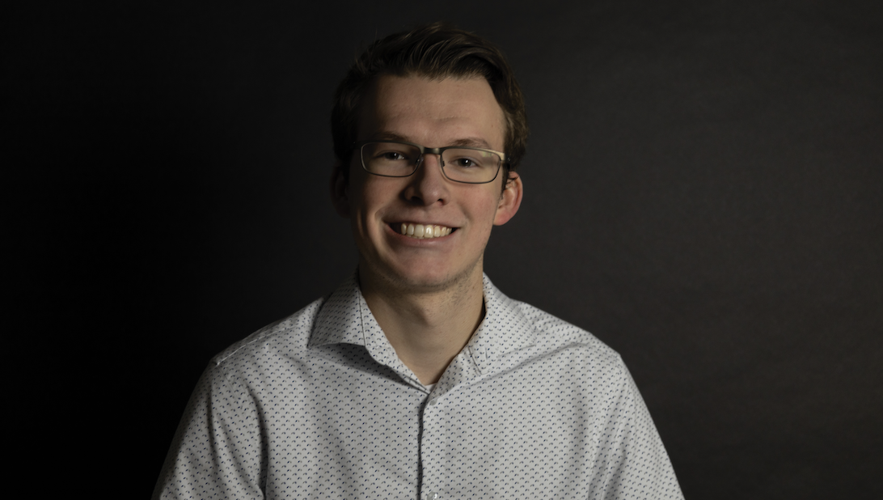
Headshot of Ryan Barnett.
Barnett was a community vision task force volunteer for ONE Norman, which was a six-month process to help formulate Norman’s comprehensive master plan.
“Something I learned so much from that ONE Norman process was how much I was in a bubble. The campus (in) Norman exists so separately from the rest of the community. It's kind of surprising, …” Barnett said. “It's not completely a fault of the community itself. It’s a broader issue of the absence of connections between the university and, genuinely, things right across the street.”
In 2023, ONE Norman released the results of a quality of life survey conducted by Mason-Dixon Polling & Strategy. In the survey, the polling firm found 68% of those surveyed had a positive view of the relationship between OU and Norman’s community.
Nearly two years later, Barnett said the back-and-forth between Norman residents and the city over the entertainment district has lengthened the process and furthered the divide between Norman residents, city officials and OU.
Originally from Tulsa, Barnett has immersed himself in Norman since becoming an OU student in 2020. Currently, he is a project intern at the Cleveland County Economic Development Coalition and an operation intern at Select Oklahoma, an organization that works to recruit and retain primary jobs and investment in Oklahoma.
Despite having a positive view of Norman and a belief that it can become a city where he can grow his career, Barnett said he has an impression of stagnation in the surrounding community.
“Ultimately, jobs are going to be created somewhere. We have a choice, and we have a say at the table in choosing whether that's our community or someone else's. And personally, I'd like to see Norman grow, and I hope that we move more in that direction,” Barnett said.
Barnett said the opportunities Norman and OU offer are sometimes overshadowed by the attention paid to the university’s football team.
“I love OU, and unfortunately OU football paints a really heavy, thick brush of paint over all of the things missing about the quality of life of both an individual student experience, a greek experience and more,” Barnett said. “I love our sports programs and everything they're doing; and I think for that reason, it gives OU, to some extent, a facade of a positive quality of life.”
Barnett urged the university to invest in higher-paying jobs at its institutions. He recounted his experience as the former president of the Interfraternity Council, where he said support staff was severely limited financially.
“People are coming here. Jobs need to be created and are being created. … There's no reason why communities should be not trying to maximize that,” Barnett said.
As for students like Kyle Eskew, a meteorology major and OU’s 2024 overall outstanding senior, it has been harder to connect to Norman due to a “bubble” on OU’s campus.

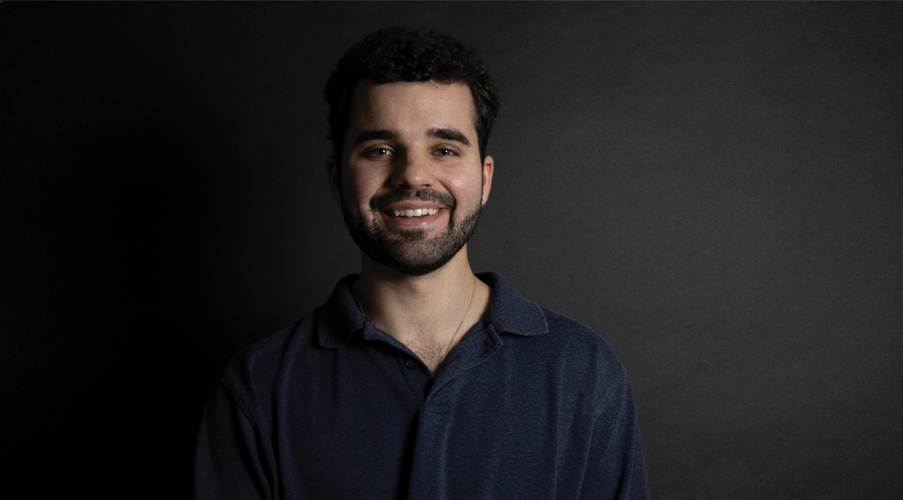
Headshot of Kyle Eskew.
“I'm probably less connected to the city of Norman than I am (to) the University of Oklahoma,” Eskew said. “I think that's true for probably most students who didn't grow up here.”
Originally from Ohio, Eskew was drawn to OU for its meteorology program. He said he came to the university with the goal of working as an operational meteorologist for the National Weather Service, which has 122 offices throughout the country, including one in Norman.
After spending nearly four years at OU, Eskew said he has enjoyed being involved on OU’s campus as part of the President’s Leadership Class, Crimson Club and Integrity Council and by volunteering at the food pantry.
“Ultimately, a lot of my life is centered around the two-by-two, square mile block around the university itself,” Eskew said.
Eskew cited the activities and opportunities offered by the university as part of the reason he feels less connected to Norman than he does OU.
“A lot of it has to do with the opportunity,” Eskew said. “I find that the opportunities on campus for a student (who is) 18 to 22 years old are much more plentiful on campus than they are off campus.”
Eskew said it’s possible his perception of the opportunities in the city might be due to ignorance on his part, but he truly does feel more connected to OU’s community.
“It really does come back to the opportunity thing and that the things I enjoy doing and spend my time doing are university affiliated,” Eskew said.
Eskew described Norman as the place he lives and OU as a place that caters to its students. He advised Norman leaders that if they want to appeal to college students more, they must be more intentional in reaching out to students and advertising what is going on in Norman that isn’t OU related.
“Over the past four years, I have perhaps been bombarded with things happening in the immediate campus area, but I don't really know what's going on outside of it,” Eskew said.
Though Eskew has enjoyed living in Norman, he believes part of the disconnect he feels between students and university and city leaders stems from the University North Park entertainment district.
“I do not believe students would travel up there for a game, any game, unless it is very high octane national attention, …” Eskew said. “I think student attendance will be lower in the entertainment district overall than it would be at the Lloyd Noble Center.”
As a former student and longtime Norman resident, Martin said he understands how college students moving in and out of the city throughout the year may sometimes create friction in the community. Martin said Norman must accept that OU is the city’s “main identity.”
Reminiscing on his time at OU, Martin said he noticed the friction between Norman and OU when he spoke before the city planning commission about the benefit of constructing what is now the Elm Avenue Parking Facility.
“We have to figure out a way to work together, …” Martin said. “We need to be a destination of choice for them once they graduate because there's tons of opportunities out there.”
Martin said the Norman Chamber of Commerce is actively working with the university to better connect its students to local business leaders. He said building connections with students while offering job opportunities is crucial when it comes to retention but also cited investing in places like Campus Corner and University North Park as ways Norman can retain talent.
“Graduates are looking for a place that they can call home, they can fit in and that's a live, work, play environment. While I think, probably, job opportunity is mission number one, they all start looking for quality of life,” Martin said.
Despite acknowledging the friction between the city and OU, Martin said the relationship is currently in a good spot and sees his role as a mediator in bridging the gap between the two.
Alongside Martin, both Barnett and Eskew said they believe Norman is moving in the right direction despite the disconnect they may feel toward the surrounding community.
“I'd be happy to work in a community where we are having to fight for development, fight for quality jobs, fight for popping the OU bubble more and building more connections between the city and the university,” Barnett said. “I think that that would be a quality building block.”
This story was edited by Peggy Dodd, Anusha Fathepure and Ana Barboza. Sophie Hemker, Mary Ann Livingood and Grace Rhodes copy edited this story.


