
Editors Note: This article was updated at 9:23 with the correct spelling of Joe Echelle's name.
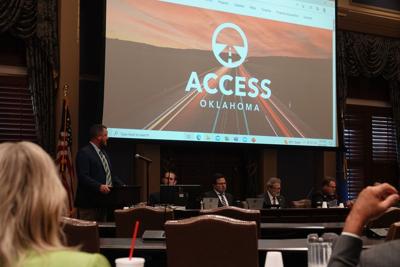
Norman city councilmembers reacted to the Oklahoma Turnpike Authority increasing ACCESS Oklahoma’s budget by $3 billion at Tuesday’s city council meeting.
ACCESS Oklahoma is a 15-year plan to develop new turnpikes and expand existing highways across the state. The original project was approved by the Oklahoma Supreme Court in August 2023 and was budgeted at $5 billion.
In a press release, the OTA wrote the $8.2 billion budget is funded by revenue bonds – funding mechanisms where the revenue of a project covers the cost of building it – which in this case would be toll roads.
In the release, OTA Executive Director Joe Echelle attributed the change to inflation and wrote that the 60% budget increase will fund the project through 2037. The original budget was estimated in 2021 dollars, Eschell wrote, and an increase was expected.
“We are experiencing a higher inflation rate and there are lots of causes to it,” Echelle wrote in the release. “Everything in this plan is more expensive, and I do mean every line item is more expensive than when we estimated this three years ago.”
Before this budget change, tolls were expected to increase by 10% but are now expected to increase further, the Oklahoma Voice reported.
In October, the OTA announced it would move forward with its project without holding any more meetings with the city of Norman.
This came after council postponed a resolution allowing the OTA to construct access and frontage roads in Norman — mirroring a similar resolution rejected by council in August. Council also unanimously approved scheduling a public hearing including representatives from the OTA and Norman residents.
Ward 5 Councilmember Michael Nash said that with this budget increase coming so early in the project, there will be no end to future budget increases. With this change, Nash said the OTA will have a debt equal to the state of Oklahoma’s. As of 2023, Oklahoma’s revenue borrowers were nearly $8 billion in debt, according to the Office of the State Treasurer.
“It’s all dark and twisted,” Nash said.
Ward 8 Councilmember Scott Dixon said that in his background of cost estimation for commercial construction, a budget increasing by $3 billion would be a big issue.
Ward 4 Councilmember Helen Grant said inflation will continue to be a problem for this plan, and the city of Norman often faces inflation too.
“The cost of materials, from our wastewater treatment plant to road maintenance, have all gone up, and budgets have had to stretch,” Grant said. “Honestly, I have no idea why OTA is doing that, except maybe the scale of what they're doing, they just didn't foresee the inflation.”
This story was edited by Ismael Lele, Anusha Fathepure and Ana Barboza.


