OU, in recent times, has been promoting week-long sessions on freedom of speech on campus. How is this different from academic freedom? Academic freedom, from the perspective of the American Association of University Professors, includes that the discussion in a classroom for critical reasoning and comprehension must be strictly pertinent to the subject matter of the class and that there are professional and scholarly standards. That is to say, professors should be covering recognized peer-reviewed and scholarly material in their classes. Free speech in the class is only about critically analyzing this scholarship, nothing more. And it should never be done to harass, in any manner, anyone, including in and outside of the classroom on the basis of race, gender, sexual identity, religion, national origin, political beliefs, etc.
Indeed, related to AAUP, academic freedom has long been recognized by OU to cover all topics in a scholarly manner in classrooms, including what some deem as controversial. In the OU Faculty Handbook, Section 3.2.1 has codified this important principle based on “The 1940 Statement of Principles on Academic Freedom and Tenure with 1970 Interpretative Comments of the American Association of University Professors.”
Academic freedom, as defined by the Faculty Handbook, guarantees faculty members full freedom in research and publications without outside political or other interference. The right to cover and discuss recognized scholarly material pertinent to the subject of a class, such as racism, sexism or discrimination based on sexual identity, is a cornerstone of academic freedom. Moreover, faculty members are guaranteed the right and even the duty to speak as private citizens on current issues. They also have the right to engage in political advocacy and run for nonpartisan political offices including that this officially counts as employment-related service to the community. It is incumbent for OU to provide the conditions for a full range of views, even ones that are unpopular.
The subsequent section in the Faculty Handbook related to academic freedom concerning faculty responsibilities provides explicit guidance related to this.

Seed sower with tape over its mouth.
First, faculty members must practice intellectual honesty. And most importantly, Section 3.2.2 (B) indicates:
“As teachers, faculty members encourage the free pursuit of learning in their students. They hold before them the best scholarly and ethical standards of their discipline. Faculty members demonstrate respect for students as individuals and adhere to their proper roles as intellectual guides and counselors. Faculty members make every reasonable effort to foster honest academic conduct and to ensure that their evaluations of students reflect each student’s true merit. They respect the confidential nature of the relationship between faculty member and student. They avoid any exploitation, harassment, or discriminatory treatment of students. They acknowledge significant academic or scholarly assistance from them. They protect their academic freedom.”
In other words, this is a call for the rigorous encouragement and pursuit of intellectual inquiry in tandem with providing an objective evaluation of thetrue merit of that student performance in the form of grades and other forms of classroom evaluation. Academic freedom and the responsibility for student learning should not be predicated, for instance, on ad hoc individual student requests to raise a grade on an assignment or test when no one else in the class is afforded that same opportunity.
What then are the similarities and differences of the Chicago Statement that was recently promoted during Free Speech Week at OU? The Chicago Statement was adopted by the University of Chicago in 2014 based on a report by the Committee on Freedom of Expression in 2014.
The principles set forth in the Chicago Statement are somewhat different from academic freedom. The statement takes a fairly absolutist and libertarian position on unfettered free speech on campus. Its intent is primarily to ensure all free debate and viewpoints are allowed in a general campus environment. The key exception is this:
"The freedom to debate and discuss the merits of competing ideas does not, of course, mean that individuals may say whatever they wish, wherever they wish. The University may restrict expression that violates the law, that falsely defames a specific individual, that constitutes a genuine threat or harassment, that unjustifiably invades substantial privacy or confidentiality interests, or that is otherwise directly incompatible with the functioning of the University. In addition, the University may reasonably regulate the time, place, and manner of expression to ensure that it does not disrupt the ordinary activities of the University. But these are narrow exceptions to the general principle of freedom of expression, and it is vitally important that these exceptions never be used in a manner that is inconsistent with the University’s commitment to a completely free and open discussion of ideas."
The Chicago Statement noted that calls and requirements for “civility” and tone-policing of ideas is an abuse of administrative and political power and discretion. “Civility” and tone-policing should not be used as a gambit to shut down certain ideas, discussions or debates, even if some at a university believe them to be "offensive, unwise, immoral, or wrong-headed."
However, general requirements for free speech in a general campus forum, as provided by the Chicago Statement, are not entirely congruent with academic freedom in the classroom. In the classroom, professors have a responsibility to provide the highest quality recognized scholarly excellence. Students should be encouraged to analyze that material in a careful and critical academic manner. For some students, this can push the envelope in terms of personal comfort, in relation to analyzing scientific publications and scholarly material they may have never previously considered.
One thing is for certain with all of this: The atmosphere in and out of the classroom should never consist of personalized harassment of the professor or students. Never. OU and the campus community have a responsibility to respond, promote and even defend academic freedom in the event this occurs. In this way, students will best enhance their learning and comprehension in terms of their ongoing mastery of academic subject areas.
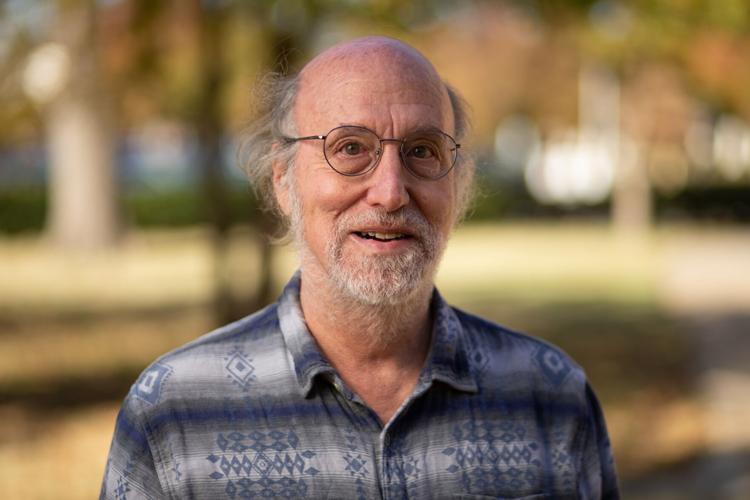
Michael Givel is an OU political science professor and president of OU's AAUP chapter.


