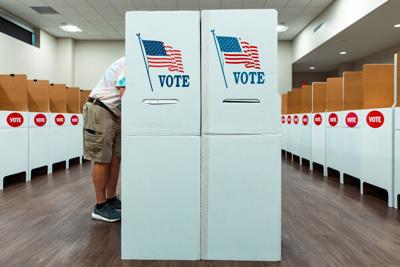

Oklahoma voters failed to pass State Question 832, which would have amended the Oklahoma Minimum Wage Act to increase the state minimum wage to $15 an hour by 2029.
As of 9:44 p.m., with 1,906 of 1,984 precincts reporting, SQ 832 earned 43.98% of votes, or 264,023 total votes, according to unofficial results from the Oklahoma State Election Board’s website.
SQ 832 would have brought the minimum wage to $12 an hour in 2027 and would have increased pay by $1.50 every year until 2029, when the wage is brought up to $15 an hour. Beginning in 2030, wages would have been increased annually based on increases in the cost-of-living, based on the U.S. Department of Labor's Consumer Price Index for Urban Wage Earners and Clerical Workers.
Oklahoma’s current minimum wage is $7.25, the same as the federal minimum wage. Wages have not increased since July 2009.
Federal and state employees would have been excluded from SQ 832. Additionally, volunteers, employers grossing under $100,000 with 10 or fewer employees, some employees of carriers engaged in interstate commerce, outside salesmen and reserve deputy sheriffs will not be/would not have been affected by SQ 832.
It is unclear how SQ 832 would have affected student employees at the University of Oklahoma.
SQ 832 would have removed exemptions in the Oklahoma Minimum Wage Act, allowing for part-time employees, farm and agricultural workers, domestic service workers (such as a nanny or house cleaner), newspaper vendors, feedstore employees, certain students and individuals under age 18 to be entitled to minimum wage, according to the ballot initiative.
In July 2024, Raise the Wage Oklahoma submitted nearly 180,000 petition signatures to the Secretary of State's office, close to double the required 92,263, in order to get SQ 832 onto a ballot.
In September 2024, Governor Kevin Stitt set SQ 832 for a June 2026 election date, leaving a 21-month gap, the longest delay for a state question in the last 10 years.
The wage increase would have begun Jan. 1, 2027.
This story was edited by Reagan Rozzi and Audrey McClour. Tori Pham copy edited this story.


