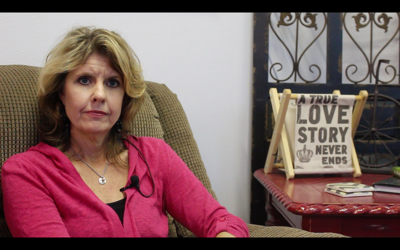

Women and children are being bought and sold as prostitutes across the nation. Though it’s a national issue, human sex trafficking is closer to home than you might think, according to president and co-founder of No Boundaries International, Lori Basey.
No Boundaries International is a nonprofit, faith-based organization that considers ending human trafficking one of its most important missions, and Basey said Oklahoma is on the commercial sex market map.
“The girls we see in the street level are typically from Oklahoma, or they may be moving through Oklahoma, and our girls from Oklahoma have also worked in Dallas, or Kansas City,” Basey said.
The highway system in Oklahoma has been regularly attributed to the sex trafficking problem, Basey said, but there are many states with the same amount of trafficking. Instead, she said, it’s a problem with sexual abuse and low self-esteem of women.
Basey said the No Boundaries team goes into the hot spots in the city, where prostitutes are known to be.
“When we originally went, we didn’t really think there would be any work to do. So we went to one of the areas where there’s visible street prostitution or human trafficking,” she said.
From there, Basey said she saw women being bought, sold and controlled by pimps.
“After watching that one specific instance throughout the day, we decided we needed to get more involved in what was happening here,” she said.
Basey said No Boundaries International originally started in 2006 as a devastation relief group, helping heal the devastation of places like post-war areas and the sites of earthquake catastrophes, she said, but they found a different kind of devastation right around the corner.
“We started working with victims that we now call ‘human trafficking victims,’” she said.
Forms of trafficking can even be found on campus, she said, with websites like arrangementfinders.com, which allows men to sign up to become “sugar daddies” and girls to sign up to become “sugar babies.”
“They have older men who are going to be mentors for young women who they’ll pay anywhere between $3-6,000 per month. The females will be there escort, if you will. Statistically, it’s been found that men have signed up to be sugar daddies, (and) females from OU with their OU emails have signed up to be sugar babies,” Basey said.
She said the idea of sex becoming a commodity on campus and women being consumed with men as the consumers is a mindset that needs to be addressed.
“I really feel that this is an identity crisis and a low self-esteem crisis that we have in the U.S. with females,” Basey said.
Leah Kennedy, a senior majoring in music composition and minoring in social justice and human relations, coordinated and directed a benefit concert on Jan. 31 called “Not Buying It” to raise awareness on human trafficking.
Kennedy said she isn’t aware of any trafficking on campus, but she said it’s a matter of vulnerability.
“I think there’s this idea that trafficking only happens to a certain group of people. We think it happens outside of the United States ... but it can happen anywhere to anyone,” Kennedy said.
“It made me realize how everyday sexism and objectification actually does feed into these larger issues like human trafficking,” she said.
She said the concert raised over $1,300 and donated 70 percent to DaySpring Villa to help local victims of trafficking and the other 30 percent to Free the Slaves to fight trafficking on a global scale.
“It’s always been my goal to combine my passion for social justice with my music, so I thought, 'Why not do a benefit concert?'” she said.
Kennedy said volunteering for organizations like No Boundaries International and DaySpring Villa can be a great start to combatting the issue.
“I really like to look at everyday sexism and things that we do in our lives that feed into human trafficking. In my view … women wouldn’t be bought and sold if it was unthinkable for women to be treated like an object,” she said.
Unfortunately, Kennedy said, objectification is something we can see everyday.
Joleen Neighbors, No Boundaries International development department director, said her heart goes out to the girls who have been sold into trafficking.
Neighbors said it’s not easy helping victims leave their situation.
“You know you can’t, because, as Dr. Basey said, there’s the whole psychology element, the mental element (and) the emotional element that goes along with that. They’ve been so conditioned to be out there,” she said.
Neighbors said it’s important to get the message out about how preventable this issue is in the U.S.
“It happens right here in our backyard. It happens right here,” she said.
“This trafficking thing can happen in your living room or your kid’s bedroom. It can happen so quickly. Just the whole message of prevention ... know what your kids are looking at online — monitor their accounts,” Neighbors said.


