
As the Norman Regional Health System faces harsh financial realities, its CEO said the system has a plan for future financial security.
“It doesn't help us to look back,” said Dr. Aaron Boyd, CEO and president of Norman Regional Health System. “We've got to keep going forward.”
The Norman Regional Hospital Authority is a public trust of the city of Norman that manages the Norman Regional Hospital System. The authority elected to issue $40 million in Series 2026 bonds earlier this month following its deferred repayment of its 2016, 2017 and 2019 revenue bonds. Bondholders were aware of the deferment and agreed to hold legal or enforcement action. Part of the funding provided by the Series 2026 bonds went to completing the deferred payment.
The decision came as credit rating agency S&P Global lowered the authority’s debt rating from CC (high vulnerability) to D (default), indicating that the authority had failed to make its payment on time.
The authority previously issued $136.2 million in Series 2016 bonds and $26.4 million in Series 2017 bonds for the purpose of — partially or fully — refunding or canceling previous bonds. Later it issued $111.5 million in Series 2019 bonds to fund the Inspire Health project.
According to the Series 2019 bond’s official statement, the authority was scheduled to repay around $16.7 million this fiscal year to service the Series 2016 and Series 2017 bonds.

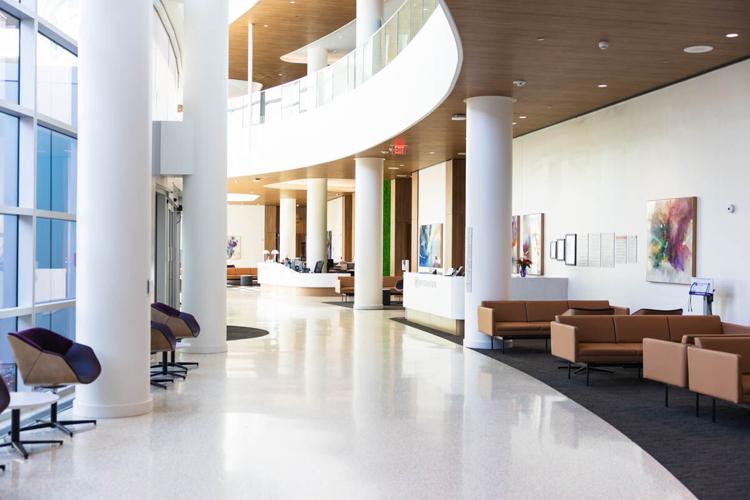
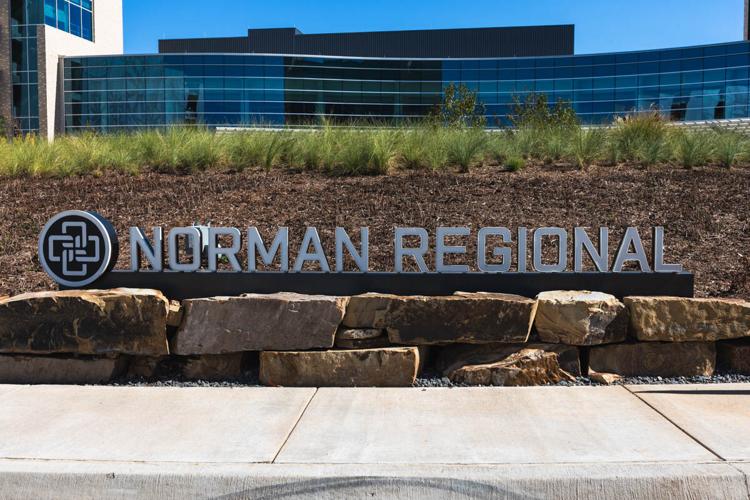
Norman Regional Hospital on Oct. 7, 2026.
Operating loss, possible solutions
The new bonds come as Norman Regional Health System has been struggling to keep up with operating costs. In a recent unaudited report, the system saw an operating loss of around $31.5 million. Since 2020, the system has seen a total operating loss of over $183 million, according to its most recent financial disclosures.
Boyd credits these losses to inefficiency in the hospital’s revenue cycle management, physician alignment, outdated contracts with health insurance companies and failed projected savings. Boyd became co-CEO with Rick Wagner in September 2024, but later became the sole CEO when Wagner resigned in 2025.
“When I took over in, basically, April of ‘25, we just kind of slammed on the brakes and started trying to uncover what was happening and what needed to be improved,” Boyd said.

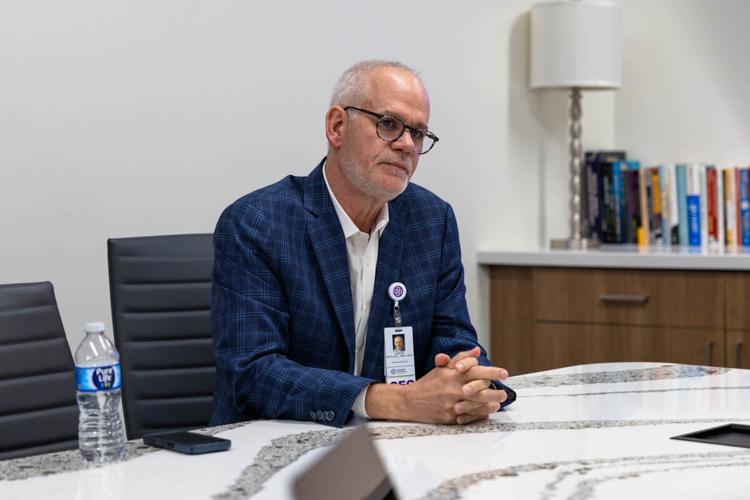
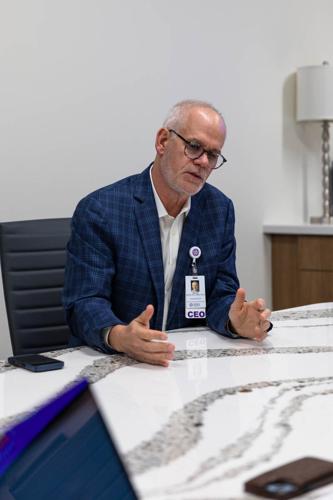
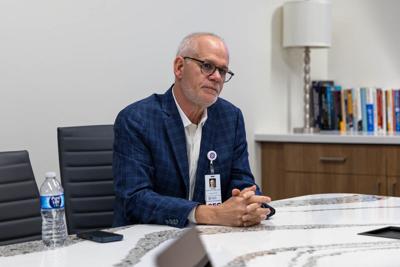
Dr. Aaron Boyd on Oct. 7, 2026.
He said the system’s main issue was its revenue cycle. According to the Healthcare Financial Management Association, revenue cycle management is a hospital system’s process of tracking revenue. It starts with a patient’s first contact with a healthcare system and ends with their final payment.
Boyd said the system had issues specifically in its billing process. Because of this, it chose to switch billing companies, a process that was only recently completed.
In addition to its issues with revenue cycle management, Boyd said the system also updated its physician payment contracts to be more efficient and coordinate with physicians to manage patient care and financial goals.
“A lot of our physicians are employed, and so we have redone all of their contracts to get them more aligned with productivity, but that didn't actually go into effect until just now,” Boyd said.
With the consolidation of inpatient services at the system’s flagship campus — at Interstate 35 and Tecumseh Road — under the Inspire Health project, the authority expected to save up to $13.4 million in reduced labor and supply costs.

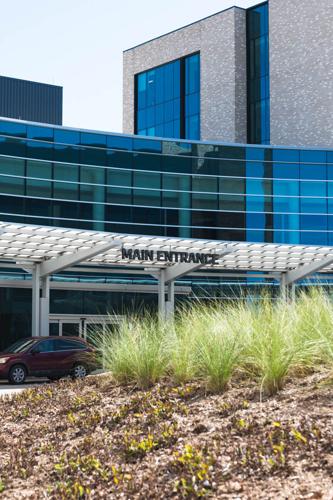
Norman Regional Hospital on Oct. 7, 2026.
The project also included a full-service emergency department with outpatient services in southeast Norman and an ambulatory pavilion and cancer center. The final part of the project was completed in 2025.
“Combining campuses didn't reduce the workforce at all,” Boyd said. “Actually, it went up, and so you lost all that potential savings in the consolidation because the labor was very high.”
Boyd said the excess labor cost is what prompted the system’s layoffs in June 2025.

Editor's note: This story was updated at 11:32 p.m. June 3 to add a statement from Rep. Jaco…
“That's always difficult to work through when you have a layoff, but what we've done, even more importantly, is make sure it doesn't drift back to the previous levels of employees,” Boyd said.
Though it was initially budgeted to cost around $285 million, Boyd said the project saw overruns.
Boyd attributes this to delays and material shortages caused by the COVID-19 pandemic and issues with fund management. Because these overages exceeded what the system had borrowed and budgeted for the project, the additional costs were paid out of its cash reserves.
“The hospital used their own money, which got us in a pretty substantial hole,” Boyd said.
Boyd said this later contributed to the system going out of compliance with previous bond agreements.
“The hospital just came more and more out of (compliance) with the metrics that were associated with these different loans, so that's when everything kind of changed,” Boyd said.
Not including the 2026 bond, the authority reported currently owing over $255 million along with debt from its $35 million line of credit.
Boyd said the system has also seen loss because of poorly negotiated contracts with various health insurance providers. To manage this issue, it has been renegotiating contracts with providers to reach more competitive reimbursement rates.
“Our contracts with them are very poor,” Boyd said. “We’re not paid the right amount, or we’re not paid at market rates.”
Boyd said insurance providers negotiate reimbursement rates by comparing the system’s rates to other rates of similarly sized hospitals.

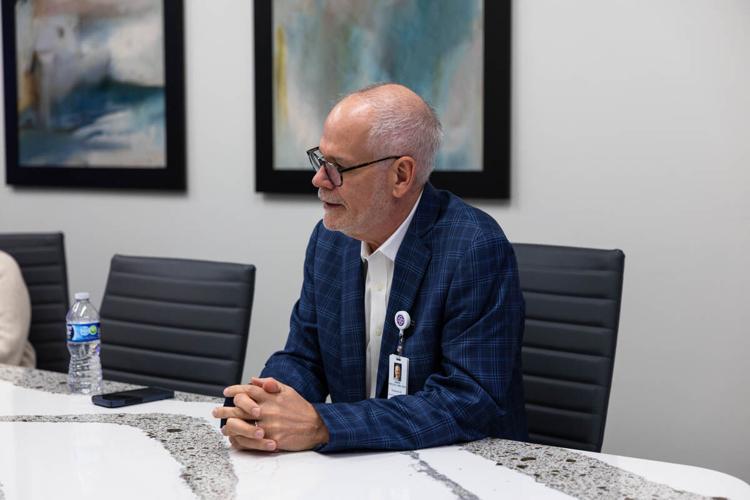
Dr. Aaron Boyd on Oct. 7, 2026.
“All of these contracts and the subsets of them, the pieces of them all, were outdated, old, and had not been really reconciled with what was going on in the market for a number of years,” Boyd said.
To address these issues, Boyd and a small executive team have been collaborating with an outside consultant.
“We have a consultant we’re working with and we just started, one by one, going through all of the different things that were not working, not efficient, and started fixing things,” Boyd said.
The system reduced its operating loss from around $68.2 million in 2025 to $31.5 million in 2026, according to the authority’s recent financial disclosures.
Future security
As it continues to work toward financial security, Boyd said the authority has created a budget focused on adhering to the conditions of the 2026 bond agreement.
“If we hit our budget, then all the other pieces fall in line as far as meeting your debt service, meeting your days cash on hand (and) meeting your net income,” Boyd said.
To stay compliant, the authority is required to repay new bonds first, reach goals for income and adhere to restrictions on new borrowing, asset sales or affiliations.
“We clearly know what we have to hit to stay in compliance. And if you're unable to stay in compliance, then you're going to have to go in a different direction. And the board and other stakeholders would have to make those decisions…,” Boyd said.
If it defaults, bondholders can require the system’s authority to seek potential sale or collaborate with another party. Boyd said though it is not the authority’s desire, potential collaboration could be a possibility to offset operational or financial challenges if they begin to impact quality of care.
“If we can't provide what we feel like to be quality care, then, again, we need to think about alternatives, and that could be partnering,” Boyd said.
He said that the system may seek collaboration with another healthcare system if it would be mutually beneficial. For Boyd, affiliation could look similar to the system’s collaboration with OU Health Stephenson Cancer Center.

Norman Regional Hospital on Oct. 7, 2026.
“Independence is certainly very much everyone's goal, and we've made huge steps towards that, but I think collaborating with health systems could kind of go in parallel with that,” Boyd said. “They don't have to be mutually exclusive.”
Though the system has a long road ahead, Boyd said its goal for treating the people of Norman and the surrounding area remains the same.
“Personalized healthcare with compassion and excellence; that's the mission, and, you know, we'll battle through the rest.”
This story was edited by Spencer Windholz and Audrey McClour. This story was copy edited by Andrew Higgins, Avery Shaw, Sophie Hemker, Larkin Bock and Kennedy Johnson.


