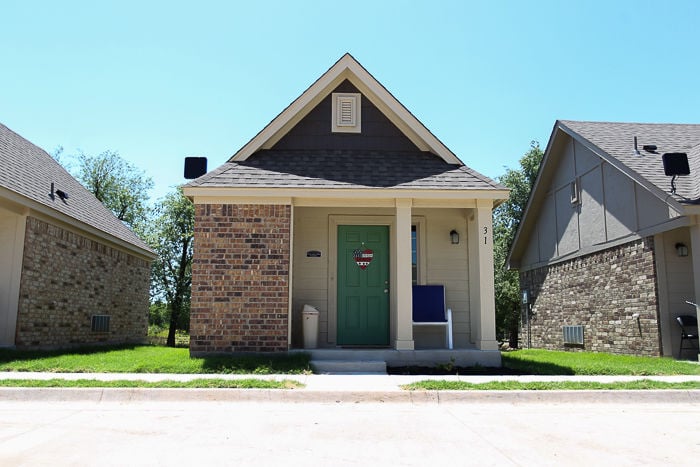


Norman Food and Shelter, a soup kitchen and shelter for the homeless, is opening its new facility just off of Main Street on Reed Avenue in July.
The new facility, McKown Village, is part of the shelter’s efforts to fight homelessness in Norman. The facility will have an office center, day shelter, soup kitchen and 32 cottages, according to the shelter’s website.
The cottages range from 285 square feet to a little over 600 square feet, and will house 16 individuals and 16 families, according to April Heiple, Norman Food and Shelter’s executive director.
“Individuals and families come to Food and Shelter to receive an assessment which will help us determine what type of housing is best for them,” Heiple said in an email to The Daily. “If it is determined they need long-term supportive housing, we begin the process to determine if we have a suitable cottage for them or if they need another solution.”
Tenants of the cottages must adhere to a specific program designed to fit their best interests while living in the cottages, Heiple said. Heiple said violence, alcohol and drug use are also prohibited.
Norman Food and Shelter opened in 1983, serving lunch once a week, according to its site. Now a fully operational soup kitchen and shelter, it serves breakfast and lunch seven days a week, averaging 250 meals a day, according to its site.
With two facilities in Norman, Food and Shelter will be able to help more people, which currently serves hundreds on a weekly basis, Heiple said.
“Though the number on the streets and in shelters is significant, it is one solution for a big group of people and we continue to work on solutions for those other friends who need a place to live,” Heiple said in the email.
One of 16 individuals moving into the cottages, Gabriel Givens, said being off the streets will help him move toward change.
“They’re getting this new Food and Shelter place, and tomorrow I get my keys to my little cottage that they’re helping me get,” Givens said. “They’ve gone out of their way for me. They actually believe in people and have hope for them. You know you can’t save everybody, but they try to help you make a positive change.”
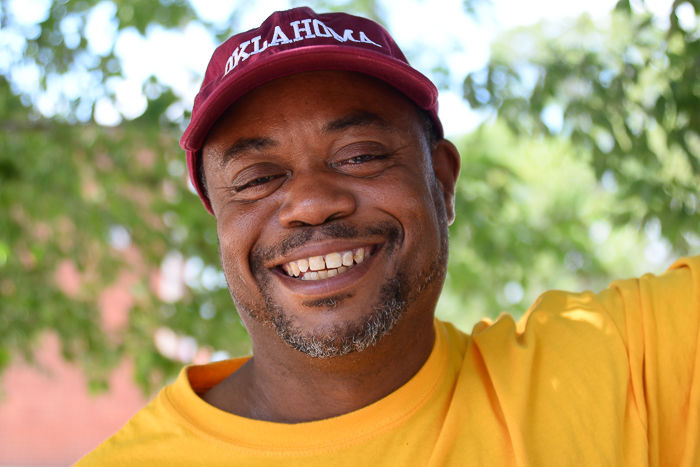
Gabriel Givens
Gabriel Givens motioned to the water bottle sitting beside him: “I ain’t going to lie, that’s not water,” he said.
An admitted alcoholic with a history of domestic abuse charges, Givens is homeless, but looking forward to moving into his new home at McKown Villages.
“I am an alcoholic. I do drink all the time,” Givens said. “But people like April tell me being out on the streets makes it hard to make positive changes because you’re never going to be away from it, but if you have a place over your head, then you can start building toward change. They’ve helped me a lot, and not just with housing, but they encourage you. It’s not that they just say ‘Go do this.’ They’re willing to stop and listen to you, and they have nothing negative to say, and that’s not part of the job description.”
Givens said he became homeless around 2013 when he moved from Okmulgee, Oklahoma, to Tulsa, Oklahoma. He was homeless for roughly five months before finding a place to live in Tulsa, but then lost his apartment and moved to Norman, Givens said. This is the same year a protective order was issued against Givens in Tulsa County.
Being homeless in Norman is a lot different than being homeless in Tulsa, Givens said.
“The people are a different breed,” Givens said. “You don’t have to be tough, but it’s inside you. Sometimes you have to be like an animal. Down here I guess I just kind of feel half-ass human. You still don’t fully feel like that because you have to sleep on the ground. It’s a lot different. There are a lot of people here that are going to be out here forever. I can’t be like that.”
Givens moved to Norman in 2014, aware that he would be homeless. He was charged with public drunkenness or intoxication five times between 2014 and 2015 in Cleveland County. In the same span he was charged with assault and battery — a felony — three times, sending him to prison in September 2015.
“This year in April, I was released and the thing is, is that it’s a lifestyle,” Givens said of homelessness. “It’s something you have to become accustomed to. It’s part of your life being out here, and you know, it’s different. It’s tough and all that. But this place right here, I always kept in touch with someone here, so when I got out, they helped me.”
Givens is currently unemployed because he’s using money reserved from before he went to prison, which his case manager handles for him, he said.
“When I first got out that was one thing I was going to do,” Givens said. “I was going to get a job, and do this and do that, but it’s easy to fall back into your old crowd and old ways. So what they’re doing now is helping me to where I can make some kind of positive change. That’s something I’m thankful for because when I was here before I went to prison, a lot of these people didn’t care for me because I was mean. Whenever I got out there was a lot of things I changed.”
Now released from prison, Givens’ normal day starts around 6:30 a.m., he said.
“You’ve got to get up early because usually you sleep somewhere, and people work there,” Givens said.
Most people who are served by Norman Food and Shelter try to make it there by 10 a.m. to get in line for lunch, which is served at 11 a.m., according to Givens. He said once the shelter closes for the evening, free time is spent with whatever habit you have.
“When they open up the liquor store, I’m there. I’ve got a habit,” Givens said. “You’ve got a habit, and you’ve got to feed it. I don’t know, it just makes it a lot easier to function and to deal with the people out here.”
Despite his state of homelessness, alcoholism and history of violence, Givens keeps a positive outlook. This is due in part to the people of Norman Food and Shelter and the help they’ve given him, he said.
“If you think bad all the time, it’s going to be bad,” Givens said. “I put myself here. Nobody else did. If I was 16 years old, I would blame my parents, but I’m about 40 years old. If you’re angry, you know things are tough, but if you’re negative then nothing good will happen.”
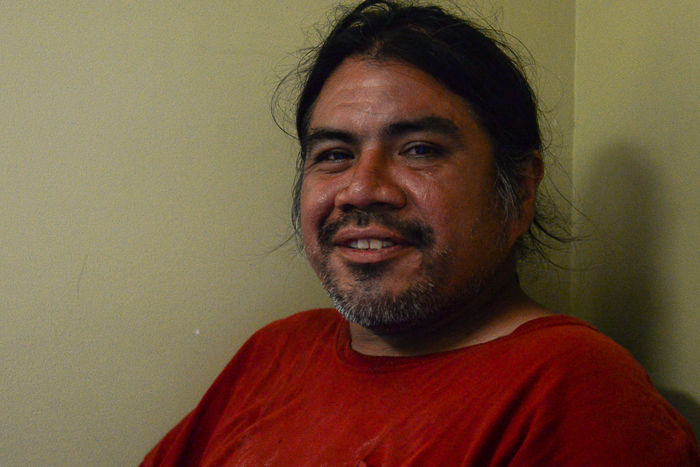
Arturo Green
Arturo Green is done selling drugs. Recently out of prison, with a potential job lined up and a cottage reserved for him at McKown Village, he’s giving up his old life.
“About a year or so it was fun, you know what I’m saying, but when I got arrested it wasn’t no fun no more,” Green said.
Green, 47, said he started dealing drugs after he became homeless in 2011. Green said the mother of two of his children cheated on him and decided to leave him and take the kids.
“I got depressed because I wanted my kids,” Green said. “She left and she kept calling me, asking me what I’m doing, and she wanted to argue all the time, so I decided ‘You know what? I’m going to become homeless so she can’t find me and can’t call me.’”
After he became homeless, Green said he was approached by a woman who offered to help get started dealing drugs. Green said she told him he could live house to house and never be homeless again, so he accepted.
“Everything was working out fine, and I was making money and living house to house like she said,” Green said. “What I failed to realize is that every house I went to the police were watching, because I was new at the game.”
In 2013, Green was convicted of possession of a controlled dangerous substance — a felony. In 2016, he was convicted of possession of a controlled substance with intent to distribute — another felony.
Now released from prison, Green has no intention of going back to his former ways.
“I’m done with selling dope and messing with it. I don’t mess with it no more,” he said. “I may drink a beer here and there, but other than that I don’t like drinking. I’m looking for a job now, and I’m pretty sure I got one working at Cheddar’s.”
The easiest way for Green to resist his old habits is by being a loner.
“If I don’t keep to myself, I’ll end up going back on drugs or drinking,” Green said.
Green has six children — none of whom he is able to see — and no family in Norman. Living a life of isolation, his best days are when Lions Park shows movies.
“On a good day, they show movies down here at the Lions Park and you get to go down and sit out on the grass and watch movies and relax,” Green said. “That’s a good day for me. But around here, it’s crazy. We’ve got people fighting all the time. We’ve got alcoholics everywhere that like to drink all the time. I don’t discriminate. I’ll sit down and talk with them, but when arguments and fights start I’ve got to move around.
Soon to be off the streets, Green’s next challenge will be holding down a job and staying clean. He said his first goal is to save enough money to pay his fines, which he’s determined to do by himself.
“My family’s in Texas,” he said. “I could go back to Texas and live a really large life, but I want to do it on my own.”


