
At 4:34 a.m. on Nov. 5, The Associated Press called President Donald Trump’s win after he officially secured the vital swing state of Wisconsin, defeating former Vice President Kamala Harris in the race for the White House.
Across social media, there was an outpour of reactions: joy, shock, celebration, anger and surprise.
In Norman, seated in front of his television, 14-year-old Chris Willert found himself getting emotional. The moment brought him back to a memory eight years prior of his mother watching the 2016 presidential election, the first time Trump won.
“She was just sitting there stunned. I didn't really understand at the time,” Willert said.
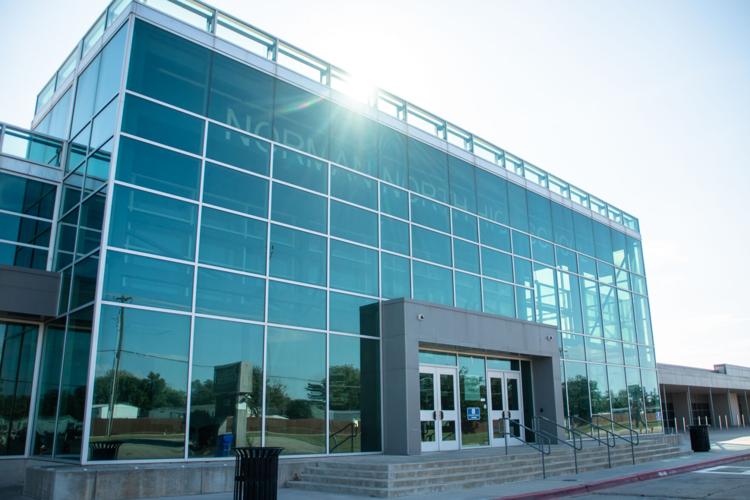
Now a freshman at Norman North High School, Willert said he hadn’t anticipated the election results.
“Up to the election, everything I had been seeing, people around me, things on social media, everything was so pro-Kamala,” Willert said. “I feel like she had so much momentum going into the election.”
Entering the 2024 election cycle, Generation Z — the generation of people born between 1997 and 2012 — seemed apprehensive of the candidates. Former President Joe Biden, 82, and Trump, 78, were two of the oldest candidates in American history to vie for the Oval Office. Biden, in particular, struggled to gain support from younger voters.
Following a poor performance in the June 27 debate, Biden dropped out of the race and endorsed Harris to run.
Nearly 20 years younger than Biden and Trump, Harris was noticeably different from the standard demographics of presidents past. Willert said Harris, a younger, Black and South Asian American woman, signified a candidate with the potential to represent the ideals of Gen Z. This sentiment was reflected in Harris’ campaign, which adopted memes and slang terms to appeal to younger voters.
Despite Harris drumming up significant support throughout a whirlwind 107-day campaign, Trump secured his win by expanding his support among many segments of the electorate, notably young men.
Jacob Schonfield, OU Student Government Association Budgetary Council chair and Oklahoma Intercollegiate Legislature speaker of the House, attributes Trump’s popularity with young men to interviews during his campaign with conservative male podcasters, such as Joe Rogan and Theo Von.
Schonfield said young men have gravitated toward conservative podcasts in a social and political climate in which they feel disparaged.

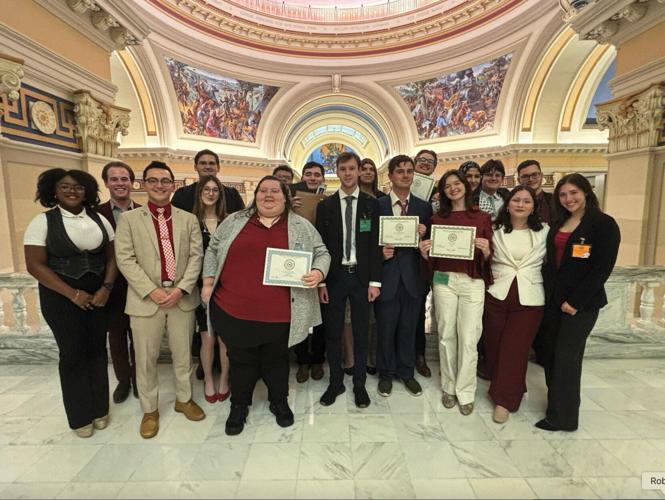
OU Oklahoma Intercollegiate Legislature Delegation.
“A sentiment that I've heard a lot from, especially, other young men is that the popular political culture is kind of geared toward belittling men or, in some way, shape or form, treating them as less than,” Schonfield said.
Founded in 2012 by conservative media personality Charlie Kirk and businessman Bill Montgomery, Turning Point USA is a national organization that advocates for conservative politics on high school and university campuses. Turning Point USA has a strong media presence with Kirk hosting “The Charlie Kirk Show,” a conservative daily radio show.
Madeline Canning, vice president of OU's chapter of Turning Point USA, said social media is a source that politicians use to connect with Gen Z.
“I do think that a huge part of how Trump won the election is his social media presence, …” Canning said. “I definitely think his social media presence probably did account for his appeal to younger men, younger audiences, just because they had more access to what he was campaigning for.”
Canning said she was excited when Trump won because she saw potential for his administration.
“I was excited because I wanted to see what his administration would do and could do,” Canning said. “America has had a really bad divide recently, and I felt with Trump coming into office, that maybe he could try to alleviate that.”
Canning said she doesn’t believe Trump’s age will impact his ability to relate to the ideals of Gen Z.
“I've always been a believer that people who are older than me have a lot of knowledge that maybe I haven't been able to attain yet because I just haven't had as many life experiences,” Canning said.
Although Trump is an older president, Canning said he has young family members such as his son Barron Trump, 18, and grandchild Kai Trump, 17, to help him relate to younger people.
“That's proven that he can relate to Gen Z, at least on some levels,” Canning said. “I believe that he can still represent the ideas of Gen Z people, especially Gen Z conservatives, because I think that so far he's shown that he is capable of that.”
Jordan Finlay, a sophomore at Norman North High School, is not as hopeful for the current administration. When Trump was elected, Finlay said she was disheartened and sad.
“We talk about the American dream and all these things,” Finlay said. “That's one of the things that we learn in school, and it's very sad for me now to see that that's not really what's happening.”
During the first few weeks in office, the Trump administration has deployed various policies and, as of Feb. 13, Trump himself has signed over 60 executive orders.
A memo obtained by The New York Times notes that Trump seeks to grant Immigration and Customs Enforcement the ability to deport thousands of migrants who entered the country on temporary status through humanitarian programs.
“We're getting violent policies such as ICE agents being able to come into schools and churches and all of these things, and they're under the guise that it's taking criminals out of our country, …” Finlay said. “It's very dystopian. In eighth grade, we read dystopian literature, and it's what's happening now. It's very scary to me.”
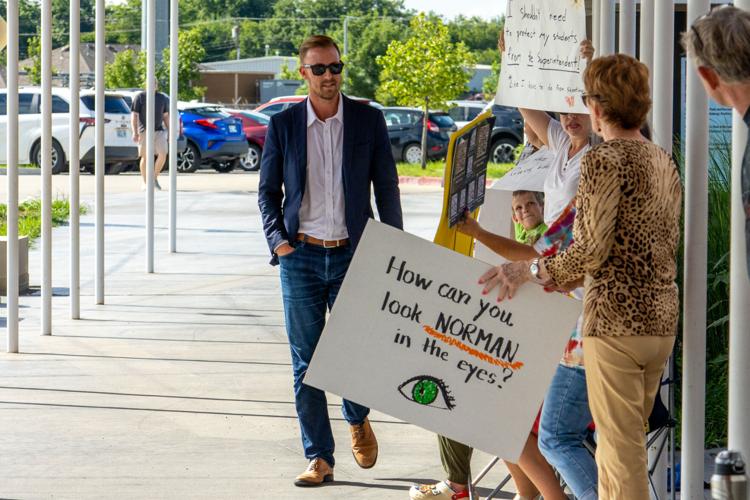
After Trump’s memo was released, State Superintendent Ryan Walters, endorsed the policy in an interview with KOCO on Jan. 23 and said he would not rule out the possibility of ICE raids in Oklahoma schools.
“When we pass this rule through, schools will comply. This is part of their accreditation. This is part of our accountability measures. They don't get to pick and choose what laws they go by,” Walters said in the interview.
Finlay said she does not believe Walters and his pandering to the Trump administration represents the best interest of Oklahoma students.
“These (policies) are targeted at minorities and people who don't look like Ryan Walters,” Finlay said. “No matter how the election would have turned out, none of it would have impacted Ryan Walters. None of it, but it does impact those of us who are Mexican, who are Native, who are low income, who are all of these things that Donald Trump is not.”
Willert echoed Finlay’s sentiments about Walters.
“He does not care about us. All he cares about is sucking up to Trump and just making himself look as good as possible to Trump,” Willert said. “He doesn't realize what we're going through, that his actions, or what he's doing, are having real implications on us.”

Oklahoma State Superintendent of Public Instruction Ryan Walters on July 6.
Despite feeling unsupported by Walters, Willert believes Norman Public Schools Superintendent Nick Migliorino has the best interests of NPS students at heart.
In an email sent to OU Daily in January by Courtney Scott, NPS chief communications officer, Migliorino wrote that, while superintendents and district employees are required to follow state and federal laws, he wanted to assure the NPS community his top priority is to keep schools and district facilities a safe learning environment.
“We will do everything in our power to uphold that commitment,” Migliorino wrote. “We will stay true to our statutory and constitutional duty to educate students, regardless of race, gender, ethnicity, or immigration status.”
Migliorino has previously strayed from Walters’ policy. In a July article published by The Norman Transcript, Migliorino said the district would not follow Walters’ June 27 mandate requiring Oklahoma teachers to incorporate the Bible and the Ten Commandments into their lessons.
Jami Jackson-Cole, a second-grade teacher and moderator of the Facebook group Oklahoma Edvocates, said she doesn't think ICE’s presence in schools is appropriate. She said she is going to trust Gov. Kevin Stitt when he rejected the idea of schools collecting students’ immigration status during a press conference on Wednesday.
“Collecting 6-, 7-, 8-year-old kids’ addresses and immigration status in the state of Oklahoma, that’s not a public safety issue,” Stitt said. “Let’s go after the bad guys. Let’s go after people that are committing crimes, and let’s not terrorize and make our kids not show up at school.”
Jackson-Cole said kids should not be pawns in politics, especially not the federal government.
“Let's just focus on the kids, and make sure that they're in our classrooms, they are safe, and they are being educated to the best of our abilities,” Jackson-Cole said.
The administration's stance on immigration is not the only policy that has received heavy scrutiny during the first month of Trump’s presidency.
On Feb. 3, dozens of employees at the U.S. Department of Education were put on paid administrative leave with many anticipating the Trump administration to begin taking action in line with his campaign promise to close the department.
Schonfield said the potential dismantling of the education department is concerning because many people, including himself, rely on funds from the federal government to pursue a higher education.
“I personally am an optimist and like to imagine things are not going to turn out in the worst case scenario, so my hope and my assumption is that, in some way, shape or form, the Department of Education may not continue to exist, but maybe those funds will or something to that effect, …” Schonfield said. “I don't know what the replacement would be, or what Trump would do instead, but I'm hopeful that, at the end of the day, we wouldn't see too much change, at least on students. It is definitely disconcerting and does create instability.”
Canning said she doesn’t believe that the Department of Education would ever entirely not exist.
“Maybe it'll be revamped and there will be changes made,” Canning said. “That being said, I don't think it's ever going to be completely gotten rid of because there's some really valuable parts to it, and I don't think that would ever pass constitutionally.”
While she has a positive outlook on Trump’s presidency, Canning understands why some people may have some anxiety.
“Having a new president come into office, even if it's a president we've seen in office before, it can be stressful, especially if you don't agree with his policies, …” Canning said. “The world isn't going to end over whoever the United States president is. We've had 47 now, the world hasn't ended. Life will go on, so don’t let that be the stressor that controls your whole life.”
For people feeling unsure or upset, Finlay said the most important thing to do during this time is to support one another as a community.
“Now is not the time to be silent about what's happening. You can't turn a blind eye, …” Finlay said. “We have to remember that we do have a voice, and in the next election, we will be able to vote. We have to know where we're going to stand in the history books.”
Jackson-Cole said she believes it’s important that younger people learn how to communicate respectfully and how to make their presence known to their representatives so they can start shaping their futures.
“I see the younger people getting involved, and it really gives me a lot of hope for our future,” Jackson-Cole said. “I don't even care what side of the political spectrum they're on, as long as they are understanding how powerful their vote is, how powerful their voice is.”
This story was edited by Peggy Dodd, Ana Barboza and Ismael Lele. Sophie Hemker, Grace Rhodes and Mary Ann Livingood copy edited this story.


