OKLAHOMA CITY — An ousted member of the state’s top school board will lead the process to approve K-12 textbooks that align with controversial new academic standards for social studies.
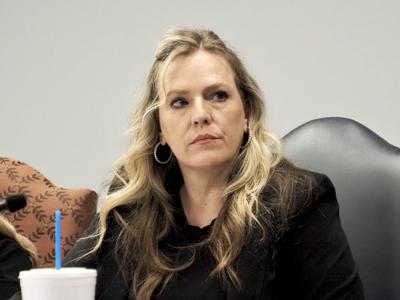
Former Oklahoma State Board of Education member Kendra Wesson will continue as the chair of a key committee that chooses all state-approved textbooks for public schools. She has been State Superintendent Ryan Walters’ designee to lead the committee since she joined the state Board of Education in January 2023.
“Serving in this role and being able to still help my state is what it’s all about, right?” Wesson said. “It’s not about (having my) name in lights. It’s about doing the serving and coming in and being who I am and consistently being who I am. So, I value it very much.”
Wesson, of Norman, said she brings high integrity to the role and has enjoyed the committee and its staff, so “it meant a lot to me to be able to stay here.”
A spokesperson for Walters’ office did not immediately return a request for comment on the superintendent’s designee and the coming textbook adoption cycle.
Gov. Kevin Stitt replaced three state Board of Education members, including Wesson, on Feb. 11 while complaining the board had fallen victim to “needless political drama.” The three removed members had voted with Walters to advance a now-defeated proposal to have public schools collect students’ immigration status, an idea Stitt opposed.
Wesson and the State Textbook Committee gathered Friday for an orientation meeting to initiate the 2025-26 adoption cycle, a process that determines which textbooks the state will approve for the next six years. The committee last met Feb. 7 to conclude the 2024-25 cycle.
Like with the state Board of Education, the governor appoints all members of the 13-member textbook committee except for one — the state superintendent, who can choose a designee to serve as the committee’s chair in his place.
The committee, mostly made up of educators, will receive sample products by July 1 from textbook publishers interested in selling to Oklahoma school districts. The number of companies bidding in the small-market state has dwindled in recent years while political debates over classroom content grew.
After the July 1 deadline, teams of subject-matter experts will begin quality reviews of the submitted learning material in August before making recommendations to the textbook committee, said Carolynn Bristow, project manager of educational materials for the Oklahoma State Department of Education.
The process culminates in the committee’s Nov. 14 vote to approve a list of textbooks aligning with the newly enacted standards for social studies education. The committee also will vote on instructional materials for personal financial literacy courses. The state will execute contracts with publishers in February after the board’s final meeting of the adoption cycle.
Wesson said the committee will follow the typical textbook adoption process and doesn’t anticipate any differences from previous cycles.
The committee and its review teams will adhere to a pre-approved rubric to evaluate textbook materials, she said.
The rubric checks for classroom usability and compliance with state academic standards. Last year, the committee also added social and moral questions to the rubric asking whether the submitted materials “degrade traditional roles of men and women,” promote “illegal lifestyles” or neglect the importance of religion in preserving American liberties.
“We have a great team here at (the state Education Department) that keeps us on track, and that’s why that rubric is there, to keep everybody on the same page,” Wesson said. “And so you will always find this committee, especially, following that process.”
The new social studies standards, which dictate what public schools must teach to students in history and government classes, have been the source of significant public scrutiny this year.
The standards now require schools to educate students about biblical teachings and Judeo-Christian values that influenced the American colonies and founding fathers, which Walters has said is crucial to ensuring students understand the full context of the country’s history.
Language casting doubt on the integrity of the 2020 presidential election results also is required teaching.
Stitt’s three new appointees to the state Board of Education said they were unaware of the 2020 election language at the time they voted on the standards on Feb. 27. Walters said he is responsible for adding the new content, but he didn’t acknowledge it until weeks after the board vote.
Despite bipartisan concerns among the state Legislature, the Republican supermajority in the state House and Senate permitted the standards to take effect. A lawsuit in Oklahoma County District Court contends Walters’ administration failed to uphold proper transparency procedures.
Wesson said the State Textbook Committee won’t have any issues finding textbooks that align with the new social studies standards, even with the new content that has made headlines.
“We’re not going to have a problem there at all,” she said.
Oklahoma Voice is an affiliate of States Newsroom, a nation 501(c)(3) nonprofit supported by grants and donations focused on delivering state government news. The Voice maintains full editorial independence. For more stories by Oklahoma Voice go to oklahomavoice.com.


