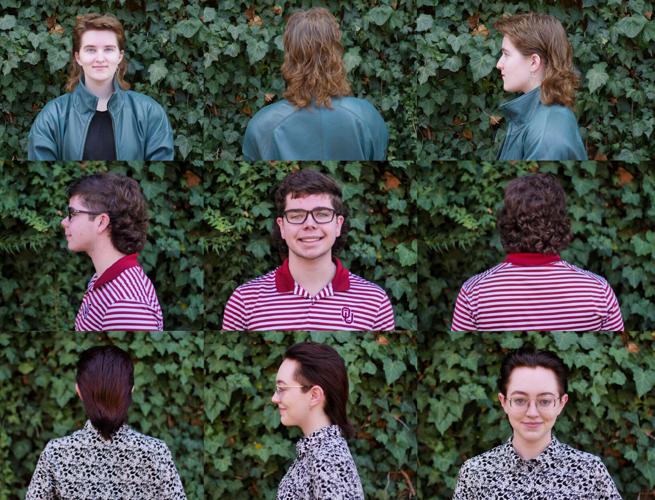
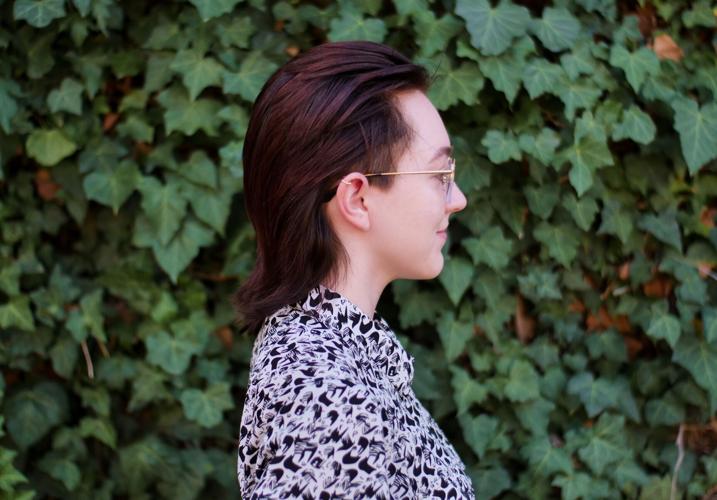

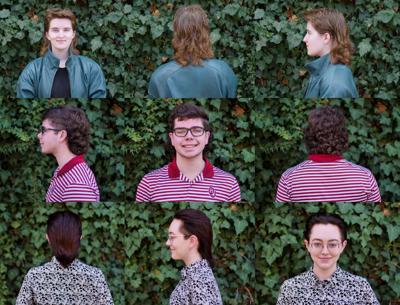
On a Tuesday afternoon in Moore, OU history and film senior Marley Lunsford arrives at Carmichael’s Salon to trim and color the vintage hairstyle they adopted in June — a mullet.
The haircut from another time — short in the front, long in the back — has made a comeback, and the resurfacing of this bona fide 1980s phenomenon has served as a welcomed change for some OU students in the wake of a tumultuous and isolated year.
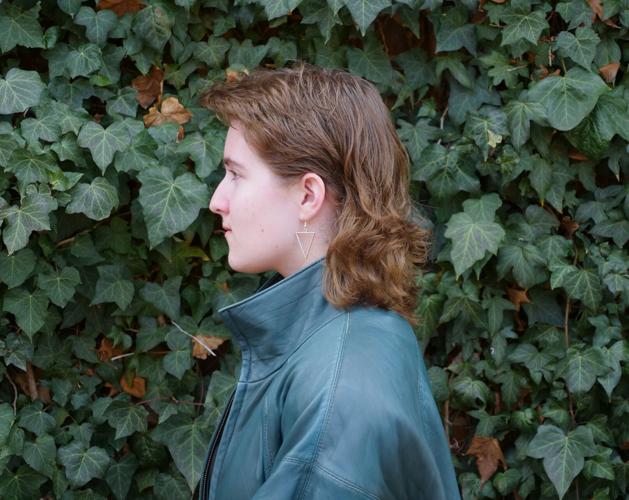
The desire to get a mullet came to Lunsford when they realized they wanted a haircut that best fit their gender identity, which they came to terms with over quarantine.

Marley Lunsford shows off their mullet Nov. 15
“It's just kind of somewhere between the feminine and the masculine. ... It's not conventional, and I think it kind of represents something I can't really explain,” Lunsford said.
The mullet is just one iteration of Lunsford’s already existing appreciation for 1980s aesthetics and the icons that made them synonymous with the time. Oversized blazers and jackets, cuffed jeans and the overall 80s style are part of Lunsford’s look.
The inspiration for the mullet ultimately came from John Taylor, bass guitarist for 80s English rock band Duran Duran.
The anachronism of wearing a mullet in 2020 isn’t lost on Lunsford, but the haircut is about more than just an aesthetic — it’s about gender identity and bringing back a look that “transcended” the binary.
“It's mostly just about pushing the mullet agenda ... to convince other people to get this ridiculous haircut,” Lunsford said.
The 80s also serve as inspiration for Walkman-wearing, mixtape-making history junior August Stroud. After quarantine and a return to school in the fall, he finally went for the haircut he’d been eyeing.
“It was actually a running joke with my hair guy for a couple years. I've been threatening that I would do it because I've wanted to for a long time,” Stroud said. “And eventually I was just like, you know what, I've been on lockdown for months. I’m half insane. I'm just gonna freakin’ go for it. … Yeehaw, now I’ve got a mullet.”

August Stroud shows off his mullet Jan 29.
The look was meant to go against the grain, and Stroud said he has been met with mixed reactions.
“Most people are absolutely incredulous,” Stroud said. “I remember when I got it, I was sitting in the kitchen, and my dad came in. ... He was like, ‘Wow, that's like a real mullet, huh?’ And I was like, ‘It's as real as yours was.’”
Stroud said having a knack for trend-watching led him to predict the mullet’s comeback a few years ago when movies and television began to adopt 80s aesthetics.
“I was thinking to myself, the next logical step in this is going to be mullets, and I need to be on the forefront of that because I think they're great,” Stroud said.
This hunch proved to be true, said Brian Bale, Stroud’s hairdresser.
“(Stroud’s) on the edge of, like, every trend, always tells me what's coming up, and he's always right. ... Sure enough, I saw it happening with other hairdressers as well as myself,” Bale said. “Big uptick in mullets.”
Bale said the return of mullets resides within a particular demographic. Young people are opting for the style, but older generations who once had mullets in their original era of popularity are leaving the cut where it was born — in the past.
“It's definitely mostly younger people,” Bale said. “The older people still have the end of the era stuck in their head. They don't remember the beginning of the era when it was fun. They remember the hangers on, and they don’t want to be grouped in with that.”
The era in question — one where the mullet was a “cutting edge” import from London aired by way of American television screens on MTV — represented a rebellion, Bale said.
Bale himself donned a mullet at the haircut’s rise to popularity in the early 80s, which served as a compromise between his parents desire for a clean-cut look and the rebellious longer style he was excited about, he said.
“As a guy ... as a teenager ... it was the ultimate rebellion to grow your hair out. ... My parents were like, ‘Alright, we'll let you grow the back out, but you gotta keep the front short and respectable,'” Bale said.
Wearing longer hair has been a site of fluctuation and deviation from the norm for men more than once.
The “Flock of Seagulls” cut, which included grown out bangs, followed the mullet’s rise and fall in popularity, and even more recently, the longer eye-covering hairstyle of a young Justin Beiber in the early 2010s brought about a trend to the dismay of some mothers who wanted to keep their sons’ hair short, Bale said.
While at the time, rebellion against gender norms wasn’t the explicit intent of the mullet, Bale said the longer hair was worn by some of the most “macho” figures in pop culture, like heavy metal and new wave ensembles that also wore makeup.
“I remember how excited I was at the time to get (a mullet), and I just wanted to make that experience special for the people that want to,” Bale said.
“A perfect storm” of the mullet reentering the popular consciousness before quarantine started and the lack of access to haircuts amid stay at home orders has brought in more men with longer hair than Bale has ever seen in his career, he said.
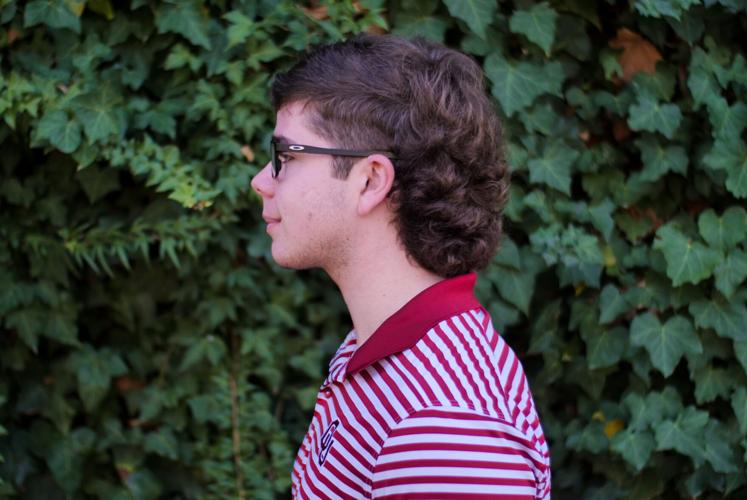
When pre-nursing and sociology sophomore Jack McGown’s hair began to grow out over quarantine and his cousin went after the mullet, he took the opportunity to get the cut, too.

Jack McGown shows off his mullet Nov. 15
“In March, when we got into quarantine and everything, my hair started getting longer, and my aunt made a bet with me that if I grew a mullet she'd pay me $1,000 dollars. So I was like you know what, my hair is already getting long — might as well do it.”
McGown said he admired OSU head football coach Mike Gundy’s mullet in particular — one of a few men involved in collegiate athletics who sport the look.
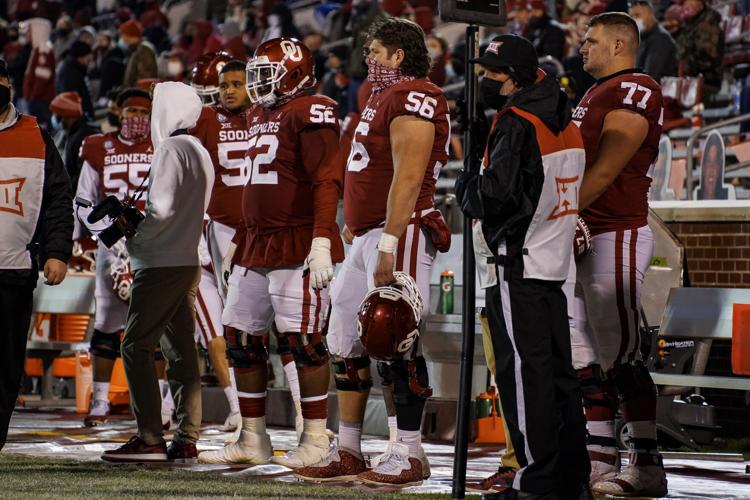
OU offensive lineman Creed Humphrey currently dons a mullet in his Twitter profile photo and showed off the look at the team’s season closer in December.

Then-redshirt junior offensive lineman Creed Humphrey stands on the sideline during the game against Baylor on Dec. 5.
For McGown, the mullet represents a happier time to be a college student and a chance to stand out.
“I wanted to emulate the 80s. The 80s was a vibe. The music was great. ... I mean there was obviously stuff going on, but I feel like there weren’t as many issues,” McGown said.
Amid an uncertain year littered with chaos, loneliness, death and an equal amount of despair, the mullet has had its moment again — a moment that Bale said has made hairdressing fun among the not-so-great landscape of the times. And so long as college students adopt the mullet’s original successor, Bale said his next prediction is a return of the perm.


