




The OU School of Dance opened “The Nutcracker” Friday, a grand-scale holiday production accompanied by the OU orchestra and featuring local young dancers.
The world sees countless performances of “The Nutcracker” each holiday season. Due to the intensity of the production and to give students a variety of performance experiences, the OU School of Dance performs “The Nutcracker” only once every four years.
The ballet tells the story of a young girl, Clara, at her family’s Christmas Eve party. She is gifted a nutcracker doll by her godfather, Drosselmeyer, who takes her on a fantastical adventure that highlights the childhood magic of holidays.
Ballet performance and pre-nutritional sciences senior Caylee Farni is dancing as Clara for the opening weekend, a role Farni danced five times prior to studying at OU.

Caylee Farni peforms as Clara with Ben Nemmers as the Nutcracker during the OU University Theatre rehearsal of "The Nutcracker" on Nov. 29.
“It’s very nostalgic looking back and being able to do (the role) again,” Farni said. “I’ve done it every year since I was 12, so it’s kind of weird going back to it.”
Playing Clara requires much more acting than needed for most other roles in the ballet. Returning to the young character as an adult has required a different and more difficult approach than it demanded during her adolescence, Farni said.
“It was a lot easier when I was 13 and 14, and I was more free with it and didn’t care as much about technique,” Farni said. “Now I have to really dig deep.”
Young dancers are a staple of “The Nutcracker” and OU’s production will feature approximately 30 children from the Norman community. The ballet features different children's roles throughout both acts, including mice, soldiers, harlequins, children at the holiday party and Clara’s mischievous little brother, Fritz.
Gaining experience on a collegiate stage, the children attend rehearsals and dance alongside more trained dancers who provide support and mentorship. The School of Dance is performing “The Nutcracker” for fourth grade classes of Norman Public Schools on Wednesday.
Farni began dancing at six, and said working with the kids has provided a glimpse of her childhood. Farni also said she hopes to work with children in the future.
“(The kids) always know what they’re doing and they keep us accountable,” Farni said. “I think it’s a great experience to be able to see ‘The Nutcracker’ through their eyes and their perspective. The kids bring their own magic to it.”
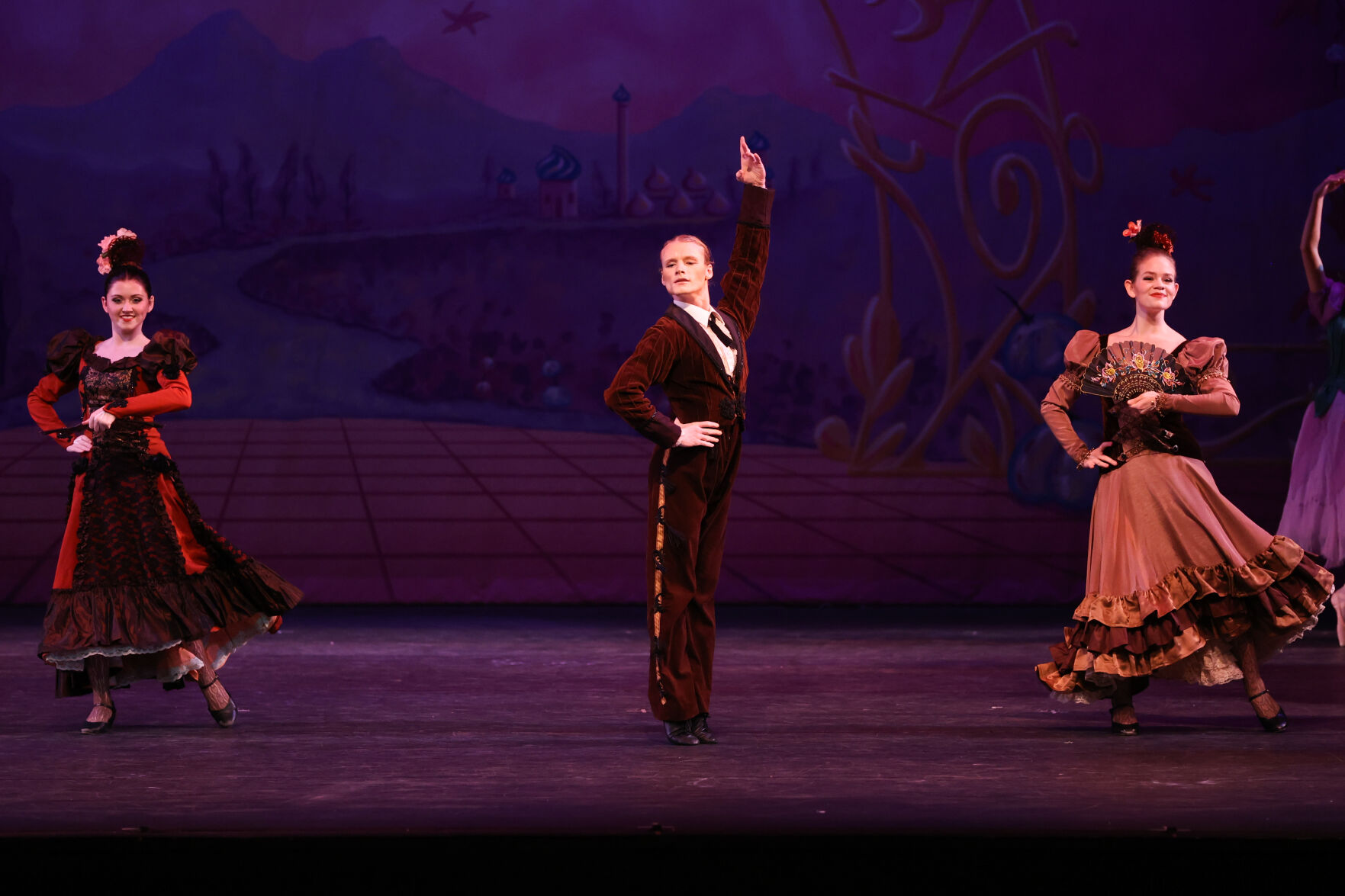
Harry Hefner performs Spanish during the OU University Theatre rehearsal of "The Nutcracker" on Nov. 29.
Ballet performance junior Harry Hefner first performed in “The Nutcracker” as a mouse at eight years old and last performed in the ballet as a high school senior. This year, Hefner is dancing multiple roles throughout the run of performances, including the life-size Nutcracker doll, which he often dances opposite Farni as her partner.
“It was definitely something I missed because I had been used to being in ‘The Nutcracker’ environment,” Hefner said. “‘The Nutcracker’ is something I like to do and it always feels like Christmas whenever I do it.”
Many dancers started performing because of “The Nutcracker,” as was the case for OU School of Dance Director Michael Bearden. However, the popularity of “The Nutcracker” has grown beyond the dance community.
Aside from going to the ballet, the story has been adapted as film and the music has found its way into many holiday movies and commercials. Bearden said it is uncommon for ballet to have had such a wide impact on culture.
“It’s definitely become more like a holiday tradition, which is kind of unusual for a ballet to be an integral part of culture,” Bearden said. “‘The Nutcracker’ is still relevant. You can’t watch TV without hearing the music or seeing references to the ballet in some way.”
The two-act ballet is based on Alexandre Dumas’s 1844 adaptation of E.T.A. Hoffmann’s 1816 “The Nutcracker and the Mouse King” and premiered days before Christmas in Russia’s St. Petersburg in 1892. The famous score was composed by Pyotr Ilyich Tchaikovsky, who died just one year after the ballet’s premiere and never witnessed its success.
“The Nutcracker” gained popularity in the United States in the 1950s, when audiences became hooked by the New York City Ballet production choreographed by George Balanchine.
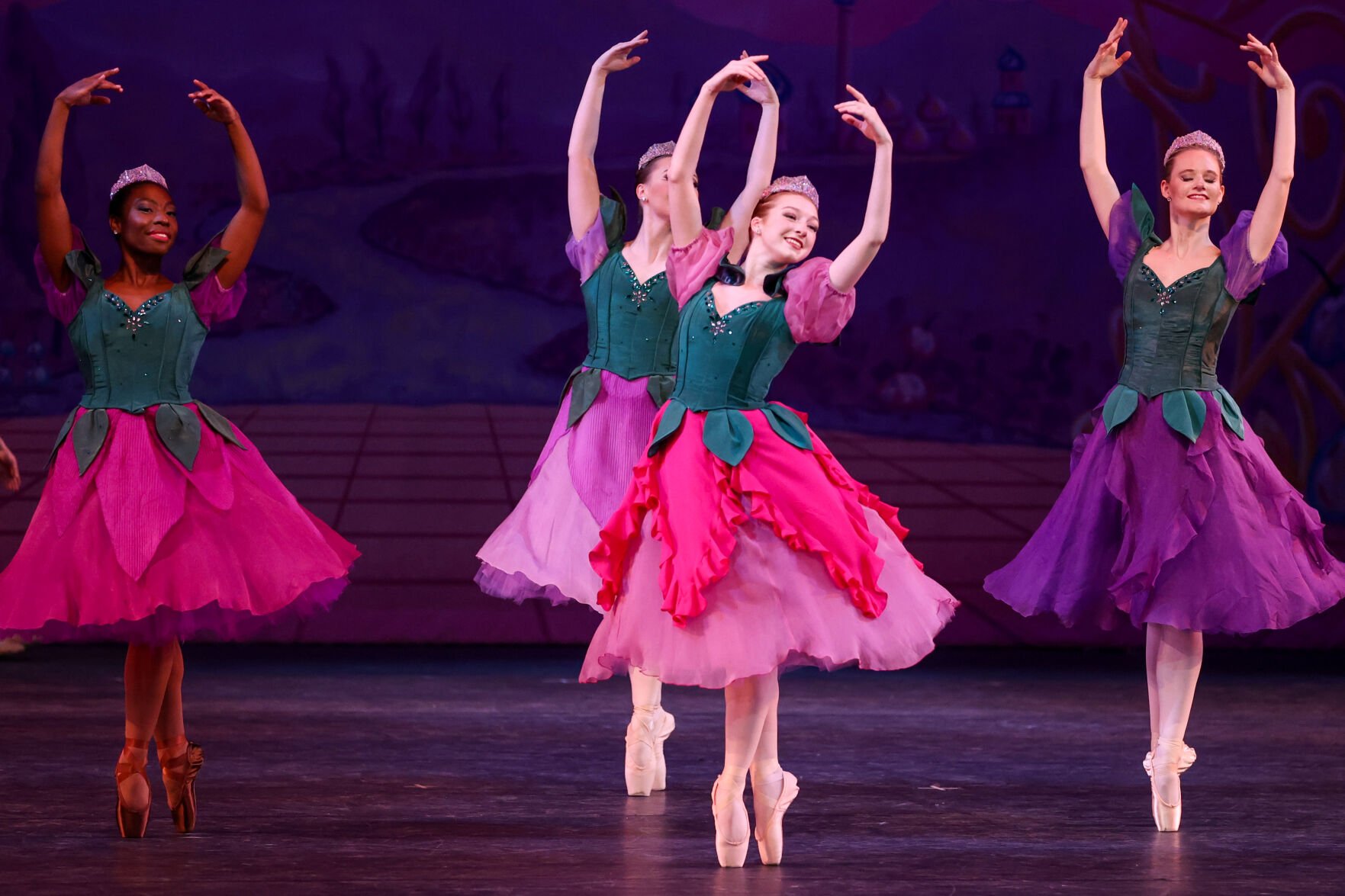
OU Dance students peform the Waltz of the Flowers during the OU University Theatre rehearsal of "The Nutcracker" on Nov. 29.
In 2017, ticket sales for “The Nutcracker” brought in $51 million, jumping from 2008’s $30 million. The New York City Ballet, the most popular ballet company in the world, generated approximately 45% of its 2021 profits from “The Nutcracker.”
Bearden explained that many ballet companies rarely make profit off ticket sales of the shows in the rest of their season. The widespread popularity and tradition of “The Nutcracker” brings in a much larger audience, making it possible for companies to profit off a production and financially support their other works in what Bearden described as “an artistic anchor for the dance community.”
In recent years, “The Nutcracker” has come under scrutiny for racial stereotyping and cultural appropriation. During the second act of the ballet, Clara enters the Land of the Sweets, in which she sees dances representing a variety of different cultures.
Theaters around the nation updated performances to be more inclusive in the 2010s when audiences and dancers began calling out the practices, and the OU School of Dance is following suit.
Most of OU’s production of “The Nutcracker” is choreographed by School of Fine Arts Dean Mary Margaret Holt. This fall, the department brought in Hannah Jew, 2015 School of Dance alumni with Chinese heritage, to choreograph a traditional Chinese ribbon dance for the production. Bearden said the dance brings an authenticity and learning experience to the show.
“There have been a lot of changes to different ‘The Nutcracker’ productions across the country that are more culturally sensitive and respectful, so I thought it was a really good move to invite one of our beloved alumni, Hannah Jew,” Bearden said.
Jew’s addition to the ballet provides a visual that “The Nutcracker” audiences may not have seen, allowing for a new experience and another reason to watch the ballet.
“(The Chinese ribbon dance) is choreographed beautifully and very captivating,” Hefner said. “I think it is a really great element and I’ve never seen it done before.”
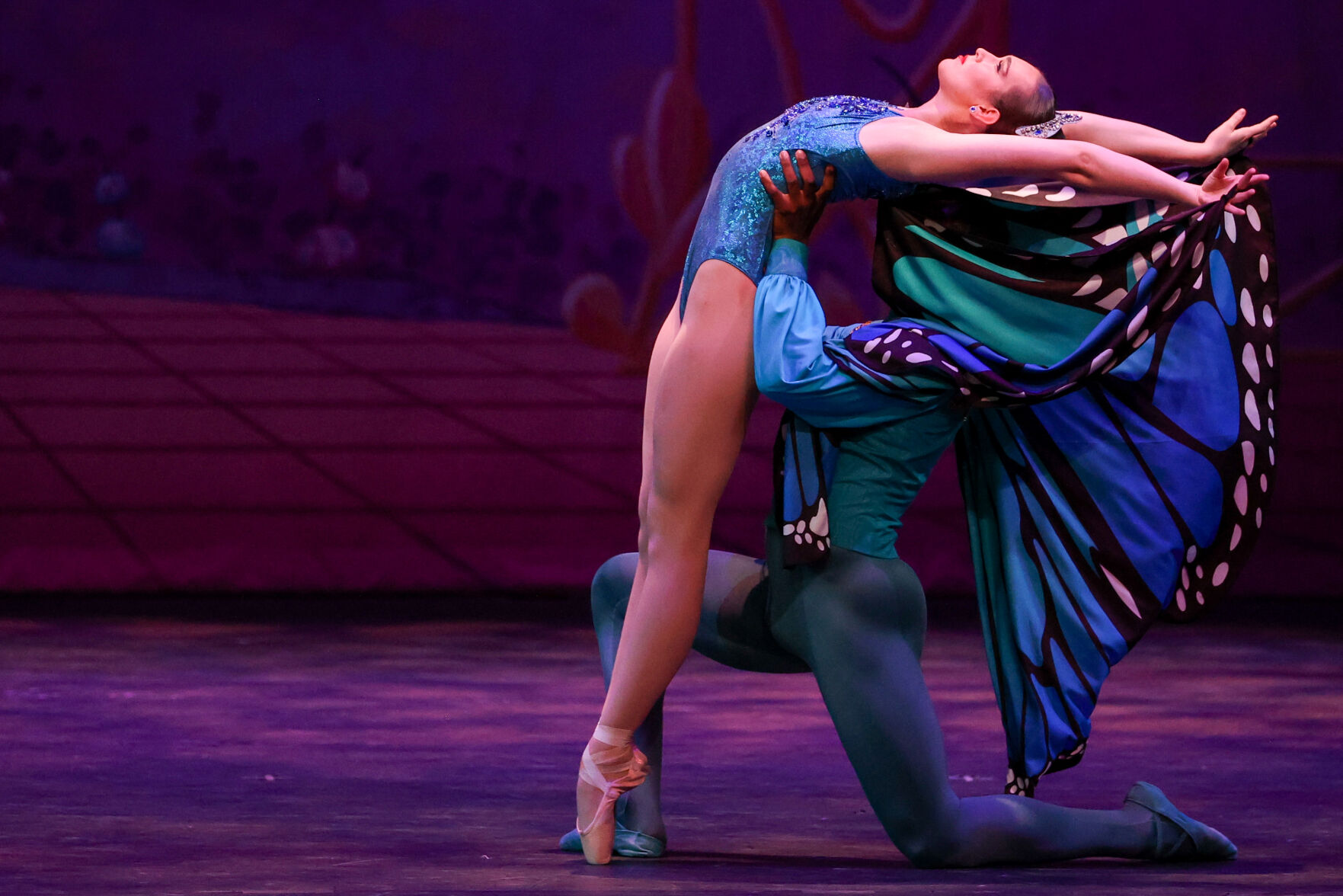
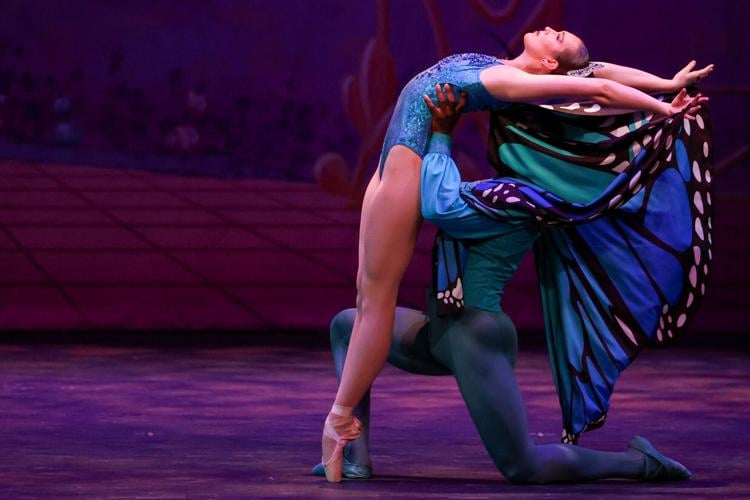
Lina Davis performs as Papillon during the OU University Theatre rehearsal of "The Nutcracker" on Nov. 29.
“The Nutcracker” involves students from both the ballet and modern departments of the School of Dance. The first weekend of performances will have accompaniment from the OU Orchestra.
“The reason (people) need to come see ‘The Nutcracker’ is so they’ll see and feel the energy and magic,” Bearden said. “The students have put so much dedication and work into this, and at the end of the day, the performance is about giving to the audience.”
“The Nutcracker” opened at 8 p.m. on Friday in the Elsie C. Brackett Theatre. The ballet has 8 p.m. performances on Saturday and Dec. 7, 8 and 9, and 3 p.m. performances Saturday, Sunday and Dec. 9 and 10.
Tickets are available online or by contacting the OU Fine Arts Box Office at 405-325-4101.
This story was edited by Emma Blakley. Grace Rhodes copy edited this story.


