There’s been a name that's been taken in vain one too many times the last year or so, and it isn’t that of any deity. It is the name of Martin Luther King Jr.
Many people have been invoking his name and legacy to critique the protests of the Black Lives Matter movement. They talk about how peaceful his protests were, how much positive change he brought into the world.
They seem to forget that for as peaceful as he was, he was still arrested 30 times and ultimately assassinated. Even in his “Letter from a Birmingham Jail,” he critiqued not those Americans who were blatantly and violently racist, but the majority who preferred order over justice and only had one word to say to the oppressed: “wait.”
These words were written decades ago, but I believe those who are trying to use his legacy to criticize protests today should listen to them — and preferably even take them personally.
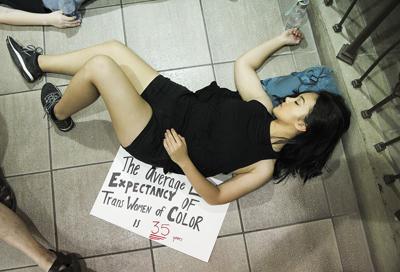
Two weeks ago, a BLM protest was held on OU’s campus — a die-in, to be precise. Prompted by the execution of Terence Crutcher and propelled by similar senseless murders that occurred decades before and in the days following it, students on campus took the initiative to have their voices heard.
Now, before I say anything else, I want to say that I know this protest was not for me or my people, even though I was glad to see signs supporting black and brown solidarity and even mentions of the Dakota Access Pipeline (preceded by a few select words which may not be appropriate to repeat here). This protest was for BLM — and because I support them in every way imaginable, I do not want any of my words to hijack the intentions of the protest or to make it about me, even though I will speak of my experience in joining in the protest.
Participants gathered at the Passion Pit, and were given directions regarding how the protest should play out. We were assured that there would be designated de-escalators walking around the Union who would make efforts to calm any aggression.
Then we started marching and chanting. It took a minute to get into the rhythm of it. I felt most inspired when my group (which entered the Union through the south entrance) met up with another group (which entered through the east entrance), and our voices joined together, doubling the impact. From there, for me, the protest was anticlimactic.
If I had any doubts that I’m horrible at playing dead, these were confirmed as I lied on the ground, trying not to open my eyes at every shadow that passed by. Those who organized the protest were in the center of the food court, explaining the "inconvenience" of our presence and addressing police brutality.
I understand, as a participant, that my playing dead (along with many others) was a way of making people pay attention to the words being said, carrying out the chants that were started intermittently. There was one person who attempted to start something (twice, I heard, for they tried again after I left), but the de-escalators performed their job well.
The stories told by those who spoke struck me, inspired me and made me want to take action — which is hard to do when you're playing dead. The concepts are mutually exclusive, it would appear.
I do believe the die-in served the purpose of giving a platform to those voices that needed, and still need, to be heard. It was a peaceful way of protesting, despite the students who complained of the inconvenience as vehemently as though their own lives were threatened.
Voices will always need to be heard, and we should always make space — communal space — for them to converse.
But it is not enough. I can’t play dead and consider “protest” checked off my to-do list for the week. Unless we stop making protests events with borders, and until we start realizing that our existence is (and if it is not, then should) be a form of continual, active protest, nothing will change. People have to keep speaking up and listening. I’ve been doing it for years.
Talk is only the start. Talk is what keeps us, the choir, in the know, what keeps us moving forward. But talking is not moving, and you can’t talk to people who don’t want to hear you. Even inconvenienced, trapped and within shouting distance, people who are not the choir will still refuse to hear. To listen.


