SEPT. 20, 2017: President Boren announced his retirement effective June 30, 2018, and indicated that students would be included on the search committee. Many students prepared and updated their resumes for the chance to apply — a chance that would never come.
Despite the Board of Regents having regularly scheduled meetings on Oct. 24 and Dec. 12, with more than nine months until Boren’s retirement, the Regents decided to convene an emergency meeting on Oct. 1 to establish the nomination process for the search committee.
According to Austin Reid, SGA leadership received a letter. Within 39 minutes, without a single interview or application, the leadership decided to volunteer themselves using the Committee of the Whole loophole to be voted on the next day. They told Congress vote yes, or students wouldn’t have a seat on the search committee. To ensure that SGA had a seat on the committee, even if unjustly given, Congress voted yes.
THE PROBLEM: Under normal procedures, SGA would’ve needed to receive notification prior to Thursday, Sept. 28, at 5 P.M. or get the Regents to approve extending the Oct. 9 deadline to Wednesday, Oct. 11.
ACTIONS TAKEN SO FAR: Tuesday, Oct. 3, I filed a legal challenge with General Counsel (GC) challenging the lack of a competitive application process. I argued it was a High Office in the Executive Branch and was an appointment, NOT a nomination asking about concurrent service in high office. On Thursday, Oct. 5, GC stated it was a low office of the Executive Branch, a nomination and nothing was in conflict of concurrent service in multiple branches. I then appealed to Superior Court. In a sweeping 5-0 opinion delivered by Chief Justice Bourland, the Court confirmed it was an Executive position. It sided with GC on being a low office and that no competitive application process was legally required. The court then declared that if Representative Rains-Saucedo and Senator Pavlowsky were selected to be on the Committee, they must resign their Chairship OR decline a position on the Committee. I thank Ryan Echols and Brian Owings for their suits in SGA courts on my previous challenge. In response, the Chairs authored legislation to serve on Regents Search Committee without having to resign — to which I have a pending challenge on the legislation.
WHERE THE BLAME RESTS:
1. The short timeline imposed by the Regents while holding emergency meetings with nine months remaining.
2. SGA Leadership for NOT either asking for a time extension, holding an application process or advocating for the students that they were elected to advocate for.
HOW TO CORRECT THIS SITUATION:
1. The next regularly scheduled meeting for the Regents is Oct. 24. The regents could grant a timeline extension until Sunday, Oct. 22, at 11:59 p.m. and declare the past student selection null and void. Senate meets on Oct. 22. Applications can be sent out/advertised this week along with interviews granted. On Oct. 22, a joint session using Committee of the Whole can then be done.
2. The Regents could declare the previous selection process null and void. Then using the previous criteria give all parties until Nov. 30 to submit their picks for the Dec. 12 meeting. This would still leave the Committee six months to search for a replacement before Boren retires.
WHAT CAN BE DONE TO IMPROVE THE FUTURE:
1. SGA may adopt legislation outlining Regent's search committees nomination processes for students.
2. The Regents could take more time and deliberate action to ensure that the correct decision is made.
3. Intense pressure can make or break leaders. On Oct. 31 and Nov. 1 many SGA representatives will be up for reelection. New executive leadership will be on the ballot. This election will be about representatives and leadership that stands up for the students OR gives into pressure. You can decide the future of SGA.
IN THE WORDS OF Rep. Williams: “SGA is NOT a rubber stamp.” This past week was a test, and let’s hope SGA doesn’t turn into a rubber stamp for short changing students. Eggs have been broken, but an omelet can still be made out of this situation.
Included in this article is a 77-page document outlining the selection of events. Additional options are being considered and explored to the fullest.
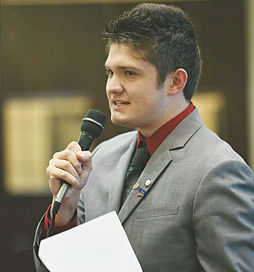
David Monlux is an international security studies and political science senior.
The Daily welcomes letters to the editor and guest columns from the OU community. To submit a letter or column, email dailyopinion@ou.edu.


