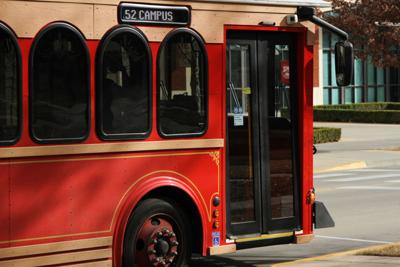
Inequality is on the rise in areas where the transit-dependent population is deprived of adequate access to public transportation services. Notably, accessibility to public transport in Norman is hindered by the lack of services at some locations and the infrequency of transit services.
According to the Go Norman transit plan, the public transportation in Norman serves low-income families, people with disabilities and densely populated areas, which have been noted to be east Norman and OU neighborhoods.
However, some other neighborhoods, such as the areas around Classen Boulevard, require public transportation due to the number of high-density, multifamily apartments that house some people who do not possess private automobiles, like OU international students.
The lack of bus stops in these neighborhoods disproportionately affects both the residents and other people who might have to access these neighborhoods but do not own vehicles. This leads to a decline in the standard of living of the population without vehicles, as they are denied their ability to commute to places they might have an interest in.
Comparably, while some households in Norman own multiple vehicles, a survey by the Go Norman Transit showed that 54 percent of the public transportation riders don’t own cars, while 53 percent of them also earn less than $25,000 a year.
This indicates that low-income individuals are the major users of public transport.
Nevertheless, the buses work during the weekdays from 7 a.m. to 10 p.m. and from 10 a.m. to 7 p.m. on Saturdays. More importantly, the bus that transports people to Moore runs twice a week on Tuesdays and Fridays.
Users of the buses usually commute from their residential areas to access education, employment, as well as recreational and health facilities. Thus, their access to these areas is determined by the availability of public transport in times of need.
Limited frequency of services, therefore, deprives people of taking night shift jobs and attending night classes and late school events. When an urgent need arises which requires them to commute during times when service is unavailable, they have to rely on alternative transport modes, which places an additional burden on them given their low earnings.
A study conducted by New York University established a correlation between limited transit access and unemployment. The study found that unemployment is more rampant in neighborhoods with limited access to transit than in neighborhoods with high accessibility.
People make decisions to apply for jobs based on the reliability of the transportation system. Transit dependents in Norman, therefore, have limited employment opportunities as they cannot work at their convenience in places that are not frequently served by the buses. At worst, people residing in places that are not served by public transport are forced to acquire vehicles before working outside their vicinity.
Considering how unequal access to transportation disproportionately affects vulnerable communities, it is important to expand the services of public transport by providing services to the neighborhoods that are not currently served, extending services from 6 a.m. to midnight during weekdays and weekends, and providing services to Moore on a daily basis.
The notion of equitable access to transportation is fundamental to the United Nations' sustainable development goals, making it central to improving the quality of life, as well as a basic component in creating sustainable cities.
There are countless ways to view how insufficiency of public transportation limits opportunities and increases the vulnerability of transit riders, widening the inequality gap among people of different income groups.
People are expected to be financially stable and self-reliant, but we forget to provide adequate transport services which are the prerequisites for productivity.
Socioeconomic inequality grows as the vulnerable population becomes reluctant to seek jobs that are not within walking distance from their homes with the fear of relying on public transport that does not provide frequent services within all areas of the city.
This story was edited by Jillian Taylor and Karoline Leonard. Nikkie Aisha and Teegan Smith copy edited this story.


