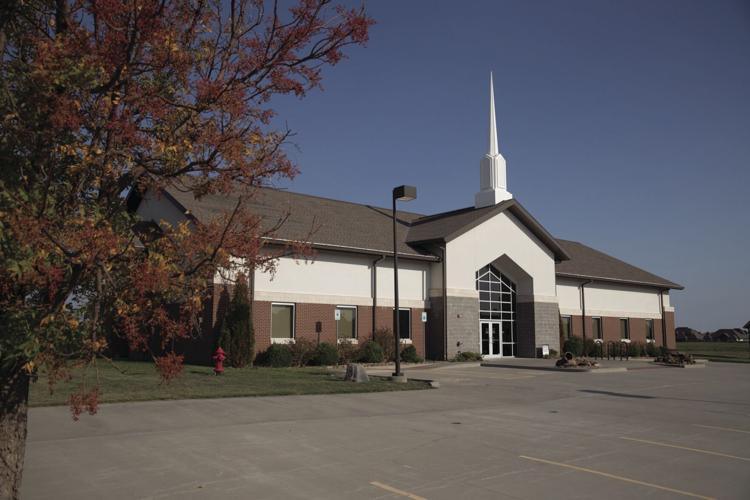

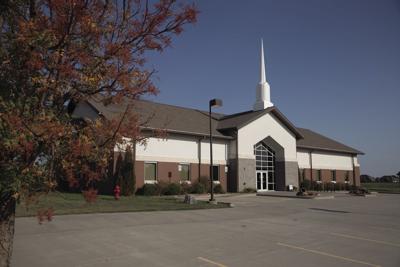
The Rev. Jennifer Logsdon-Kellogg learned the U.S. Supreme Court had officially overturned Roe v. Wade on Friday, June 24.
She had already prepared her sermon for that Sunday, but she knew she had to address what happened. She struggled to find a way to bring up the topic without telling her congregation what to think, but she couldn’t ignore the topic entirely.
“I was feeling slapped in the face,” Logsdon-Kellogg said. “The autonomy of all women was being questioned.”
She was still wrestling with what to say when she arrived at Norman United Methodist Church that Sunday. As she socialized before the sermon, she spoke with other women in the congregation and found many of them were feeling the same pain and inner turmoil she felt.
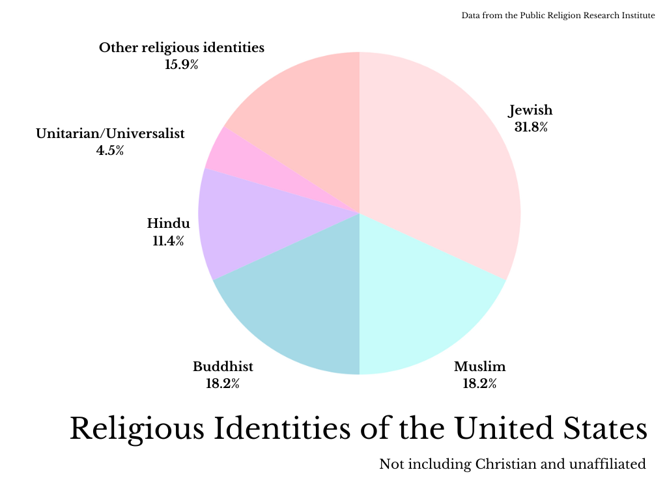
Logsdon-Kellogg’s congregation is part of one of over 100 subsects of Christianity in the U.S., according to the Pew Research Center. There are dozens of other religions, including Judaism, Islam, Hinduism and Buddhism, that observe unique views on abortion.
When Logsdon-Kellogg gave her sermon, she knew she was one of many religious leaders who had to address the news carefully. When she finished, she began packing up to head home. She heard earlier there would be a protest at the Oklahoma state Capitol that afternoon, but she couldn’t decide if she needed to be there. Still, she felt called to the Capitol steps.
“I decided it didn’t matter whether my presence was going to make a difference in making any kind of statement,” Logsdon-Kellogg said. “I needed to be there with people who were also feeling distressed.”
At the protest, Logsdon-Kellogg was in a crowd of hundreds.
‘A political creation’
The assumption that evangelical Christians were always against abortion came from over 50 years of anti-abortion organizing, said Jennifer Holland, an OU assistant professor of history. The movement was led predominately by white Catholics — with other major religions left out of the fight — ahead of the initial Roe v. Wade ruling in 1973.
“This idea of a Judeo-Christian value that always believes abortion is murder is a political creation of the anti-abortion movement,” Holland said.
Logsdon-Kellogg was not inclined to join political movements growing up. Originally from Ada, Oklahoma, she spent most of her formative years focused on learning about the values of different religions. She graduated from Oklahoma Christian University in 1994 with a degree in philosophy and religion.

Afterward, she started a construction business with her husband. For nearly two decades, she worked side-by-side with her high school sweetheart. In 2010, however, she felt a calling to ministry.
She quickly started seminary school, graduating in 2016. In her time at seminary school, her childhood church — United Methodist in Norman — asked her to be a pastor. She accepted the offer and was eventually ordained as a minister in 2018.
Through her years of studying Christianity, she learned that the Bible doesn’t mention abortion specifically. However, multiple passages in the Bible are interpreted to mean that God loves all, including fetuses, Logsdon-Kellogg said.
Another value emphasized in the Bible is freeing people from captivity, Logsdon-Kellogg said. She explained that a key theme in Christianity is working toward liberation.
Logsdon-Kellogg argued that a person being forced to have a child they cannot care for is a form of captivity in modern society. Throughout the Bible, there is an emphasis on the community caring for those less fortunate, she explained. In modern society, however, there are not enough systems in place to make that a reality.
Logsdon-Kellogg said she knows other Christians would disagree with her stance on the topic, but she emphasized there is a lot more nuance to the discussion than is often acknowledged.
While Logsdon-Kellogg holds that every life is sacred — including potential life — she said she understands that every person should have the right to make their own choices. She also worries that the legal system cannot be flexible and responsive enough to take into account the many medical dangers pregnant people can face.
“You can’t make a law or list that would cover every eventuality,” Logsdon-Kellogg said. “There is only so much our laws can do for us.”
Logsdon-Kellogg also expressed concern about laws that punish people who counsel those considering abortions and medical professionals that provide them. She feels her role at her church is to be a sounding board for members of her congregation.
Logsdon-Kellogg is not the first reverend in her position. Religious leaders have acted as guides in the realm of abortion for decades, Holland said.
Clergy members of all religions
Before Roe v. Wade, the Clergy Consultation Service existed. Clergy members — predominately those of Christian and Jewish faiths — worked together to help people seeking abortions find medical care. Their positions as religious advisers helped them naturally transition into their new roles.
In their acts of civil disobedience, they were protected from prosecution as leaders in the community, Holland said. New laws proposed across the U.S. could end that protection, Holland said.
“It feels like we’re going backward,” Logsdon-Kellogg added.
Haris Ali — an Imān of the Islamic Society of Norman — also acts as an adviser for those who have questions about abortion. People come in with their “emotions all over the place,” he said, and he always sits them down to take deep breaths before they talk about their options.
While Ali said the need for abortion is a rare occurrence in Muslim communities because of the way relationships are structured, it does happen. But it is understood that no matter what, God will provide, he said. For example, if a person feels they need an abortion because of poverty, they can instead turn to the Muslim community for support, he said.

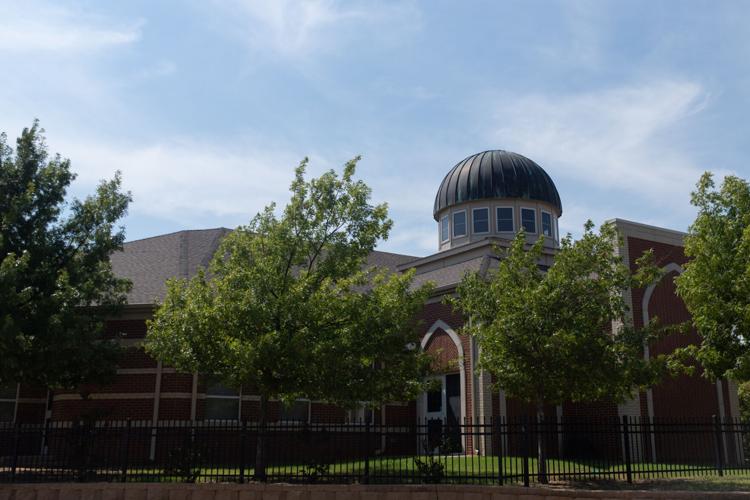
Islamic Society of Norman temple on Sept. 14.
“We support everyone, Muslim and non-Muslim, when they come into the mosque,” Ali said. “It’s just who we are.”
He also advises people based on the idea that nobody is perfect and that the topic of abortion is not black and white. In some interpretations, most abortions would be considered murder. According to the Quran and Islamic tradition, murder is one of the greatest sins a person can commit. However, there are exceptions, Ali said.
If a person is in danger because of a pregnancy, the person’s existing life should be saved. In instances of rape — comparable to an act of war in Islam — abortion is permissible early in the pregnancy.
Ali said abortion is a private decision that would be between the person and God. He said all life should be appreciated and cherished, but committing a sin in Islam does not mean a person is doomed.
“Through your sins, you get closer to Allah,” Ali said. “Through your sins, you turn back to God.”
Ali also emphasized that Muslims have varying views on abortion. The same is true in religions like Hinduism and Buddhism. With a diverse population comes diverse beliefs, said Sushumna Kannan, a former researcher of feminism at Indic Academy.
For example, in India, abortions are legal and fairly common because of a regional distaste for the use of condoms due to the belief that they lessen pleasure, Kannan said. However, one of the prominent religions in India — Hinduism — says that killing someone who cannot defend themselves is one of the worst sins, Kannan explained.
Geoffrey Goble, a religious studies professor at OU, explained that religious debates usually reflect cultural concerns as opposed to strictly religious ones. People use religion as a “tool kit” as opposed to a strict set of rules to “inform their lives in a meaningful sort of way,” he said.
“The dominant morality of a tradition is to be guided by the dominant culture in which it is found,” Goble said.
Similar to Christianity and Islam, Hinduism follows the beliefs that if someone’s life is in danger due to their pregnancy, an abortion should be done, Kannan said. While Buddhism has no strict rules against abortion, it is interpreted that its rules against violence apply to the medical procedure, Goble said. However, Buddhism also has for exceptions in emergencies, Goble added.
‘No room for us in the pro-life movement’
Holland said Jewish people have historically supported abortion rights given their stance — similar to other religions — that a person’s life should be prioritized over the fetus.
Abby Jacobson, a rabbi of the Emanuel Synagogue in Oklahoma City, said part of the reason Jewish people have been so involved in advocating for abortion rights is because the anti-abortion movement was dominated by and committed to evangelical Christians.
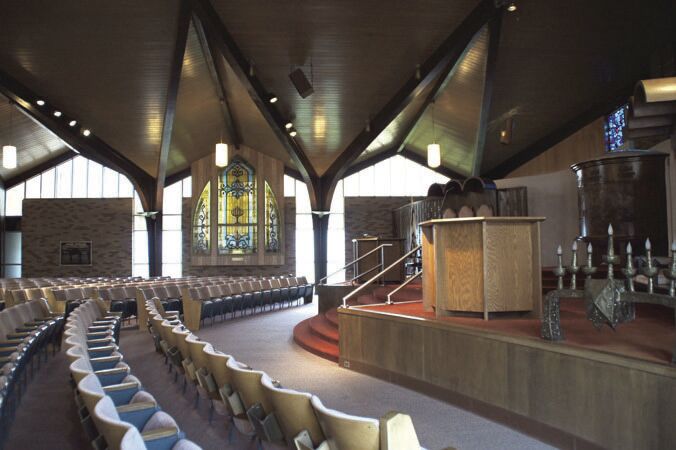
The OKC Emmanuel Synagogue.
“There is no room for us in the pro-life movement,” Jacobson said. “If religion goes into politics in America, we will always lose.”
Jacobson added that Jewish people often strongly oppose mixing religion with politics. She said they are generally comfortable with Jewish laws being separate and different from the government’s.
“As an American, I want people to be able to make that choice because it's not my right to argue about it,” Jacobson said. “It’s not my right to stand in the way.”
Jacobson said while the Torah says nothing directly against abortion, it does explain that if a person’s life is in danger, an abortion is expected.
Additionally, the oral tradition of Judaism has adapted over the centuries to address additional contingencies in the modern era. For example, if the pregnant person’s mental health is in danger, as opposed to their physical health, it is acceptable to have an abortion. If a doctor recommends an abortion, it is accepted, Jacobson explained.
“Even when the doctor and rabbi are disagreeing, the doctor is always right,” Jacobson said. “We believe you should live by the Torah and not die by the Torah.”
Rape is a more sensitive topic for Jewish people, Jacobson said. There are many ancestors of modern Jewish people who were the product of rape, she explained. However, whether the person keeps the child or not, it is ultimately their choice.
“It’s a terrible choice, but if you have to choose, we would choose the mother,” Jacobson said.
Jacobson said there needs to be a certain level of trust between people that when a decision as hefty as abortion is made, it’s being made with thoughtfulness and care.
A female perspective
When Logsdon-Kellogg was first studying religion, she searched for stories of women in the Bible that were not directly connected to fertility or childbirth. It was a difficult task, and she found very few. She emphasized that the way the Bible depicts women is not done from a female perspective.
One story she found and still thinks of, however, was heartbreaking to her. In the Book of Judges in the Hebrew Bible, a man prayed to God that he would win a battle he had against his enemies. If he were to win, he promised he would sacrifice the first thing that came through the door to greet him when he returned.
The next day, he won the battle and, when he was home, his daughter was the first to welcome him. When he explained what he had done, she nodded in understanding. She said she knew he had to follow through on his promise, but asked that she have time to say goodbye to her loved ones and prepare herself.
“I cling to that story because … the only autonomy she had was the timing of the sacrifice, not the fact of it,” Logsdon-Kellogg said. “And I think that as terrible as that story is, there are women … in Oklahoma that are in that situation all the time.”


