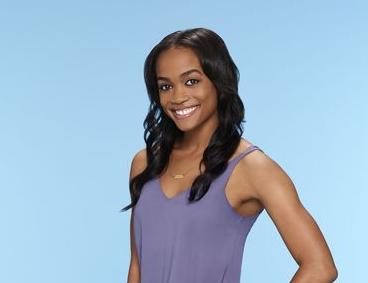

The Campus Activities Council Speakers Bureau hosted a Thursday night virtual Q&A with Rachel Lindsay, the first-ever Black Bachelorette, where she discussed diversity and inclusion in the media and her college experience.
Lindsay began the event answering questions about why she joined the 21st season of The Bachelor before deciding to be on The Bachelorette’s 13th season in 2017. Lindsay said she felt she needed to take on the challenge of representing Black women as a woman of color and a minority on the show.
“I was going to be the first Black Bachelorette, and I knew that,” Lindsay said. “So, I knew it's a big thing to be the first, because there's a reason it hasn't been done before. So people aren't always going to be comfortable with what it is that you're bringing to the table. You're new, you’re change.”
Lindsay said there were a lot of concerns surrounding her race and background, but those concerns became motivators in her pursuit of joining The Bachelor franchise, even though she originally declined to join because of the pressure.
“What does this mean for young women who look like me, who are going to see themselves represented in a way they never have before on this type of show?” Lindsay said. “For me, those were the questions that I focused on. … That's what carried me through to eventually say yes, because when they asked me originally, I said no.”
Lindsay talked about her career before joining The Bachelor, outlining her path from college to practicing law in Texas. While working toward her undergraduate degree from the University of Texas and law degree from Marquette University, Lindsay developed her interest in sports management. She encourages college students to pursue their own individual interests.
“I'm doing things that I never thought I would imagine,” Lindsay said. “And I'm looking at the path that I took to get here. It wasn't linear. I didn't do this, this and this, and this added up to equal this. That's just not how things work. … Be open to the experiences that life has. Listen to your gut, listen to the things that you want to do. Pursue those things, because it can lead you back to where you're originally supposed to be.”
Along with answering questions about her husband Bryan Abasolo, who was the winning contestant on the 2017 season of The Bachelorette, Lindsay also stressed the importance of mental health and therapy.
Lindsay said therapy was a way to cope with being a minority on The Bachelor franchise, and said seeing the show’s psychiatrist was a huge help for her getting through the show. Lindsay said she started therapy two years before first joining The Bachelor, and she made it a priority to see her therapist once a week during filming when she became the Bachelorette.
“I know I would not have survived The Bachelorette, I know I would not have been able to really pick Bryan and see Bryan for who he is without going to the psychiatrist,” Lindsay said. “That was really a lot of what protected my peace.”
At the end of the Q&A, Lindsay touched on the ways the Black Lives Matter and #MeToo movements have shaped the media today.
“People who had been oppressed became fearless — that's what the (movements) did,” Lindsay said, “It's enough. (It’s) very similar to what you saw in Me Too. Women had been treated in the worst ways in the media industry forever, where it became the norm. And we just knew about (it), but you didn't speak on it. Somebody decided to bring about the Me Too movement, and it took on a life of its own. And they started knocking down powerhouses who had been doing this forever — who had normalized it in a way that we never thought would happen. The movement took on a life of its own. That's what needs to happen.”


