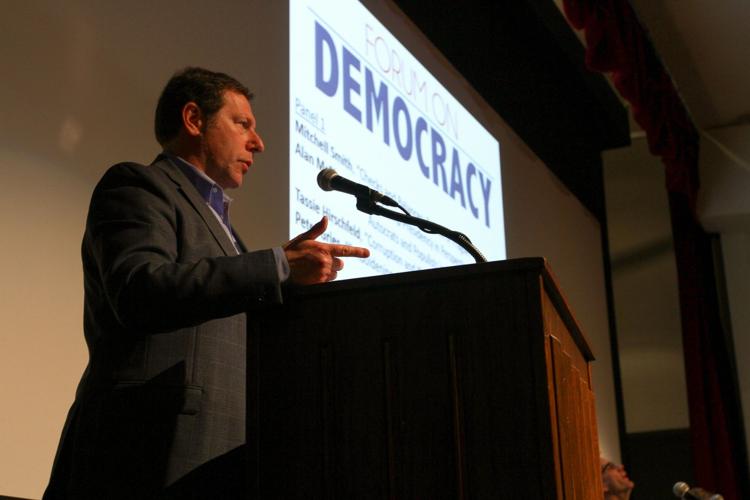
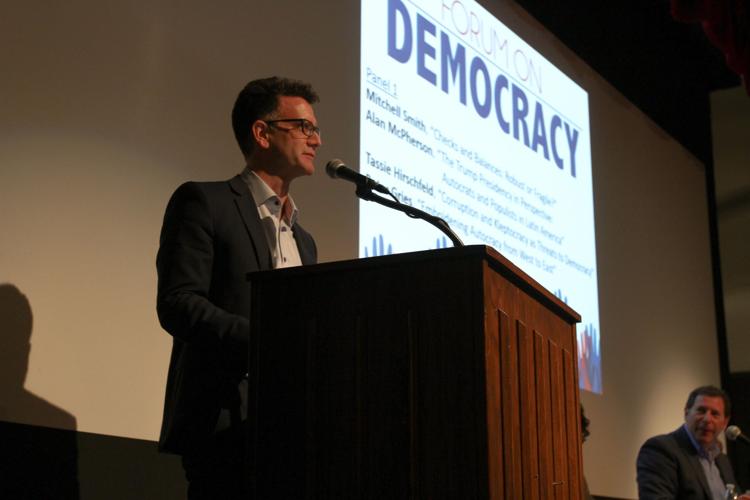
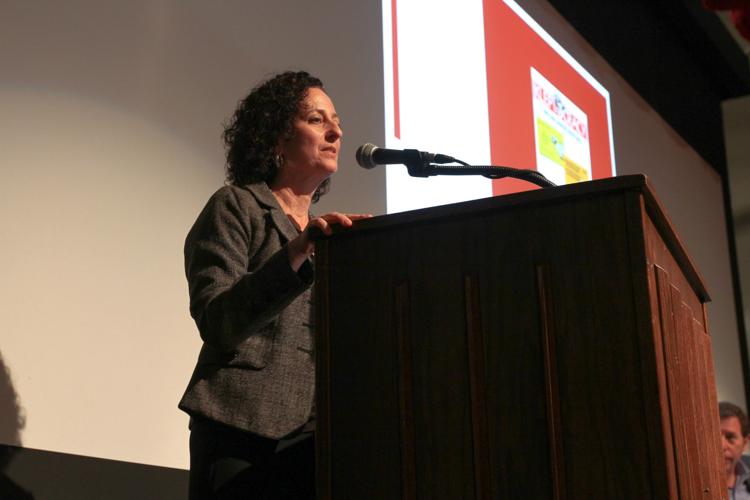
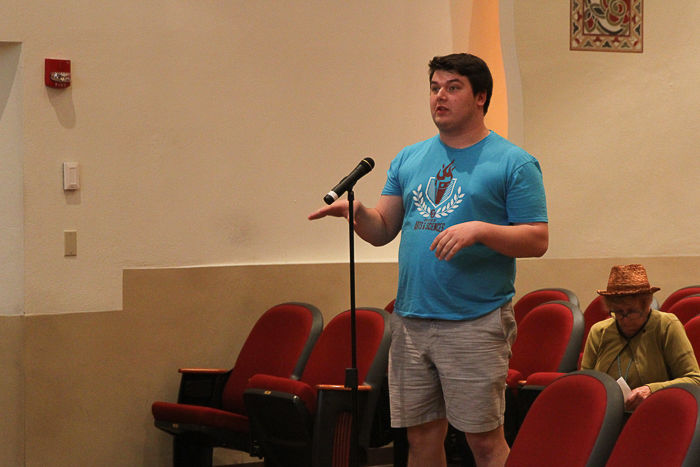
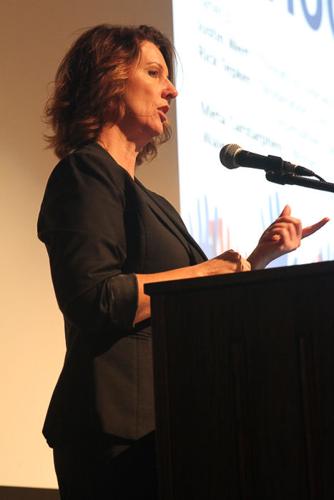
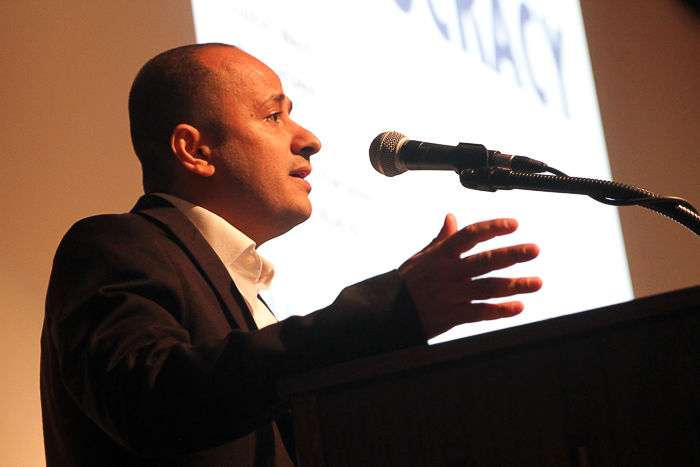
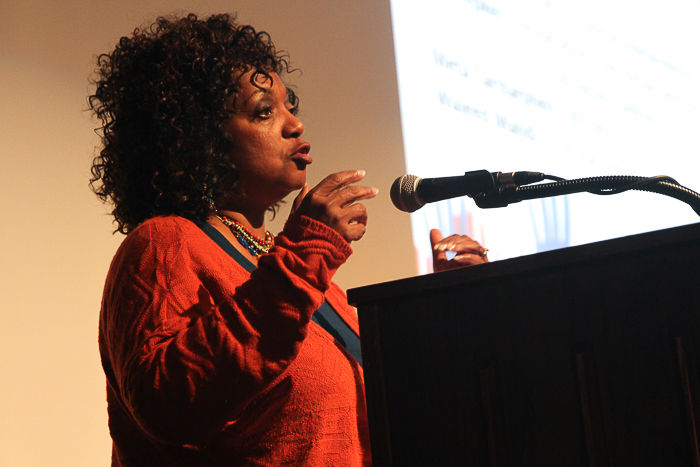
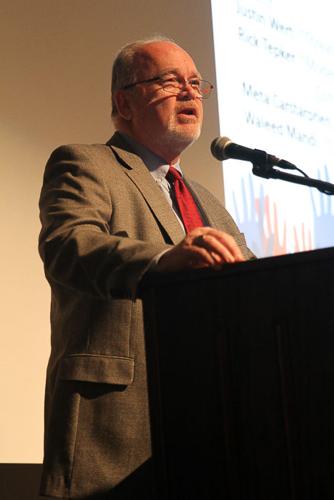
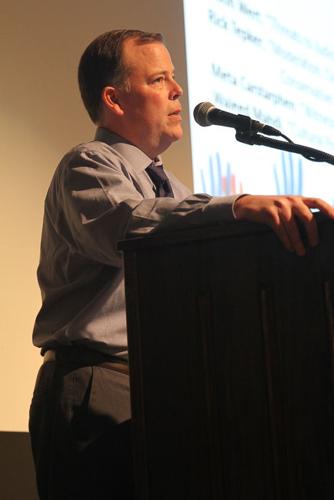
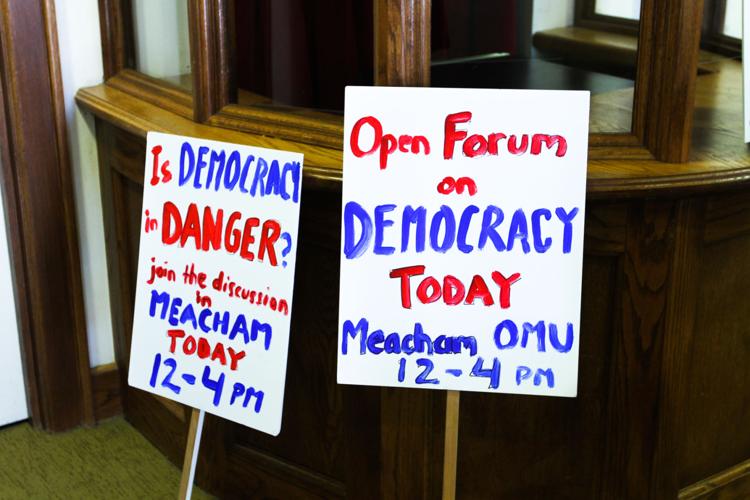
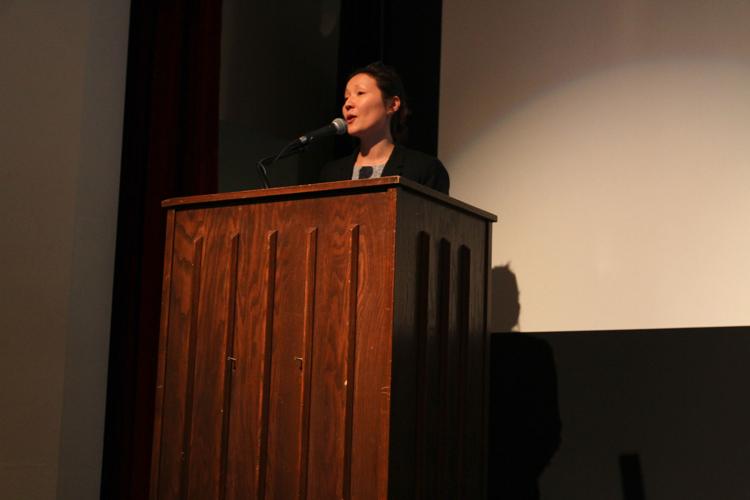
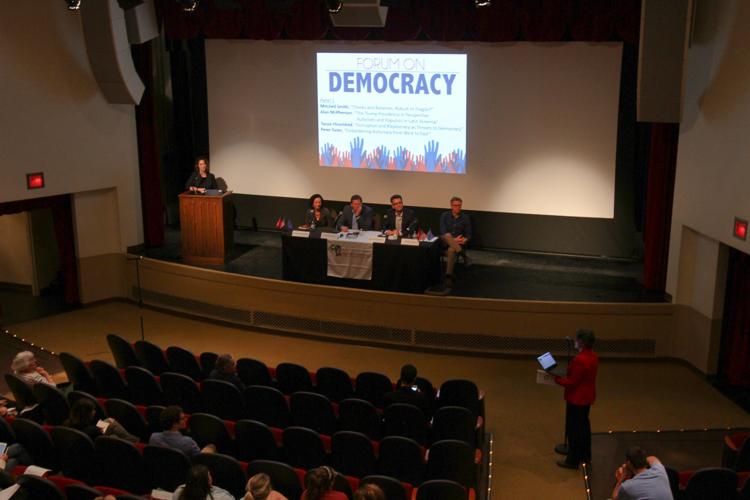


Several panelists from the OU community discussed topics relating to the United States’ political system at OU’s "Forum on Democracy."
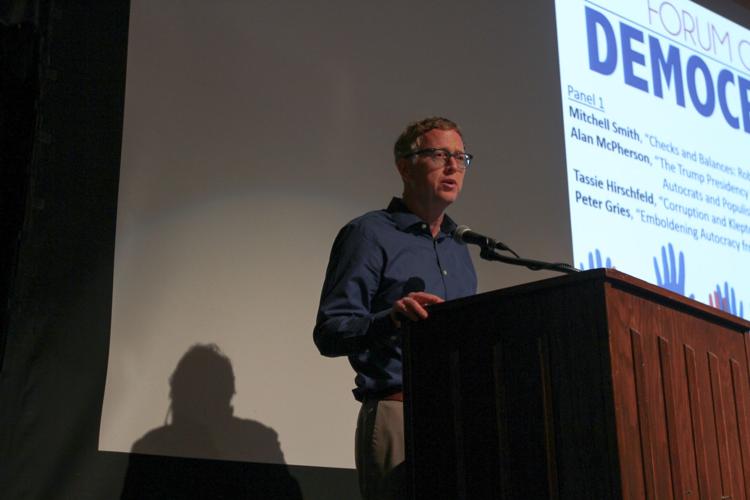
Suzette Grillot, dean of the College of International Studies, and Provost Kyle Harper opened the forum, welcoming the audience with opening remarks before leading into the first panel. The first panel included Tassie Hirschfield, professor of anthropology; Mitchell Smith, associate dean of academic affairs of the College of International studies; Alan McPherson, professor of international studies; and Peter Gries, professor of international studies and director of the Institute for U.S.-China Issues.
Smith gave a talk entitled "Checks and Balances: Robust or Fragile?" He discussed how checks and balances are becoming “flimsier” and the effort undermine professional journalism and the media.
“It's about sowing doubt, about what is true and what is not, to advance the notion that there is ultimately only one reliable source of information. This is a very dangerous thing indeed, and let's call it what it is: It's propaganda,” Smith said.
McPherson followed Smith, discussing the parallels between Latin American autocrats and populists. McPherson said President Donald Trump is a populist in that he is charismatic and can convince the people that he has an “internal magic” that can get things done, but also that he is deeply divisive and forces the blame for his own failures on others.
Hirschfield, the third speaker on the first panel, discussed corruption and kleptocracy. Hirschfield said that in a kleptocracy, an enormous amount of wealth gets transferred from public to private. He said it's the most common form of government that no one wants, and while it doesn't describe the United States today, it’s not impossible.
Hirschfield gave several examples of corrupt economic practices to be wary of and said these practices could be overlooked with the constant public focus on human rights and social issues.
“Our country was founded on the idea of democratic governance, and this to me is a good thing, a protection. But it does have to be practiced and reinforced,” Hirschfield said.
Gries had originally prepared a presentation about U.S.-China relations, but he said he would rather use his time to talk about the assault on truth in the context of the freedom of the press. He referred to the Korean War as an example, and he referred to how China’s propaganda campaign influenced the Chinese to be distrustful of Americans due to false information about biological warfare.
Gries also mentioned the Tiananmen Square Massacre as example of an assault on truth.
"There was no free press to cover what was happening ... so it whitewashes the reality of what happened. That does violence to the reality of what happened,” Gries said.
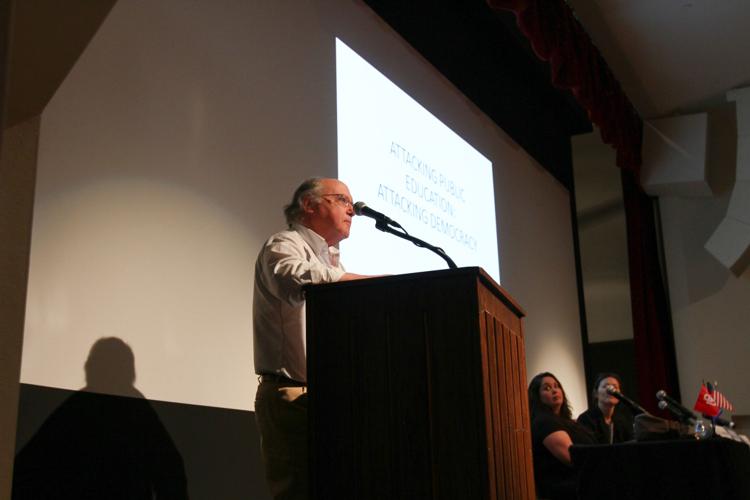
The second panel included John Covaleskie and Mirelsie Velazquez, professors of educational studies, and Solongo Wandan, assistant professor of political science.
Covaleskie discussed the different forms of assault on education in his talk entitled, “Attacks on Public Schools as Attacks on Democracy." Covaleskie said these forms include diversion, direct attack and systematic underfunding.
“Diversion distracts citizens from asking uncomfortable questions. The fact is, public schools are not a failure. It's never been perfect, but the idea that there was this golden age is all narrative to make the president look bad,” Covaleskie said.
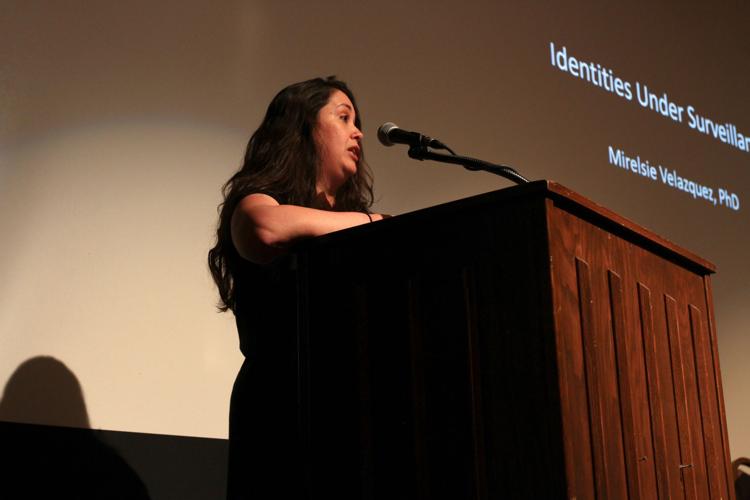
Velazquez took the mic next, for her talk entitled, "Identities Under Surveillance." She opened her talk by reading letters written by second-generation Japanese schoolchildren who were questioning whether they belonged in America or not.
“Schools really do become the first place where we teach children that we don't love them,” Velazquez said.
Velazquez related this sentiment to what she said children are feeling today.
“Today, we are watching families living in fear, children are wondering whether their families will be rounded up to be deported,” Velazquez said.
The last speaker of the second panel, Wandan, discussed the erosion of democracy and comparative perspectives on the issue. Wandan said countries with a long tradition of democratic systems have more recently began to report a loss of faith in the democratic system, specifying that this is happening with younger generations.
The final panel of the forum included law professor Rick Tepker, Meta Carstarphen, professor in the Gaylord College of Journalism & Mass Communication, Waleed Mahdi, assistant professor of U.S.-Arab cultural politics, and associate professor of political science Justin Wert.
Wert was the first to speak with his talk entitled, “Threats to Judicial Independence in the U.S.” He defined judicial independence in the United States as “the freedom that judges have to make decisions on the judgment of cases, free of the influence of the executive and legislative branches, and free of the influence of public opinion."
Wert also brought up the recent fraud cases of Trump University and the court decisions against Trump's travel restrictions on certain Muslim-majority countries and, in closing, encouraged citizens to stay engaged with their legislators.
Tepker spoke on this topic "Moderation, Civic Virtue, and the Death of a Genuine Conservative Tradition," discussing how people are steering away from the label “conservative” and instead towards “liberal."
"I suggest you hold your elected officials accountable when they do not uphold true conservative values,” Tepker said.
The third speaker of the last panel, Carstarphen, discussed the First Amendment and the importance of ensuring that there is no barrier between the government and the people’s expression in her talk entitled, "Witness."
“If you let truth out, even if you have falsehoods, if they are fighting each other, truth will win," Carstarphen said.
In closing, the last speaker of the forum, Mahdi, spoke on the issue of "Cultural Prejudices as Threats to Democracy.”
Mahdi explained how American citizens who fit a profile similar to his own are being asked to hand over cell phones, laptops, passwords and social liberties.
"The term 'immigrant' has sadly become toxic in this current atmosphere,” Mahdi said.