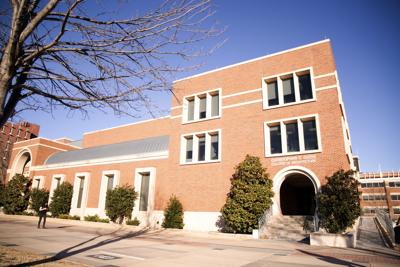

In late October, students and staff in the Christopher C. Gibbs College of Architecture received notice from Dean Hans Butzer that its Master of Landscape Architecture program would be discontinued, pending approval by the Board of Regents.
The board will likely consider the decision at a meeting this spring.
Elaina Maurer, a second-year student in the program, published a petition requesting a reconsideration of the decision to discontinue. She said the choice was shocking to architecture students.
“It’s been a huge mental blow for a lot of us,” Maurer said. “I think it says to us that our work isn’t important and that our program isn’t a priority, and that’s been really disheartening.”
In March 2024, the board approved the continuation of the program if it reached an enrollment of 40 by Sept. 8, 2025. Butzer wrote in his official closure announcement email to the program’s students and staff that the choice was not simple.
“This recommendation follows more than three years of careful review and conversation about the program’s size, demand, and alignment with workforce needs,” Butzer wrote.
However, Maurer said she believes the reasons provided for the closure are not enough to close the program.
“There’s an increase in interest and an increase in enrollment, and just the amount of work that we do with communities in our state and my letters of support have demonstrated that there is a need in the workforce,” Maurer said.
The 2024-25 annual report for the program noted that first-year enrollment for the 2023-24 year was eight incoming students, which grew to 13 incoming students in the 2024-25 year.
The program also gained two new staff members in the fall 2026 semester, according to Maurer.
Maurer said the program works closely with Oklahoma communities, including designing a nature-based park for the Child Study Center at the University of Central Oklahoma.
According to the program’s website, landscape architects are responsible for designing inclusive and functional outdoor spaces including parks, campuses and streetscapes. Their work focuses strongly on community engagement and incorporating public input.
In regard to workforce development, Maurer mentioned how Oklahoma City’s preparations for the 2028 Olympic Games and current Metropolitan Area Projects initiative create an expected increase in job opportunities for the program’s graduates.
Maurer said she reached out with the help of an OU alum to landscape architecture firms in Oklahoma and received letters of support underscoring their need for more landscape architects.
“There are so many opportunities that make it obvious that there is a need for what landscape architects do,” Maurer said.
The petition also highlights the program’s work through the Institute for Quality Communities, an engagement program that partners with Oklahoma communities to create projects addressing local issues. The institute has completed over 112 projects across 60 counties, according to the website.
Maurer said that this focus on community engagement and landscape architects’ key role in designing green spaces aligns with the university’s “Lead On, University” strategic plan.
“The alignment of the president of the university’s strategy … goes hand-in-hand with what landscape architects do,” Maurer said. “I know that he mentioned wanting to decrease diabetes. Landscape architects create spaces where people can exercise.”
The petition has 872 signatures of its 1,000 goal as of Thursday. Maurer said she reached out to several students and received testimonies in support of her petition.
OU said it will continue to support students currently in the program.
“Current students enrolled in the Master of Landscape Architecture program will receive full instruction and support through graduation, with faculty remaining dedicated to teaching and mentoring them as they prepare for professional practice,” the university wrote in an email to the OU Daily.
Frank Hicks, a third-year graduate student in the program, expressed concerns over where the closure will leave students currently in the program.
“It’s kind of hard to keep that promise. When you’re in that last year of students, there’s no guarantee to give them the same level of education we’re getting now,” Hicks said.
Maurer said she hopes to convince the regents to reverse their decision and to bring awareness to what landscape architects do.
“I just want people to understand the importance of green spaces and how it’s a source of connection in creating communities,” Maurer said.
This story was edited by Natalie Armour and Macey Thaxton. Larkin Bock, Tori Pham and Mary Ann Livingood copy edited this story.


