












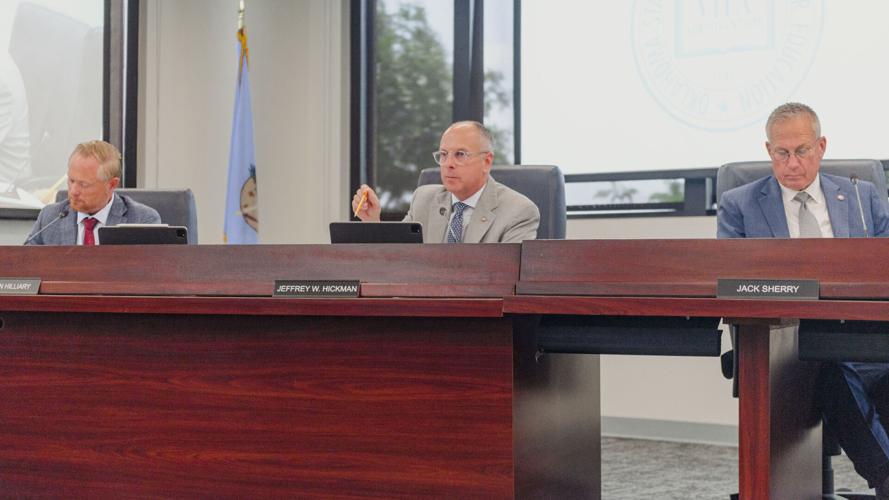




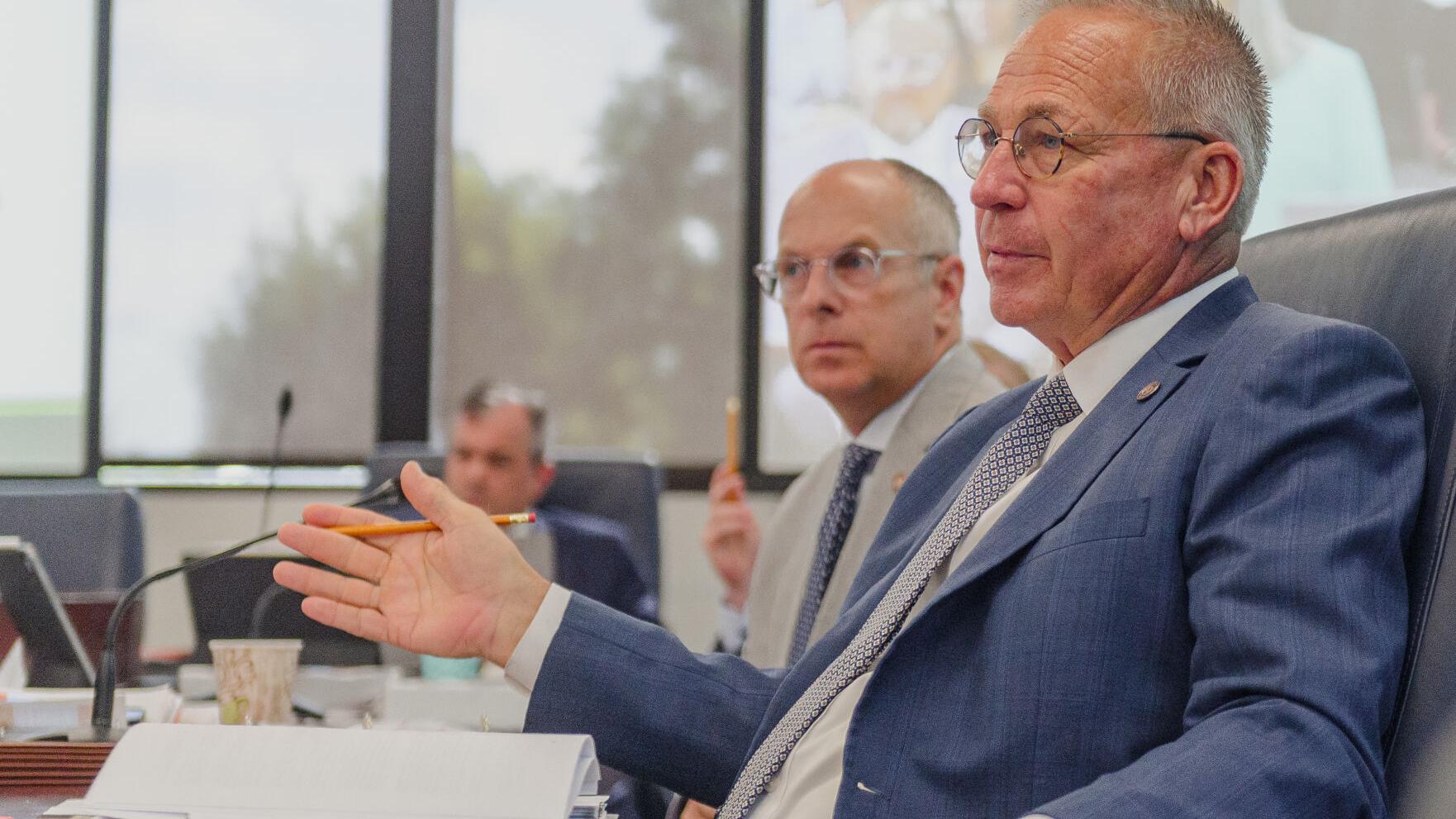


The Oklahoma State Board of Regents for Higher Education unanimously approved OU’s tuition and fees increase at its Thursday meeting.
In June, the OU Board of Regents approved a 3% increase in tuition and mandatory fees for undergraduate and graduate students at the OU-Norman campus.
The cost for a full-time undergraduate resident would be $5,093.25 per semester, $150 more than last year’s $4,943.25. The cost for a full-time undergraduate nonresident would be $14,150.25 per semester, $417 more than last year’s $13,733.25.
A graduate resident student would see a $11.50 increase, totaling $393.75 per credit hour. A graduate nonresident would see a $32.50 increase, totaling $1,112.75 per credit hour.
OU College of Law would see a 5% increase in tuition and mandatory fees for all students. A resident student would see a $29.15 increase, totaling $612.65 per credit hour. A nonresident student would see a $52.90 increase, totaling $1,111.90 per credit hour.
Regent Jeffrey Hickman said it’s important to look at the total cost for students, including charges beyond tuition and fees.
“I kind of default to ‘no’ and voted no on this request last year,” Hickman said. “However, there is critical research happening as we sit here in this meeting, across the street (at OU Health Sciences Center). President (Joseph) Harroz’s commitment to help those students that are caught in the middle, that don’t qualify for financial aid, but also can’t afford the cost.”
Regent Dustin Hilliary said he typically votes no on tuition increase requests, but was reminded during Harroz’s presentation to the board on Wednesday that OU hopes to help students that don’t qualify for Oklahoma’s Promise attend OU through scholarships provided by the university.
“(OU) is really more affordable because of the fundraising efforts at OU,” Hilliary said. “At the end of the day, it always goes back to the student and how we can provide the best quality education (at) the most affordable price.”
Harroz told OU Daily at the June OU Board of Regents meeting that the 3% tuition increase would help the university’s pursuit of excellence and affordability. He said the increased tuition allows higher financial aid for students.
“What best lifts the individual and lifts the state and the entire region is to have two things, both excellence and affordability,” Harroz said. “When you look at the increase, the 3% increase in tuition, you really can't look at that without saying, then have you put in place at least enough offsetting dollars to lower that cost for the average student that needs the help.”
Harroz said that though there’s been a rise in sticker price, the increase in tuition brings more room for need-based scholarships and helps decrease the price of attendance.
“When people talk about increasing tuition, I think what they’re really saying is, has the cost gone up or down over the last six years? And our answer is down,” Harroz said. “It’s not just the headline of tuition, is it? Yes, sticker price tuition is going up. When we look at the need-based aid in the scholarships that are being provided for the average student, it’s gone down.”
After the vote, Hilliary said it’s important to speak with state politicians and legislators to help secure more funding for higher education from the state. He said it’s important to establish a long term plan to prevent continual tuition increases at Oklahoma universities.
“We’re limited on what we can do with the state,” Hilliary said. “I understand that we’re not a big, rich state. We can’t dump billions of dollars in like Texas does, but I want to commend everybody on that effort.”
Background
Over the past five years, OU has raised tuition and mandatory fees for resident undergraduates by an average 1.8% per year and for nonresident undergraduates by an average 2.3% per year. According to the agenda, OU has significantly increased tuition waivers, scholarships and grants that have lowered costs for students.
Earlier this month, Gov. Kevin Stitt said during a press briefing that Oklahoma universities did not need a tuition increase.
“I don’t think we’ve gotten all the efficiency out of our universities,” Stitt said. “I would encourage the boards to look for efficiencies, look for the tenured professors that maybe aren’t teaching as many classes as they should. Those are the things that I would continue to push before they do a tuition increase.”
At a launch event in April, Harroz said that due to underfunding from the state, students have faced tuition increases for three consecutive years, and while the university has made efforts to mitigate the financial burden of tuition increases, it is not sustainable.
Harroz said state and private funding is necessary to maintain excellence.
“We’ve got to have the state’s participation, and we have to have our donors kicking in funding. This is critical,” Harroz said. “We cannot waste dollars. They’ve got to be efficient.”
This story was edited by Natalie Armour. Ryan Little copy edited this story.


