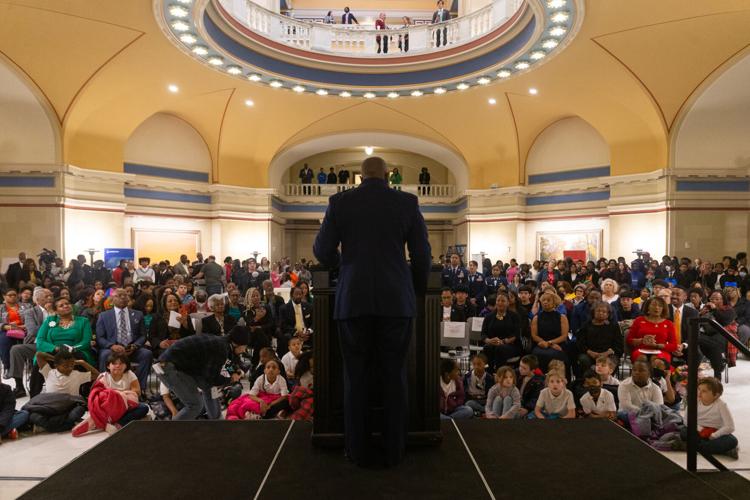

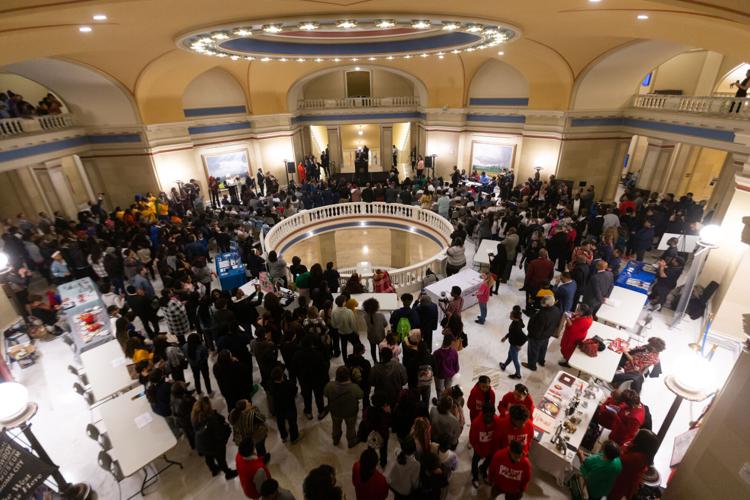
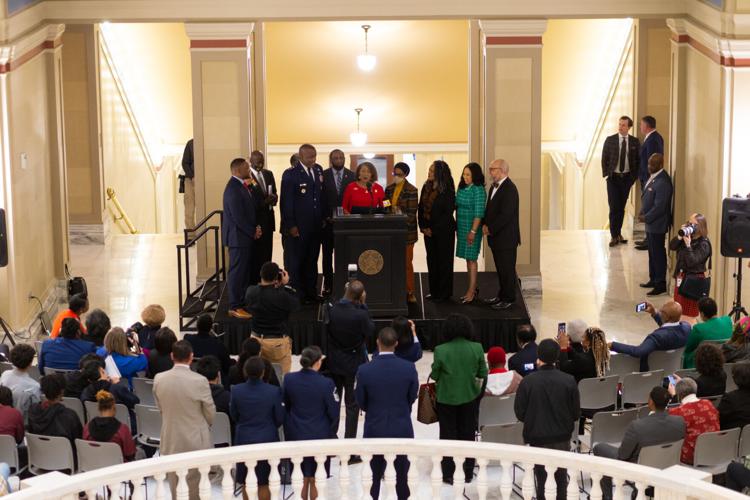
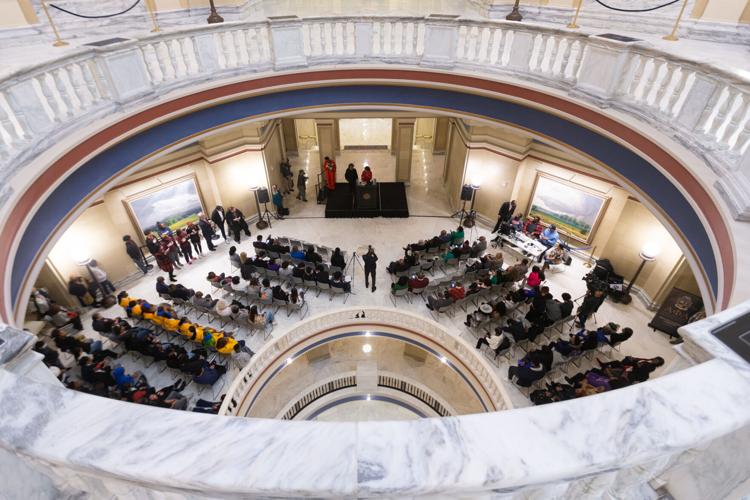
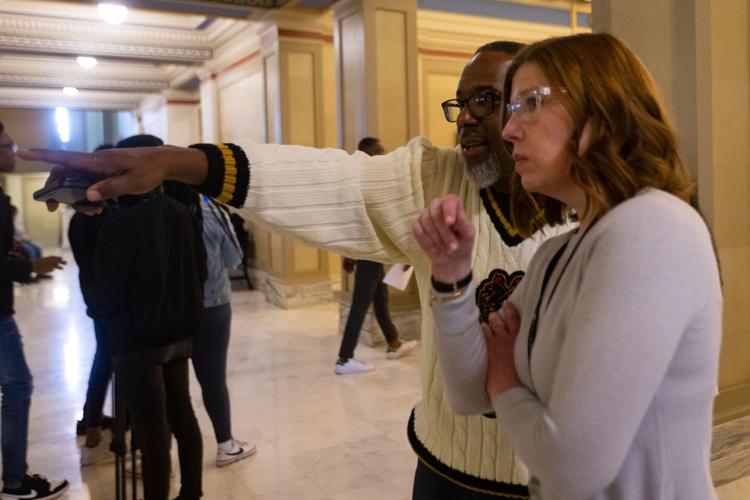
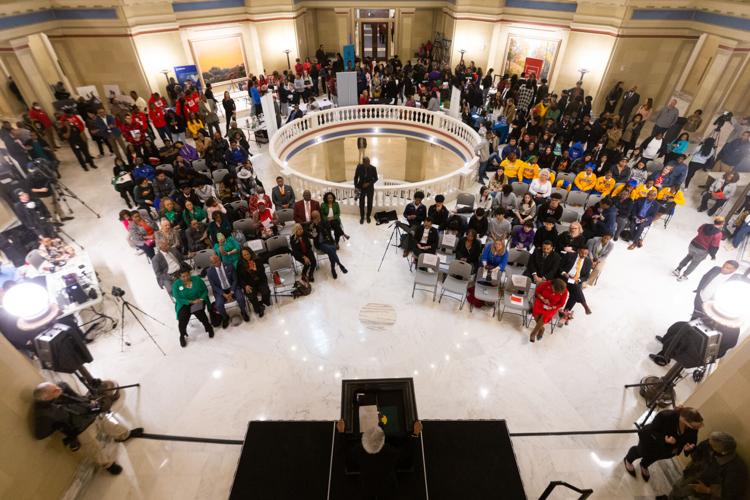
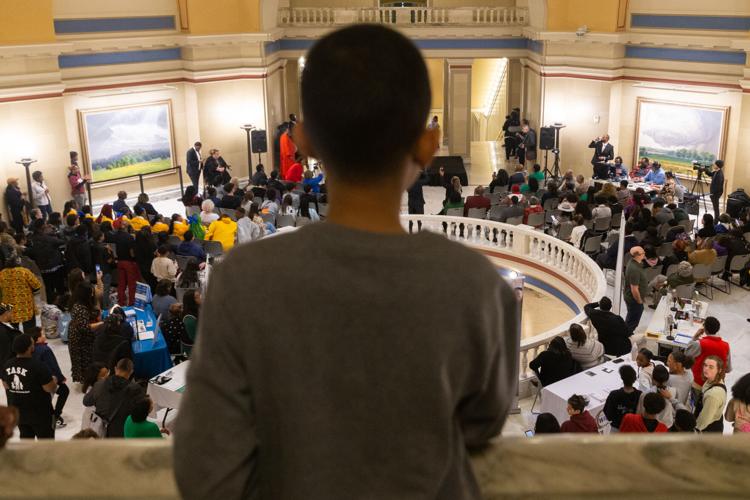
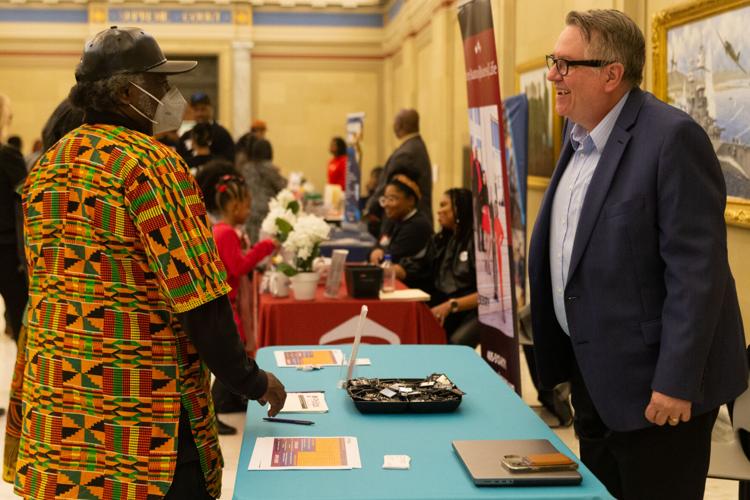
As students and community members from across Oklahoma gathered on the second floor of the Oklahoma state Capitol, filling the room with laughter, music and boisterous conversation, they could only describe the atmosphere in one way: soulful.
"The Capitol has never seen this much soul," said Oklahoma City Ward 7 Councilmember Nikki Nice. "We are making history."
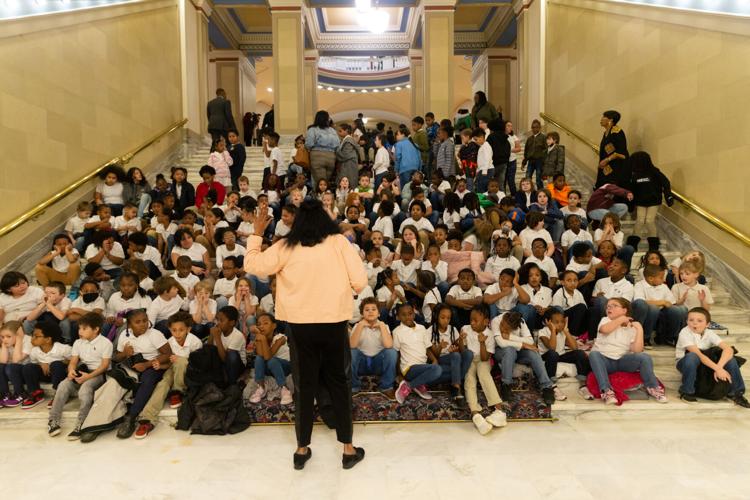
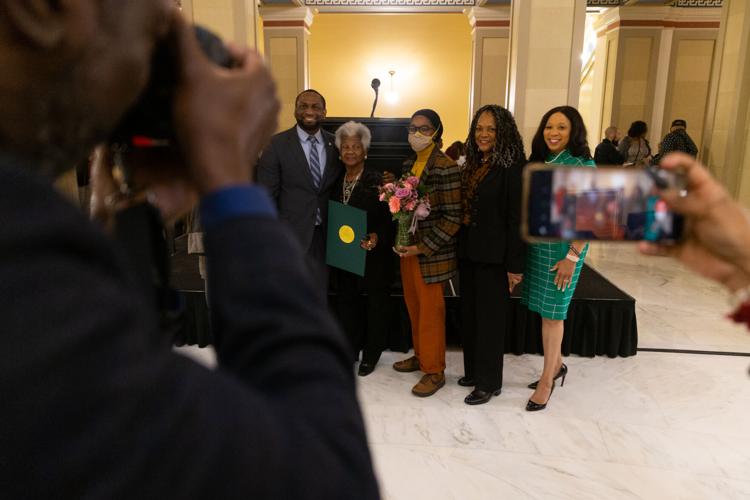
Approximately 400 Oklahomans joined legislators Monday to celebrate Oklahoma’s inaugural Black History Day at the Capitol.
The event, hosted by the Oklahoma Legislative Black Caucus, was created to celebrate Black Oklahomans and their accomplishments as well as to provide an opportunity for the community to learn about Black history.
“This inaugural celebration is special to me because Black history is Oklahoma history," said Rep. Jason Lowe, Black Caucus chairman, during his opening remarks. "This is the first time a day has been dedicated to learning and celebrating the contributions of African Americans to the economy, culture and growth of our great state."
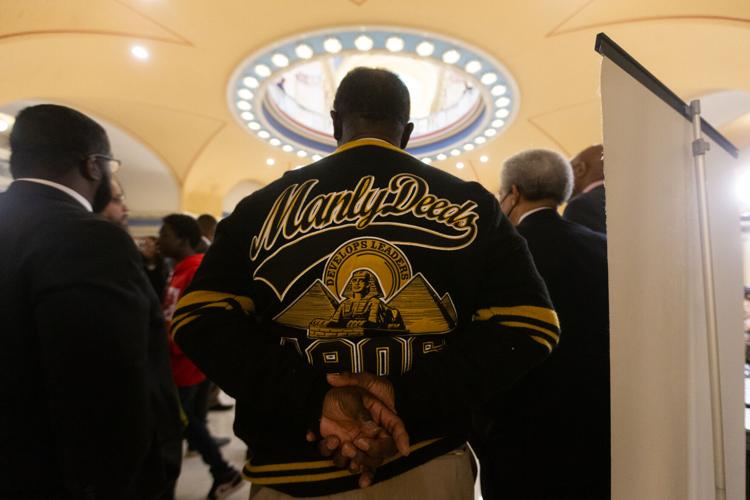
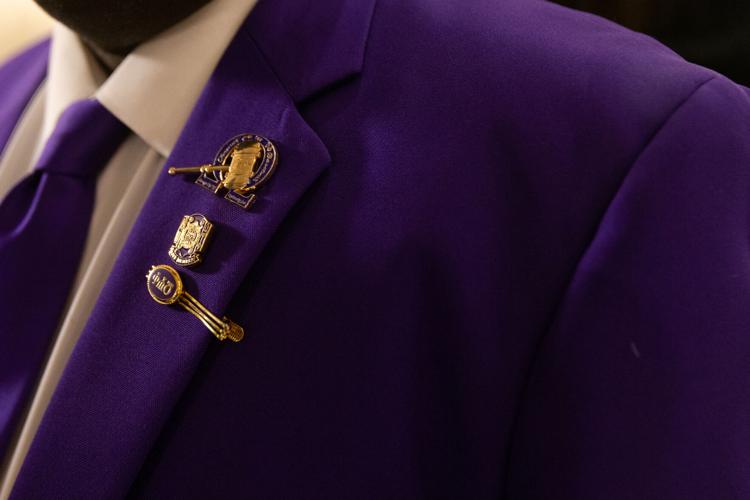
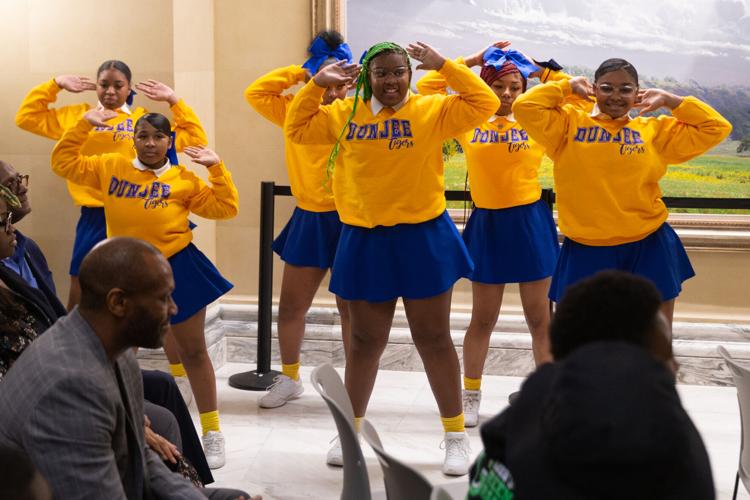
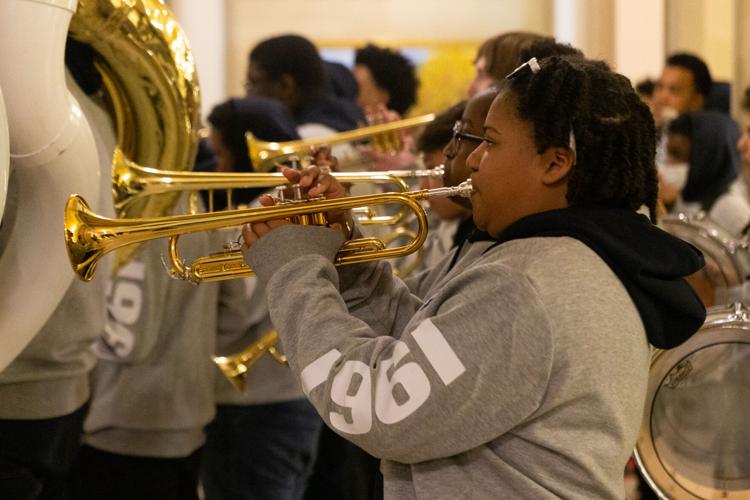
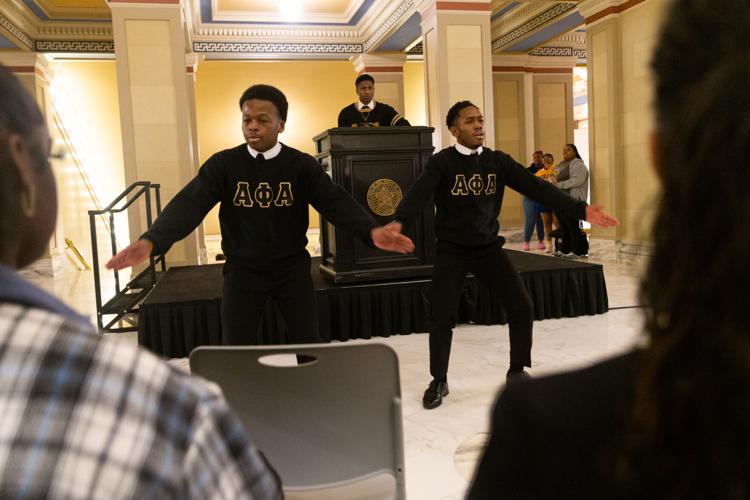
The event featured performances from the Millwood High School and Star Spencer High School marching bands, stomp performances from the Alpha Phi Alpha fraternity and spoken word performances by local artists and students.
More than two dozen speakers presented speeches at the event as well, including several members of the Oklahoma Legislative Black Caucus and prominent Oklahoma leaders and activists.


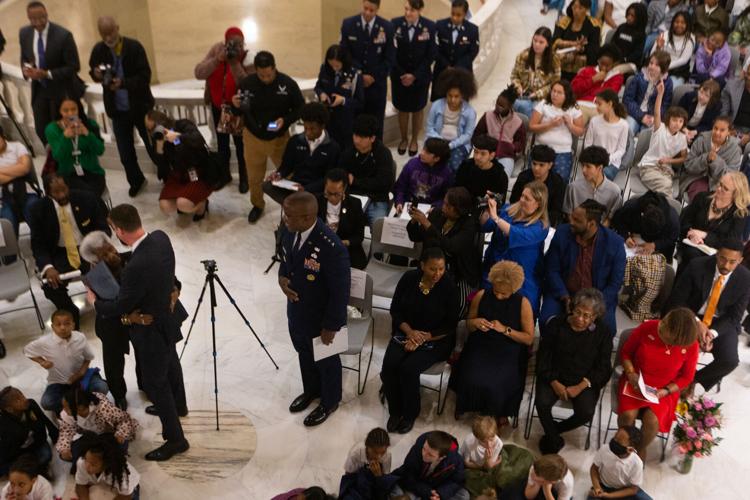
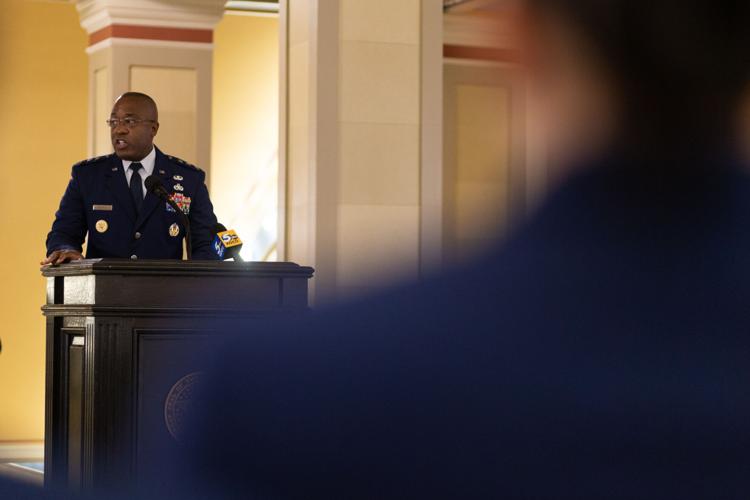
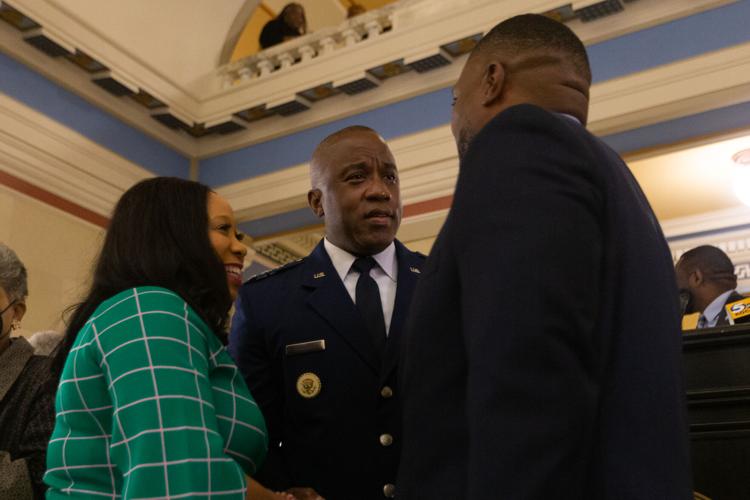

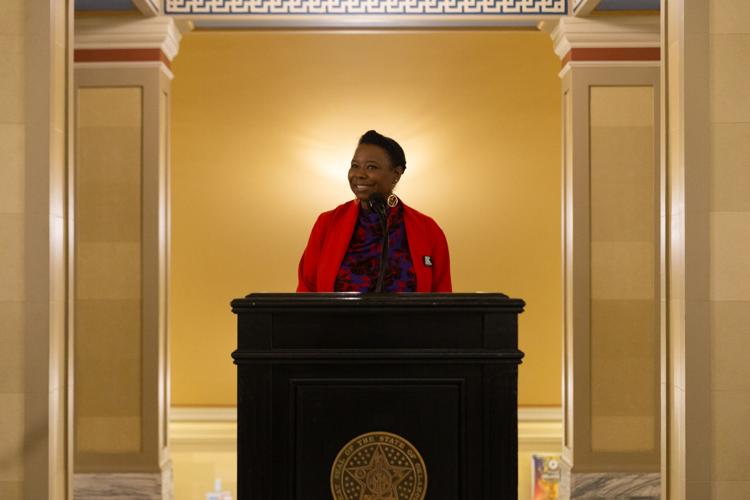

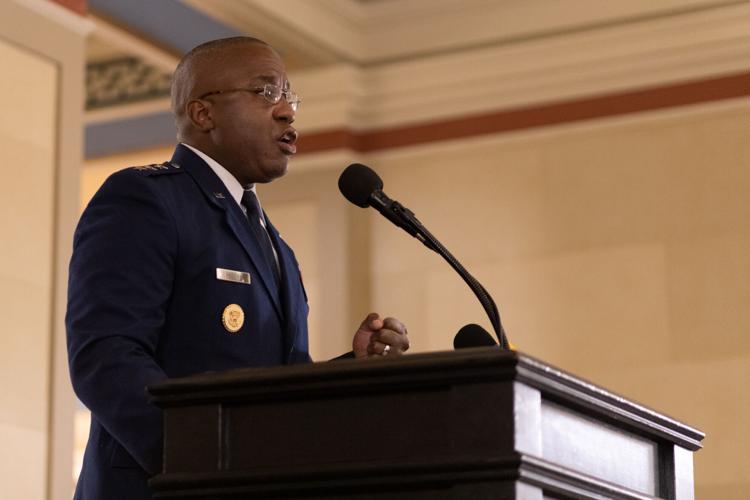


Lt. General Stacey Hawkins, commander of the Air Force Sustainment Center, was the keynote speaker for the event.
In his speech, Hawkins talked about the history of all-Black towns in Oklahoma in the 19th century and how they built the standard of community. Hawkins shared how his parents were raised when the Jim Crow South existed, and how they were only two generations removed from their slave ancestors.
"It is so important to recount this not-so-bright part of our nation's past, because remembering how far we have come as an American people over a relatively short period of time assures that we don't repeat the mistakes of our past and that we keep moving forward," Hawkins said.
Hawkins said it is important to recognize the story of Black people from slavery through reconstruction, the new Jim Crow to equity and inclusion, to the present-day fight for equal justice under the law.
"This story of our people is inextricably a part of the American story, which is a holistic recognition of history that helps inform how we all must work together to realize the promise of our nation's constitution," he said.
Hawkins said the journey of Black Americans speaks to the idealistic power of democracy, freedom and equality, as well as to the power of forgiveness.
"Whether your ancestry contains a history of being the oppressor, or whether your ancestry contains a history of being the oppressed, our collective ability to forgive, renew and restore and even (move) away from long-held beliefs of our ancestors that come before us,” Hawkins said. “These conscious acts of renewal are essential to reversing the past generational curses and appealing future generational progression for all our nation depends on it."
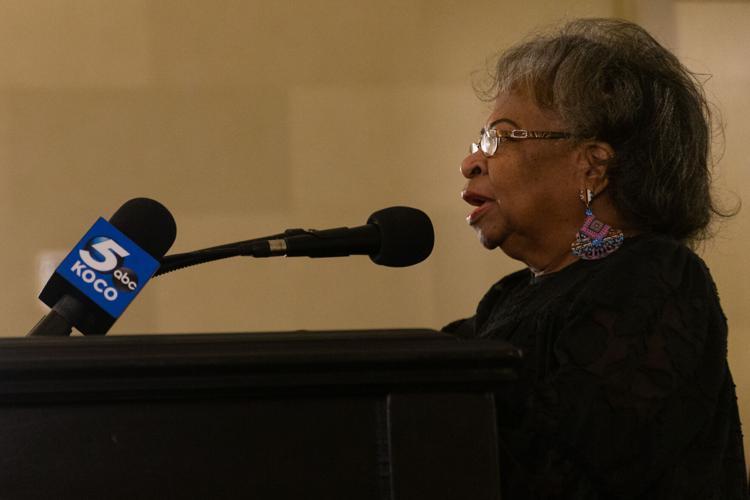
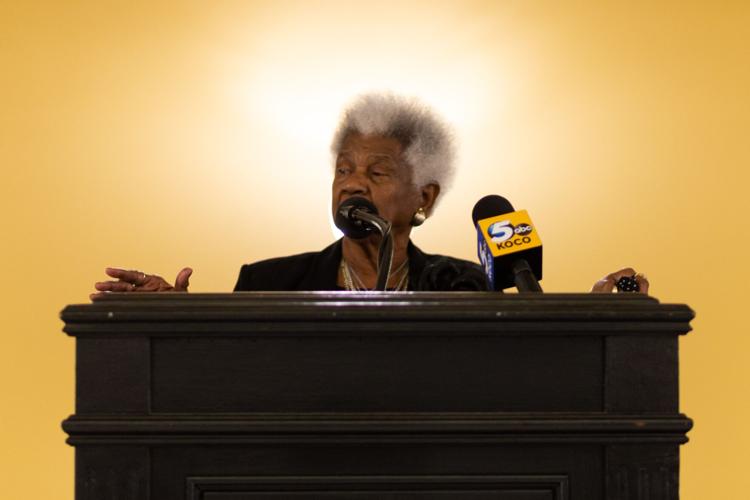
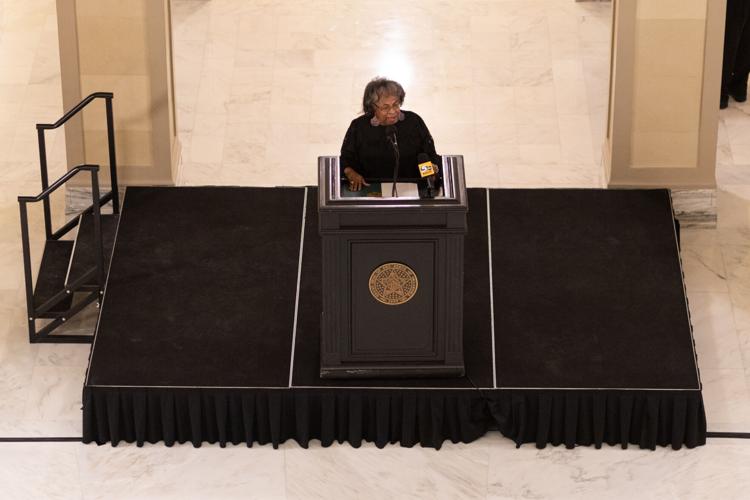
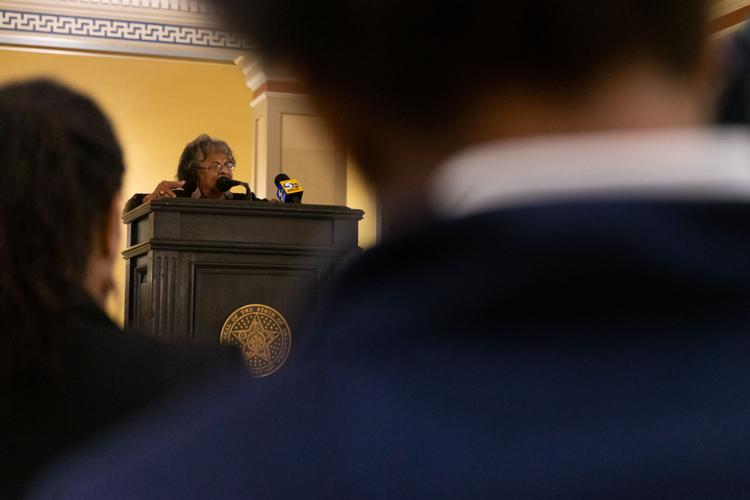
Marilyn Luper Hildreth, daughter of the late Clara Luper, a civil rights activist who initiated the Katz Drug Store sit-in of 1958, spoke about the power of Black youth.
The sit-in, which was the first nonviolent lunch counter sit-in in the nation, occurred after Luper and 13 other students were denied service at the store's lunch counter in downtown Oklahoma City because of their skin color. The sit-in lasted three days and was the first direct action in the struggle for civil rights, according to the Oklahoma Historical Society.

Marilyn Luper Hildreth, a civil rights activist and daughter of late Clara Luper, speaks during the first annual Black History Day at the Oklahoma state Capitol on Feb. 13.
Ray Bahner/OU DailyHildreth was just ten years old at the time.
"I want to tell you this, young people, you have a responsibility. You're standing on the shoulders of the people that gave their blood, sweat and tears so that you can be where you are," Hildreth said. "Your day is now. You don't have to do anything but try. If you try and fail, that's OK too, but get up and try again. Nothing is promised to you."
Hildreth, and several other speakers at the event, talked about the importance of learning Black history, particularly in schools. They said recent legislation, such as Oklahoma House Bill 1775, which bans schools from knowingly or unknowingly teaching that a person, because of their race or sex, is inherently racist, sexist or oppressive, has made it difficult for educators to teach Black history to students.
"There are certain truths about what we've learned that helped us progress that are under threat. The accurate teaching of history, our ability to engage in diverse conversations in higher education, these are all important issues," Rep. Monroe Nichols, Oklahoma Legislative Black Caucus vice chair and treasurer, said.
Nichols said there are some people who don't understand how Black Americans progressed to where they are today.
"Our charge is to educate,” he said. “Our charge is also to activate and our charge, more than anything this month and all months, is around progress."
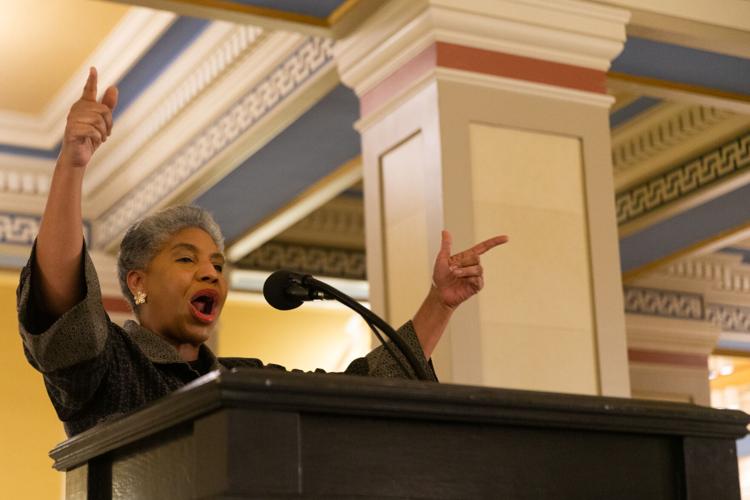
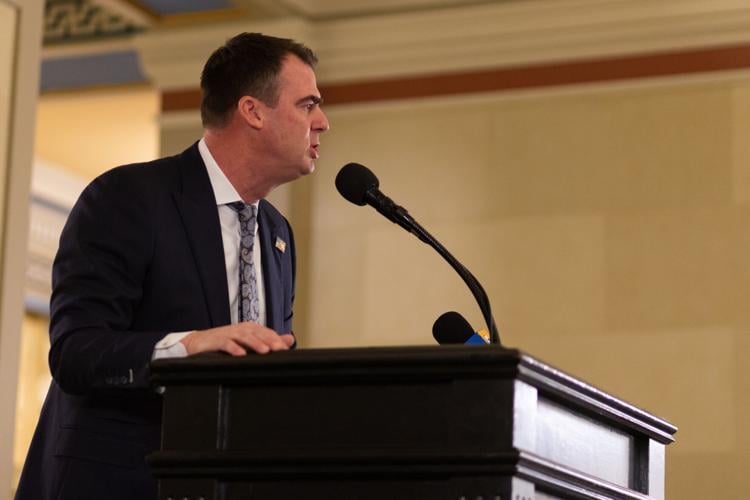
Pounding her fist on the podium, Lelia Foley-Davis, the first African American female mayor elected in the U.S., said she will be going to Oklahoma Gov. Kevin Stitt with a chosen committee to bring Black schools back into the historic towns of Oklahoma.

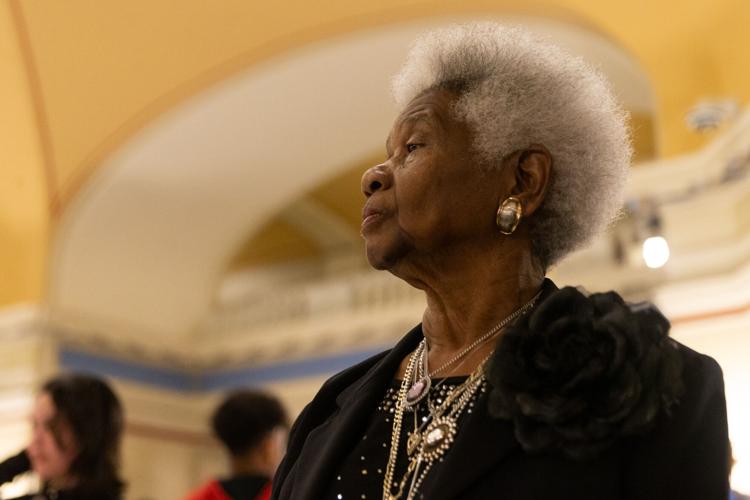
Lelia Foley-Davis, the first African American female mayor elected in the United States, listens during the first annual Black History Day at the Oklahoma state Capitol on Feb. 13.
Ray Bahner/OU DailyFoley-Davis said she lives in Taft, Oklahoma, one of more than fifty All-Black towns that used to be in Oklahoma and one of only thirteen still existing, and that there are no public schools there.
"Something is wrong with the picture," Foley-Davis said.
Foley-Davis said she was happy to see school buses arrive at the Capitol to learn about Black history, but that Black history isn't just past — it's present.
"Black history is every day,” she said. “Every time you look in the mirror and see a Black face, that is Black history."
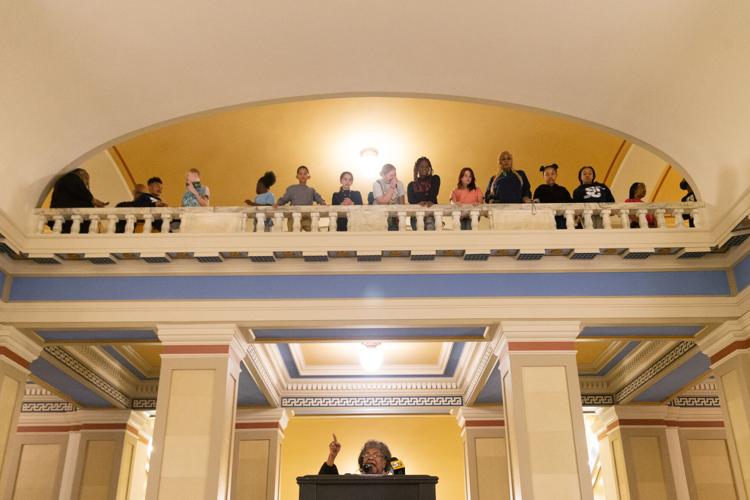
As students from several Oklahoma public schools sat in the audience and watched from the rotunda above, Foley-Davis ended her speech with a final message.
"I say to the young people here: Adventure waits for you. Dream, work hard and go out and change the world," she said.
This story was edited by Alexia Aston, Karoline Leonard and Jazz Wolfe. Francisco Gutierrez and Mary Ann Livingood copy edited this story.
OU Daily standards
See an error? Earning trust is our duty. We correct errors atop stories. Identify an error, request a takedown or get in touch.
Independent and free since 1916: OU is committed to our editorial independence. You can help ensure our reporting remains strong and accessible to all invested in OU and Norman.
Want to comment? We value dialogue on issues we cover. On our social media accounts, we moderate disparagements, arguments and attacks, including those directed at our staff — and ban those repeatedly failing civility. The editor considers guest column submissions.


