
Cleveland County's Continuum of Care service providers are gearing up for its annual headcount of people experiencing homelessness in the county, aiming to decrease the homeless population by understanding and meeting their immediate needs.
The Continuum of Care is a federally funded program run by the Department of Housing and Urban Development, and is designed to promote community collaboration focused on ending homelessness. Oklahoma has eight different Continuum of Care sectors, with Oklahoma City, Tulsa and Cleveland County each having their own.
A continuum does not offer services or programs itself, but is a collaborative organization that brings community-based service providers to the table when considering solutions to homelessness.
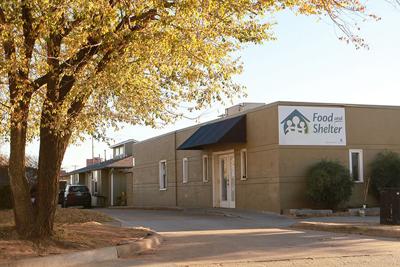
Service providers in Cleveland County’s Continuum of Care include the Norman Housing Authority, Care-A-Vans, Food and Shelter, Sanctuary Women’s Development Center, the Oklahoma Department of Mental Health and Substance Abuse Services, HOPE Community Services and Thunderbird Clubhouse.
Heidi Smith is the director of operations at Thunderbird Clubhouse, an organization that fosters community-based adult mental health recovery. Thunderbird Clubhouse is the Cleveland County Continuum of Care collaborative applicant as of 2022.
The collaborative applicant is the administrative lead agency of the continuum that is in charge of sending in grant applications and organizing reports such as the annual point-in-time count. The city of Norman was the previous collaborative applicant, but after the resignation of Michelle Evans, the previous homelessness coordinator, the city opted to no longer fill the role.
The point-in-time count is an annual HUD-mandated report and must be done in the last 10 days of January. The Cleveland County Continuum of Care usually performs the count on the last Thursday of the month. Cleveland County coordinates its count with the Oklahoma City Continuum of Care in order to prevent duplication.
According to Smith, the homeless population between Norman and Oklahoma City can be fairly transient.
The strategy for gathering the most accurate numbers possible involves going to every city park, known encampments and other places where they believe people experiencing homelessness are staying, Smith said.
Last year, the Continuum of Care used an app to do a digital survey that gathered demographic information, Smith said. They also distributed warming kits and hygiene kits during the point-in-time count.
Smith said Cleveland County is in the planning stages right now for January’s count, and is reconsidering certain questions it may want to add or remove and what medium they want to use to complete the survey. After that, they will start recruiting volunteers and establish a base of operations that everyone can work out of on the day of the count, Smith said.
April Doshier, executive director of Food and Shelter, said the Cleveland County continuum was required to formalize its structure in order to receive HUD funding around 10 years ago.
“They wanted to make sure we were including people who had lived experience with homelessness at the table,” Doshier said. “In addition to that, we were asked to develop what we called our charter.”
She said the charter laid out how the continuum would work and helped them structure the allocation of funds they received from HUD.
“Forming our continuum of care has allowed us to work together more effectively to use the funds that we have in a more strategic way so that we can ensure there are not as many gaps,” Doshier said. “There are so many gaps just because the need is so great and the funding is so minimal.”
Doshier gave an example of how the continuum has helped Norman homelessness services run more effectively. She said that many years ago, the continuum was encouraged to bring the local housing authority to the table, which is the organization that issues Section 8 vouchers.
The Section 8 Rental Assistance Program, which helps low-income families afford housing via rent subsidies is coordinated by the Norman Housing Authority and funded by HUD. Qualification for the program is based on family size and gross income. For example, a family of four must make less than $43,000 per year to be eligible for Section 8.
“Because we brought them to the table and they’ve become invested in working toward ending homelessness in a more robust way, they started to offer us vouchers that we could decide who gets,” Doshier said. “And they were offered outside the normal Section 8 waiting list process.”
Karen Canavan, executive director of Norman Housing Authority, said the continuum enhances the capabilities of the housing authority and vice versa.
“It’s like if you have two departments within your business and they communicate frequently and they understand what the other department is needing, efficiencies are just drastically increased,” Canavan said.
Canavan has worked in multiple housing authorities across the country, including Orlando, Omaha and Tulsa’s housing authorities and she said it has been around 20 years that HUD has been encouraging agencies to collaborate to eliminate the duplication of services offered.
“It kind of evolved from trying to eliminate the duplication of services into, ‘Hey, we want to get everyone at the table to talk about what’s going on in the community,’” Canavan said.
Doshier said this relationship between Norman’s service providers has ended homelessness for “dozens and dozens” of people each year.
“It’s an incredibly effective process to help bring community-based organizations together in a more effective way,” Doshier said.
A prime example of how the continuum was able to effectively solve a homelessness crisis because of its cohesive organization was during the COVID-19 pandemic, according to Doshier.
“People who were on the street or people who were homeless that got COVID, we were able to take funds that we had set aside and use to mitigate as much COVID as possible,” Doshier said. “That cohesive team of organizations really rose to an incredible challenge when the pandemic started.”
Canavan said the continuum benefits the housing authority because the advocates in the continuum know the ins and outs of the applications the housing authority uses.
“Having the advocate to assist them with that process, it helps their success rate immensely in actually leasing it to housing and having subsidized housing,” Canavan said.
Doshier said rents have reached an extraordinary average cost recently and service providers are even struggling to place people with income into housing.
The median rent for a one-bedroom apartment in Norman is $773, while the minimum wage in Oklahoma is $7.25 per hour. According to the Massachusetts Institute of Technology living wage calculator, a living wage for an adult with no kids in Cleveland County is $16.06 per hour.
The calculator takes into account factors like health care, broadband access, food, housing and transportation when estimating a livable wage.
Doshier said the Bishop’s Landing apartment complex was the first affordable housing project of many that were torn down to build student housing. Norman City Council voted to demolish Bishop’s Landing in 2015 in order to build a high-density, eco-friendly and student-focused apartment complex. Today, the student-exclusive Callaway House sits on the property.
“When you tear down places that are the only places people can afford to live and give them no other option, there are consequences to that,” Doshier said. “That is where we started to see the first growth in homelessness.”
A new affordable housing complex called Crimson Flats is under development in Norman and had a pre-development meeting in September. Lisa Krieg, the city’s community development block grants manager, said the city is holding the developer to a number of 75 units for the complex because the neighborhood went through the process around a decade ago to rezone for that number of units.
“We really would not be increasing the density to the point that it would cause neighborhood concern,” Krieg said. “We wanted to make sure that they fully understood what the city was proposing.”
Krieg said this new development is not specifically targeted at Norman’s homeless population, but that it could encourage families to leave other affordable housing units in the city, freeing up space for people experiencing homelessness to utilize.
According to Krieg, there are certain standards that the new development must adhere to because it’s a tax credit project and involves the federal government. She said the standards are there to ensure the qualifications of the tenants and their ability to pay rent. The main reason for these procedures is to ensure that the project won’t decline in value over time, Krieg said.
“Most people don’t realize that affordable housing happens at the same cost as market rate housing,” Krieg said. “In order for affordable housing to occur within Norman, there has to be this outside influence.”
As the continuum aims to provide services to people experiencing homelessness in Norman, Doshier said while housing is one priority, so was creating a coordinated entry system. This means regardless of which partner organization an individual comes to within the continuum, they can access federally funded housing resources the same way as anywhere else.
The continuum adopted a housing assessment that is used to get people on their by-name list, a data tool used to identify individuals by name and specific needs to facilitate service matching and case planning. Smith at Thunderbird Clubhouse administers the continuum’s by-name list.
According to Doshier, adding someone to the by-name list is the first step to qualifying for housing choice vouchers or other HUD-funded resources like rapid rehousing.
Canavan said HUD’s initiative is the main reason so many agencies have come together that otherwise would have stayed in their own world.
Smith and Canavan said overall Norman is a collaborative and cooperative community when it comes to alleviating homelessness. Canavan said out of all her positions at housing authorities across the country, Norman is the best place she has worked thanks to the city’s caring and intelligent community.
“There tends to be a lot of tension around homelessness in our community right now,” Smith said. “But I know that when we’re all pushing towards a common goal, we’re going to be able to do a lot more for those experiencing homelessness and for our community at large.”
This story was edited by Alexia Aston, Peggy Dodd and Taylor Jones. Natalie Armour, Grace Rhodes and Mary Ann Livingood copy edited this story.


