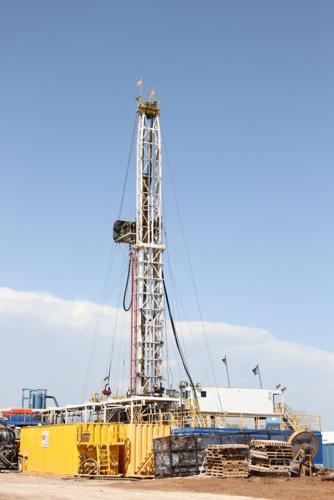


Day and night, Norman resident Patricia Askins hears a steady pounding from a hydraulic fracturing operation just across the street from her home. Lying in bed, she hears the sound of the pump mingle with a beeping noise warning people to get out of the way of trucks backing up at the site.
Askins said she was surprised by the late-night noise when the drilling operation began about a month ago on Franklin Road in east Norman.
“But my husband wasn’t surprised. He said, ‘They’re digging a well. It’s a 24-hour operation. They don’t shut it off because it’s night. They keep digging,” Askins said.
But what surprised Askins even more was the discovery that the drilling company is using Norman’s drinking water to break up the rocks and retrieve oil.
While city officials advise residents to conserve their water because of an ongoing drought, Finley Resources, Inc., an oil and gas company from Fort Worth, Texas, has used more than 400,000 gallons of Norman drinking water for fracturing, said Shawn O’Leary, director of Public Works for the City of Norman.
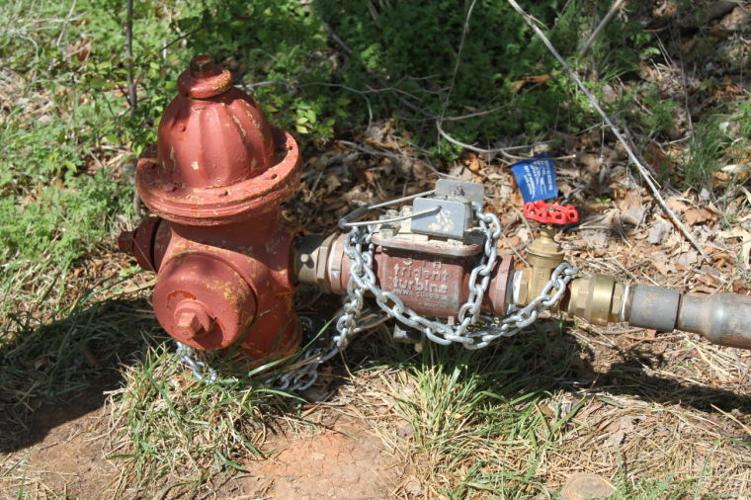
There’s nothing illegal about this operation — Norman Mayor Cindy Rosenthal said the City of Norman issued the company a bulk water permit so the operators could connect their hose to a water hydrant near their drilling site.
Despite the legality of the situation, Rosenthal said the fact that one company can buy thousands of gallons of drinking water for fracturing while Norman is still undergoing mandatory water conservation has unveiled what she calls a “gap” in city policies.
Some common customers issued bulk water permits to connect to hydrants are nonprofit groups, who need the water for a car wash, or construction companies, who use the water to spray dirt down for dust control, Rosenthal said.
“Our policies at the moment are silent on differentiating amongst those,” she said. “So when this company came in, a clerk issued the permit just like any other person who comes in and asks for a bulk water permit.”
The city started receiving complaints after Sarah Terry-Cobo, a reporter for the Journal Record, reported that the company was using Norman’s potable water.
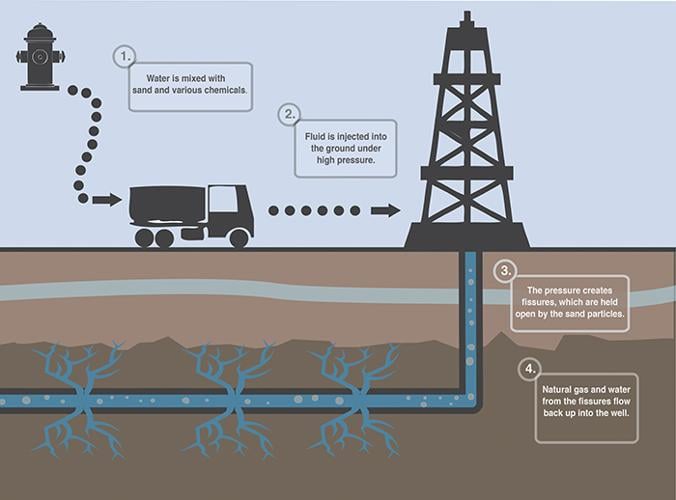
The drinkability of the water used for hydraulic fracturing can’t ever be restored because it’s mixed with sand and chemicals, some of which are toxic, said Robert Puls, the director of the Oklahoma Water Survey at OU.
This fluid is then injected under high pressure to break up rock formations underground, and once that rock cracks under the pressure, the sand that was mixed in with the water holds open the cracks so that water and oil will flow into the well, said Stan Paxton, a physical scientist with the Oklahoma Water Science Center.
Once the pressure is released, around 20 to 50 percent of the water that was originally injected into the rock will flow back up to the surface, Puls said. Along with the injected water, water that was stored in the depths of the rock formation flows through the cracks and up to the surface.
There isn’t currently any way to treat this “flowback” water because it’s hard to know exactly what’s in it. It may contain natural elements, such as metals and salt, as well as the chemicals used in the fracturing process, said Neil Suneson, a geology professor and geologist with the Oklahoma Geological Survey at OU.
“It’s not the same as treating sewage,” Suneson said. “We know what’s in sewage — it’s biological. You can get bugs to eat biological stuff in your water.”
So to get rid of this wastewater that’s been rendered undrinkable, it will be injected deep into the earth in underground wastewater wells, Paxton said.
Norman city manager Steve Lewis said at the April 8 Norman City Council meeting that city officials have considered having oil and gas companies use waste water for hydraulic fracturing instead of potable water, but this isn’t currently regulated by Oklahoma’s Department of Environmental Quality.
Besides issuing permits for using waste water on a case-by-case basis, the department won’t finish developing standards to issue waste water permits to oil and gas companies until the summer of 2015, said Tim Ward, the department’s assistant director for external affairs.
But some Norman residents don’t want to wait that long, such as economics professor Cynthia Rogers, who said she would “absolutely support a moratorium on hydraulic fracturing using potable water,” because careful water management is essential to ensuring that Norman can grow.
Rosenthal said she’s asked city council members to meet later this month to discuss the current rates for a bulk water permit, whether there are alternatives other than potable water that might be used, the criteria for selling bulk water and how well the bulk water permits align with the city’s current conservation policies.
“I think what we have here is an area of the law that in Norman is silent, and I think many of us on City Council are concerned and certainly don't want to be sending mixed messages about the importance of conservation,” Rosenthal said. “So we're really going to be looking hard at how do we fill that policy gap.”
While the drought in Norman isn’t as bad as it was two years ago, city officials still advise residents to conserve water because of uncertainties associated with Norman’s water supply at Lake Thunderbird, Puls said.
With summer on the horizon, Puls said water consumption is only going to increase, and that’s when he believes using drinking water for hydraulic fracturing will become more of a cause for concern.
“If we’re in the summer still selling that amount of water, it will definitely be an issue,” he said.


