
In 1630, a religious sect seeking spiritual and cultural reform left England on a ship bound for America. This group, composed of English Protestants who called themselves Puritans, centered their new life in Massachusetts around the teachings of the Bible, and believed that faith was the secret to spiritual salvation.
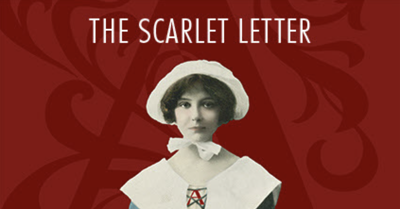
The plain, patriarchal society of Puritan New England inspired Nathaniel Hawthorne’s novel “The Scarlet Letter,” which is now considered an American masterpiece, according to Britannica. Published in 1850, it explores guilt and redemption through the lens of Puritan societal values and exposes the basis of morality within human beings.
Since its publication, “The Scarlet Letter” has been adapted for film and for the stage. In May of 2016, it premiered as an opera by composer Lori Laitman and librettist David Mason, according to Lori Laitman’s website. OU Opera Theater is presenting “The Scarlet Letter” this weekend, stage directed by guest Beth Greenberg and conducted by Johnathan Shames, artistic director of OU Opera Theatre.
Greenberg, renowned for her work with the New York City Opera, said she came to OU by invitation of Shames after Laitman recommended her as director. Greenberg directed the world premiere of the opera in 2016.
“I was thrilled to come back to the piece, and this is truly a masterpiece,” Greenberg said. “I believe in this work so much. When you go back to them, they're so rich that you always find new things and so it's nice to have another chance with this one.”
Sung in English in six scenes with English supertitles, the opera takes place in Boston and centers around protagonist Hester Prynne, a young woman forced to wear a scarlet “A” on her chest after she births a child out of wedlock. Unaccepted by insular Puritan society, Prynne lives in exile with her child Pearl, but never reveals the identity of Pearl’s illegitimate father to her town or her husband, who arrives in Boston unexpectedly after Prynne is condemned.
Shames said the opera operates under several moods.
“The opening chorus … has this feel of the water and of travel,” Shames said. “It's not just time passing but in fact space, and then you have the darkness of Hester being accused of (adultery).”
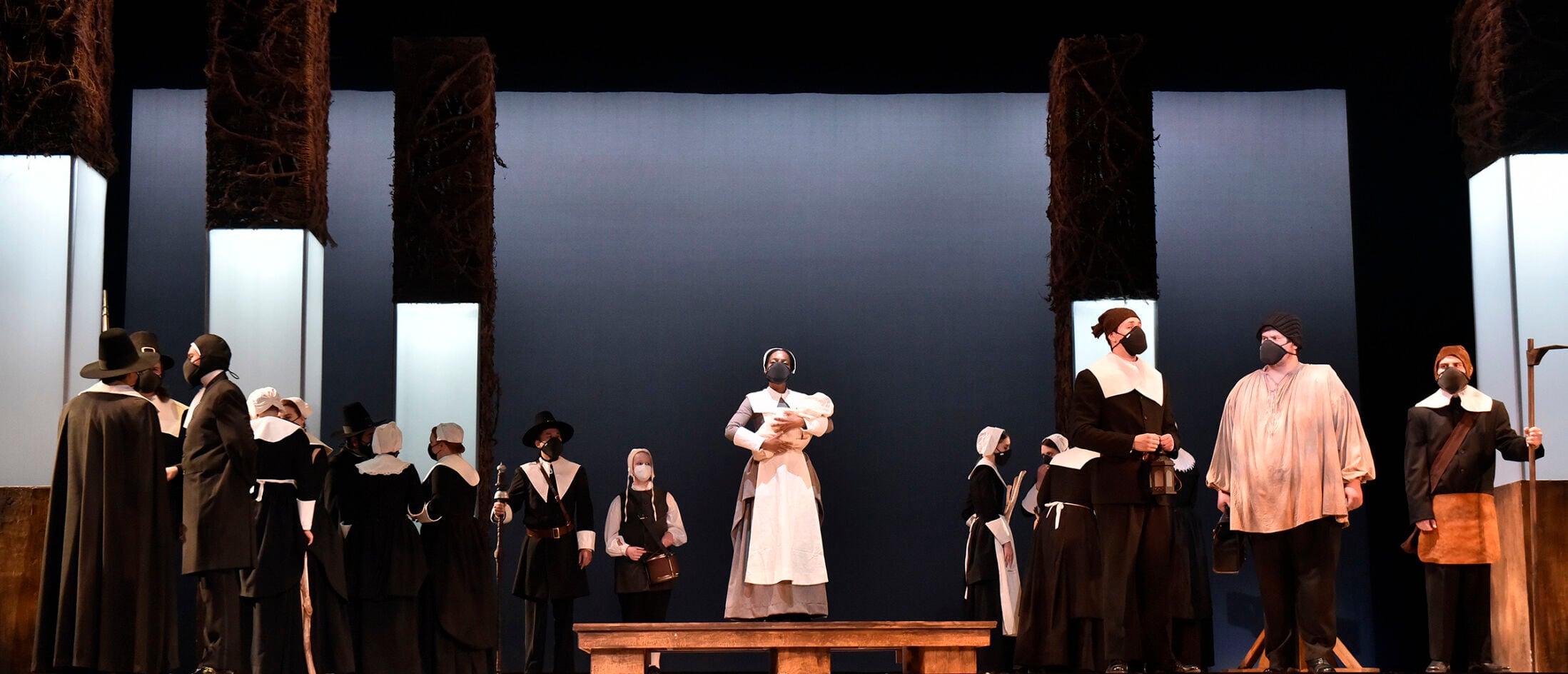
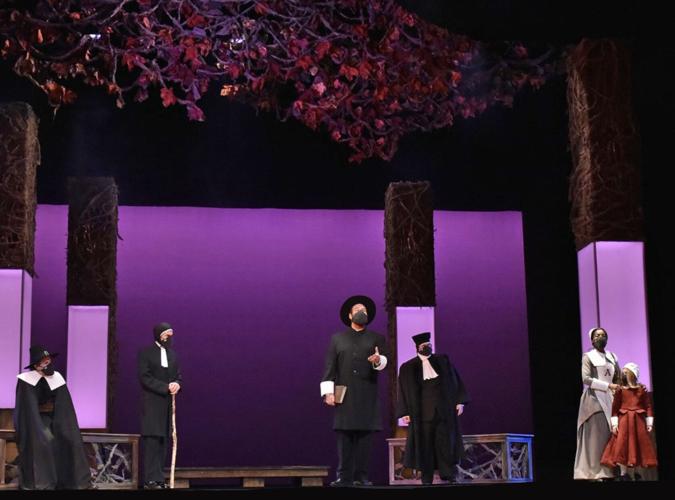
Performers in the opera practice in full costume. Photo provided by Wendy Mutz Photography.
In contrast, Shames said the opera is brightened each time Pearl enters the scene because she represents the future.
“She doesn't sing anything … (she is) actually a seven year old child,” Shames said. “But the light comes in when Pearl is there.”
Greenberg also said the opera is dark.
“This was the time of Edgar Allan Poe and also of American romanticism and the supernatural,” Greenberg said. “There's a wonderful twist at the end of the opera — an unforgettable event that happens and just blows everyone's mind. Who doesn't love a good supernatural story with a little twist in it?”
Although the story is saturated in dark ambiance, Greenberg said the atmosphere of the rehearsal process was not.
“I think the students have enjoyed rehearsing,” Greenberg said. “In the three weeks I've been here, I've just seen a metamorphosis in a couple of students who I think were a little bit afraid. I think everyone is a little scared of the first days but I've just seen them blossom in completely unusual and delightful ways. So it's very nice not only as a professional director but as an educator.”
In addition to focusing on Prynne, the opera also centers around minister Arthur Dimmesdale, the secret father of Prynne’s child. Dimmesdale’s character is portrayed by two casts. In one cast his character is portrayed by Lorenzo Butler, a first-year graduate student in the School of Music. Butler said that portraying Dimmesdale’s guilt-ridden character was difficult.
“It's kind of hard to reconcile with Dimmesdale … how does it feel to be so guilty that you're driven to madness … driven to sickness,” Butler said. “Finding those nuances was definitely a challenge.”
Butler said getting a chance to read the novel for himself was illuminating in understanding his character.
“A novel like that is embedded in American history,” Butler said. “Reading it through and then highlighting how Hawthorne refers to Dimmesdale and how he talks (helped me recognize) what parts of me I can align there even though we're different people.”

Students practice their performance for the upcoming opera. Photo provided by Wendy Mutz Photography.
Butler said the rehearsal process has been full of learning experiences, especially since this production is his debut opera.
“I wasn’t really sure if there was a place for me in the world of opera, especially being a person of color,” Butler said. “It's been really great to shed light on things that I was ignorant of, but also to know that there is a spot for me and I can do it.”
According to the New York Times, opera companies have been historically inclusive of select singers of color, but behind the scenes, an overwhelming amount of people are white.
In addition to growth within those involved, Greenberg said the opera also suggests several progressive themes, including some related to feminism.
“Hester is in the middle — a very strong American woman who never tells who the father is, and she raises her daughter Pearl. She's America's first working mom, and she's sort of a proto-feminist. Dimmesdale is just being consumed by guilt and he begins to deteriorate. He asks her to tell him what to do, and so the roles are reversed. She has to be a minister to him and be the strong one.”
Shames said he would encourage people to come to the show regardless of whether or not they are familiar with opera.
“I would say that this is an art form where music and drama come together,” Shames said. “You have these situations where the only appropriate mode of expression is singing. You're going to see an incredibly vivid depiction of The Scarlet Letter because it's enlivened by the music. … Opera can be an incredibly powerful thing. I would say anybody who has never been to an opera owes it to themselves to give it a shot.”
Butler said opera can be for anyone, regardless of one’s background.
“When I was a kid, I did not know what opera was,” Butler said. “I always thought it was like the Looney Tunes with the Viking helmets … not like me. Opera has been put on this huge pedestal, but at the end of the day, it's all music. It's all art. It's all extensions of finding truth and finding love and compassion through community.”
Performers will be masked for the production in special face coverings by VocalEase, which allow singers to perform at full acoustic value without spreading germs, according to the VocalEase website.
The Scarlet Letter will run at 8 p.m. on Feb. 10-12, and at 3 p.m. on Feb. 13 at the Reynold’s Performing Arts Center. The show contains adult content.
Tickets are available on the University Theater’s website and by calling 405-325-4101. On-demand video will be available.
Greenberg said the opera’s themes still apply to society today, over 170 years after the story’s original publication.
“Great opera is so meaningful to occur in a contemporary audience because the stories of these human beings caught up in these situations … they’re us,” Greenberg said. “When we see ourselves in 2022 in jeans, sweatshirts and sneakers, we're dressed differently, but our hearts are the same. We see we get caught up in their world.”


