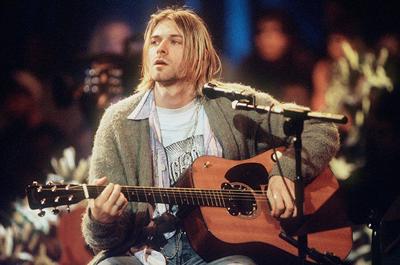

April 5 is the 23rd anniversary of the suicide of Nirvana frontman and grunge icon Kurt Cobain.
Joel Burcham, classical singer and voice professor at the OU School of Music who is also a self-proclaimed “metalhead,” reflects on how Cobain influenced his generation and shaped the music scene that followed.
Q: What impact do you think Cobain had on music in your generation?
“Well, his impact is huge. Any time pop culture people, or even scholars and whatnot, talk about the American Gen X generation, or the Gen X generation worldwide even, Nirvana is not far away from that discussion.”
Q: How would you define Nirvana’s music?
“It’s grunge. I mean, it wasn’t a genre that was already out there. Kurt Cobain and Dave Grohl and Krist Novoselic, the guys in the band, probably would have never called themselves that. They probably would have just said hard rock, borderline punk, cause they were all influenced heavily by punk bands, and some hard rock bands too. And even The Beatles — Kurt Cobain was really influenced by The Beatles even though his music, at first listen, doesn't sound anything like The Beatles. But when you look at the song structure, as far as verses and chorus and song length, and they’re catchy; in that way you can hear The Beatles’ influence a lot. (Nirvana is) just darker.”
Q: Why do you think your generation connected with Cobain’s music?
“I think there was a lot of pain carried in from my generation that’s felt in my generation, and a lot of cynicism too, and a lot of criticism of certain social constructs, and he put that into his music in a pretty raw, honest way. And the fact that they got picked up on a mainstream label, (DGC Records), was kind of a miracle, I guess. I mean, there’s just certain things that were just in their favor as a band, where the music audience was hungry for that kind of raw hard rock/punk rock music, and (David) Geffen saw that and knew that it would sell.”
Q: When was the first time you heard Nirvana?
“I was dating a girl, and I dropped her off at her house, and I was driving home, and ("Smells Like Teen Spirit") came on the radio. And I was blown away. So I loved that song. Cause I associated with heavy metal, cause that’s where I first heard — it was on that show Monday Night Metal.”
Q: How would music be different if not for Cobain?
“There were a lot of (divorces) — and this isn’t just my opinion, this is documented — the divorce rates in the '70s were huge. Huge, because no-fault divorce laws had just gone into practice. And there are a lot of Gen X kids that were affected by that. He was one of them. But he was affected in the worst way, because it wasn’t just two parents who needed to get a divorce and then co-parent. It was parents who got a divorce, and then neither one of them wanted to have anything to do with him. So he had severe abandonment issues, and he wrote a lot of that pain into his music.
"And it was timely, because, at that point, the metal scene out of LA that was really popular, like Poison and the Motley Crue and those kinds of bands, they were just writing formulaic songs churned out by the record company, and they weren’t really relatable to a lot of people. And Nirvana did it in a more raw way than any of the other bands in Seattle did it, so I don’t know if we would have gotten that rawness if Kurt Cobain had not been alive and did what he did.”
Q: Do you think the punk/grunge scene is coming back?
“I don’t know if grunge is coming back necessarily, but I think that there are just still some artists that don’t get tired of the old-fashioned formula of loud distorted guitar, real honest music, catchy hooks, melodies and lyrics that are honest. And some of that might sound to certain ears as grunge, but I don’t think they’re intending it to be grunge. I think they’re just intending it to be loud, high-energy rock 'n' roll that’s real.”


