P: The sweet smell of barbecue filled the air along Jenkins Avenue in Norman. Faces were lathered in paint, and fans donned their favorite crimson and cream attire. Like any other Saturday in the fall — it was football time in Oklahoma.
Thousands of Sooner football fans were tailgating around Gaylord Family-Oklahoma Memorial Stadium on the University of Oklahoma’s campus the afternoon of October 1, 2005. The Sooners were preparing for a 6 p.m. kickoff against an easy Kansas State team after starting the season a measly 1-2.
As the excitement for the game ramped up outside the stadium, six blocks away waited Joel Henry Hinrichs.
Joel, a mechanical engineering senior at OU, sported an unruly chinstrap beard, which contrasted his short, black, curly hair. He was a lanky man, standing at 6 feet, 3 inches.
Joel was in his Parkview apartment, an OU complex in the neighborhood immediately southeast of the stadium, filling his backpack with the items he needed for the day.
The stadium filled up as 82,000 fans scanned their tickets and made their way to their seats.
It’s an 11-minute walk from where Parkview once stood to the stadium, and Joel made his way, carrying his stuffed backpack. Despite the 80-degree temperature and 13 mph wind speed, it appeared Joel dressed in layers and wore a baseball cap.
Recording of broadcast audio: Peterson, he breaks through. 15. 10. He’ll Score! Oklahoma’s on the board! *RUF/NEK shotguns*
P: Joel has made his way to a bench outside George Lynn Cross Hall, around 100 yards west of the packed stadium. The bright student from Colorado, who had once earned a National Merit Scholarship, had recently taken a year off school and was struggling with his mental health. He sat down. And he waited.
Recording of broadcast audio: Coming on for the point after, Garrett Hartley, the kicker. Sophomore out of South Lake, Texas. … It’s up. It is good. *RUF/NEK shotguns*
P: The clock read just under 11 minutes left in the second quarter. OU fan Jeff Lawrence said the atmosphere in the stadium shifted.
Recording of Jeff Lawrence: There was kind of like a lull in the crowd. There's always a point in the game where everyone is crazy and then there's a moment where not much is going on. People aren't cheering. There’s not much going on over the intercom — there’s just kind of a lull.
Recording of Radio Announcers: Here’s Bomar, gives to peterson. Peterson’s outside him. Thrown for a loss. Back at the 14 yard line by Maurice Porter. Blitzing on the play, ??? the safety. *EXPLOSION* so a loss from the 12-yard line.
P: Jenny Clemons, a season ticket holder, was sitting in the stadium with her husband when she heard the explosion.
Recording of Jenny Clemons: The bleachers kind of rattled under us and my husband, a Vietnam veteran, he looked at me and goes ‘that was a bomb.’
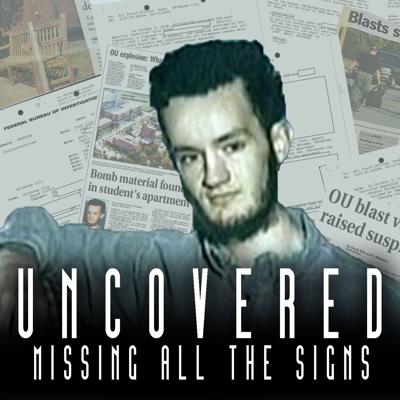
P: The OU Daily, in its podcast series Uncovered, examines the 2005 explosion outside of the Gaylord Family-Oklahoma Memorial Stadium and the chaos, fear and change that ultimately followed. I’m Paxson Haws and I’ll be your host as we hear from those who knew Joel Henry Hinrichs and from those who were involved with the months-long FBI investigation that followed. Joel's story was riddled with conspiracy theories, driven by fear and paranoia. It had only been four years since the 9/11 terrorist attack devastated the nation, and only 10 years after the Oklahoma City Bombing changed Oklahoma forever. Everyone had the same questions: Was it terrorism? Did he work alone? What led him to that park bench? And why?
We’ll hear about the discrimination projected towards Joel stemming from the conspiracy theories. We’ll learn about who he was, his struggle with mental illness and the changes to OU’s mental health resources and security guidelines.
Scooby Axson, then OU Daily’s crime reporter, was the first call The Daily’s editor-in-chief made shortly after the explosion.
Recording of Scooby: That night, I was sitting at home watching the game … and our editor-in-chief called me and says, ‘You need to get down to the stadium.’ And I'm like, ‘No, I'm watching the game.’ She was like, ‘No, you really need to get down here because people are like, filing out in the second quarter. There's something going on down here.’
P: As Axson, who had recently returned from New Orleans where he was providing disaster relief efforts to Hurricane Katrina victims, arrived at the South Oval, an OU police officer who served in the National Guard with Axson immediately pointed out a bomb robot. Now, Axson knew something serious had occurred.
Joel, it turned out, had packed a day planner, chemistry book, wallet, various hand tools and an improvised explosive device in his backpack.
He detonated his bomb, killing himself but harming no others.
Students studying in a nearby building came outside after hearing the explosion and were met by black smoke.
Recording of Scooby: I had them describe to me what they saw. So basically, they saw in, if you could imagine this, a pair of legs on a bench. That's it.
P: Law enforcement officers started filing out of the stadium and rushing to the scene. Norman and OU police officers secured the scene and started the investigation. Phil Cotten, who served as the Norman Police Chief at the time, attended the Oct. 1 game. Once Cotten was aware of what had occured, he returned to the stadium to inform members of the athletic department. The FBI had several agents watching the game inside the stadium and quickly became involved in the investigation.
Recording of Phil Cotten: It kind of looked like it might be like a terrorism attempt or terrorism act. So they came in when the primary jurisdiction was Oklahoma University Police Department. And then the FBI came in to assist.
Recording of Scooby: It was absolutely a circus on campus.
Recording of Scooby: The next day, I go down to the south oval. It looks straight-out like a CSI scene. Like there's like FBI and there's like markers where evidence is. It looks straight out of a TV show. And so the bench where the gentleman set and strapped the bomb to himself, there was a bus right in front of that bench. The Norman Fire Department was out there cleaning off like human remains the next morning. Yeah, it was that surreal.
P: With the FBI involved, OU students and Norman residents were itching for information. It wasn’t long before rumors and conspiracy theories were floating around. The FBI interviewed friends and family of Joel, collected evidence, conducted searches, and talked with witnesses and security from the stadium, culminating in an over 100-page case file compiled over 9 months. Everyone wanted to know: What led to Joel killing himself? Why did he use a bomb? Was this a suicide or did Joel have other intentions?
Recording of Phil Cotten: You have to wonder why a person would be all geared up with all those explosives and walk — I mean real close to the stadium that had 85,000 people in it.
Next time on Uncovered...
Recording of Scooby Axson: This was the talk of, of everybody. Everybody had their conspiracy theories
Recording of Jenny Clemons: A scary experience, especially when you know, I found out that it was a suicide bomber
Recording of Joel Hinrichs Jr: They won’t tell me what happened to Joe. They just say he’s been seriously harmed and seriously injured


