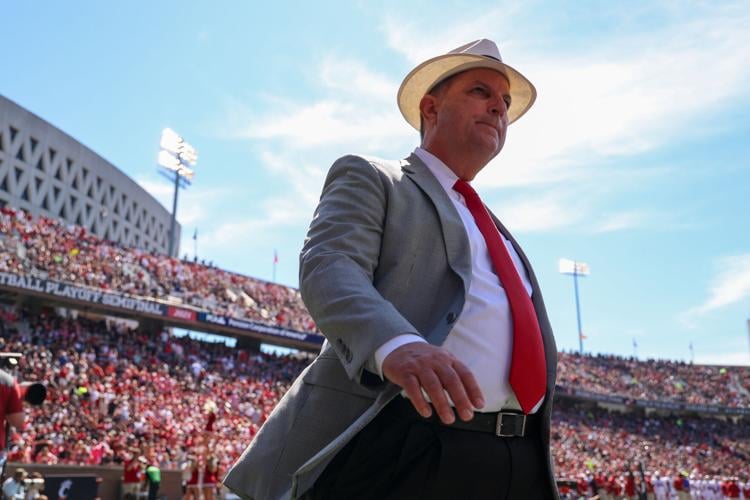



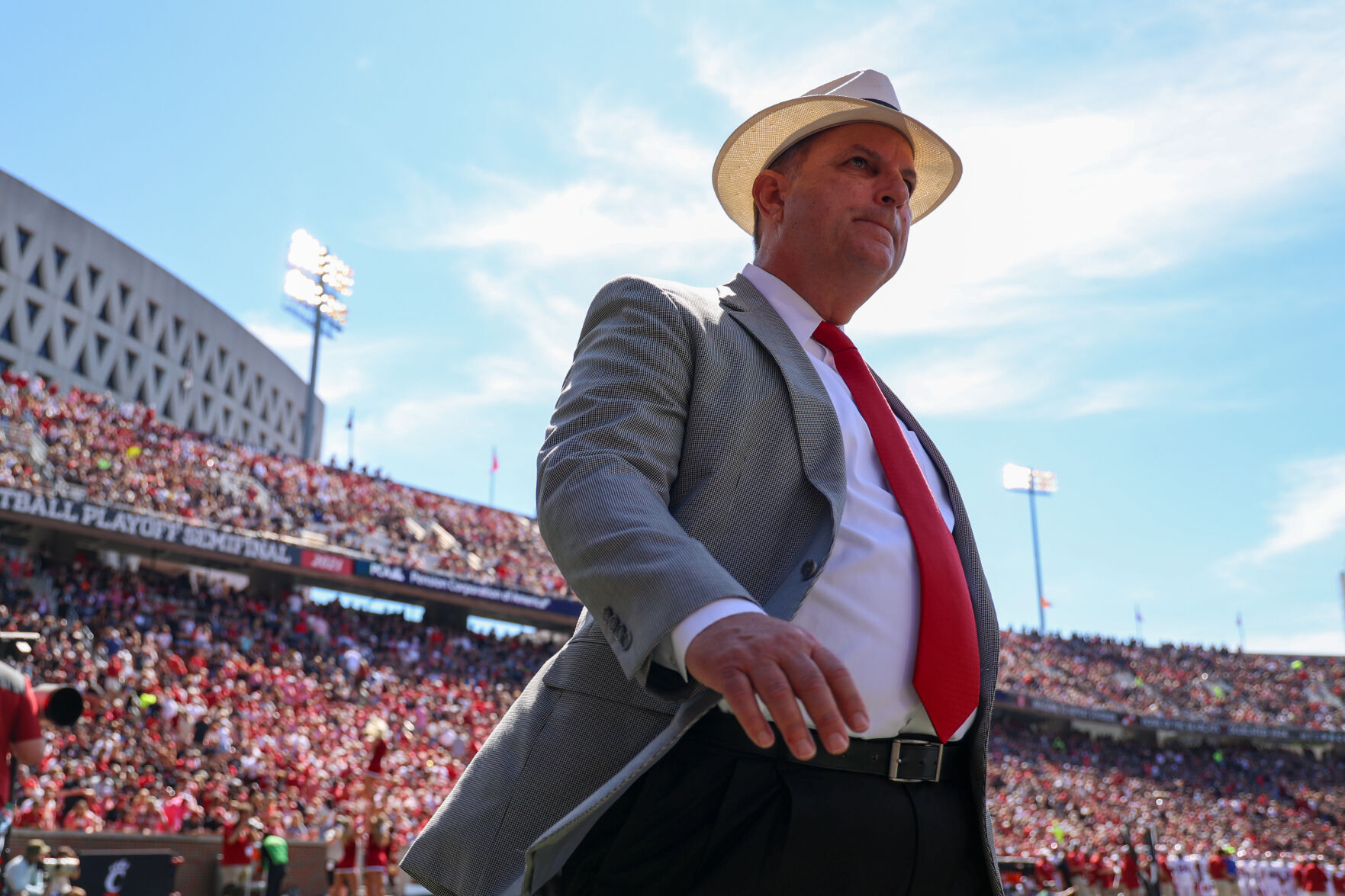
OU athletic director Joe Castiglione during the game against Cincinnati on Sept. 23.
Mark Williams nervously shuffled his chair as he readied for a meeting led by OU President Joseph Harroz Jr. this spring.
OU’s head men’s gymnastics coach is usually laid back, but the uncertain future of Name, Image and Likeness (NIL) protocols and litigation gave him and every coach in the room an uneasy feeling.
“Nobody really knows where all this is going,” Williams told the OU Daily. “(OU athletic director Joe Castiglione) has kind of given us guidance, but even he doesn't know the answers. The best he says is that we're moving to the SEC, and the commissioner (Greg Sankey) of the SEC is really on top of everything.”
Oklahoma Gov. Kevin Stitt had just signed into law Senate Bill 1786, which broadly prohibits any NCAA penalties on athletes for receiving NIL deals or direct payments from any in-state university.
On May 23, that evolved when the Power Five, now known as the Power Four, and NCAA came to a groundbreaking agreement on a $2.77 billion settlement, pending official approval in the courts. The three House antitrust cases — House v. NCAA, Carter v. NCAA and Hubbard v. NCAA — will force the NCAA to pay damages to athletes from the past decade, create a revenue-sharing arrangement between athletes and athletic departments and implement up to a $22 million cap on NIL spending.
While the complexities of this agreement will take roughly six months to sort out, according to ESPN, Castiglione is focused on maintaining a fair and sustainable method of paying athletes across all sports. With revenue sharing, Williams expressed fears of losing funding or, even worse, non-revenue sports being cut from the athletic department.
Many also view the settlement as a threat to Title IX, a law that prohibits sex-based discrimination in education programs or athletic activities, as programs decide whether to pay based on the market value of each sport.
If that were the case, the $22 million cap would likely go toward revenue-driving sports like football and men’s basketball, leaving women’s programs in a potentially inequitable position.
“I think there is fairly universal agreement that we should rightly compensate players through a mechanism that is transparent, equitable and sustainable and, importantly, allows collegiate athletics to preserve Title IX,” Castiglione told the OU Daily in a written statement. “Clearly, we’re still working through how that would operate. What we’re focused on for OU right now is our entry into the SEC and the opportunities presented by the expanded CFP.”
In response to the House settlement, OU recently merged the Crimson & Cream, 1Oklahoma and The Sooner Nation collectives into the new market-based, in-house 1Oklahoma collective to better prepare the university for a potential revenue-sharing model, as it will likely share up to 22% of its athletic department funds with student-athletes at the start of the 2025 fiscal year.
The focus on NIL has also led to a shift in spending from OU’s donors, putting facility projects like the Sooners’ proposed $175 million football operations facility, $75 million student-athlete success center and $30 million facelift for OU baseball’s stadium and training facilities on the back burner.
There's only 1 place to get access to your Sooners. We are 1Oklahoma and this is the future of NIL at OU. #1Oklahoma #NIL #BoomerSooner #NILinNorman #OU pic.twitter.com/malBvi020B
— 1Oklahoma (@join1oklahoma) June 24, 2024
“I’ve made it very clear to the university that they should not be spending an extraneous dollar outside of NIL,” Jason Belzer, the CEO of Student Athlete NIL, the company previously operating the Crimson and Cream Collective, told the OU Daily.
“You can't tell Oklahoma not to build a new academic building, but you can tell it not to build a new football facility,” Belzer said.
While issues of revenue sharing, Title IX and facilities donations have hit the forefront, many other questions remain, leaving uncertainties at large for the Sooners, their new SEC counterparts and the NCAA.
Will student-athletes turn into student employees in the near future? Will revenue sharing result in collective bargaining agreements? Will collectives move in-house or remain as third-party marketing agencies for athletic programs?
One thing is certain: the continued changes will shape how college athletics operate for the next few decades, and every program — especially those outside of the power conferences — must brace for impact.
“We need to provide first-class experience and facilities for our student-athletes, and we also need to ensure that we have competitive NIL offerings,” Castiglione said. “To achieve both is certainly a challenge, but we’re charged with thoughtful prioritization and being disciplined with our resources to best position all of our programs, including football.”

L. Dale Mitchell Park during the scrimmage against UT Arlington on Nov. 3.
‘We’re sitting on a fixed bucket of resources’
On May 16, Castiglione took to X, formerly Twitter, to ask Oklahoma fans for donations to help fund OU baseball’s stadium project announced in 2022.
“For all of you peppering me with messages about our Baseball Stadium Project, here is the way you can help make it happen,” OU’s athletic director said in the post. “While I appreciate the enthusiasm, we need financial support to complete it. Contractors won’t accept social media posts for payment.”
For all of you peppering me with messages about our Baseball Stadium Project, here is the way you can help make it happen. While I appreciate the enthusiasm, we need financial support to complete it. Contractors won’t accept social media posts for payment https://t.co/spqfoAPkdt
— Joe Castiglione (@soonerad) May 17, 2024
It’s common for programs to ask fans to sign up for subscription-based endowments to increase NIL funding, much like the Crimson & Cream Collective’s $2 million fundraiser it launched in January, which aimed for 2,000 fans signing up to help fund the collective by March 7.
Based on other stadiums in the SEC, OU baseball’s facilities are overdue for an upgrade.
Oklahoma’s L. Dale Mitchell Park can seat only 3,180 fans, making it the second smallest venue in the conference outside of Georgia’s Foley Field, which seats 2,760 and opened in 1966.
Despite that, Sooner fans didn’t hold back in their responses to OU’s athletic director.
“Fans are now supposed to pay for the facilities AND pay the athletes? Yeah, that's a hard no,” one Oklahoma fan replied.
Others weren’t so kind.
“Get a loan for the rest of it. The athletic department will be making more than enough money in the SEC,” another person wrote. “No more excuses.”
Since OU’s Board of Regents approved a feasibility study to construct a sterling, $175 million football operations facility adjacent to Gaylord Family-Oklahoma Memorial Stadium, there have been no updates on the timeline of its potential construction, much like the potential renovations to OU’s baseball stadium.
According to Rick Nagel, a member of OU’s Board of Regents, OU’s athletic department is making strategic investments where it can. At the moment, NIL is where donors are putting their money, which has left OU President Joe Harroz Jr. and Castiglione scrambling to find funding.
Before the 2022 season, SEC powers Auburn, Florida and Georgia all completed football-only operations facilities upgrades, which cost $91.9, $85 and $80 million, respectively. In 2020, Alabama opened a $288 million football facility, one of the most expensive in the entire conference.
With OU’s SEC move, facility investments remain a top priority despite the burgeoning importance of NIL.
“We know we need to continue to make investments in our football program, in our facilities, and we're committed to doing that right,” Nagel said. “We’re sitting on a fixed bucket of resources here. You have schools around the country that just went online with big new stadiums and practice facilities and are sitting on hundreds and hundreds of millions of dollars' worth of debt and have no ability to pivot toward NIL initiatives. We don’t want to be like that.”
Nagel gave no construction timeline for OU’s football facilities, but he did confirm there is a plan in place to relocate the Sooners’ track and field program, whether it be to a new facility or a building in the same area.
While OU facility initiatives are on hold for the foreseeable future, other SEC programs are struggling with the same reality. Arkansas athletic director Hunter Yurachek made a splash this spring when he hired former Kentucky head coach John Calipari.
Days after the move, reports surfaced that billionaire donor Johnny Tyson helped assemble a $5 million NIL package for his friend Calipari.
“There's been a lot of rumors out there that Mr. Tyson that he's already footed the whole NIL bill that's totally false,” Yurachek told the OU Daily. “We’re on the same page in terms of where the NIL funding needs to be, but the hay is currently not in the barn.”
Those false reports frustrated Yurachek because he has struggled to garner funding for renovations to Bud Walton Arena, a new $20 million softball complex and a $15 million soccer stadium to avoid a debt crisis.
“The people that were asking for NIL money, we will ask for money for the capital campaign,” Yurachek said. “It is a delicate balance right now, but some people make it easy for you.”
In a similar vein, Florida athletic director Scott Stricklin told the OU Daily that there are Gators’ donors who are selective about fully funding the Florida Victorious collective, while others want their money invested strictly in facility projects.
Still, Stricklin knows that both NIL and facilities remain crucial to fulfilling the Gators’ recruiting vision in the SEC.
“I think you want every part of your program to be excellent if you're gonna compete at the highest level,” Stricklin said. “If you had great coaching and great facilities and great fan support and no NIL, you probably wouldn't win as many games as you feel like you should."
“You've got to be good in all those areas," Stricklin said.
According to Belzer, the Crimson & Cream Collective spent $4 million on OU’s football team, which ranked 13th in NIL spending for any program in the nation last season. He expects more money to be needed as programs look to max out the $22 million spending cap.
But, as donors continue to drain their pockets, the tectonic squeeze of NIL is reaching an insurmountable end. Athletic departments can bend for only so long until something has to break.
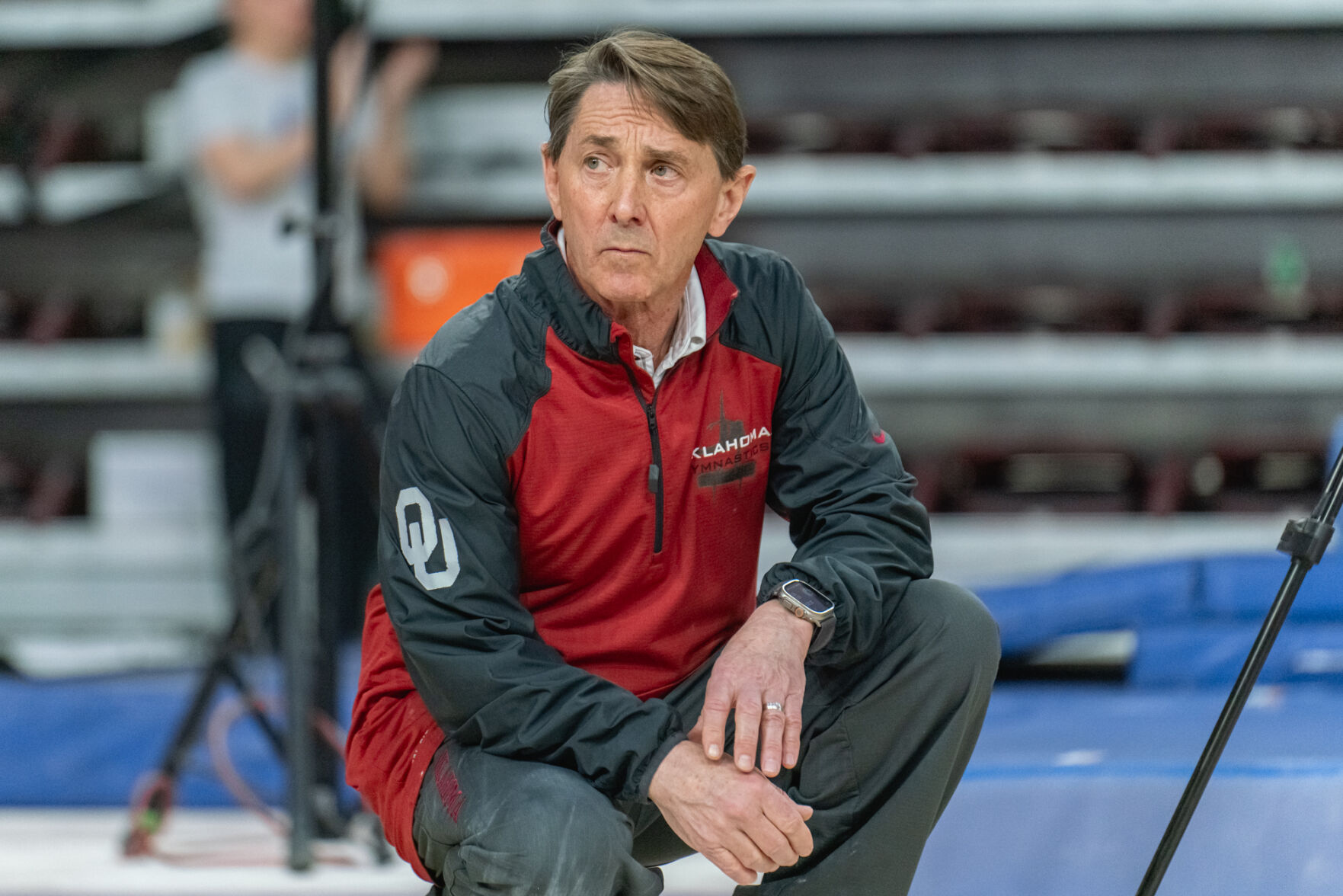
OU men's gymnastics head coach Mark Williams during the MPSF championship on April 6.
‘Would be a death sentence’
Growing up, Mark Williams never dreamed of becoming a football or basketball player.
Williams’ 5-foot frame rendered him useless in most sports. He would never touch a rim. He’d be lucky if he could catch a football, and — if he tried hard enough — maybe he could dribble a basketball.
“A guy like me, who's 5-foot nothing, wasn't gonna be a basketball or football player,” Williams said. “I got creamed. I couldn't play with the big boys.”
Instead, Williams took to men's gymnastics, a sport where his small, agile frame allowed him to excel and, as a result, later become a coach. It’s that same dream Williams hopes to pass on to the gymnasts that he coaches.
As a coach, Williams has had his share of success. The Sooners have won nine national titles and named 39 individual national champions since he was hired in 2000. Even with that success, neither OU’s head coach nor any of his gymnasts have made any NIL deals or had any contact with OU’s Crimson and Cream Collective.
With revenue sharing expected to be implemented in 2025, Williams fears for the future of his sport and even his job security. In 2023, OU’s total athletic department operating revenues for the fiscal year were $199,295,570.
In all, Oklahoma’s athletic budget resulted in a more than $10 million surplus, making it one of the only programs in the country operating above its expenses. Due to the implications of the House settlement, however, even some of the most cash rich athletic departments are making budget cuts, a trend that's expected to continue.
In response to revenue sharing, Texas A&M — known for its massive NIL spending and oil tycoon donor base — recently laid off more than a dozen athletic staffers due to the upcoming changes with the House settlement.
Williams has fears that will start extending into non-revenue sports like men’s gymnastics.
“We're all a little bit afraid of that,” Williams said of the future of revenue sharing. “I think even women's softball is a little bit afraid of that because if it becomes a profit-sharing issue with the school, there's always so much money that can go around.
“If you're taking away 50% of profits from the athletic department to pay athletes, that'll only go so far. And does that mean that some of the non-revenue sports go away? I mean, my fear is that not only would the athletes not get paid, but we wouldn't have enough money to support all the teams that are currently at OU.”
Williams is aware that football revenue helps support Oklahoma’s non-revenue sports currently, which is a reality that will likely continue. However, his main concern goes back to the dying culture of the sport that raised him.
“Kids ought to have the opportunity to get an education, and they ought to have an opportunity to play a sport if they're in college,” Williams said. “If you're looking at just money in dollars and cents, you lose all the culture and character-building things that come from being a student-athlete on a university campus.”
While it's expected that football will receive a large sum in the new revenue-sharing model, there are broad concerns about revenue sharing and how it would impact equal opportunities for pay among women’s athletics nationally. NCAA president Charlie Baker said Title IX is a topic that will be addressed at a conference and institutional level in an interview with NPR on May 30.
OU women’s basketball head coach Jennie Baranczyk isn’t concerned about the future of Title IX at Oklahoma, despite the football team driving most of the revenue.
Despite being a lesser-funded program, Baranczyk landed a commitment from coveted transfer forward Raegan Beers and has led Oklahoma to three consecutive NCAA tournament appearances.
She pins most of her success on the support of OU’s athletic department and the leadership of Castiglione, which is why she trusts the university to stay true to Title IX despite national concerns.
“We don't have answers … but there's no question that our administration has the highest integrity in Title IX and it is going to be of the utmost consideration with revenue sharing,” Baranczyk told the OU Daily. “Now, that doesn't mean that hard decisions aren't going to continue to have to be made.”
While much is still unknown about the future of revenue sharing and its impact at OU, Williams and Baranczyk hope the foundation of college sports remains intact.
Beyond that, Williams hopes he will still have a seat at the table.
“To even envision that we either become just a club program or go away would be a death sentence to certainly my coaching career and the opportunities for other young men,” Williams said.
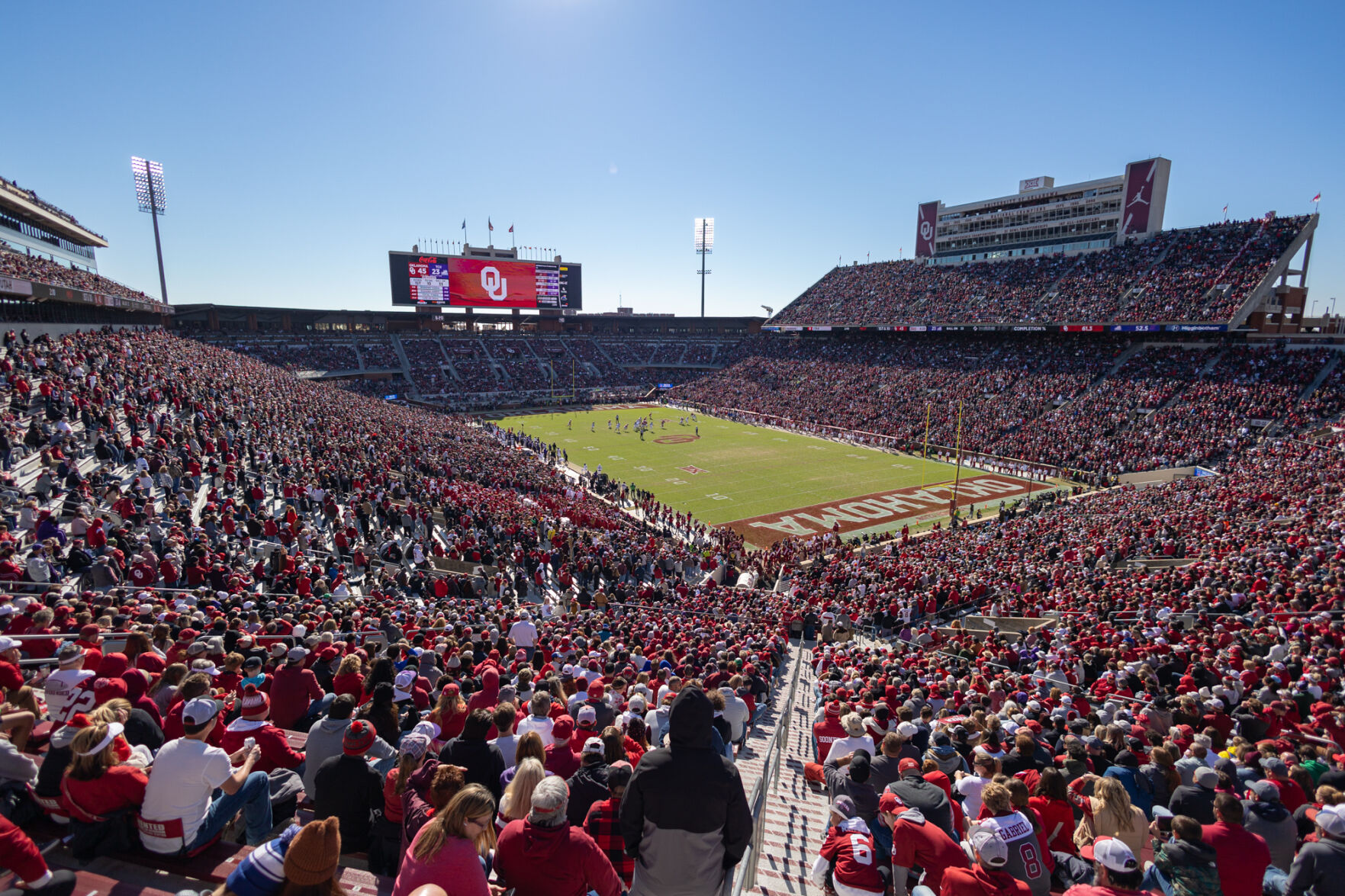
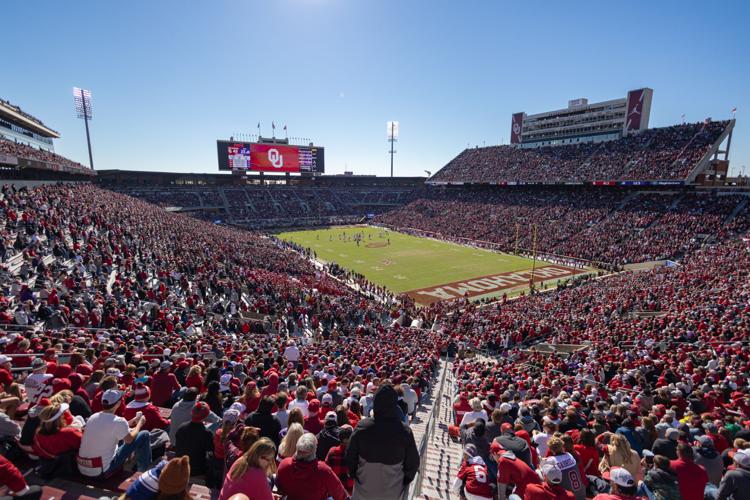
Gaylord Family-Oklahoma Memorial Stadium during the game against TCU on Nov. 24.
‘Oklahoma is a right-to-work state’
The next step following the House settlement, for many, is determining if student-athletes will become employees.
Stricklin envisions a future where student-athletes could be labeled employees, which would give them rights under national labor laws and, more definitively, the right to collectively bargain for pay, benefits and more.
“Collective bargaining is how they do it in professional sports,” Stricklin said. “We really don't have that mechanism. I think we need to be open to figuring out whether it's something definitely like that or some kind of other version.”
In a recently proposed piece of legislation authored by Rep. Bob Good (R-Virginia), advanced by the U.S. House Committee on Education and the Workforce weeks after the House settlement, federal lawmakers pushed to bar student-athletes from being considered employees. While the bill is likely to face opposition from Senate Democrats, it represents how the revenue-sharing model is still being debated and developed before being set in motion in 2025.
Sen. Kristen Thompson (R-Edmond), a co-author of the groundbreaking SB 1786, wanted to ensure athletes' potential rights as employees were in mind. She worked with lawyers and officials from both OU and Oklahoma State University to author the legislation. Together, they had the idea of college athletes becoming employees long before the bill was signed by Gov. Stitt.
“Oklahoma is a right-to-work state,” Thompson told OU Daily. “That was actually one of the first questions that I asked when I started exploring this legislation, and this is part of the free market. So, if we're going to do something like this, we have to make sure that we let the market do what it is going to do within the regulations.”
Rendering student-athletes as employees wouldn’t come without its difficulties. There is speculation that Title IX can only be regulated if they’re not employees, which has left questions among female athletes and coaches in the NCAA.
Beyond that, Mit Winter, who represents numerous P4 programs as an NIL attorney, views the future of collective bargaining as a threat to the NCAA’s current model, despite the significance of the House settlement.
“If some college athletes are employees, they're probably going to form players associations, and then collectively bargain the terms of their employment with either a conference or some other entity, whether it's a new football league or a new college basketball league,” Winter said.
This future continues to represent the uncertainty surrounding NIL, revenue sharing and more. For the Sooners, it’s unclear if there will be any future unions of collective bargaining agreements with the NCAA, SEC or the program itself.
Beyond that, it’s unknown if the Sooners will seek corporate sponsorships to put on their field and uniforms. Oklahoma has already made the step to move the new 1Oklahoma in-house, preparing its athletes and program for revenue sharing ahead of the 2025 fiscal year.
What is clear for OU’s coaches and administration, is that the landscape is ever-changing, and if they don’t adapt, then everything and everyone will be left behind.
“It does make you change and evolve because you can't, you're no longer in your five-year plan because how much will change in five years,” Baranczyk said. “Everything could change on a Friday, that's kind of where we’re at. So you just have to constantly be flexible. You have to adjust. You have to rely on your administration.”
This story was edited by Taylor Jones and Gracie Rawlings. Riley McDaniel, Matthew Moore and Avery Avery copy edited this story.


