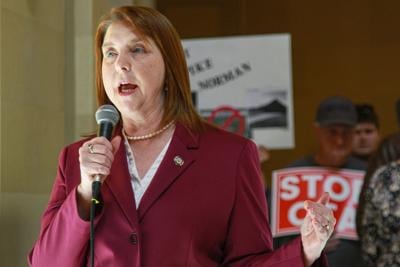

Oklahoma Senator Mary Boren (D-Norman) is now listed as a co-author of House Bill 4088 — which currently allows the Oklahoma Turnpike Authority to construct and operate a toll turnpike at the Oklahoma City Outer Loop expressway systems — and said she will work to amend or modify the bill to ensure studies are conducted and local officials are heard in a Monday statement.
Rep. Merleyn Bell (D-Norman) initially filed an amendment opposing HB 4088. The bill was authored by Rep. Kevin Wallace (R-Wellston) and outlines where the OTA can operate turnpikes in the state.
The amendment, which was blocked by the Oklahoma House of Representatives in March, would have removed existing law to restrict the OTA’s ability to move forward with two new stretches of turnpike through Norman and Moore, according to a Fox 25 article. During the House of Representatives meeting, Boren said she would try to amend the bill.
The ACCESS Oklahoma Plan includes a $15 billion long-range state turnpike proposal divided into several parts to provide alternative options for drivers. It was unveiled to the public Feb. 22 and first discussed during a March 1 Norman City Council study session, where Mayor Breea Clark said she learned about the proposal days before the public.
Since the proposal, Norman residents have expressed fears of losing their homes and the potential impacts on Norman wildlife because the proposed turnpike would be constructed through the center of Ward 5.
Boren wrote in the statement that she hopes to have an amendment approved before additional turnpikes damage more homes and towns.
“Clearly, all Oklahomans have serious concerns about building more turnpikes without any plan to pay off the ones that have already been built,” Boren wrote. “We are also anxious when eminent domain can be used to take land and homes without having to complete studies to determine the verified need for the projects."
Senate Bill 1610 will also be heard in the house transportation committee at 10:30 a.m. on Thursday. The bill would require the OTA to conduct studies on why they chose this route, and the legislature could authorize its modification.


