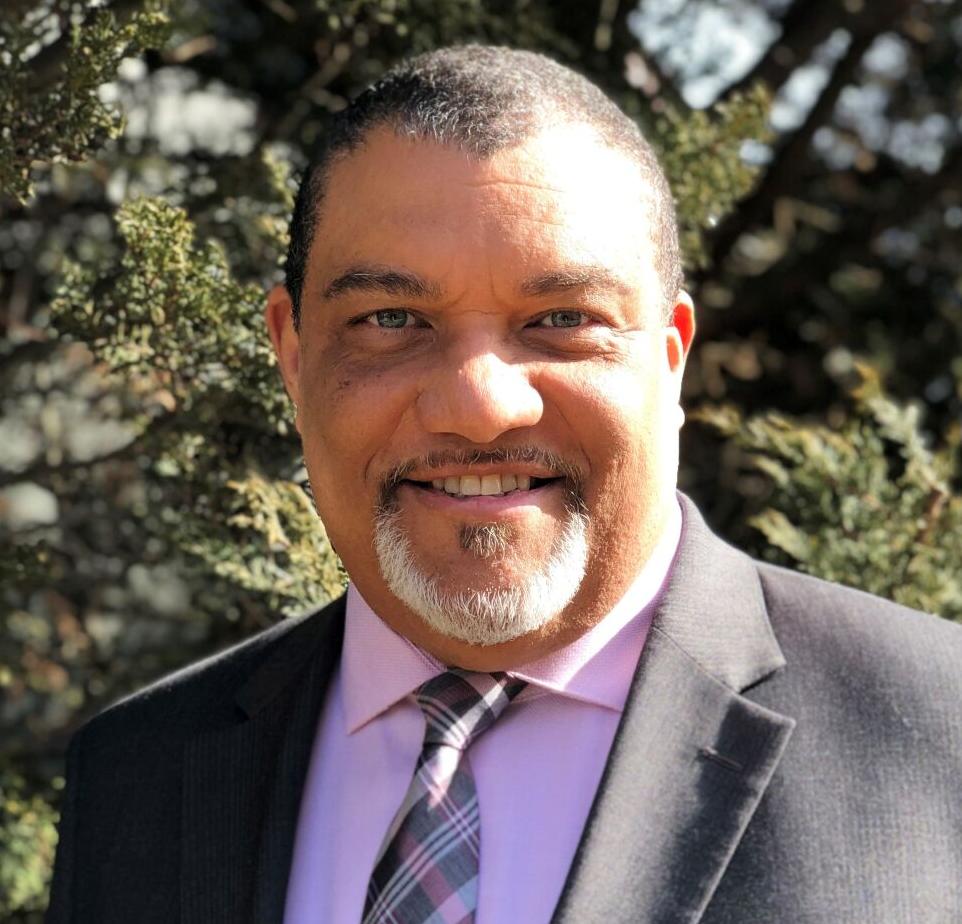

OU announced the hiring of André-Denis Wright as senior vice president and provost Thursday during a process that has drawn simultaneous praise and criticism from scholars on university administrative searches and government transparency.
Wright was selected to succeed former Senior Vice President and Provost Kyle Harper, who vacated the position in June 2020.
Wright currently serves as dean of the College of Agricultural, Human and Natural Resource Sciences at Washington State University, where he’s worked since June 2018. According to the email from OU President Joseph Harroz announcing the hire, Wright has served in the leadership of 15 schools and departments in the natural and human sciences, including more than 3,100 students, about 1,250 faculty and staff across almost 50 locations, a $196 million budget, a tribal office and four research and extension centers across Washington.
Harper stepped away months after a three-day sit-in at Evans Hall, where students and Black Emergency Response Team leaders demanded his resignation.
Harper was appointed as interim provost following the 2014 retirement of then-Provost Nancy Mergler, and roughly a year later, he was named to the position permanently. His tenure was rife with racist incidents, though the concern which led to calls for his resignation was on his response — or lack thereof — to multiple incidents, from a professor comparing a racist slur to the phrase “OK, Boomer” to members of Tri Delta applying blackface and using racist slurs.
During the sit-in, documents from the search process which led to Harper’s hiring were leaked, revealing the search committee had previously expressed concerns with Harper’s commitment and ability to engage with diversity initiatives. Former Dean of the OU College of International Studies Suzette Grillot co-chaired this search.
Grillot previously provided The Daily with recordings of a conversation between herself and former OU Regent Renzi Stone, wherein Stone complained of a “lack of trust” among high-level university officials complicated by former OU President David Boren’s push for Harper to be selected as provost.
The search leading to Wright’s hire began in “early 2021” according to a university spokesperson. OU conducted virtual on-campus interviews for all semifinalist candidates through early April.
Although students were not directly provided the link to these town halls, “all faculty and staff” were “encouraged to attend” the events in a university email, and Daily reporters were permitted to join the Zoom calls. However, search co-chair and Dean of Students David Surratt began each forum by asking attendees to maintain the confidentiality of the candidates’ names and not discuss the event outside of the Zoom call. Attendees were also invited to provide feedback on candidates, and over 400 faculty and staff shared their thoughts, according to Harroz’s email.
The search which led to Harper’s hiring was a “mixed bag,” Grillot said in an interview with The Daily. The final three candidates hosted public town halls and answered questions from all community members, unlike in Wright’s hiring, and their names were shared with campus.
“It was all very transparent in that way,” Grillot said. “The catch in all of this is that we all knew what was going to happen — we knew that President Boren was going to pick Kyle Harper.”
The search also drew only 19 applicants, Grillot said, potentially due to concerns about the legitimacy of the search because of the inclusion of an internal candidate. According to an email sent by OU President Joseph Harroz announcing Wright’s hire, the most recent search attracted 55 candidates.
Judith Wilde, a professor at George Mason University and researcher on collegiate presidential and administrative searches, praised OU for breaking from the standard of completely secretive searches by allowing faculty and staff to hear from the five semifinalists.
“It’s a little bit unusual, but I’ve seen it done before with good results,” Wilde said. “They’re letting the people they’ll be working with talk to them. I think that’s good — what’s more normal is what OU did when they hired (former OU President James) Gallogly.”
Wilde previously criticized the university for opting for a “secret search” during Gallogly's hiring — the names of candidates considered for OU’s presidency following Boren’s retirement were never revealed, and a search firm was employed to gather the candidate pool. Wilde similarly questioned why the university chose to keep the provost candidate names secret while inviting faculty and staff to hear from the semifinalists.
In an email to The Daily, OU Director of Media Relations Kesha Keith wrote the university chose to keep candidates’ identities confidential “per the counsel” of the search firm OU employed in the selection.
“This allows candidates to pursue opportunities at other institutions, without negatively impacting their current employment or exposing them to any unnecessary political risk,” Keith wrote. “Some of the most qualified candidates for executive roles are not actively searching for other positions and have an expectation of confidentiality in order for search firms to convince them to apply for positions outside their current employer. Removing confidentiality could result in having a qualified candidate withdraw to avoid any current employment disruptions.”
Contrary to the growing trend Wilde said she identified in her research, Louisiana State University released a list of 23 candidates for its presidency April 21. Wright was among those candidates.
One candidate recently declined to be named a finalist if they were not the only candidate and withdrew from the search during the University of Wisconsin’s search for a system president, according to a UW official.
In a 2019 Inside Higher Education article, a senior consultant for a candidate search firm said a university president was once fired for looking into another position — but not running for the position himself — but did not specify the individual or institution.
Wilde said the perception candidates should fear for their job security if named in another search is inaccurate.
“If you ask the search firms to give you the name of somebody or an institution at which (someone was fired for being a candidate for another job), they will say ‘Oh no we can’t, privacy, confidentiality,’” Wilde said. “If a school is really happy with their president ... and found out that president had other offers, would they fire the president, or would they try to keep the president?”
Keeping candidates secret is also a benefit for search firms themselves, Wilde said, making it easier for them to grow candidate pools for different searches.
“By keeping all names quiet, nobody knows who has been in a candidate pool someplace else,” Wilde said. “If I were in the candidate pool, and a reporter was able to suss out I had been in five other searches, or I’d made the final list and never been hired, you might wonder what happened. By keeping all the names secret, they can rehash the same candidates over and over again, and nobody ever knows.”
Though she hasn’t seen any evidence of the search firms’ claims in her research, Wilde said it’s been repeated so many times that candidates are now requesting confidentiality from universities themselves before being considered for positions.
The provost search was, however, a semi-secret affair compared to what is common, Wilde emphasized.
Joey Senat, an associate professor of media law at Oklahoma State University and freedom of information expert, called OU’s process a “weird hybrid.”
“I think it’s unrealistic to expect to have this large gathering and basically have anyone who wants to be in it, in it and ask everyone to keep the details a secret,” Senat said. “If they wanted to say, 'We won’t let you in unless you make this promise,' (that would be different). … This constant obsession with secrecy is counter to a university’s mission of transparency and open education.”
Although such faculty meetings are not public meetings under the Oklahoma Open Meeting Act, Senat said, it’s “just not realistic” to expect the candidates’ employers don’t know they’re being interviewed for a job so late in the process. If faculty and staff attending the meeting know someone at a candidate’s institution, it’s also unlikely they wouldn’t reach out to learn more about the candidate, Senat said.
“The circle of secrecy is never as small as people think, and it grows just bigger and bigger the more people that are involved,” Senat said.
Senat also agreed it’s “nonsense” to argue if a candidate is desired for another job, it would lead to their employer eventually firing them.
“It doesn’t understand how academics and how universities work to make that argument,” Senat said. “If somebody wants your person, that’s a good thing.”
Pending Board of Regents approval, Wright will take his position July 1. The Board of Regents is next scheduled to meet May 17 and 18.


