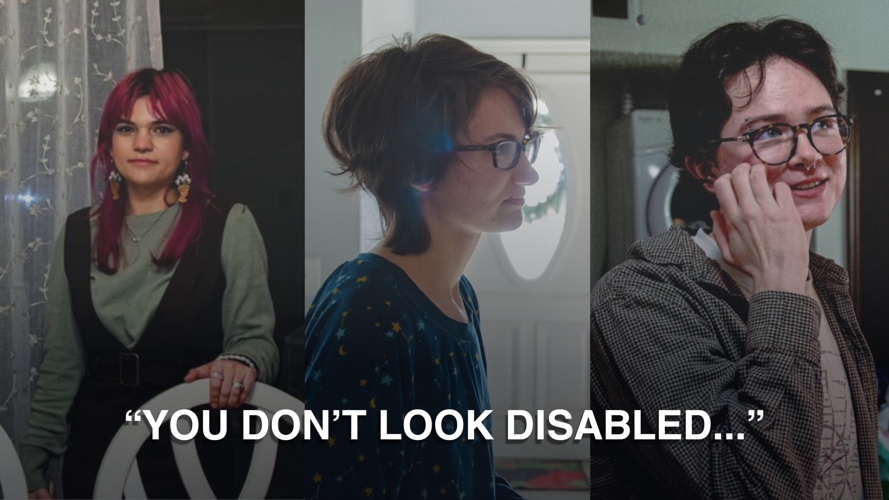


From left to right: Doran Walters, Chet Talbot and Will Spicer.
From December 2024 to January 2025, OU Daily interviewed Norman residents and OU students with various disabilities. At first glance, these people may seem perfectly healthy, but in reality, their conditions cannot be seen physically and are categorized as an invisible disability.
An invisible disability is an umbrella term used to refer to any condition that negatively impacts a person’s daily life and is largely undetectable from an outside perspective.
Examples of invisible disabilities include chronic illnesses such as postural orthostatic tachycardia syndrome, Ehlers-Danlos syndrome and fibromyalgia; mental health conditions like PTSD, obsessive-compulsive disorder and depression; and neurological conditions like a traumatic brain injury, attention-deficit/hyperactivity disorder and autism.
In the U.S., around 10% of the population is estimated to live with a condition that would be classified as an invisible disability, which makes the chances of someone having an invisible disability over twice as likely than being born with red hair. While not acknowledged by the Americans with Disabilities Act as an official term, people who identify as “invisibly disabled” are still widely diagnosed with conditions that are recognized and protected under the act.
Doran Walters: Paraeducator, disability rights advocate

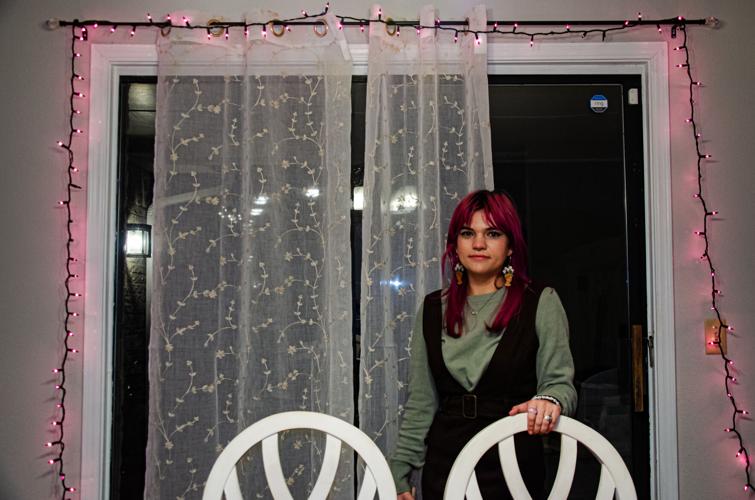
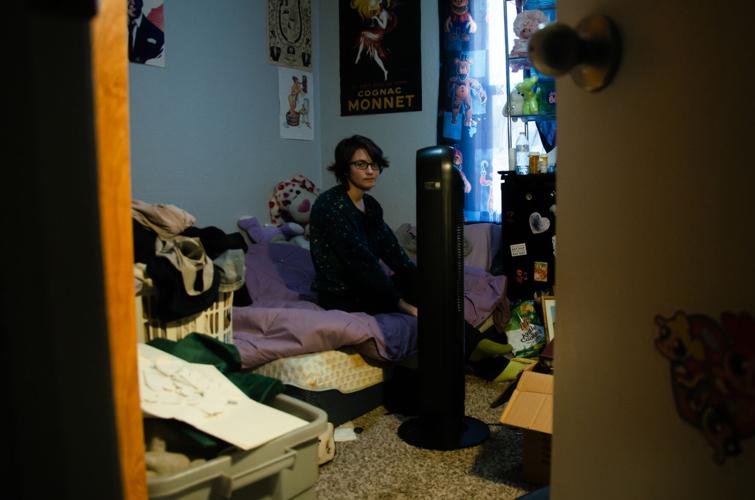
Doran Walters in her home on Jan. 15.
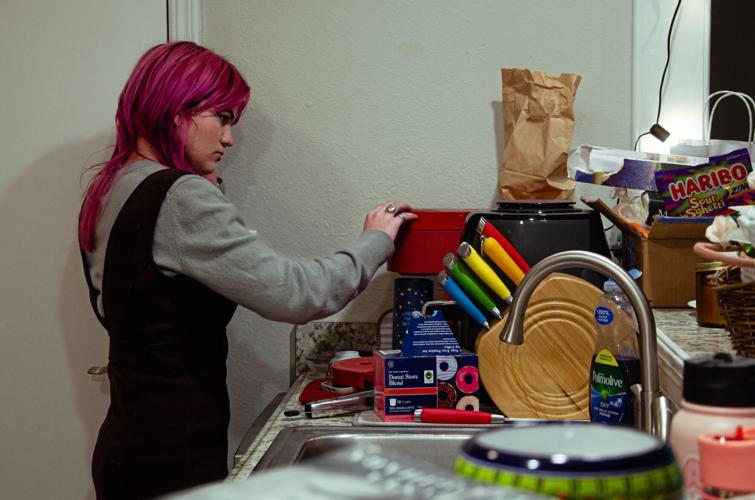
Doran Walters, a paraeducator and disability rights advocate, has been living with chronic migraines since kindergarten. In high school, she sought treatment for mental health reasons, which were assumed to be the cause of her health issues by doctors. As her mental health improved, her physical symptoms continued to worsen. She began to suspect she had a blood circulation disorder called POTS.
“I could barely make it through a day of school. I was always dizzy and nauseous,” Walters said. “Everything took so much more effort than it felt like it took everyone else.”
Throughout her medical journey, Walters faced constant roadblocks. A false negative due to incorrect testing procedures only increased her anxiety.

Doran Walters in her home on Jan. 15.
“It was really frustrating, and it's something that's really common for people with invisible illnesses — that no one believes them,” Walters said. “There's so much medical gaslighting.”
Walters’ favorite comparison to make about her situation is to the Greek myth about Cassandra of Troy. According to the story, Cassandra was gifted the ability to see the future by Apollo. However, after Cassandra rejected his advances, Apollo cursed her so no one would believe her prophecies.
“One of the most difficult parts of not being believed was … the fear that nothing was going to get better and it was just getting worse already and that there was nothing I could do about it ‘cause no one believed me,” Walters said.

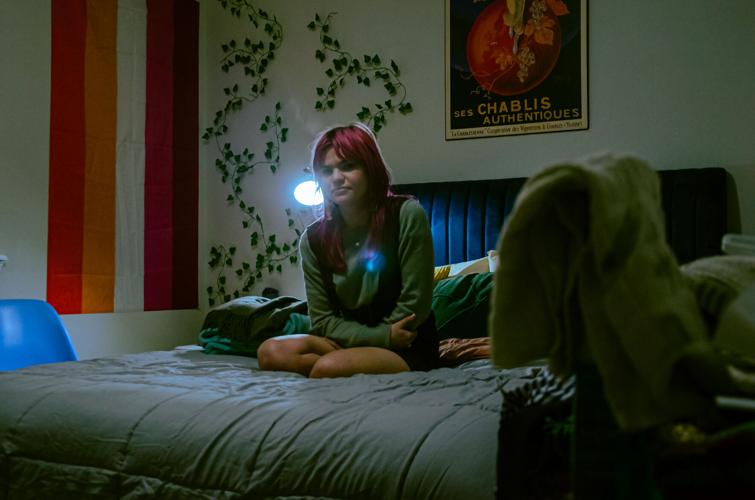
Doran Walters in her home on Jan. 15.
It was only after she went to the Mayo Clinic and met with a POTS specialist that Walters finally found answers. She was diagnosed with both POTS and dyspraxia, a disorder that affects her motor functions and coordination.
“I had a lot of relief and kind of like some vindication that I was right,” Walters said.
After her diagnosis, Walters implemented changes in her daily life to accommodate her symptoms. For her low blood volume and electrolytes, she makes sure to carry a water bottle and salt shaker with her.
Now, Walters dedicates herself to educating and advocating for other people with disabilities.

Doran Walters in her home on Jan. 15.
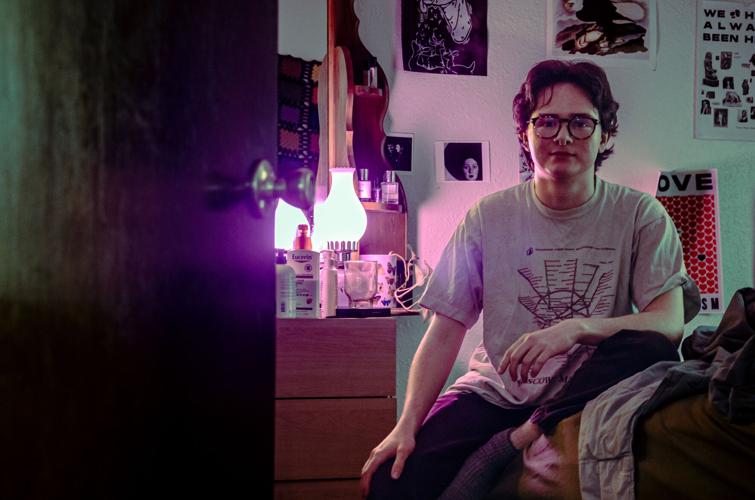
Chet Talbot: Professional writing student

Chet Talbot in her home on Dec. 21.
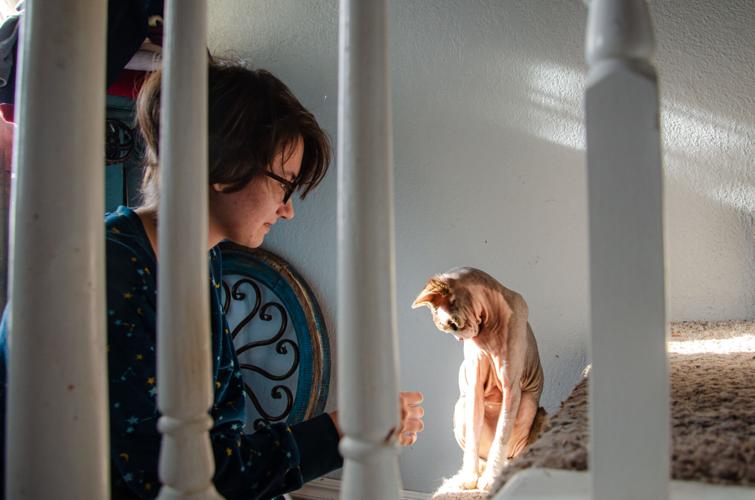
Chet Talbot is a junior professional writing student at OU. She was diagnosed with avoidant/restrictive food intake disorder, or ARFID, in high school. Talbot deals with severe sensory and digestive issues, making eating difficult for her. Talbot also has chronic musculoskeletal and nerve pain, which she has yet to receive an official diagnosis for.
Talbot was first diagnosed with ARFID during a hospital visit for her gastrointestinal issues. She recalled feeling surprised by the diagnosis and admittance to the hospital’s in-patient eating disorder program. Talbot ended up staying at the hospital for four months before being transferred to a private eating disorder clinic.

Chet Talbot in her home with her cat on Dec. 21.
During her hospital stay, Talbot was incorrectly prescribed medication she was allergic to. Even though she quickly notified medical staff, Talbot said it took months before her medication was changed. During this time, she struggled to eat even more than usual.
“I definitely feel like I needed it, and I'm glad I got through it, but at the same time, I went through a lot of people not geared to my specific needs. ... It left me with just about as many problems as it helped me with,” said Talbot, “I think what I've learned is that doctors can really make or break it. It just really depends on who you're talking to.”
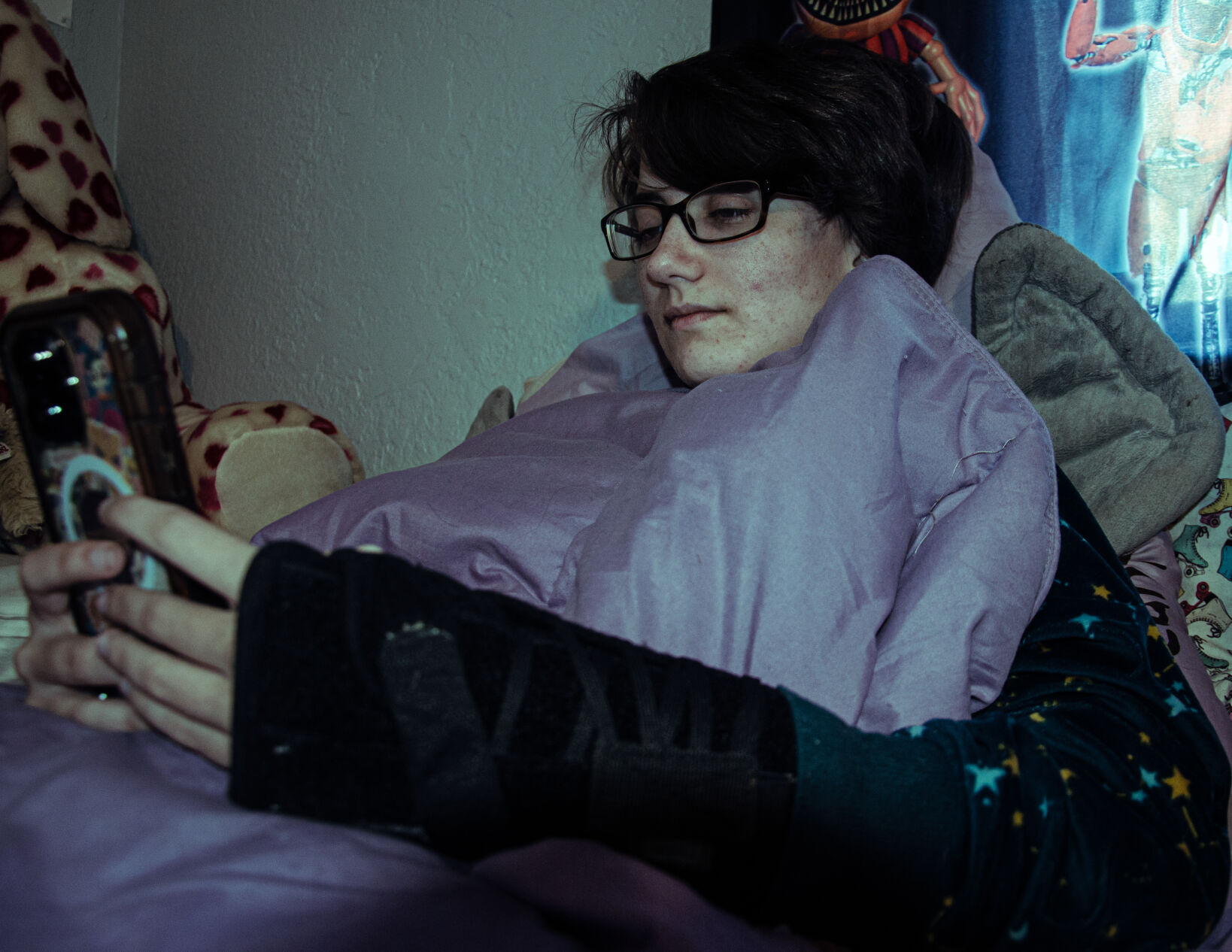
Chet Talbot in her home on Dec. 21.
Talbot lives with her family in Norman while attending OU. After decorating her room, the physical exertion had caused widespread pain and numbness in her feet for the rest of the day into the night. Talbot believes that being able to make the space her own was worth the struggle.
“I was like, I need to put my things on the wall immediately, and that definitely helps. Just my friends, my art, my ... things, knowing it's like, yeah, I kind of have to deal with these, like the diagnosis, for basically the rest of my life, but I'm not alone and, I mean, it's not all bad,” Talbot said.
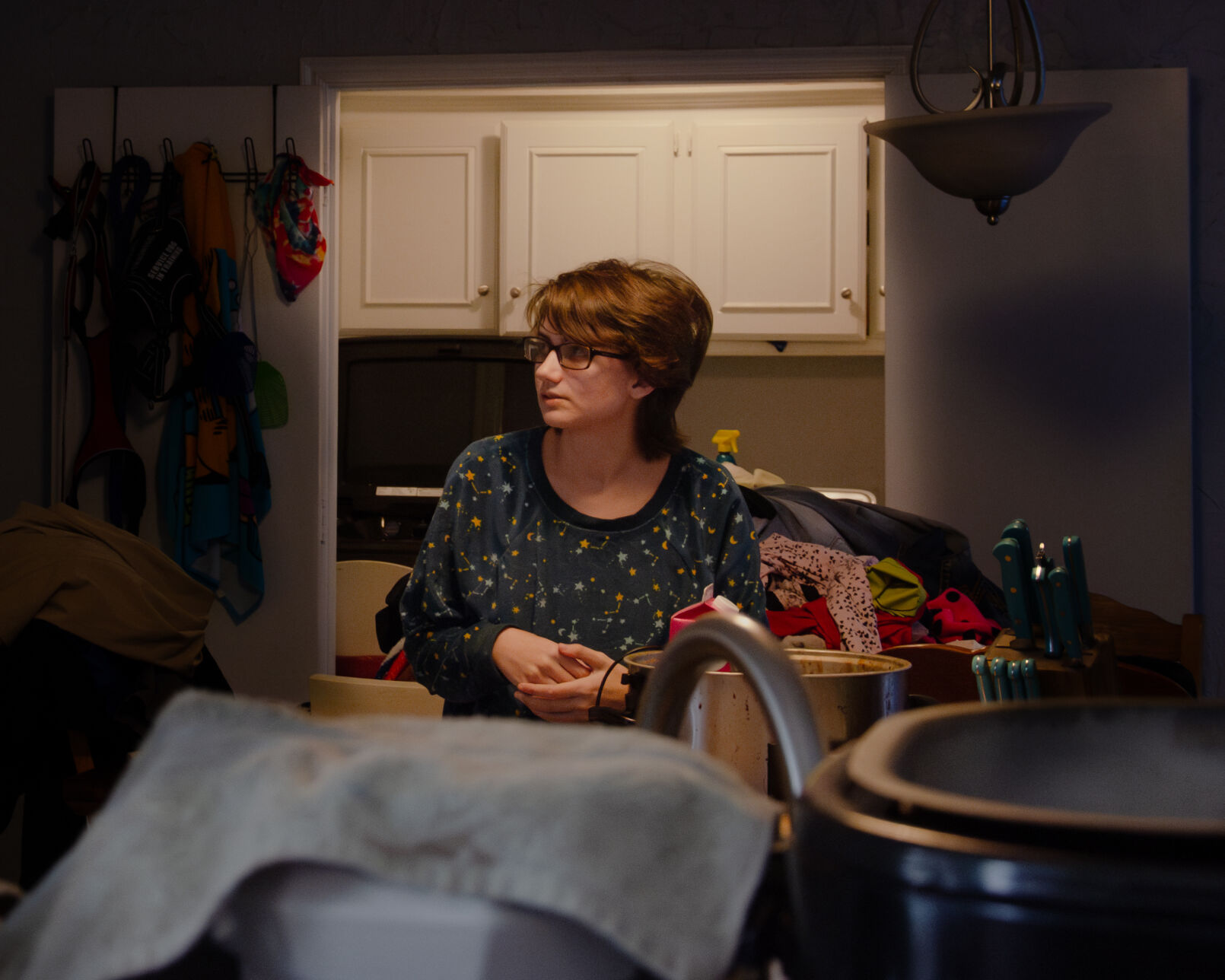
Chet Talbot in her home on Dec. 21.
Will Spicer: Environmental sustainability graduate

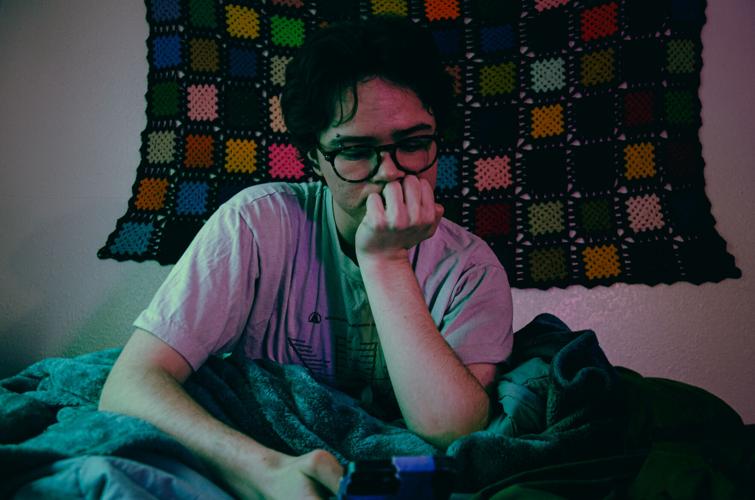
Will Spicer in his home on Jan. 25.
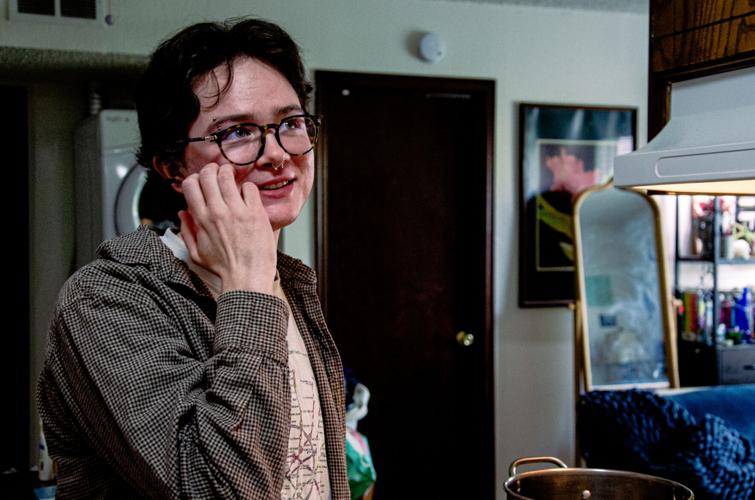
Will Spicer, a recent OU environmental sustainability graduate, was diagnosed with OCD two years ago. Before treatment, Spicer heavily dealt with unwanted and distressing thoughts. His symptoms can range anywhere from an obsession with hygiene and organization to more intense moments of Spicer questioning his morality and the world around him.
“One of my OCD things is it makes me feel just like really guilty over nothing, and I was looking at these stories of people that felt guilty over something mean they said in elementary school, which is how my OCD makes me feel. Everything is such a big deal and like I'm evil, and I have to repent for my sins and stuff or whatever,” said Spicer.
Spicer is not the only one with OCD to struggle with guilt. People with OCD frequently report feeling extreme guilt as a result of intrusive thoughts that are opposite of their morals and values.

Will Spicer in his home on Jan. 25.
“I used to have a really hard time even leaving my house,” Spicer said. “I'd skip class all the time. I wouldn't socialize or hang out with people. I was able to maintain my grades but because that was the only thing I was doing. I was just constantly distressed to put it lightly, which makes it just really hard to do anything at all.”
Spicer had been receiving mental health treatment long before being diagnosed. None of his health professionals chose to diagnose or treat him for OCD. The condition had never been considered as a possibility. He had been repeatedly misdiagnosed with conditions like anxiety, ADHD and bipolar disorder.
“I had to do my own research and stuff to even figure out that I had OCD because all of my therapists just kept missing it,” Spicer said.
Spicer’s difficulty getting diagnosed and treated is not a unique case. When finding and meeting with his current therapist who specializes in OCD, he said she was not surprised to hear about his experience. According to a 2021 study, it takes nearly 13 years on average for a patient to be diagnosed with OCD.

Will Spicer in his home on Jan. 25.
Over the years, Spicer has spent thousands of dollars in the hopes of getting treatment. Even though his therapist is not covered by insurance, he said it is his only option.
After getting the help he needed, Spicer’s symptoms have been reduced to a much more manageable level.
“I was just like, I can’t live like this anymore. … It’s taken a lot of work to get to that point where I can be like, I’m living with uncertainty and imperfection,” Spicer said.

Will Spicer in his home on Jan. 25.
This story was edited by Peggy Dodd. Geethika Kollu and Grace Rhodes copy edited this story.


