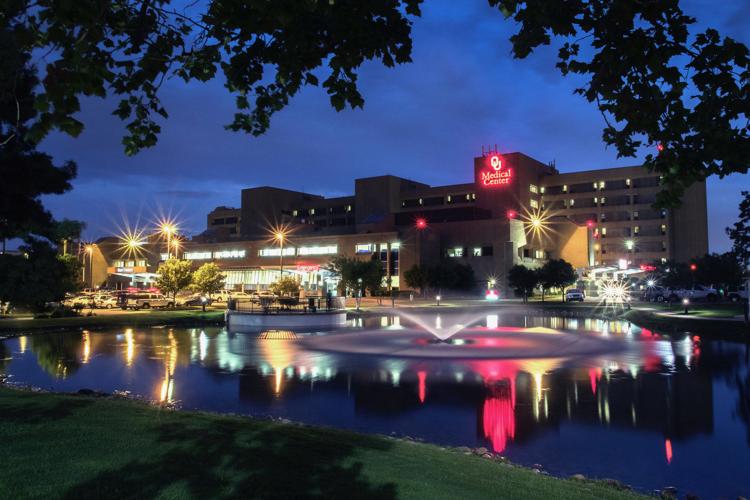


Premedical students at OU highlighted the benefits and opportunities of OU's Medical Humanities Scholars program, which includes provisional acceptance into the OU College of Medicine.
According to Sarah Tracy, director of the Medical Humanities Program, the program emphasizes preparation for a medical career through the study of the basic sciences, humanities, arts, social sciences and study of western and non-western medical traditions.
The Medical Humanities Scholars Program was established in 2000 in an attempt to bring the OU College of Medicine and the OU Honors College together to benefit OU’s premedical students and encourage them to continue studies in Oklahoma, and to distinguish the OU Honors College from other universities, Tracy said.
As the only historian of medicine on campus at the time, Tracy drew up the plan for a program.
“The goal of the program was to make premedical education a lot of fun because notoriously people take physics, organic chemistry and all of these genetics and cell biology courses that are pretty grueling and rigorous. So we wanted to … give students a much broader understanding of the experiences of health and disease and healing across cultures,” Tracy said.
Tracy believes this sense of broadening a pre-med student’s worldview is the core of the program.
“The clinic students are heading into a multicultural place so they ought to be conversant in how different cultures see the world, how they interpret sickness and illness, and how they attempt to heal people,” Tracy said.
The application process to the Medical Humanities program requires an applicant to be accepted to OU and its Honors College. After this, all honors students are eligible to apply for the Medical Humanities program.
Tracy explained that admission into the program is a holistic process that examines an applicant’s transcript and college essays alongside aspects of their character outside of their grades. This includes demonstrated altruism through high school, clinical experience and emotional maturity.
Natalie Keller, a microbiology and cello performance senior in the program, said she first learned of the program at a National Merit dinner.
“Music is a really big part of my life, so I loved the idea of being able to bring together my interest in music and medicine through this program that would really allow me to explore both of those fields,” Keller said.
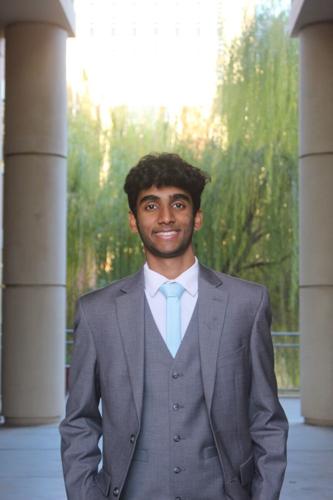
Aashish Allu, a psychology freshman and a first-year Medical Humanities scholar, said the distinguishing factor for him in applying was that it was an eight-year program. Many other Bachelor of Arts/Medical Degree and Bachelor of Science/Medical Degree programs across the nation, such as the University of Missouri-Kansas City and George Washington University, chart an accelerated course for medical students over the span of typically 6 or 7 years.

Aashish Allu, an OU medical humanities scholar.
“I felt like I'd be missing out on a large part of my life where I can explore and develop as an individual and mature by cutting off two years,” Allu said.
The program works with students to create enriching experiences with health care providers in the Oklahoma City and Norman areas as well as students’ hometowns. This includes traditional physicians, but the program routinely sends students to alternative, non-physician healers.
Tracy said some examples are a practitioner of traditional Chinese medicine and acupuncturists.
“It’s important to know what kinds of healers your patients are seeing when they aren't seeing you,” Tracy said.
Tracy explained how the program’s personalized humanities education distinguishes it from other Bachelor of Arts/Medical Degree and Bachelor of Science/Medical Degree programs across the nation.
“We're really trying to make the medical humanities a tool to help pre-meds and medical students think not just about the person in front of them, but about the social matrix in which that person moves,” Tracy said.
Allu said the program’s emphasis on gaining a substantial humanities education will allow a physician to better connect with their patient.
“Being able to take care of the patient holistically, whether it be emotionally or being able to connect with them on something … (helps) patients connect with their physician and may be able to help them understand better about what's exactly going on in their care, and it will give them a greater willingness to go about getting their care.”
According to a National Opinion Research Center study at the University of Chicago, patients are more likely to see a physician who they have a measured level of trust with. Fourteen percent of patients said they did not trust their doctor because their doctor did not listen to or know them.
Keller said she believes her music education alongside a premedical education will allow her to better understand patients.
“I'm getting to learn about other people and how music can be so central to how we connect with other people, how to heal and how we can better understand one another, too. So, I think that'll be really essential for trying to become a doctor,” Keller said.
Outside of the course curriculum, the program also works to foster community among the members. Tracy often holds events where new and old scholars can meet one another.
Allu said the community has been really helpful as he transitions into college. He said upperclassmen serve as mentors to new students, giving advice about academics and studying while also checking up on how they are doing mentally.
Tracy credits the success of the program to the work of the students themselves.
“These are students who want to be as sophisticated as they can in their STEM understanding of health and disease and as sophisticated as they can be in terms of understanding the patient in front of them,” Tracy said. “That's pretty admirable, and it's hard to do. So we try to help them in any way we can.”
Tracy believes the program ultimately works to foster future physicians who are able to understand and place themselves in the shoes of their patients.
“The medical humanities are a great way to connect individual clinical-based care with larger public health concerns,” Tracy said. “The medical humanities are wonderful at illustrating the social determinants of health. … You can’t really have a full understanding of medicine unless you understand it from a variety of perspectives. … You must understand that patients are people first.”
This story was edited by Alexia Aston, Karoline Leonard and Jazz Wolfe. Nikkie Aisha copy edited this story.


